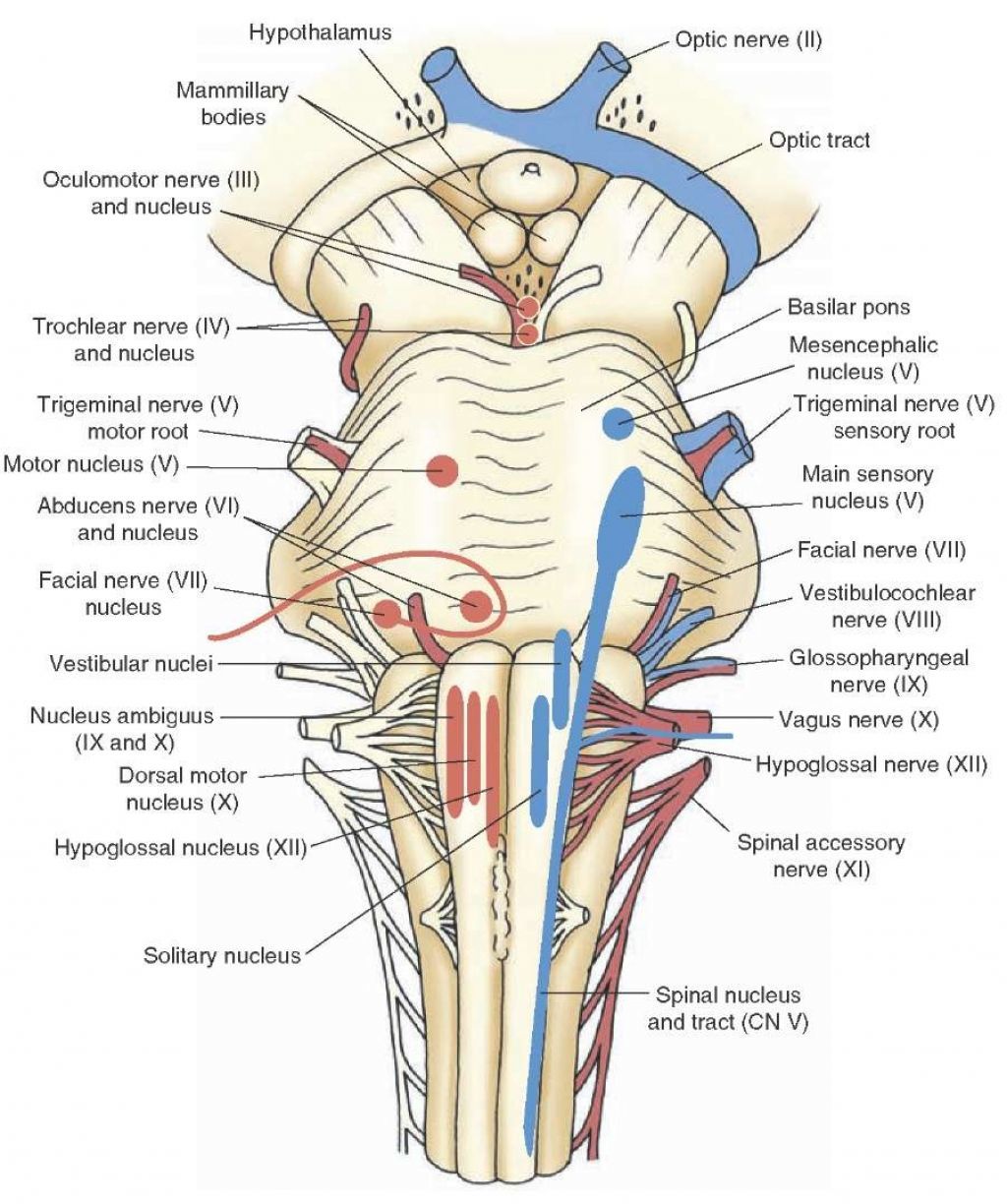
posterior cranial fossa
C. posterior
- skull foramen:
- internal acoustic meatus; CN 7,8
- jugular foramen; CN 9,10,11, jugular vein
- hypoglossal canal; CN 12
- foramen magnum; spinal roots of CN 11, brain stem, vertebral arteries
A. CP of HIV-associated dementia
B. pathogenesis of HIV-Assoc dementia
C. What causes neuronal damage?
A.
- HIV infection
- medical noncompliance
- progressive cognitive decline
- CD4 counts <200 cells/mm3
- symptoms of subcortical dementia (eg attn/working memory problems, executive dysfxn, slow information processing)
- HIV affects primarily the subcortical/deep gray matter structures
B. Pathogenesis
- inflammatory activation of microglial cells
- HIV-infected monocytes cross the BBB to become perivascular macrophages
- activated** macrophages and microglial cells (resident macrophages of the CNS) form groups (microglial nodules**) around small areas of necrosis and may fuse to form multinucleated giant cells.
C. neuronal damage occurs from inflammatory cytokine release by macrophages/microglial cells and the direct tociv effects of HIV-derived proteins.
A. Define sciatica
B. what are the causes of sciatica?
A. nonspecific term for low back pain that radiates down the leg
B. compression of the lumbosacral nerve roots and is most commonyl caused by vertebral disc herniation or spinal foraminal stenosis (eg due to degenerative arthritis of the spine)
-innervation of the nerve rootresults in characteritic dermatomal and myotomal deicits (radiculopathy) depending on the level of involvement
A. What is true hydrocephalus?
B. What are the {THREE} groups pertaining to the pathogenesis of hydrocephalus
A. a rise in the volume and pressure of CSF caused by abnormal production flow, or reabsorption of the fluid.
B.
- Increased CSF production=rare cause of hydrocephalus. excessive CSF may be produced by choroid plexus papillomas
- Abnormal CSF circulation=most common cause of hydrocephalus. obstructio is located in either the ventricl or arachnoid villi.
- Disorders of CSF absorption are rare
Abusive head trauma (AHT)-formerly known as “Shaken baby syndrome”
- inflicted intracranial injury due to blunt force trauma or vigorous shaking in a to-and-fro fashion
- resultant injuries are due to infants’ unique anatomic features
- infants have larger heads, enalrged subarachnoid space, higher brain water content and decreased cervical muscle tone compared to older children
- these facotrs lad to increased movement of the immature brain in relation to the skull, resulting in tearing of the bridging veins and subdural hemorrhages
- AHT may occur repeatedly over weeks o months, so acute (looks lighter on CT) on chronic (on CT looks darker) subdural hemorrhages are often seen
- shaking motion also results in retinal hemorrhages due to rupture of congested retinal veins
- *posterior rib fractures are also alarming for trauma
- *inconsistent hx: rolling over is not typical before age 4 months
Acoustic neuroma
- Schwann cell-derived tumor that typically arises from the vestibular portion of the vestibulocochlear nerve (CN 8)
- CP: ipsilateral sensorineural hearing loss and tinnitus due to impairment of the cochlea portion of the nerve
- damage to the vestibular component may also result in vertigo, dysequilibrium, and nystagmus
- most cases are unilateral, but bilateral are seen in pts with neurofibromatosis type 2
ADPKD
- systemic disorder (though major pathological process is in the kidneys)
- intracranial berry aneurysms arise in the circle of Willis and when they rupture, they cause subarachnoid hemorrhage (SAH)
- CP: severe HA (“worst HA of my life”)/thunderclap HA, neck stiffness (nuchal rigidity)-usually present or develops in the next 24 hrs as blood in the subarachnoid space acts as a meningeal irritant
- CT scan of brain without contrast=most commonly used initial imaging study for diagnosing SAH, should be done during the first 24hrs from the onset of symptoms
- positive in up to 90% of patients
- If CT scan is negative a lumbar puncture needs to be performed to evaluate the CSF for the presence of xanthochromia (blood in the CSF)
Anterior cerebral artery
- ACA supplies the medial portions of the 2 hemispheres (frontal and parietal lobes)
- occlusion of ACA would affect sensory and motor function of th contralateral leg and foot, while predominantly sparing the contralateral arm/face
- bilat ACA occlusion can also develop significant behavioral symptoms and urinary incontinence if frontal micturition center is affected
Ataxia-telangiectasia
- autosomal recessive disorder
- due to mutation of ATM gene (ataxia telangiectasia mutated) for DNA break repair
- cerebellar atrophy leads to ataxia that occurs in the first years of life
- telangiectasias=abnml dilatations of capillary vessels; superficial blanching nests of distended capillaries
- associated factors:
- causes severe immunodeficiency (cell-mediated and humoral dysfunction) with repeated sinopulmonary (upper and lower airway) infections
- increased risk of hematologic malignancies
- risk of cancer is significantly increased because of inefficient DNA repair (DNA damage and repair is an ongoing process)
- DNA hypersensitivity to ionizing (x-ray) radiation
- another manifestation: oculocutaneous telangiectasia-usually delayed
ATROPINE poisoning
- Jimson weed (Datura stramonium) poisoning/Gardener’s mydriasis-produces toxins (belladonna alkaloids) that are strong anticholinergics
- strikingly similar to atropine poisoning
- path: blockade of visceral muscarinic receptors
- CP: “ blind as a bat, mad as a hatter, red as a beet, hot as a hare, dry as a bon, the bowel and bladder lose their tone, and he heart runs alone.”
- Heart: diminished vagal tone at the SA nodes causes relative tachy
- Blood vessels: vasoconstriction via muscarinic receptor blockade in endothelial cells results in decreased NO synthesis
- nonetheless get cutaneous flushing
- GI: delayed gastric emptying, decreased intestinal motility, and secretion
- Respiratory: bronchodilatation
- GU: urinary retention via detrusor relaxation and contraction of the external urtehral sphincter
- Secretions: decreased lacrimation (dry eyes), salivation (dry mouth) and sweating (dry and hot skin).
- ATROPINE decreases ability to sweat=contributes to hyperthermia
- Eye: mydriasis (dilated pupils) and cycloplegia (inability to focus on the near objects, blurry vision)
- CNS: hallucinations, agitation, and delirium
- Tx: increase concentration of ACh in the synaptic cleft by a cholinesterase inhibitor=PHYSOSTIGMINE (tertiary amine, can reverse both CNS an peripheral symptoms of severe stropine toxicity)
- Neostigmine and Edrophonium have a quatenary ammonium structure that limits CNS penetration
BBB
- formed by tight junctions between nonfenestrated capillary endothelial cells that prevent the paracellular passage of fluids and solutes
- tight junctions (zonular occludentes-composed of transmembrane proteins (claudins and occludins) that associate with actin filaments
- only permits passage of substances form the blood to the brain via transcellular movement across the endothelial plasma membrane-limited to diffusion or carrier-mediated transport
Chiari malformations
- group of congenital disorders caused by the underdevelopment of the posterior fossa
- small size of the fossa causes parts of the cerebellum and medulla to herniate through the foramen magnum
- two types:
- Chiari type 1:
- most common and benign
- characterized by low-lying cerebellar tonsils that extend below the foramen magnum into the vertebral canal
- pts present during adolescence/adulthood with paroxysmal occipital HA (due to meningeal irritation) and cerebellar dysfunction (eg dizziness, ataxia) due to compression of the cerebellar tonsils
- Chiari type 2 (Arnold-Chiari malformation):
- more severe and typically becomes evident during the neonatal period
- characterized by: downward displacement of the cerebellum (vermis, tonsils) and medulla through the foramen magnum
- non-communicating hydrocephalus almost always occurs due to aqueductal stenosis
- compression of the medulla may result in dysphagia, stridor, and apnea
- pts also often have an associated lumbar myelomeningocele which can cause lowe limb paralysis
- Chiari type 1:
Cholinomimetics (cholinergic agonists)
- indications: non-obstructive urinary retention, paralytic ileus, glaucoma
- SE: N/V/D abdominal cramps, dyspnea (via bronchoconstriction), increased secretions (sweating, lacrimation, and salivation)
- BETHANECHOL-used to stimulate peristalsis in post-op ileus and to tx non-obstructive retention (atonic bladder)
- CARBACHOL and PILOCARPINE-used to lower intraocular pressure in glaucoma
Clostridium tetani (Tetanus)
- following a puncture wound
- C. tetani causes disease by producing a potent metalloprotease exotoxin (tetanospasmin) that is deadly in nanogram quantities
- toxin binds to receptors in the presynaptic membranes of peripheral motor neurons
- migrate by retrograde axonal transport to central inhibitory neurons in the SC and brainstem and prevents release of the inhibitory NT glycine and GABA
- suprresion results in increased activation of motor nerves causing muscle spasms and hyperreflexia
- CP:
- difficulty opening the jaw (lockjaw or trismus)
- fixed sardonic smile (risus sardonicus)
- contractions of back muscles resulting in backward arching (opisthotonos)
- very iritable
- develop tetanic spasms in response to minor stimuli (eg loud noises)
Comparison of frontotemporal dementia (Pick’s disease) and Alzheimer disease
Pick’s disease
- macroscopic exam: pronounced atrophy of frontal and temporal lobes
- onset: 50s&60s
- microscopic features:
- intial neuronal loss in the frontotemporal lobes
- Pick bodies (cytoplasmic inclusions of microtubule-associated protein tau)
- initial symptoms: personality and behavioral changes (apathy, socially inappropriate behavior)
- genetic basis: AD inheritance in 20-40%
Alzheimers
- macroscopic exam: mild-to-moderate generalized brain atrophy
- onset: 60s & 70s or older
- microscopic features:
- initial neuronal loss in parietal and temporal lobes
- neurofibrillary tangles
- amyloid plaques
- initial symptoms: impairments involving recent memory
- genetic basis: chromosome 21 (APP gene) and Apolipoprotein E4
Congenital toxoplasmosis
- transplacental infection (acquired in utero)
- fetus affected only if mother is infected during first 6 months of pregnancy
- expecting mothers should avoid cat feces to help prevent exposure
- classic triad:
- hydrocephalus-due to CNS inflammation, evidenced by macrocephaly and enlargement of the ventricles
- intracranial calcifications
- chorioretinitis-inflammation of the choroids and the retina that can leave cotton-like white/yellow scars on the retina visisble on fundoscopy
- affected neonates also have:
- hepatosplenomegaly and rash
- mulitple neurological abnormalities (seizures, altered muscle tone and ocular movement defects)
CTZ
- chemoreceptor trigger zone
- triggers the vomiting and acute nausea that results form the administration of systemic chemotherapy
- lies in the area postrema of the dorsal medulla near the fourth ventricle
- area postrema receives blood from fenestrated vessels (absent BBB), which allows it to sample chemicals circulating in the blood
Define dysdiadochokinesia
feature of cerebellar ataxia and may be the result of lesions to either the cerebellar hemispheres or the frontal lobe (of the cerebrum), it can also be a combination of both
Describe the steps for the generation adn propogation of action potentials
- binding of an excitatory NT (eg glutamate) to a postsynaptic neuron causes opening of ligand-gated sodium channels
- sodium influx and membrane depolarization
- depolarization impulse is transmitted from the dendrites through the cell body to the axon hillock which ocntains a large number of voltage-gated sodium channels
- once the hillock becomes sufficciently depolarized, an AP is triggered and propagates along the axon via a steady influx of sodium ions
- whan the AP reaches the axon terminal, bvoltage gated calicum channels open and allow the influx of calicum
- calcium is esential for the fusion and release of NT vesicles into the synpatic cleft
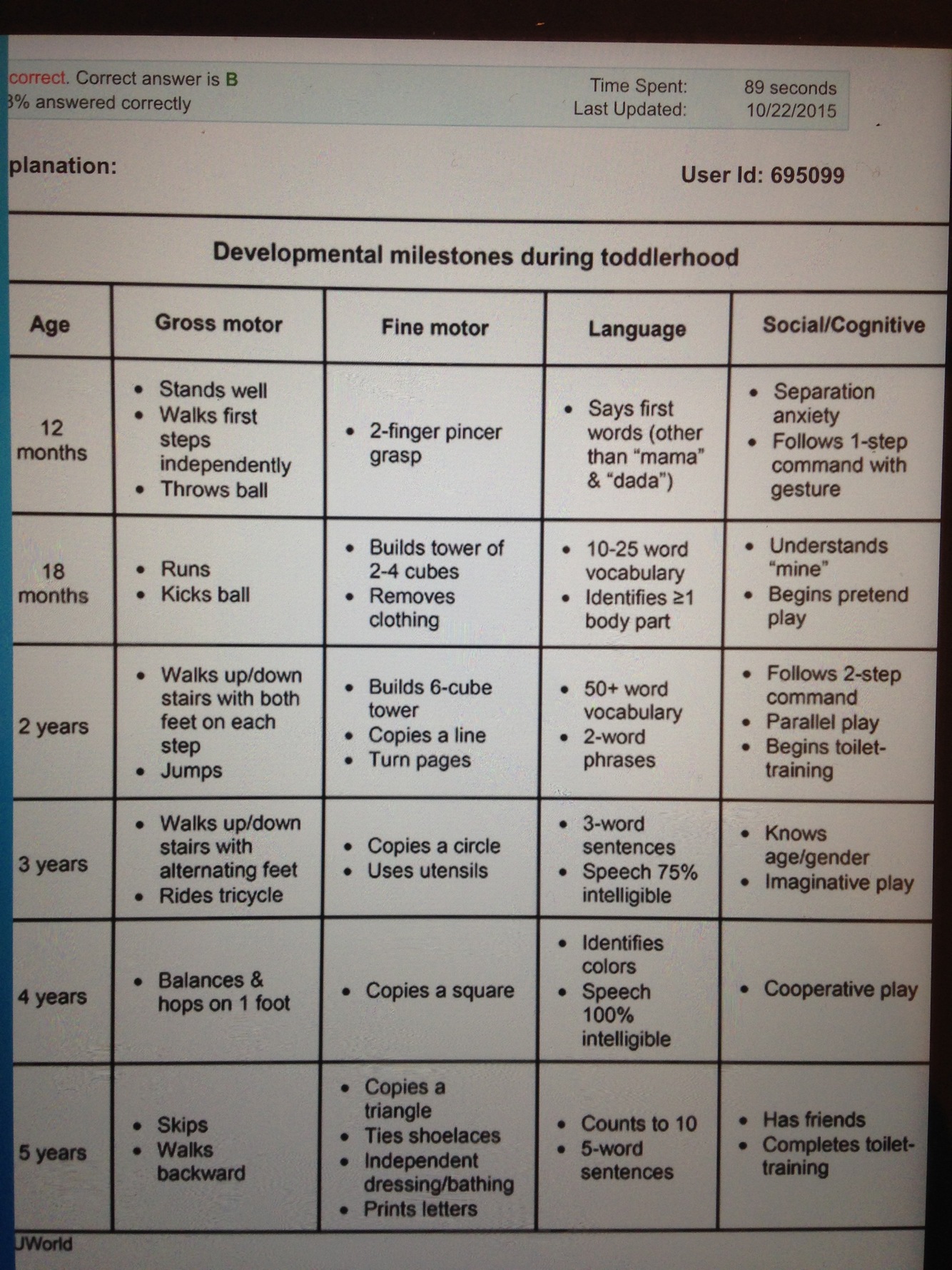
Developmental milestones during toddlerhood
Essential tremor
- the most common movement disorder
- Cp: slowly progressive, symmetric postural and/or kinetic tremor that most commonly affects the upper extremities
- often inherited in an autosomal dominant fashion (rferred to as familial tremor)
- first-line tx: nonspecific beta-adrenergic antagonist PROPRANOLOL
ETHOSUXIMIDE
- Indication: absence seizures
- MOA: blocks T-type Ca channels that trigger and sustain rhythmical burst discharges in thalamic neurons
food poisoning with Clostridium botulinum toxin
- CP: nicotinic blockade (diplopia and dysphagia) and muscarinic blockade (dry mouth)
- C bot=highly potent preformed neurotoxin
- inhibits ACh release from presynaptic nerve terminals at the NMJ=prevention of muscular contraction
- can be partially overcome by high-rate repetitive nerve stimulation (hence the compound muscle AP facilitation seen in the pt
- anerobic environment within a contaminated can of food allows for spore germination and organism growth
- toxin (produced by vegetative bacteria) is NOT actively secreted, ramins intracellular until autolysis causes its release into food
- toxin is readily destroyed by heat
- if food not cooked properly, get 3Ds (in 12-36hr of consumption)
- diplopia
- dyspahgia
- dysphonia
- if food not cooked properly, get 3Ds (in 12-36hr of consumption)
- Two other forms of botulism:
- wound botulism-toxin production in a wound infected with C botulinum
- infant botulism-soncumption of C botulinum spores, classically found in contaminated honey, that then mature into vegetative toxin-producing cells
- all are medical emergencies!
Fractures to the orbital floor
- commonly result from direct frontal trauma to the orbit floor (composed of zygomatic bone and maxilla)
- infraorbital nerve (continuation of maxillary nerve) runs along the orbital floor in a groove in the maxilla before exiting the skull inferior to the orbit
- damage can result in numbness and paresthesia of the upper cheek, upper lip, and upper gingiva
- also, displacement of the orbital contents through the floor may cause eophthalmos and inferior rectus muscle can also become entrapped, limiting superior gaze






