Nephron - Vascular Component
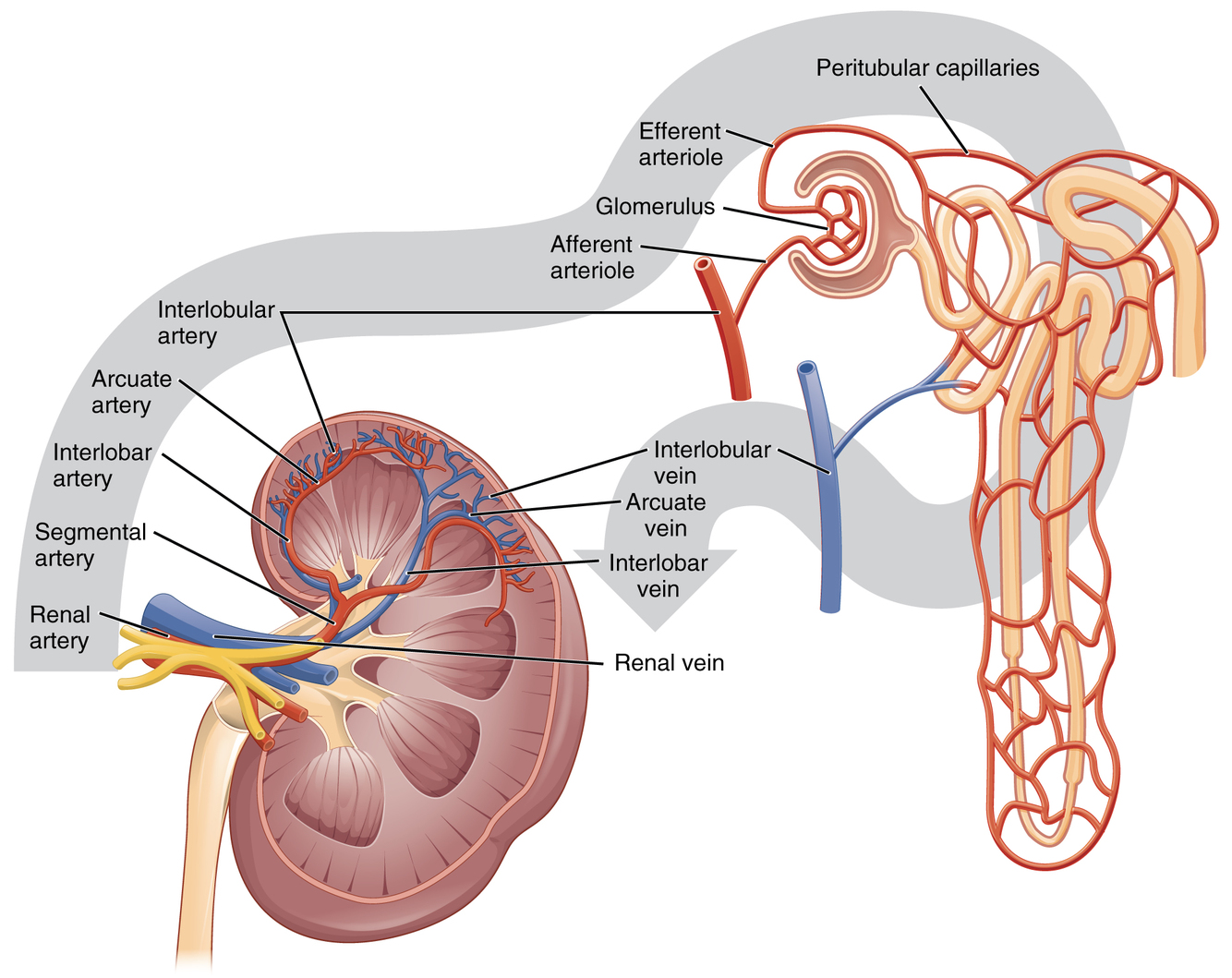
Receives blood from branches of renal artery, supplies blood to glomerulus.
a. ) Afferent arteriole
b. ) Glomerulus
c. ) Efferent arteriole
d. ) Peritubular capillary network
e. ) Vasa recta
a.) Afferent arteriole
Receives blood from branches of renal artery, supplies blood to glomerulus.
Nephron - Vascular Component
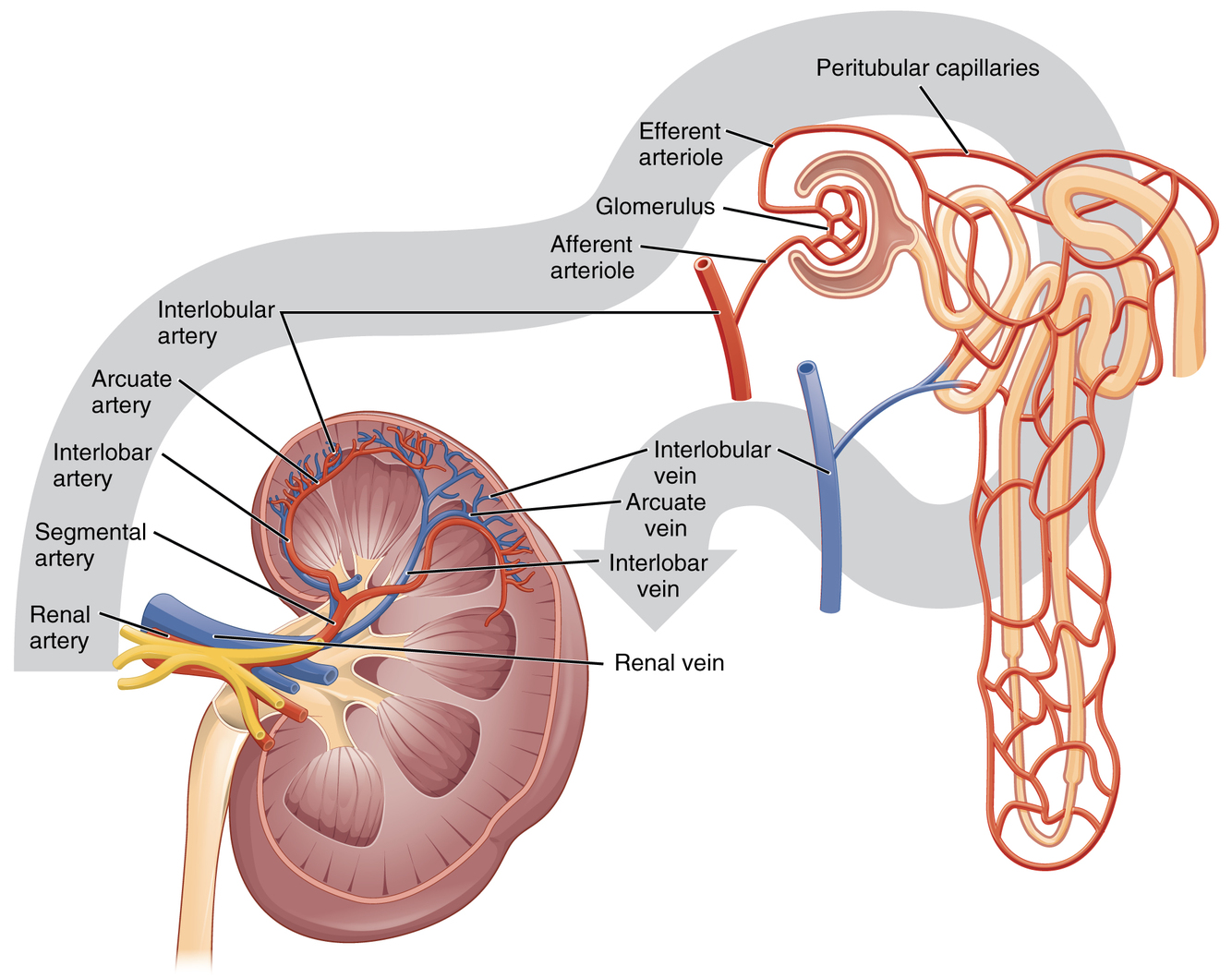
Long, looping capillaries near kidney medulla, important in concentrating urine. Blood then enters venous circulation via renal veins.
a. ) Afferent arteriole
b. ) Glomerulus
c. ) Efferent arteriole
d. ) Peritubular capillary network
e. ) Vasa recta
e.) Vasa recta
Long, looping capillaries near kidney medulla, important in concentrating urine. Blood then enters venous circulation via renal veins.
Nephron - Vascular Component
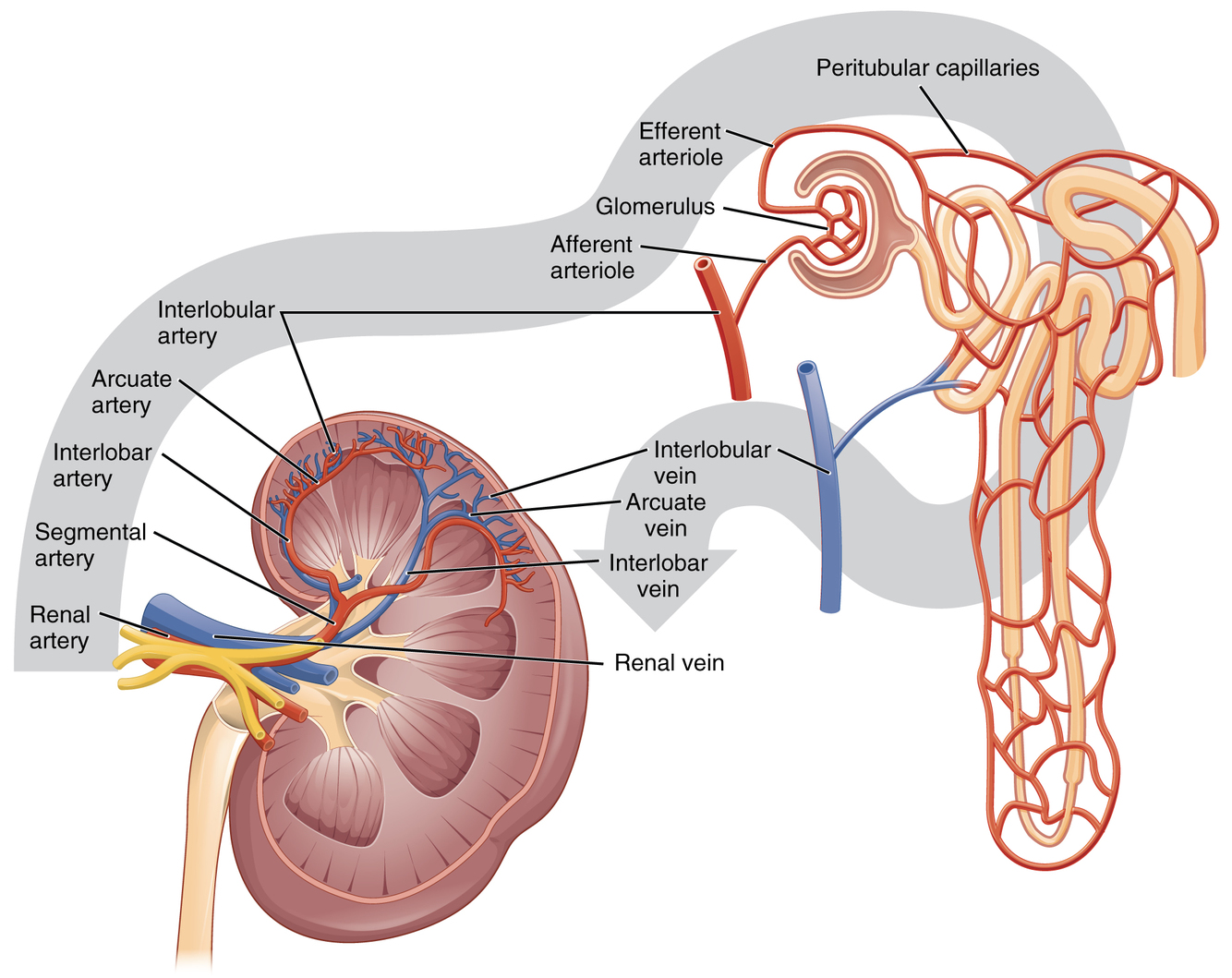
Surrounds tubule, allowing for movement of water and solutes between blood and urine filtrate.
a. ) Afferent arteriole
b. ) Glomerulus
c. ) Efferent arteriole
d. ) Peritubular capillary network
e. ) Vasa recta
d.) Peritubular capillary network
Surrounds tubule, allowing for movement of water and solutes between blood and urine filtrate.
Nephron - Vascular Component
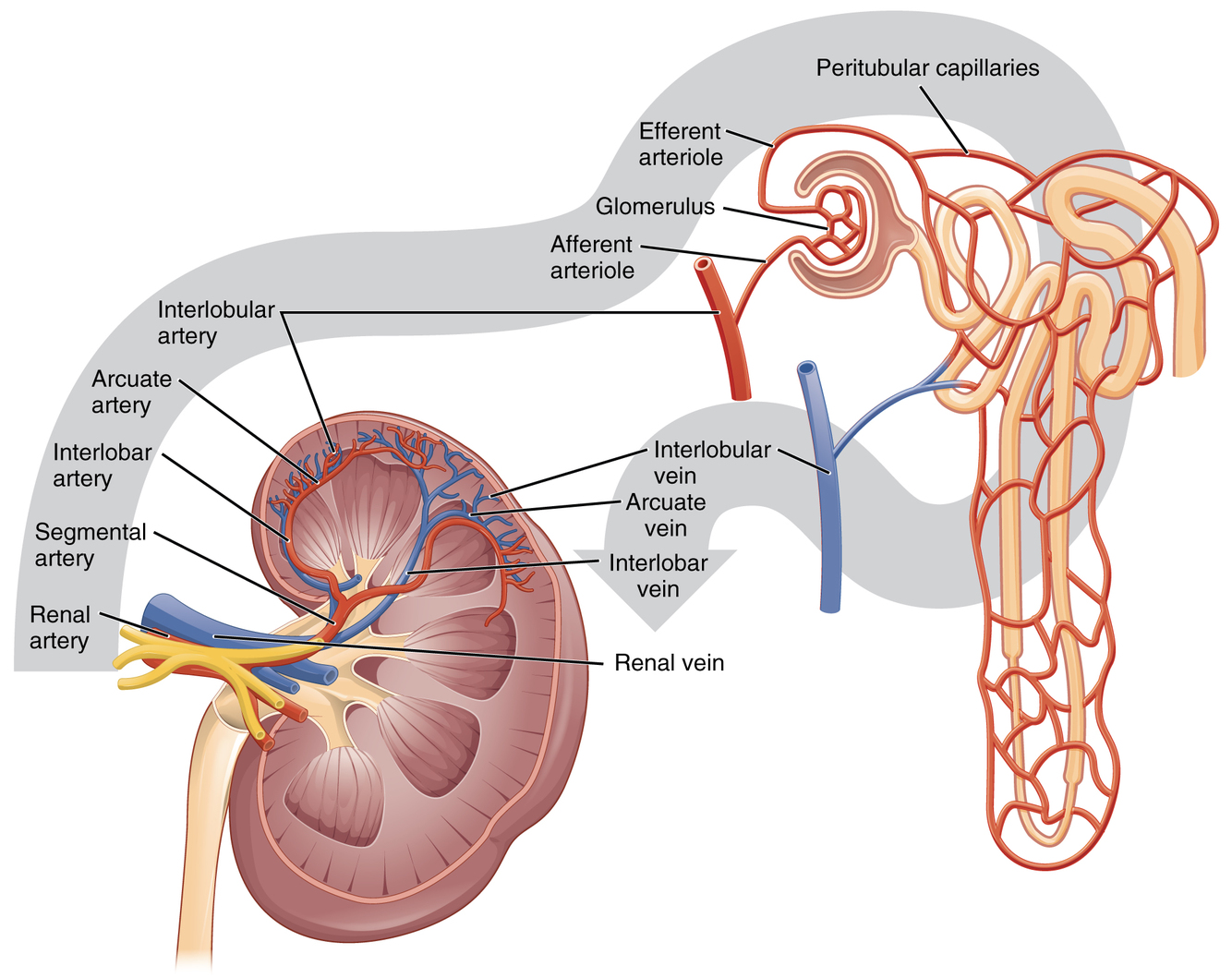
Capillary bed from which fluid and substances are filtered to form urine filtrate (that collects in Bowman’s capsule).
a. ) Afferent arteriole
b. ) Glomerulus
c. ) Efferent arteriole
d. ) Peritubular capillary network
e. ) Vasa recta
b.) Glomerulus
Capillary bed from which fluid and substances are filtered to form urine filtrate (that collects in Bowman’s capsule).
Content of filtrate determined largely by integrity of the glomerular basement membrane.
Nephron - Vascular Component
Selectively constricts/dilates to regulate blood flow/pressure within glomerulus, which, along with arterial BP, determines GFR (normally around 125 ml filtrate formed per minute).
a. ) Afferent arteriole
b. ) Glomerulus
c. ) Efferent arteriole
d. ) Peritubular capillary network
e. ) Vasa recta
c.) Efferent arteriole
Along with efferent arteriole, selectively constricts/dilates to regulate blood flow/pressure within glomerulus, which, along with arterial BP, determines GFR (normally around 125 ml filtrate formed per minute).
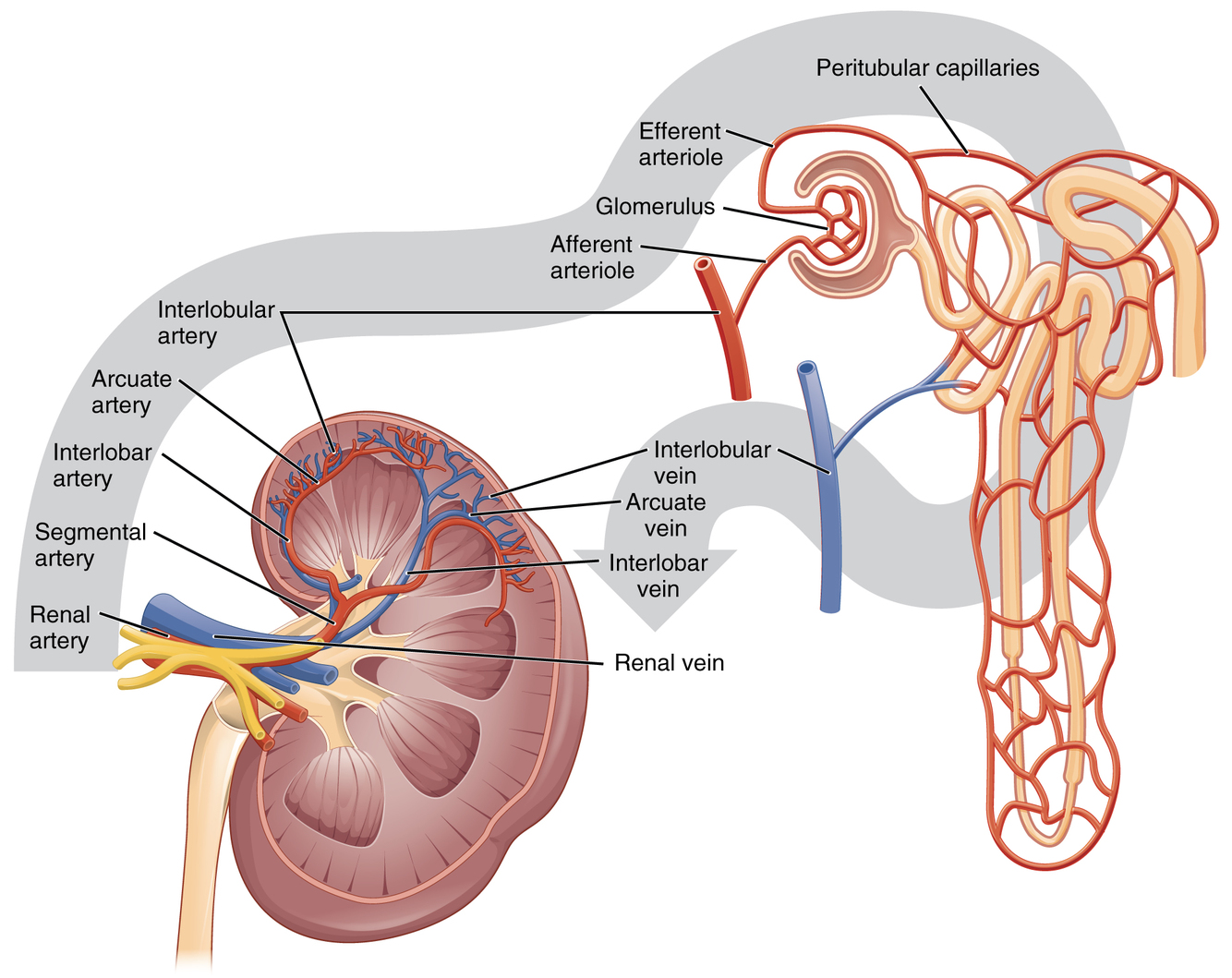
Nephron - Tubular Component
Permeable to solutes only.
- Produces dilution of urine filtrate.
- Generates high osmolarity gradient in medulla for fine-tuning of water reabsorption from collecting tubes.
a. ) Proximal convoluted tubule
b. ) Descending limb of Loop of Henle
c. ) Ascending limb of Loop of Henle
d. ) Distal convoluted tubule
e. ) Collecting tubule
c.) Ascending limb of Loop of Henle
Permeable to solutes only.
- Produces dilution of urine filtrate.
- Generates high osmolarity gradient in medulla for fine-tuning of water reabsorption from collecting tubes.
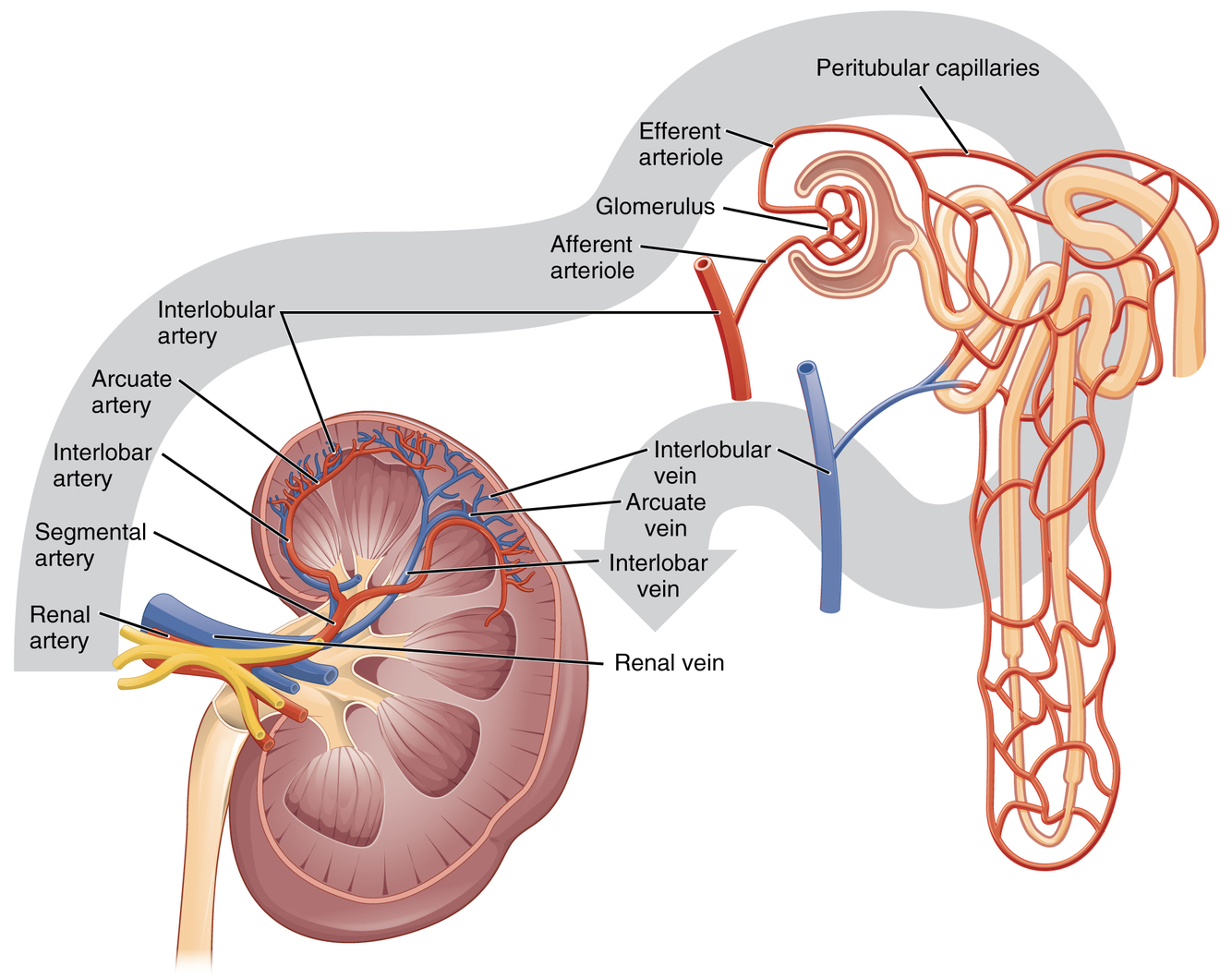
Nephron - Tubular Component
Empties into renal calyces/pelvis.
- Site of ADH’s action (fine-tunes concentration of urine).
a. ) Proximal convoluted tubule
b. ) Descending limb of Loop of Henle
c. ) Ascending limb of Loop of Henle
d. ) Distal convoluted tubule
e. ) Collecting tubule
e.) Collecting tubule
Empties into renal calyces/pelvis.
- Site of ADH’s action (fine-tunes concentration of urine).
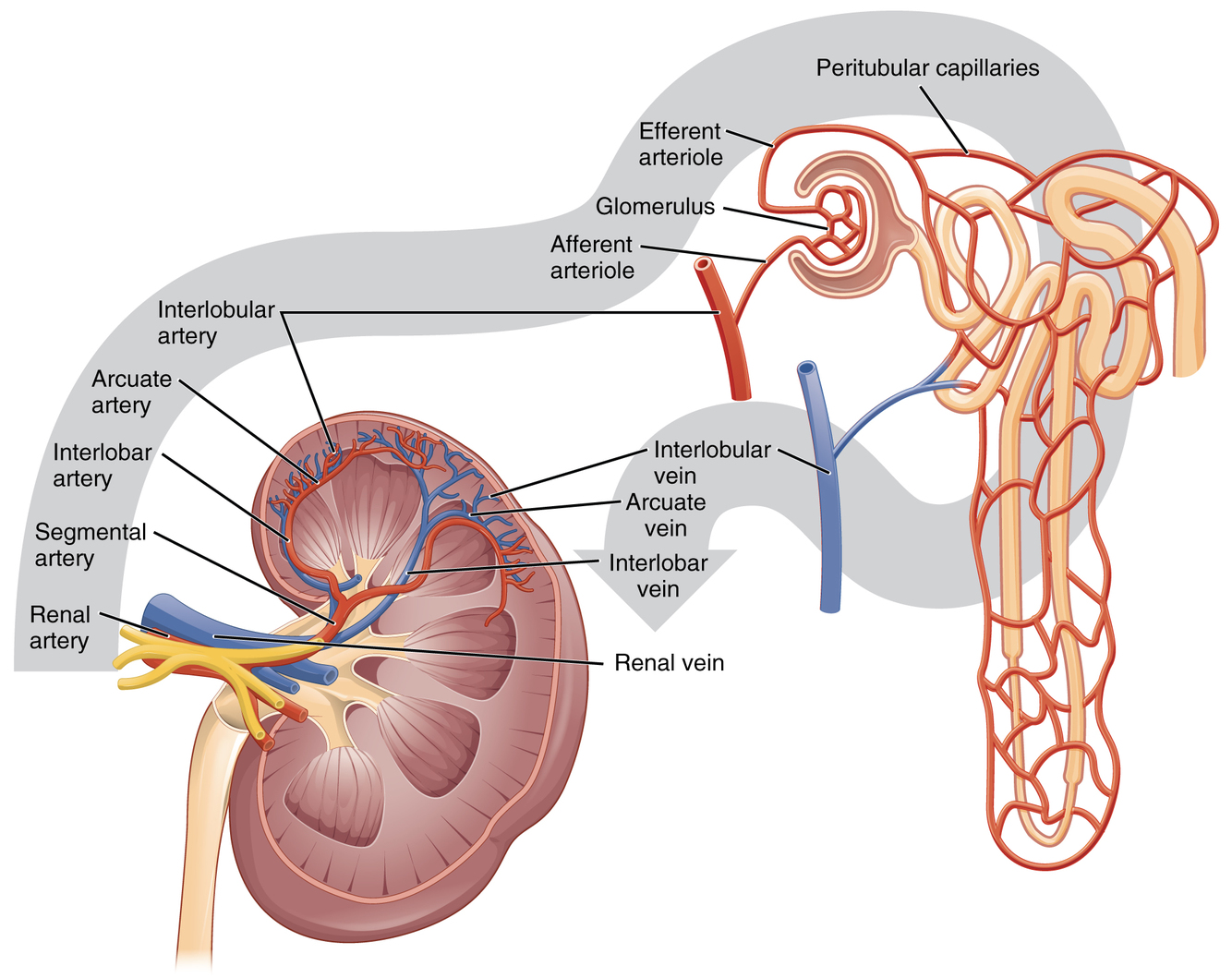
Nephron - Tubular Component
Permeable to both water and solutes.
- Produces dilution of urine filtrate.
- Generates high osmolarity gradient in medulla for fine-tuning of water reabsorption from collecting tubes.
a. ) Proximal convoluted tubule
b. ) Descending limb of Loop of Henle
c. ) Ascending limb of Loop of Henle
d. ) Distal convoluted tubule
e. ) Collecting tubule
b.) Descending limb of Loop of Henle
Permeable to both water and solutes.
- Produces dilution of urine filtrate.
- Generates high osmolarity gradient in medulla for fine-tuning of water reabsorption from collecting tubes.
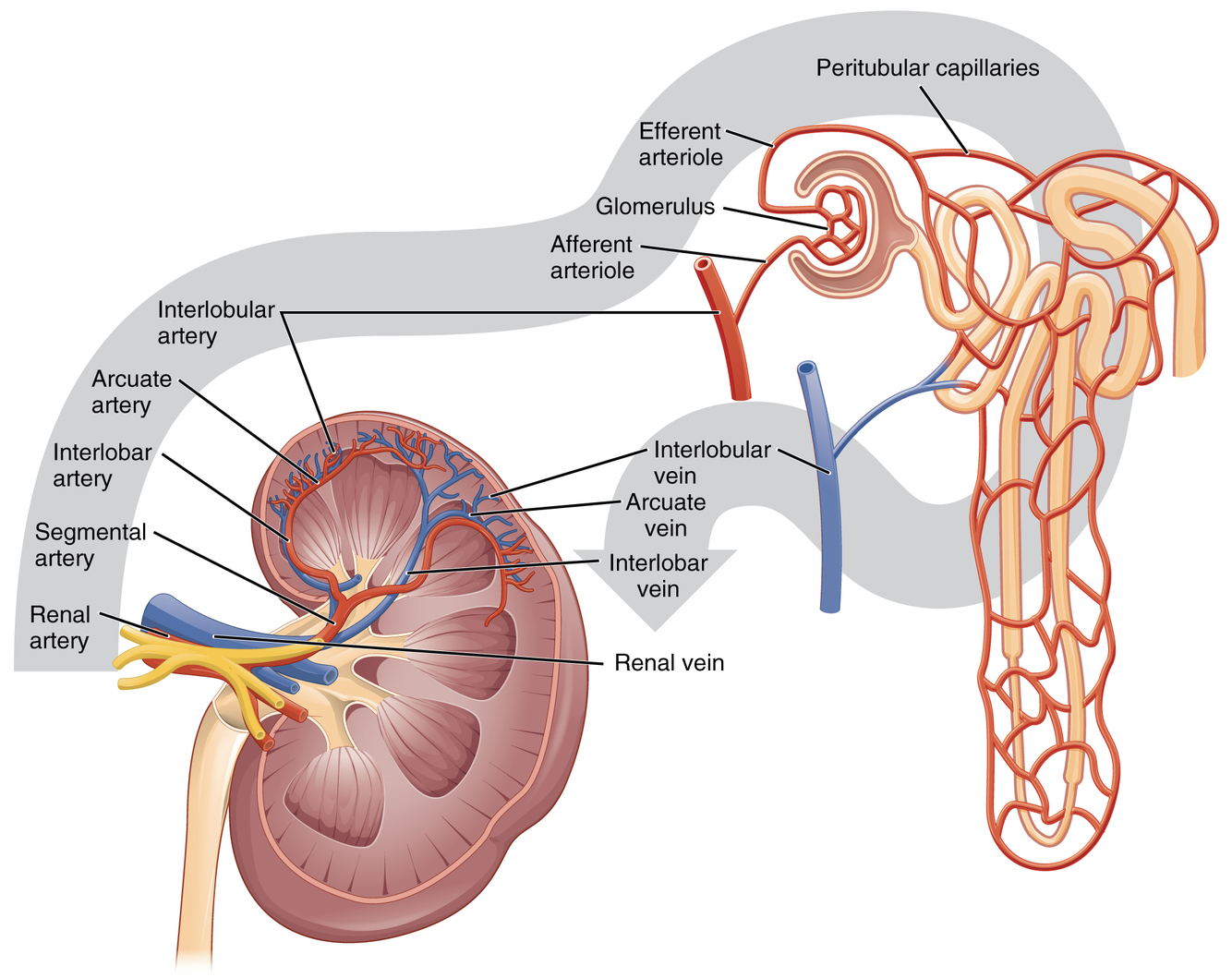
Nephron - Tubular Component
a. ) Proximal convoluted tubule
b. ) Descending limb of Loop of Henle
c. ) Ascending limb of Loop of Henle
d. ) Distal convoluted tubule
e. ) Collecting tubule
d.) Distal convoluted tubule
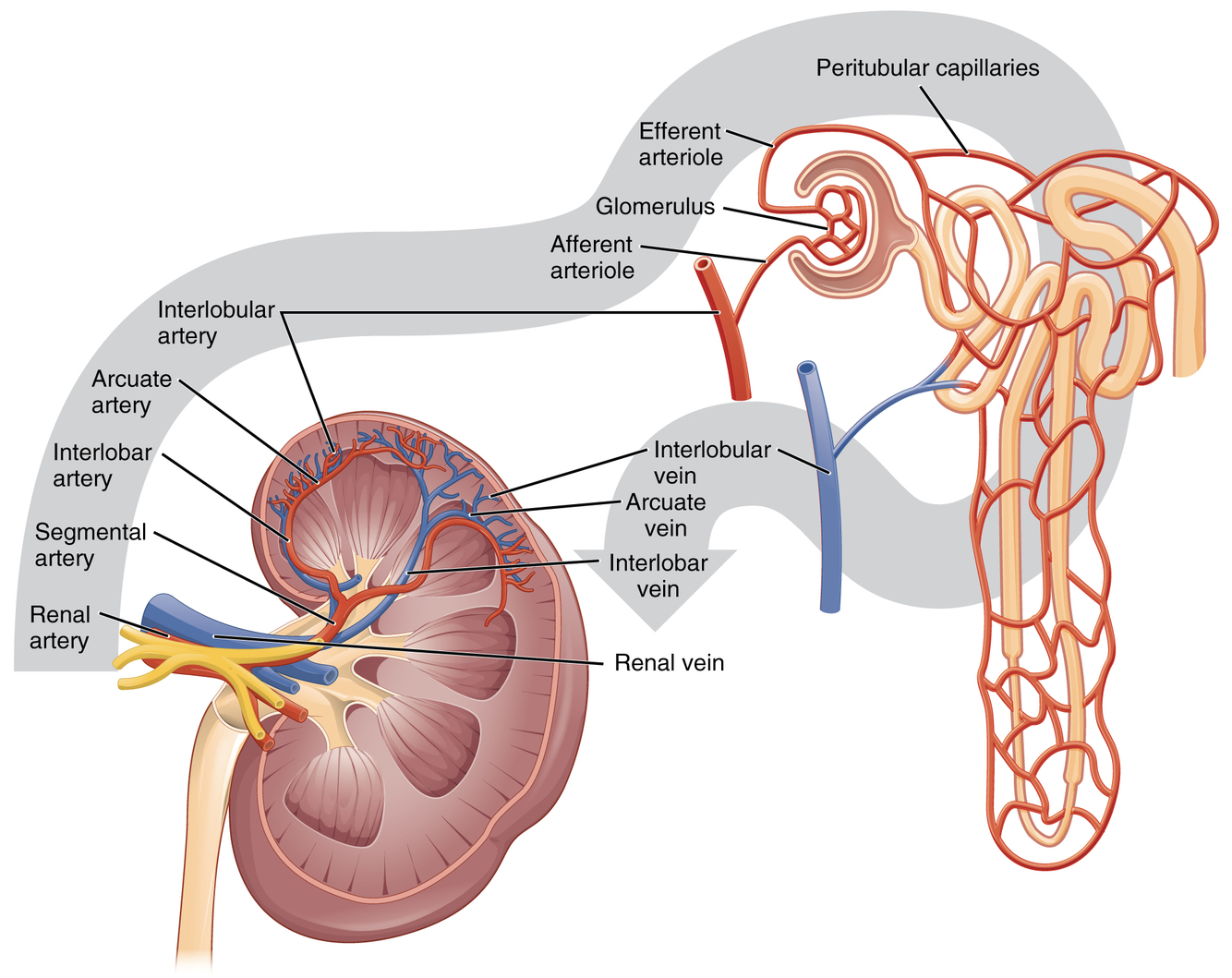
Nephron - Tubular Component
Extends from Bowman’s capsule.
- Reabsorbs nutritionally important substances.
- Reabsorbs large amount of electrolytes.
- Water passively follows.
a. ) Proximal convoluted tubule
b. ) Descending limb of Loop of Henle
c. ) Ascending limb of Loop of Henle
d. ) Distal convoluted tubule
e. ) Collecting tubule
a.) Proximal convoluted tubule
Extends from Bowman’s capsule.
- Reabsorbs nutritionally important substances.
- Reabsorbs large amount of electrolytes.
- Water passively follows.
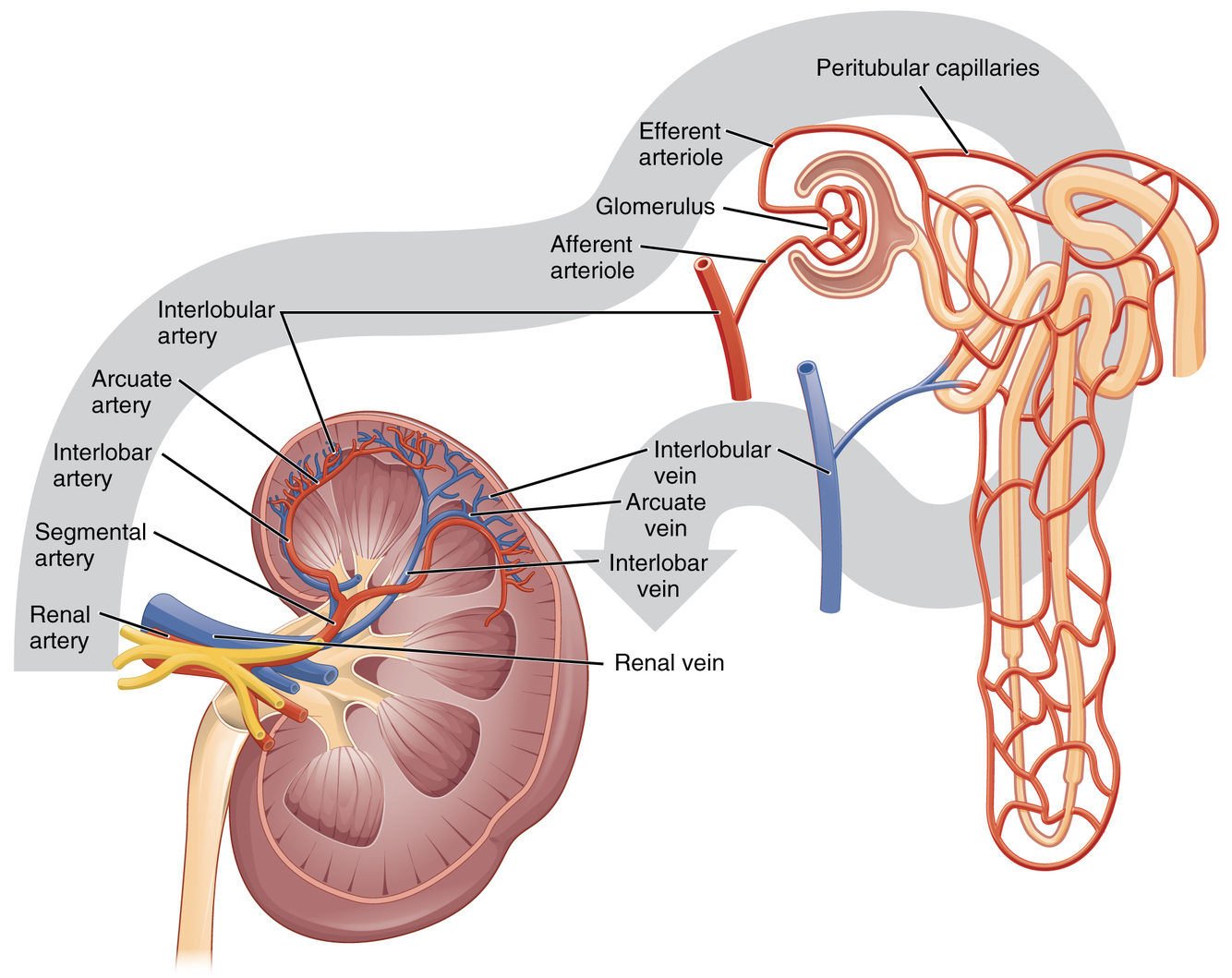
Regulation of Renal Blood Flow
Regulation through sympathetic nervous system. Helps regulate constriction/dilation of afferent and efferent arterioles →
- Adjusts blood flow to keep GFR relatively constant.
- Helps lower urine output and maintain BP during shock states.
a. ) Neural control mechanism
b. ) Humoral control mechanism
c. ) Autoregulation
a.) Neural control mechanism
Regulation through sympathetic nervous system. Helps regulate constriction/dilation of afferent and efferent arterioles →
- Adjusts blood flow to keep GFR relatively constant.
- Helps lower urine output and maintain BP during shock states.
Regulation of Renal Blood Flow
Regulation through substances that cause constriction or dilation of renal vessels (ex. angiotensin II, dopamine, prostaglandins, etc.).
a. ) Neural control mechanism
b. ) Humoral control mechanism
c. ) Autoregulation
b.) Humoral control mechanism
Regulation through substances that cause constriction or dilation of renal vessels (ex. angiotensin II, dopamine, prostaglandins, etc.).
Hormones affect whether 2 areteries constrict or dilate
Regulation of Renal Blood Flow
Regulation through specialized cells in the kidney called the juxtaglomerular complex. Regulates synthesis/release of renin based on feedback (i.e. blood pressure in afferent arteriole).
a. ) Neural control mechanism
b. ) Humoral control mechanism
c. ) Autoregulation
c.) Autoregulation
Regulation through specialized cells in the kidney called the juxtaglomerular complex.
Regulates synthesis/release of renin based on feedback (i.e. blood pressure in afferent arteriole).
Monitors composition of fluid in distal tubule

-
Packet 121
-
Packet 225
-
Packet 2 (genetics)10
-
Packet 3 - Blood25
-
Packet 3 - Blood (part 2)24
-
Packet 4 - immunity & inflammation29
-
Packet 4 - immunity & inflammation (2)9
-
Patho Study Book27
-
Packet 5 - Immune System22
-
Packet 6 - Circulatory Function20
-
Packet 6 - Circulatory Function (2)15
-
Packet 6 - Circulatory Function (3)10
-
Packet 6 - Circulatory Function (4)8
-
Packet 7 - Circulatory System10
-
Packet 7 - Circulatory System (2)21
-
Packet 8 - Circulatory Function Part 212
-
Packet 8 - Circulatory Function Part 2 (2)5
-
Packet 8 - Circulatory Function Part 2 (3)15
-
Packet 8 - Circulatory Function Part 2 (4)20
-
Patho Study Book 219
-
Patho Study Book 313
-
Packet 9 - Respiratory System12
-
Packet 9 - Respiratory System (2)16
-
Packet 10 - Fluid Balance13
-
Packet 10 - Fluid Balance (2)17
-
Packet 10 - Fluid Balance (3)23
-
Packet 10 - Fluid Balance (4)2
-
Packet 11 - Renal Function13
-
Packet 11 - Renal Function (2)1
-
Packet 11 - Renal Function (3)10
-
Patho Study Guide21
-
Patho Review Questions21
-
Packet 12 - GI System2
-
Packet 12 - GI System (2)9
-
Packet 12 - GI System (3)0
-
Packet 13 - Hepatobiliary System7
-
Packet 13 - Hepatobiliary System (2)23
-
Packet 13 - Hepatobiliary System (3)10
-
Packet 14 - Endocrine Function17
-
Packet 14 - Endocrine Function (2)11
-
Packet 14 - Endocrine Function (3)8
-
Packet 14 - Endocrine Function (4)7
-
Quizlet Final P.Q.'s20
-
Quizlet Final P.Q.'s (2)17
-
Packet 15 - Endocrine System8
-
Packet 15 - Endocrine System (2)16
-
Packet 15 - Endocrine System (3)11
-
Packet 16 - Alterations in Neural Function Part 110
-
Packet 16 - Alterations in Neural Function Part 1 (2)8
-
Packet 16 - Alterations in Neural Function Part 1 (4)13
-
Packet 17 - Nervous System5
-
Packet 17 - Nervous System (2)11
-
Packet 17 - Nervous System (3)13
-
Patho Study Book Random5



