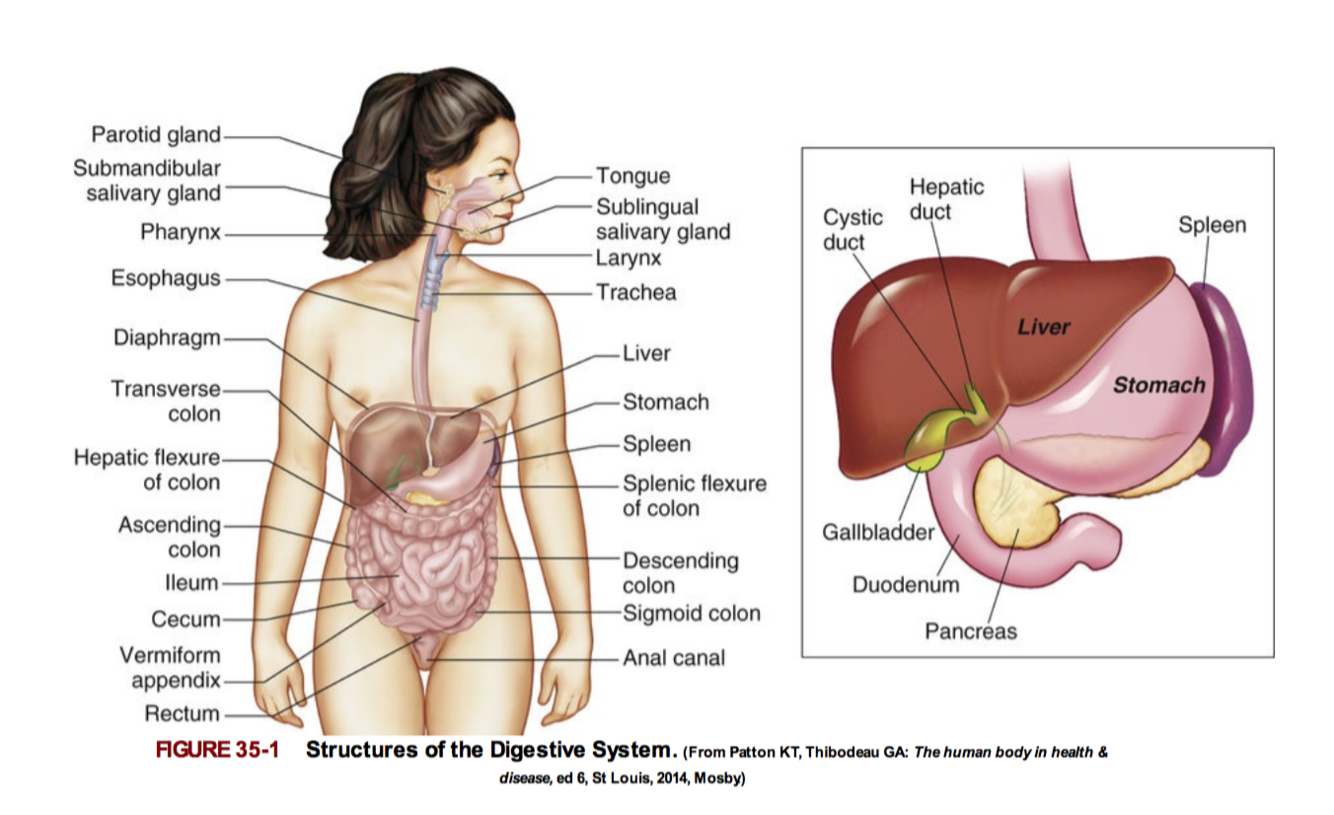
The digestive system includes what components?
- GI tract
- Accessory organs of digestion
- salivary glands
- liver
- gall bladder
- exocrine pancreas
What movements of the digestive system are controlled by hormones and autonomic NS?
a) chewing
b) swallowing
c) defecation of solid wastes
d) peristalsis
d) peristalsis
Describe the general pathway of food from ingestion to elimination.
1) food breakdown starts in the mouth with chewing and continues in the stomach where it’s churned and mixed with acid, mucus, enzymes and other secretions
2) In stomach, fluid and partially digested food pass into small intestine where more biochemical agents and enzymes secreted by the intestinal cells, gallbladder, and exocrine pancrease break things down even more into components that can be absorbed (proteins, carbs, fats)
3) Nutrients pass through the walls of small intestine into blood vessels and lymphatics, they’re off for storage or further processing
4) Things that are not absorbed in small intestine pass into large intestine where fluid continues to be absorbed. Fluid wastes travel to kidneys for elimination via urine. solid wastes through rectum for defecation.
What components does the GI tract consist of?
- mouth
- esophagus
- stomach
- small intestine
- large intestine
- rectum
- anus
What digestive processes are carried out by the GI tract?
- Ingestion of food
- Propulsion of food and wastes from the mouth to the anus
- Secretion of mucus, water, and enzymes
- Mechanical & chemical digestion of food particles
- Absorption of digested food
- Elimination of waste products by defecation
- Immune and microbial protection against infection
Histology
study of microscope structure of tissues
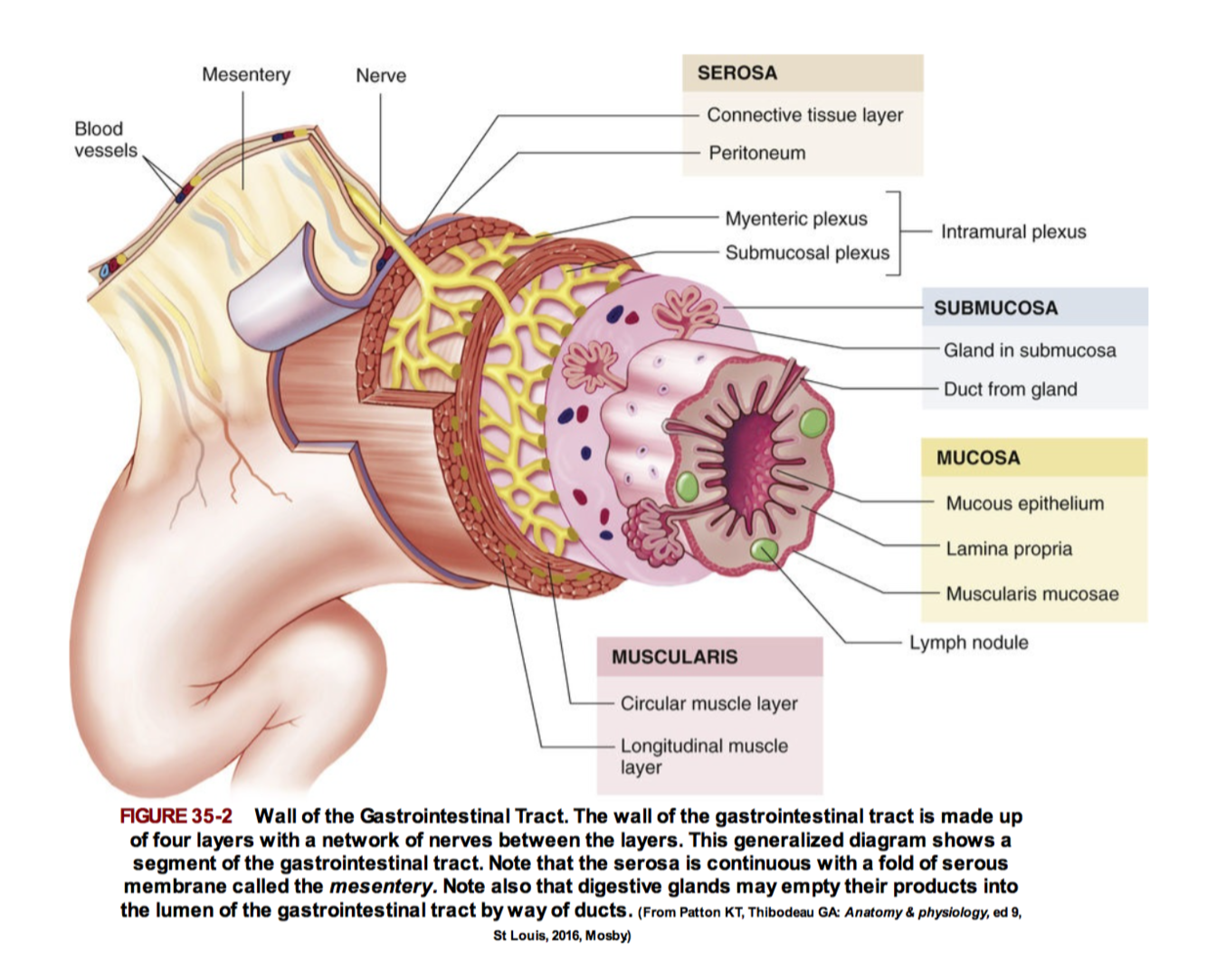
What are the four layers of the GI tract, starting from inside out?
mucosa
submucosa
muscularis
serosa/adventitia
What is the enteric/intramural plexus and why is it important?
The enteric plexus is located within different layers of the GI walls and it a network of nerves that control mobility, secretion, sensation and blood flow within the GI tract.
This is all coordinated through through local and autonomic nervous system
How many permanent teeth are in an adult mouth? What is the importance of having teeht?
32
needed for speech and mastication
Function of mouth/tongue
- acts as a reservoir for chewing and mixing food with saliva
- food particles gets smaller and move around in the mouth where taste and buds and olfactory nerves are continuously stimulated to add to satisfaction of eating
- Tongue’s surfaces has thousands of chemoreceptors that can distinguish between salty, sour, bitter, sweet, and savoury (umami) tastes and these (along with food odors) help with initiating salivation and secretion of gastric juice in stomach
Describe the structures & substances involved with salivation and what functions saliva may have.
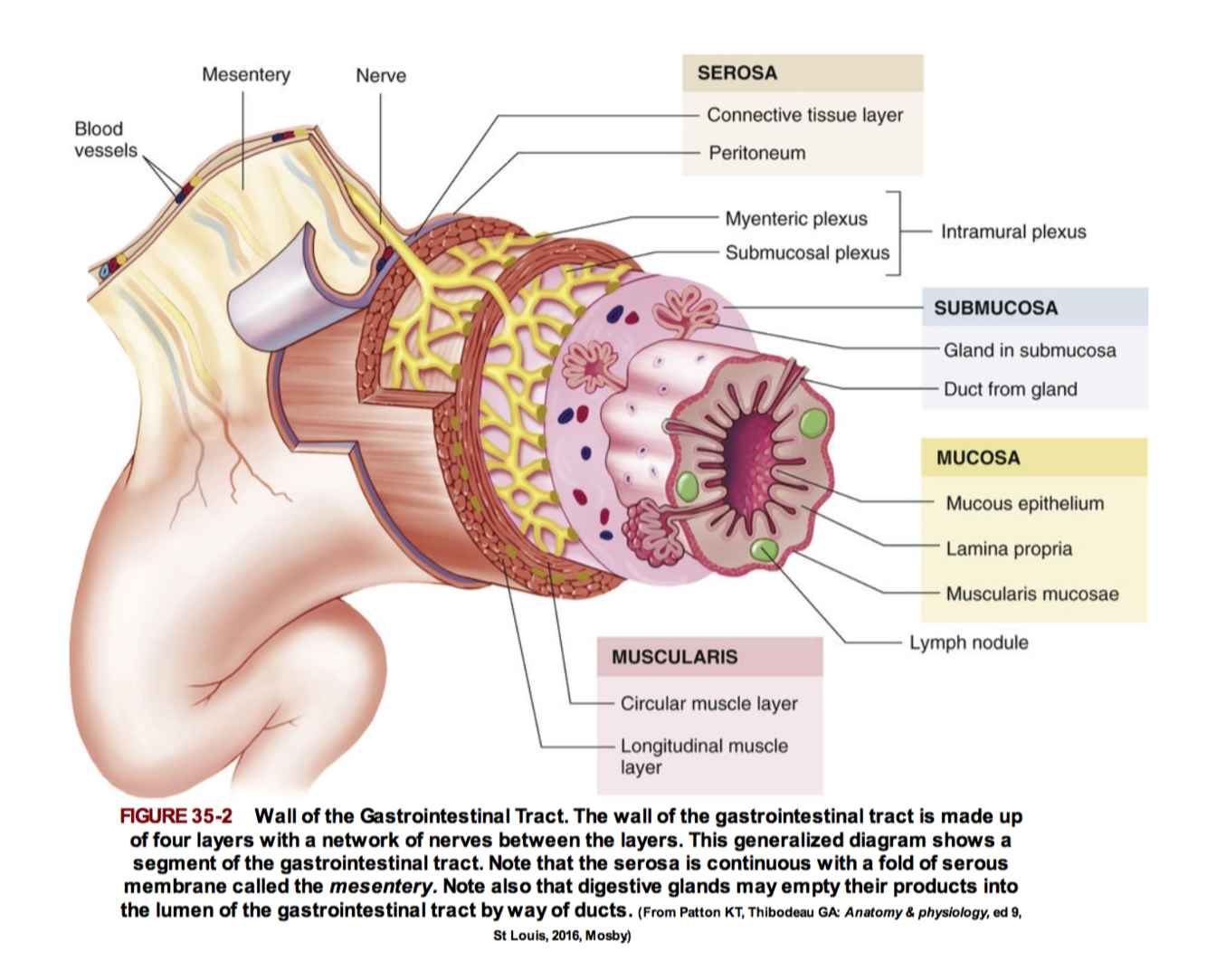
Structures involved: 3 pairs of salivary glands - submandibular, sublingual, parotid glands that collectively secrete ~1L of saliva/day
- Innervated by sympathetic and parasympathetic divisions to control salivation; not regulated by hormones (nervous system only)
- Gland stimulation: cholinergic parasympathetic fibers, β-Adrenergic stimulation from sympathetic fibers
- Gland inhibition: atropine (anticholinergic), makes mouth dry
Composition of Saliva: mostly water with mucus, sodium, bicarbonate, chloride, potassium, salivary α- amylase (ptyalin), an enzyme that initiates carbohydrate digestion in the mouth and stomach. Composition depends on rate of secretion.
Functions:
- pH ~7.4 to neutralize bacterial acids and prevent tooth decay
- also contains mucin, IgA and other antimicrobial substances to help prevent infection
- Mucin provides lubrication
- Exogenous fluoride (i.e. from drinking water) also secreted in saliva as additional protection against tooth decay
What structural components are involved with swallowing. Describe this process as if you were following a piece of food down to the stomach.
- once food passes the mouth, it enters the esophagus (hollow muscular tube ~25cm long that conducts food from oropharynx into stomach) and moves via peristalsis
- each end has a sphincter
- upper esophageal sphincter: keeps air from entering esophagus during respiration
- Lower esophageal sphincter (Cardiac sphincter): prevents regurgitation from stomach and caustic injury to esophagus. Normally constricted serving as a barrier between stomach and esophagus; relaxes with swallowing
- pharynx and upper 1/3 of the esophagus is striated muscle (voluntary) that is directly innervated by skeletal motor nueorns that control swallowing
- Lower 2/3s contain smooth muscle (involuntary) that is innervated by preganglionic cholinergic fibers from vague nerve
- fibers activated and coordinated by swallowing center in the medulla
What is peristalsis and when is it stimulated?
Definition: coordinated sequential contraction and relaxation of outer longitudinal and inner circular layers of muscles to move food throguh GI tract
How it works: stimualted when afferent fibers along the length of the esophagus sense changes in wall tension caused by food passing by and stretching the walls. The greater the tension, the greater the intensity of contraction. Intense contractions can cause pain similar to “heartburn” or angina
Swallowing is coordinated primarily by the swallowing center in the medulla. There are several phases that make up swallowing. Identify what the two phases are and describe what happens during each phase.
1) Oropharyngeal (voluntary) phase: takes <1 second
- Food is segmented into a bolus by the tongue and forced posteriorly toward the pharynx.
- The superior constrictor muscle of the pharynx contracts so the food cannot move into the nasopharynx.
- Respiration is inhibited, and the epiglottis slides down to prevent the food from entering the larynx and trachea.
2) Esophageal phase: takes 5-10 seconds, bolus moves 2-6cm/sec
- The bolus of food enters the esophagus.
- Waves of relaxation travel the esophagus, preparing for the movement of the bolus.
- Peristalsis, the sequential waves of muscular contractions that travel down the esophagus, transports the food to the lower esophageal sphincter, which is relaxed at that point.
- The bolus enters the stomach, and the sphincter muscles return to their resting tone.
Primary vs Secondary Peristalsis
primary peristalsis: peristalsis that immediately follows the oropharyngeal phase of swallowing
secondary peristalsis: if a bolus of food becomes stuck in the esophageal lumen, a wave of contraction and relaxation independent of voluntary swallowing occurs. This is a response to stretch receptor stimulation by increased wall tension which activates impulses from the swallowing centre of the brain.
Describe the structural components and functions of the stomach.
Structure: hollow, muscular organ below the diaphragm
- starts at the lower esophageal sphincter where food passes through the cardiac orifice at the gastroduodenal junction into the stomach
- other end: pyloric sphincter which relaxes as food is propelled through the pylorus/gastroduodenal junction into the duodenum
- innervated by sympathetic and parasympathetic divisions of ANS
- at rest, contains about 50ml of fluid and has no wall tension (everything is relaxed)
Function: stores food during eating, secretes and mixes food with digestive juices, propels partially digested food (chyme) into duodenum and small intestine
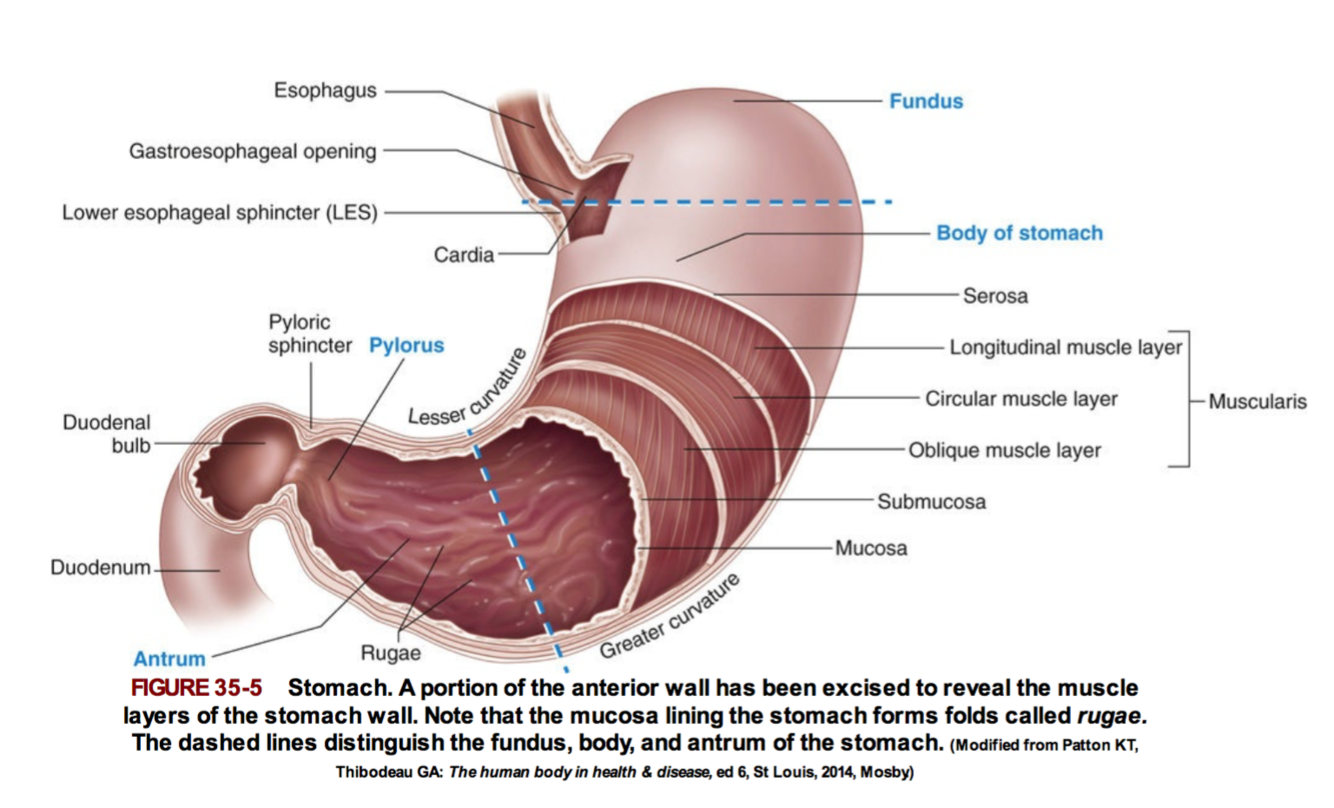
The functional areas of the stomach are:
fundus (upper portion)
body (middle portion)
antrum (lower portion)
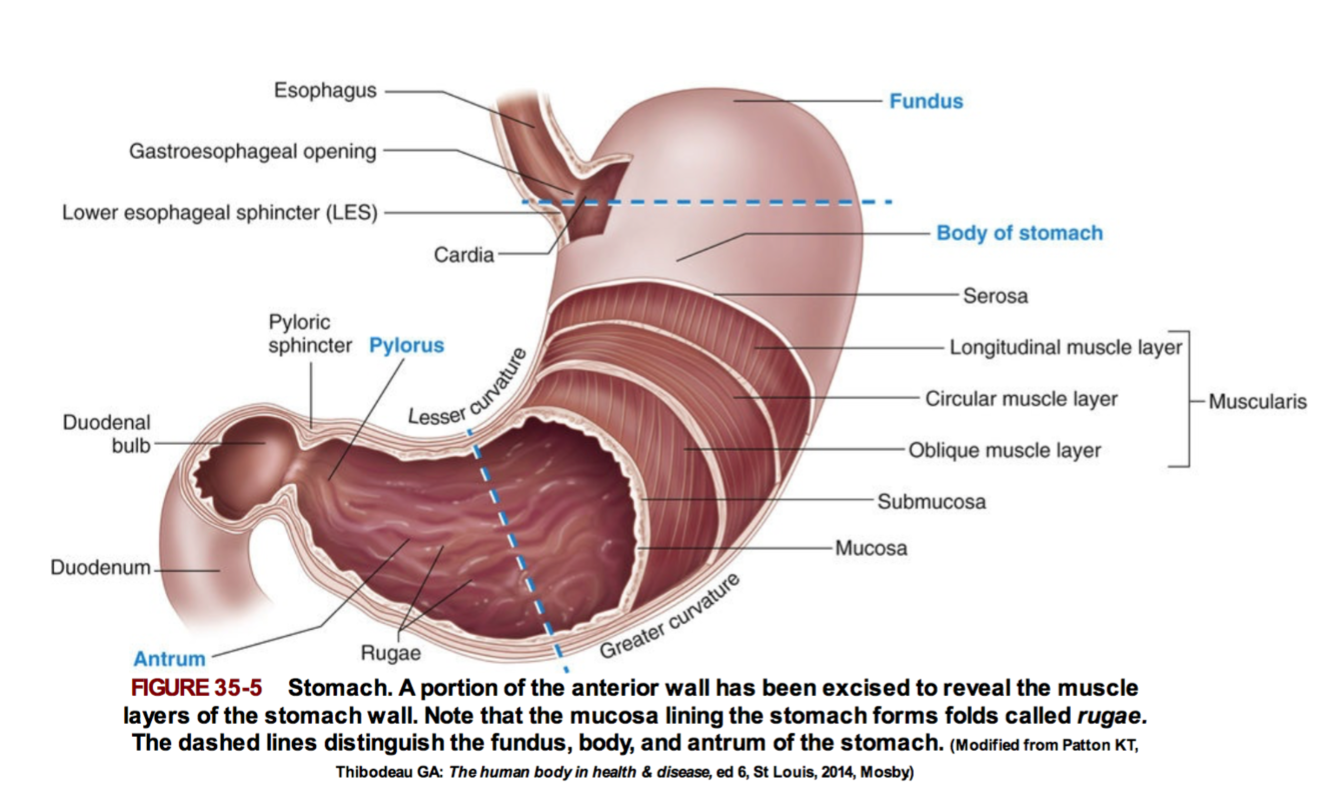
What are the three layers of smooth muscle that make up the stomach?
1) outer longitudinal layer
2) middle circular layer
3) inner oblique layer (the most prominent)
these layers become progressively thicker in the body and antrum where food is mixed and pushed into duodenum
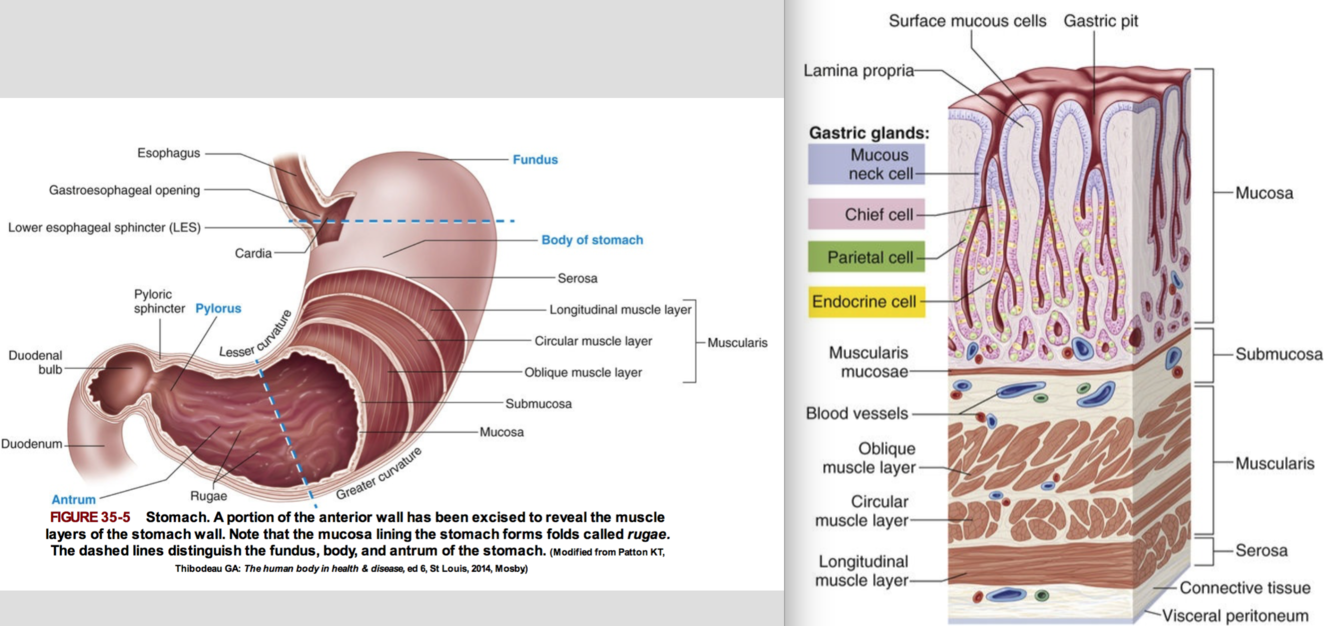
Describe the vasculature of the stomach
receives its blood supply from the celiac artery
abundant blood supply that ischemic changes will occur only after majority of the arterial vessels are blocked off
drains blood via small veins that empty into hepatic portal vein
What kind of effect does swallowing have on the stomach and what other hormones facilitate this process?
swallowing causes the fundus to relax (Receptive relaxation) to receive a bolus of food from the esophagus
relaxation coordinated by vagal fibers and facilitated by gastrin and cholecystokinin
Gastrin - describe its source of secretion, when it is stimulated, and what its action is.
Source: Stomach mucosa
Stimulus for secretion: presence of partially digested proteins in stomach
Action: stimulates gastric glands to secrete HCl, pepsinogen, histamine; growth of gastric mucosa
Cholecystokinin - describe its source of secretion, when it is stimulated, and what its action is.
Source: small intestine mucosa
Stimulus for secretion: presence of chyme (acid, partially digested proteins, fats) in duodenum
Action: Stimulates gallbladder to eject bile and pancreas to secrete alkaline fluid; decreases gastric motility; constricts pyloric sphincter; inhibits gastrin
What factors increase gastric motility/contractions?
- initiation of perstaltic waves (go from body to antrum) - rate ~3 contractions/min
- Gastrin, motilin, vagus nerve all increase rate of contraction by lowering threshold potential of muscle fibers
What factors decrease or inhibit gastric motility/contractions?
- sympathetic activity
- secretin
- both raise threshold potential










-
PCTH - ALS Intro (Auxiliary Directives)48
-
PCTH - Clinical Procedures5
-
Additional Directives36
-
Neonatal Resuscitation & Emergency Childbirth Medical Directives21
-
PCTH - Trauma Cardiac Arrest Medical Directive48
-
PCTH - Medical Cardiac Arrest Medical Directive22
-
PCTH - Cardiac Arrest Special Considerations34
-
PCTH - Opioid/Hypoglycemia/Adrenal Crisis Directives44
-
PCTH - Analgesia & Allergic Reaction43
-
PCTH - Cardiac Ischemia and STEMI Bypass63
-
PCTH - ACPE/CPAP37
-
PCTH - Croup/Bronchoconstriction36
-
Patho - Neurological System568
-
PATHO - Endocrine System153
-
PATHO - Urinary System144
-
PATHO - Digestive System217
-
PSYCH - Stress, PTSD, & Crisis Intervention59
-
PSYCH - Panic, Anxiety, Mood Disorders80
-
Differential Diagnosis - Altered LOA59
-
Differential Diagnosis - Trauma & Non-Traumatic Pain70
-
Differential Diagnosis - Allergies, Non-Traumatic Pain, Respiratory50
-
HALO - Term Test 1 Normal Childbirth112
-
HALO Term Test 2 - Birthing Complications77
-
PATHO - Reproductive System174
-
HALO - Term Test 3 (Pediatric & Neonatal Resuscitation, Bariatric, Geriatric)107



