The 5 general functions of the endocrine system
1) Differentiation of reproductive system and CNS in developing fetus
2) Stimulation of growth and development during childhood and adolescence
3) Coordination of the male and female reproductive systems (allowing sex reproduction)
4) Maintenance of internal environment
5) Initiating corrective/adaptative responses to emergency demands of body
Autocrine vs Paracrine vs Endocrine action
all are mechanisms of communication and control via hormones
Autocrine: hormones acting within a cell (i.e. on the cell that produced the hormone)
Paracrine: hormones acting on nearby cells
Endocrine: hormones acting on cells around the body via the circulatory system
Major Endocrine organs (9)
1) pineal gland
2) pituitary gland
3) parathyroid gland (on posterior surface of the thyroid gland)
4) thymus
5) thyroid gland
6) adrenal gland
7) pancreas
8) ovary
9) testis
All hormones share certain general characteristics, which include:
1) have specific rates & rhythms of secretion
- diurnal: during the day
- pulsatile and cyclic
- depending on level of circulating substrates
2) operate within feedback systems - negative or positive - for homeostasis
3) affect only target cells with specific receptors for the hormone and then act on these cells to initiate specific cell functions or activities
4) Excretion/inactivation
- steroid hormones - excreted via kidneys or metabolized by liver (inactives them and makes them more water soluble for renal excretion)
- peptide hormones - catabolized by circulating enzymes and eliminated in feces/urine
What are the different ways hormones can be classified?
structure
gland of origin
effects
chemical composition
Why do hormones get released (i.e. what happens in the body that would regulate the release of hormones)?
What mechanisms control this release?
Why they get released:
- 1) released to responsd to an altered cellular environment
- 2) released to maintain the level of another hormone/substance
Mechanisms regulating hormone release:
- 1) chemical factors (ex. blood glucose cause insulin release, calcium levels)
- 2) endocrine factors (ex. hormones from hypothalamus controlling pituitary hormones)
- 3) neural control (ex. ANS directly stimualting beta cells to release glucose)
Negative vs positive feedback
Negative feedback: when changes to chemical, neural or endocrine response to a stimulus DECREASE the synthesis/secretion of a hormone - maintains homeostasis/original steady state; most common
Positive feedback: when changes to chemical, neural or endocrine response to a stimulus INCREASES the synthesis/secretion of a hormone - moves system FURTHER away from original status
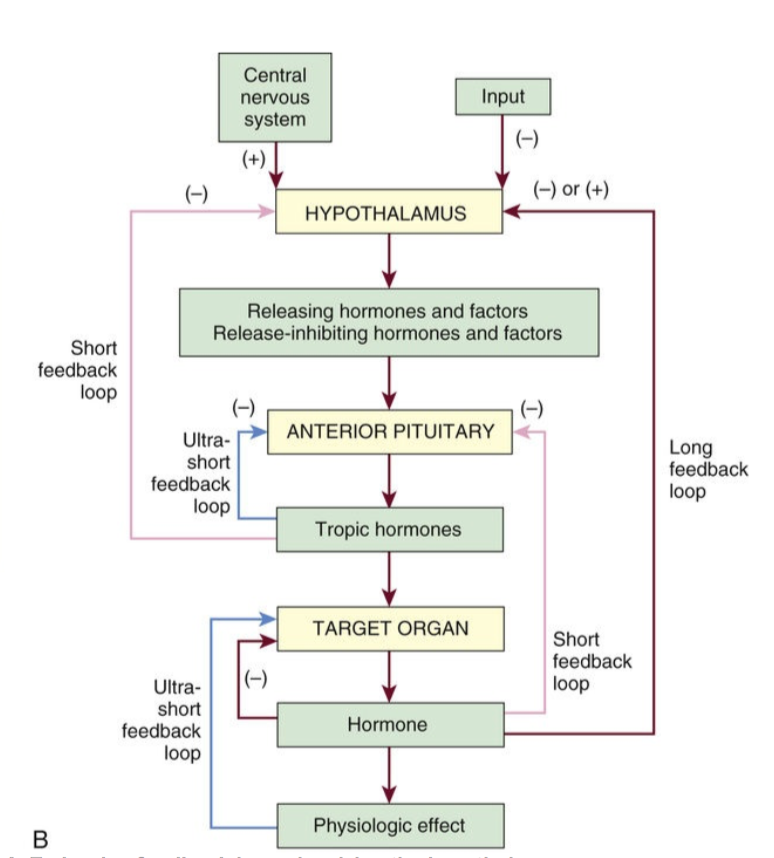
Describe the feedback loop between hypothalamus-pituitary axis (HPA) and the thyroid gland when T4 and T3 levels decrease, and whether this is a positive or negative feedback loop.
Negative feedback loop
1) ↓ serum levels of thyroxine (T4) and triiodothyronine (T3) stimulate secreation of thyrotropin-releasing hormone (TRH) from hypothalamus
2) TRH stimulates secreation of thyroid-stimualting hormone (TSH) from anterior pituitary
3) TSH stimulates synthesis and secretion of T3 and T4
4) T3 and T4 levels are now ↑ and generate negative feedback on the pituitary and hypothalamus to inhibit TSH and TRH synthesis
Negative feedback loops are possible at three levels, which are:
1) target organ - ultra short feedback loop
2) anterior pituitary - short feedback loop
3) hypothalamus - long feedback loop
Describe the feedback loop within the female reproductive cycle when estradiol levels increase, and whether this is a positive or negative feedback loop.
positive feedback loop
1) ↑ estadiol levels act on hypothalamus to release Gonadotropin Releasing Hormone (GnRH)
2) GnRH stimualtes release of follice-stimulating hormone (FSH) from anterior pituitary
3) FSH (and LH) cause ovaries to produce more estrogen, leading to ovulation
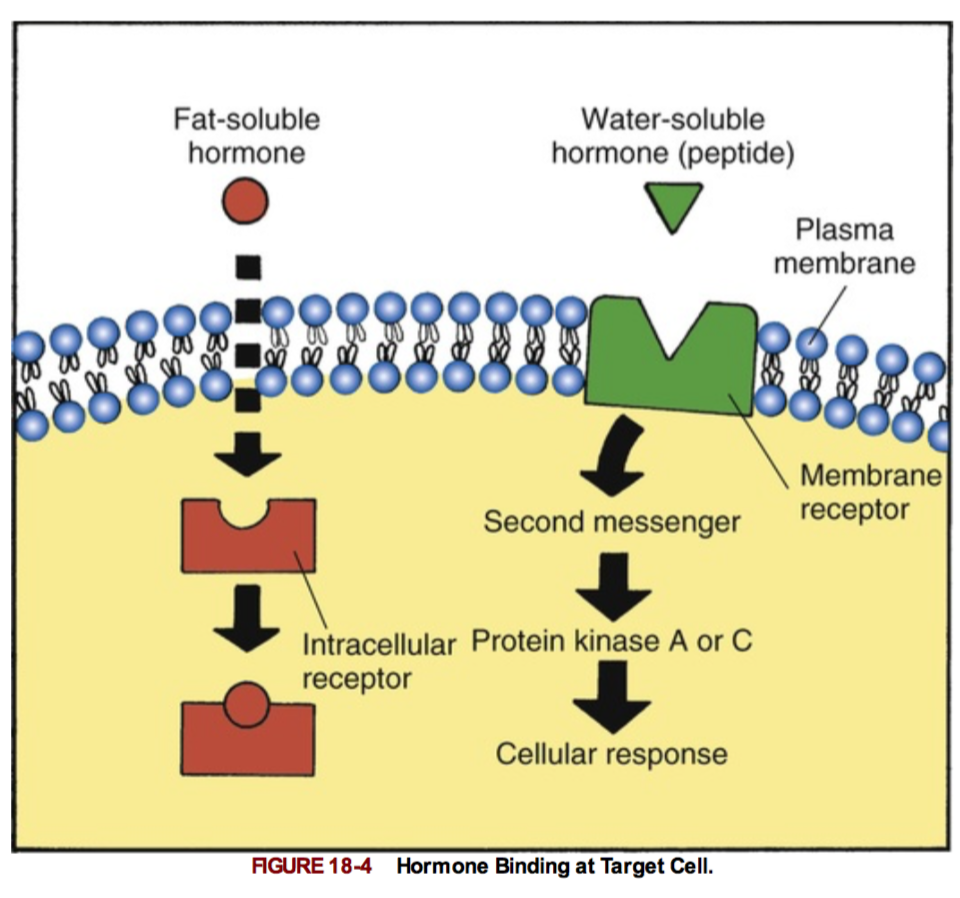
Water-soluble hormones vs lipid-soluble hormones
Describe how they are transported in the circulatory system and their half lie.
Water-soluble hormones:
- aka peptide hormones (protein hormones, catecholamines)
- circulate in free (unbound) forms - only these can signal a target cell (if they are bound to a carrier protein like lipid soluble hormones, they cannot)
- high MW, cannot diffuse across cell membrane - bind with receptors on or in cell membrane
- half-life typically seconds to minutes because they are catabolized by circulating enzymes
- ex. insulin
Lipid-soluble hormones:
- transported bound to a water-soluble carrier or transport protein
- can pass freely across plasma and nuclear membranes (via simple diffusion) & bind with cystolic or nuclear receptors (vit. D, retinoice acid, and thyroid hormones can also do this)
- hormone-receptor complex binds to a specific region in the DNA and stimulates specific gene exprsesion
- can remain in blood for hours to days
- ex. cortisol & adrenal androgens
What are target cells and what are the two main functions of the hormone receptors of the target cell?
Target cells: cells with appropriate receptors for THAT specific hormone
Two main functions:
- 1) to recognize and bind specifically and with high affinity to their particular hormones
- 2) to initiate a signal to appropriate intracellular effectors
Upregulation vs downregulation
Upregulation: low concentrations of hormones increase the number or affinity of receptors per cell
Downregulation: high concentrations of hormone decrease the number or affinity of receptors per cell
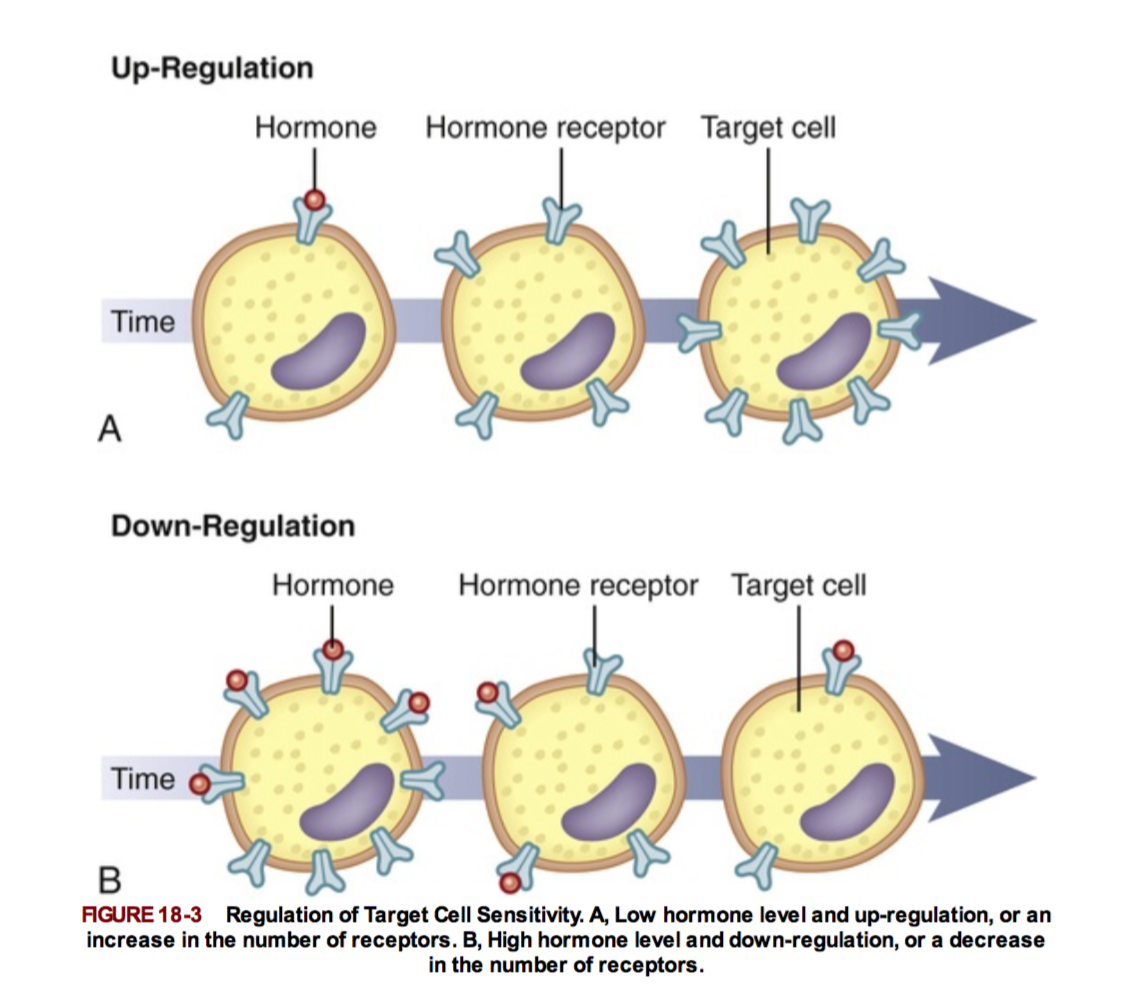
Cells are able to adjust their sensitivity to the concentration of a signaling hormone. How do they do this and what factors/phsyiochemical conditions may influence this sensitivity?
- sensitivity of the target cell to a specific hormone depends on # of receptors and/or their affinity for the receptors
- receptors are continuously synthesized and degraded, so their numbers on the cell surface can frequently change as well
- factors that affect their ability to do this:
- fluidity and structure of plasma membrane
- pH
- temperature
- Ion concentration
- Diet
- Presence of other chemicals (like drugs)
Describe how the regulation of hormone receptors on cells for glucose uptake is affected in NIDDM/Type 2 Diabetes.
In NIDDM, there is a decrease in insulin receptor sensitivity and hyperglycemia (so they need to be able to quickly increase their numbers of receptors to pick up as much insulin as possible to deal with the high sugar levels)
Direct effect vs Permissive Effect
ways in which hormones affect target cells
- Direct effect: obvious changes in cell function that are specifically a result from stimulation by a particular hormone
- ex. insulin directly affects skeletal muscle via insulin receptors to increase glucose uptake
- Permissive effect: less obvious hormone-induced changes that facilitate max response/functioning of a cell
- ex. insulin’s effect on mammary cells - facilitates response of mammary cells to prolactin
Where are the two locations that hormone receptors can be found?
a) in the plasma membrane
b) in intracellular compartment of the target cell
First messenger vs Second messenger
First messenger: the hormone that binds to the receptor on the plasma membrane that initiates a cascade of intracellular effects
- intiates signal transduction: the transmission of molecular signals from a cell’s exterior to its interior
Secondary messenger: intracellular molecules that relay signals received at receptors on the cell surface to the cytoplasm & nucleus of the cell and mediates effects of the hormone on the cell
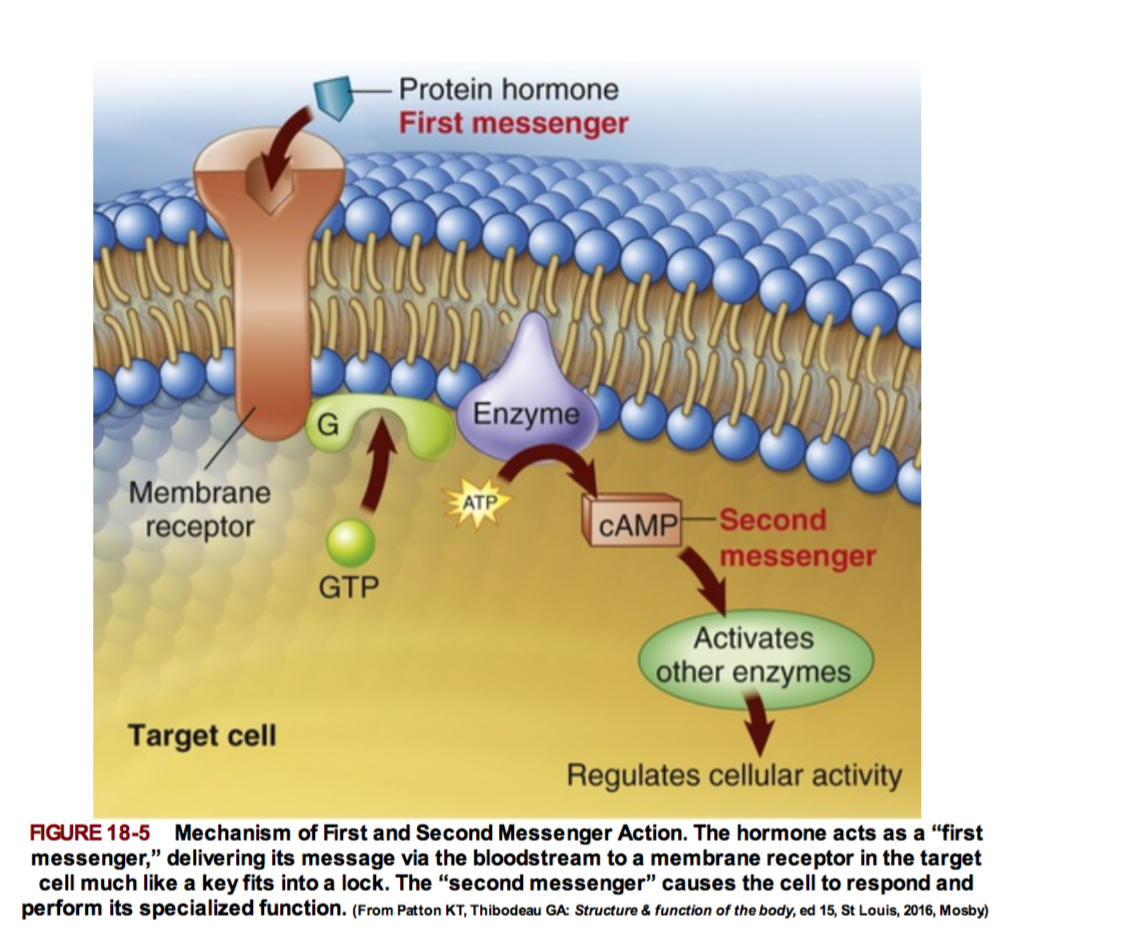
Second messengers include:
- cyclic adenosine monophosphate (cAMP)
- cyclic guanosine monophosphate (cGMP)
- calcium
- inositol triphosphate (IP3)
- tyrosine kinase system
What first messengers activate/increase cAMP levels to cause cell signaling?
adrenocorticotropic hormone (ACTH)
thyroid-stimulating hormone (TSH)
both^ cause cAMP levels to increase, which then activate protein kinases leading to phosphorylation of cellular proteins (which then either activates/deactivates intracellular enzymes and causing specific functions)
What first messengers result in the production of IP3. Describe the cellular cascade as a result of the first messengers triggering IP3.
First messengers: Angiotensin II, ADH
Cellular cascade: first messengers generate IP3 which then triggers a release of intracellular calcium ⇒ forms a calcium-calmodulin complex ⇒ mediates effects of calcium on intracellular activities that are crucial for cell metabolism and growth
Insulin, GH, and prolactin are first messengers that bind to surface receptors and activate which second messenger(s)?
second messengers of the tyrosine kinase family:
Janus family of tyrosine kinases (JAK)
signal transducers and activators of transcription (STAT)
With the exception of thyroid hormones, lipid-soluble hormones are synthesized from ___________________. These lipid-soluble hormones include:
cholesterol (i.e. hormones with “steroid” in the name)
androgens, estrogens, progestins, glucocorticoids, mineralcorticoids, vitamind D, retinoid
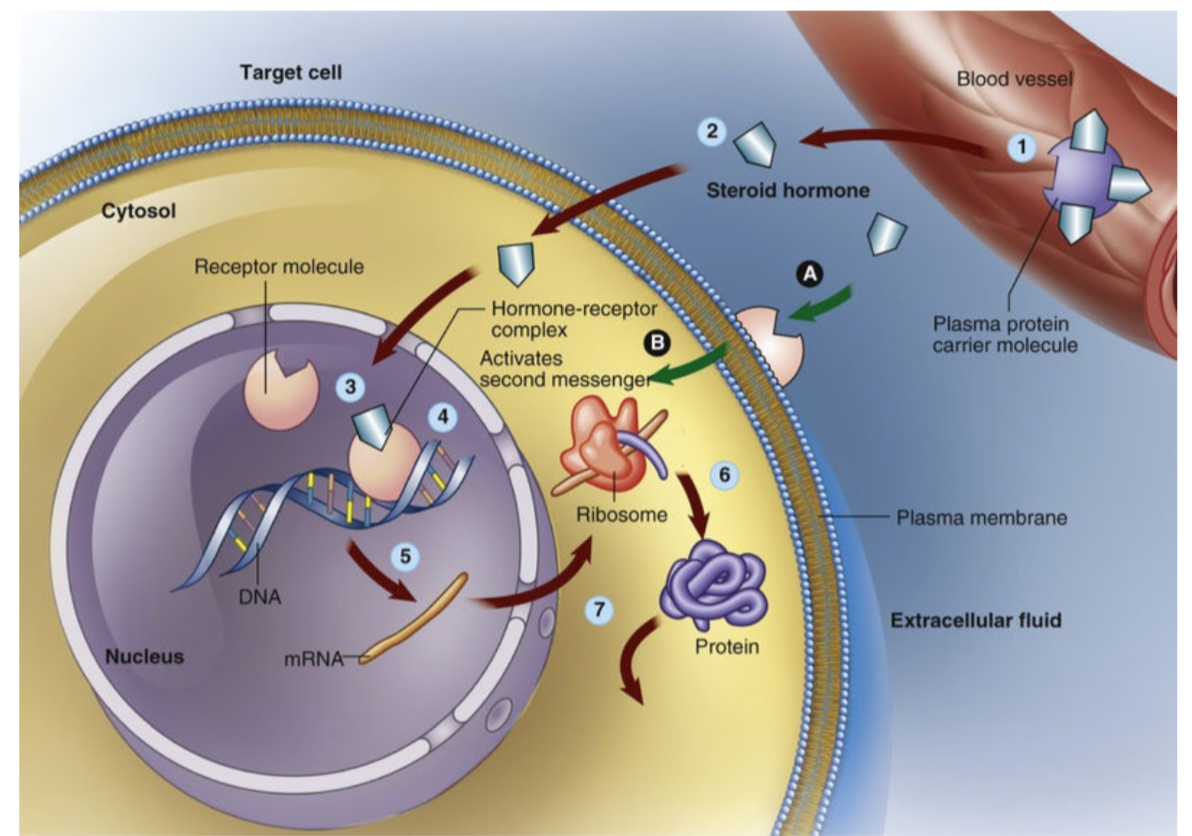
Describe the steroid hormone mechanism causing an effect on its target cell.
1) Lipid-soluble steroid hormone molecules detach from carrier protein & pass through plasma membrane
2) Hormone molecules then diffuse into the nucleus where they bind to a receptor to form a hormone-receptor complex
3) Hormone-receptor complex then binds to a specific site on DNA molecule
4) Triggers transcription of genetic information encoded there
5) Resulting mRNA molecule moves to the cytosol where it associates with a ribosome and initiate synthesis of a new protein
6) new protein now produces specific effects on the target cell





-
PCTH - ALS Intro (Auxiliary Directives)48
-
PCTH - Clinical Procedures5
-
Additional Directives36
-
Neonatal Resuscitation & Emergency Childbirth Medical Directives21
-
PCTH - Trauma Cardiac Arrest Medical Directive48
-
PCTH - Medical Cardiac Arrest Medical Directive22
-
PCTH - Cardiac Arrest Special Considerations34
-
PCTH - Opioid/Hypoglycemia/Adrenal Crisis Directives44
-
PCTH - Analgesia & Allergic Reaction43
-
PCTH - Cardiac Ischemia and STEMI Bypass63
-
PCTH - ACPE/CPAP37
-
PCTH - Croup/Bronchoconstriction36
-
Patho - Neurological System568
-
PATHO - Endocrine System153
-
PATHO - Urinary System144
-
PATHO - Digestive System217
-
PSYCH - Stress, PTSD, & Crisis Intervention59
-
PSYCH - Panic, Anxiety, Mood Disorders80
-
Differential Diagnosis - Altered LOA59
-
Differential Diagnosis - Trauma & Non-Traumatic Pain70
-
Differential Diagnosis - Allergies, Non-Traumatic Pain, Respiratory50
-
HALO - Term Test 1 Normal Childbirth112
-
HALO Term Test 2 - Birthing Complications77
-
PATHO - Reproductive System174
-
HALO - Term Test 3 (Pediatric & Neonatal Resuscitation, Bariatric, Geriatric)107



