Anatomy and histology of the ovary
Anatomy: Relations, blood supply
Histology: Tunica albug, Germinal epithelium, Cortex, Medulla, follicle
Causes of male and female infertility
Male (30 %):
- Pre-testicular: HPG related (hypogondism),
- Testicular: Environmental (smoking, obesity etc.); cryptorchidism; testicular torsion
- Post-testicular: Epipididymus, epididymal occlusion, immunological? CHECK THIS
Female
- Tubular (25 %): Adhesions and occlusions
- Anovulation (25 %): -gonadotropic -gonadism
Other causes (10 %) and unknown (10 %)
Folliculogenesis
Location, process (including related hormones), possible outcomes
Location: Folliculogenesis occurs in the cortex of the ovary
Process: The primordial follicle goes through a series of steps to achieve maturation. Approximately 5-6 follicles begin the folliculogenesis each cycle. The length of the follicular phase may vary whilst the luteal phase remains a constant 14 day period.
Primary follicle → secondary follicle → antral follicle (may progress to tertiary follicle) → Graafian follicle (mature ovum)
Antrum: A fluid filled cavity in the follicle. Contains secretions from granulosa cells
The most dominant follicle (may be due to high FSH receptor expression) is selected. The follicle becomes dominant and undergoes ovulation, which sees the perforation of the ovarian membrane and release of the oocyte into the abdominal cavity. The oocyte is captured by infundibular associated fimbrae.
The follicle becomes the progesterone secreting corpus luteum.
Associated hormones:
- Oestrogen is associated with the maturation of the follicle. Oestrogen is synthesised by granulosa cells of the follicle, in response to gonadotropins, FSH and LH.
- At 10 mm the follicle becomes FSH independent
FSH window is seen: This is where FSH levels peak. Follicles experience a ‘surge’ in growth. It is at this point that the follicle which displays dominance is selected - this is as the peak in FSH level persists for only a short period.
Possible outcomes:
Following ovulation the oocyte may be fertilised → zygote.
The corpus luteum maintains the endometrial linign through secretion of progesterone.
Once the placenta is established, 12-13 weeks, the corpus luteum becomes the corpus albicans.
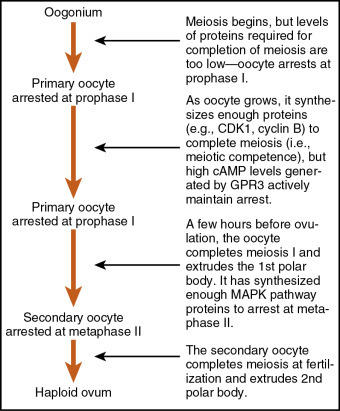
Gametogenesis
x
HPO disorders
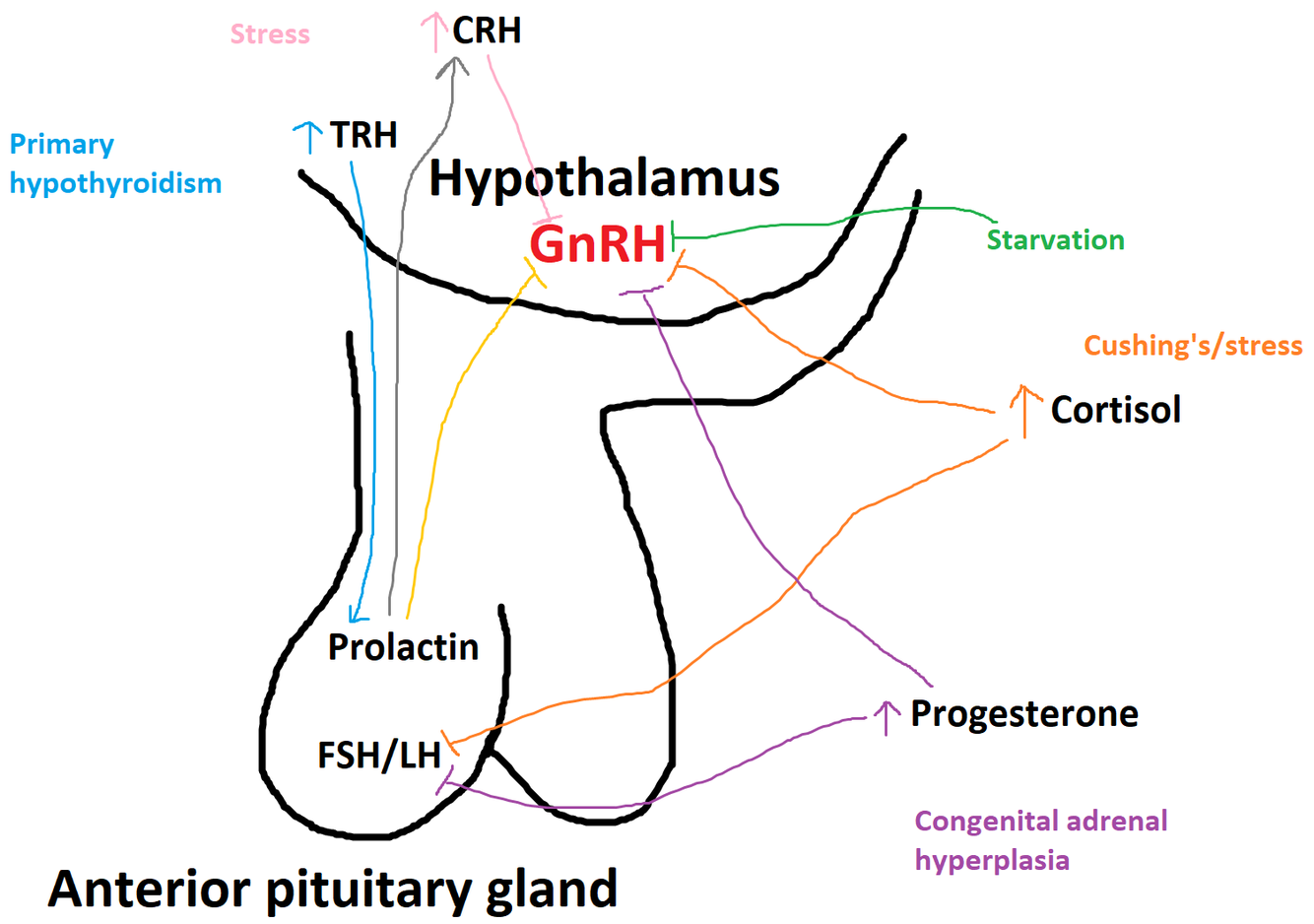
Possible causes
Stress, weight change (e.g. eating disorder), excessive exercise, PCOS, congenital adrenal hyperplasia, primary hypothyroidism
⋆ Can lead to luteal phase deficiency and infertility
Hypogonadotropic hypogonadism
Normogonadotropic normogonadism
Hypergonadotropic hypogonadism
Ovarian Physiology
Ovarian cycle: Follicular and luteal phases
- Ovarian folliculogenesis is under the infuence of gonadotropins FSH and LH
- FSH promotes the maturation of follicles and the eventual selection of the most dominant follicle
- Oestrogen creates a negative feedback on FSH, keeping FSH low. This ensures that the most FSH-responsive follicle is selected.
- LH promotes ovulation of the most dominant follicle, allowing for release of the oocyte
- The follicle secretes oestrogen during the follicular phase, alowing for the proliferation of the endometrium
- During the luteal phase the follicle remnant, corpus luteum, secretes progesterone. This allows for continued proliferation and secretion of the endometrium (decidualisation of the endometrium). The luteal is regular in length, 14 days. If no fertilisation occurs then the corpus luteum degenerates to the corpus albicans. If fertilisation occurs then the corpus luteum is maintained, through syncytiotrophoblast hCG secretion, until the placenta is established.
- AMH (anti-mullerian hormone) acts to inhibit folliculogenesis - KO = early menopause
- Ovarian theca cells express LH receptors and produce androgens in response to binding.
- Ovarian granulosa cells express high levels of FSH receptors. The granulosa cells convert the theca generated androgens to oestrogens oestradiol)
Physiology of conception
Ovum generation, intercourse, capacitation and fertilisation
- Secondary oocyte (arrested at metaphase II) enters the uterine tube
Intercourse
- Following ejaculation the spermatozoa enter the vagina and travel to the uterine tube
- The movement of sperm is facilitated by uterine and uterine tube contractions, resultant of prostaglandin (from semen) and oxytocin (from female orgasm) release
- Oestrogen causes contraction of the myometrium - helps propel sperm upward towards the oviduct
Capacitation of sperm
- Final maturation step for sperm - takes place in the female reproductive tract
- Cholesterol decreases, making membranes softer and more permeable to calcium (Ca2+), which in turn is essential for flagellum function
- Increase permeability to Ca2+ also allows for the facilitation of the acrosome reaction
- Hyperactivation of the flagellum
Fertilisation
- To acheive fertilisation the sperm must breach 3 barriers which surround the egg:
Expanded cumulus, zona pellucida and plasma membrane of the egg (oolemma)
- Digestion of cumulus cells: The sperm use membrane-bound hyaluronidase to digest the hyaluronic acid of the egg
- Binding of the zona pellucida: The sperm binds its ZP3 receptor to the zona pellucida. This triggers the acrosomal reaction.
- Acrosomal reaction: Inner sperm plasma membrane fuses with the outer acrosomal membrane, allowing the contents of the acrosomal vesicle to be released. The enzymes released from the acrosomal vesicle digest the zona pellucida.
- The sperm now binds to the oocyte via its ZP2 receptor whilst the acrosomal enzymes digest the zona pellucida. The sperm can now swim through to the egg plasma membrane. Enters the perivitelline space.
- Intracellular release of Ca2+ follows: Sperm PLC causes the production of IP3 which in turn allows Ca2+ release (as IP3 binds receptors on the ER and opens Ca2+ channels)
- The rise in Ca2+ allows cortical granules (from the oocyte) to translocate to the plasma membrane and release hydrolytic enzymes through exocytosis.
- This acts to prevent polyspermy, through preventing binding of acrosome-reacted sperm by modifying ZP2 receptors.
- The rise in Ca2+ also allows for the seondary oocyte to complete meiosis 2.
- http://www.pathophys.org/conception-and-pregnancy/#Conception
- Book: Endocrine and Reproductive Physiology
Puberty
Age of onset, secondary sexual characteristics, stages endocrine control
Age of onset: 8 - 13 females, 9 - 14 males
Secondary sexual characteristics:
- Axillary and pubic hair
- Genital enlargment
- Breast enlargment
Stages:
Female: Thelarche, pubarche, growth spurt menses
- Tanner stages
Males:
Endocrine control
- Increased pulsatile release of GnRH allows for the onset of menses
- This in turn allows for increased secretion of FSH and LH from the anterior pituitary gland and increased sex hormone synthesis
- The hypothalamus and anterior pituitary gland become less sensitive to negative feedback
Anovulation and relationship to obesity
Obese females are at increased risk of anovulation and infertility
- Increased oestrogen production (secretion from adipose tissue)
- Insulin resistance and hyperinsulinaemia allows excess insulin to act as a co-gonadotroph, allowing for increased production of gonadotrophs and hyperandrogenemia
- Hyperinsulinaemia also causes decreased levels of SHBG (sex hormone binding globulin) further increasing androgen levels
- Regulation of the HPO axis is disrupted
- Decreased leptin levels may also cause further disruption to the axis
Causes and features of amenorrhoea
Causes: Pregnancy, PCOS, infertility, hyperprolactaemia, eating disorders, stress, post-contraception withdrawal (progesterone), hypothyroidism, congenital adrenal hyperplasia, ovarian failure, chemo/radio-therapy
Features: Absence of menses for > than 6 months or for 3 menstrual cycles
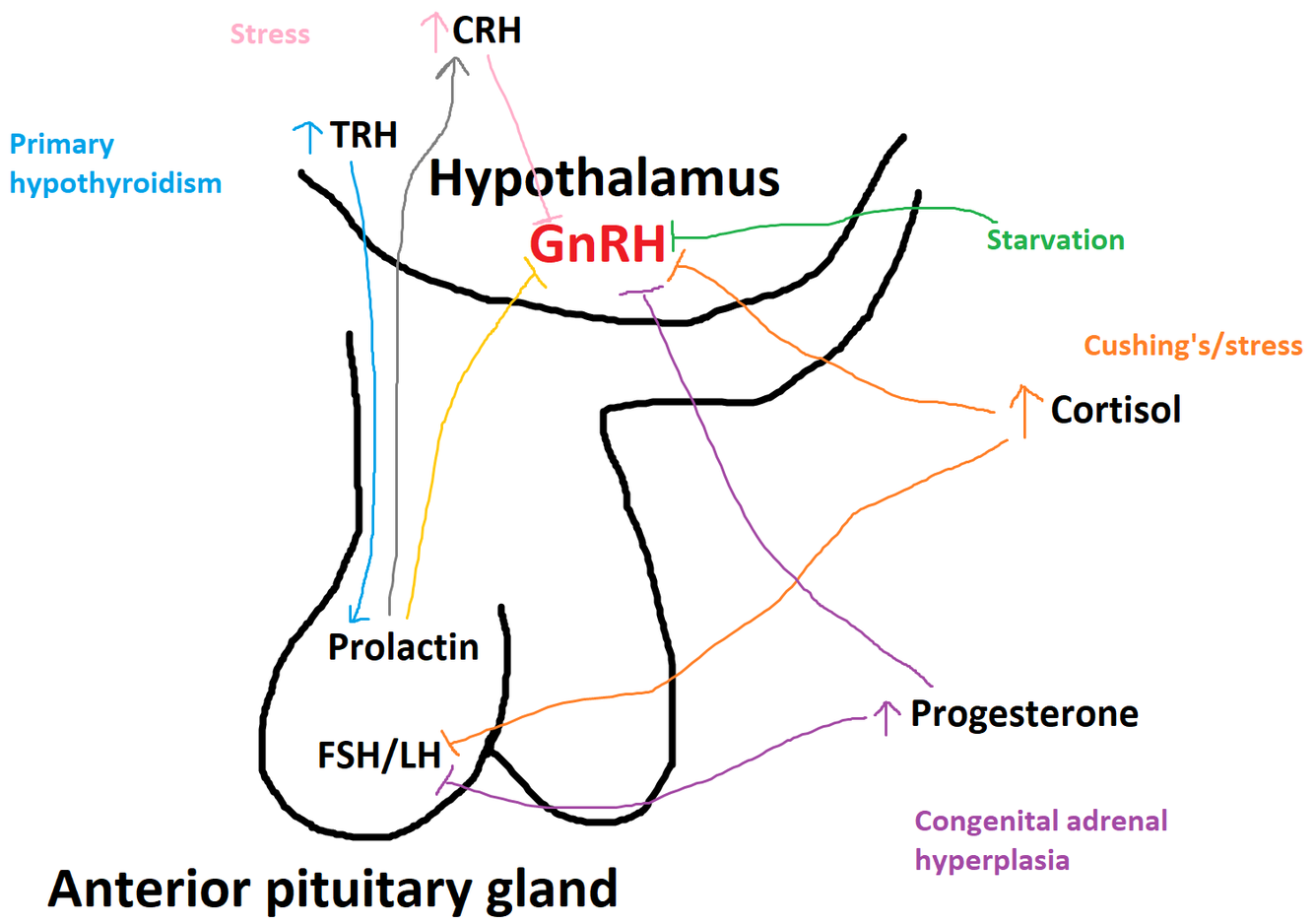
Control of fertility and infertility in males and females
Causes of infertility in females: Tubal (25 %) - adhesions, occlusions; ovulatory (25 %)
Causes of infertility in males: Pre-testicular, testicular and post-testicular
- Testicular: Hypogonadotropic hypogonadism, normogonadotropic normogonadism and hypergondaotropic hypogonadism
Hormone analysis
- May be performed through blood tests
- Suppression or stimulation tests
Tests for fertility, tubal patency and semen analysis
Fertility testing:
Includes FBC, chlamydia testing, ultrasound,
Tubal patency:
- HSG: Hysterosalpingogram
- HyCoSy
- Lap and dye
Semen analysis: Seminogram
Oligozoospermia: Low sperm count
Asthenozoospermia: Movement abnormalities
Teratospermia: Abnormal morphology
Azoospermia: No sperm in ejaculate
Polycystic ovary syndrome
Definition, features, diagnosis and long term consequences
Definition: A syndrome characterised by androgen excess and ovarian dysfunction
- Cysts observed are not true cysts but instead antral follicles arrested in development. May be caused by increased androgen levels which inhibit the production of oestrogen by aromatase
Features: Hirsutism, amenorrhoea, acne, weight gain, infertility, elevated blood pressure
Diagnosis: Rotterdam Criteria (at least 2 present)
- Oligo/amenorrhoea persisting for at least 2 years after menarhce
- Polycystic ovary morphology: Increased size and presence of 12 or > follicles in one ovary
- Biochemical hyperadrogenaemia
Long term consequences: T2DM, NAFLD, CVD, endometrial cancer
Ethical considerations: Termination of pregnancy and IVF
IVF:‘Excess’ embryos may be used for research; IVF increases the likelihood of multiple pregnancies (danger for mother); costs large amounts of money that may be spent elsewhere; places ‘strain’ upon the couple if it is unsuccessful
Termination of pregnancy: Allows maternal choice; is effectively ending a life;
Public health implications of STDs
x
Endocrinological basis on contraception
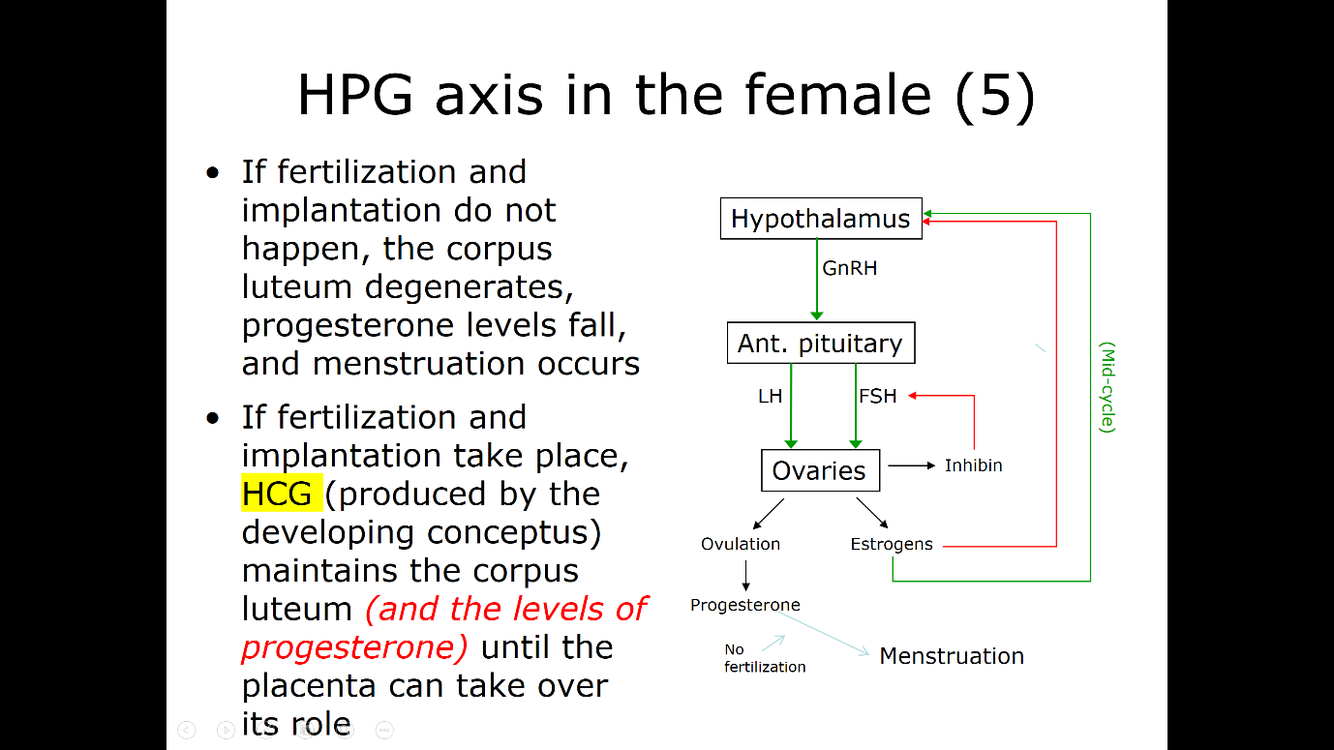
Targets the HPO axis, preventing the maturation of follicles and subsequent ovulation.
Oestrogen: Inhibits the secretion of FSH, through negative feedback on the HPO axis, preventing maturation of the follicle
Progesterone: Inhibits secretion of LH, preventing ovulation
- Progesterone decreases the pulsatile release of GnRH
Contraception inhibits ovulation via hormonal control.
Also acts to induce chances in the uterine environment, decreasing the likelihood of pregnancy. Decreases uterine tube peristalsis, endometrial proliferation and also causes the endometrium to be less receptive to implantation.
Menopause
Loss of fertility and ovarian function.
Average age: 51 y/o
Classified as menopause following 1 year after the LMP
Physiology: Oestrogen levels decrease, as follicle maturation ceases. Decreased oestrogen levels means negative feedback on the HPO axis is removed, leading to increased levels of FSH and LH.
Symptoms: Hot flashes, vaginal dryness, night sweats, acne, thinning hair, dry skin
STRAW +10 classification used: Reproductive, menopausal transition and post-menopausal stages
Causes of pelvic pain
PID: A combined infection of the fallopian tubes, ovaries and peritoneum
Salpingitis: Inflammation of the uterine tube
Endometriosis: Ectopic growth of endometrial tissue outside of the uterine cavity with cyclic bleeding abilty, leads to inflammation.
Adenomyosis: Growth of the endometrial tissue within the uterine myometrium.
Ectopic pregnancy:
Malignancy:
Iatrogenic e.g post-surgical adehesions
Ovarian and menstrual cycles: Stages
*Draw hormone level diagram*
Ovarian cycle:
Follicular: Associated with the growth and maturation of the follicle (contained in the cortex). Mediated by FSH. The follicle secretes oestrogen.
Luteal: Follows the ovulation, mediated by LH, of the follicle and release of the oocyte. The corpus luteum (remnant of the follicle) secretes progesterone, promoting the maintenance of the endometrial lining. Oestrogen levels also remain relatively high, allowing for further endometrial proliferation.
Menstrual cycle:
Proliferative: Oestrogen promotes the growth of endometrial stratum functionalis and the spiral arteries.
Secretory: Progesterone promotes endometrial secretion. The endometrium becomes more cork-screw like and the spiral arteries become more ‘coiled’. Mid-luteal a change from endothelial stroma to secretory decidual cells is seen - secrete glycogen and lipid droplets which provide nutrition for the embryo.
Outline the HPO axis
Causes of abnormal uterine bleeding (AUB)
Stuctural
Polyps
Adenomyosis
Leiomyoma (fibroids)
Malignancy
Functional
Coagulopathy
Ovulatory
Idiopathic
Not yet classified
Mechanism of action of steroid hormones
Early pregnancy and implantation (7.3)
Early pregnancy:
Fertlisation → Cell cleavage→Generation of 16 cell morula (day 3)→ Blastocyst forms (day 5) (out trophoblast and inner cell mass) → Shedding of the zona pellucdia (day 6) and adimplantation →bilaminar disk formation (inner cell mass → epiblast and hypoblast) → outer trophoblast layer gives rise to the cytotrophoblast and syncytiotrophoblast cells
Implantation:
Day 8 - Invasive syncytiotrophoblast cells secrete lytic enzymes and apoptosis inducing factors which allow for the invasion of the endometrium.
The syncytiotrophoblasts invade nearby blood vessels and glands. Blood filled lacunae form in the trophoblast layer. Can cause implantation spotting.
Day 13 - The blastocyst becomes embedded in the uterine endometrium and the uterine epithelium ‘seals’ the site of invasion.
The syncytiotrophoblast secretes hCG to maintain the progesterone secreting corpus luteum. Progesterone allows for maintenance of the endometrium. Once established the placenta will assume this role.



-
STIs (7.1)21
-
Module Workshops69
-
Gametogenesis (7.2)8
-
DUB, Ovarian Function and Anovulation (7.2)23
-
Cancers of the female reproductive tract and breast structure (7.1)16
-
Infertility (7.2)13
-
PBL Learning Objectives74
-
Pharmacology24
-
Puberty (7.2)10
-
Pre-natal nutrition, placenta and foetal membranes (7.3)8
-
Physiology and Pathophysiology of Pregnancy 7.325
-
Menarche, menopause and beyond (7.2)13
-
Conception and fertility (7.3)4
-
Anatomy of the male urogenital tract (7.4)7
-
Prostate pathology: BPH, prostitis and prostate cancer (7.4)11
-
Male Sexual Function and Dysfunction (7.4)5
-
Renal physiology: Function, structure and ultrafiltration (7.5)12
-
Assessment of kidney function and disease (7.5)14
-
Kidney pathology (7.5)28
-
Urinary Tract Infection (UTI) (7.5)14
-
Potassium Homeostasis (7.6)6
-
Renal Acid-Base Regulation (7.6)10
-
Menstrual Cycle (7.1)6
-
Nephrotic and Nephritic syndromes (7.7)9
-
Reabsorption (salt, water and glucose) and Osmoregulation (7.6)12
-
Diuretics: Complications and actions (7.6)6
-
Proteinuria (7.6)8
-
Chronic Renal Failure Pathophysiology (7.7)5
-
Disorders of ECV (7.6)4



