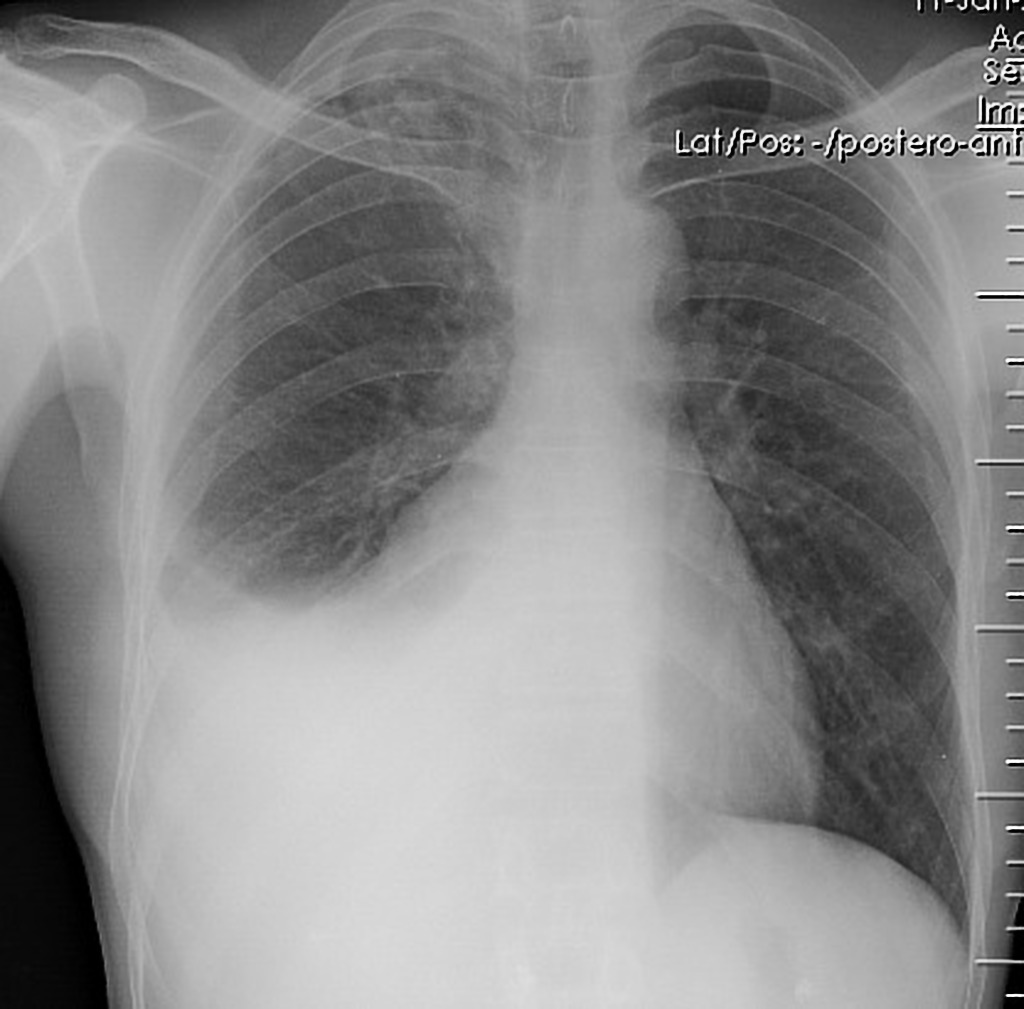
Pleural Effusion Main Features
Exudative - inflammatory (increased permeability) i.e. Malignancy, Pneumonia/TB/Empyema (ph <7.2, low glucose), PE etc. High protein (>30g/L) & LDH.
Transudative (changes to hydrostatic/osmotic forces) - non-inflammatory i.e. HF, RA, Cirrhosis, Hypoalbuminaemia (nephrotic, LD, Meig’s - triad of ascites, pleural effusion and rhs ovarian tumour), Hypothyroid etc. Low protein (<30g/L) & LDH.
Symptoms: Dyspnoea, Chest pain, Reduced exercise tolerance.
Signs: Tracheal deviation (away), Reduced chest expansion, Stony dullness to percussion, absent/reduced breath sounds on auscultation, reduced vocal fremitus.
Ix: PA CXR; blunting of costophrenic angle or white-out (large).
Management: ABCDE, US-guided aspiration, Intercostal drain, Pleurodesis with tetracycline/bleomycin (recurrent).
Asthma
A: Reversible airway obstruction
Symptoms: Wheeze, dyspnoea, cough (nocturnal), chest tightness, diurnal variation (worse in morning), atopy/FHx, worse after exercise or NSAIDs/BBlockers
Signs: Tachypnoea, Hyperinflated lungs, Hyper-resonance (air-trapping), Reduced air entry, Wheeze on auscultation.
Ix: Peak flow (variability >20%). FENO >40 adults or <35 in paeds
Tx: SABA (salbutamol) - ICS (beclometasone) - LABA (salmeterol); if no benefit stop and increase ICS dose - LRTA (montelukast), high-dose steroid or oral b2-agonist
Pneumonia Types
Symptoms: Fever, malaise (unwell), rigors, cough, purulent sputum, pleuritic chest pain, haemoptysis.
Signs: tachypnoea, tachycardia, hypotension, cyanosis, pyrexia, dullness to percussion, increased vocal resonance/tactile fremitus, bronchial breathing (high pitched), pleural rub.
CAP:
HAP (>48hrs admission): Pseudomonas aeruginosa, Staph. aureus, Enterobacteria.
Staph aureus: gram-positive cocci; IVDUs, Elderly or Influenza
Klebsiella: gram-negative aneorobic rod; ‘red-currant’ sputum, elderly, alcoholics & diabetics.
Mycoplasma: flu-like symptoms (arthralgia, myaligia, dry cough & headache), affects younger patients.
Legionella: Fever, myalgia and malaise followed by dyspnoea and dry cough. Associated with legionnaire’s disease. Patients exposed to poor hotel air conditioning.
Chlamydophila psittaci: contact with infected birds i.e. parrots, cattle, horse and sheep. Features include lethargy, arthralgia, headache, anorexia, dry cough and fever.
Pneumocystis: Immunosuppression (malignancy/chemo) or HIV positive (increased risk if CD4+ <200). Pneumocystis jiroveci (fingus). Symptoms include dyspnoea, dry cough and fever.
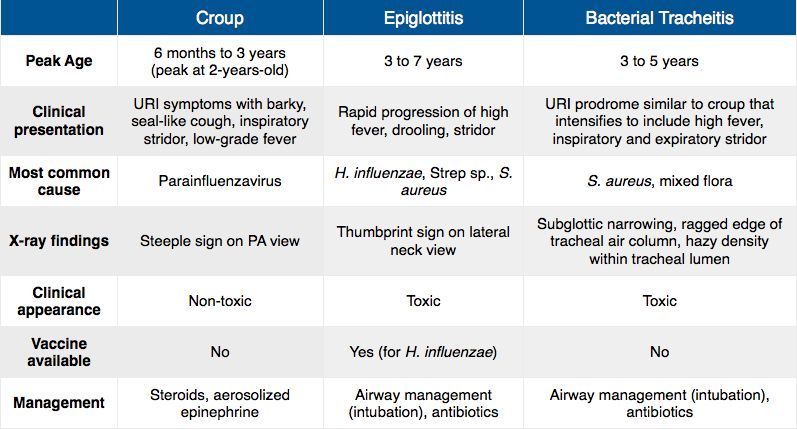
Croup vs. Epiglottitis
Croup: 6m-3yrs old. Parainfluenza. Inspiratory stridor. Seal-barking cough & hoarse voice. Low-grade pyrexia (upto 38.5). Keep child CALM. Dexamethasone 0.15mg/kg/dose regardless of severity (pred if unavailable). IF Moderate/Severe (biphasic stridor, irritability or reduced conciousness) then NEBULISED ADRENALINE 0.4ml/kg 1:1000, max 5mls) & high-flow Oxygen.
Epiglottitis (less common due to vaccination): 2-5 years. Staph aureus, H.Influenzae b (Hib), Pseudomonas spp. Moraxella catar., Mycobacterium tb. Rapid onset. Sore throat, odynophgagia, drooling, ‘hot-potato’ voice, fever. Manage with immediate senior involvement, DO NOT EXAMINE THROAT, oxygen, IV abx, endotracheal intubation may be required.
Bacterial Tracheitis:
Ashtma Attack
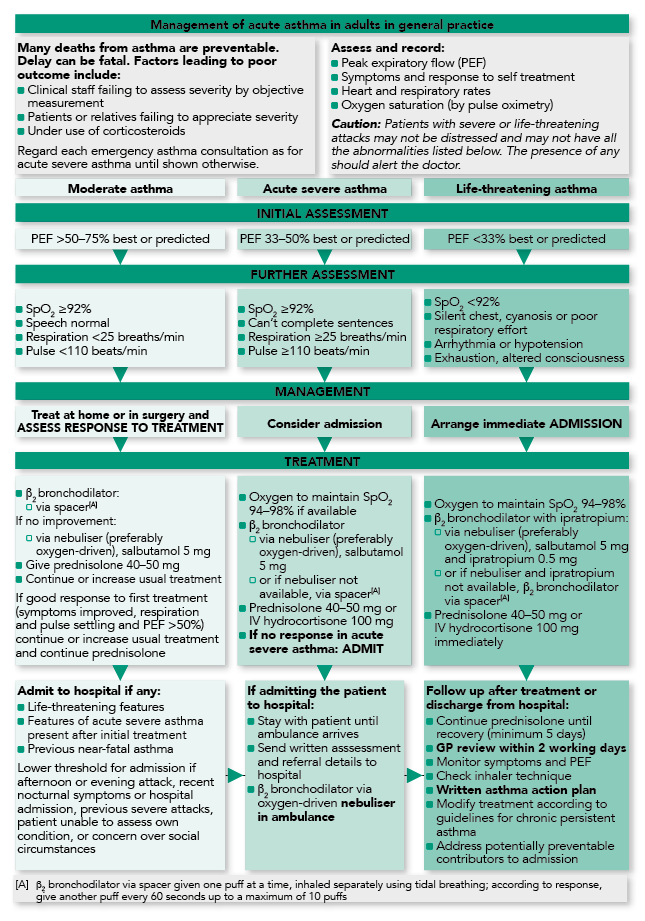
Severe: Inability to speak in complete sentences, RR >25, peak flow 33-50% predicted
Life-threatening: silent chest, confusion, bradycardia, cyanosis, exhaustion
Ixs: ABG, Bloods (FBC, CRP), CXR.
Management:
- Maintain airway (patency)
- Nasal cannula 6L O2; target O2 sats (94-98)
- Nebulised salbutamol (5mg) & ipratropium (0.5mg)
- Steroids (oral pred 40-50mg or IV hydrocortisone 100mg; severe)
- IV Mg Sulphate (severe) & IV aminophylline (severe)
CURB Score
To calculate the CURB-65 a point is awarded for each of the following:
- C – confusion: An abbreviated mental test of ≤8
- U – urea: >7mmol/L
- R - Respiratory rate: ≥30/ min
- B - blood pressure <90 systolic and/ or <60mmHg diastolic
- 65 - age: >65year old
The score also indicates the risk of mortality for a patient with pneumonia
- 0 – 0.7%
- 1 – 3.2%
- 2 - 13%
- 3 - 17%
- 4 - 41.5%
- 5 - 57%
A CURB-65 score of 0-1 requires home treatment, 2 requires consideration for hospital treatment, however 3-5 would need hospital admission alongside consideration for ITU referral.
Pneumonia Management
Management of patients with pneumonia consists of:
- Oxygen to keep O2 saturations above 94%
- Fluid management
- Analgesia if patients have pleuritic chest pain. Paracetamol 1g/6 hours (Max. 4g 24hours)
- Antibiotics can be given orally for patients who are not nil by mouth and are managed in the community. However, for severe pneumonia Intravenous route is required.
- Follow up appointments are organized for 6 weeks and CXR could be repeated at this time if there are complications or symptoms have not resolved.
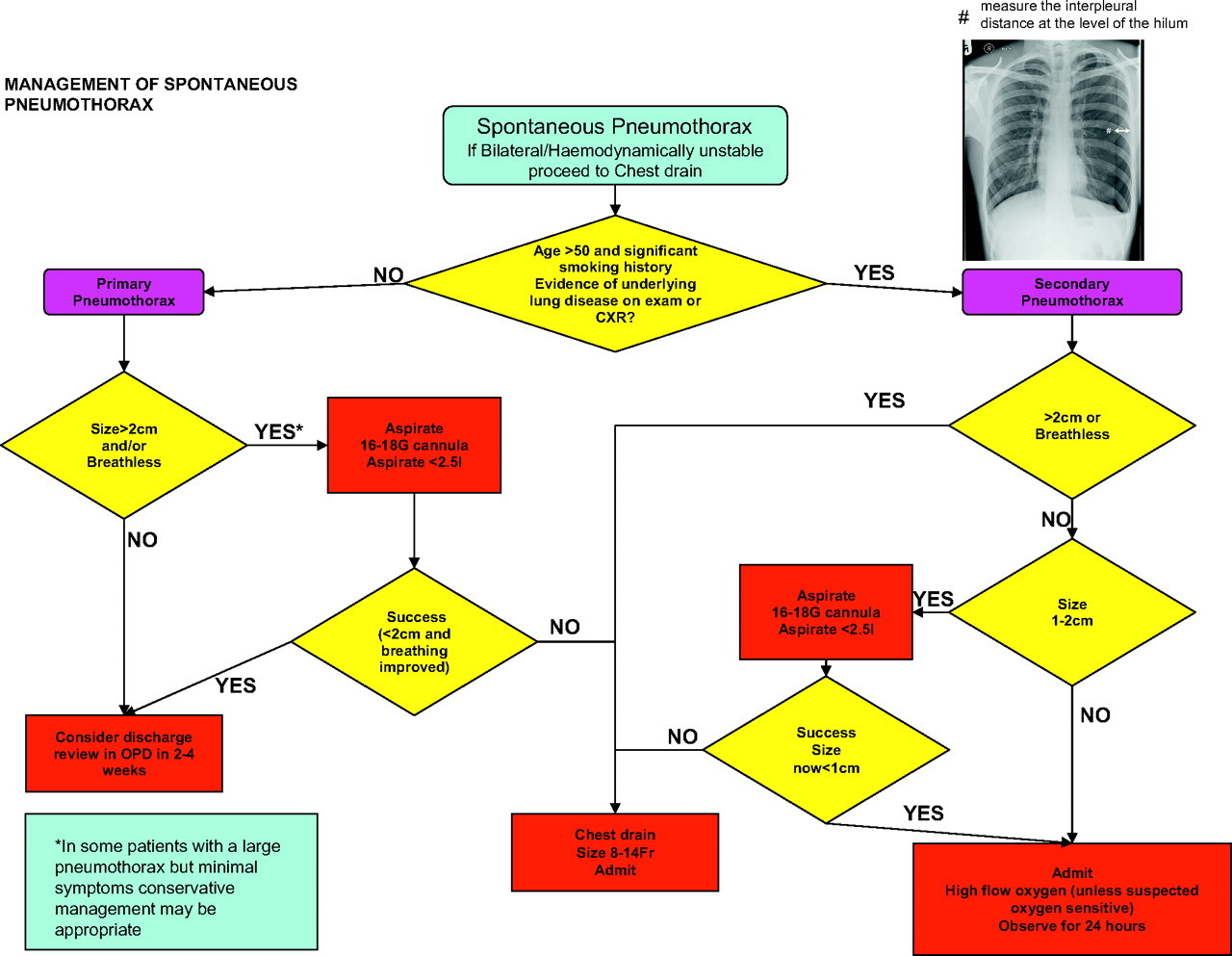
Pneumothorax
Symptoms: Sudden-onset SOB & Pleuritic chest pain.
Tension:
ABCDE, High-flow O2, Emergency needle decompression.
Primary (spontaneous):
<2cm and NO SOB then discharge & review in 2-4 weeks.
>2cm or SOB; Emergency needle decompression 16-18G cannula.
Secondary:
1-2cm and NOT SOB; Chest X-ray aspiration. Admit for 24hrs observation.
SOB or >2cm on CXR; intercostal drain & admit patient
Sarcoidosis
A: multi-system disease characterised by granuloma formation with widespread inflammatory changes and complications. Common in young adults and people of African descent.
Acute: Swinging fever, polyarthralgia, erythema nodosum (red shin nodules), and bilateral hilar lymphadenopathy. This is also known as Löfgren syndrome.
Chronic: Resp features of dry non-productive cough, dyspnoea, reduced exercise tolerance. Examination may reveal crepitations.
- Constitutional: fatigue, weight loss, arthralgia, and low-grade fever. General signs include lymphadenopathy and enlarged parotid glands.
- Neurological: meningitis, peripheral neuropathy, bilateral Bell’s palsy.
- Ocular: uveitis, keratoconjunctivitis sicca.
- Cardiac: arrhythmias, restrictive cardiomyopathy.
- Abdominal: hepatomegaly, splenomegaly, renal stones.
- Dermatological: erythema nodosum, lupus pernio (facial purple lesions).
Ix: Tissue-biopsy (lung, lymph nodes) is diagnostic revealing non-caseating granulomas. Raised ESR, ACE (not specific/diagnostic) & Ca. Reduced lymphocytes.
Management: Acute - bed rest & nsaids. Steroid tx; oral or IV dependent on disease severity. Immunosuppressants in severe disease.
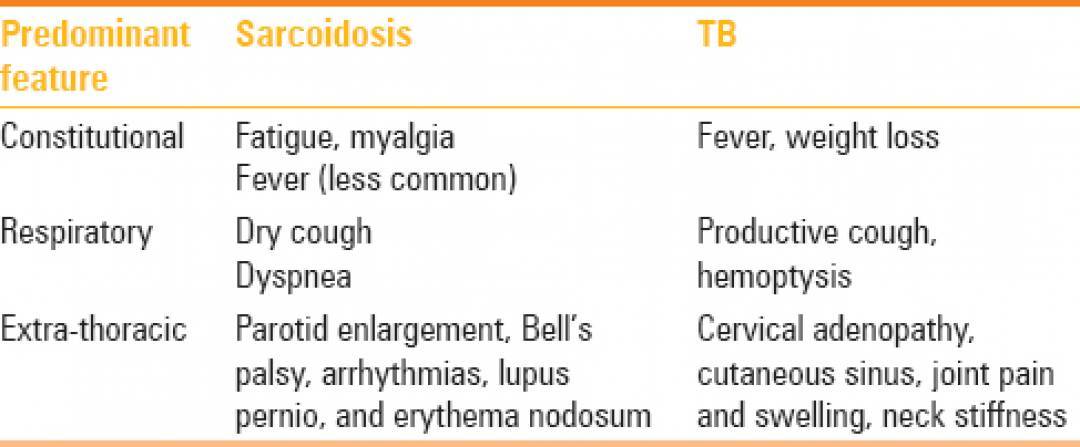
Sarcoidosis vs. TB
- Caseating (TB) vs. Non-Caseating (Sarcoidosis) Granulomas
- Productive cough & haemoptysis (TB) vs. Dry cough & Dyspnoea (Sarcoidosis)
- Fatigue & myalgia (TB) vs. Fever & Weight loss (Sarcoidosis)
COPD Management
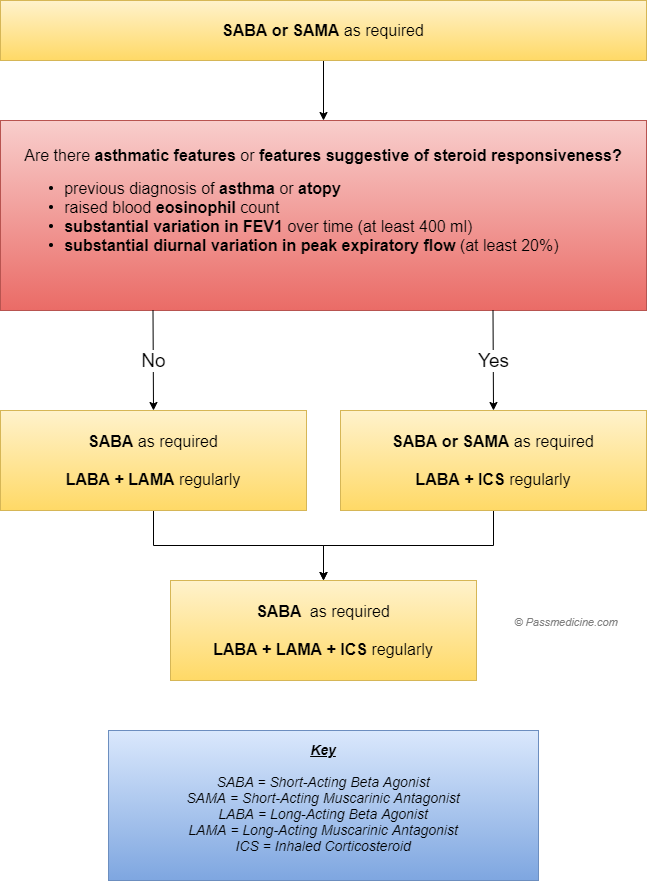
General: Smoking Cessation (nicotine replacement), annual influenza vaccine, pneumococcal vaccine (once), pulmonary rehab.
Pharmacological:
- SABA (salbutamol) or SAMA (ipratropium)
- IF NO Asthmatic features/steroid responsiveness then add LABA (salmeterol) + LAMA (tiotropium)
- IF Asthmatic features*/steroid responsiveness then add LABA + ICS (beclometasone)
- Oral prophylactic antibiotics; Azithromycin (requires ECG & LFTs due to >QT risk) recommended in select patients
if already taking a SAMA, discontinue and switch to a SABA
*Asthmatic/Steroid responsive features include:
- any previous, secure diagnosis of asthma or of atopy
- a higher blood eosinophil count - note that NICE recommend a full blood count for all patients as part of the work-up
- substantial variation in FEV1 over time (at least 400 ml)
- substantial diurnal variation in peak expiratory flow (at least 20%)
Acute exacerbation of COPD management
- Controlled O2 via venturi
- Nebulise Salbutamol & Ipratropium bromide
- Prednisolone PO STAT (7d)
- ABx (amoxicillin, clarith*. or doxy. if signs of pneumonia or purulent sputum), NIV, Aminophyline + ICU review
*Avoid in patients with long QT
NICE guidelines from 2010 recommend the following:
- increase frequency of bronchodilator use and consider giving via a nebuliser
- give prednisolone 30 mg daily for 5 days
- it is common practice for all patients with an exacerbation of COPD to receive antibiotics. NICE do not support this approach. They recommend giving oral antibiotics ‘if sputum is purulent or there are clinical signs of pneumonia’
- the BNF recommends one of the following oral antibiotics first-line: amoxicillin or clarithromycin or doxycycline.
Lung Cancer
Types:
Small Cell (SCLC) ~15-20%
- Small Cell Lung Cancer - central, associated with paraneoplastic syndromes (SIADH, Cushings, Lambert-eaton), aggressive, rapidly-growing
Non Small Cell (NSCLC) ~80-85%
- Squamous Cell - smokers, central and metastasise, hypercalcaemia,
parathyroid hormone-related protein (PTH-rp) secretion causing hypercalcaemia, clubbing, hypertrophic pulmonary osteoarthropathy (HPOA), hyperthyroidism due to ectopic TSH
- Adenocarcinoma - female non-smokers (but still occurs in ~80% smokers),
gynaecomastia, HPOA (long bones, painful)
Signs
- Weight loss/cachexia
- Clubbing
- Effusion/Collapse/Consolidation
- Monophonic wheeze (focal)
Symptoms
- Cough
- Haemoptysis
- SOB
- Recurrent chest infections
- Pain (if invaded chest wall)
Ixs:
CXR (mass, mediastinal widening, hilar lymphadenopathy, lobe collapse)
CT (staging)
Brochoscopy with biopsy (CT guided/VATS) - EBUS (central) or Transthoracic needle (peripheral)
Management:
- Radiotherapy
- Chemotherapy/Biologics (targeted)
- Surgery (NSCLC)
Refer individuals >40 years with haemoptysis (2 weeks)
Indications for urgent CXR
Aged 40 or greater with 2 of following (1 if smoker):
- Persistent Cough
- Fatigue
- SOB
- Chest pain
- Anorexia
- Weight loss
Organisms assoc. with Acute exacerbation of COPD
- Haemophilus influenzae (most common cause)
- Streptococcus pneumoniae
- Moraxella catarrhalis
Atelectasis
- Atelectasis is a common postoperative complication in which basal alveolar collapse can lead to respiratory difficulty. It is caused when airways become obstructed by bronchial secretions.
Features
- dyspnoea and hypoxaemia around 72 hours postoperatively
Management
- Position the patient upright
- Chest physiotherapy: breathing exercises
Interstitial Lung Disease
Upper Zones (CHARTS)
- *C**- Coal worker’s pneumoconiosis
- *H** - Histiocytosis/ hypersensitivity pneumonitis
- *A** - Ankylosing spondylitis
- *R** - Radiation
- *T** - Tuberculosis
- *S** - Silicosis/sarcoidosis
Lower Zones
- idiopathic pulmonary fibrosis
- most connective tissue disorders (except ankylosing spondylitis) e.g. SLE
- drug-induced: amiodarone, bleomycin, methotrexate
- asbestosis
Granulomatosis with Polyangiitis (GPA)
Features
- upper respiratory tract: epistaxis, sinusitis, nasal crusting
- lower respiratory tract: dyspnoea, haemoptysis
- rapidly progressive glomerulonephritis (‘pauci-immune’, 80% of patients)
- saddle-shape nose deformity
- also: vasculitic rash, eye involvement (e.g. proptosis), cranial nerve lesions
Investigations
- cANCA positive in > 90%, pANCA positive in 25%
- chest x-ray: wide variety of presentations, including cavitating lesions
- renal biopsy: epithelial crescents in Bowman’s capsule
Management
- steroids
- cyclophosphamide (90% response)
- plasma exchange
- median survival = 8-9 years

-
Cardiology90
-
Emergency8
-
Neurology19
-
Respiratory18
-
Ophthalmology79
-
Endocrine30
-
Reproductive Medicine39
-
Obstetrics & Gynaecology91
-
Infectious Diseases1
-
Surgery79
-
Ethics & Law0
-
Therapeutics76
-
ENT64
-
Psychiatry96
-
Dermatology76
-
Acute Medicine87
-
Paeds80
-
Haematology67
-
Renal Medicine87
-
Clinical Anatomy59
-
Clinical Imaging2



