describe damage by immune response seen in streptococci infection
- cross-reacting antibodies get deposited on normal tissue antigens
- e.g. Rheumatic fever
- immune complex deposition in organs
- e.g. glomerulonephritis
describe the cross-reacting antibodies seen in Rheumatic fever
- initial infection with specific strains of Streptococci causing sore throat or rarely skin infections
- lag period of 2-3 weeks after the initial infection
- antibodies generated to M protein of the bacteria cross-react with tissue glycoprotein in joints, heart, skin, etc.
- get deposited in the tissues and elicit inflammatory reaction at the site of deposition
- carditis: Aschoff bodes in the heart
acute rheumatic fever is a type ____ hypersensitivity
acute rheumatic fever is a type II hypersensitivity
in rheumatic fever, antibodies generated to ____ cross-react with tissue glycoprotein in joints, heart, skin, etc.
in rheumatic fever, antibodies generated to M protein of the bacteria cross-react with tissue glycoprotein in joints, heart, skin, etc.
they get deposited in the tissues and elicit inflammatory reaction at the site of deposition
in acute rheumatic fever, ____ are found in the heart
in acute rheumatic fever, Aschoff bodies are found in the heart
patients with rheumatic fever then develop fever, ________ (5 other symptoms)
patients with rheumatic fever then develop fever, polyarthritis, carditis, chorea, skin nodules, erythema (ACCNE)
in rheumatic fever ____ and ___ would be elevated
in rheumatic fever ASO titer and ESR would be elevated
rheumatic carditis can become chronic and lead to _____
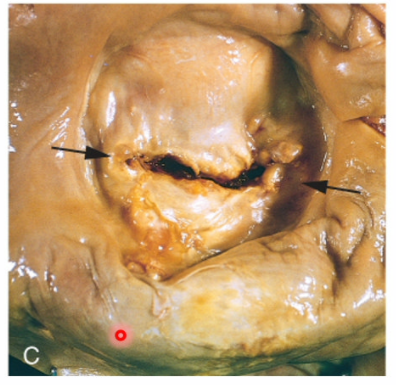
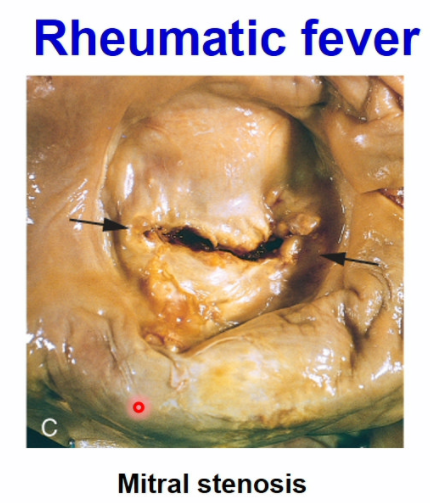
rheumatic carditis can become chronic and lead to mitral stenosis
describe what is seen in the image
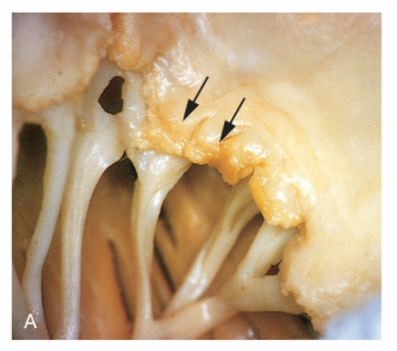
acute vegetation of the mitral valve with fibrosis of the chordae tendineae
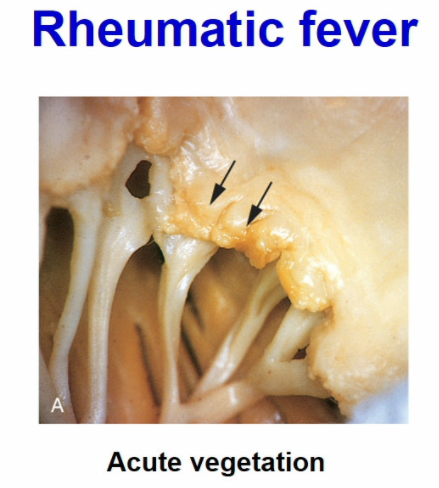
describe what is seen in the image
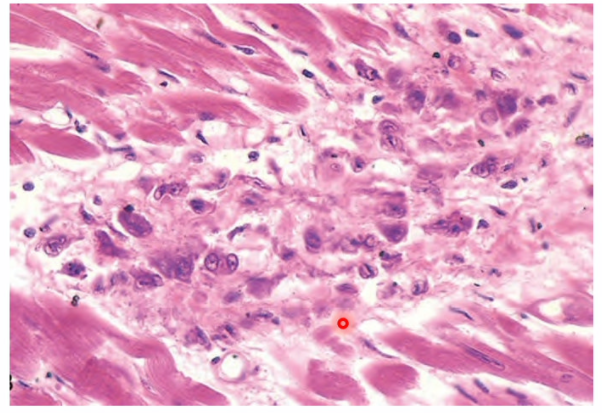
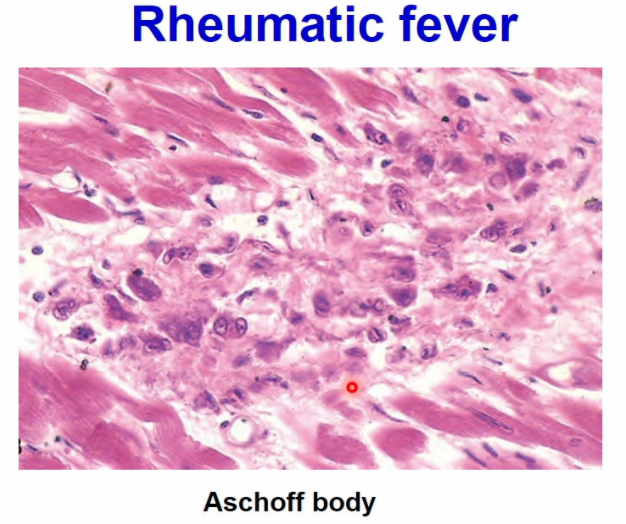
describe what is seen in the image
describe post-streptococcal glomerulonephritis
immune complex mediated
- initial infection with specific strains of Streptococci causing skin infections or rarely sore throat
- lag period of 1-4 weeks after the initial infxn
- then develop acute malaise, fever, oliguria, hematuria, azotemia (increased BUN, creatinine and decreased GFR), hypertension
in post streptococcal glomerulonephritis, immune complexes get deposited in the _____ of the _____
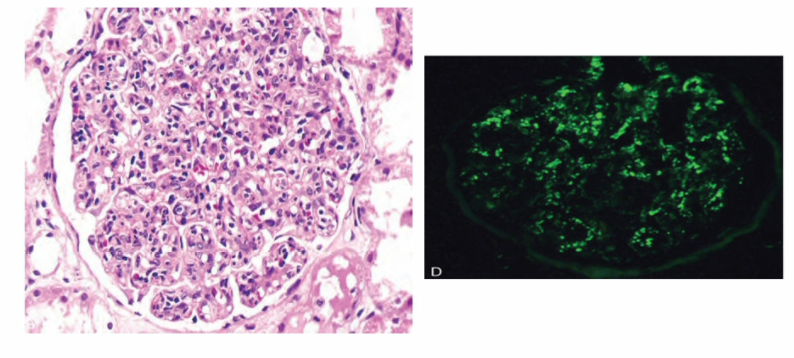
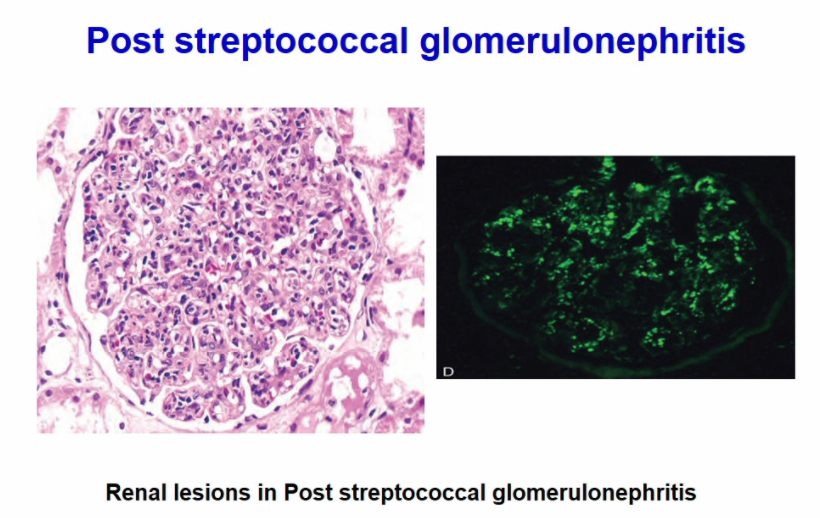
in post streptococcal glomerulonephritis, immune complexes get deposited in the basement membrane of the glomeruli
describe what is seen in the image
describe the etiology of diphtheria
- etiology:
- corynebacterium diphtheria: G+ve rod
- commonly affect children
describe the pathogenesis of diphtheria
- pathogenesis:
- toxin inhibits protein synthesis by ADA-ribosylation of protein synthesis
- affects the pharynx and tonsils and leads to necrosis of the mucosa
- the necrotic cells, bacteria, PMN and exudate form pseudomembrane (can block the airway)
describe the clinical features of diphtheria
- clinical features:
- fever, dysphagia
- lymph nodes enlargement in the neck (Bull neck)
- laryngeal edema (may need tracheotomy)
- adherent thick gray material covering the tonsils and pharynx
describe complications of diphtheria
- C. diphtheriae can produce powerful exotoxins
- this can cause myocarditis which can lead to heart failure (3 weeks) and spinal nerve paralysis
_______ is an antibiotic-associated colitis
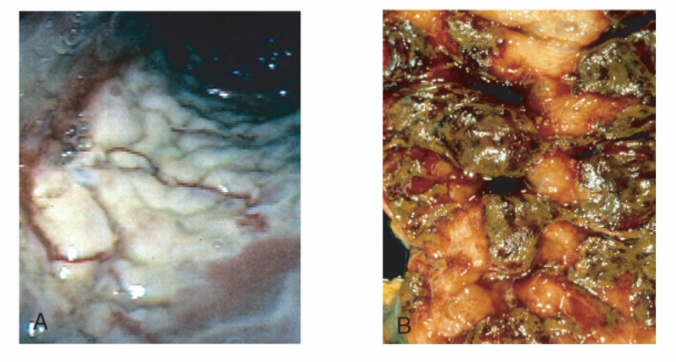
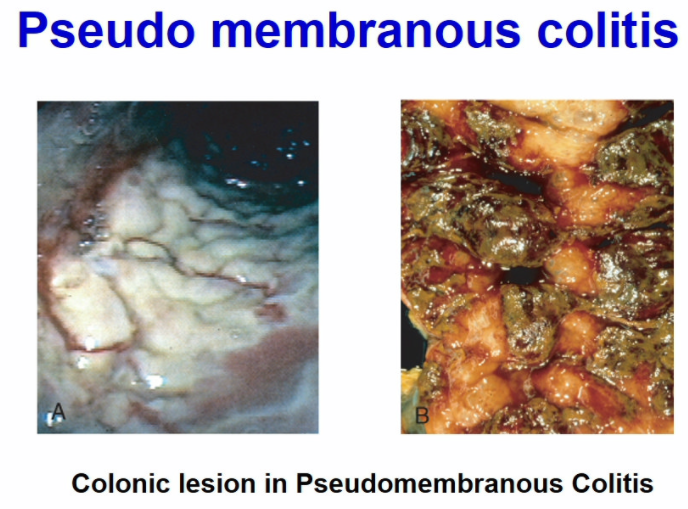
pseudomembranous colitis is an antibiotic-associated colitis
describe the etiology of pseudomembranous colitis
- etiology:
- Clostridium difficile (G+ve bacillus)
describe the pathogenesis of pseudomembranous colitis
- pathogenesis:
- broad spectrum antibiotics eliminate normal flora of the gut that normally afford protection
- classically seen with the use of Clindamycin, cephalosporin, amoxicillin, ampicillin
- severe mucosal suppurative inflammation (multiple ulcers) which leads to necrotic mucosa that forms a pseudomembrane (seen on colonoscopy)
- colitis and pseudomembrane result from bacterial production of large amount of enterotoxins
- broad spectrum antibiotics eliminate normal flora of the gut that normally afford protection
an investigation for pseudomembranous colitis is ____ in the stool
an investigation for pseudomembranous colitis is C. difficile in the stool
describe the clinical features of pseudomembranous colitis
- clinical features:
- fever, abdominal cramps and diarrhea (watery, with/without blood)



-
Pathology of Infections I23
-
Pathology of Infections II29
-
Streptococci28
-
Gram Negative Bacteria37
-
Viral Infections23
-
Fungal Infections34
-
Tuberculosis and Leprosy33
-
Lungs22
-
Obstructive Lung Diseases34
-
Restrictive Lung Diseases25
-
Pneumonias22
-
Vascular Diseases of the Lung27
-
Lung Cancer44
-
Cardio I12
-
Ischemic Heart Disease44
-
Valvular Diseases45
-
Non-Ischemic Myocardial Disease38
-
Congenital Heart Disease27
-
Tumors of the Heart and Hypertension25
-
Vasculitis40
-
Aneurysms and Dissection25
-
Environmental5
-
Environmental II29
-
Environmental III13
-
Immunopathology I17
-
Immunopathology II43
-
Immunopathology III20
-
Pericarditis & Atherosclerosis22



