Different proteins involved in the canonical and non-canonical NF-kappaB signaling pathways
-Williams
Canonical
NF-kappaB homo/hetero dimers
- RelA
- p105 (degrades to –>) p50
IkappaB proteins: anchor NF-kappaB in the cytoplasm
- IkappaBalpha
IKK proteins
- NEMO
- not a kinase
- component of signalsome
- IKK2
- kinase
- phosphorylates IkappaBalpha to mark for degradation
Non-Canonical
NF-kappaB homo/hetero dimers
- RelB
- p100 (degraded to –>) p52
NO IkappaB proteins
IKK proteins
- IKK1
- kinase
- phosphorylates p100 to mark for partial degradation into p52
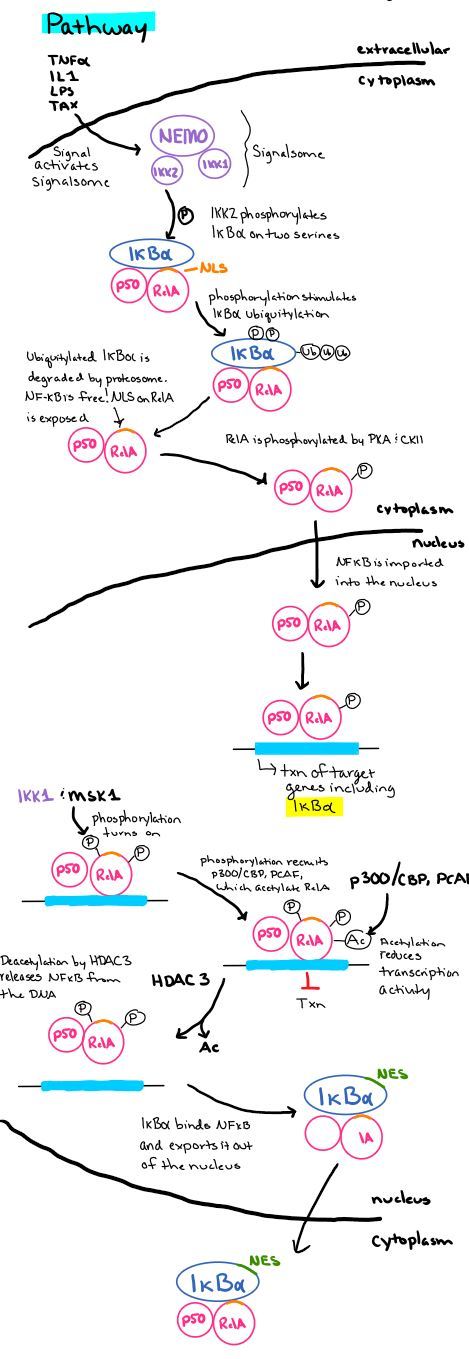
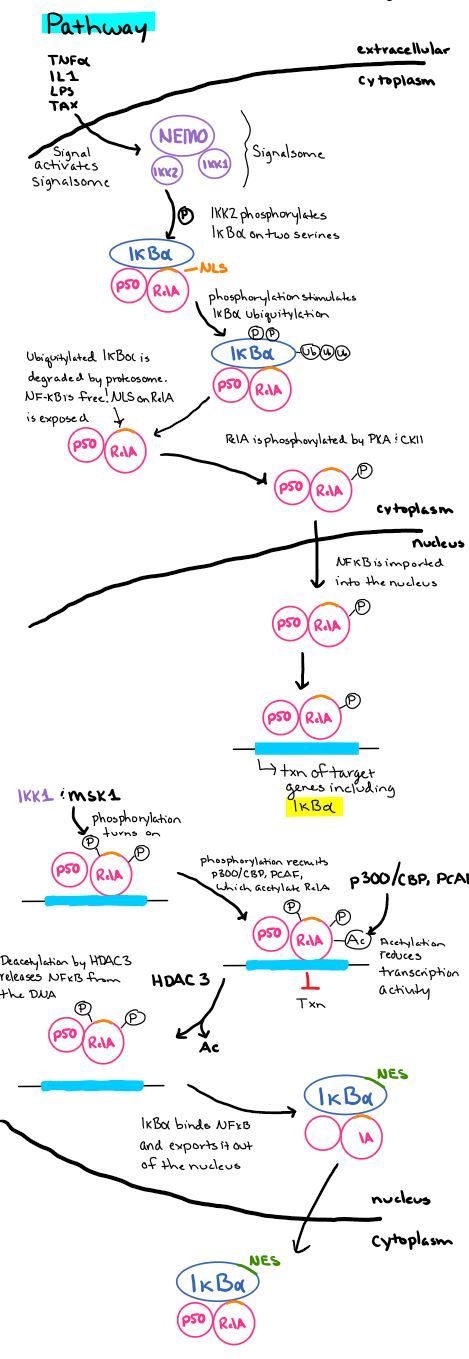
Canonical NF-KB signaling pathway
-Williams
- Signal activates signalsome (NEMO, IKK2, IKK1)
- IKK2 phosphorylates IKBa on two serines
- Phosphorylation stimulates IKBa ubiquitylation
- Ubiquitylated IKBa is degraded by protesome and NF-KB (p50, RelA) is free! NLS on RelA is exposed
- RelA is phosphorylated by PKA & CKII
- NF-KB is imported into the nucleus, where it initiates transcription of target genes including IKBa.
To get out of the nucleus:
- IKK1 and MSK1 phosphorylation recruits p300/CBP,PCAF, which acdetylate RelA
- Acetylation reduces transcription activity
- Deacetylation by HDAC3 releases NF-KB from the DNA
- IKBa binds NF-KB and exports it out of the nucleus
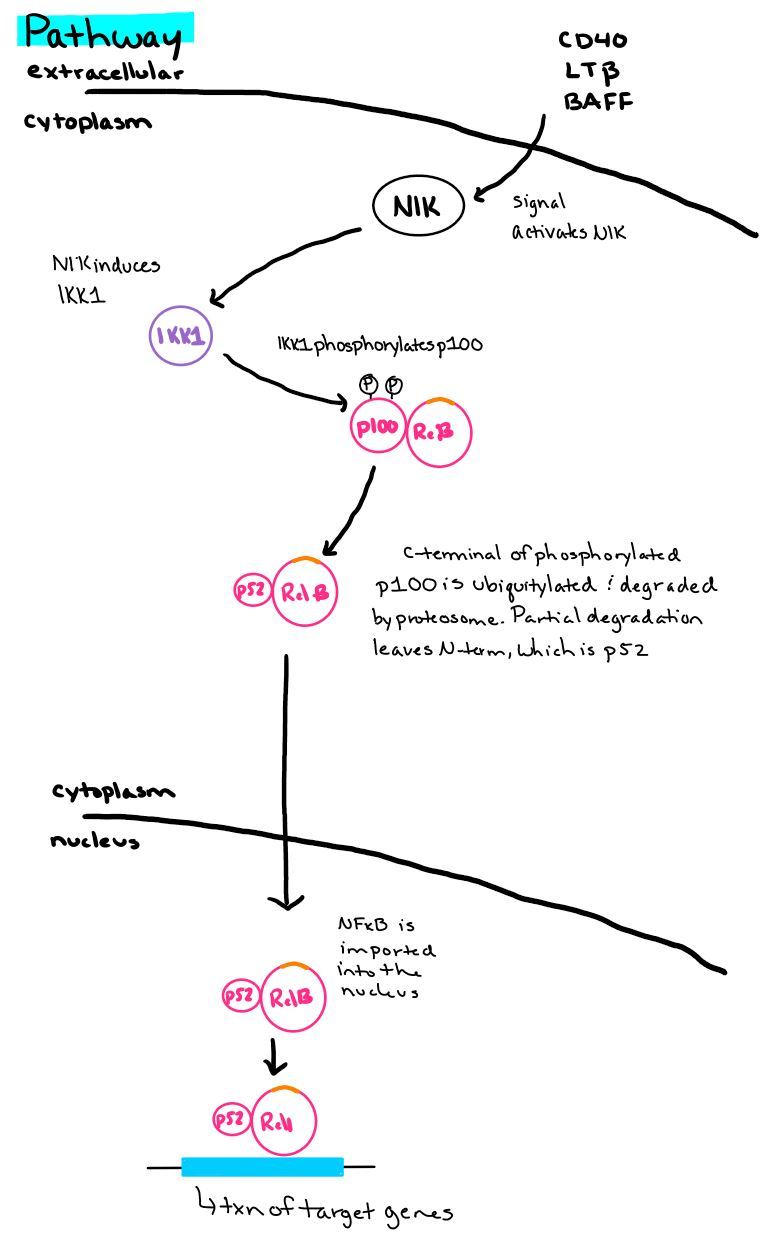
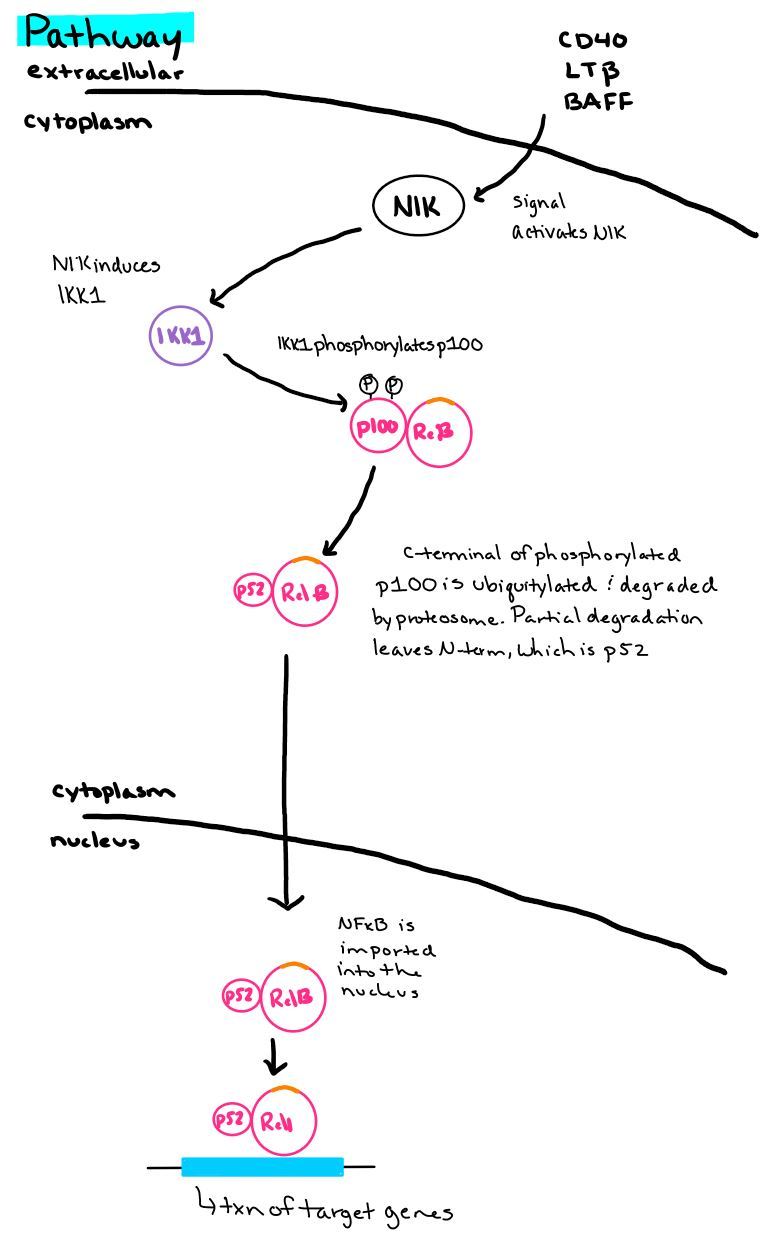
Non-canonical NF-KB signaling pathway
-Williams
- Signaling activates NIK, which induces IKK1
- IKK1 phosphorylates p100
- c-terminal of p100 is ubiquitylated & degraded by protesome. Partial degradation leaves p52
- NF-KB (p52 + RelB) imported into the nuclease, where it activtes transcription of target genes
You are investigating the effects of two different drugs (drug A and drug B) on cancer cells that have high activity of both the canonical and non-canonical NF-kB signaling pathways.
You discover drug A inhibits the phosphorylation of IkBa in the cytoplasm of the cancer cells.
a) Do you expect drug A to increase, decrease, or not change the degradation of the IkBa protein compare to untreated cells?
b) Do you epect drug A to increase, decrease, or not change the transcription of the IkBa gene compared to untreated cells?
c) Draw a diagram depicting the changes in protein interaction and PTMs that occur when IkBa is phosphorylated in the NF-kB signaling pathway. Briefly explain why you think drug A might (or might not) affect the degradation of the IkBa protein and the transcription of the IkBa gene.
- Williams
a) decrease
b) decrease
c) see image
Without IkBa phosphorylation, it will not be marked for ubiquitylation and therefore NOT degraded by the protesome. NF-kB (RelA + p50) will not be released and therefore cannot be imported into the nucleus. Ultimately, initiation of target gene transcription will NOT occur INCLUDING transcription of IkBa.
You are investigating the effects of two different drugs (drug A and drug B) on cancer cells that have high activity of both the canonical and non-canonical NF-kB signaling pathways.
You discover the drug B blocks the phosphorylation of p100 in the cytoplasm of the cancer cells.
a) Do you expect drug B to increase, decrease, or not change the amount of p52 in the cells, compared to untreated cells?
b) Do you expect drug B to increae, decrease, or not change the amount of RelB localized in the nucleus of the cells, compared to untreated cells?
c) Draw a diagram depicting the changes in protein interaction and PTMs that occur when p100 is phosphorylated in the NF-kB signaling pathway. Using this diagram, briefly explain why you think drug B might (or might not) affect the amount of p52 in cells and the nuclear localization of RelB in the cells.
- Williams
a) decrease
b) decrease
c) see image
If p100 is not phosphorylated, it is not marked for partial degradation into p52 (p52 is not produced). Additionally, without partial degradation of p100 –> p52, NF-kB (RelB + p52) will not be imported into the nuclease (decreased RelB nuclear localization).
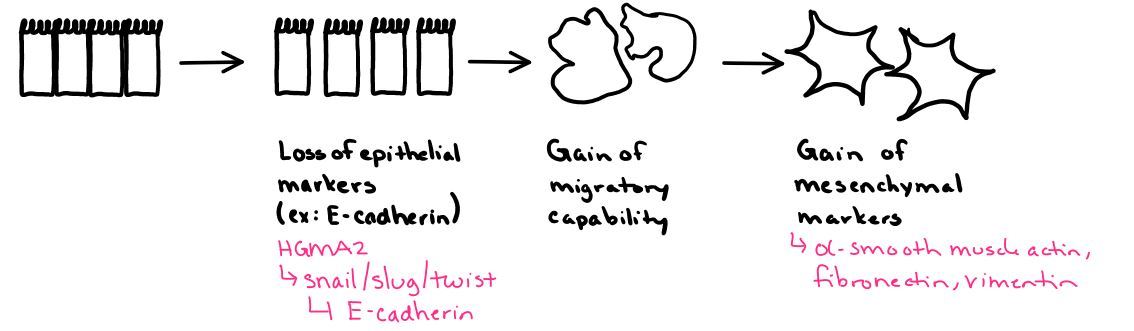
Epithelial-Mesenchymal Transition
-Williams
Epithelial tissue:
- complex, stable junctions
- continuous tissue layer
- apical vs basal cell polarity
- no cell mobility
Mesenchymal tissue:
- loose or no junctions
- no uniform tissue structure
- leading vs trailing edge polarity
- motile
Proteins that increase:
- Vimentin
- Fibronectin
- Snail
- Slug
- Twist
Protiens that decrease:
- E-cadherin
Proteins that accumulate in the nucleus:
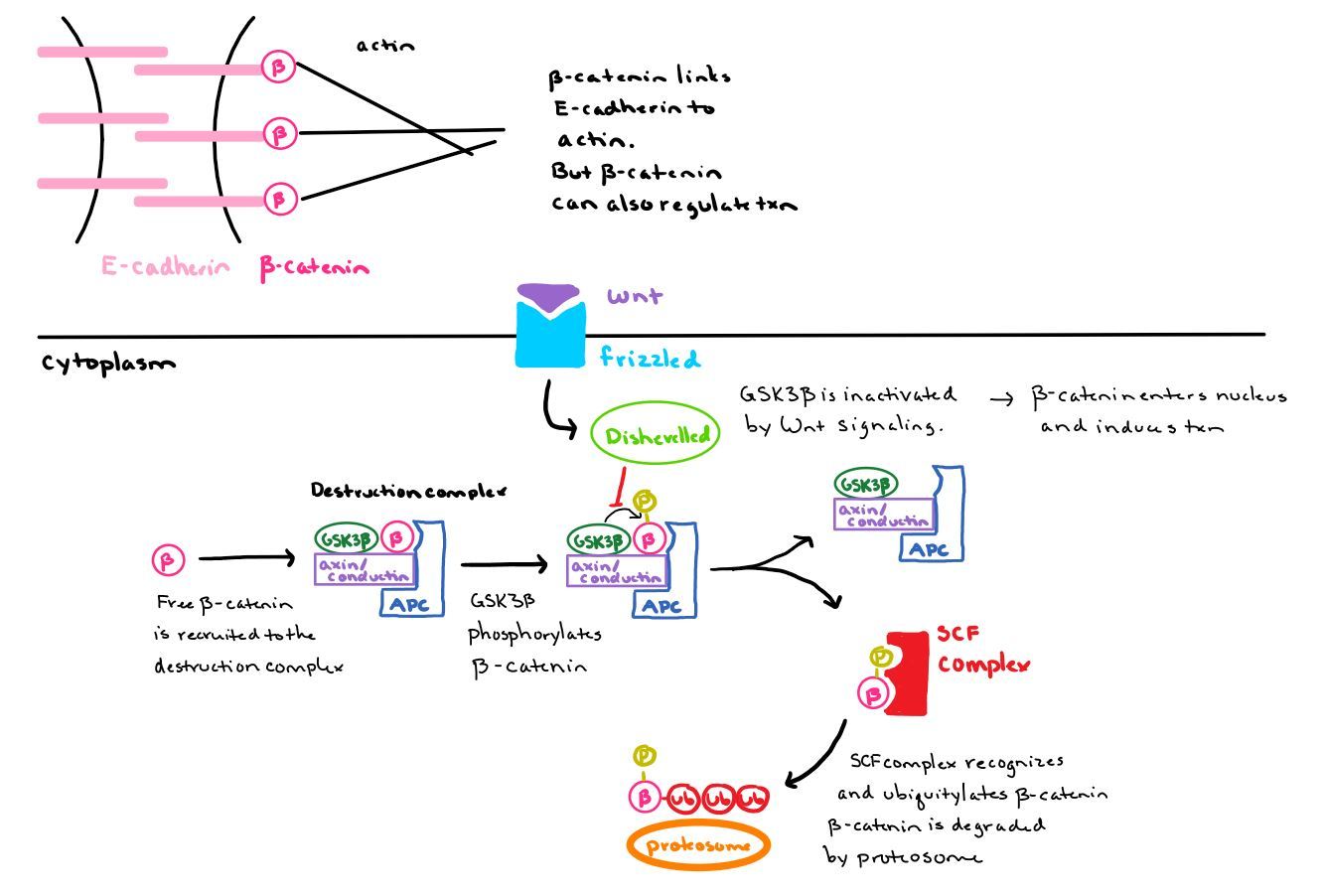
- ß-catenin - via Wnt signaling
- Smad 2/3 - via TGF-ß signaling
- Snail - via TGF-ß signaling
- Slug - via TGF-ß signaling
- Twist - via TGF-ß signaling
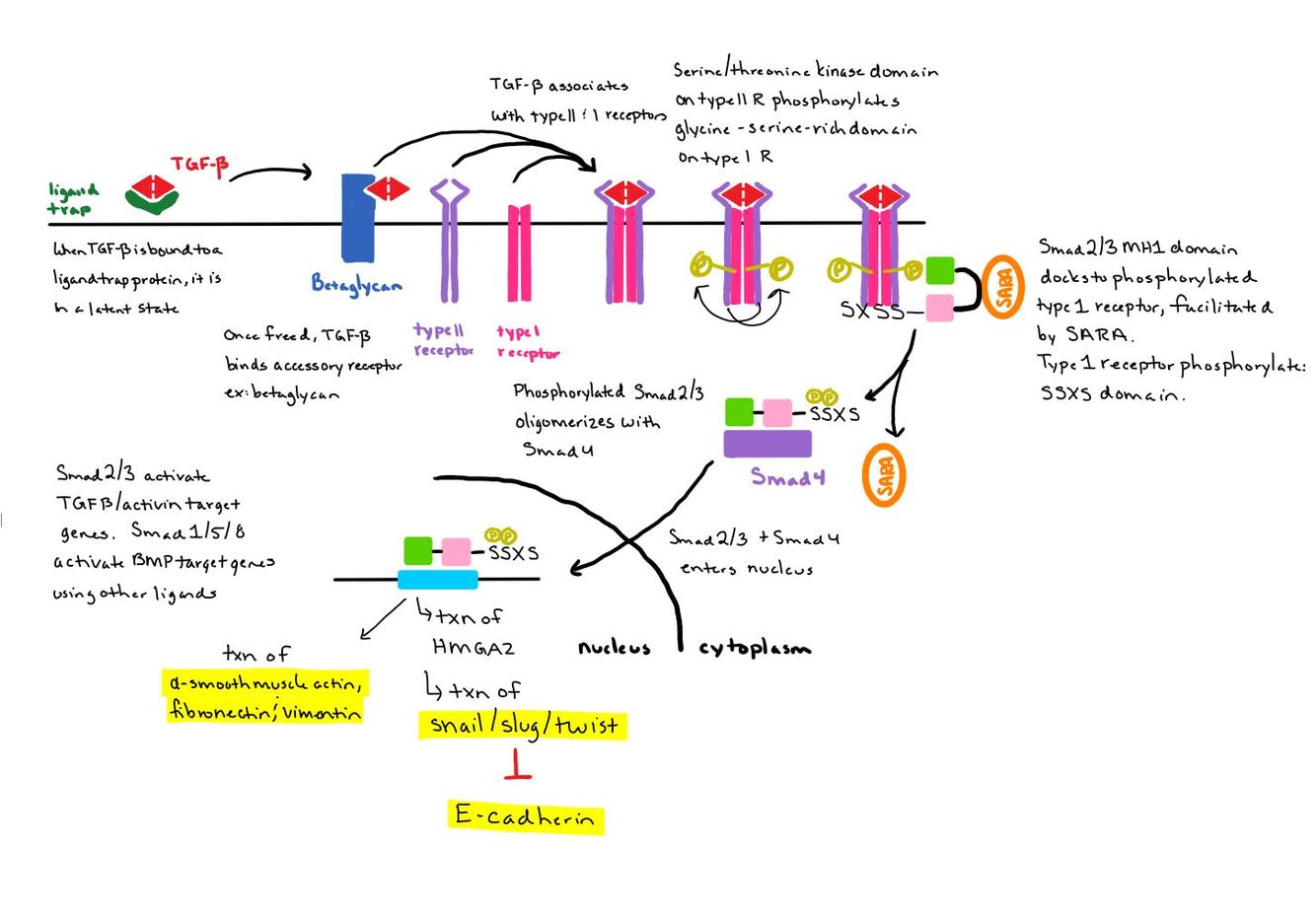
TGF-ß signaling pathway
-Williams
ß-catenin & Wnt Signaling
-Williams
During your doctoral research, you discover that a certain strain of mice (called the “No Smad4” mouse strain) has a mutation that inhibits the expression of Smad4. This mutant mouse strain lives to adulthood, but has some odd characteristics because it does not express Smad4. You obtain your Ph.D. degree for your pioneering work on the “No Smad4” mouse strain.
You isolate epithelial cells from a normal mouse, and from the “No Smad4” mouse, and compare the responses of the cells to treatment with TGF-ß. You find that treatment with TGF-ß causes Smad2 to localize in different regions of the cells. Compare and contrat the movement of Smad2 through the different regions of normal mouse cell vs the “no Smad4” mouse cell when the cells are treated with TGF-ß.
-Williams
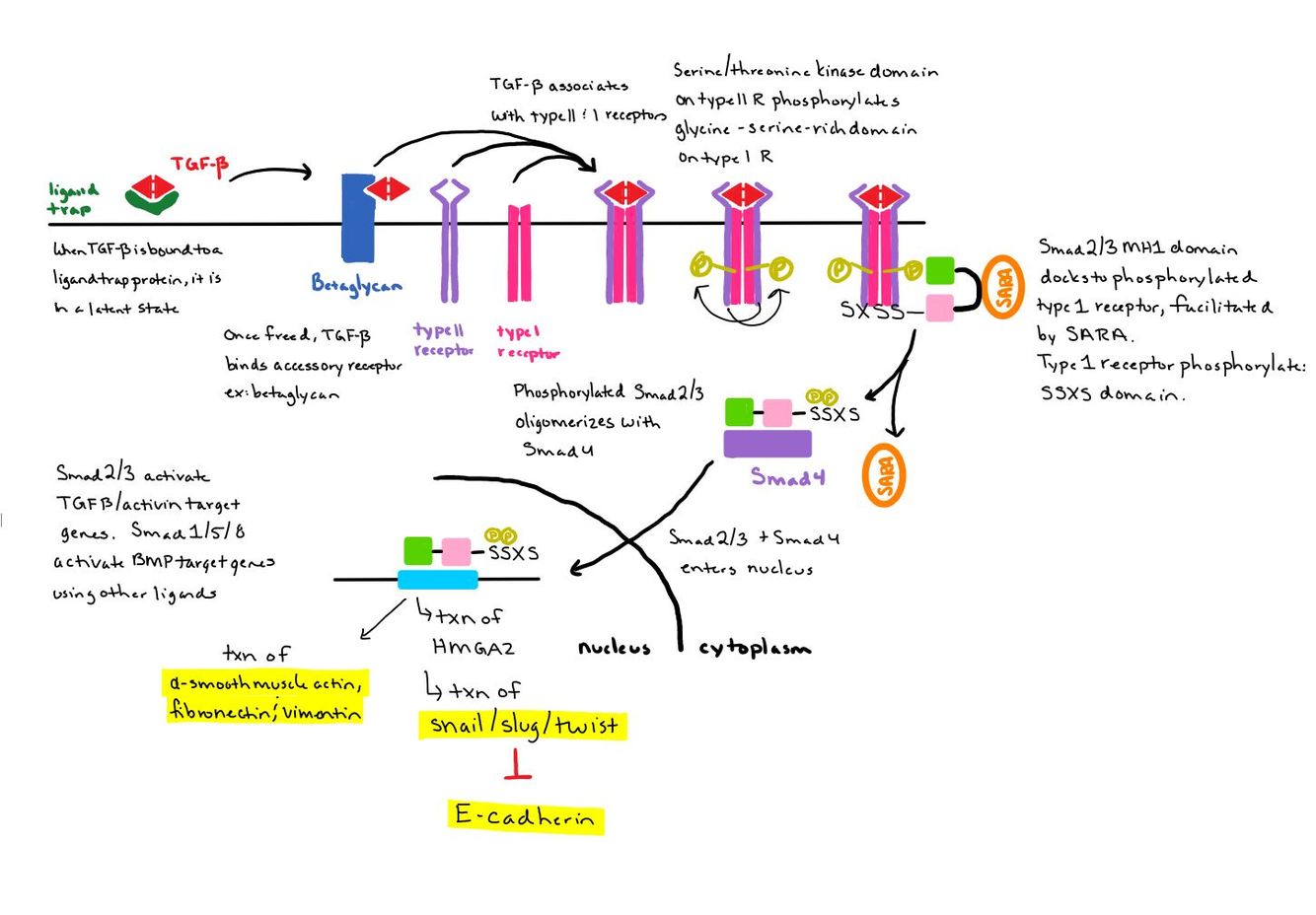
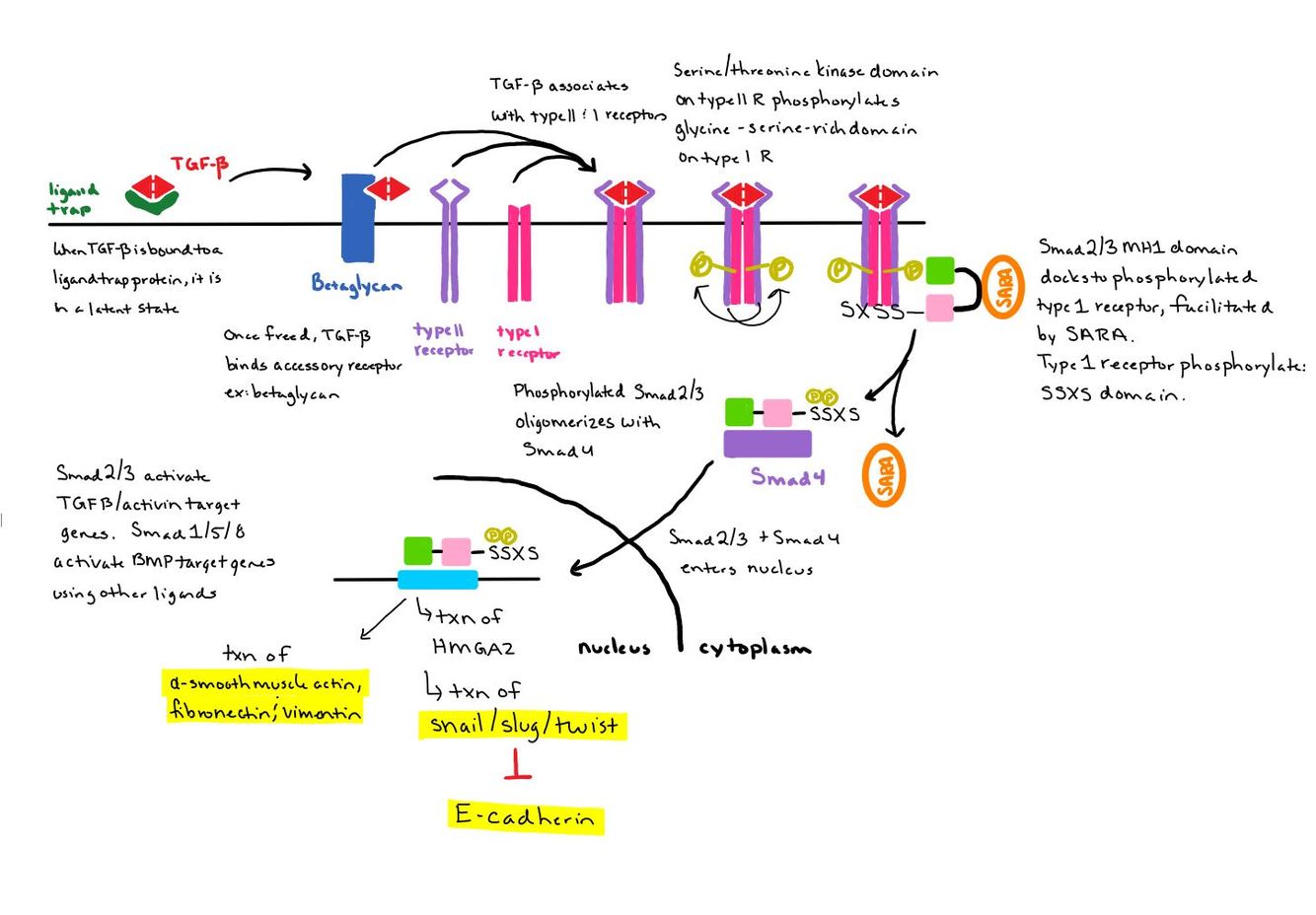
Normal & No Smad4 cells:
- TGF-ß treatment causes type II TGF-ß reeptor to recruit and phosphorylate the type I TGF-ß receptor
- Activated type I TGF-ß receptor recruits Smad2 to membrane
- SARA facilitates recruitment of Smad2 to the activated type I recptor
- Activated type I receptor phosphorylates Smad2 at the SSXS motif
Normal cells:
- Phosphorylated Smad2 leaves the receptor and dimerizes with Smad4
- The Smad2/Smad4 dimer enters the nucleus
“No Smad4” cells
- Phosphorylated Smad2 leaves the receptor but remains in the cytoplasm because it cannot dimerize with Smad4
During your doctoral research, you discover that a certain strain of mice (called the “No Smad4” mouse strain) has a mutation that inhibits the expression of Smad4. This mutant mouse strain lives to adulthood, but has some odd characteristics because it does not express Smad4. You obtain your Ph.D. degree for your pioneering work on the “No Smad4” mouse strain.
You isolate epithelial cells from a normal mouse, and from the “No Smad4” mouse and treat the cells with TGF-ß and examine expression of E-cadherin and vimentin by the cells.
A) Treating the normal cells with TGF-ß will INCREASE, DECREASE or NOT ALTER E-cadherin expression by the cells, compared to untreated normal cells.
B) Treating the “No Smad4” cells with TGF-ß will INCREASE, DECREASE or NOT ALTER E-cadherin expression by the cells, compared to untreated “no Smad4” cells.
C) Treating the normal cells with TGF-ß will INCREASE, DECREASE or NOT ALTER vimentin expression by the cells, compared to untreated normal cells.
D) Treating the “No Smad4” cells with TGF-ß will INCREASE, DECREASE or NOT ALTER vimentin expression by the cells, compared to untreated “no Smad4” cells.
Explain why you expect the changes in E-cadherin and vimentin expression that you predicted.
-Williams
A) decrease
B) not alter
C) increase
D) not alter
In normal Cells:
- Smad2/Smad4 hterotimer binds DNA in the nuclease and binds the Smad-binding element (SBE)
- Initates transcription of HMGA2, which promotes expression of Snail, Slug, and Twist
- Smad2/Smad4 dimer also induces expression of vimentin
In “no Smad4” cells
- Smad2 reamins in the cytoplasm and therefore cannot regulate the HMGA2-Snail/Slug/Twist-E-cadherin pathway or vimentin expression
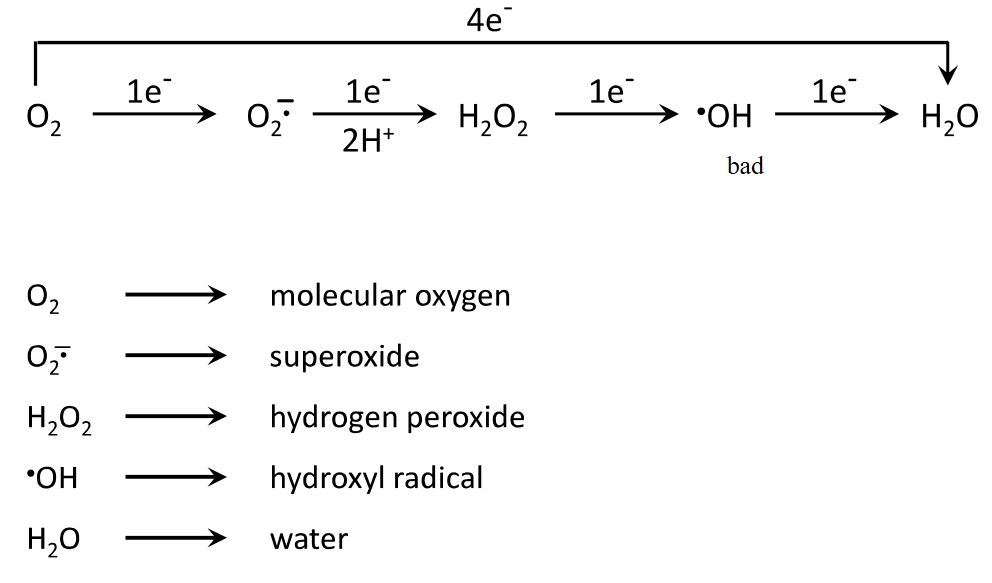
Draw the scheme for the one-electron reduction of molecular oxygen. Give both the chemical formula and names of the intermediates.
-Hogg
O2-- → H2O2
- SOD
H2O2 → H2O
- CAT
H2O2 → ultimately glucose
- glutathione peroxidase
Describe how hydrogen peroxide can be sensed by a cell to elicit a transcriptional response.
-Hogg
****
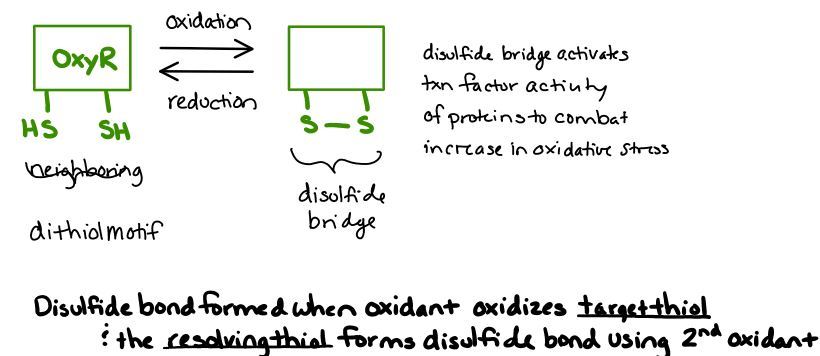
OxyR Signaling
-Hogg
Prokaryotic example
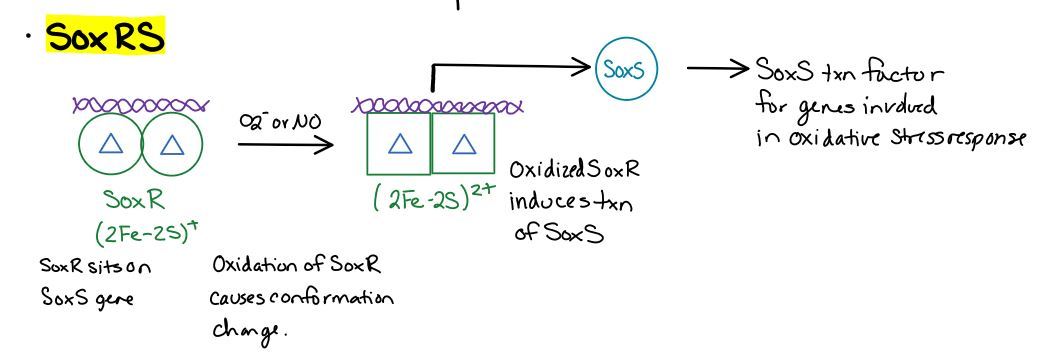
SoxRS
-Hogg
Example of iron sulfur cluster oxidation
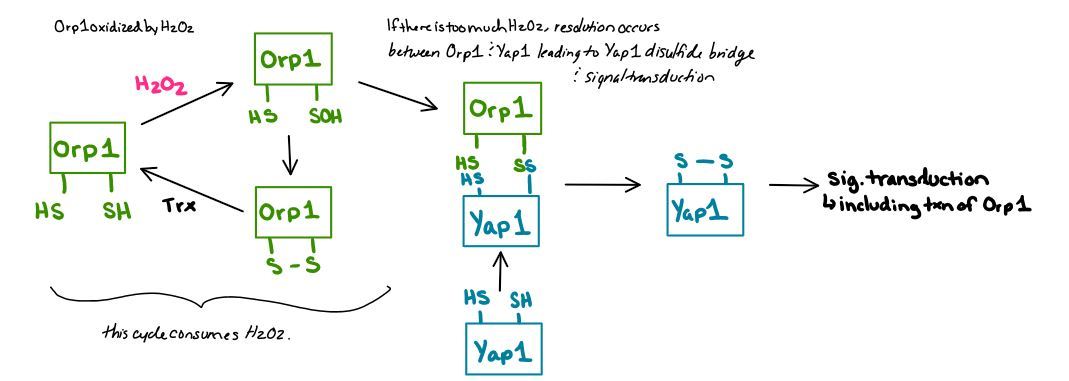
YAP1/Orp1
-Hogg
Yeast
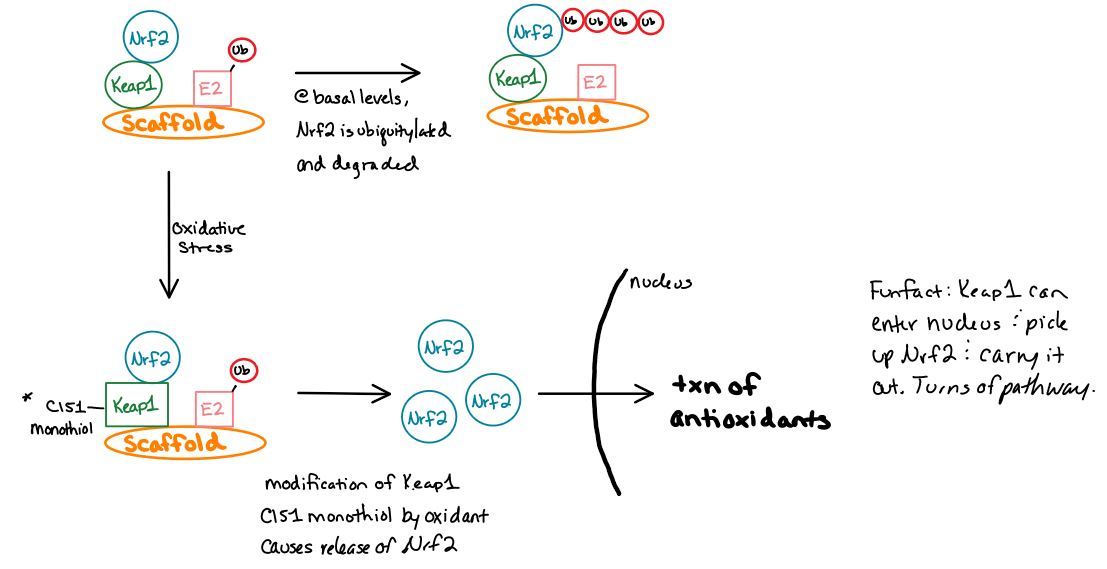
Keap1/Nrf2
-Hogg
Mammals
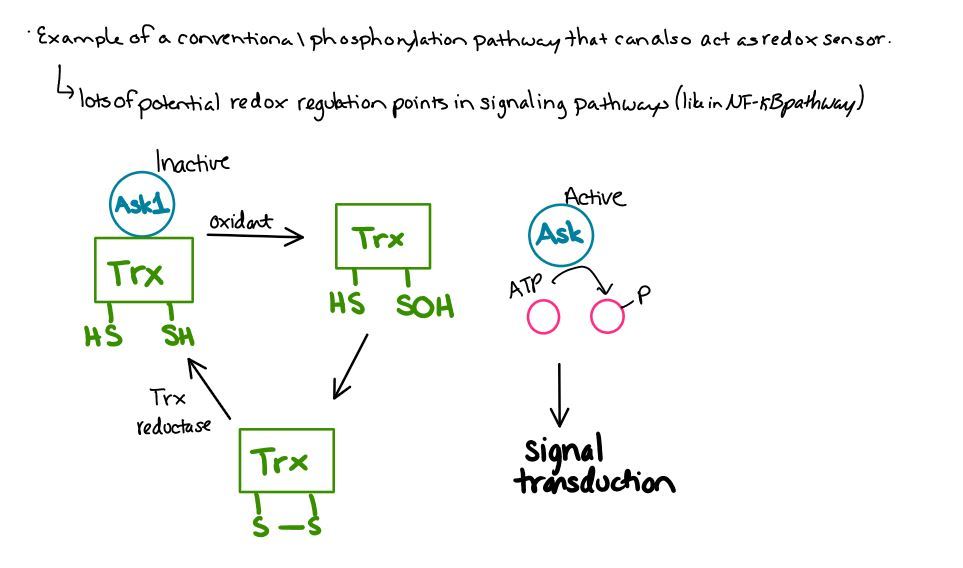
ASK1/Trx system
-Hogg
Discuss protective mechanisms that can remove Reactive Oxygen Species.
-Hogg
1) Antioxidants
Vitamin E. Major component is alpha-tocopherol, which can donate an OH group to radicals to form a more stable radicle.
Vitamin C reduces vitamin E radical to form a vitamin C radical, which is outside the membrane and very stable.
2) Enzymes
Superoxide dismutase (SOD) oxidizes superoxide to molecular oxygen. Reduced SOD reduces superoxide to hydrogen peroxide - there are many enzymes that deal with hydrogen peroxide. Ex: Catalase (CAT) reduces 2 hydrogen peroxides into water.
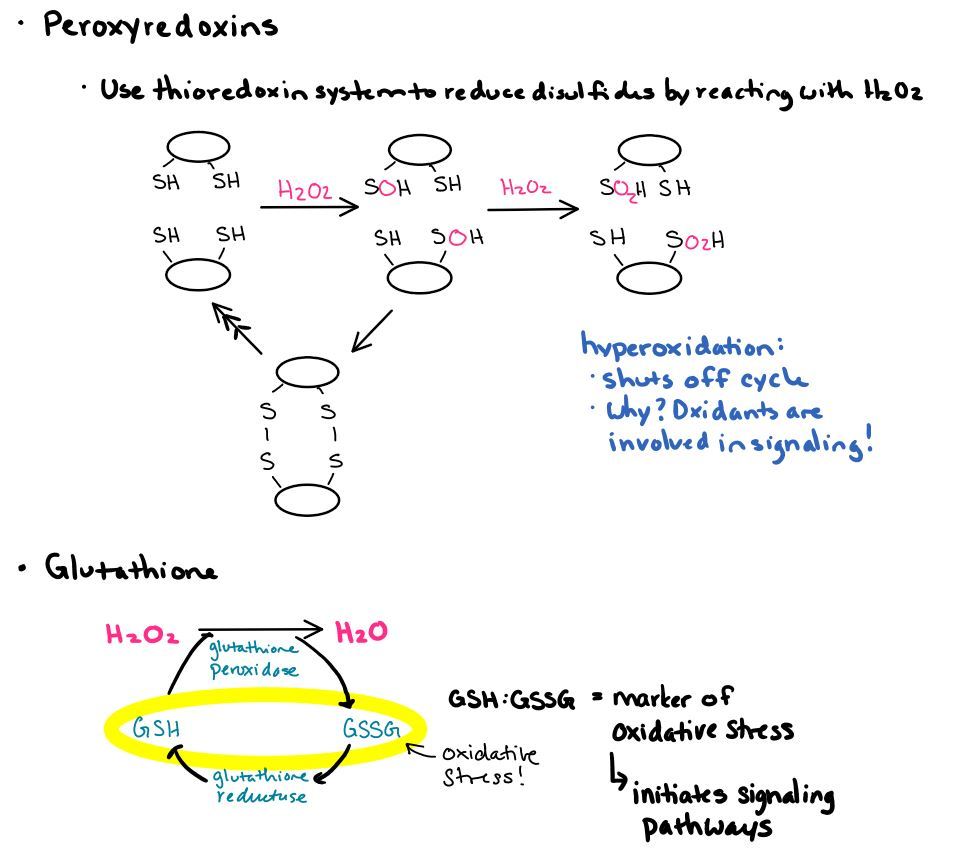
Glutathione reduces hydrogen peroxide into water and initiates signaling pathways (see image)
Peroxyredoxins use thioredoxin system to reduce disulfides by reacting with hydrogen peroxide (see image)
Discuss the concept of ‘vicinal di-thiols’ and ‘resolving cysteine residues’ in the context of redox signaling mechanisms.
-Hogg
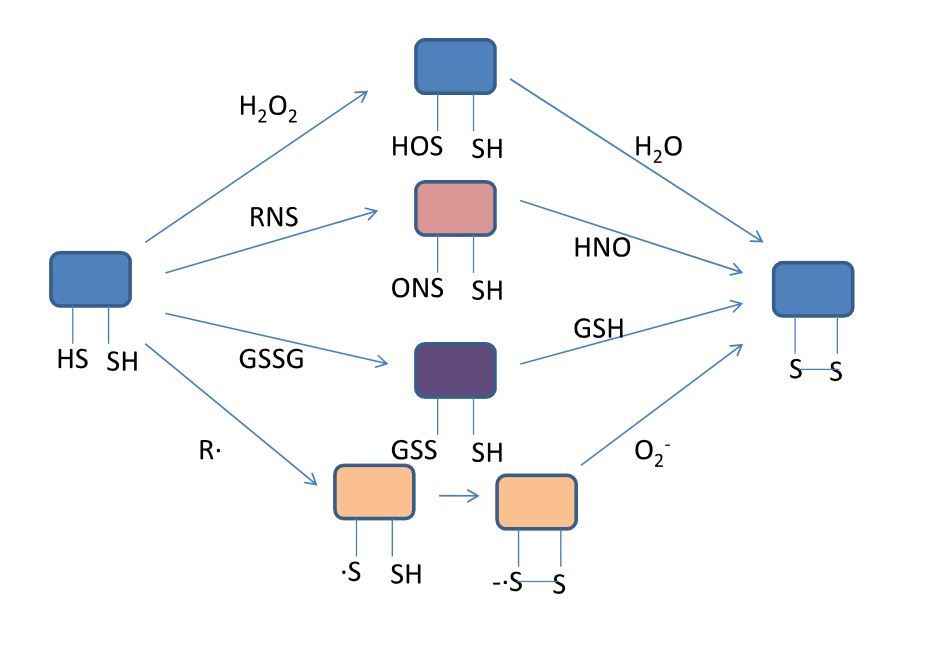
Cysteine (SH) oxidized (SOH) by target ROS. Neighboring cysteine ‘resolves’ by forming a disulfide bond (S-S).
Di-sulfide bond directly or indirectly regulates gene expression as in the OxyR, YAP1/Orp1, and ASK1/Trx systems.
Name the three isoforms of nitric oxide synthase and one feature unique to each isoform.
-Hogg
eNOS: has three acetylation sites at its N-terminal for membrane anchoring
nNos: has a N-terminal PDZ domain for membrane anchoring
iNos: does not have an inhibitory loop, reacts with Ca2+ at basal levels
Describe three nitric oxide-dependent modifications of biomolecules that may be associated with its pleotropic signaling mechanisms.
-Hogg
1) NO binds heme of sGC to induce cGMP formation. cGMP interaction with PKG causes dilation of smooth muscle.
2) NO binds heme of complex IV in the ETC, thereby competing with O2 and inhibiting mitochondrial respiration.
3) NO can bind lipid radicals (antioxidant activity) and produce signaling molecules. Ex: LOO• + NO → LOONO
Discuss mechanisms of canonical (cyclic GMP) and non-canonical nitric oxide signaling.
-Hogg
Canonical:
- Endothelial agonist (ex: acetylcholine) increases calcium levels to activate eNOS.
- eNOS produces NO, which diffuses and binds sGC heme group in muscle tissue.
- sGC makes cGMP
- cGMP interacts with PKG to cause dilation of smooth muscle
Non-canonical:
- NO reacts with lipoxygenase to produce liponitride
- S-nitrosation: NO somehow reacts with thiols (mechanism unknown). Post-translational thiol modification changes protein activity.
Describe cellular events that are controlled by the binding of NO to heme groups.
-Hogg
Canonical:
- Endothelial agonist (ex: acetylcholine) increases calcium levels to activate eNOS.
- eNOS produces NO, which diffuses and binds sGC heme group in muscle tissue.
- sGC makes cGMP
- cGMP interacts with PKG to cause dilation of smooth muscle
NO can also bind heme group of complex IV in ETC to inhibit mitochondrial respiration. Occurs when oxygen levels are low (NO better competitor).
Discuss how the formation of NO is controlled at the enzyme level, including a discussion of the different isoforms of NO.
-Hogg
NO is formed by nitric oxide synthase (NOS), of which there are three isoforms: eNOS, nNOS, and iNOS.
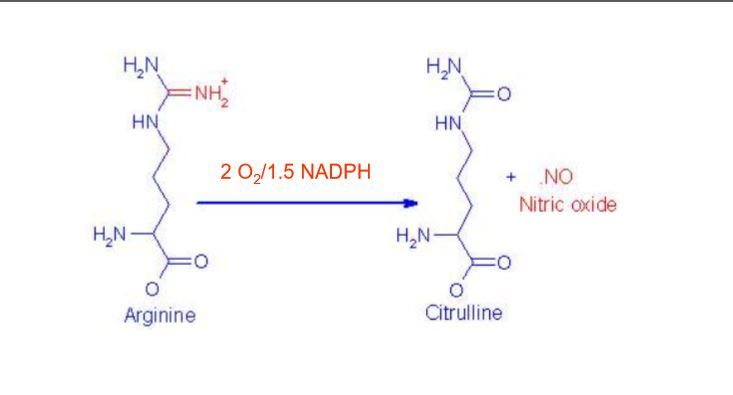
All three isoforms convert arginine to nitric oxide and citrulline using oxygen and NADPH.
Two domains:
- Reductase domain: location of NADPH binding. Reaction with flavins causes flow of electrons to:
- Oxygenase domain: electrons bind and activate oxygen
eNOS and nNOS are regulated by an inhibitory loop. Calcium relieves eNOS and nNOS from inhibition. Basal levels of calcium are sufficient for iNOS activation.