Describe the key events involved in muscle contraction (starting from neuromuscular transmission and ending with contraction of the muscle)
-Lawlor
- Acetylcholine is released into the neuromuscular junction and activates Na+ channels, which initiates an action potential that moves down the T-tubule.
- The AP triggers the voltage-gated Ca2+ channel, DHPR, which, in turn, activates the RyR calcium channel, thereby releasing Ca2+ from the star opals is reticulum.
- Ca2+ binds troponin, causing a conformation change to tropomyosin, which frees cross-bridge binding sites on actin.
- Myosin-bound ATP is hydrolysis to ADP + Pi, causing myosin head extension and binding to actin.
- Myosin pulls actin toward the M-line (powerstroke) to shorten the sarcomere (contraction).
- ADP + Pi are released and ATP binding releases myosin from actin.
Explain two disease states that illustrate dysfunction in the muscle contraction process.
-Lawlor
Myasthenia Gravis:
- autoimmune disease where antibodies block acetylcholine receptors in the neuromuscular junction, thereby preventing the formation of action potentials & ultimately muscle contraction.
Myotubular myopathy:
- caused by loss of myotubularin (MTM1), a triad component. Results in small mayo fibers, organelle mislocalization, and triad loss.
Extracellular and intracellular ionic composition (Na+, K+, and Ca2+)
-Kwok
Na+ - outside
- 140 mM extracellular
- 10 mM intracellular
K+ - inside
- 4 mM extracellular
- 140 mM intracellular
Ca2+ - outside
- 2.4 mM extracellular
- 50 nM intracellular
What forces determine what direction ions will go?
-Kwok
Electrical forces (positive and negative charges) and chemical forces (concentration gradients).
Electrical forces = chemical forces —> no flux, @ equilibrium
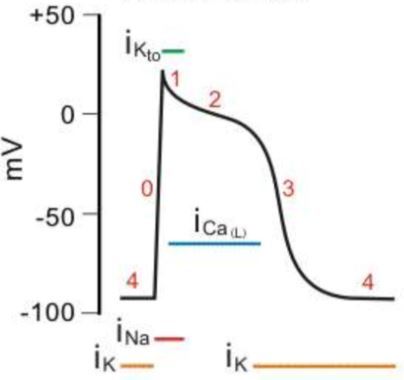
Ventricular action potential
-Kwok
phase 0: Na+ influx
- depolarization
- INa
phase 1: K+ influx
- ITO (K+)
phase 2: Ca2+ influx
- plateau phase
- delicate balance/easily perturbed
- allows Ca2+ to come in and cell contracts
phase 3: K+ efflux
- repolarization
- IK
phase 4:
- resting state
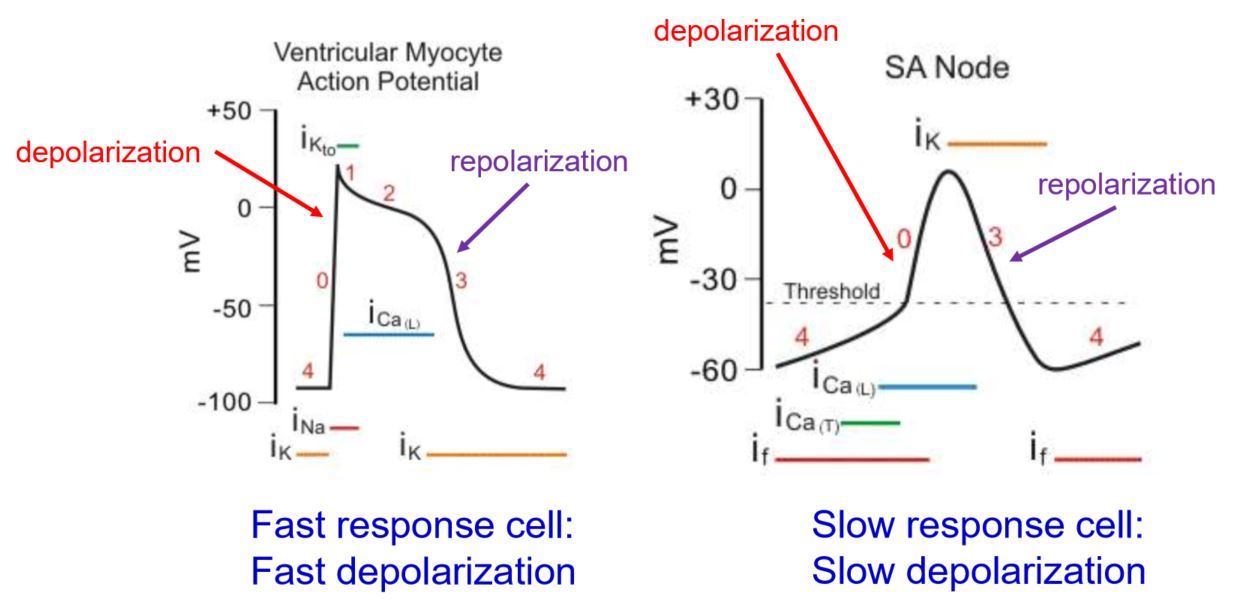
SA node action potential
-Kwok
SA node does not use sodium for depolarization, it uses calcium!
Calcium channels open slower so get slower depolorization.
Atrial and ventricle: depoloraization due to sodium
Nodal tissue: depolorization due to calcium
Sodium channels
-Kwok
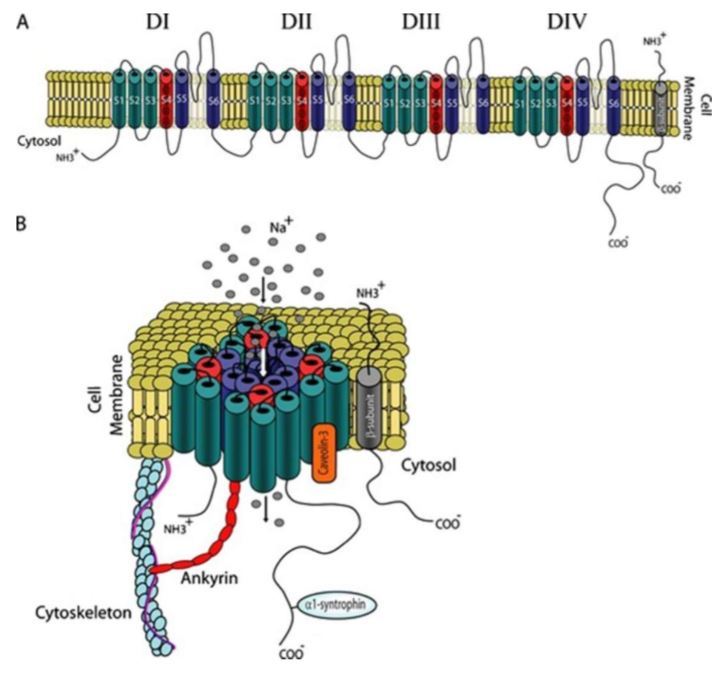
- responsible for ventricle/atrium phase 0 depolarization
Structure:
- 4 domains, each with 6 transmembrane segments
- Loops between S5 and S6 line interior of pore
- makes channel permeable to sodium
- S4 (red) is voltage center
- makes channel sensitive to voltage
- cytosolic linker between D3 and D4 important for inactivation
Inactivation:
- inactivation loop swings over and blocks pore
- recovery is time and voltage dependent.
- membrane potential more negative than -60 mV facilitates transition from inactivated to closed state
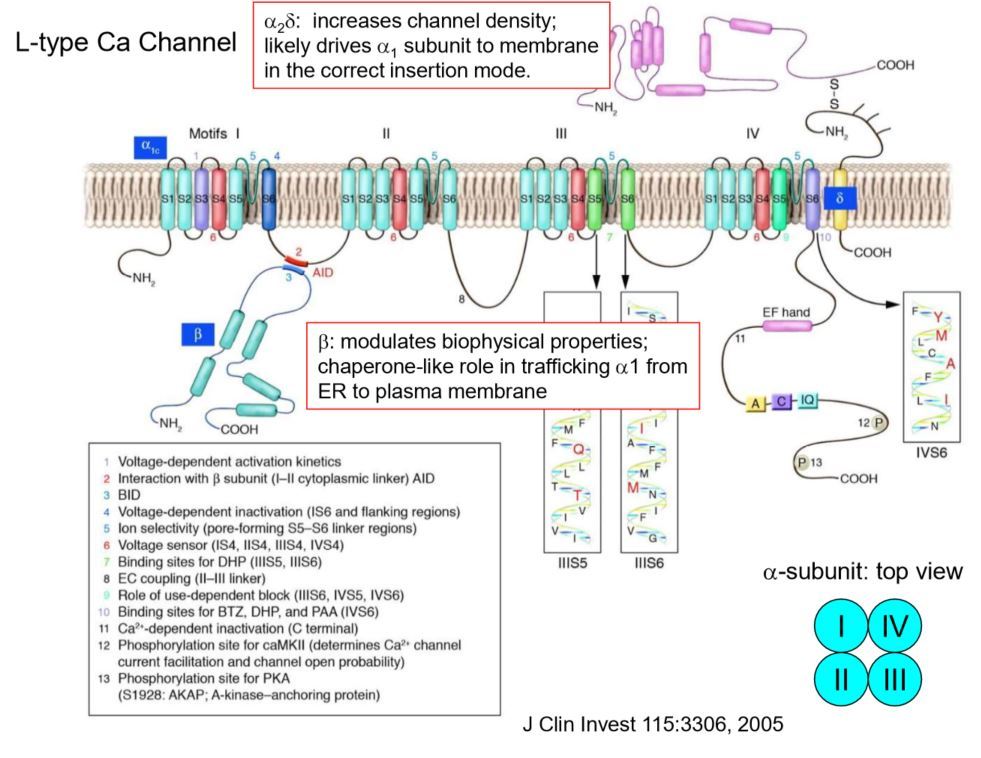
Calcium channels
-Kwok
- influx during phase 2 plateau
- balanced by K+ efflux to determin AP duration
- causes intracellular calcium-induced calcium-release from SR to increase intracellular calcium and induce contractile process
- nodal cells use calcium channels for depolarization (NOT sodium channels)
Structure:
- 4 domains with 6 transmembrane regions
- S4 region = voltage sensing
- S5 and S6 linker region = selectivity loop, lines pore
Inactivation
- Ca2+ dependent inactivation
- Fast voltage-dependent inactivation
- Slow votlage-dependent inactivation
Potassium channels
-Kwok
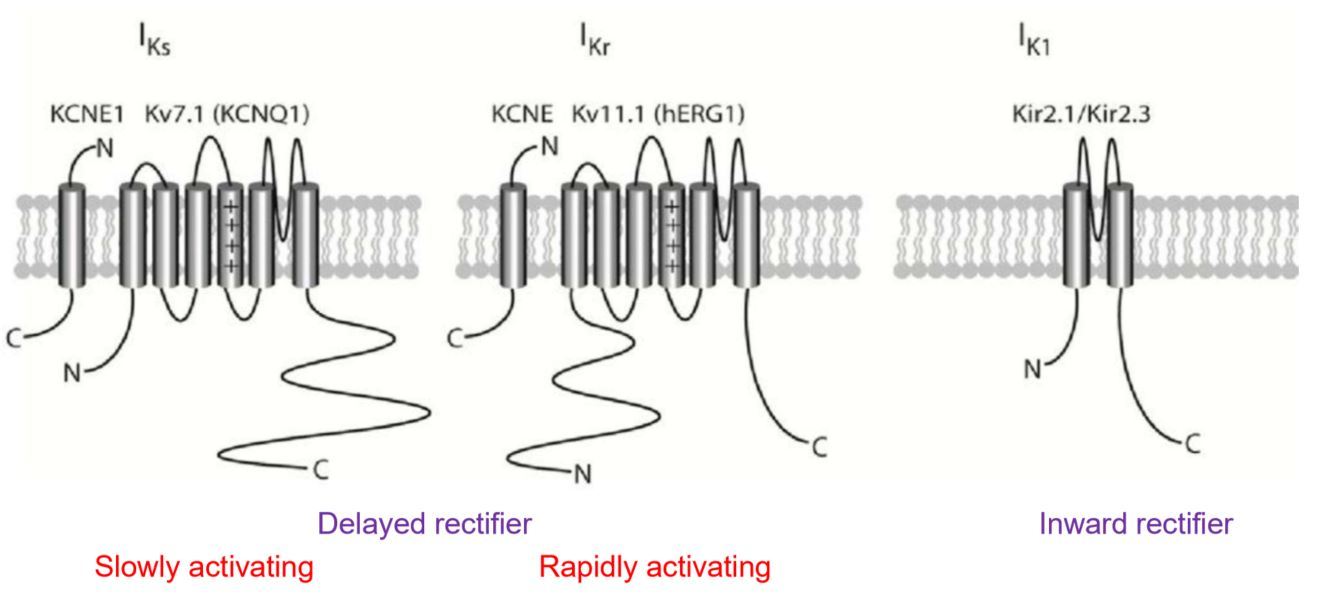
Delayed rectifier isoforms:
- Similar to one domain of Ca2+ or Na+ channel
- 4 domains form channel (tetramer)
- critical for repolorazation
- Slowly activating - IKs
- Rapidly activating - IKr
Inward rectifier isoform (IK1)
- equivalent to S5/S6 (pore) region of delayed rectifier
- no voltage sensor
- forms tetramers
- late phase 3 repolarization
- open @ rest
- allows efflux of K+, which is why resting potential is -90 mV
Long QT Syndrome
-Kwok
Prolonged action potenial
- as begins repolarizaing, allows Na channels to be reactivated from inactivation state
- triggers action potenials when it shouldn’t
Atherosclerosis
-Pfister
- Fatty material (plaque) builds up arteries
Stages of atherosclerosis
- Endothelial dysfunction
- endothelium has increased permeability to lipoproteins
- upregulation of endothelial adhesion molecules
- leukocytes migrate into artery wall
- Fatty-streak formation
- Advanced, complicated lesions
- fibrous cap walls of lesion from the lumen
- covers a mixture of leukocytes, lipid, and debris
- Unstable fibrous plaques
- rupture of fibrous cap
Cholesterol Function and Synthesis
-Pfister
Function:
- cell growth and development
- building blocks for membranes
- synthesis for steroid hormones, bile acids, and vitamin D
Synthesis:
- from acetyl-coA
- rate limiting step:
- HMG-CoA reductase
Regulation of HMG-CoA Reductase
-Pfister
- transcription
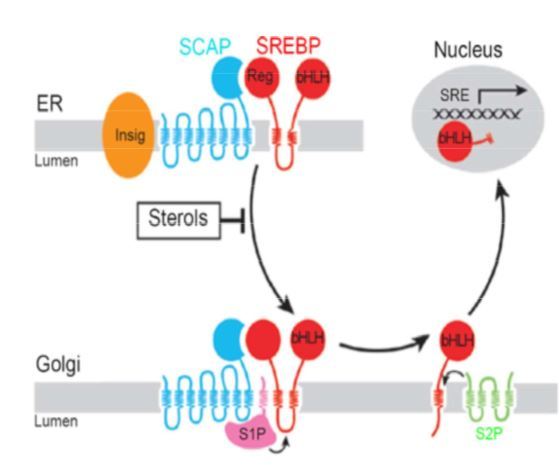
- SREBP: transcription factor
- SREBP binds SCAP to form SCAP-SREP complex that is a sterol sensor in ER
- When sterol levels are high, Insig proteins bind SCAP to keep in ER
- When sterol levels are low, SCAP-SREP complex translocate to Golgi and SREBP is cleaved
- bHLH-SREBP domain enters nucleus and binds and promotes transcription of an SRE
- SREBP: transcription factor
- translation
- HMG-CoA translation inhibited by nonsterol metabolites from mevalonate, dietary cholesterol, and oxysterols
- degradation
- HMG-CoA binds insigs associated with ubiquitin
- ubiquitination
- phosphorylation
- phosphorylation INACTIVATES
- hormonal regulation
- insulin causes increased synthesis
- glucagon causes decreased synthesis
Cholesterol circulation
-Pfister
Cholesterol is nonpolar. Need to solubilize to be in blood!
LIPOPROTEINS
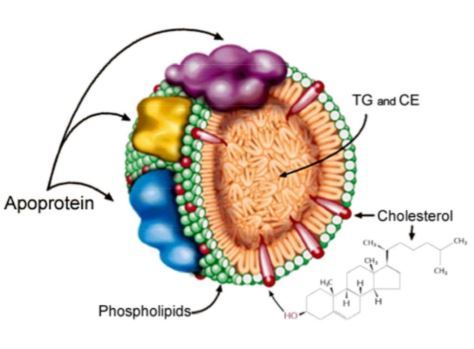
- core of non-polar lipids
- monolayer of exterior phospholipids
- integral and peripheral apoproteins
Apolipoproteins
- help solubilize the lipoprotein
- activate/inhibit plasma enzymes
- binding sites for cell surface receptors
Lipoprotein types
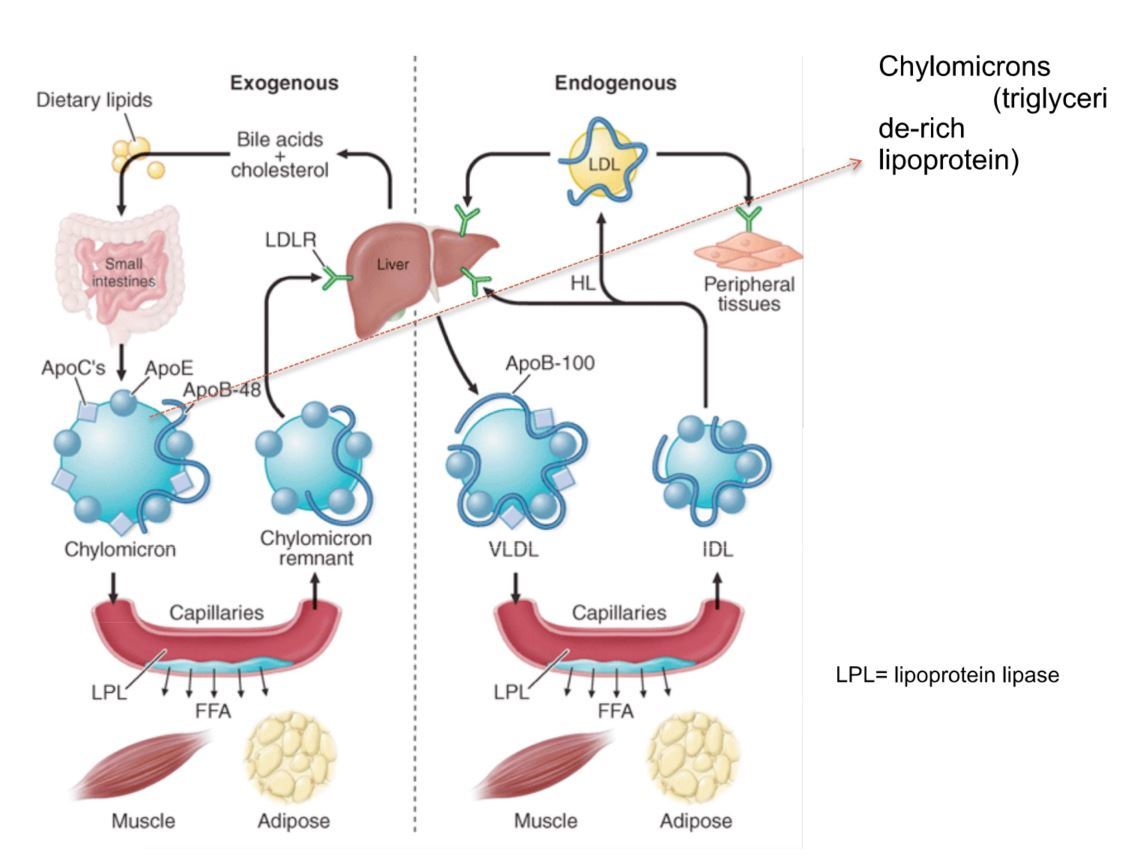
- Chylomicrons
- triglyceride-rich
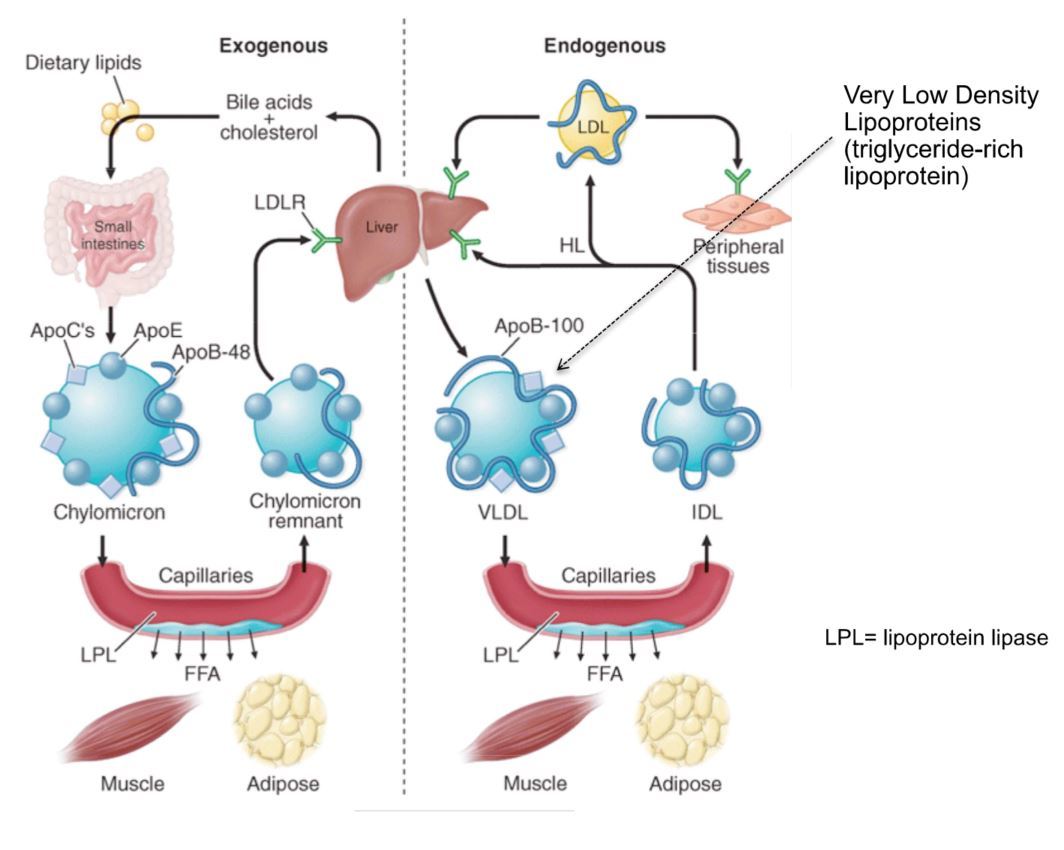
- Very low density lipoproteins
- triglyceride-rich
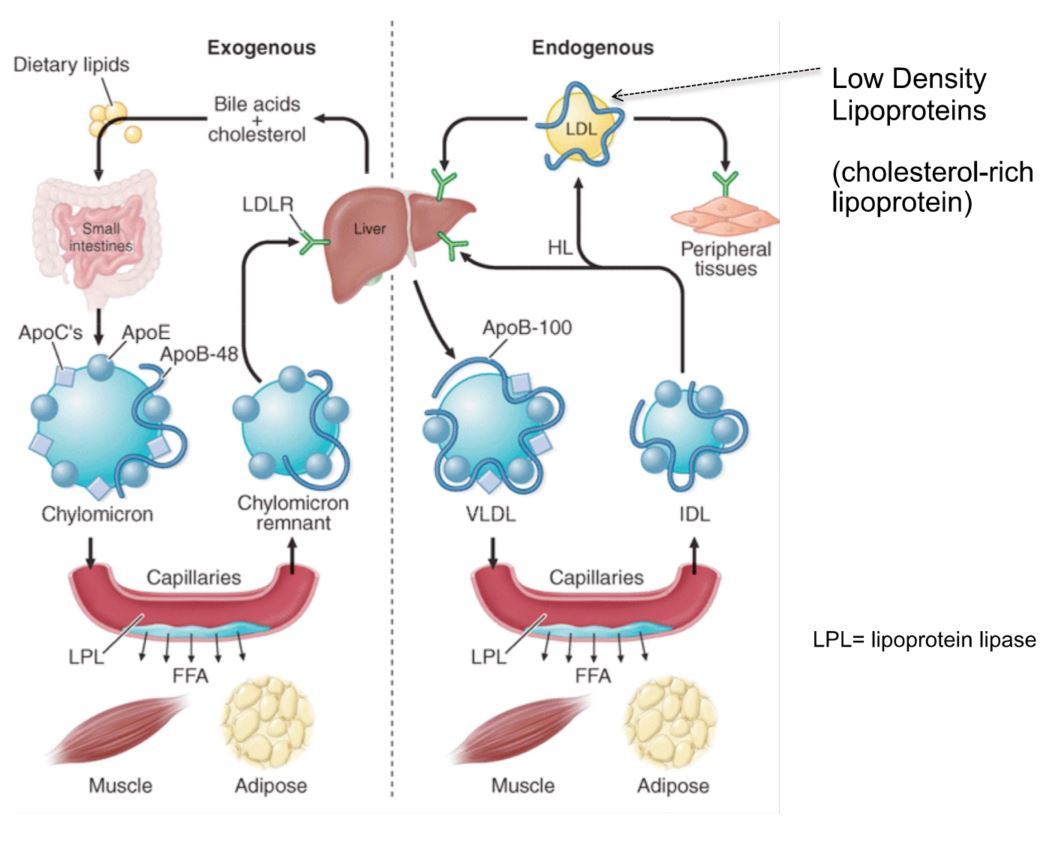
- Low density lipoproteins
- cholesterol-rich
- High density lipoproteins
- cholesterol-rich
Chylomicrons
-Pfister
Dietary lipids go to small intestine where they are packaged into chylomicrons and circulate through blood stream.
Lipoprotein lipase (LPL) hydrolyzes triglycerides into free fatty acids, which can be used by muscle for energy or stored as adipose tissue.
Chylomicron remmnant retains cholesterol, which is taken to the liver.
Major lipid composition: triglycerides
Major apoprotein: apoB48
Major effect: carries dietary cholesterol to liver and packages dietry triglycerides for LDL hydrolysis to free fatty acids for storage or energy
Very Low Density Lipoproteins
-Pfister
Triglycerides (and dietary cholesterol) from liver packaged and released to bloodstream. Lipoprotein lipase (LPL) hydrolyzes triglycerides to free fatty acids for energy of storage.
Major lipid composition: triglycerides
Major apoportein: apoB100
Major effect: delivers triclycerides to tissues as fatty acids
Microsomal triglycerid transfer protein (MTP)
- TG synthesis is regulated by DGAT
- After TG synthesis in ER, transffered by MTP to site where apoB-100 is available to from VLDL
- Patients with dysfunctional MTP fail to make apoB-containing lipoproteins (chylomicrons, VLDL, or LDL)
LDL Receptors
-Pfister
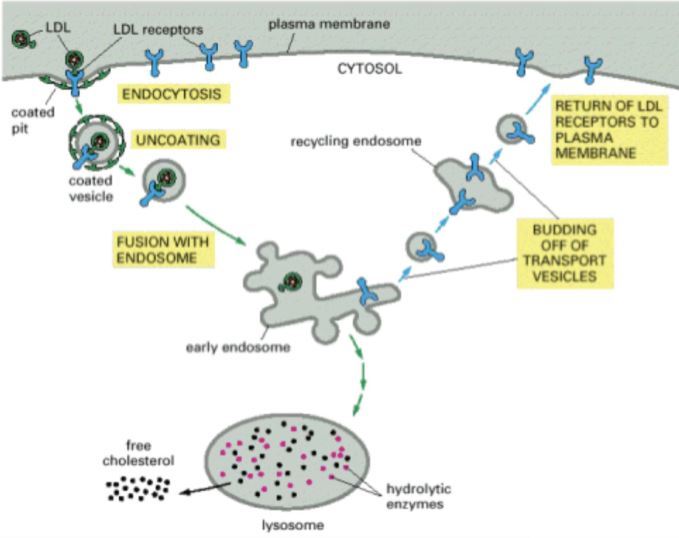
LDL receptors bind LDLs circulating in the bloodstream and transport them into the cell (many cell types). LDL is broken down and cholesterol released for use by cell. LDL receptor recycled back to cell surface.
- SREBP transcription factor
- increased expression when sterol levels low
PCSK-9 degrades LDL receptors.
- increased expression when sterol levels low
Oxidized LDL (not native) contributes to atherogenesis by enhancing the rate of uptake of the lipoprotein leading to foam cell formation. Can be modified by:
- reactive oxygen species
- lipid reroxidation products modify apoB sites on LDL
- no longer recognized by native LDL receptor, but instead by scavenger receptors
Low density lipoproteins
-Pfister
LDLs are formed from VLDL remnants, IDLs and contain primarily cholesterol and apoB-100. Carries cholesterol to various tissues with LDL receptors that recognize apoB-100.
Major lipid composition: cholesterol
Major Apoprotein: ApoB100
Major Effect: major lipid that contributes to elevated plasma cholesterol
High density lipoproteins
-Pfister
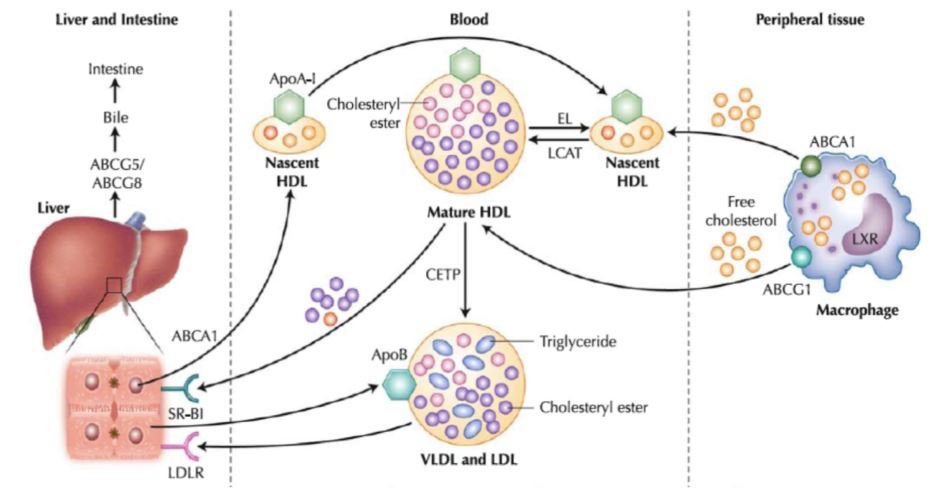
HDLs pick up cholesterol from peripheral cells and return it to the liver.
major lipid composition: cholesterol
major apoprotein: apoAI
major effect:
Lecithin-cholesterol acyl transfer (LCAT) responsible for making mature HDL from Nascent HDL.
- Esterfies cholesterol (so nonpolar and can move into core of HDL)
- apoA-I activates LCAT
Cholesteryl ester transfer protein (CETP)
- Transfers cholesteryl esters from HDL to VLDL, IDL, and LDL, in exchange for triglycerides
- CETP deficiency is associated with increased HDL levels
ATP binding cassette transporter (ABCA1)
- Membrane transporter that promotes efflux of cellular phospholipids and cholesterol to lipid-free apoAI, but NOT to spherical HDL
- Defective ABCA1 results in poor HDL cholesterol acquisition and reduced HDL levels
Scavenger receptor BI (SR-BI)
- The “HDL” receptor
- Takes cholesterol from HDL back into liver
Foam cells
-Pfister
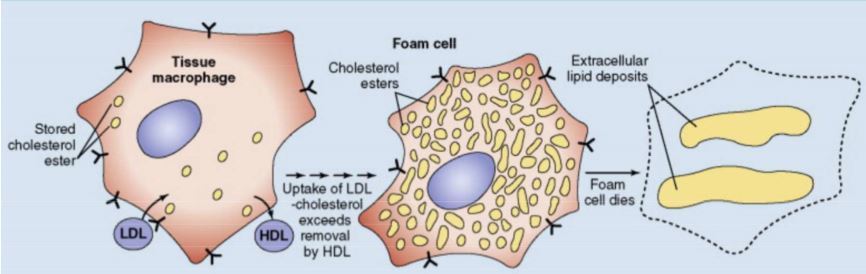
Foam cell
- Progressive accumulation of lipid droplets by macrophages/monocytes
- Tissue macrophages accumulate LDL which are targeted to lysosomes. Choloesteryl esters (CE) are hydrolyzed to free cholesterol and delievered back to the ER, repackaged into CE, and stored in cytoplasmic lipid droplets
Acyl-CoA: cholesterol acyltransferase (ACAT)
- uses Acyl CoA and cholesterol to produce cholesterol esters.
- plays critical role in foam cell formation
Drugs to treat atherosclerosis
-Pfister
Statins: inhibit HMG CoA reductase
- HMG CoA reductase mediates the rate-limiting step of choelsterol synthesis. By inhibiting it, cholesterol levels will be reduced. This will free SCAP-SREBP from Insig-mediated ER retainment, allowing translocation to the Golgi and SREBP cleavage to its active transcription factor, which induces transcription of LDL receptors. The LDL receptors will bind ciruclating LDL and import them into cells, resulting in decreased plasma cholesterol.
PcSK9 inhibitor: increases LDL receptors
Bile acid vinding resins: increases LDL receptors
Cholesterol absorption inhibitors: increases LDL receptors
Niacin: decrease TG synthesis
- lowers VLDL, results in decreased LDL
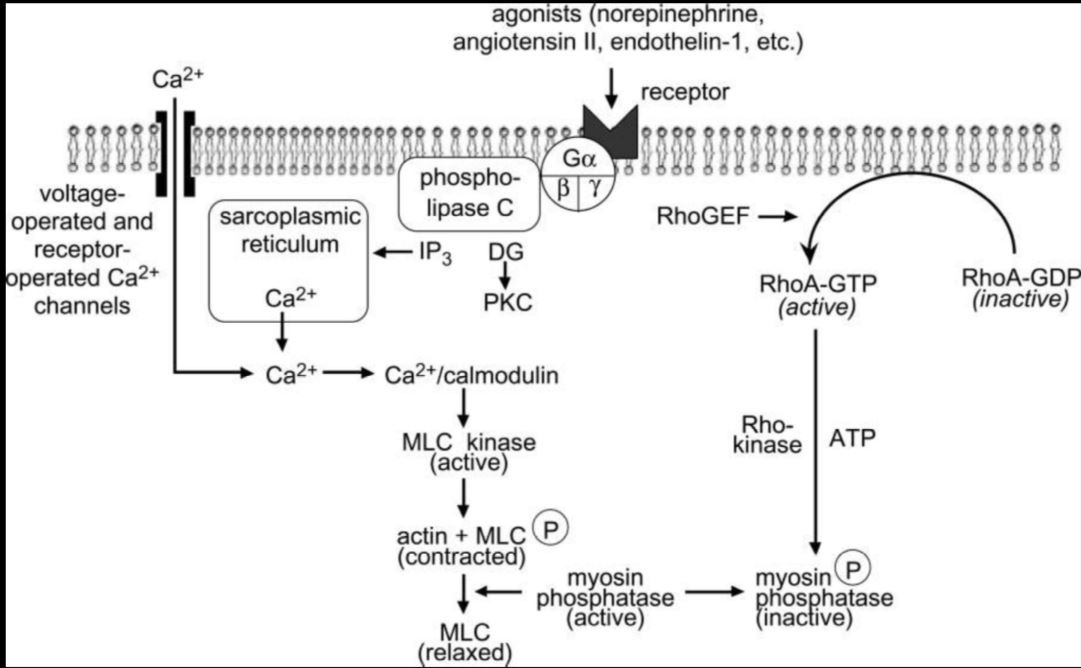
Mechanisms of smooth muscle contraction
-Imig
Mechanisms of constriction reversal
-Imig
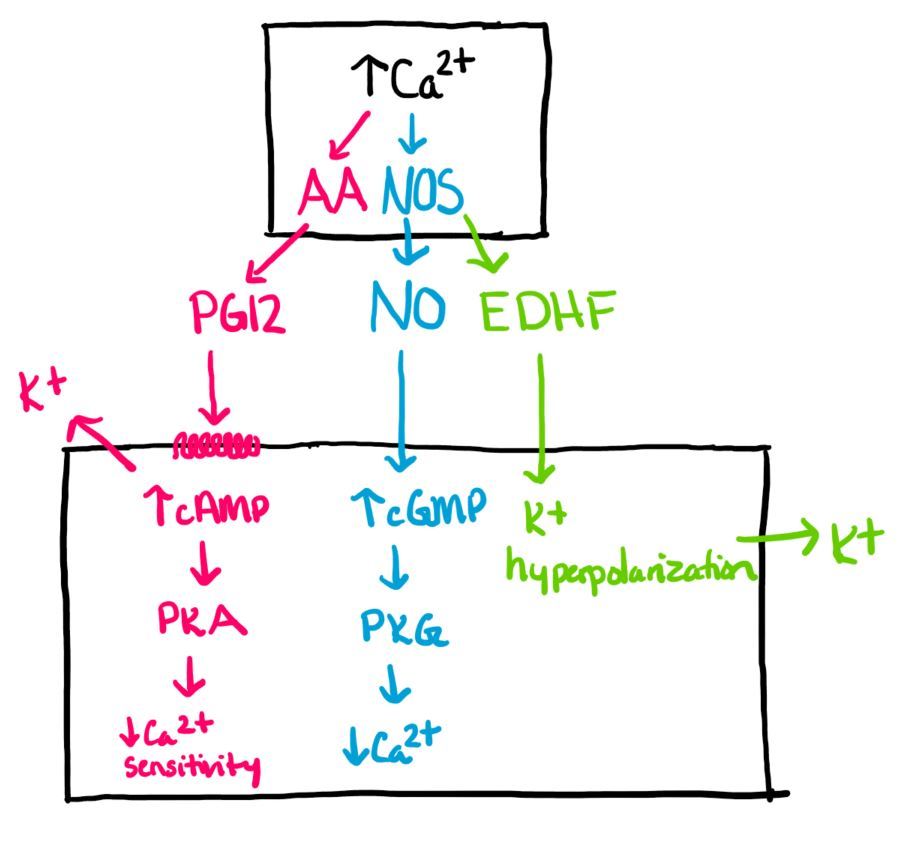
Endothelium-derived factors:
- Nitric oxide (NO)
- Produced by nitric oxide synthase (NOS) from O2 and L-arginine in endothelial cells
- NO stimulates cGMP production
- cGMP induces smooth muscle relaxation by:
- inhibiting calcium entry & decreasing intracellular calcium concentration
- activating K+ channels to hyperpolarize cell
- stimulating protein kinase that activates myosin light chain phosphatase enzyme that dephosphorylates myosin
- Prostaglandin I2 (PGI2)
- Endothelium-derived hyperpolarizing factors (EDHFs)
Innate cells
-JBarb
Two important features: recognition of a stimulus and migration
Migration:
- Different integrins recognize different surface molecules
- Use actin cytoskeleton to move certain direction
- Two phenomena: spreading and directed motility
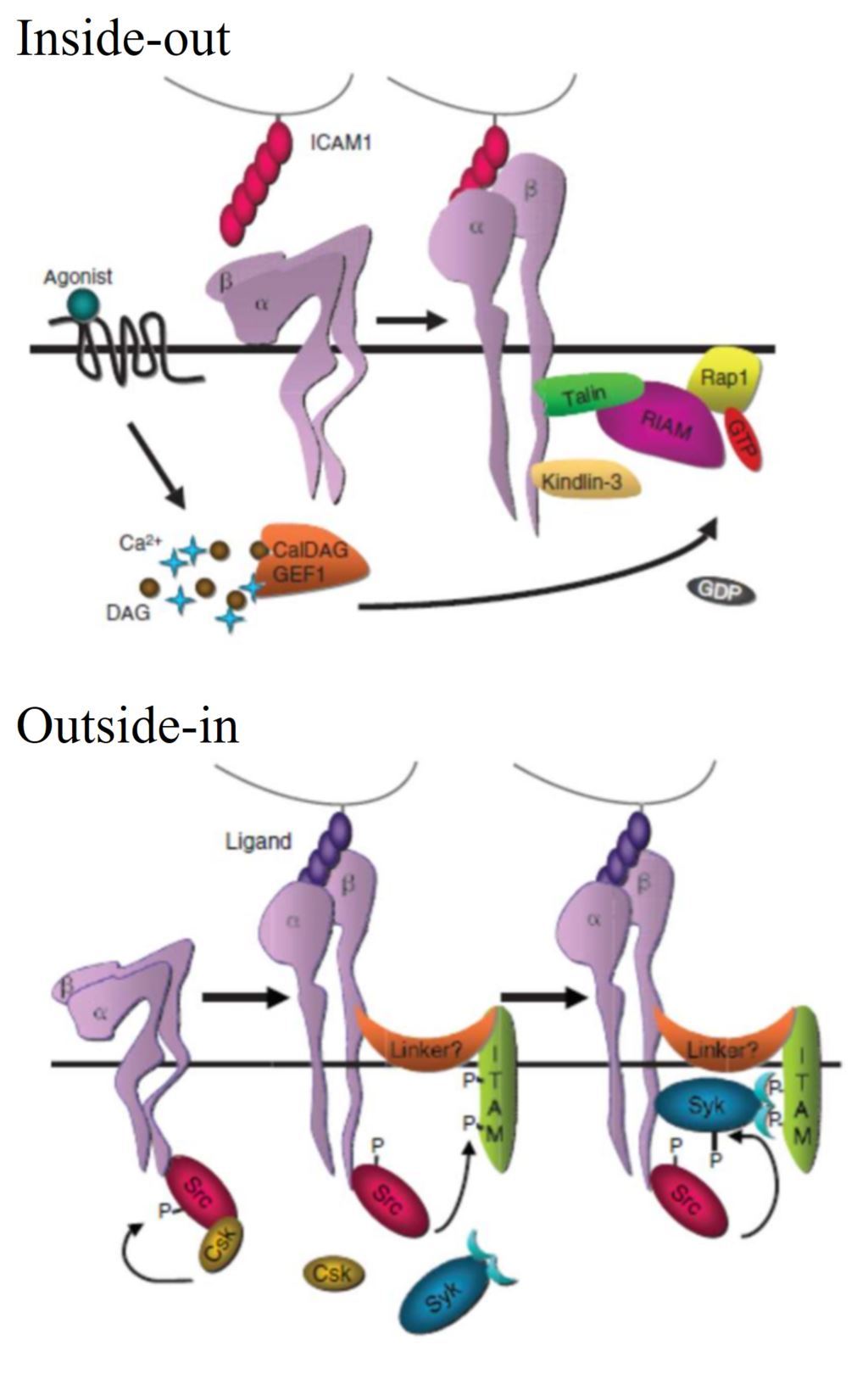
Inside-out signaling:
- GPCR mediated
- In area of inflammation, agonist bind GPCR and get Ca2+ and DAG response that activate he Rap1 GEF CalDAG-GEF1
- Talin is recruited to the beta-subunit of integrins to activate integrin
- Increases affinity of integrin binding to ECM
Outside-in signaling:
- Binding to ECM activates integrin
- When inactivated: Src kept inactive by Csk kinase.
- When activated, Csk kinase is released and Src phosphorylates exchange factors that activate Rac1, which stimulates spreading.