where are viruses? what can they cause
- found everywhere: in all ecosystems, all cellular organisms are infected by them
* if theres a host they can ifnect they’ll be there
- big impacts on ecosystems, evolution, human/animal health and history
- some can generate serious global diseases: SARS COVID-19, Zika, human and avian influenza, HIV-AIDS etc
how are Viruses used in research?
- serve as tools and model systems in molecular biology and genetic engineering including vectors for gene clonging, delivery devices for gene therapy and CRISPR antiviral defense system
- Attenuated and genetically engineered viruses used as vaccine
- Bacteriophages are being used to treat infections by multi-antibiotic resistant bacteria
- Buculoviruses (infect specific insects) are used for bio-control of insect pests
what is the ecological role of viruses
- viruses are the tiniest of biological entities, they have huge roles in ecosystems
- sum of viral populations in an ecosystem = virome
- virus-to-bacteria ratios range from 1:100 in marine and aquatic environments to 1:1000 (100-1000 virsues for each species of bacteria)
*play role in controlling microbial densities -> they pray on bacteria
- on global scale they are critical players in carbon balance and in the global recycling of nutrients
- marine bacteriophages and eukaryotic viruses infect numerous aquatic hosts, when host organism dies their organic matter provides them carbon and nitrogen for growth to toher organisms in env
describe the ‘host range’ of a virus
- viruses are obligate intracellular pathogens (must infect a host cell to reproduce)
- each species infect a particular group of host species known as their host range
- Chronic viral ifnections are more common than acute disease
- we have far more antibacterials then antivirals (viruses typically cause chronic infections though, would be more lucrative to have mroe antivirals)
what is a virus
- virus particle or VIRON is a ‘bag’ of genomic material protected by protein coat that:
- must infect a host cell where itll reproduce
- typically subverts the cell’s machinery and directs it to produce viral particles
- consists of nucleic acid (DNA or RNA) contained usually within a protective protein CASPID coat
- genome typically codes for 10-100 genes
* cna argue that viruses are non living bc lack metabolism and not able ot reprudoce wihout a host
What are giant viruses
- simple definitions based on size can be problematic
- ‘giant’ viruses have genomes of double stranded DNA comrpised of 500-2500 genes
*more genes than some free lving bacteria and aerchaea
- the mimivirus which infects amoebas is as large as some bacteria (can actually be infected by smaller viruses called virophages)
what are viroids
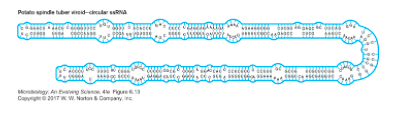
- Viroids (not virions) are extreamely simple RNA viruss that infect plants
*double stranded RNA virus
*basically just naked RNA, no protein cpaid and replicated by the hosts RNA polymerase
- some have catalytic ability: cleave specific RNA sequences
- transmitted by sap feeding insects, throguh damaged tissue and infected seeds
what are prions
- shape chainging proteins
- occur naturally in the brain fo animals: in normal conformation cause no problems
*infectious proteins, NO RNA or DNA, not in a capsid
- cahnge in conformation due to spon mutation, can then recruit and bind to the normal protein causing it to change shape
- abnormal conformation is pathogenic (disease causing) and can be transmitted
•Highly resistant to chemical, heat, radiation inactivation
* multiple prion proteins aggregae and cause sponge like holes/plaques in the brain
*prions are not viruses, cause disease by abnormal protein shape not be nucleic acids
describe the gneral anatomy of a virus
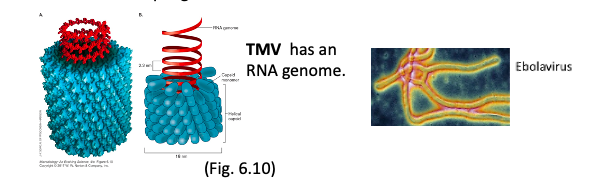
- two general formats: caspid & genome (RNa and DNA) or caspid, genome & envelope
*envelope is composed of cytoplasmic/cell membrane derived fromt he host cell
- the viral caspid protects the genome (present in all virsues)
- capsid composed of repeated protein subunits, this maximized the capacity while minimizing the number of genes required
- caspid packages of the viral genome and delivers it to the host cell
*different virsues make different caspid forms: symmetrical and asymmetrical
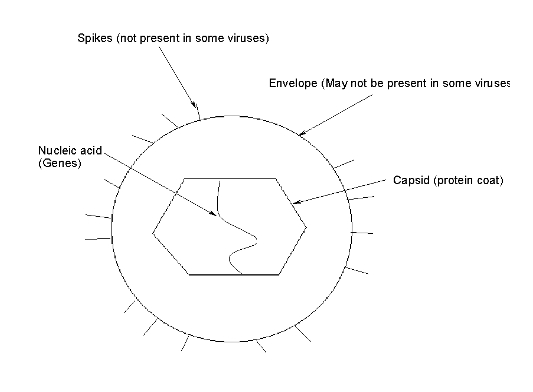
What is an icosahedral virus
- symmertrical virus
- ef: herpes simplex virus (HSV-1)
- polyhedral with 20 identical triangular faces- largest possible (making up the caspid)
- structure has rotational symmetry
- caspid is packed with viral DNA genome *not all icosahedral viruses have a DNA genome, but this is the case with herpes
- some icosahedral virsues ahve an envelope surroudning/encolsing the caspid
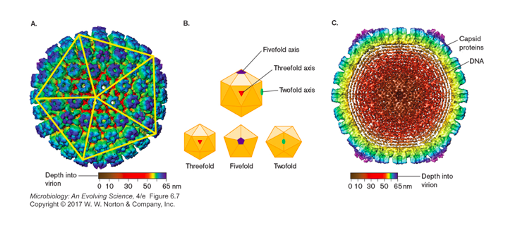
what is a filamentous virus
- symmetrical virus
- ex: tobacco mosaic virus (TMV), ebola
- elongated shape
- caspid consists of long tube of caspid monomers with the genome coiled inside
- vary in legnth depenging on genome size
- include bacteriophages as well as animal viruses
what are asymmetircal viruses
ex: influenza, poxvirus - lack capid symmetry
- have large genomes surrounded by several layers: core envelope studded with PSIKE proteins and an outer membrane
- also contain a large number of accessory viral proteins
*encoded for by viral genome
- accessory proteins are required immediately upon infection of the host cell, faciliates survival of virus and subvert host cell functions
describe complex / asymmertircal viruses
- ahve multipart structures
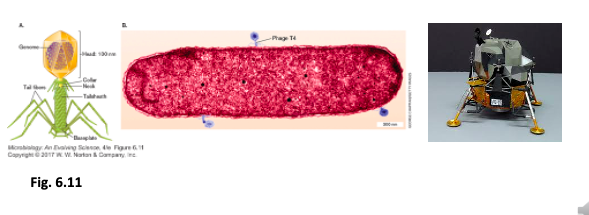
- T4 bacteriopahges
- have icosahedral “head” and helical “neck”
- neck acts as an elaborate injectisome devide
- looks like an apollo lander
- middle pic is an electromicrograph shoing bacteriophage infecting an ecoli cell, entire virus contracts as the DNA in injected through the neck adn cell wall into e coli
describe viral genomes
- DNA or RNA not both
- varations: double standed (ds) or single standed (ss) RNA or DNA
- ssDNA or ssRNA can be + (sense) or - (antisense)
- can be linear, ciruclar or segmented: some viruses ahve one piece of DNA/RNA while others may have multiple pieces
- messanger RNA encoded using antisense as the template so the nucleotide seq of mRNA matches that of the coding strand
- genes in viruses encode: capsid proteins, the accessory proteins, spike protiens
how are viruses classified
- classifed based on :
1. genetic material: DNA or RNA genome, strandessness (ss or ds), if ss then either +sense or -antisense
2. morphological/host range characteristics: shape, size, enveloped, non enveloped, host range
*baltimore classification scheme uses only (1) while international committee on the taxonomy of viruses (ICTV) uses (1) and (2)
what is the central dogma
DNA -> mRNA -> protein
*information flows different pathways in RNA genome viruses
-ssRNA <–(rdRP)–> + ssRNA —(host ribosomes)–> viral proteins
RdRP = viral RNA-dependent RNA polymerase, this viral enzyme is packaged in the viron
+ssRNA = positive (+) single strang (the +ssRNA serves directly as mRNA)
-ssRNA = negative ss RNA, template to make a +sense copy
*all cells and vriuses nee to make mRNA (+ssRNA) to produce proteins
NOTE +ssRNA is teh same as mRNA

describe the baltimore classification of viruses
- research-wise is the most used
- HOW mRNA is produced by a virus is central to the baltimore virus classification
- 7 fundamental ways shown in fig 6.19
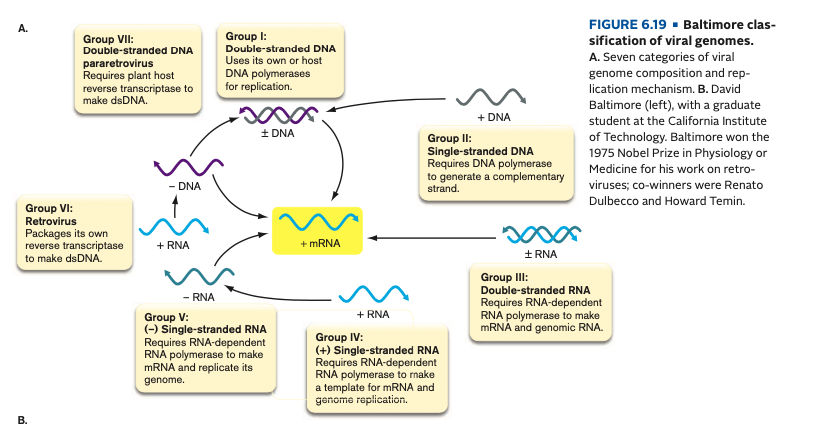
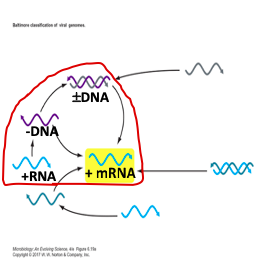
how to retroviruses make mRNA
- integrate their genomes into the host genome
- have (+)ssRNA genomes, equivalent of an mRNA is used for translation into viral proteins using host cell machinery
- retroviruses are RNA reverse transcribing viruses : they package thier own reverse transcriptase (RT) enzyme
- the +ssRNA is injected into the host and used as template and transcribed into -ssDNA (intermediate)
- accomplished by RT enzyme trascribes the virus (+)ssRNA genome into a ss(-)DNA (start with RNA to get DNA)
- the ss(-) DNA strans if then generated using host DNA polymerase generating dsDNA
- the dsDNA is inserted into the host genome and directs the expression fo the viral genome
- includes HIV, SIV and FIV
*read more in textbook on how
naming viruses
- Family name: ends with viridae
- Genus name: ends with virus
*Members of the same family share similar characteristics but each member (genus) has other unique characteristics
E.g. FAMILY: Hepadnaviridae
Genera: Hepadnavirus
Can you tell the type of genetic material? Disease the virus causes?- hep = liver cells, also contains DNA
how do you grow viruses - bacteriophages
- culturing bacteriophaes quite easy, just need bacteria and palte on agar medium and evenutally get a lawn
- infect wiht bacteriophage that infects these
- if lytic will see plaques (zones of clearance), if you took a sample from middle of plaque where there is a lawn would make another zome of cleance (plaques contin lots of the virus)
- can then washt eh plate with buffer to collects lots of baceria phages
howd o you culture eukaryotic viruses
- culturing viruses reuqires groth in a susceptable/ appropraite host cells: plant and simal viruses are especially diffuclt to cultuure bc they show tropism for particular cells/host tissues
- host cell must have the right receptors (maybe specific to liver cell)
ways to clulture:
- living animals: rabbits, mice, chimps
* ensures cirus maintains original virulence, but this is expesnvie and laborious and ethics - embryonic eggs
* inject virus into developing enbryo, this is hw you culture influenze virus for vaccinations - Tissue culutre
- in liquid media (complex and specialized media, doesnt work for all)
- in transformed/culture adapted cells, gow a layer and infect
decribe how bacteriophages/viruses infect the cell
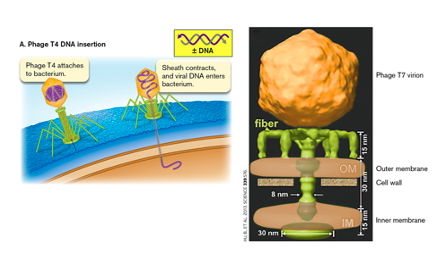
- to start infection cycle bacteriophages need to contct and attach to the surface of an appropriate bacterial host cell
- contact and attachemnt mediated by cell surface receptors
- phages have proteins/glycoproteins on their caspids that recognize specific proteins or polysaccharides on the bacterial cell surface
- receptors determine the phage tropism
- cell surface receptors are proteins wiht important functions for the host cell that have been co-opted by the virus
- host bacteria can evolve resistance to phage attachment by mutating the aa seq on receptors
what are teh stages of the lytic cycle of bacteriphages
APUBARM
- Attachemnt to a bacterial cell surface receptor (host ‘tropism’)
- Penetration of the genetic material thorugh bacterial cell wall (w/o lysis of the cell)
- Uncoating: DNA drawn into celll (caspid ghosts stays outside, ins ome animals viruses can use with the membrane)
- Biosynthesis: temporal regualtion of transcription, viral protein synthesis, genome replication
- Assembly of virion proteins and genome
- Release (+/- lysis of the cell ) through cell membrane/wall
- Maturation (final activation of virion proteins



-
History of Microbiology30
-
Microscopy31
-
Bacterial CM transport29
-
Cell envelopes35
-
Virus37
-
Microbial growth30
-
Biofilms18
-
Environmental influences on microbial growth25
-
Microbial diversity16
-
Bacterial diversity27
-
Archaeal Diversity24
-
Microbial Diversity: Eukarya33
-
Microbial Ecology and Microbial Association46
-
Introduction to the innate immune system35
-
Cellular barriers to the innate immune system33
-
Adaptive Immune system27
-
Adaptive Immune system Pt 2: Oct 3021
-
Guest lecture19
-
Microbes in health and disease31
-
Microbes and health: Nov 625
-
Defining the interplay of Klebsiella pneumoniae and host during infection by quantitative proteomics24
-
Viral Pathogens26
-
HIV: Viral pathogen24
-
Guest lecture Nov 1812
-
Physical, chemical and biological control of microbes38
-
Microbes in biocontrol19
-
microbes in food and beverage industry17
-
lab11
-
microbes in food and beverage industry pt 223



