What is an A-E assessment?
Focussed examination, detects life-threatening problems in a sequential fashion
Find - Stop - Treat - Back to start
When do we do an A-E assessment?
Any patient who looks unwell, altered conscious level, sudden deterioration, high NEWS
AIRWAY
Is the airway patent?
Can the patient talk?
Causes of acute obstruction
- Reduced consciousness: loss of soft tissue tone esp. soft palate
- Foreign body
- Oedema
- Tumour/ abscess
Airway management
- Head tilt, chin lift
- Evidence of blood or vomit? Suction
- Adjuncts
> If the above fail or are likely to fail - get anaesthetist
Signs of obstruction
- Partial: snoring, gurgling, stridor
- Complete: seesaw movement of chest and abdomen - trying but failing to get air in
BREATHING
Look: colour, resp. rate and pattern, O2 sats
Feel: trachea, chest wall movement, percussion
Listen: equal air entry, absent breath sounds, added sounds
Actions
- O2 15L NRBM
- Target sats 94-98 unless T2RF
- Request ABG/ VBG/ CXR if indicated
Types of pathological respiration
Seesaw/ paradoxical: chest falls on inspiration and rises on expiration: usually due to type 3 resp. failure
Cheyne-stokes: cyclical increase and decrease in depth of respiration associated with CHF, cerebrovascular insufficiency
Kussmaul: slow, deep breathing, hyperventilation, gasping and laboured due to ketoacidosis
Biot’s breathing: totally irregular with no pattern - CNS injury
CIRCULATION
Look: colour and temp of hands, cap refill time, JVP
Feel: peripheral and central pulse and rhythm, strength of pulse, temp
Listen: heart sounds, measure BP
How do we calculate MAP?
MAP = systolic BP + diastolic BP + diastolic BP / 3
Causes of hypotension
Problem with the pump
Arrhythmias, acute coronary syndrome, acute LV failure
Problem with the fluid
Hypovolaemia
Problem with the pipes
Sepsis, anaphylaxis
Most common cause of circulatory disturbance?
Hypovolaemia
Give 500ml bolus of either Hartmann’s or 0.9% NaCl and repeat up to 2L (or 30ml/kg)
If patient has known cardiac or renal failure consider giving 250ml instead
DISABILITY
Conscious level
Pupils
Glucose (DON’T EVER FORGET GLUCOSE)
AVPU
A - is patient alert?
V - responding to voice?
P - responding to pain?
U - unresponsive
GCS is useful if patient has had head injury
Action regarding disability
- Pin point pupils? Overdose? Do we have an antidote?
- Intracranial event - urgent CT head?
- Hypoglycaemia if blood glucose <4mmol/L - give 100ml 20% IV dextrose if you have access
- What should blood glucose be? 4.0-11.0mmols/L - if it is >15mmols/L check ketones because patient may be in diabetic ketoacidosis
- Reduced conscious level?
- Risk of airway obstruction and aspiration, place in left lateral position, airway should be protected if their GCS is less than 8
EXPOSURE
Here we perform a detailed examination of the rest of the patient while maintaining their dignity - screen for anything else abnormal
- Temperature
- Rash
- Calf swelling/ bruises
- Bleeding
- Abdominal palpation
- Use information from hx to guide you
- Collateral hx from bystanders or ambulance drivers
Once you have completed E it is important to go back to A and ensure airway is patent
Differences in airway between adults and children
Kids have large heads, tongues and floppy epiglottis so minor flexion and extension can kink off the airway, the tongue will also obstruct the airway more easily in a child than an adult
Mural causes of airway failure
Mural = in the wall
Angioedema
Burns to mouth
Infection
Neoplasm
Intraluminal causes of airway failure
Foreign body
Laryngospasm
Tongue obstruction
Bilateral recurrent laryngeal nerve palsy
Large tonsils
What % of airway is obstructed if a stridor can be heard?
~ 70%
How do patients sometimes compensate for partial airway obstruction?
- Sitting up and leaning forwards - tripod position
- Reluctant to speak or cough
- Nasal flaring
- Accessory muscles
- Pursed lips
- Paradoxical chest movements
What can make bag and mask ventilation difficult?
- Previous difficulty
- Beards
- Short, fat necks
- Obstructive sleep apnoea
- Dentures - keep them in
- Structural facial abnormalities
Causes of bradypnoea?
Sedation
Opioids
Raised ICP
Exhaustion in airway obstruction
Causes of tachypnoea
Obstruction
Asthma
Pneumonia
PE
Pneumothorax
Pulmonary oedema
Heart failure
Anxiety
Normal values for an ABG
pH: 7.35 – 7.45
pO2: 10 – 14kPa
pCO2: 4.5 – 6kPa
Base excess (BE): -2 – 2 mmol/l
HCO3: 22 – 26 mmol/l
What does a value outside of the normal base excess indicate?
That there is a metabolic cause for the alkalosis or acidosis
Base excess of >2 = metabolic acidosis
Base excess <2 = metabolic alkalosis
Patient has a chronic T2RF - what happens to their bicarbonate levels?
To counteract the respiratory acidosis caused by hypercapnia, the kidneys produce more bicarbonate
This is why a pH can be normal despite a raised CO2
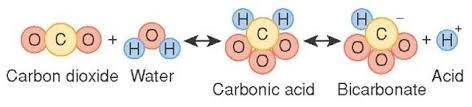
If there is an acute respiratory or metabolic acidosis, what happens to the bicarbonate?
Levels fall, ions are used to buffer the acids

-
Diabetic ketoacidosis10
-
Sepsis39
-
Acute coronary syndrome29
-
Anaphylaxis27
-
Acute haemorrhage39
-
Major trauma89
-
Head and spinal injury75
-
Burns36
-
Crush syndrome6
-
PPT68
-
Altered consciousness7
-
Seizures23
-
Overdose and poisoning72
-
Organ failure and referral52
-
Preoperative assessment15
-
Intraoperative care47
-
A-E, ABG, consent39
-
Postoperative care17
-
CPR25
-
Shock4
-
Upper and lower limb injury136
-
Asthma attack0



