Define infection
The invasion of normally sterile host tissues by microorganisms
- Any infection can give way to sepsis but not all infections lead to sepsis
Define sepsis
Life threatening organ dysfunction due to a dysregulated host immune response
Definite or likely infection + one red flag
Define septic shock
Septic patient remaining hypotensive even though fluids have been given
A subset of sepsis in which particularly profoud circulatory, cellular and metabolic abnormalities are associated with a greater risk of mortality
Persisting hypotension - requires vasopressors (press on vessels) to keep MAP above 65
+ lactate >2 despite adequate fluid resuscitation
Epidemiology of sepsis
1/5 deaths worldwide are caused by sepsis
150,000 people in the UK have sepsis every year
20-30% mortality from sepsis
50% people with septic shock die
1 person dies every 4hrs from sepsis in UK
£1.5billion cost to NHS per year
What are the most common infections that cause sepsis in the UK?
- Pneumonia: strep pneumonia = 35%
- UTI: E.coli = 25%
- Intra-abdominal infections: gram negative & anaerobes = 11%
Skin & soft tissue: staph aureus = 11%
How is sepsis clinically assessed?
NEWS2 = 5+
NEWS2 = 3 in any one parameter
Any red flags?
Signs of infection?
Sepsis red flags
- New/ altered mental state
- Resp rate >25
- Systolic BP <90 or 20% less than normal
- Sats <94% (not COPD)
- >40% oxygen needed to maintain sats
- Oliguria/ anuria/ AKI/ no urine for 8-12hrs
- Lactate >2mmol/L
- Coagulopathy/ rash/ mottled/ ashen/ cyanotic
- HR >130bpm
- Chemo within last 2-3 weeks
**If any one of the above is present and an infection is the suspected cause - escalate**
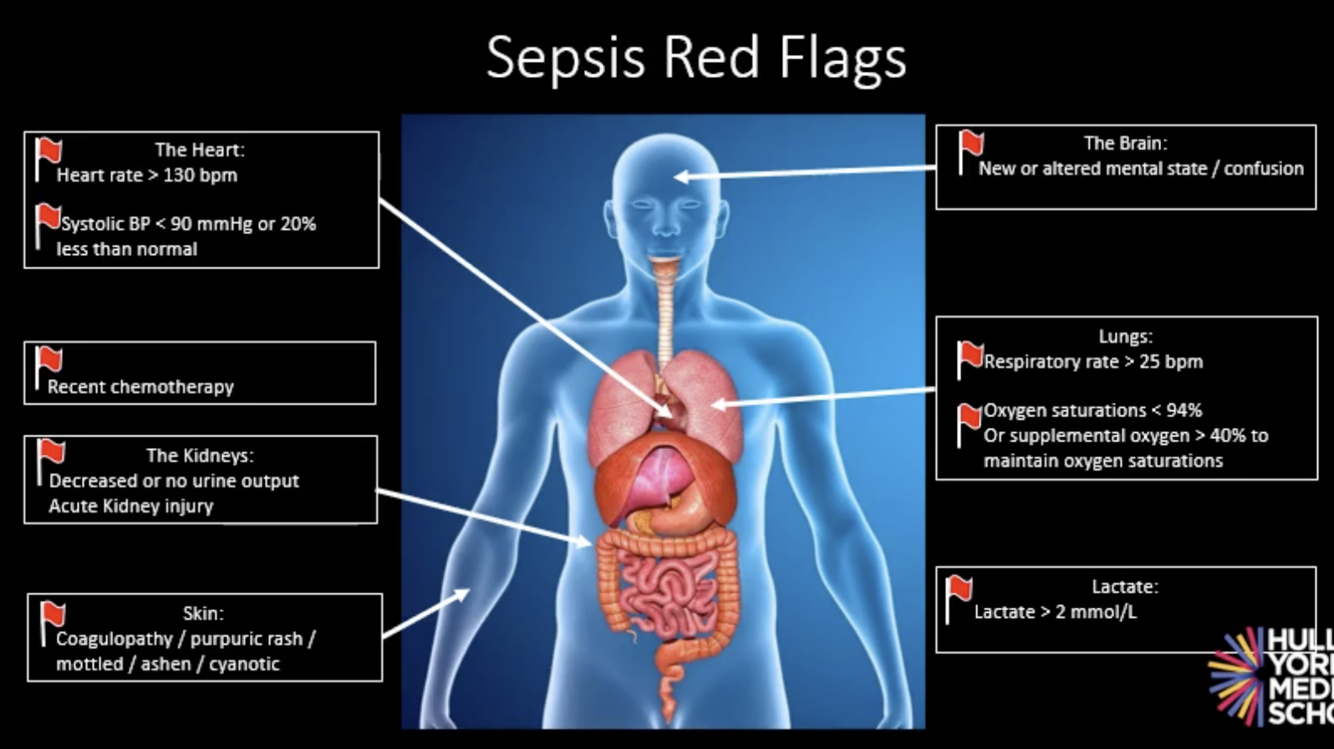
Sepsis physiology
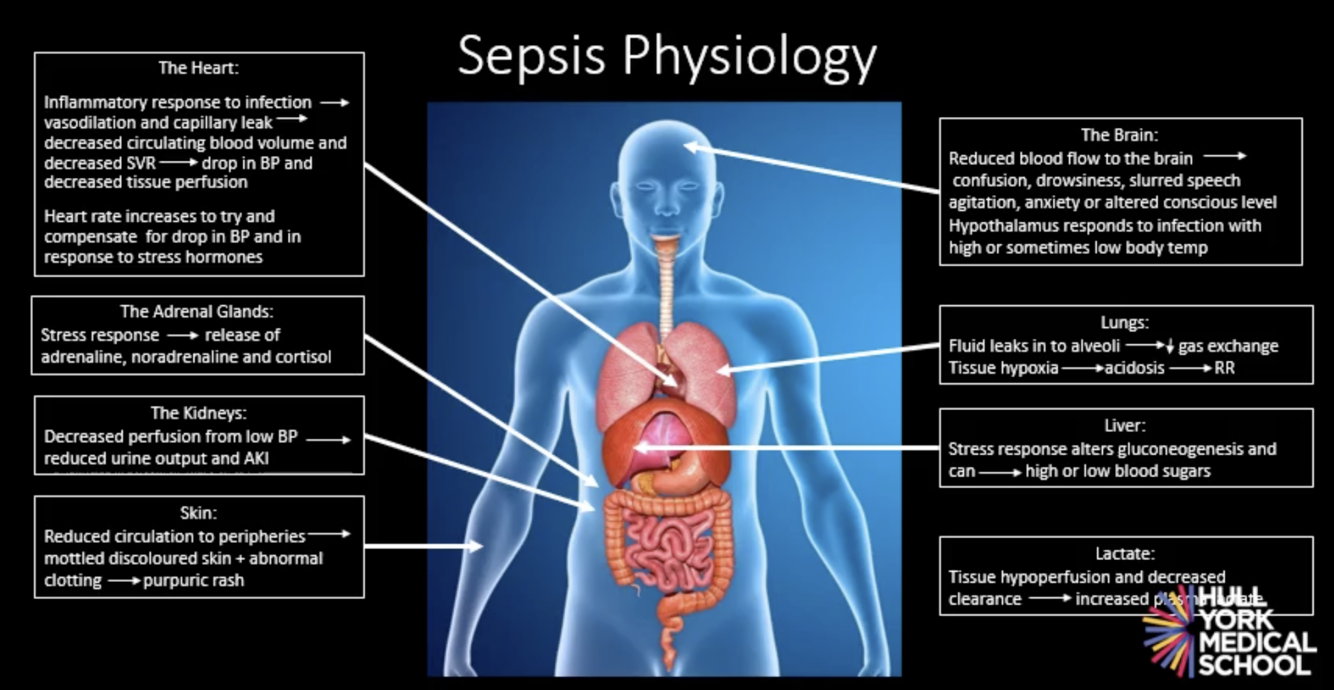
Explain the pathophysiology of sepsis related to the lungs
Important to remember about communicating sepsis as a differential
SEPSIS IS NOT A DIAGNOSIS - IT HAS TO BE ‘SEPSIS SECONDARY TO…’
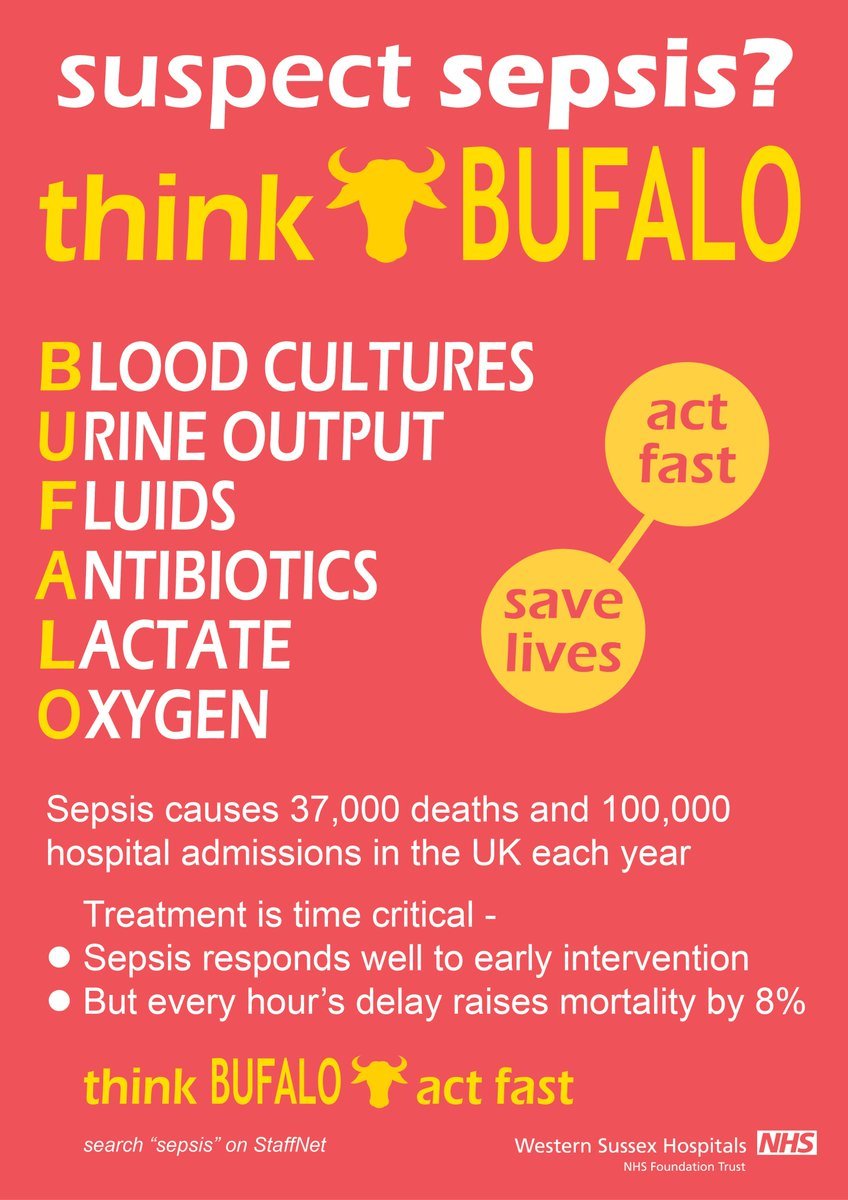
What are the sepsis 6?
Bloods Urine Fluids Antibiotics Lactate Oxygen
The 6 things done to manage sepsis
- Give oxygen: keep sats >94%
- Cultures
- Antibiotics
- Fluids
- Lactate level
- Urine output
Discuss giving oxygen in sepsis
Aim: maintain sats >94%
*Unless the patient has T2 hypercapnic respiratory failure
Cultures in sepsis
At least 1 set, ideally 2
10mls blood in each bottle
- Allows for targetted antibiotic therapy
Anibiotics in sepsis
GIVE WITHIN FIRST HOUR
Use trust antibiotic guidelines to pick the appropriate antibiotic - very broad spectrum given until cultre results available
IV fluids in sepsis
Optimises oxygen delivery to tissues
>16yrs: use crystalloids that contain sodium in the range 130–154 mmol/litre with a bolus of 500 ml over less than 15 minutes
If hypotensive or lactate >2mmol/L give IV fluid bolus injection up to 30mls/kg fluid over first 1-2hrs
If, despite fluids, BP and lactate do not improve, consider referral to ICU
Lactate in sepsis
Lactate rises becase lack of oxygen = anaerobic respiration = lactate production
High lactate = poor prognosis
*Sepsis is not the only cause of a raised lactate*
Urine output in sepsis
Urine output reflects cardiac output - we can’t measure CO on the ward so this is the way to do it
Patient doesn’t need to have a catheter
Minumun of 0.5mls urine/kg/hr e.g. 35mls in 70kg human
Fall in urine production may be the first sign that CO is falling, even if B is normal
Rsik factors for sepsis
Very young (<1yr)/ very old (>75yrs)
Immunocompromised: cancer, DM, splenectomy, steroids, immunosuppressant drugs
Recent surgery
Breach of skin integrity: cuts/ burns/ blisters
IV drug use
Indwelling lines/ catheters
Why do we measure urine output in sepsis?
It is a marker of cardiac output via kidney function
What is your responsibility in cases of suspected sepsis
- Do sepsis 6 (BUFALO) within 1hr
- Escalate to reg/ consultant
- Regularly review patient
- Refer to ICU if no improvement
What is post-sepsis syndrome?
Subtle symptoms that occur following sepsis
- Sadness/ anxiety
- Dysphagia
- Weakness
- Clouded thinking
- Insomnia
- Poor memory
- Poor concentration
- Fatigue
Compliations of sepsis
Death
Loss of fingers/ toes/ limbs due to dry gangrene
Impact on life and ability to work
Post-sepsis syndrome
Finding the source of infection in sepsis
- PMH: immunosuppression
- Vaccinations: travel immunisation
- Recent hospital stay: SSI/ indwelling devices
- Contacts: family/ friends/ co workers
- Pets: psittacosis, campylobacter
- Travel: location, food, sexual contacts, Legionnaires
- Occupation: farmers, animal handlers, healthcare worker (GI infections/TB/blood borne), sewage (leptospirosis)
- Food: shellfish (Hep A), poultry (campylobacter/ salmonella)
- Leisure activities: tick bites (Lyme disease), swimming, canoeing (leptospirosis)
- Blood borne: IVDU/ tattoos
- Sexual history
Risk assessment - NICE sepsis guidance
If sepsis is suspected the risk of severe illness is stratified
Behaviour and history: not waking, continuous cry, appears ill, carer concerned, impaired immune system
Breathing: grunting, apnoea, low sats, nasal flaring, crackles in chest, needing 40% oxygen to maintain sats >94%
Circulation: > <60bpm, cap refill 3+ seconds, cold peripheries, leg pain
Skin
Temperature
Urine

-
Diabetic ketoacidosis10
-
Sepsis39
-
Acute coronary syndrome29
-
Anaphylaxis27
-
Acute haemorrhage39
-
Major trauma89
-
Head and spinal injury75
-
Burns36
-
Crush syndrome6
-
PPT68
-
Altered consciousness7
-
Seizures23
-
Overdose and poisoning72
-
Organ failure and referral52
-
Preoperative assessment15
-
Intraoperative care47
-
A-E, ABG, consent39
-
Postoperative care17
-
CPR25
-
Shock4
-
Upper and lower limb injury136
-
Asthma attack0



