What are the shockable rhythms?
🎶 DFIB for VFIB and pulseless VTACH 🎶
What are the non-shockable rhythms?
PEA & asystole
🎶 Don’t shock asystole you won’t get them back 🎶
Patient is unresponsive + not breathing - what to do?
Check for response, open airway and look, listen, feel for 10 seconds
Call resus team 2222 - state adult cardiac arrest + location
CPR 30:2 (100-120 compressions per min @ 5-6cm)
Attach defib/ monitor: once attached, pause for rhythm check
DON’T FORGET TO ATTACH OXYGEN, INSERT CANNULAE AND ATTACH SATS PROBE
- You will need to take blood to look for K+ derrangements that can cause cardiac arrest -
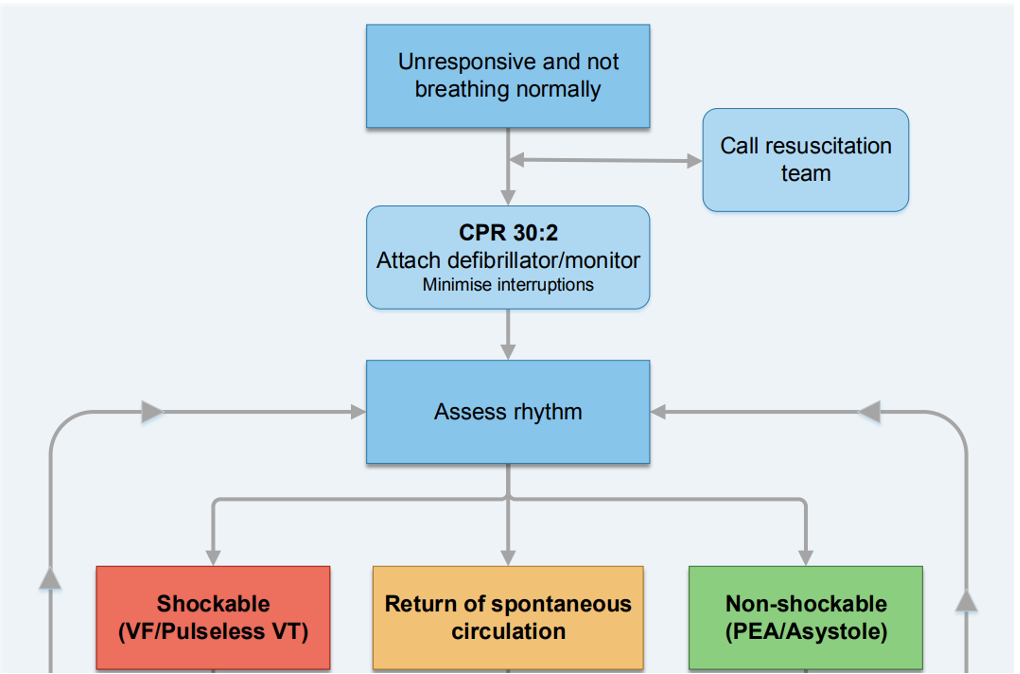
You’ve attended a cardiac arrest call and the ECG shows VF - what do you do?
VF is a shockable rhythm
1 shock followed by CPR for 2 mins
After 2 mins another rhythm check is performed
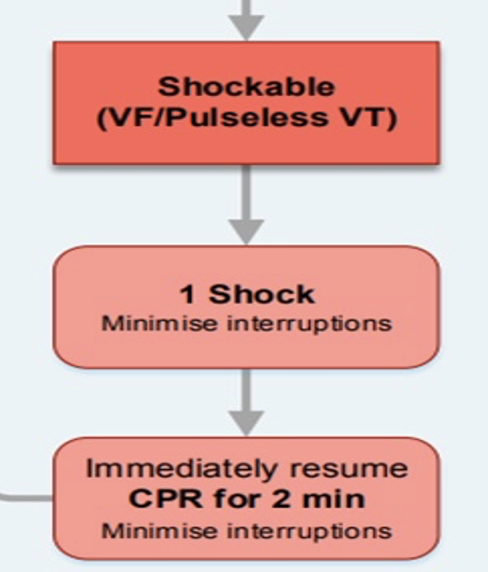
3 shocks have been given to a cardiac arrest patient - what drugs should be given at this point?
1mg adrenaline: 1:10,000 IV
3mg amiodarone IV
Done whilst continuing CPR
Give another 1mg adrenaline after alternate shocks
Give 150mg more amiodarone after a total of 5 shocks
Reversible causes of cardiac arrest
4 x H
- Hypoxia
- Hypovolaemia
- Hypokalaemia/ hyperkalaemia (important to take blood to assess this)
- Hypothermia
4 x T
- Thrombosis
- Tension pneumothorax
- Tamponade
- Toxins
How would management of a patient in cardiac arrest be different if they were in a non-shockable rhythm?
After a rhythm check is done that confirms the rhyhm is non-shockable
Continue CPR at 30:2
Amiodarone is NOT given in non-shockable rhythms
Adrenaline IS given (1mg 1:10,000 IV)
When is adrenaline normally synthesised?
Synthesised from noradrenaline in the adrenal medulla (chromaffin cells)
*Patients who have had their adrenal glands removed still produce adrenaline from sympathetic chains around the aorta*
Mechanism of action of adrenaline
Alpha and beta adrenoceptor agonist
With regards to cardiac arrest it increases coronary and cerebral perfusion via effects on the alpha receptors - causes vasoconstriction
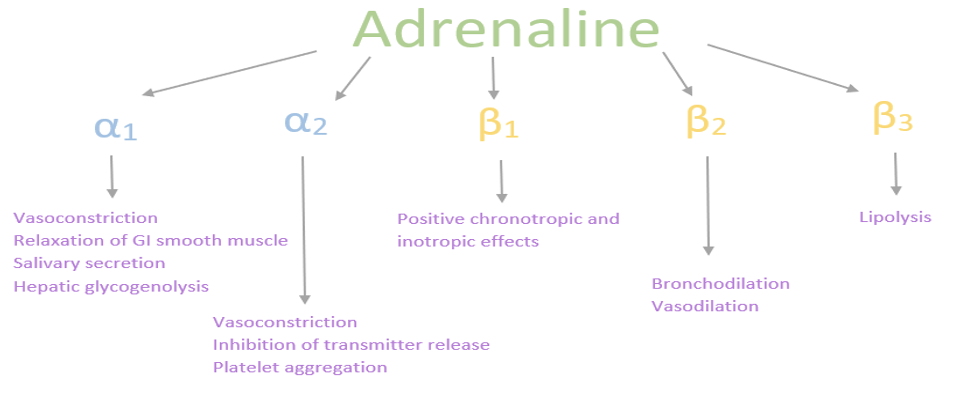
Cautions of using adrenaline
- Ischaemic heart disease
- Cerebrovascular disease
- DM
- HTN: risk of cerebral haemorrhage
- Hyperthyroidism
- Hypokalaemia: adrenaline causes K+ to enter cells
- Ring blocks : do not use adrenaline, can cause necrosis
BUT remember the above do not apply to cardiac arrest… can’t do much harm if patient is in cardiac arrest
Most common cause of PEA?
Hypoxia secondary to respiratory failure
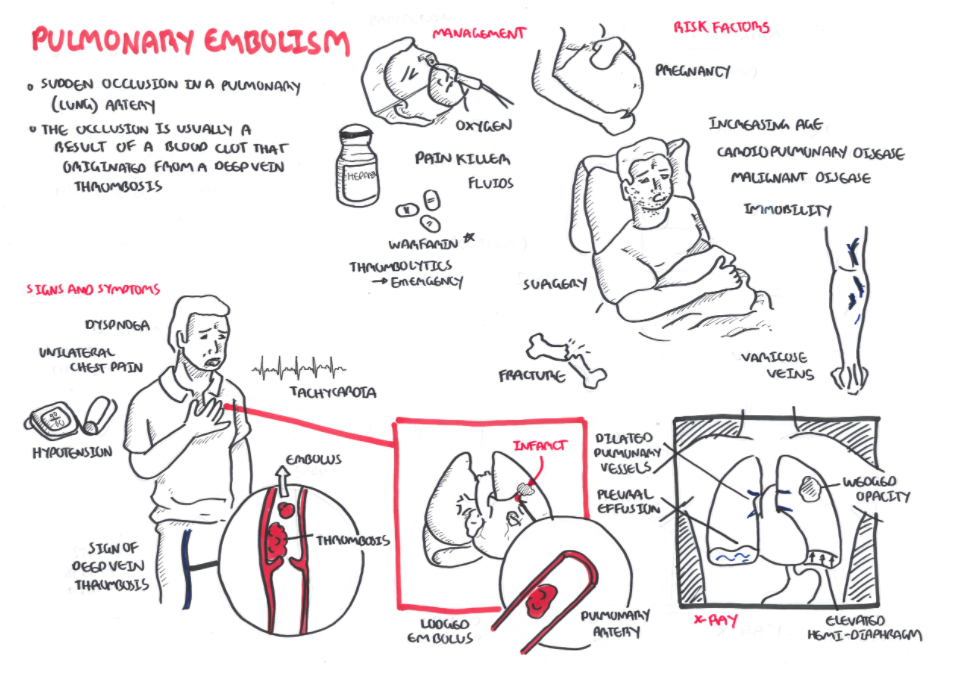
Explain how a PE causes PEA
Massive saddle PE
a) Prevents blood leave the right ventricle because it is blocking the way
b) The left side of the heart is receiving no blood from the lungs because of the PE
Meaning the blood is trying to pump but there’s nothing in it to pump
Why is there a risk of severe hypertension when beta blockers and adrenaline interact?
Adrenaline attempts to compete with the b-blocker and we end up with unopposed alpha effects and mainly vasoconstriction
Normally adrenaline would cause a bit of vasodilation - in the absence of a beta-blocker, a systemic dose of epinephrine does not have much effect on mean blood pressure because it has both alphaadrenergic effects (producing vasoconstriction) and beta-adrenergic effects (producing vasodilation).
B-blockers mean adrenaline causes excessive vasoconstriction leading to severe HTN
Mechanism of action of amiodarone
Class III antiarrhythmic - blocks K+ channels
- Used to disrupt irregular electrical activity by prolonging the duration of the cardiac action potential
Multiple anti-arrhythmic actions across all four groups
- Prolongs cardiac action potential and delays refractory period
- Inhibits K+ channels involved in repolarisation
Challenges of amiodarone
- Poorly orally absorbed
- Large volume of distribution
- Extremely long half life: takes many weeks to reach steady state so it is given in different doses over a number of weeks, once stopped takes a long time to be eliminated
Side effects of amiodarone
Most term side effects are long term
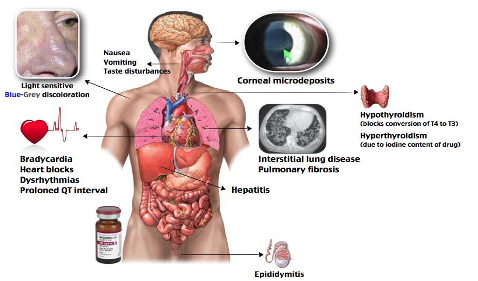
- Gastrointestinal disturbances – constipation, nausea, vomiting, taste disturbance
- Corneal microdeposits – reversible on withdrawal of treatment, associated with night glare, if vision impaired or optic neuritis/neuropathy develops amiodarone must be stopped to prevent blindness
- Hypothyroidism – prevents conversion of T4 to T3 resulting in hypothyroidism requiring replacement with thyroxine
- Hyperthyroidism – high iodine content, can cause a destructive thyroiditis leading to release of preformed thyroid hormones and refractory thyrotoxicosis
- Skin reactions – photosensitive skin rashes and blue-grey discolouration
- Hepatotoxicity – severe LFT abnormalities or clinical signs of liver disease require discontinuation of treatment
- Progressive pneumonitis and lung fibrosis – should be suspected if new onset SOB or cough
Proarrhythmic effects
Peripheral neuropathy/myopathy – reversible with withdrawal of treatment
Short term
- Bradycardia
- Heart block
>> Again in cardiac arrest, we don’t worry about side effects because patient already dead <<
What monitoring would you arrange for a patient commencing amiodarone?
TFT and LFT should be checked before treatment and every 6 months
Check potassium levels and chest x-ray before treatment
With IV use ECG monitoring must be available
Amiodarone contra-indications
- Severe cardiac conduction disturbances (unless pacemaker fitted)
- Thyroid dysfunction
- Iodine sensitivity
- Severe respiratory failure – amiodarone causes fibrosis
- Circulatory collapse
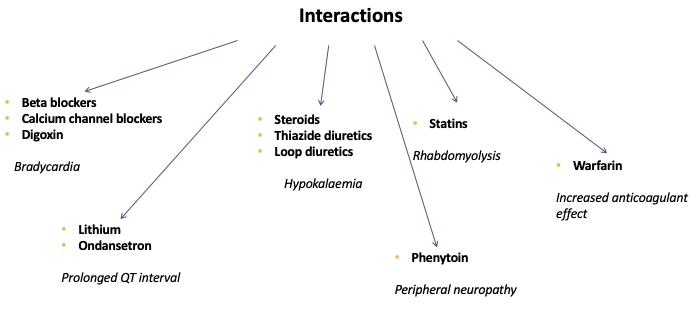
Amiodarone side effects
What do we do BEFORE we give a carotid sinus massage?
Listen for a bruit
Does the patient have a plaque that we could dislodge?
What is the first way to try and terminate a supraventricular tachycardia?
Vagal manoeuvres
- Carotid sinus massage: works on the baroreceptors at the bifurcation of the common carotid artery which control BP and HR by measuring degree of stretch in the vessels. Results in reduction in HR and BP >> performed by applying pressure over the carotid pulse for 5-10 seconds >> continuous ECG nonitoring
- Valsalva manoeuvre: forced exhalation against a closed airway, performed for 15-20 seconds causing fluctuations in HR and BP due to altering venous return
How does adenosine work?
IV adenosine has potent effects on the SA node inducing sinus bradycardia and slows impulse conduction through the AV node with no effect on conduction through the ventricles
Used for emergency management of SVT for rapid conversion back to sinus rhythm
Works on adenosine receptor - binding promotes opening of adenosine sensitive K+ channels and increased K+ efflux out of myocardial cells - cells become hyperpolarised and slows the rate of the pacemaker potential
Bolus of adenosine lasts 20-30 seconds
How many doses of adenosine are given before giving for senior help?
3
Adenosine contraindications
- Asthma/COPD
- Decompensated heart failure
- Long QT syndrome/AV block/sick sinus syndrome
- Severe hypotension
- Many cautions associated with cardiac disease




-
Diabetic ketoacidosis10
-
Sepsis39
-
Acute coronary syndrome29
-
Anaphylaxis27
-
Acute haemorrhage39
-
Major trauma89
-
Head and spinal injury75
-
Burns36
-
Crush syndrome6
-
PPT68
-
Altered consciousness7
-
Seizures23
-
Overdose and poisoning72
-
Organ failure and referral52
-
Preoperative assessment15
-
Intraoperative care47
-
A-E, ABG, consent39
-
Postoperative care17
-
CPR25
-
Shock4
-
Upper and lower limb injury136
-
Asthma attack0



