Describe the anatomy and drainage of the paranasal sinuses
- 4 pairs of sinuses → frontal, ethmoidal, sphenoidal, maxillary
- need to be ventilated + drain to stay healthy and pain free
- frontal → drain via frontonasal duct, enters middle meatus
- ethmoidal → 3 sets of air cells w/ diff drainage, anterior (frontonasal duct), middle (ethmoid bulla) and posterior (superior meatus)
- sphenoidal → sphenoethmoid recess
- maxillary → hiatus semilunaris (of middle meatus)
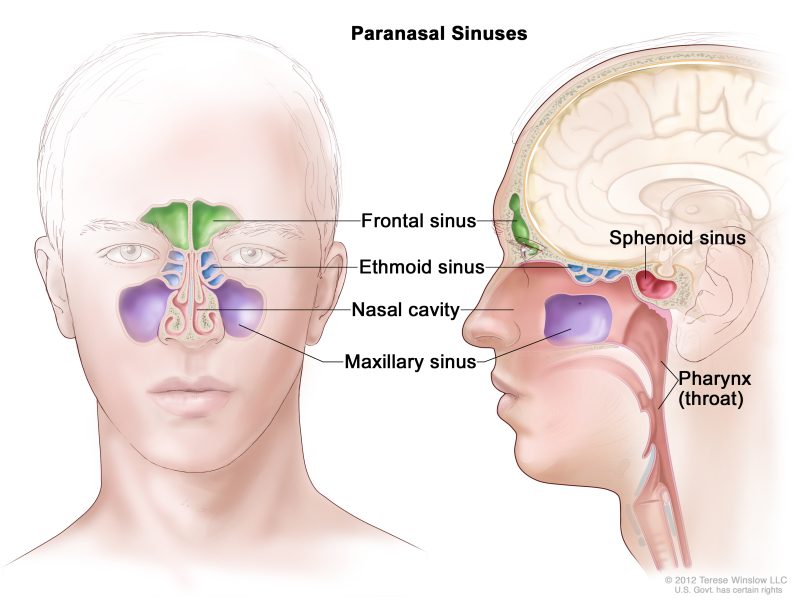
Acute sinusitis is symptomatic inflammation of the mucosal lining of the nasal cavity and paranasal sinuses, where clinical symptoms have been present for 4wks or less. It can be caused by either a viral or a bacterial infection.
What are the signs and symptoms of acute sinusitis?
- symptoms <10 days → acute viral sinusitis
- symptoms >10 days but <4wks → acute bacterial sinusitis
- bacterial also when symptoms worsen after initial improvement
- purulent nasal discharge
- nasal obstruction
- facial pain/pressure
- pain → dental / peri-orbital / deep headache
- cough, myalgia, sore throat, hyposmia, oedematous turbinate
How is acute sinusitis diagnosed?
- clinical diagnosis but can do tests to confirm
- nasal endoscopy → mucosal erythema + purulent discharge
- sinus culture → positive for organism
- CT sinuses → identified extent
- XR sinuses → air-fluid level of involved sinuses
- MRI
- lateral neck x-ray → adenoid hypertrophy in kids
This is generally a self-limiting disease, and treatment is primarily symptomatic. The disease course is usually less than 10 days, but symptoms tend to improve after approximately 5 days.
What is the treatment for acute viral sinusitis?
- conservative → adequate rest, hydration, warm facial packs, steam inhalation, OTC meds (try for 5-10 days)
- analgesics / antipyretics → for pain + fever
- decongestants → topical (oxymetazoline) (3-5days)
- intranasal corticosteroids → in those w/ congestion, trial for 1month
- topical anticholinergics → for those w/ rhinorrhoea
- intranasal saline irrigation
What is the treatment for acute bacterial sinusitis?
- for non-severe symptoms in immunocompetent people → watchful waiting for up to 10 days w/ symptomatic therapy
- antibiotic therapy for immunocompromised or those with:
- fever
- mod-severe facial or dental pain
- unilateral sinus tenderness
- periorbital oedema
- worsening of symptoms after 3-5 days
- lack of improvement after 7-10 days of observation
- 1st-line → amoxicillin +/- clavulanic acid
When would referral to ENT specialist be indicated, in regards to acute sinusitis?
- patient is immunocompromised
- complication of sinusitis is suspected
- cranial nerve deficits present, suggesting possible invasive fungal or orbital sinusitis
- condition refractory to usual Abx
- condition is recurrent (4+ episodes / year) or significantly affects quality of life
- suspected allergic or immunological basis for condition or comorbidities present that complicate management
Complication of acute sinusitis occurs when infection spreads beyond the bony walls of the sinus. This is rare in Western countries but a common problem worldwide.
What are some of the complications?
- Orbital complications (cellulitis / abscess) → peri-orbital oedema, diplopia, chemosis, proptosis. Rx → CT, IV Abx plus ENT opinion, surgery required if any change in vision
- Meningitis, extradural abscess + subdural abscess (S milleri)
- Cerebral abscess (frontal lobe) → insidious onset, headaches, apathetic + abnormal behaviours
- Osteomyelitis → headache + oedema over frontal sinus, intensive IV Abx + removal of bone if required
- Cavernous sinus thrombosis → rare, proptosis, chemosis, opthalmoplegia, Rx → culture-directed IV Abx + anticoag
- Chronic sinusitis
Chronic sinusitis is inflammation of the paranasal sinuses lasting >12wks. Chronic sinusitis is divided into 2 groups: with and without polyps, which have slightly different treatment regimens.
What are the clinical features of chronic sinusitis?
- facial pain/pressure, nasal obstruction, discharge
- purulence
- headache
- fatigue
- anosmia
- halitosis
- ear pain/pressure
What are causes of chronic sinusitis?
The most difficult aspect of this disease is that it seems to be an endpoint (sinonasal inflammation) from many different causes, not a disease entity in and of itself. The main cause is thought to be anatomical obstruction of the osteomeatal complex (a common drainage pathway for several sinuses) leading to inadequate sinus drainage of mucus.
Three overlapping groups:
- genetic/physiological → CF, primary ciliary dyskinesia, asthma
- environmental → smoking, foreign bodies
- structural → severe mid-septal deviations
Studies have shown a higher incidence of anaerobic and polymicrobial infections in patients with chronic sinusitis compared with those with acute disease
How is chronic sinusitis investigated?
- anterior rhinoscopy → polyps, purulence from middle meatus, or structural abnormalities may be seen
- nasal endoscopy → similar findings as above
- sinus CT/MRI
- nasal/sinus cultures
What is the treatment for chronic sinusitis?
- 12wk course antibiotics (culture-directed)
- topical intranasal corticosteroids
- nasal saline irrigations
- surgery → endoscopic sinus surgery to reestablish sinus ventilation and drainage by making sinus openings and passageways wider

-
Hearing Loss21
-
Acute Otitis Media8
-
Chronic Otitis Media & Cholesteatoma11
-
Conditions of the Pinna and External Auditory Canal0
-
Earache (Otalgia)3
-
Tinnitus4
-
Vertigo20
-
Acoustic Neuroma0
-
Epistaxis14
-
Rhinitis & Nasal Polyps10
-
Acute & Chronic Sinusitis11
-
Nasal Injury and Foreign Bodies0
-
Tumours of Nose, Sinuses and Nasopharynx0
-
Airway Obstruction and Tracheostomy11
-
Laryngitis and Epiglottitis14
-
Pharyngitis and Tonsillitis14
-
Head and Neck Carcinoma19
-
Sleep Apnoea7
-
Vocal Cord Paralysis0
-
Diseases of Salivary Glands0



