Rhinitis is inflammation of the lining of the nasal cavity. There are allergic and non-allergic mechanisms.
What are typical clinical features of rhinitis?
- nasal congestion + obstruction
- rhinorrhoea or discharge (enhanced glandular activity)
- sneezing
- post-nasal drip
- anosmia
- facial pain
- nasal pruritus
O/E ⇒ nasal mucosal oedema/exudate, enlarged turbinates
Up to 25% of the population have nasal manifestations of type I hypersensitivity reactions. Seasonal allergic rhinitis often causes hayfever, whereas perennial (continuous) allergic rhinitis has no seasonal variation and is often due to house dust mites but can be animal dander.
What is the pathophysiology behind allergic rhinitis?
- allergen binds to IgE on mast cells
- leads to degranulation
- inflammatory mediators eg. histamines cause local response
- leads to oedema and mucus secretions
- results in symptoms experienced
How is allergic rhinitis diagnosed?
- clinical diagnosis
- therapeutic trial of antihistamine or intranasal steroid
- allergen skin-prick testing
- in vitro specific IgE determination
What is the treatment of rhinitis?
- avoidance / removal of allergens (see next)
- nasal douches
- medical ⇒ antihistamine therapy (oral or intranasal) eg. cetirizine
- second-line if more severe:
- leukotriene receptor antagonists
- oral or intranasal corticosteroids (short term)
- nasal decongestants (use for short periods)
- sodium cromoglycate (stabilises mast cells)
What advice would you give a patient for efficient allergen avoidance and control?
Goal is to avoid/remove pollen, dust mites, pet dander + moulds
- keep windows closed + employ air conditioner in recycling mode
- minimise time spent outdoors during high pollen times
- employ HEPA (high-efficiency particulate air) filters
- encase bedding in impermeable plastic covers
- wash bedding weekly at 60oC
- apply acaricides in carpets
- dehumidification (<50%)
- mould control
What are nasal polyps?
- swellings of the mucosal lining of paranasal sinuses that represent subgroup of chronic rhinosinusitis
- aetiology unknown
- may be associated w/ long-standing rhinitis of any cause
- thought that polyps arise from mucosa of ethmoidal sinuses
- they gradually swell until it projects into nose, giving polyp a pedunculated appearance
- typically occur in pts over 40
- beware of polyps in children (CF) or babies (nasal glioma or nasal encephalocoele)
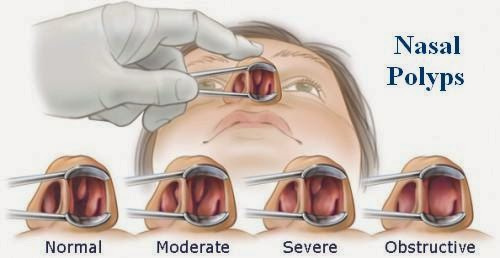
Nasal polyps are usually bilateral, unilateral polyps are a cause for suspicion. Histologically, they are composed of loose oedematous stroma infiltrated by lymphcytes and eosinophils, covered by respiratory epithelium.
What are differentials of nasal polyps?
- chronic rhinitis (of any cause)
- family history
- cystic fibrosis
- hypertrophied inferior turbinate
- blob of mucus
- inverted papilloma
- rhinosporiosis + rhinoscleroma
- angiofibroma
- meningocele
- malignancy
- aspirin/NSAID sensitivity
What are clinical features of nasal polyps?
- nasal obstruction → regard unilateral obstruction w/ suspicion of neoplasm
- rhinorrhoea
- facial pain / pressure
- reduced sense of smell / anosmia
- cough (2o to tracheal/laryngeal irritation caused by postnasal drip or as a result of asthma)
O/E → nasal polpys appear yellowish-grey, smooth and moist, on gentle probing they should be insensitive
How is a diagnosis of nasal polyps made?
- polyp must be seen on anterior rhinoscopy or nasendoscopy or indirectly on CT scan for diagnosis to be made
What is the treatment for nasal polyps?
- 3-month course intranasal corticosteroid spray eg. fluticasone or mometasone
- oral steroid if severe symptoms
- nasal saline irrigation also beneficial
- doxycycline modest effect with steroids
- if no improvement after 3 month follow-up → surgical removal

-
Hearing Loss21
-
Acute Otitis Media8
-
Chronic Otitis Media & Cholesteatoma11
-
Conditions of the Pinna and External Auditory Canal0
-
Earache (Otalgia)3
-
Tinnitus4
-
Vertigo20
-
Acoustic Neuroma0
-
Epistaxis14
-
Rhinitis & Nasal Polyps10
-
Acute & Chronic Sinusitis11
-
Nasal Injury and Foreign Bodies0
-
Tumours of Nose, Sinuses and Nasopharynx0
-
Airway Obstruction and Tracheostomy11
-
Laryngitis and Epiglottitis14
-
Pharyngitis and Tonsillitis14
-
Head and Neck Carcinoma19
-
Sleep Apnoea7
-
Vocal Cord Paralysis0
-
Diseases of Salivary Glands0



