Reactive Oxygen Species
(ROS)
Production
ROS are by-products of oxygen metabolism.
Typically generated in the mitochondria.
- Add 1 e- ⇒ superoxide (O2-)
- Add 2 e- ⇒ hydrogen peroxide (H2O2)
- Add 3 e- ⇒ extremely reactive hydroxyl radical (OH・)
- Concerted addition of 4 electrons generates the desired H2O product
Nitric oxide (NO・) is another physiological free radical.
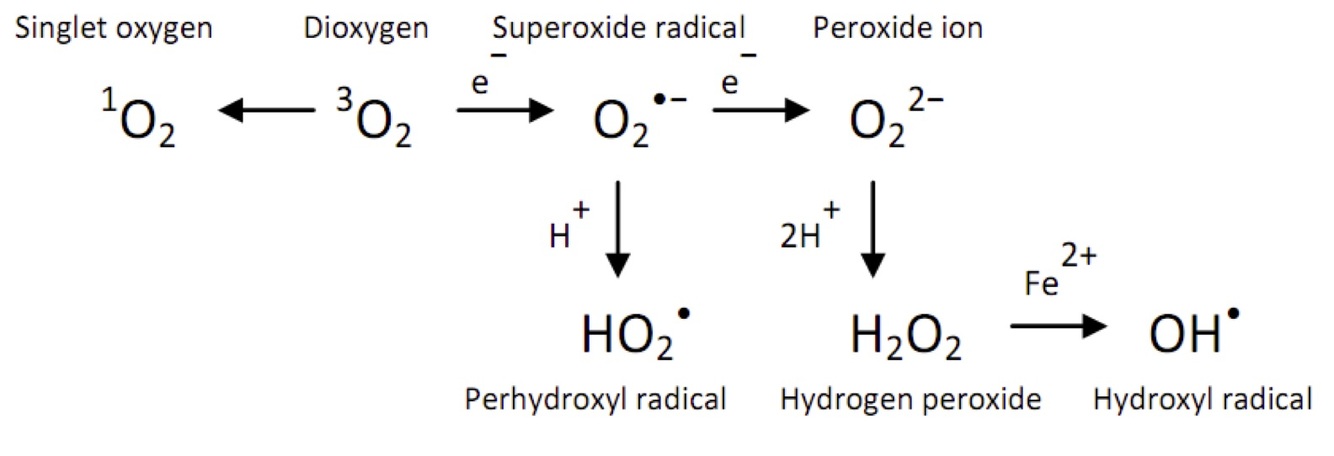
Effects of ROS
- In membranes and lipoproteins, hydroxyl radical acts on unsaturated fatty acid groups to form lipid carbon-centered radicals
- Can initiate a chain reaction
- Lipid carbon-centered radicals seen as foreign
- Oxidative stress occurs when production of ROS faster than antioxidant defenses can consume them
- Ex. respiratory burst
- Can lead to cell damage and death
- With ischemia-reperfusion injury, most tissue damage occurs on re-exposure to oxygen
- Tissue undergoes necrosis and death
ROS Associated Diseases
- Cancer development through oxidative DNA damage leading to mutagenesis
- Atherosclerosis due to oxidation of LDL and uptake by macrophages ⇒ foam cells
- Alzheimer’s disease due to neuronal death from elevated NO and/or mitochondrial dysfunction
- Aging attributed to progressive decline in mitochondrial function
Vitamin E
Sources and Absorption
Lipophilic Antioxidant
- Synthesized in plants
- High levels in grains and vegetable oils
- wheat germ, whole grain bread and cereals, egg yoke, nuts and sunflower seeds
- Absorbed in intestines and transported to liver in chylomicrons
- May include a variety of tocopherols (saturated side-chains) and tocotrienols (3 double bonds in side-chain)
- 𝛼-tocopherol with highest activity ⇒ “natural” vitamin E
- RDA is 15 mg/day
- TUL is 1,000 mg/day
- Vit E supplementation at high doses can compete with Vit K
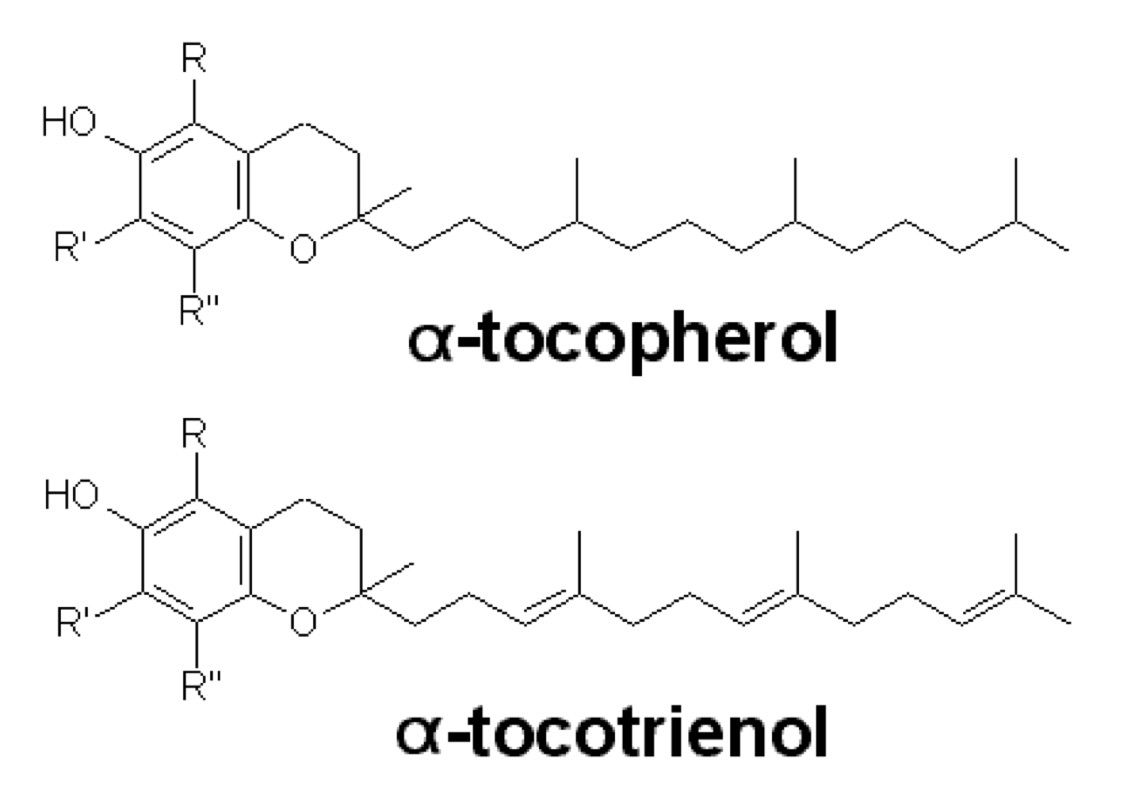
Vitamin E
Functions
Lipophilic Antioxidant
- Can function as a chain-breaking antioxidant
- Prevents propagation of lipid carbon-centered radicals of FA residues of membranes
- Able to cross BBB and protect lipids in CNS from oxidative damage
- Deficiency can result in neurological sx
- Important at blocking formation of atherogenic lipoprotein species
- Concomitant reduction in CAD not yet adequately demonstrated
- Antioxidant supplements are not currently recommended
Vit E Deficiency
in
Celiac Disease
Celiac’s results in autoimmune damage of intestinal villous.
Prevents absorption of lipid-containing mixed micelles which would normally deliver fat-soluble vitamins to enterocytes.
Results in malabsorption of many nutrients including iron, calcium, Vit D, and less frequently Vit E.
Causes progressive systemic degeneration of large-caliber myelinated sensory axons in spinal cord and peripheral nerves.
Presenting symptoms:
Neuromyopathy, Sensory neuropathy, Optic atrophy, Cerebellar syndrome
Hemolytic anemia, myopathy, weakness, ataxia, impaired reflexes, ophthalmoplegia, retinopathy, damage to nervous tissue
Treatment includes Vit E replacement with 𝛼-tocopherol.
Vitamin C
Major hydrophilic antioxidant vitamin.
Many important physiological roles:
- Returns Vit E back to reduced state
- Indirectly impacts oxidation of membrane components
- Important for collagen synthesis
- Coenzyme for several hydroxylases
- Vit C deficiency results in scurvy
- loose teeth, bleeding gums, ecchymoses, slow wound healing
- Dietary Vit C reduces ferric iron to ferrous iron (absorbed form)
- Results in improved absorption of dietary iron
Beneficial effects of ascorbate seen in lowered markers of DNA oxidation (8-oxoguanine) and lowered markers for membrane oxidation (malondialdehyde)
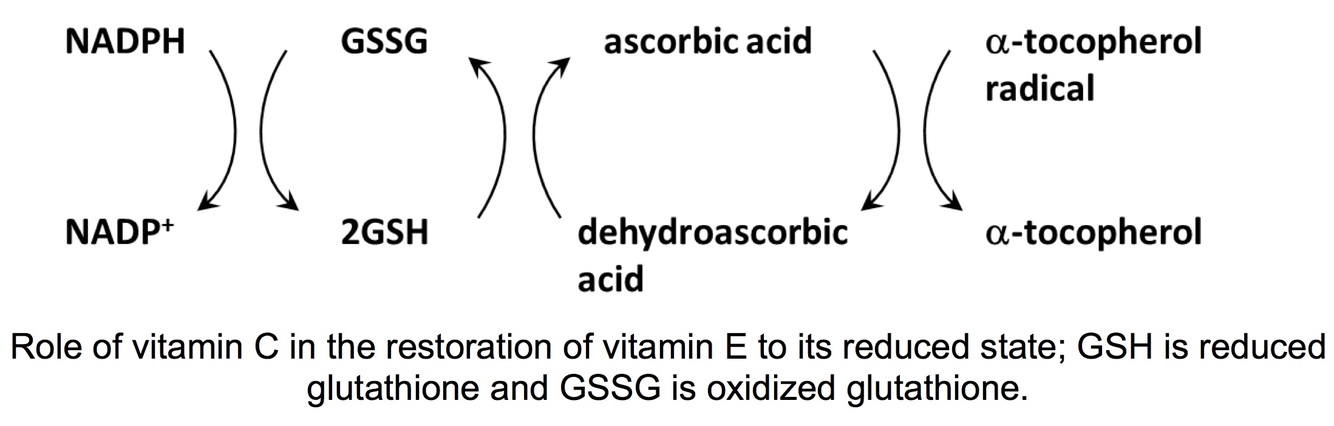
Antioxidant Enzymes
ROS are enzymatically inactivated.
- Superoxide dismutase
- superoxide → hydrogen peroxide
- mammals with at least 2 isozymes
- Catalase
- hydrogen peroxide → water and oxygen
- heme protein
- located in peroxisomes
- Glutathione peroxidases
- Catalyzes reduction of H2O2 by glutathione (GSH)
- Oxidized GSSG returned to GSH by glutathione reductase utilizing NADPH
- Found in cytosol
- Selenium is an important prosthetic group in these enzymes and is therefore essential.
Flavonoids & Flavones
Plant-derived hydrophilic antioxidants.
Found in blueberries, green tea, red wine, and cocoa.
Possible role in reduction of CAD and cancer.
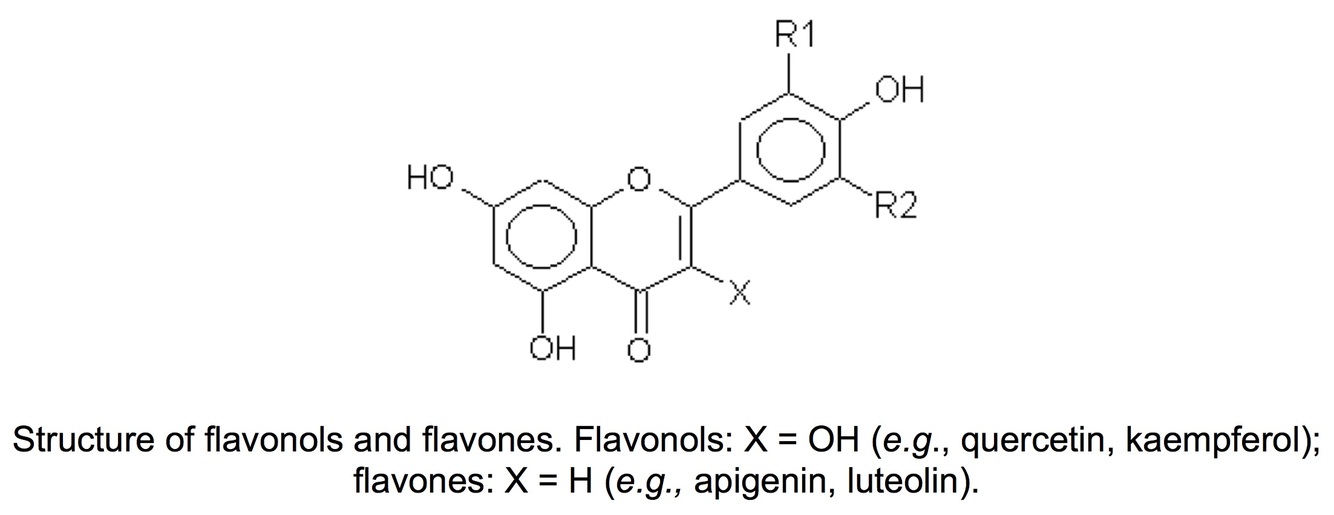
Carotenoids
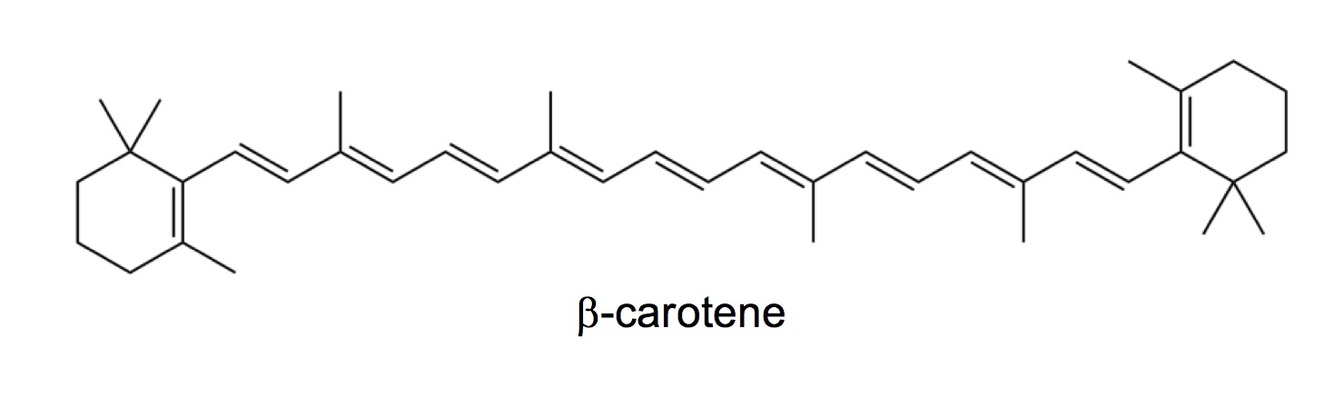
Have also been suggested to act as antioxidants.
Ex. beta-carotene
Antioxidant Supplementation
Studies unable to prove health benefits of antioxidant supplements.
Balanced diet rather than supplementation is the most consistent health recommendation.
Many antioxidants advertised without significant scientific validation e.g. lipoic acid, CoQ, grape seed extract.

-
Dietary Recommendations, Life Stages, and Nutrition24
-
B Vitamins23
-
Antioxidants11
-
Energy Expenditure15
-
Nutritional Assessment10
-
Carbohydrates23
-
Proteins15
-
Lipids16
-
Obesity20
-
Need to Know Numbers23
-
Nutrition and Cancer31
-
Vitamin A & K18
-
Vitamin D10
-
Calcium, Phosphate, and Iron31
-
Nutrition for the Critically Ill22



