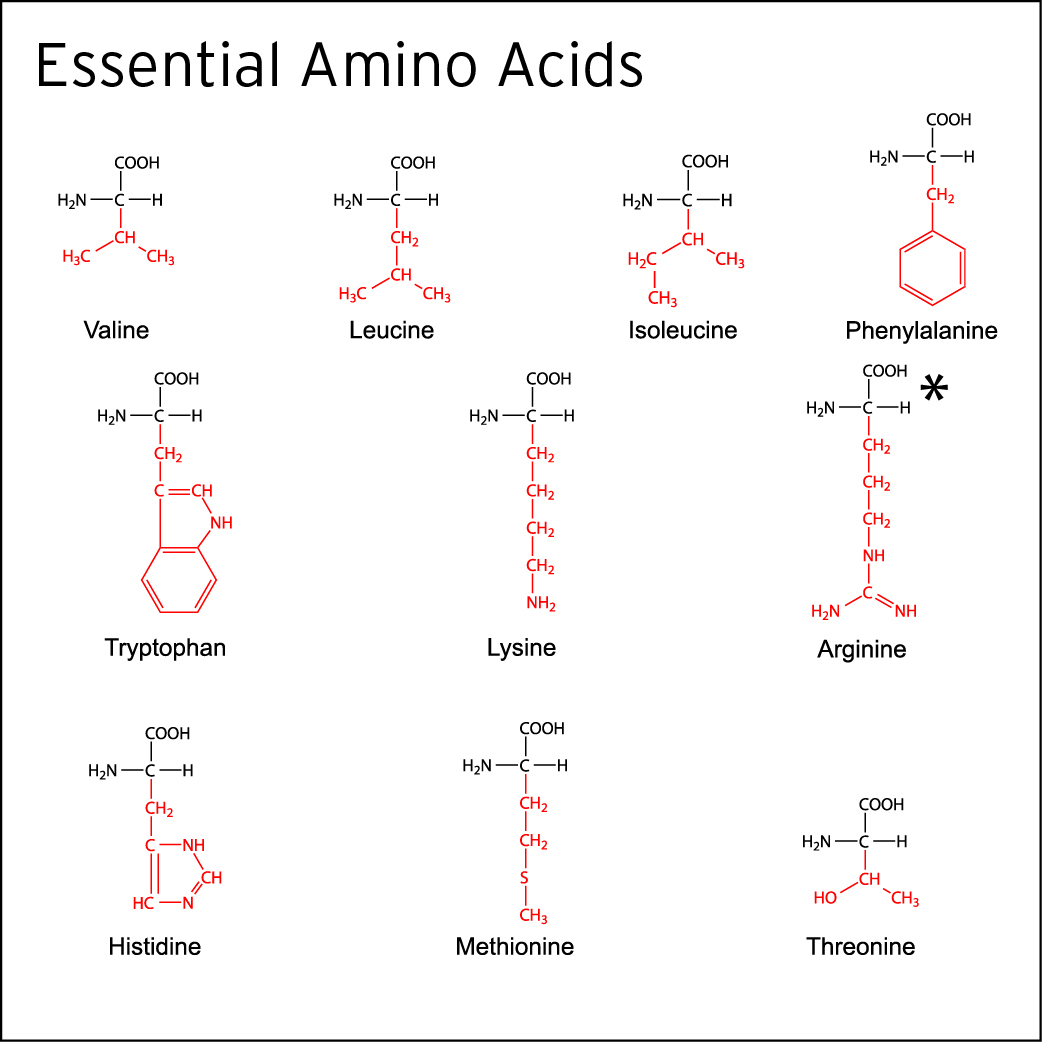
Essential Amino Acids
HV MILK FTW
- Histidine (H)
- Valine (V)
- Methionine (M)
- Isoleucine (I)
- Leucine (L)
- Lysine (K)
- Phenylalanine (F)
- Threonine (T)
- Tryptophan (W)
Arginine (R) becomes essential under certain circumstances such as illness or injury.
Protein Requirements
Normal protein requirements:
- Infancy ⇒ 2 g/kg
- Ages 1-2 y/o ⇒ 1 g/kg
- Adulthood ⇒ 0.8 g/kg for both males and females
- Pregnancy & lactation ⇒ extra 10-15 g/day
Disease states may affect protein needs:
- Increased need
- wasting such as disuse atrophy
- physiological stress (fractures, burns, traumas, illness)
- Decreased need
- acute liver failure (to avoid hepatic trauma)
- kidney disease
Protein Quality
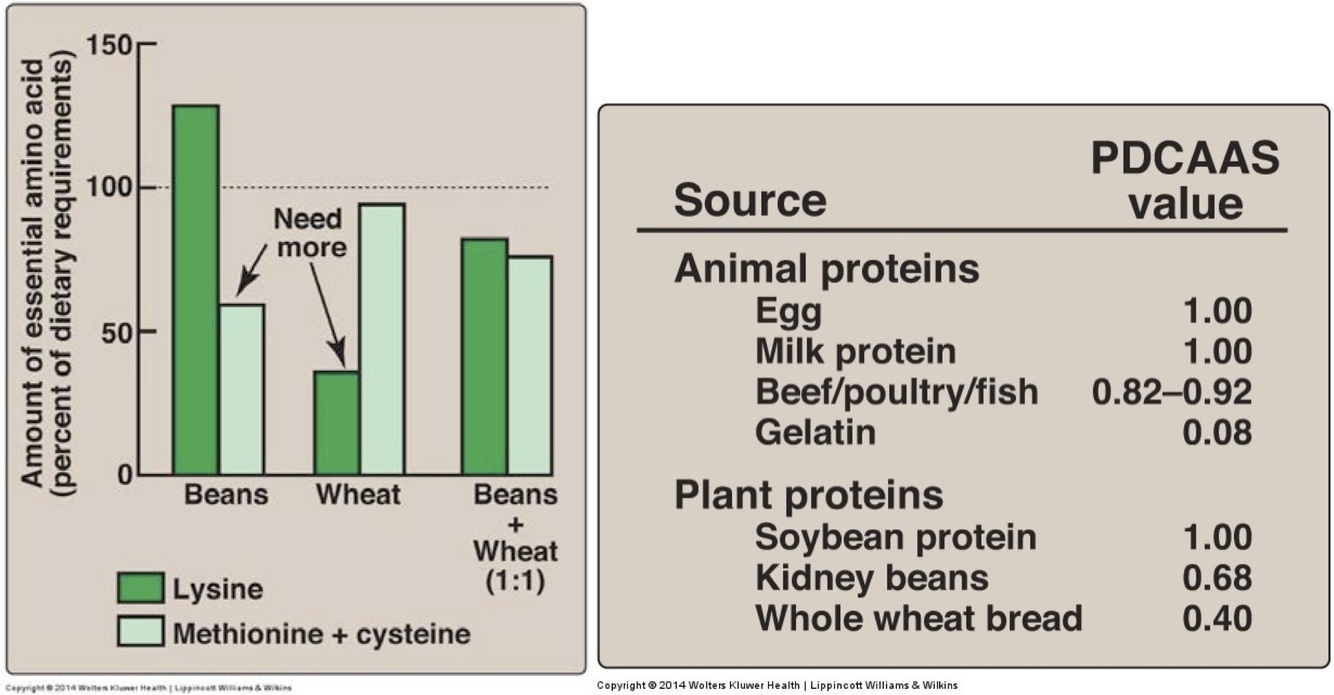
A “good” protein supplies all needed AA in appropriate ratios.
Many dietary proteins, esp. plant proteins, do not supply proper mix.
Must eat complementary proteins.
Protein abundance of amino acids score (PDCAAS):
Chemical score accounts for amount of AA based on content of most limiting essential AAs.
Corrects for digestibility.
A poor quality protein would generate a high BUN due to excess AAs which are metabolized.
Digestion and Absorption
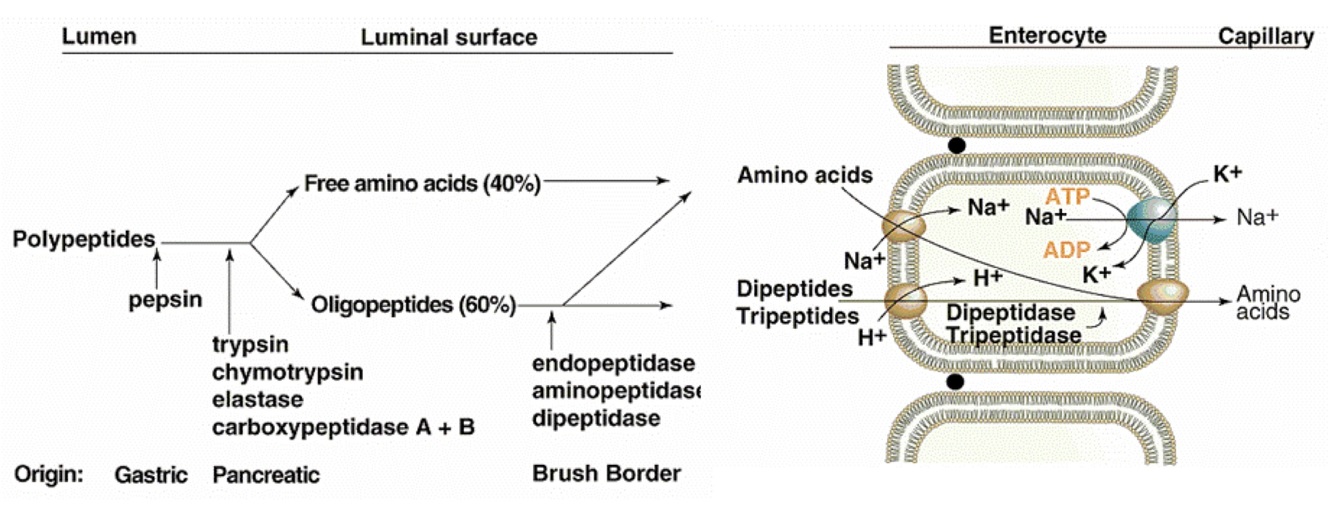
- Proteins hydrolyzed by peptidases into free AAs and oligopeptides
- Oligopeptides hydrolyzed by peptidases on brush border to form FAA, di- and tri-peptides
- Free AAs, di- and tri-peptides absorbed along entire small intestine, most proximally
- AA via symport with Na+
- Di- and tri-peptides via H+-linked transport system
- Di- and tri-peptides hydrolyzed by proteases in enterocyte cytoplasm
- Enterocytes use glutamine as 1° energy source & generate alanine
- Mostly free AAs enter circulation
- Escaped oligopeptides hydrolyzed by peptidases in plasma or at cell membranes of organ tissues
- AA uptake primarily by the liver via portal circulation
- 57% catabolized
- 20% converted into proteins
- 23% released into general circulation
- 70% BCAA ⇒ taken up by muscle, heart, and kidneys for energy
Celiac’s Disease
Gluten Enteropathy
- Peptide fragment from gluten indigestible
- Causes autoimmune destruction of enterocytes
- Must avoid wheat, barley, and oats (rice ok)
Protein Utilization
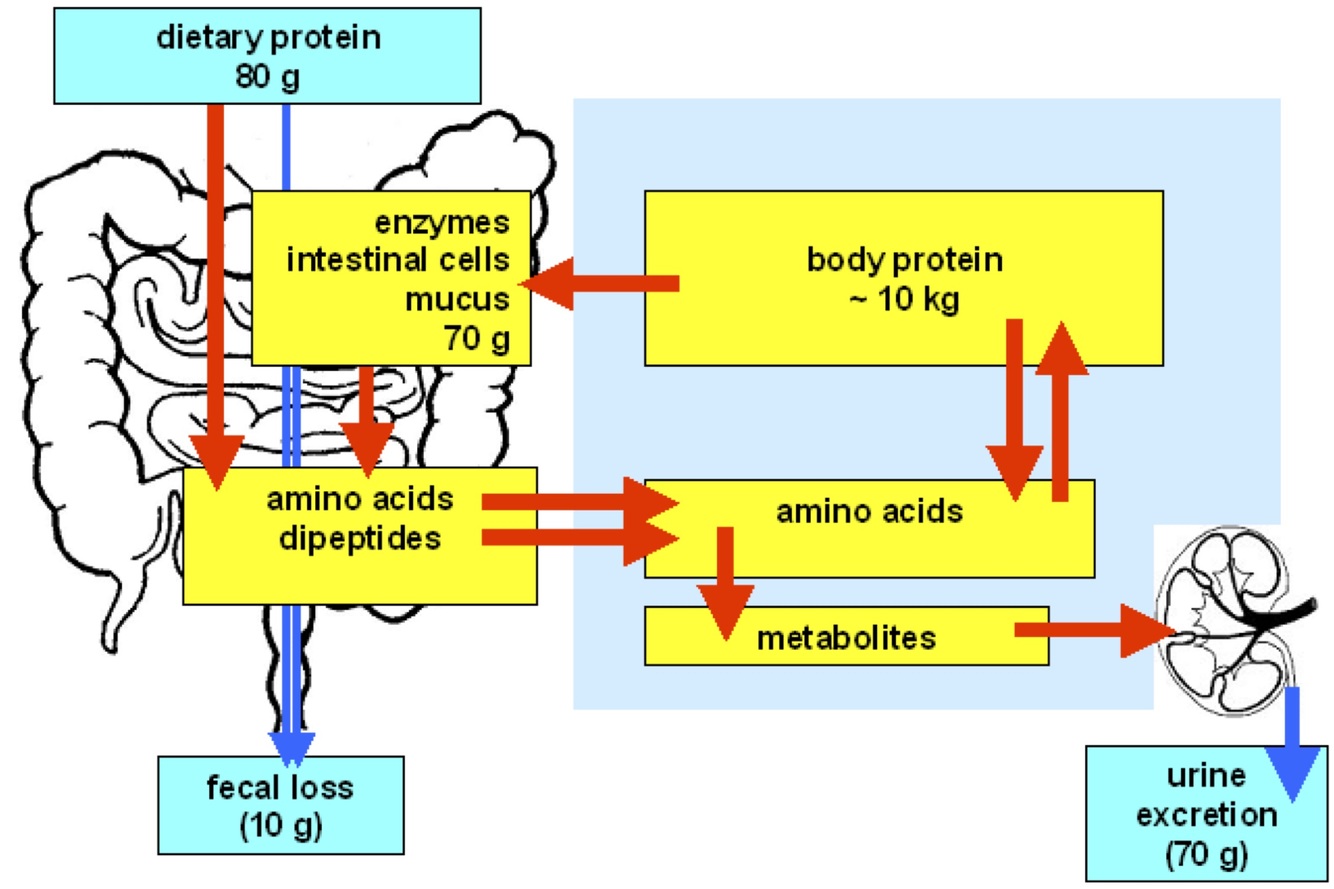
- Fates of circulatory AAs
- catabolism
- protein synthesis
- production of biogenic amines
- Homeostatic balance occurs in healthy persons
- Ingested protein = “excreted” or catabolized protein
- Neither proteins or AAs are actually excreted intact
- Ingested protein = “excreted” or catabolized protein
Amino Acid Catabolism
When amino acids are catabolized:
Carbons exhaled as CO2
Nitrogens excreted mostly as urea
- Found in blood as BUN (blood urea nitrogen)
- Excreted primarily as UUN (urinary urea nitrogen)
- measured as total amount of urea nitrogen found in a 24 hr urine collection
Nitrogen Balance
Nitrogen constitutes 16% of protein mass.
1 gram of nitrogen ⇔ 6.25 grams of protein
Nitrogen balance = Intake - Output
N-balance = protein N intake (g/24h) - (UUN + 4g)
4 g accounts for N in other forms & losses in feces and skin
⊕ N-balance (intake > loss) during growth or pregnancy
⊖ N-balance (intake < loss) during starvation, sickness, etc.
Adults are normally in nitrogen balance.
Protein-Energy Undernutrition (PEU)
aka
Protein-Energy Malnutrition (PEM)
Deficiencies of macronutrients.
- Spectrum of states of malnutrition
- Differ in acuity and need for intervention
- Two extreme states:
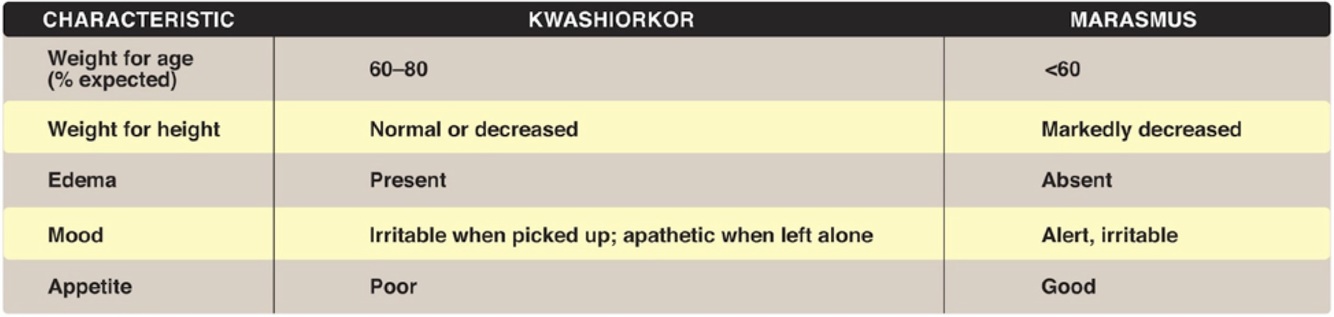
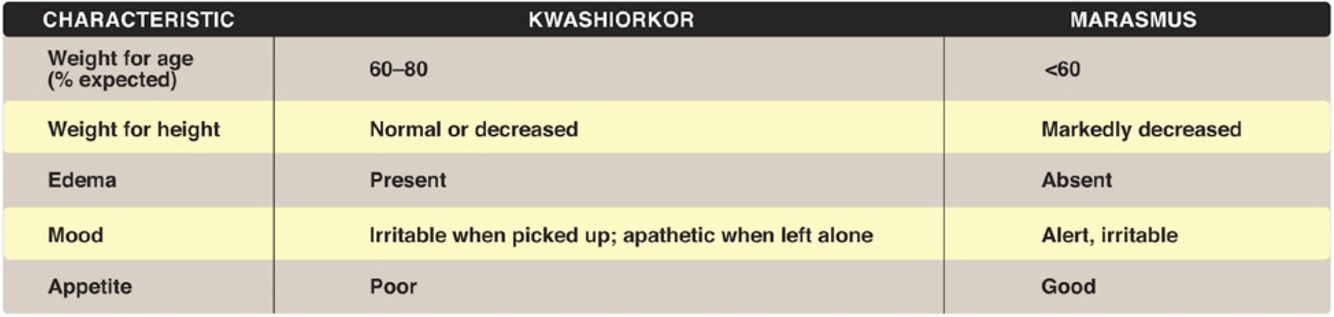
- Kwashiorkor
- Marasmus
- Marasmic Kwashiorkor may occcur (combined form of PEU)
Kwashiorkor
Non-adapted Starvation
Protein deficiency with adequate caloric nutrition.
- Seen in weaned children 1.5-3 y/o or adults with certain chronic diseases
- Mildest anthropomorphic changes
- little wasting in adults
- some wasting in children
- Greatest depression of serum proteins
- Symptoms:
- edema characteristic
- intracellular > extracellular water increases
- hair and skin changes
- diffuse “flaky paint” dermatitis with desquamation and depigmentation
- lightened hair at roots
- hepatomegaly or fatty liver
- due to inc. FA synthesis from carbs
- lack AA prevents apolipoprotein synthesis required for lipid transport
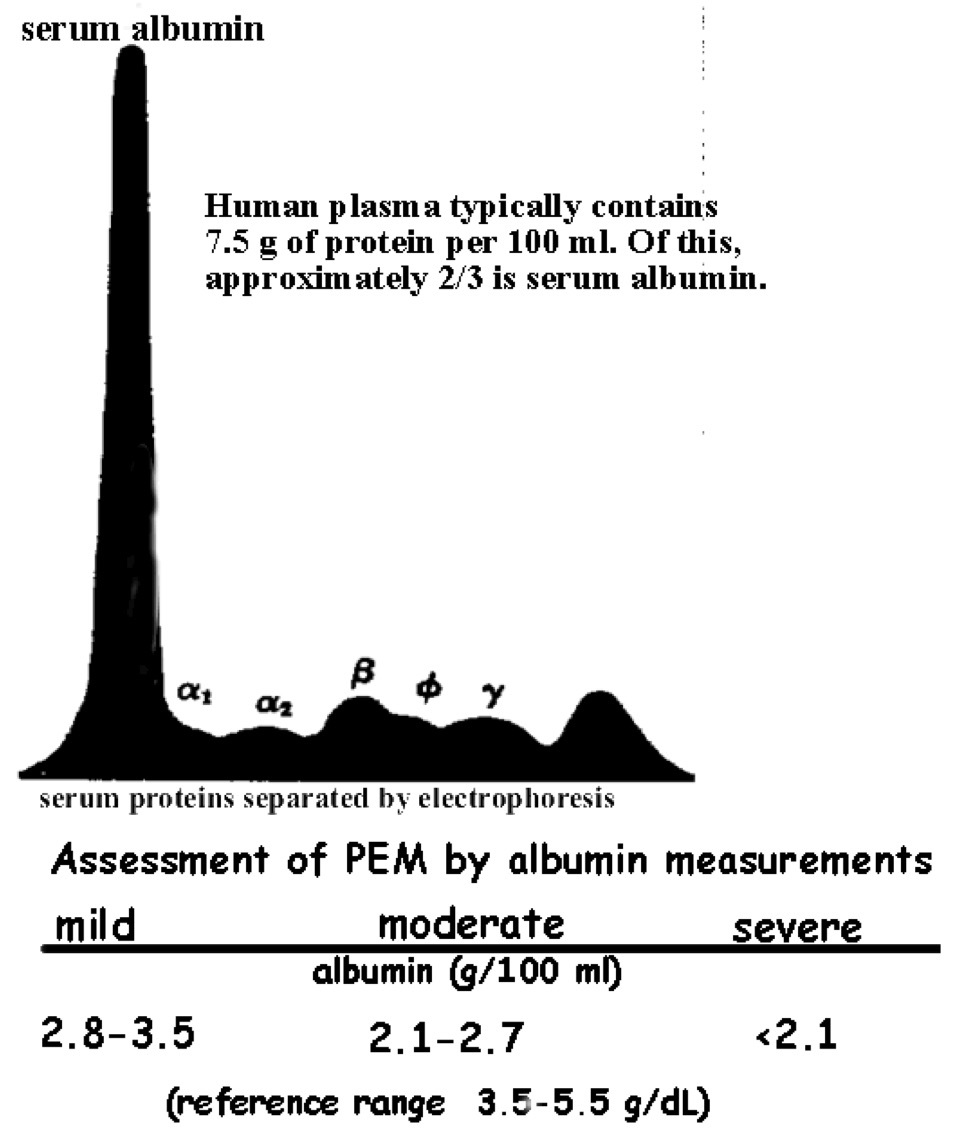
- hypoalbuminemia
- hyperinsulinemia (in response to carbs)
- decreased tissue lipolysis
- decreased muscle protein breakdown
- lethargy, apathy, or irritability
- stunted growth and some muscle wasting
- anorexia, vomiting, diarrhea
- significant immune dysfunction
- marked ↓ T-cells
- atrophy of thyrmus
- B-cells & splenic/LN B-cells regions fairly normal but defects in Ab production
- edema characteristic
Marasmus
Adapted Starvation
All macronutrients are inadequate and calories are inadequate.
- Manifests with greatest anthropomorphic changes
- significant generalized wasting
- growth stunting
- absence of subQ fat
- non-edematous
- abdominal distention may be present
- Body has adjusted to reduced caloric intake
- hypoglycemia with hypothemia can occur
- Some immune depression
Marasmic Kwashiorkor
Combined form of PEU
Biochemical features of both may be seen.
Protein deficiency usually predominates.
- Muscle wasting and decreased subQ fat
- Also exhibits edema
Cachexia
Malnutrition resulting in low body weight and bodily decline associated with chronic diseases.
Ex. cancer, tuberculosis, malaria.
PEU
Treatment
- Kwashiorkor
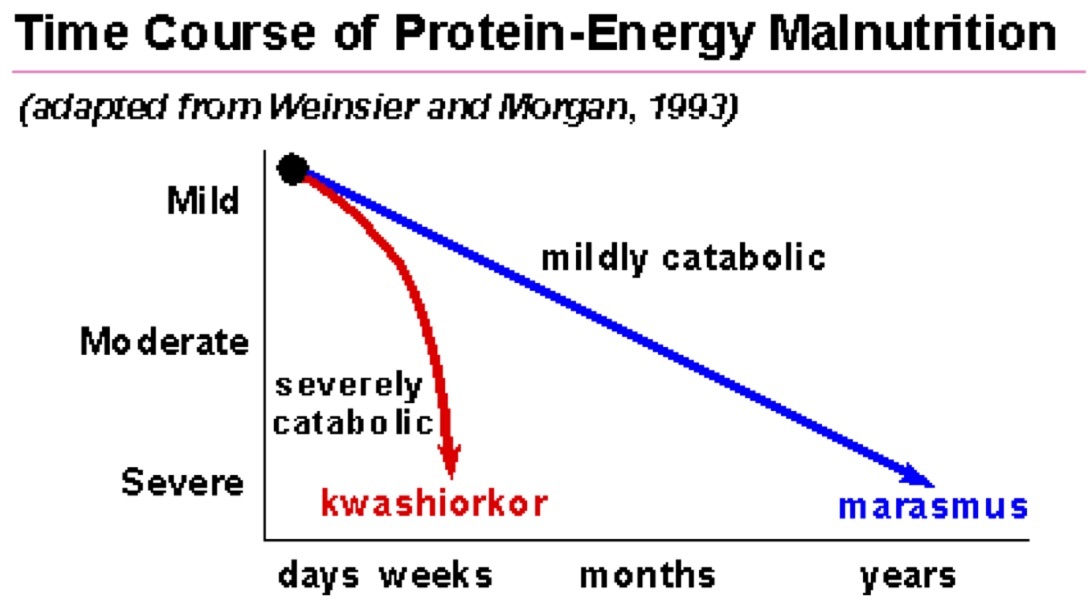
- rapid deterioration over weeks
- life-threatening due to immune compromise
- requires immediate and aggressive refeeding
- Marasmus
- deterioration over years
- slower, progressive re-introduction of calories especially carbs
- aggressive refeeding can be harmful
- rapid intro of carbs ⇒ G-6-P formation but poor utilization
- depletion of inorganic phosphate pool leads to inability to reform ATP
- can result in cardiac failure and death
PEU
Assessment
- Anthropometric measurements mainly used for severity determination.
- weight-for-height
- weight-for-age
- height-for-age
- upper arm circumference
- BMI
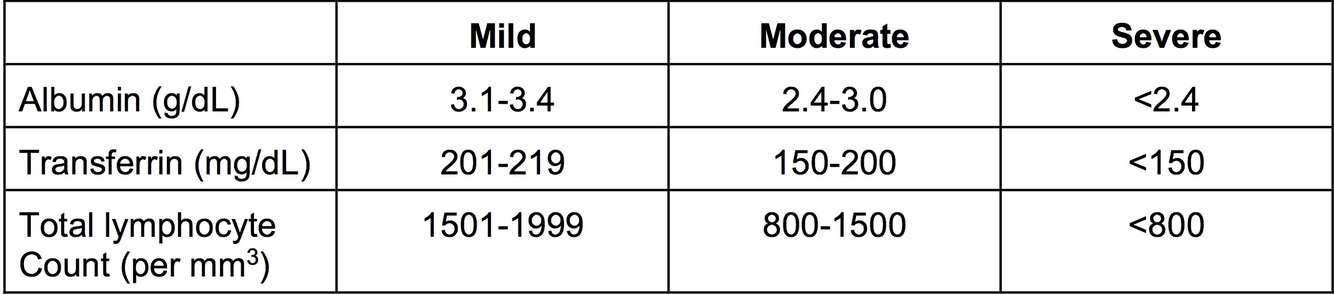
- Biochemical parameters often unchanged in early stages or are not specific.
- Parameters may help distinguish mild from severe PEU.
- *Need to know reference albumin values only.

-
Dietary Recommendations, Life Stages, and Nutrition24
-
B Vitamins23
-
Antioxidants11
-
Energy Expenditure15
-
Nutritional Assessment10
-
Carbohydrates23
-
Proteins15
-
Lipids16
-
Obesity20
-
Need to Know Numbers23
-
Nutrition and Cancer31
-
Vitamin A & K18
-
Vitamin D10
-
Calcium, Phosphate, and Iron31
-
Nutrition for the Critically Ill22



