Players in the PC Industry:
New entrants: Many: thousands of manufacturers: ranging from established brands to no-name clone makers
Buyers: home, small and medium-sized businesses (SMB), corporate, education, and governments
Suppliers: companies manufacturing: memory chips, disk drives, and keyboards, microprocessors, operating systems
Substitutes: consumer electronics (CE) products: e.g. mobile and smart phones, TV set-top boxes, game consoles, iPads, tablets
Rivals: HP, Dell, Lenovo, Acer etc. Complements: Application software, Hardware
5 Forces (+complements) in the PC Industry
Bargaining power of buyers: Strong
Home consumer has many manufacturers to choose from, also some large buyers that buy in bulk (e.g. universities, govt)
Bargaining power of suppliers: Medium
Two groups: those making products with many sources e.g. keyboards (low bargaining power) and those making products with few sources e.g. microprocessors (high bargaining power)
Rivalry: High
Many competitors, average selling prices (ASPs) declined, by 2014 the average profit margin for major PC manufacturers was under 3%
Threat of new entrants: High
Low entry barriers (anyone can make a PC in its garage)
Threat of substitutes: High
The rise of smartphones and tablets replacing PCs
Complements: Yes
But software applications are moving to the smartphone and tablet markets
Conclusion from 5 Forces Analysis (PCs):
Low level of profitability for the PC industry can be expected
Comparison with Industry profitability
- Average selling prices declined by a compound annual rate of 8%–10% per year from the early 1990s through 2005 and declined between 2006 and 2014 by a compound annual rate of 2%.
- By 2014, the average profit margin for the major PC manufacturers was under 3%
Apple’s Business Model:
Mainly based on the sales of tech products, both software and hardware
- Has developed a ‘platform’ to connect app developers and users, creating value for both
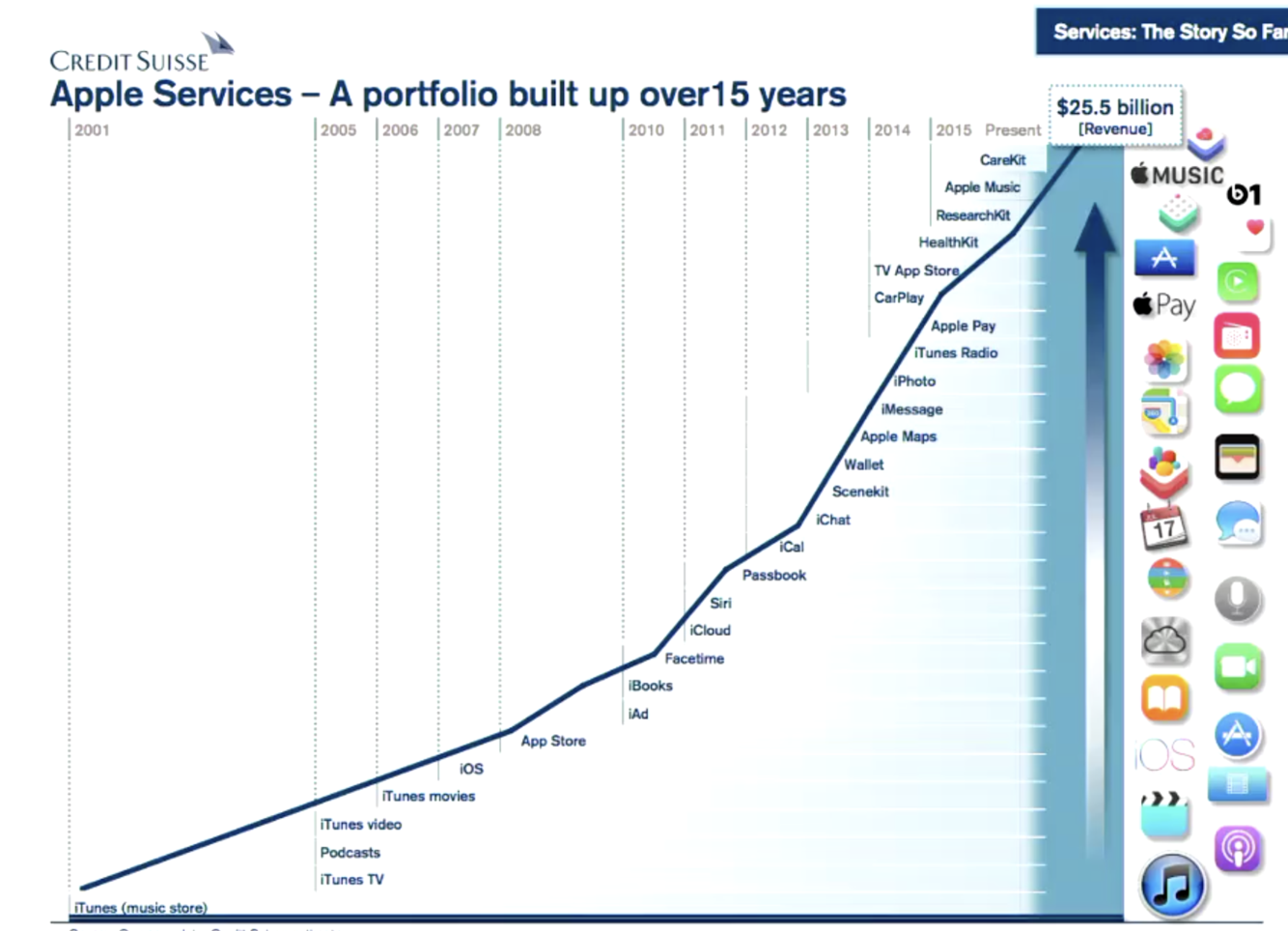
- The bigger the customer base, the greater the number of applications and services on offer and the more different platforms Apple introduces – iPod, MacBook Pro, iPhone, iPad, Apple Watch, etc. the more interconnected they all become (It’s this ecosphere Apple has been building that is strengthening its competitive advantage)
- Sells its products and resells third-party products in most of its major markets directly to customers through its retail and online stores and its direct sales force.
- Employs a variety of indirect distribution channels, such as third- party cellular network carriers, wholesalers, retailers and value- added resellers
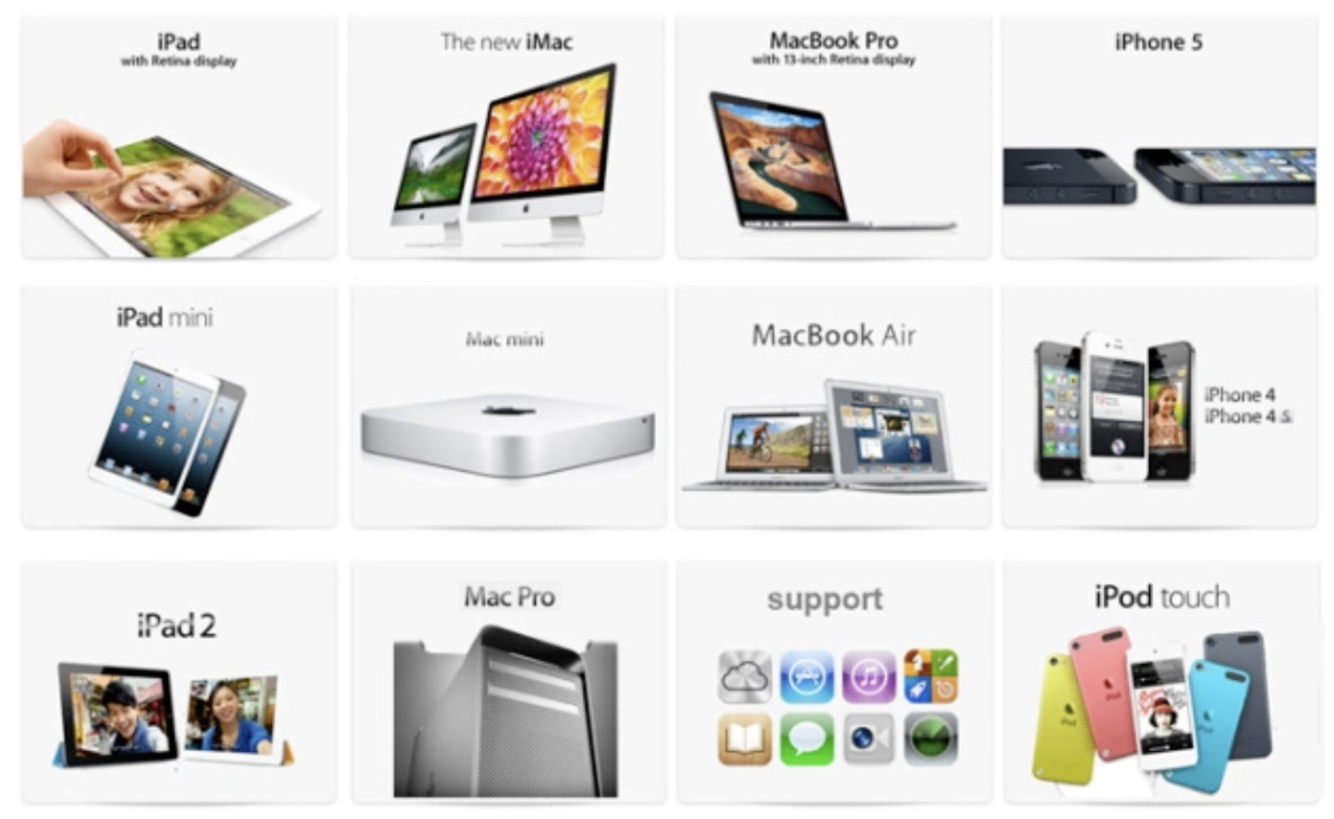
What, historically, have been Apple’s competitive advantages?
- Economies of scope (e.g., the ability to cross-sell iPhones, iPads, and Macs) through Apple Stores
- Proprietary environments (especially with its operating system)
- Industrial design (clever, innovative, appealing chassis design and packaging)
- Buyer loyalty
- Strong brand
- Ease of use (user-friendly graphical interface; plug-and-play peripherals)
- Ecosystem of complements (apps, music, videos, etc.) and inter-operability between the different products (synchronisation, synergy, easy data transfer), ; In computers, dominance in desktop publishing, as well as education
- Economies of scale (e.g., one of the largest purchasers of flash memory in the world)
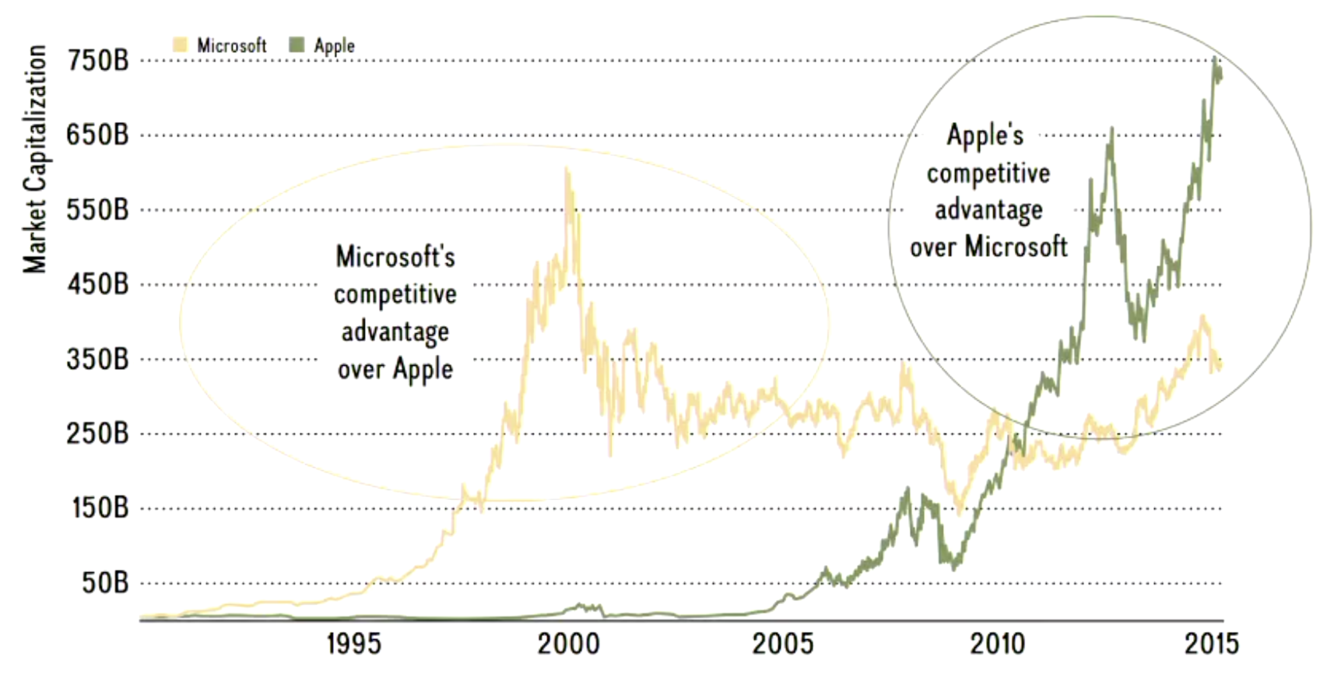
Why was Apple so weak in the 1990s and early 2000s?
- Declining differentiation:
- Macs and Wintel (Windows OS combined with an Intel processor) PCs are substitutes
- Declining prices throughout the PC business put pressure on Apple’s prices and margins
- Windows 95 further narrowed the differences between a Mac and a Wintel PC
- Application software:
- PC industry benefitted from declining application software prices, Apple was largely unable to leverage the benefits, as they didn’t sell their softwares separately.
- Independent software vendors (ISPs) naturally prefer to write software for a large installed base. Exhibit 4: the larger size of the installed base of PCs compared to that of Macs became more dramatic over time
- Operating system
- It cost $1 billion to develop Windows XP. Microsoft received as much as $60 in revenue per copy. Seventeen million copies were sold in the first eight weeks => Microsoft broke-even in roughly eight weeks.
- Windows 7 cost about $2.5 billion (including marketing). It earns roughly $100 in revenue per copy. Microsoft quickly recouped its development cost, as Windows 7 generated almost $7 billion in revenue in its first quarter of sales.
- Meanwhile, Apple also spent about $1 billion to develop OS X. Assume that Apple sells its OS for around $50 a copy (the OS is bundled with Macs, but Apple used to charge $50 for its Mac license). As late as 2006, Apple was only selling 5 million Macs. If Apple sells around 5 million copies of its OS to buyers of new Macs every year, it would still take Apple roughly four years to break-even.
=> Apple’s position in the Macintosh business would appear to be unsustainable, at least in the 1990s and early part of the 21st century.
Sculley, Spindler and Amelio:
(Optional)
- The Sculley Years, 1985–1993
By 1990, Apple had $1 billion in cash and was the most profitable PC company in the world
Macintosh’s loyal customers allowed Apple to sell its products at a premium price. Top-of-the-line Macs went for as much as $10,000, and gross profit hovered around an enviable 50%.
However, as IBM-compatible prices dropped, Macs appeared overpriced by comparison.
John Sculley’s strategy:
- Lower cost and increase volume to attract independent software vendors (ISVs) and amortize the costs of R&D;
- Create “hit” products, such as the PowerBook, to drive up margins; and
- Create a joint venture with IBM to share development costs and lower the break-even point.
=> Strategy failed because it lacked internal consistency
=> Contradiction between releasing “hit” products, which require increased spending in R&D and marketing, and reducing cost to gain volume
- The Spindler and Amelio Years, 1993–1997
- Spindler killed the plan to put the Mac OS on Intel chips
- Cutting 16% of Apple’s workforce, and pushed for international growth
- At the end of 1995, Apple and IBM parted ways on their joint ventures. After spending more than $500 million, neither side wanted to switch to a new technology
Apple Ecosystem:
Steve Jobs and the Apple Turnaround:
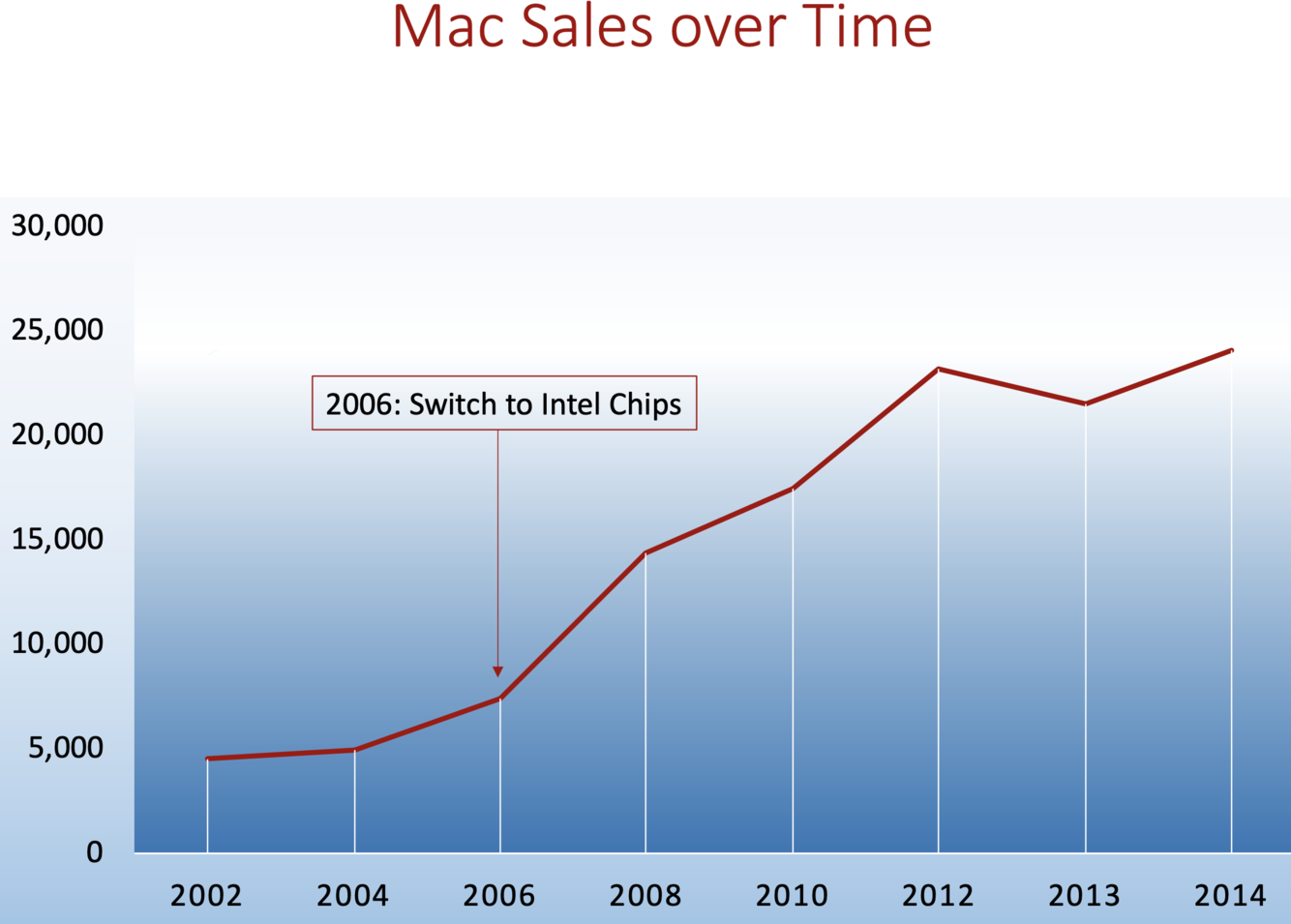
Since the early 1990s, Apple had built Macs with an IBM CPU, called PowerPC.
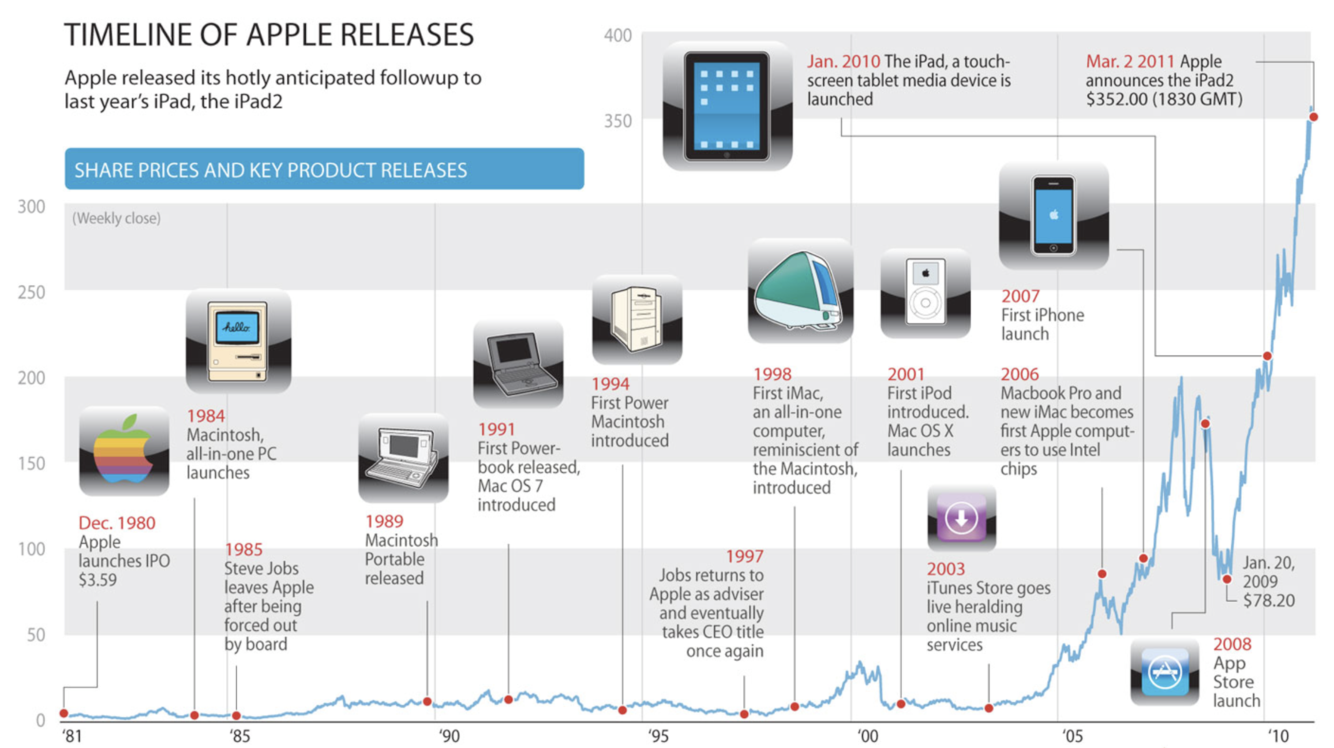
In 2006, Jobs made a large investment to shift Apple from a Motorola and IBM CPU to Intel chips. By the next year, the entire Macintosh line ran on Intel.
=> Very risky, but ex post, we know that this strategy worked
- It cost Apple around $1 billion to rewrite all their software and redesign their hardware
- Switch was critical to the long-run health of the Macintosh product line. IBM did not have the very low-powered chips that Apple needed to offer thin and light laptops
- Great timing as the booming iPod business provided cover for any issues with the Macintosh business
The Mobile Device Industry - Porter’s Five Forces
- Powerful cellular network carriers; in the U.S. market, just two carriers—Verizon Wireless and AT&T— collectively control more than 60% of the market
- Role of subsidy—cellular networks have the power to lower consumers’ purchase price
- Intense price competition
- A very different supplier base (Qualcomm, Mediatech, Samsung—who also manufactures CPUs for Apple
How sustainable is Apple’s competitive position in smartphones?
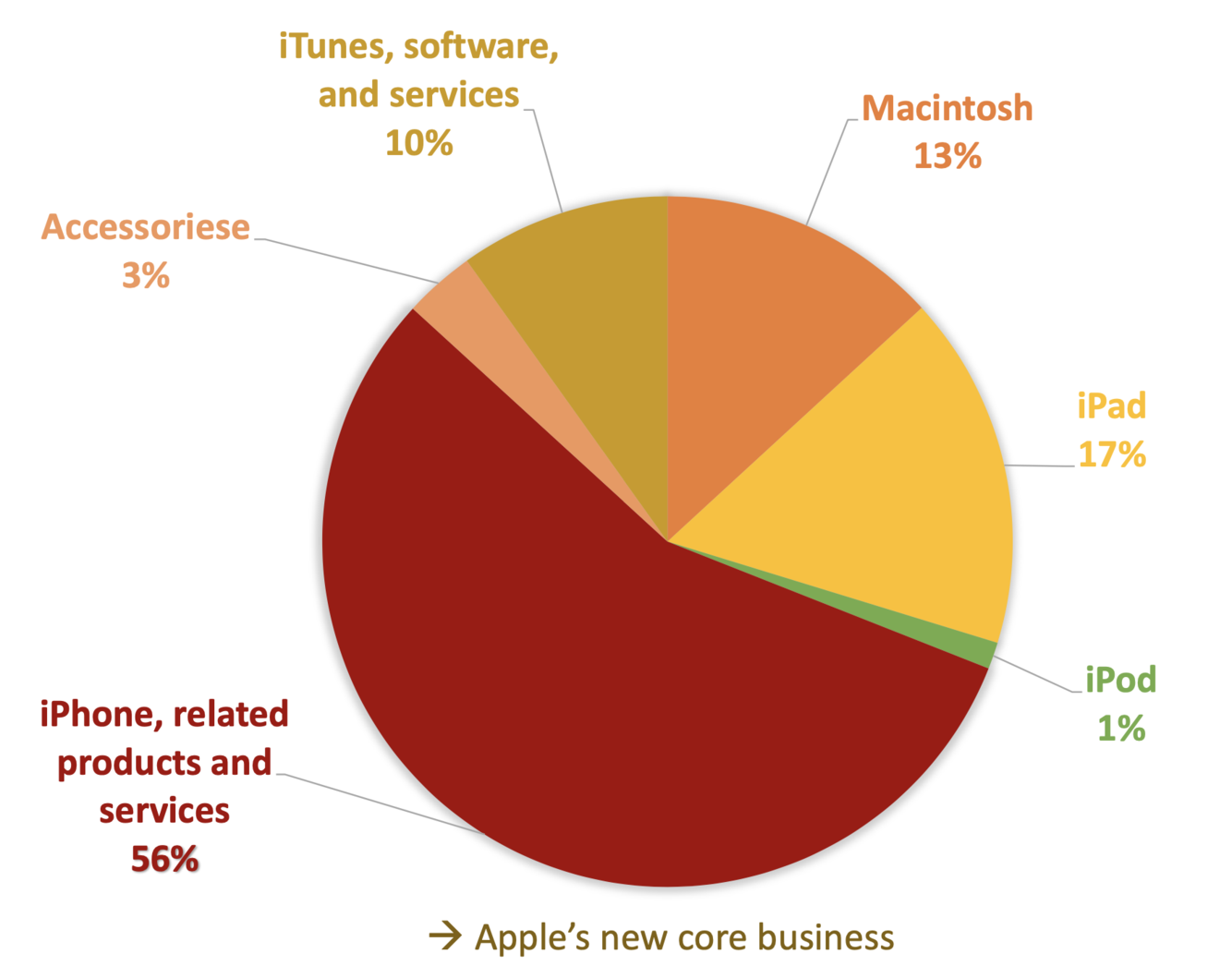
Mobile phones are Apple’s new core business.
The future of Apple depends heavily on the future of iPhones. Apple’s average selling price for an iPhone is over $600, while the industry ASP is less than $300
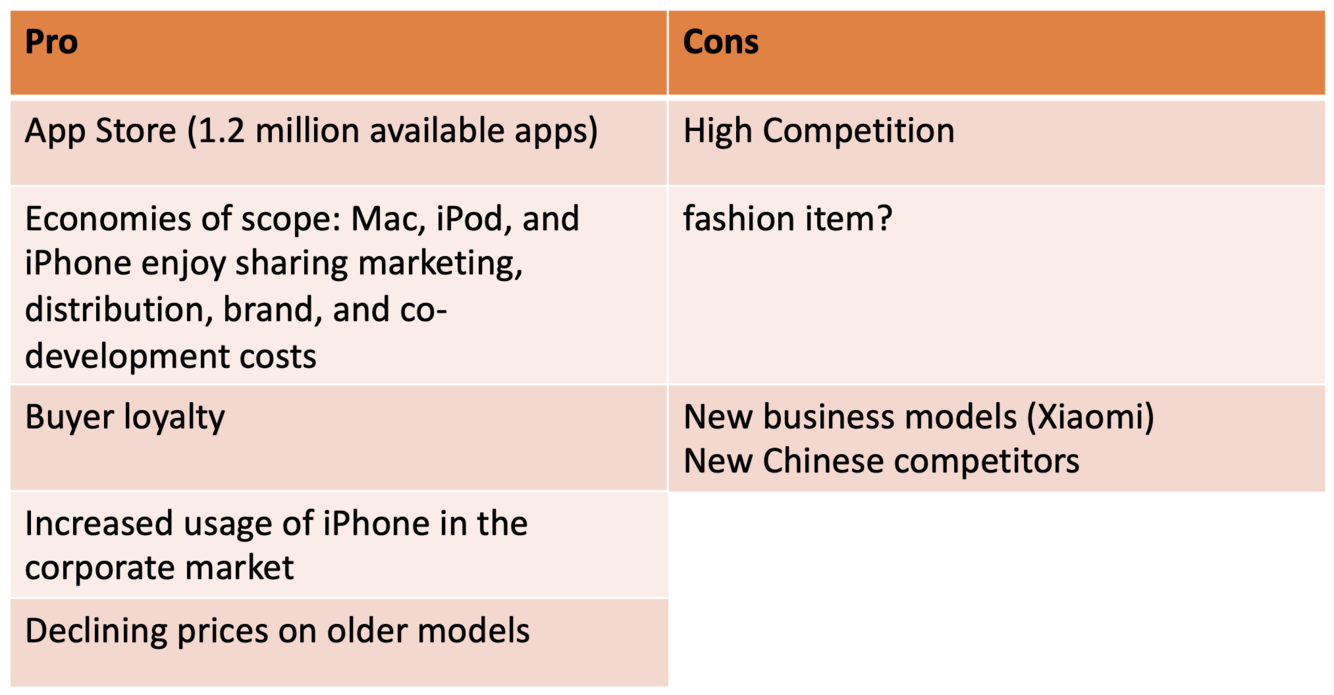
- Some apps are still available on iOS only
- But, ppl start to realise that iPhones are not being innovative anymore, too expensive, other phones more advanced and cheaper.
- Fashion item = maybe it has a limited time span and can’t be fashionable forever. Trends come and go
- Chinese competition: it is much easier now to compete on features like camera and battery than it was
Broader Lessons from Apple
Big difference between having a product advantage and having a competitive advantage
- Product advantages alone are difficult to sustain. To build competitive advantages, companies have to think about their entire value system—a system that includes complements and underlying cost drivers
- Making a better product is never sufficient to sustain a competitive advantage. This is the lesson of Apple’s failures in the 1990s.
Companies must have a deep understanding at the driving forces within their industries
- One of Apple’s biggest mistakes during the 1980s and 1990s was that it became too insular. Apple didn’t understand the industry dynamics.
Companies have to pay careful attention to timing and windows of opportunity. Coming up with the right strategy is not enough; you also need to implement it before the window of opportunity shuts.
- In the late 1980s and the early 1990s, Apple missed every strategic window. However, Jobs’s timing in 2000s was brilliant: The introduction of the iPod and iTunes, the switch to Intel CPUs, the iPhone, and the iPad




