Source of Variation in Firm Profitability:
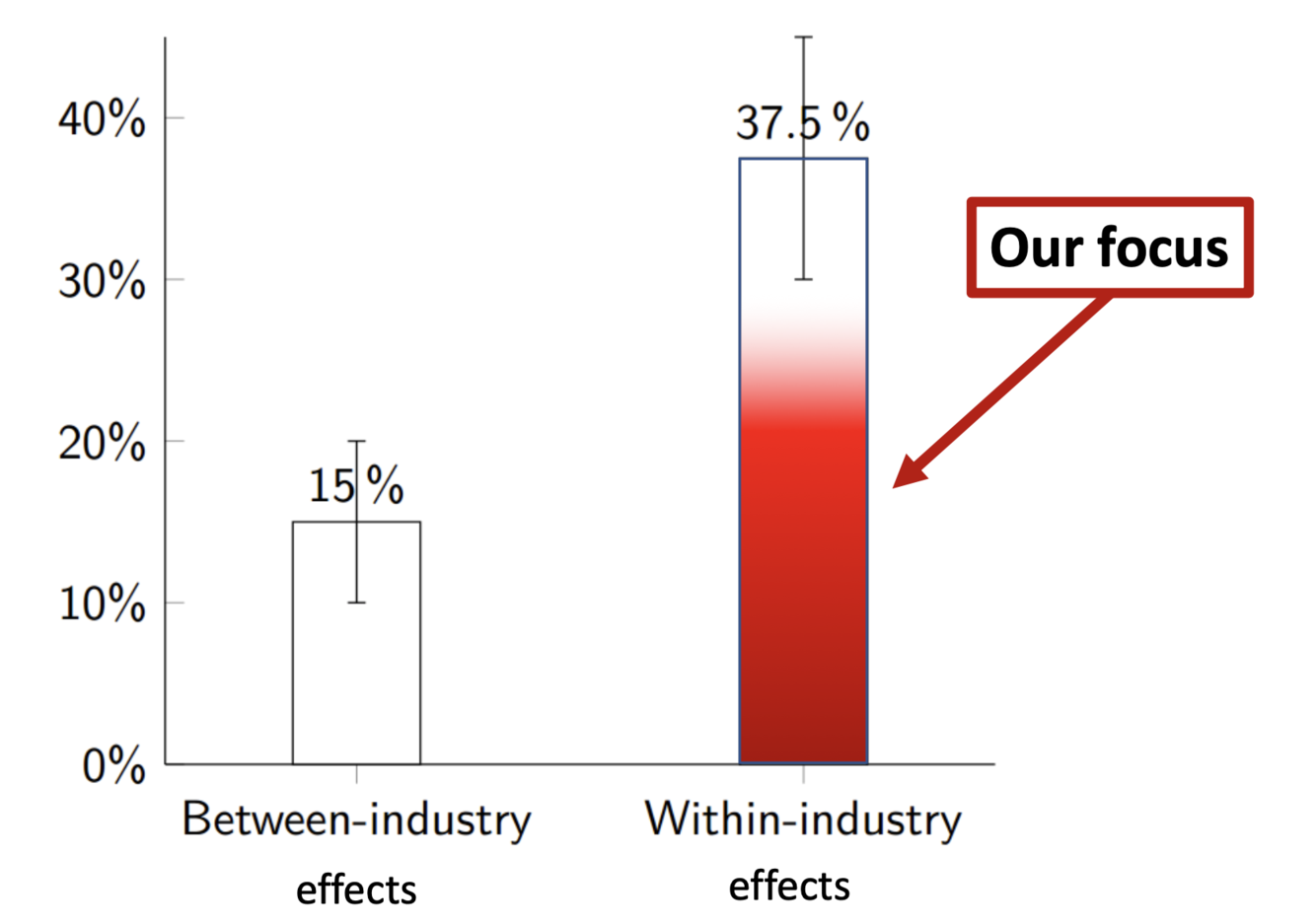
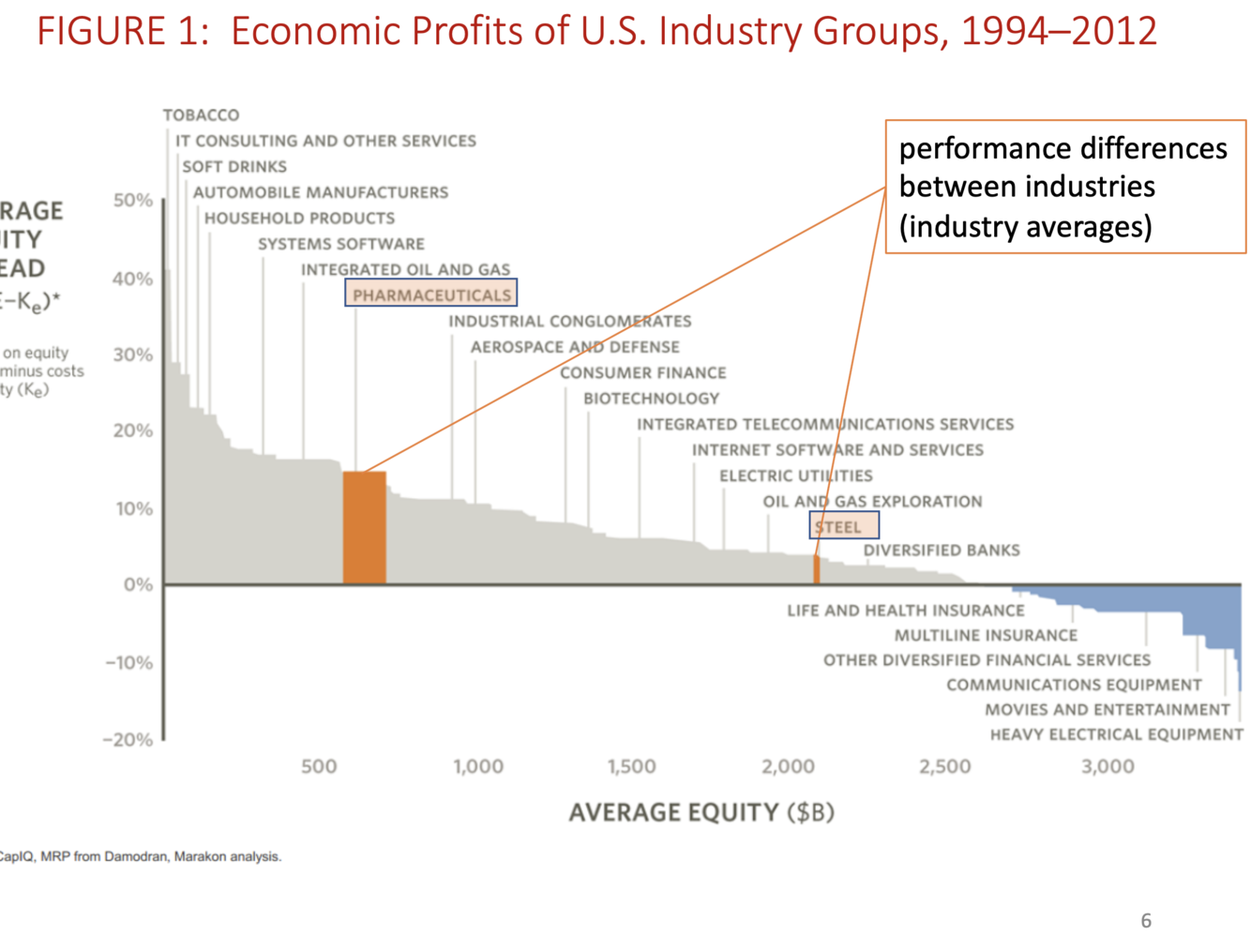
W ithin-industry effect has a greater impact on firm profitability than between industries effect .
The goal of BS3100 is to explain why some firms are more profitable than other firms in the same industry (Without denying the importance of between-industry effects).
Keep in mind that:
- Structural forces define the possibility to get (and sustain) a competitive advantage position
- Clever managers fix the strategy adopted so as to mitigate negative effects of structural forces
Definition and function of competitive advantage:
Definition:
A firm has a competitive advantage over its rivals if it has driven a wider wedge between the amount its customers are willing to pay and the costs it incurs than its competitors.
Function:
Helps strategists understand and analyse within-industry differences in performance.
In order to create a competitive advantage, a firm must:
- do something unique and valuable
- get its full range of activities: production, finance, marketing, logistics etc. to act in harmony
Willingness to Pay =
The maximum amount of money a customer is willing to pay in order to obtain the product or service.
- A customer considering the purchase of a portal crane from Harnischfeger would be willing to pay as much as $7.5 million for it
- If it costs more than that, the customer would be better off buying the forklifts for $1 million and paying the extra $6.5 million to operate them
Supplier Opportunity Cost =
Minimum amount of money a supplier will accept for the services and resources required to produce a good or service.
- We call this an ‘opportunity cost’ because it is dictated by the best opportunities a supplier has to sell its services and resources elsewhere
- In the example, the actual cost that Harnischfeger incurred to deliver a portal crane was $2.5 million
- We don’t know the lowest amount the company’s suppliers would have accepted, but we will speculate that it was not far below $2.5 million-say, $2.0 million.
Bargaining Scenario ‘A’
Harnischfeger is bargaining with International Paper, one of the largest paper manufacturers, over the price of a portal crane
Suppose that Harnischfeger is the only company that can provide a portal crane and that International Paper is the sole customer
→ The price that emerges from the bargaining may fall anywhere between $2.5 million, Harnischfeger’s cost, and $7.5 million, International Paper’s willingness to pay
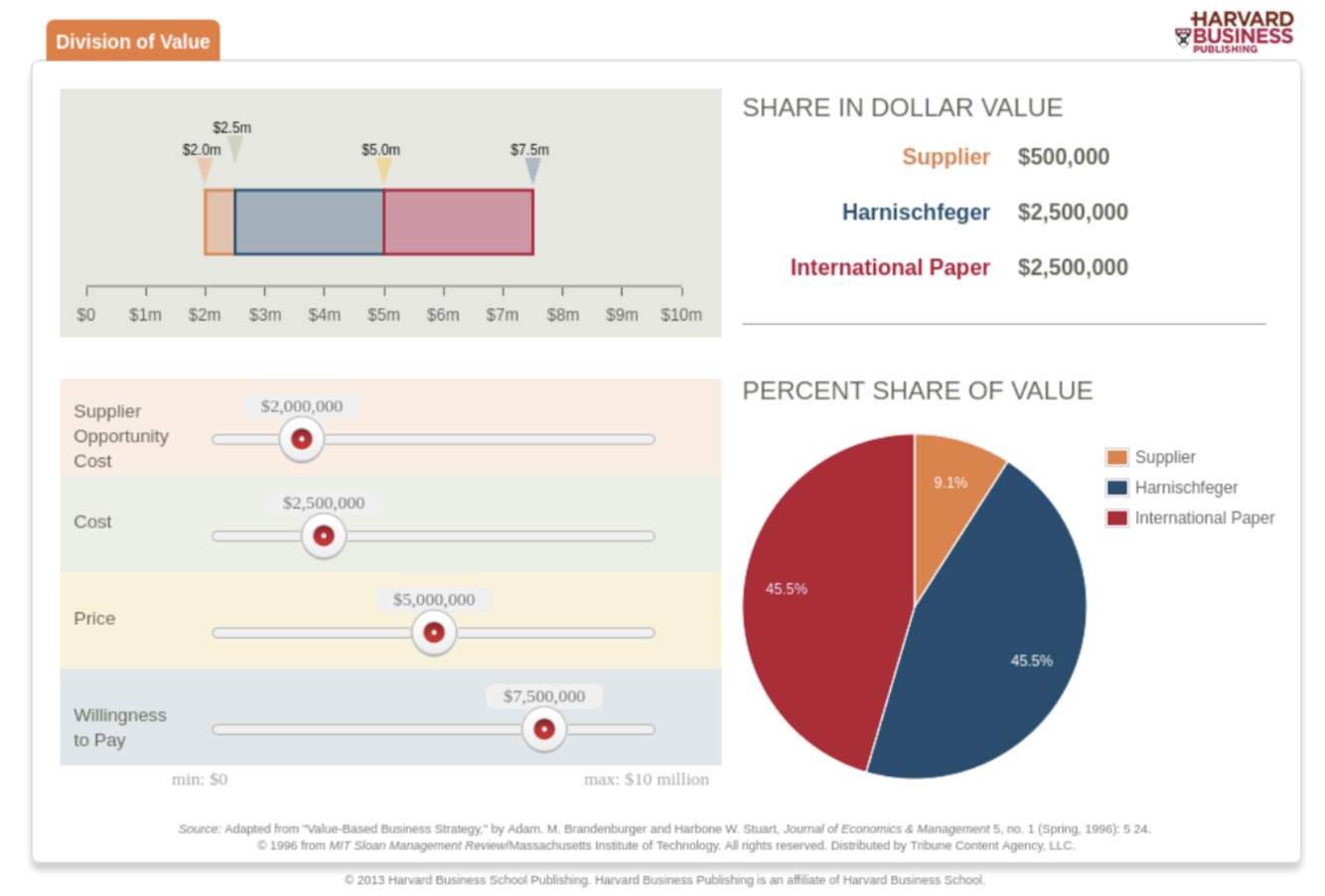
Total Value Created =
Difference between the customer’s willingness to pay and the supplier’s opportunity cost.
Example: Total Value Created: $7.5m - $2m = $5.5m
Value Captured =
”Money earned”
- The value captured by Harnischfeger is the difference between the negotiated price and the $2.5 million it cost to produce and install the crane ($5m - £2.5m = $2.5m)
- International Paper captures value equal to $7.5 million minus the price ($7.5m - $5m = $2.5m)
- The suppliers capture the difference between costs and supplier opportunity costs ($2.5m - $2m = $0.5m)
Added Value =
Maximal value created by all participants in a transaction minus the maximal value that could be created without the firm.
(i.e. Value that would be lost to the world if the firm disappeared).
Consider the bargaining scenario ‘A’:
- If Harnischfeger opts out of the transaction, the entire $5.5 million of value goes uncreated
- The same is true if International Paper refuses to participate
- If both participate, then Harnischfeger and International Paper have an added value of $5.5 million.
Bargaining Scenario ‘B’:
In the late 1980s, Kranco, a management-buyout firm headed by former Harnischfeger executives, entered the market for portal cranes
Assume Kranco produces an identical product, with a cost of $2.5 million and a supplier opportunity cost of $2.0 million, and it generates the same willingness to pay of $7.5 million.
→ The added value of Harnischfeger is now $0. If it participates in a deal with International Paper, the total value created is $5.5 million. If it opts out, Kranco can fill its place, and the value of $5.5 million is still generated.
Bargaining Scenario ‘C’:
Suppose now that Harnischfeger adds some new services to its core product
The services boost the willingness to pay of International Paper to $9.0 million, but because the services entail additional labour, they raise supplier opportunity costs to $3.0 million
→ The total value created if Harnischfeger participates is now $9.0 million - $3.0 million = $6.0 million
→ The total value created if Harnischfeger opts out and Kranco provides the crane is $7.5 million - $2.0 million = $5.5 million
What is Harnischfeger’s added value under scenario C with Kranco participating?
Portal Crane Example: Take-Aways
The notion of added value highlights the fact that competitive advantage derives fundamentally from scarcity
A firm establishes added value by making sure that it is unique in some valuable way—that the network of suppliers, customers, and complementors within which it operates is more productive with it than without it and that it is not readily replaced.
Competitive Advantage Strategies:
- Differentiation strategy: Raising customers’ willingness to pay for its products without incurring a commensurate increase in supplier opportunity cost
- Low cost strategy: Reducing supplier opportunity cost without sacrificing willingness to pay
Differentiation strategy risks:
Supply chain can be more complex and expensive and more difficult to oversee
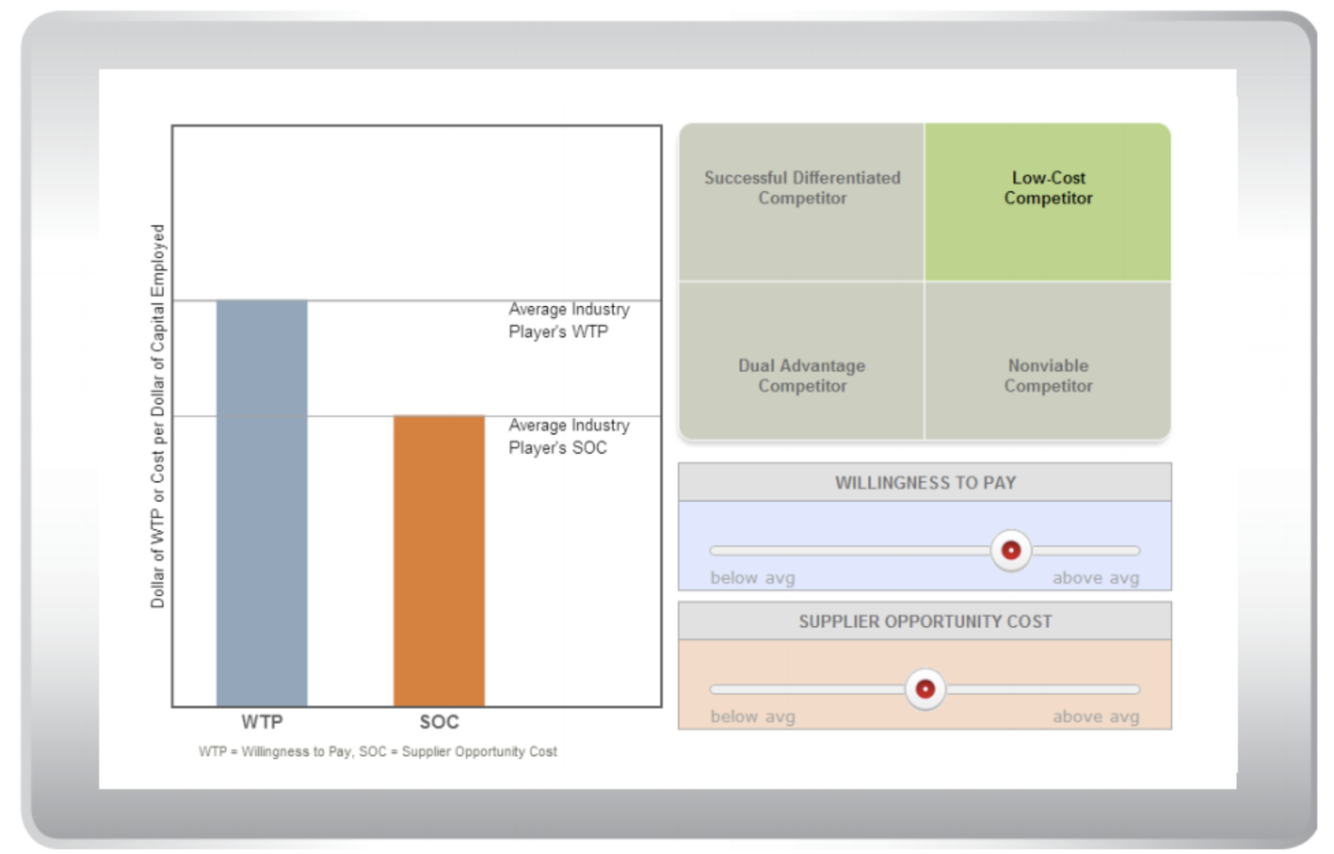
Types of competitors positioning (related to competitive advantage):
- Dual Advantage Competitor (higher-than-average willingness to pay and lower-than-average supplier opportunity cost)
- Successful differentiated competitor (higher-than-average willingness to pay)
- Low-Cost Competitor (Average willingness to pay and supplier opportunity cost)
- Nonviable competitor (Any difference/écart between WTP and SOC that is smaller than the low cost competitor)
A Note on Differentiation Strategy:
A differentiated firm has boosted the willingness of customers to pay for its output and commands a price premium.
However, it doesn’t mean that the company is different from its competitors
Activity Analysis : why should managers analyse firm’s activities?
To identify competitive advantages opportunities
- Understand why the firm does or does not have a competitive advantage
- Spot opportunities to increase a firm’s competitive advantage
- Foresee shifts in competitive advantage
Steps in Activity Analysis: How managers can analyse firm’s activities?
- Catalog the firm’s activities
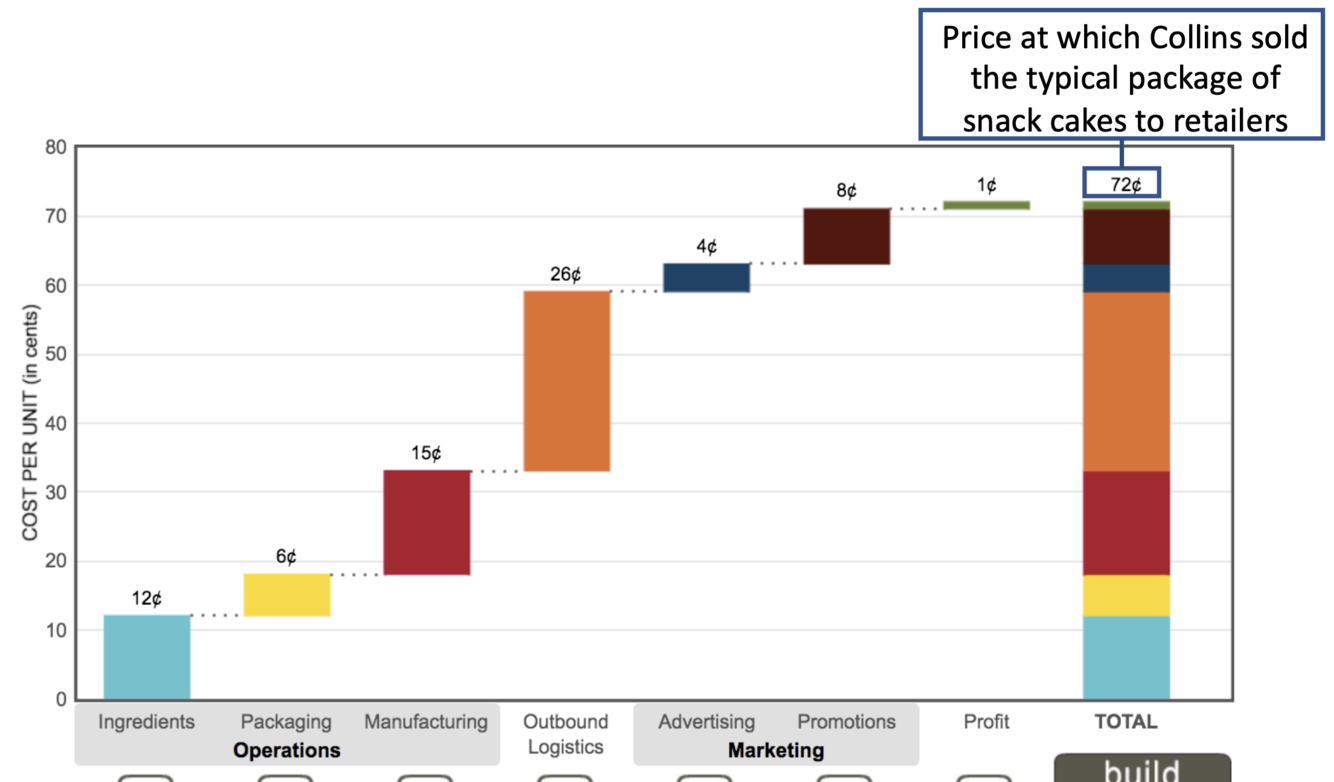
- Examine the costs associated with each activity, and they explore differences in rivals’ activities to understand how and why their own costs are higher or lower
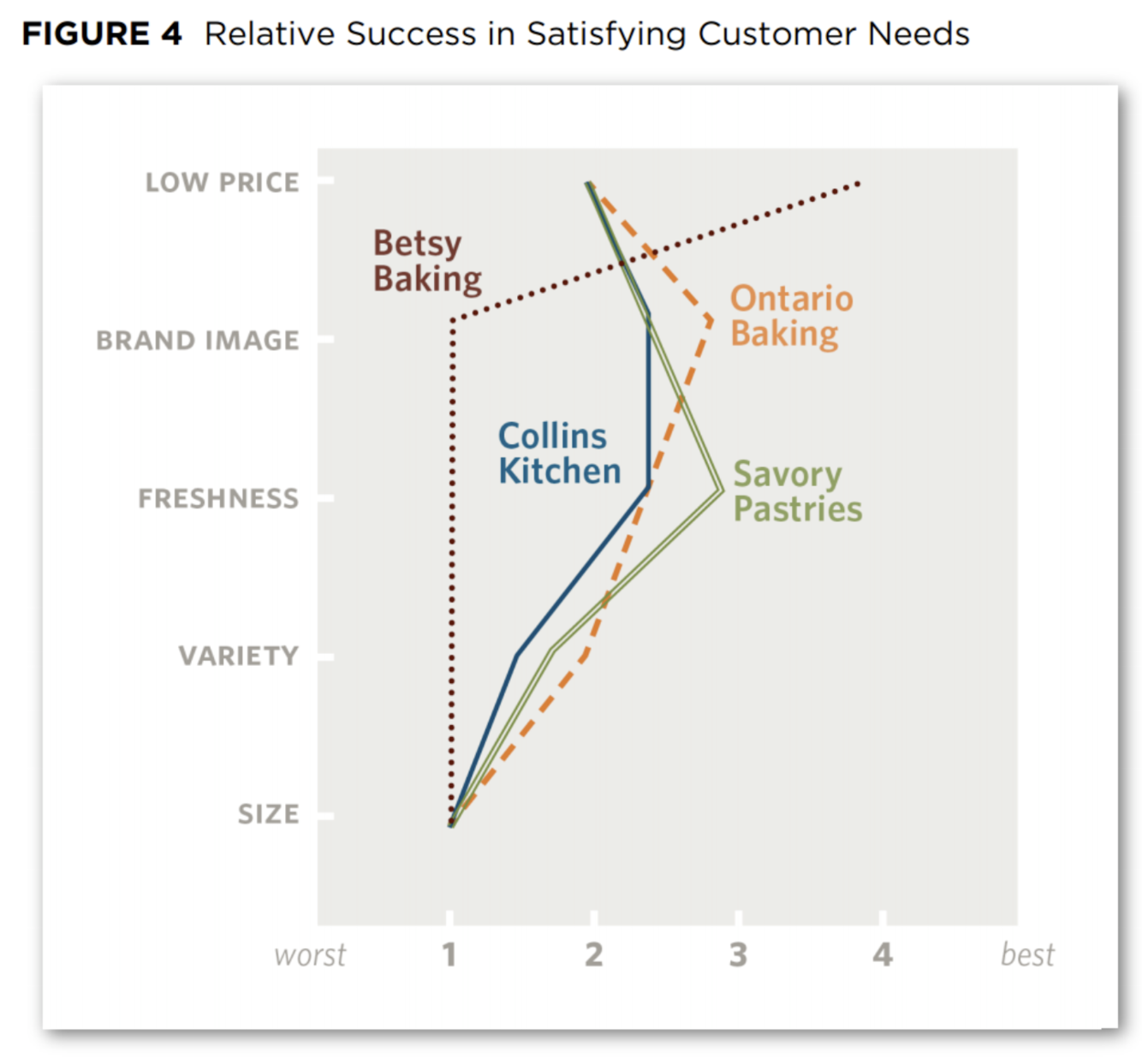
- Analyse how each activity generates customer willingness to pay, and they study differences in competitors’ activities to examine how and why their customers are willing to pay more or less
- Consider changes in the firm’s activities that could widen the wedge between costs and willingness to pay.
Step 1: Activities
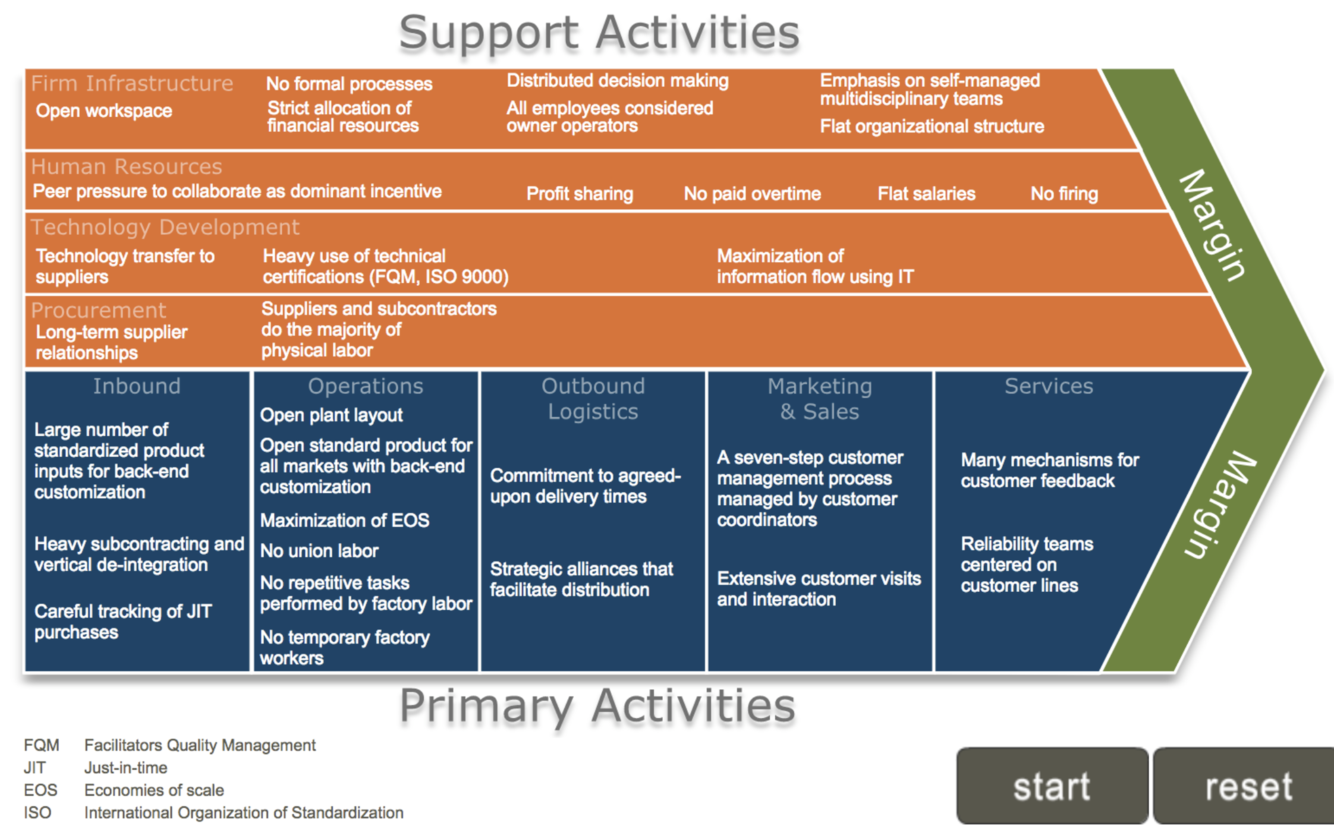
Example: Irizar
- Primary Activities
- Support Activities
Step 2: Cost Analysis
Example: Collins Kitchen
Step 3: Contribution to WTP
A firm’s activities do not just generate costs. They also increase customers’ WTP.
- Differences in activities account for differences in WTP and hence for competitive advantage and differences in profitability
Step 4: Explore Options and Make Choices
Some imperatives to formulate proposals of change:
- Identify competitor’s essential drivers
- Anticipate competitors’ reactions
- Don’t focus too much on physical product characteristics and not enough on benefits to buyers
- Pay special attention to ‘bleeding edge’ customers (buyers whose demands foresee the needs of the larger marketplace)
- Explore the existence of undeserved customer segments




