Why is it important to extend bandaging distal to the coronary band in equines?
to avoid coronary band damage
If your bandage ends at the coronary band, the adhesive may disrupt the band, potentially resulting in abnormal hoof growth. That’s not ideal.
T/F: When applying a bandage, it is important to roll each layer such that tendons are pulled laterally
False
- Roll each layer such that tendons are pulled medially. This minimizes risk of tendon injury secondary to bandage placement.*
- Bandage from the medial aspect of the limb, moving cranially around the lateral side*
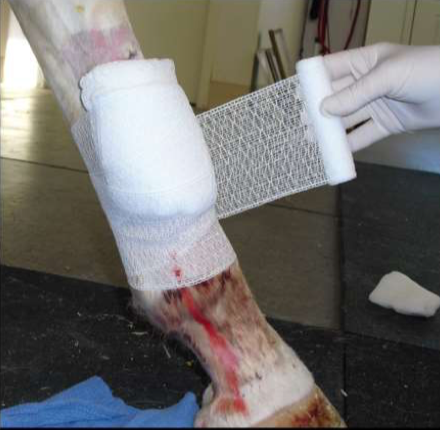
How do you stabilize an olecranon fracture in a horse?
- Stack bandage with a palmar splint
- Extend splint from heels to top of elbow
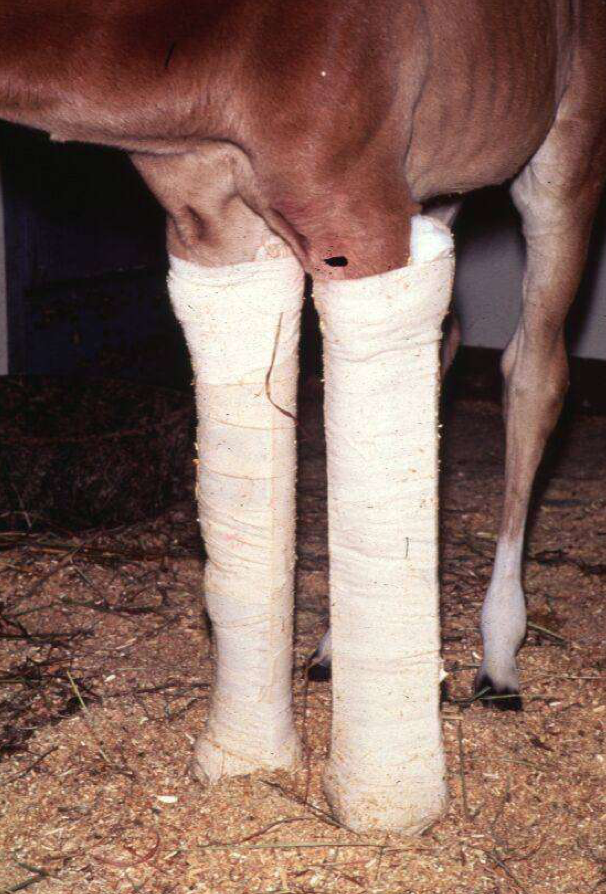
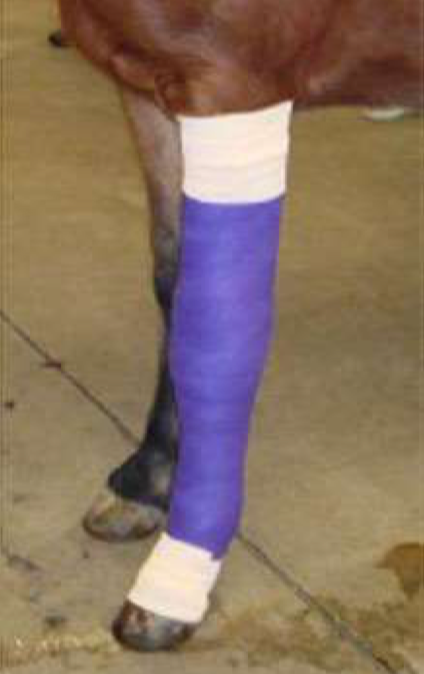
Why is it important to incorporate the hoof into the cast in large animals?
To ensure maximum diversion of weight from the limb and ground forces away from the limb to the cast
Identify this instrument:
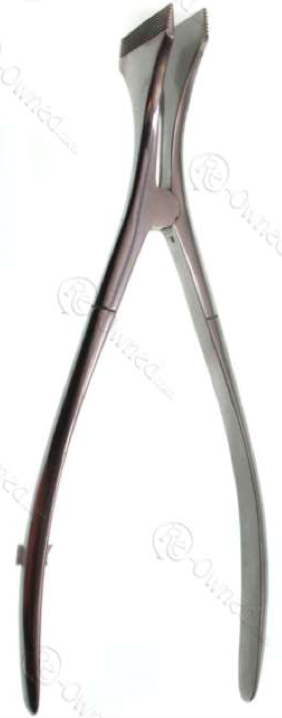
cast spreader
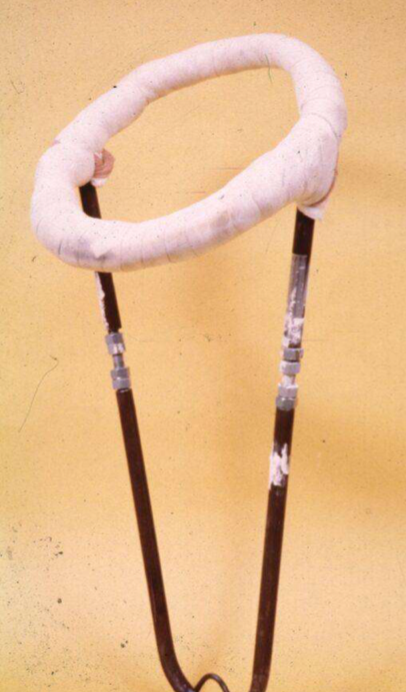
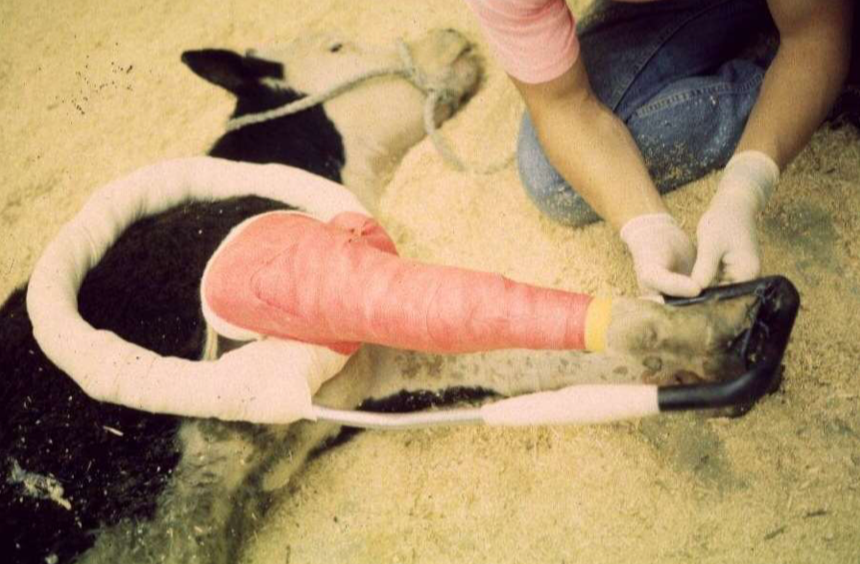
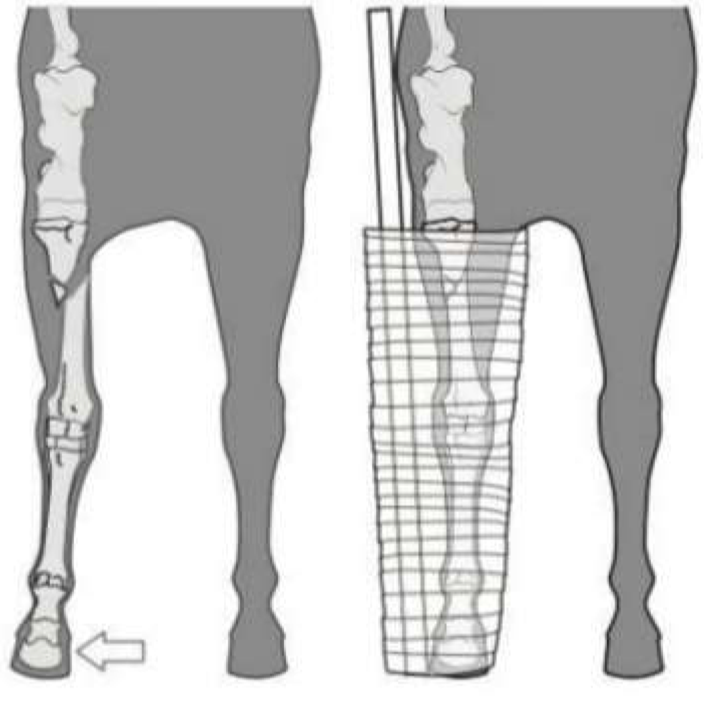
What type of splint is seen here?
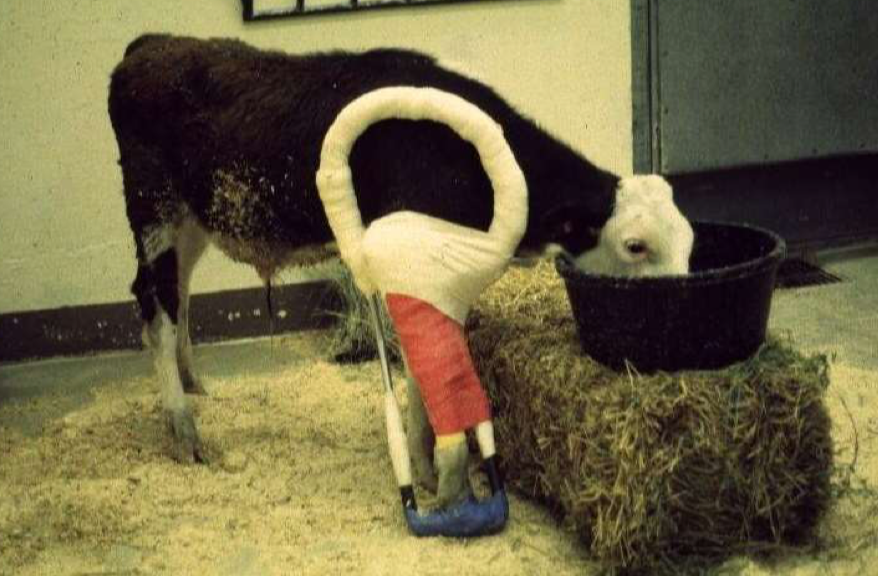
Thomas-Schroeder Splint
The Thomas-Schroeder splint is useful for radial and tibial stabilization in food animals. It is also used for rupture of the gastrocnemius.
What is the splint placement rule for fracture stabilization?
YOU MUST IMMOBILIZE A JOINT ABOVE AND A JOINT BELOW
This is true for casting as well
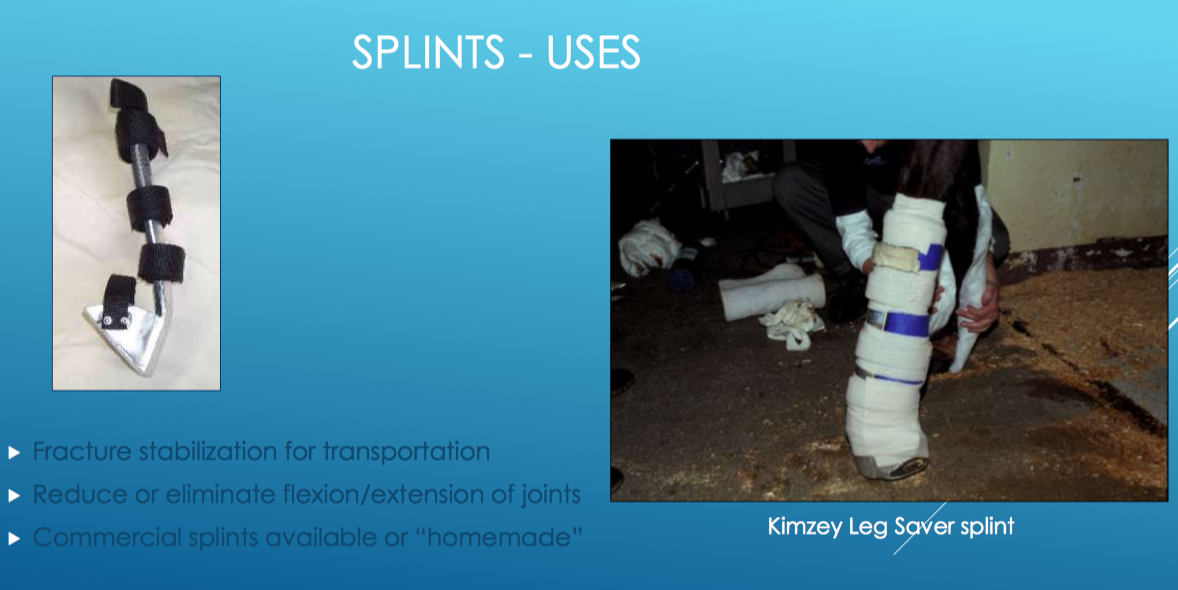
What type of splint is shown here?
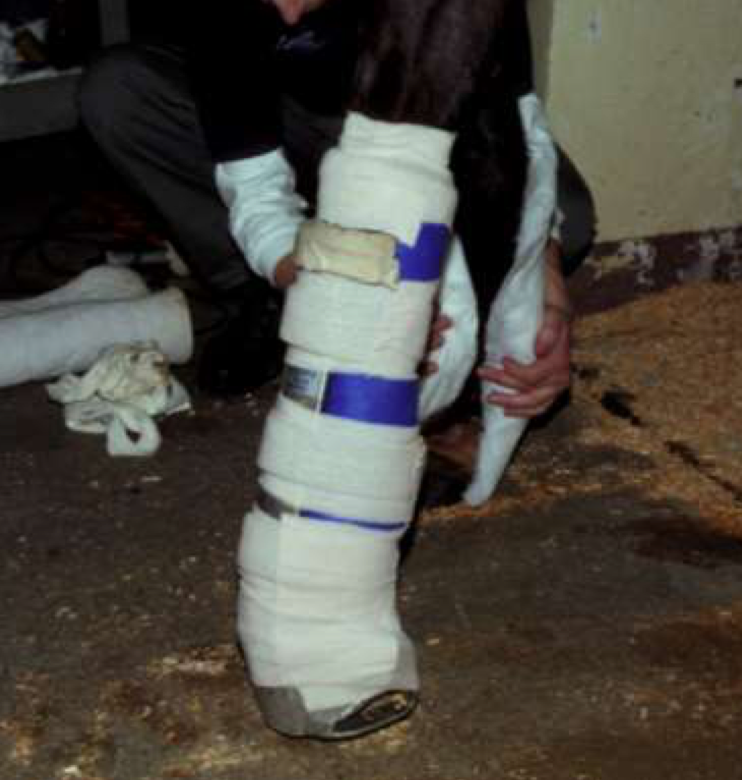
Kimsey Leg Saver Splint
T/F: The Thomas-Schroeder splint is useful for radial and tibial stabilization in horses
False
The Thomas-Schroeder splint is not used in horses. It IS useful for radial and tibial stabilization (and gastrocnemius rupture) in food animals though.
T/F: A ‘stack bandage’ extends from below the coronary band to proximal to carpus or tarsus
True
- Extends from BELOW coronary band to proximal to carpus or tarsus
- After placing secondary layer (cotton sheeting/RediRoll), “stack” another cotton above, covering the proximal aspect of the 1 st cotton
- Secure with brown gauze
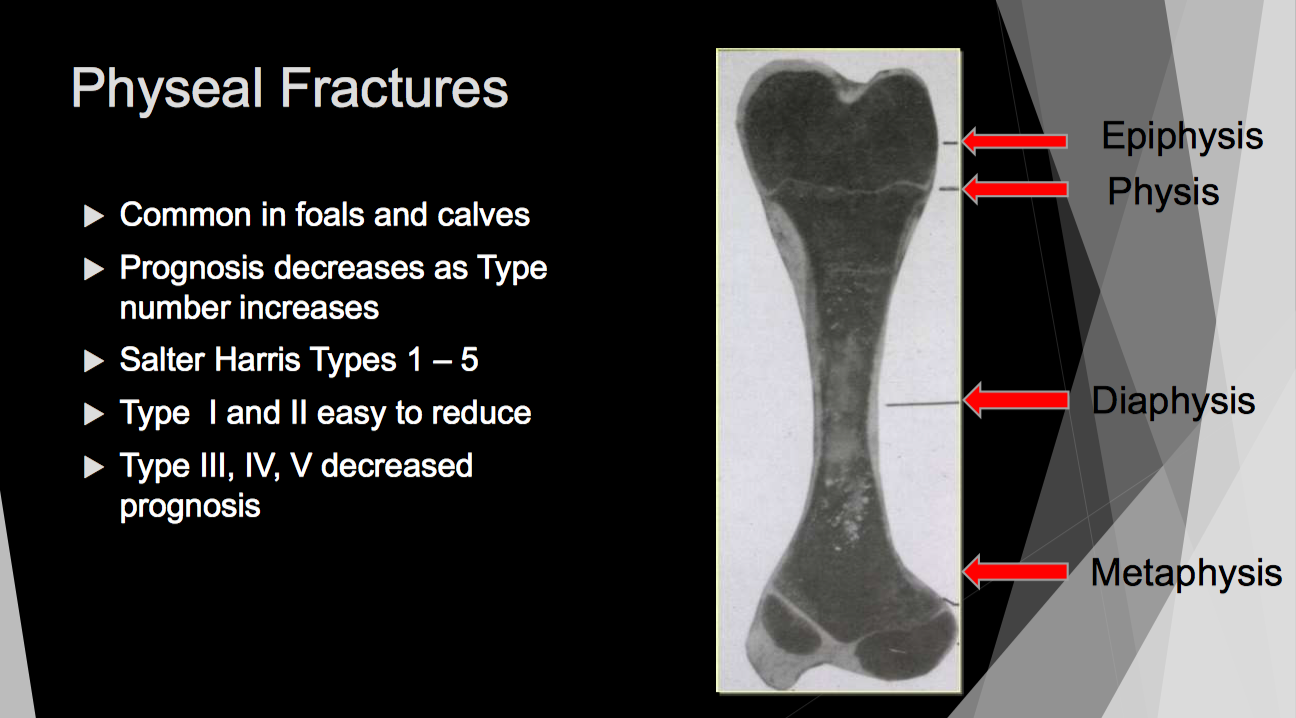
Which Salter-Harris fractures have a poorer prognosis?
Type III, IV, V
T/F: Bandages must be changed immediately if soiled, wet, or slips
True
How do you stabilize a radial fracture in a horse?
- Robert Jones Bandage
- Palmar splint from heels to elbow
- Lateral splint from hoof to withers
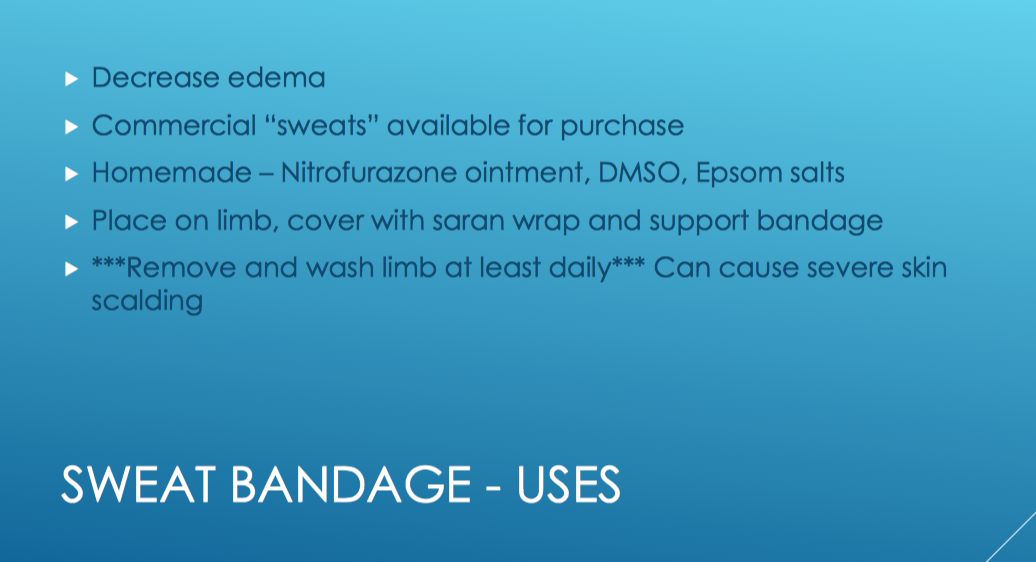
The main purpose for a sweat bandage is to decrease ________
edema
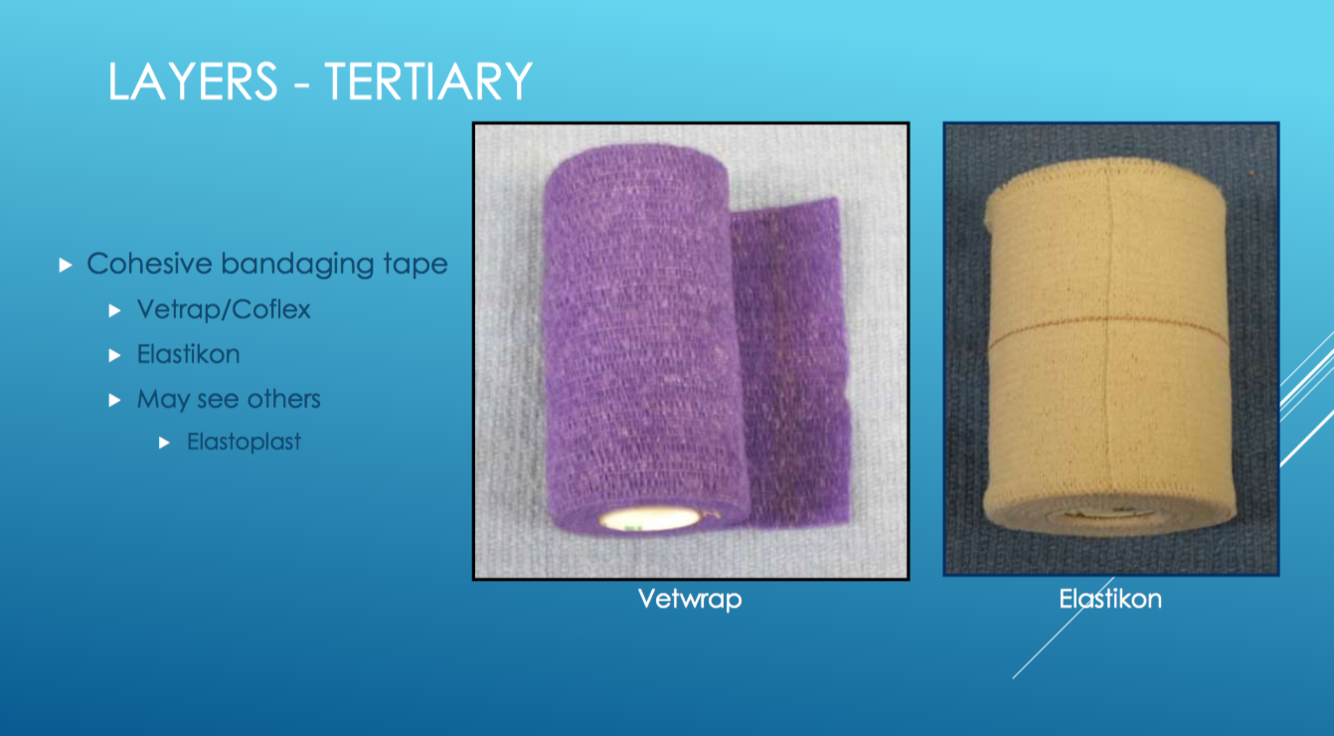
For which bandage layer would Vet Wrap or Elastikon be used?
tertiary layer
What are some clinical signs of cast failure?
swelling, foul odor, moisture, cracks, increased temp at the cast
When would you use a hypertonic dressing (Curasalt) as a primary bandage dressing?
exudative wounds
What are the functions of the tertiary bandage layer?
- Secures previous layers
- Provides rigidity / support to bandage
- Helps protect bandage from contamination
Casts should be changed at the FIRST sign of any lameness. How often should a cast be changed normally.in an adult horse?
every 6 weeks
If significant swelling at time of 1st cast placement, change in 3 – 5 days.
Casts should be changed at the FIRST sign of any lameness. How often should a cast be changed normally.in a foal?
every 7-14 days
If significant swelling at time of 1st cast placement, change in 3 – 5 days.
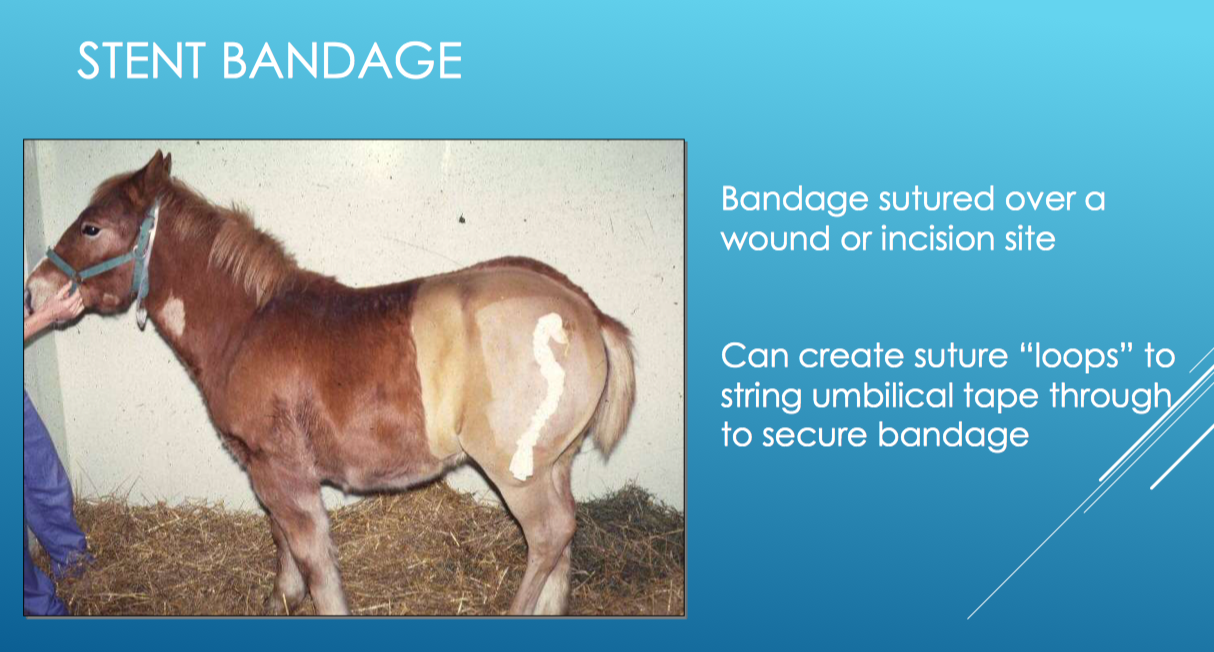
What type of bandage is shown here?
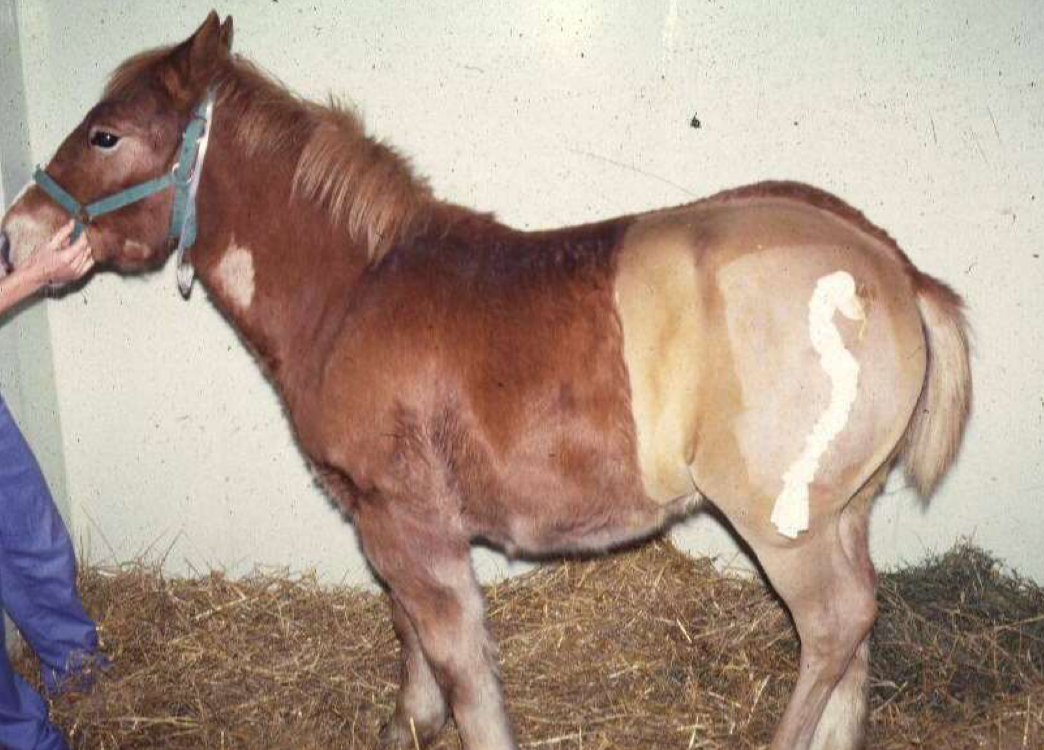
stent bandage
Which bandage layer(s) need to be secured with conforming roll gauze?
primary and secondary layers
When placing a cast, you should overlap cast padding and casting tape ____%
50%
What type of bandage is shown here?
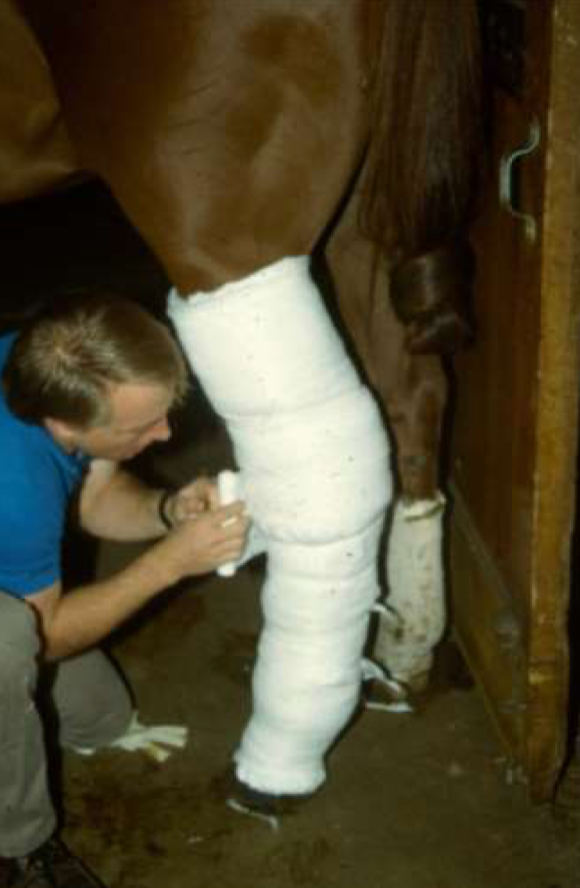
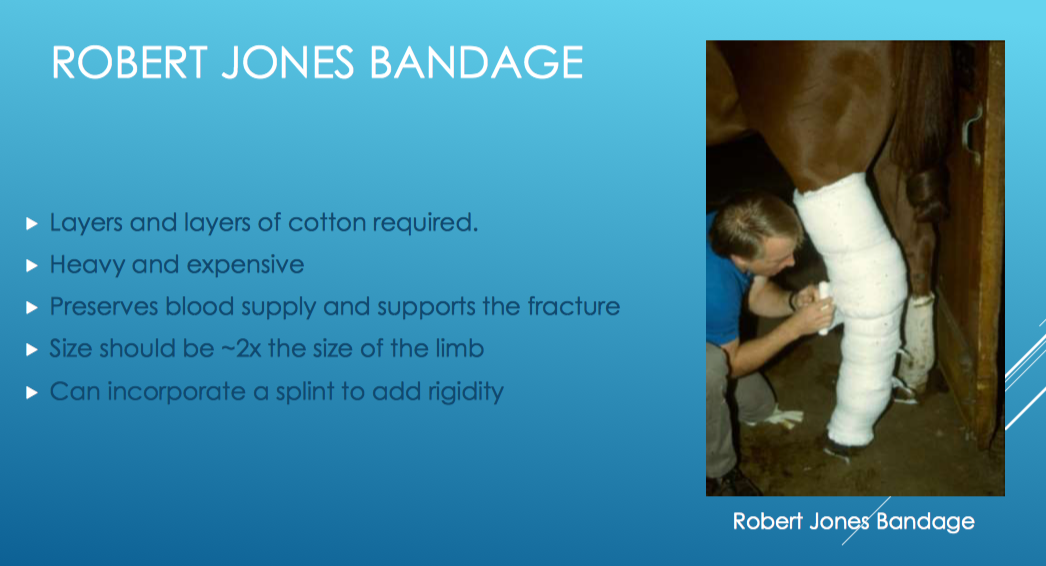

-
Wound Management48
-
Arthrocentesis (Sx Lab)5
-
Vasectomy, Epididectomy, Urolithiasis, Castration, Male Urogenital Sx (Sx Lab)70
-
Tendonitis, Tendon Laceration, Joint Disease, Neurectomy, Sweeny35
-
Bandaging, Casting (Sx Lab)25
-
Corrective Shoeing, Diagnosing Lameness44
-
Osteochondrosis Dissecans (OCD)22
-
Arthroscopy20
-
Equine Laparoscopy, Staplers21
-
Equine Sarcoid & Melanoma24
-
Sequestrum9
-
Surgical Eye Diseases12
-
Teat & Udder Surgery22
-
Right Flank Celiotomy, LDA, AED, etc. (gave up on this one)9
-
Lameness in Cattle & Horses, Septic Arthritis/Septic Physitis34
-
Digit Amputation, PIJ Arthrodesis22
-
Angular Limb Deformities, Flexural Deformities/Tendon Laxity21
-
Bone Spavin, P1, Splint Bone, Proximal Sesamoid Fractures25
-
Long Bone Fractures: Cannon, Ulna, Femur, Tibia, Complications, ExFix, Stack Pinning, Mandibular Fractures20
-
Head and Neck Fractures24
-
Equine Dental Surgery35
-
Equine Respiratory Surgery, Arytenoid Chondritis, Guttural Pouch Issues79
-
Intussusception, Intestinal Volvulus, Hemorrhagic Bowel Syndrome in Cattle23
-
Surgical Diseases of the Rectum and Anus27
-
Inguinal & Umbilical Hernias38
-
Choke, Rumen Fistula, Rumenotomy, Pericarditis20
-
Ruminant Male Reproductive Surgery40
-
Equine Female Urogenital Surgery36
-
Equine Male Surgery32
-
Equine Colic52
-
Nose Rings, Dehorning, Tracheal Collapse17
-
Vaginal Prolapse & Cesarean Section30



