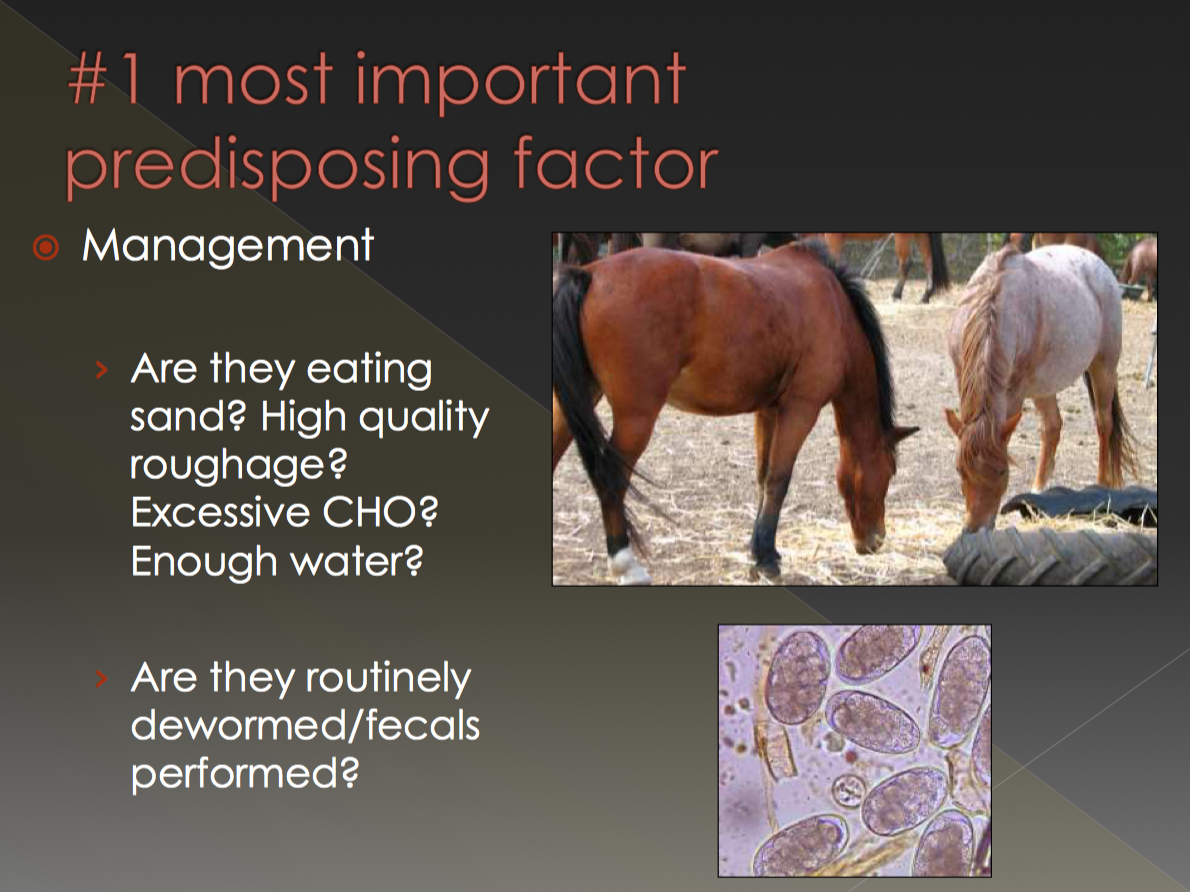
What is the #1 predisposing factor for colic in horses?
improper management
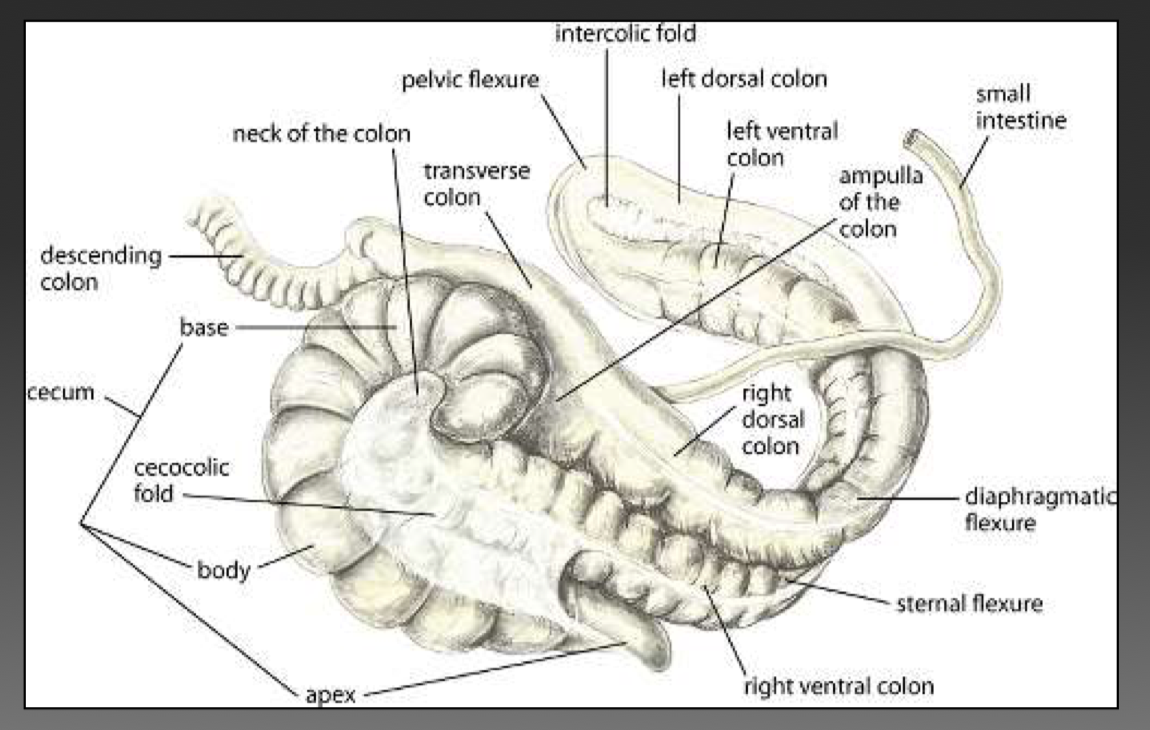
What are the most common locations for impaction in the horse?
- Pelvic flexure
- Right dorsal colon
- Transverse colon
- Small colon
- Stomach
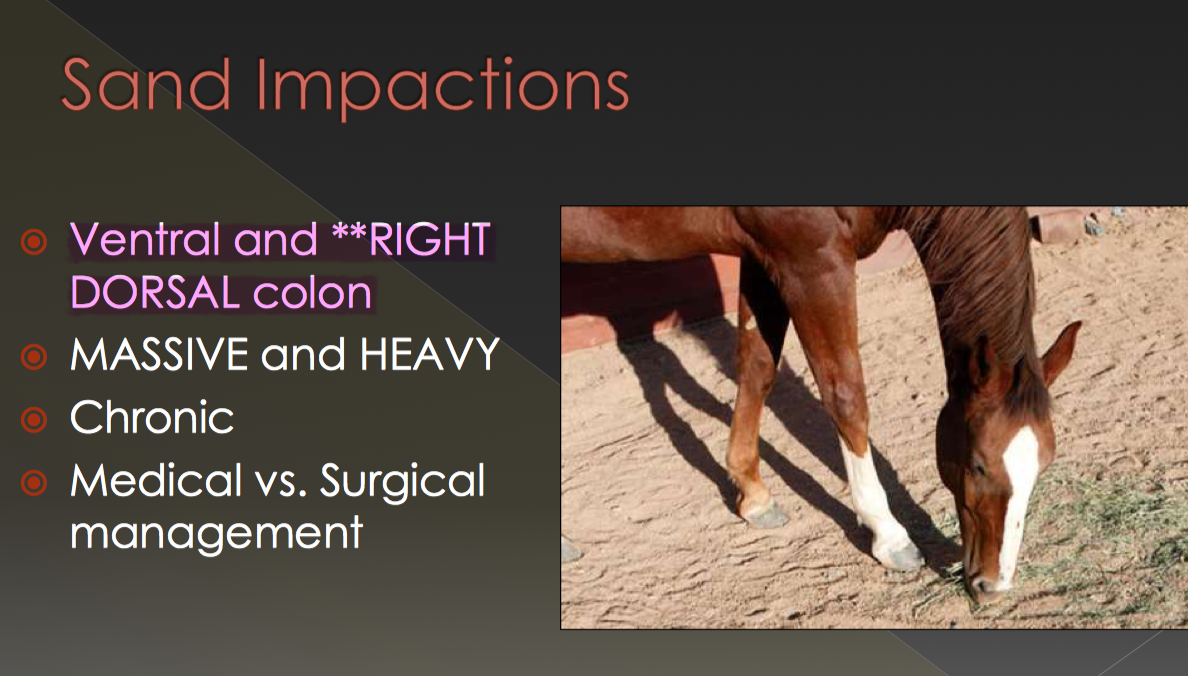
Where are sand impactions most commonly observed in horses?
Right dorsal colon
- Diagnosis:
- Auscultation (sounds like a beach!)
- Fecal float/sink
- Abdominocentesis - sand
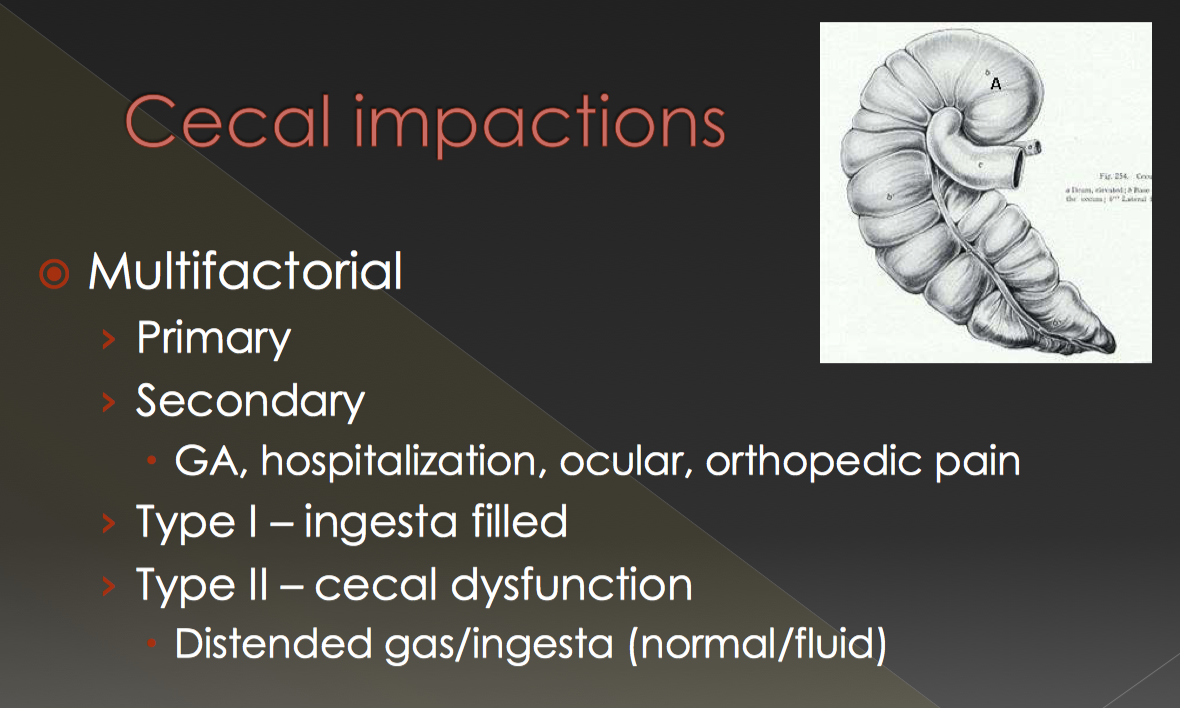
Type II cecal impactions in horses are typically the result of:
cecal dysfunction
T/F: Abdominal ultrasound is a routine part of the colic exam
True
Can confirm LDD, SI distention, bowel thickening, free fluid. Excellent tool for evaluating the GI in real time
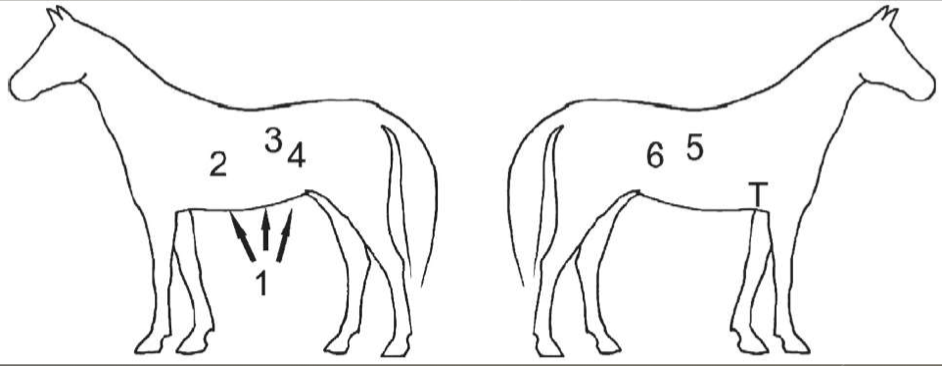
What are the 7 locations on the horse that are examined using the fast localized abdominal sonography of horses (FLASH) ultrasound technique?
- Left side:
- 1 - Ventral abdomen
- 2 - Gastric window
- 3 - Nephrosplenic window
- 4 - Left middle 1/3 of abdomen
- Right side:
- 5 - Duodenal window
- 6 - Right middle 1/3 of abdomen
- 7 - Cranial ventral thorax
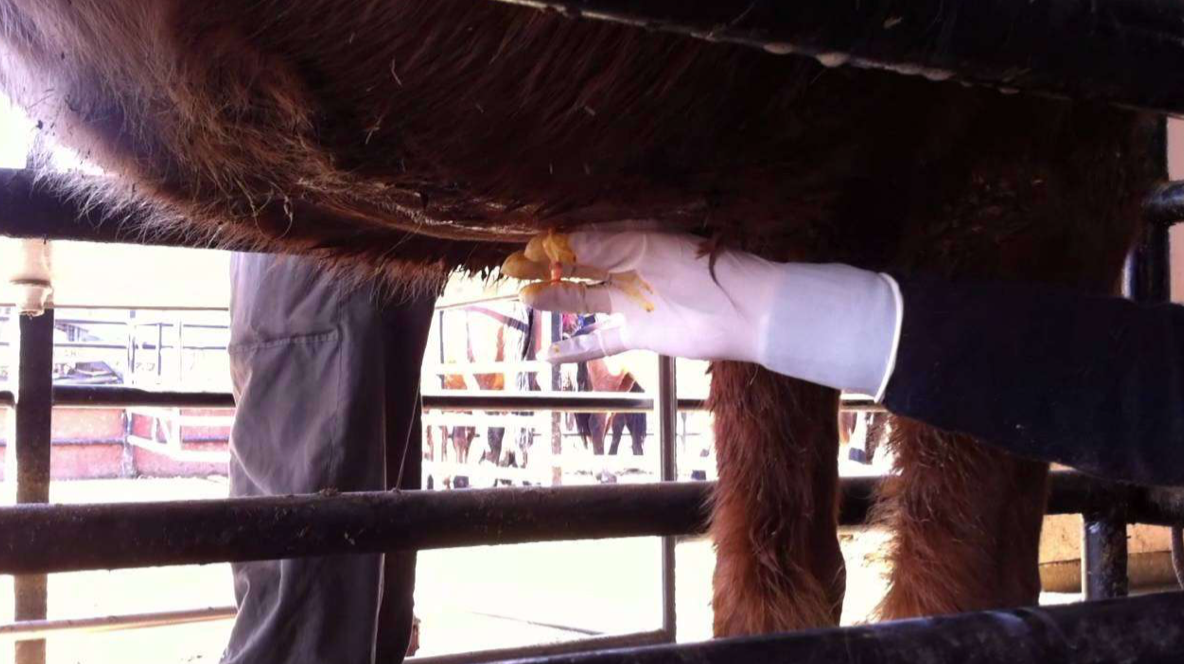
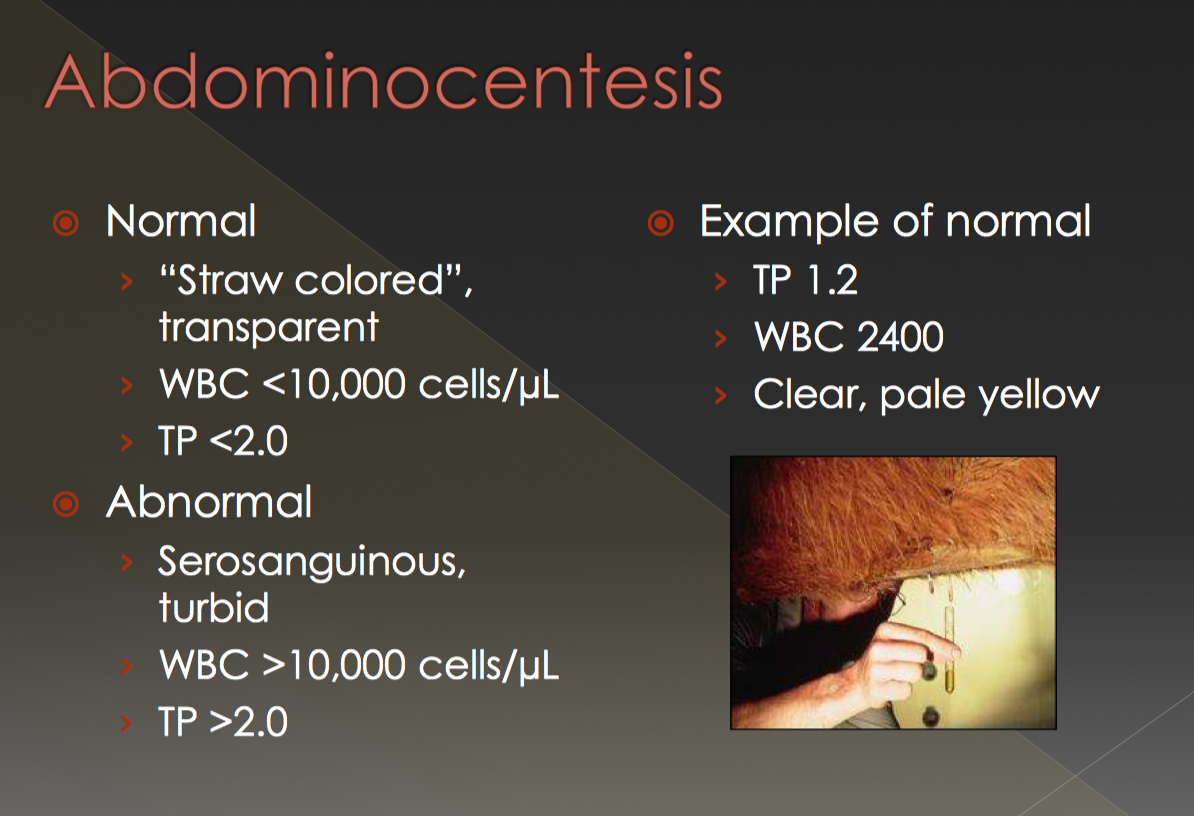
Where is an abdominocentesis performed on a horse?
On or to the RIGHT of ventral midline & caudal to the xiphoid
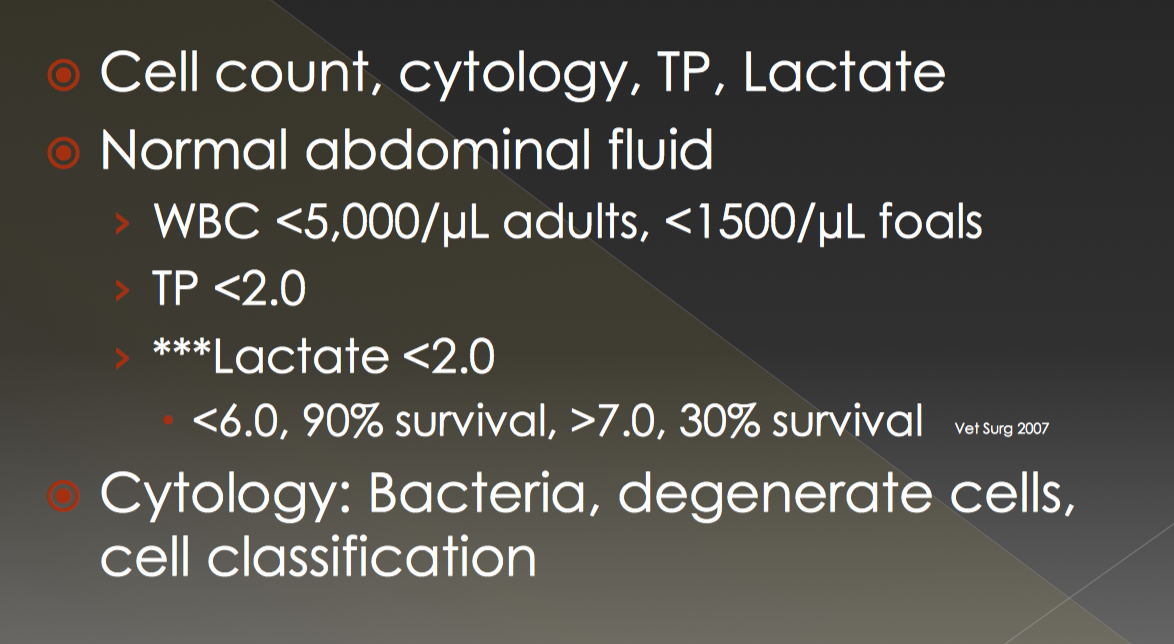
Normal lactate level in peritoneal fluid of a horse should be _____
<2
Normal WBC in peritoneal fluid in an adult horse should be _____
<5,000/μL
T/F: Normal fluid on an abdominocentesis should be serosanguinous and turbid
False.
It should not be that.
What is the minimum pre-op bloodwork prior to colic surgery?
- PCV/TP
- Lactate
- CBC with differential
- Fibrinogen
- Glucose
- BUN/Creatinine
Helps assess prognosis and help determine likelihood of intra/post-op complications
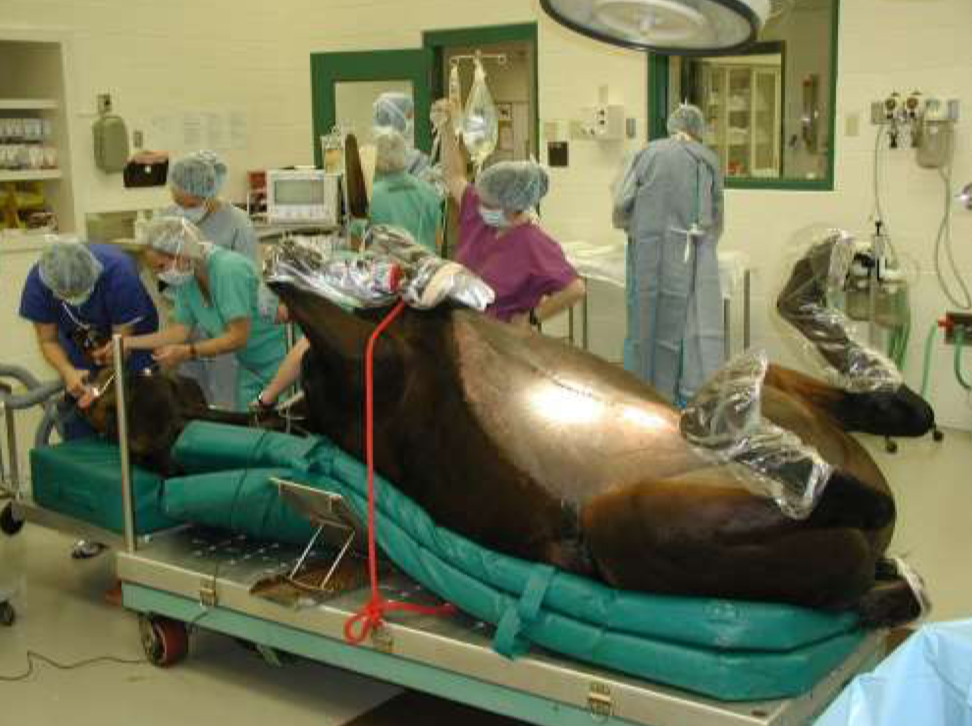
What is the best overall surgical approach for colic surgery?
Ventral midline approach
- Can exteriorize 75% of GI tract
- Minimal hemorrhage, strong closure
- Unable to exteriorize stomach, duodenum. distal ileum, base of cecum, distal RDC, transverse colon, terminal small colon
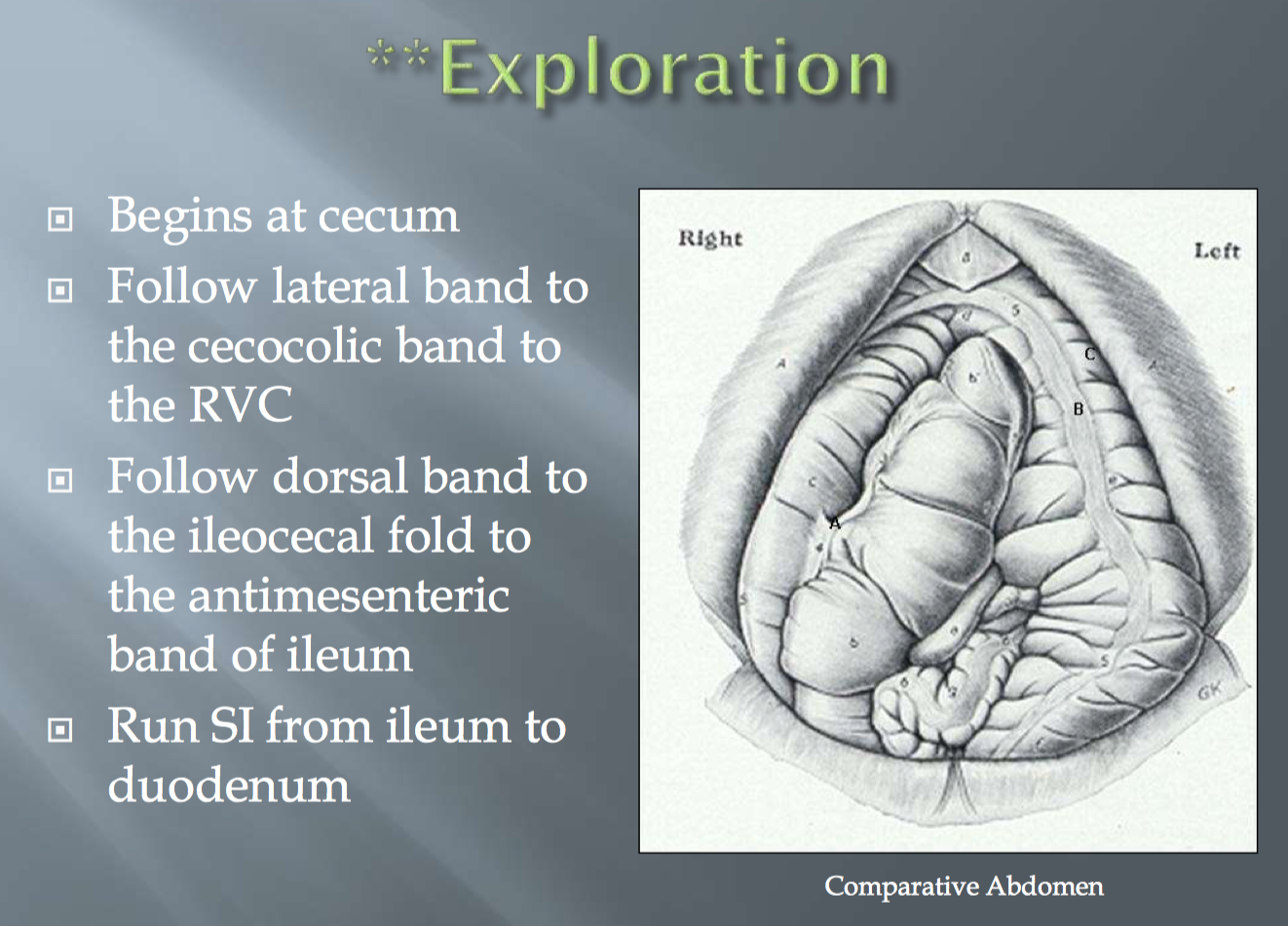
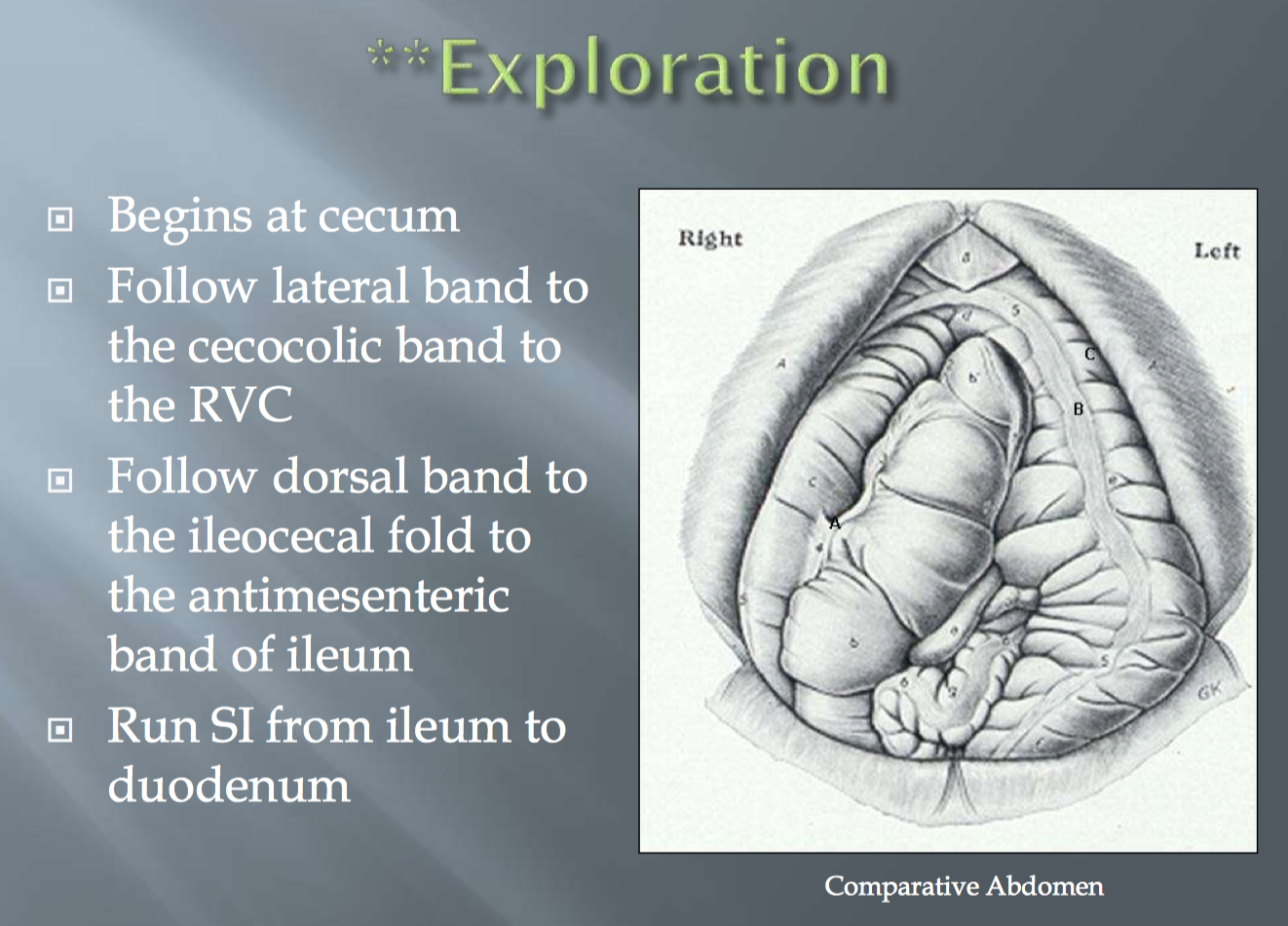
Abdominal exploration in the horse should start at the __________
cecum
When exploring the abdomen in the horse, you begin at the cecum. If you follow the lateral band to the cecocolic band, you will reach the ________
Right ventral colon
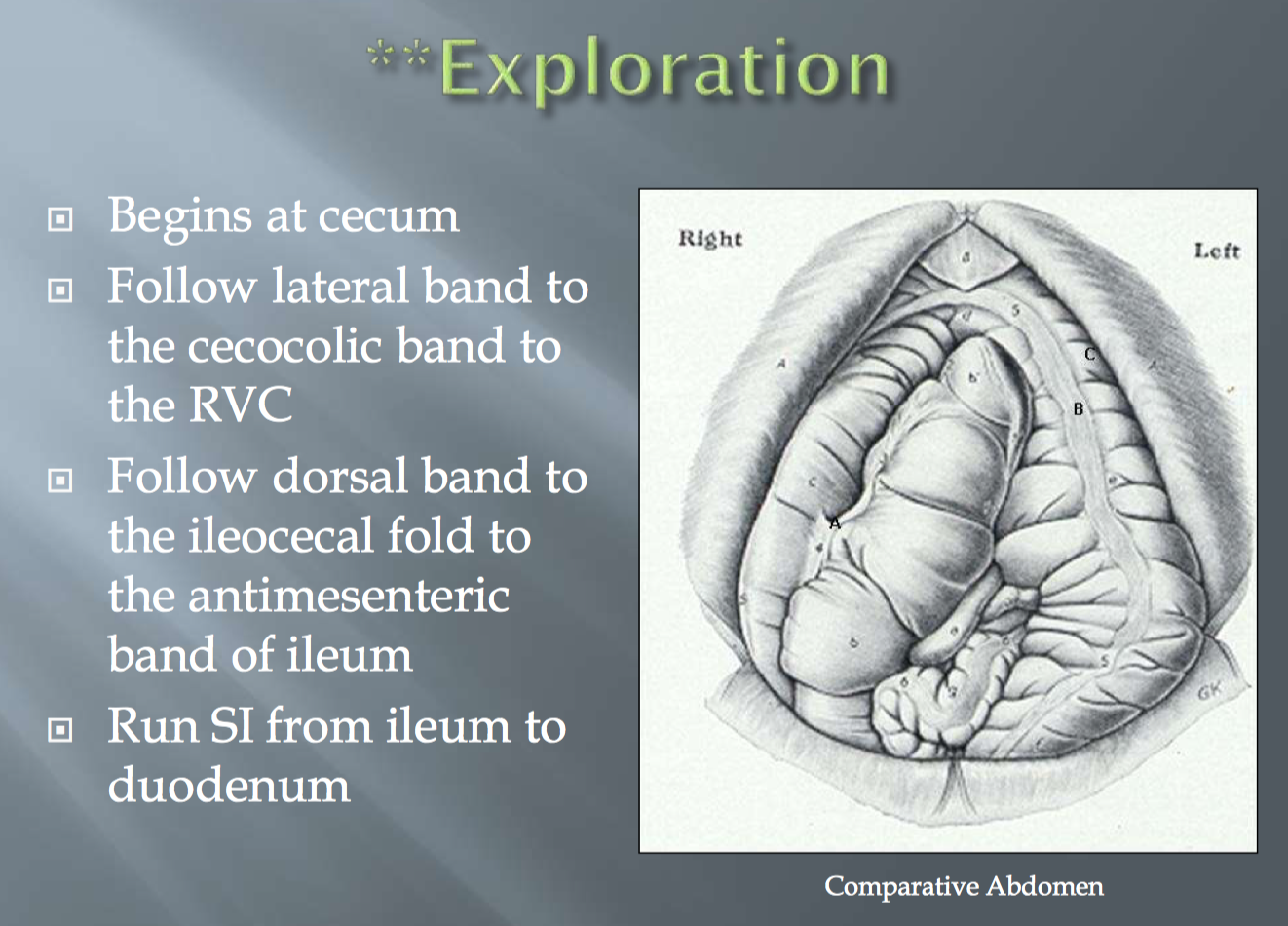
When exploring the abdomen in the horse, you begin at the cecum. If you follow the dorsal band to the ileocolic fold, you will reach the ________
antimesenteric band of the ileum
The duodenum is fixed to the dorsal body wall and transverse colon by the __________ ligament
duodenocolic ligament
What is the gold standard for assessing tissue viability?
Histopathology
Not very practical though unfortunately, so we rely on gross clinical assessment, which is only ~54% accurate
This 14 year old QH gelding was normal this morning and at lunch, but was severely painful this afternoon.
Rope horse, eats grass/alfalfa mix, and pellets. Up to date on vaccines and deworming. No history of previous colic and no meds
Physical Exam: Temp: 100.8, HR: 80, RR: unable d/t pain, mm: “muddy”, CRT: 3, GI neg all quadrants. Evidence of self induced trauma over head/eyes
Based on the PE findings, what is your next step?
- Rectal exam
- Sedation/pain management
- NG tube
- Bloodwork
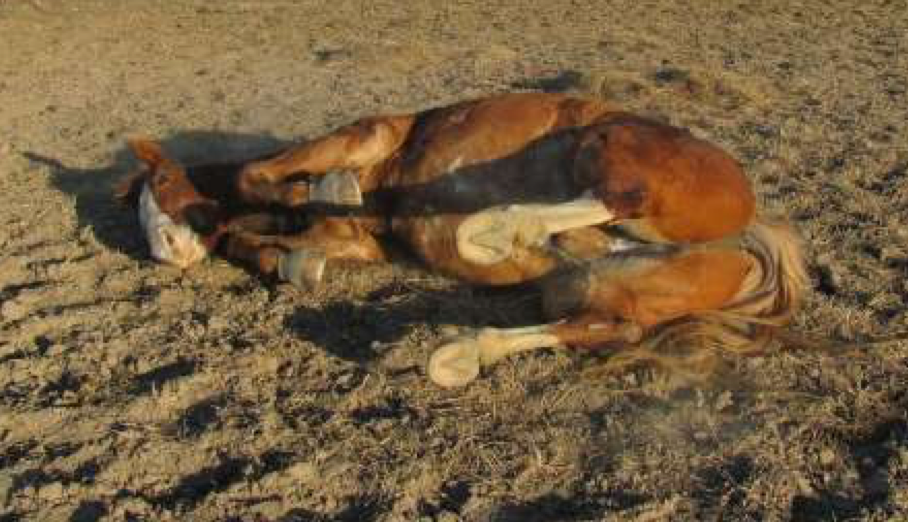
Sedation/pain management
Then NG tube
An owner found her 8 year old Warmblood mare violently colicky. The mare has a foal and the owner is concerned for the foal’s safety. The mare foaled 8 weeks ago and the foal is doing great (this is her 3rd foal). Current on vaccines and deworming. On spring pasture. The owner gave 10 mL Banamine PO prior to calling.
Based on this information, what is your top differential?
Colon Torsion
Other differentials include mesocolon tear, LC displacement, or other intestinal accident.
Which of the following would be a likely pre-op drug protocol for colic surgeries?
- K+ Pen
- Gentocin
- Banamine
- Tetanus toxoid
- IV Fluid (LRS)
All of the above
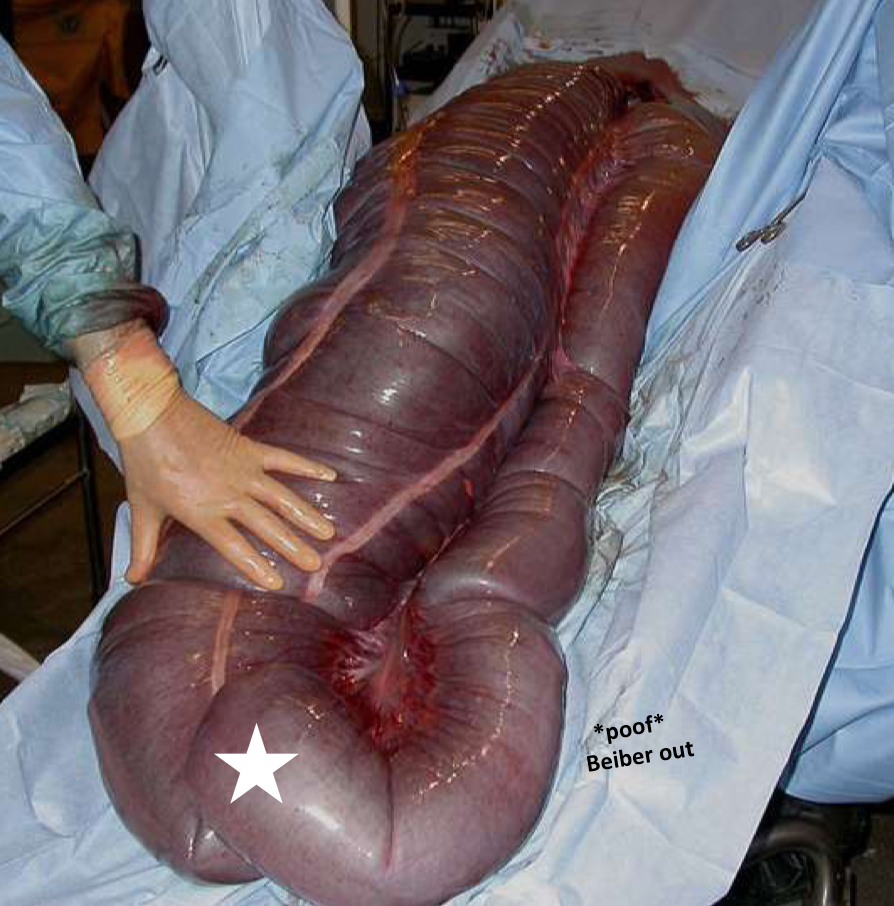
What structure is Justin Beiber pointing to?
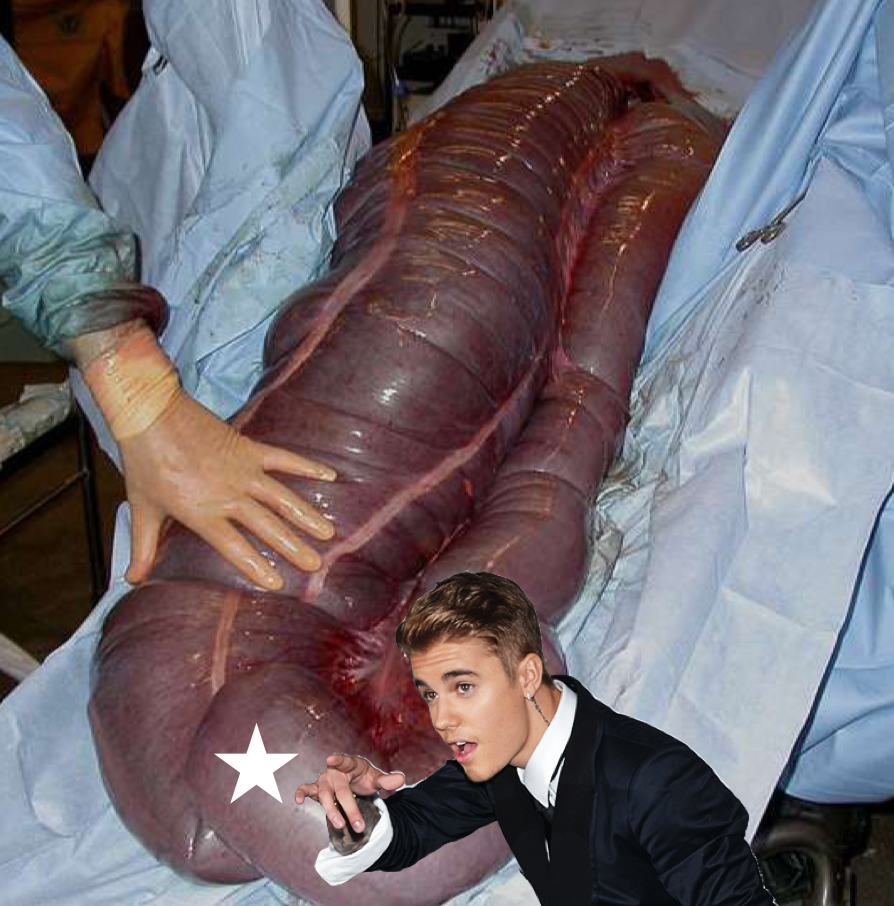
Pelvic Flexure
What is the daily maintenance fluid rate for post-op colic horses?
50 mL/kg/day
Don’t forget to add losses to maintenance
After colic surgery if your patient has hypocalcemia that is refractory to therapy, this may indicate __________
hypomagnesemia
- High prevalence of hypomagnesemia post-op due to increased requirements of critically ill patients
- Can add 150mg/kg/day of MgSO4 in fluids for maintenance supplement
When supplementing potassium in a horse, it is important not to give more than ____ mEq/kg/hr
0.5 mEq/kg/hr
Usually add 80mEq to a 5L bag



-
Wound Management48
-
Arthrocentesis (Sx Lab)5
-
Vasectomy, Epididectomy, Urolithiasis, Castration, Male Urogenital Sx (Sx Lab)70
-
Tendonitis, Tendon Laceration, Joint Disease, Neurectomy, Sweeny35
-
Bandaging, Casting (Sx Lab)25
-
Corrective Shoeing, Diagnosing Lameness44
-
Osteochondrosis Dissecans (OCD)22
-
Arthroscopy20
-
Equine Laparoscopy, Staplers21
-
Equine Sarcoid & Melanoma24
-
Sequestrum9
-
Surgical Eye Diseases12
-
Teat & Udder Surgery22
-
Right Flank Celiotomy, LDA, AED, etc. (gave up on this one)9
-
Lameness in Cattle & Horses, Septic Arthritis/Septic Physitis34
-
Digit Amputation, PIJ Arthrodesis22
-
Angular Limb Deformities, Flexural Deformities/Tendon Laxity21
-
Bone Spavin, P1, Splint Bone, Proximal Sesamoid Fractures25
-
Long Bone Fractures: Cannon, Ulna, Femur, Tibia, Complications, ExFix, Stack Pinning, Mandibular Fractures20
-
Head and Neck Fractures24
-
Equine Dental Surgery35
-
Equine Respiratory Surgery, Arytenoid Chondritis, Guttural Pouch Issues79
-
Intussusception, Intestinal Volvulus, Hemorrhagic Bowel Syndrome in Cattle23
-
Surgical Diseases of the Rectum and Anus27
-
Inguinal & Umbilical Hernias38
-
Choke, Rumen Fistula, Rumenotomy, Pericarditis20
-
Ruminant Male Reproductive Surgery40
-
Equine Female Urogenital Surgery36
-
Equine Male Surgery32
-
Equine Colic52
-
Nose Rings, Dehorning, Tracheal Collapse17
-
Vaginal Prolapse & Cesarean Section30



