trends in handedness
- left handers display more variation speech lateralization
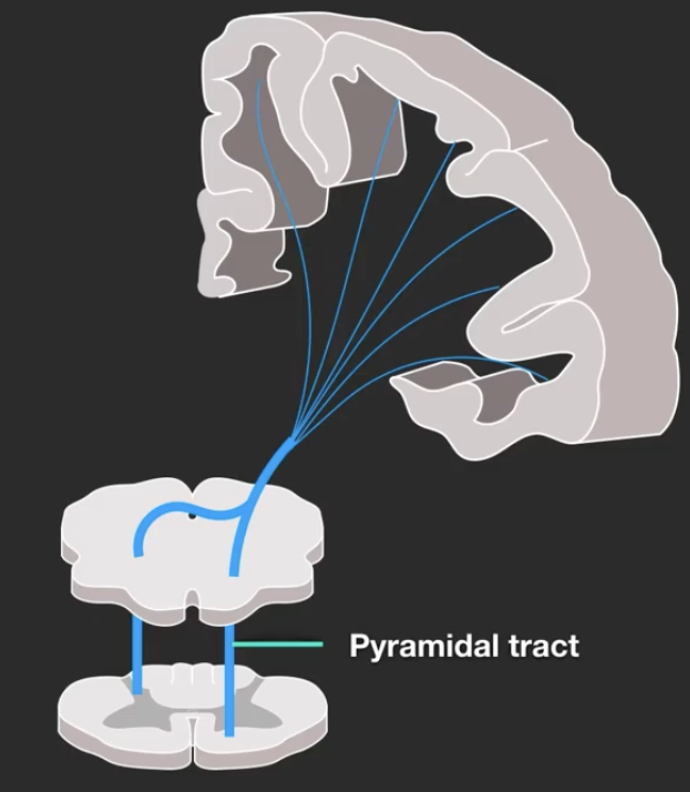
- in 80% of rt handers, the pyramidal tract descending to the right hand contains more fiber than does the same tract going to left hand
- more fibers descend
- some left and rt handers show marked dissociation between morphological and functional asymmetry
environmental theories of handedness
- utility of handedness
- ex: adaptive for mother to hold infant in left hand to be soothed by rhythm of her health and leaving rt hand to do things
- reinforcement for hand use
- established by bias in environment or genetics
anatomical theories of handedness
- rt handedness attributed to enhanced maturation and ultimately greater development of left hemisphere
- non familial left handers will show an asymmetry mirroring that of right handers, whereas familial left handers will show no anatomical asymmetry
hormonal theories of handedness
inhibitory
- early in life, brain plasticity can modify cerebral asymmetry significantly leading to anomalous patterns of hemispheric organization
- action of sex linked male hormone testosterone in altering cerebral organization during course of development
- testosterone’s inhibitory action takes place largely in lt hemi, allowing rt hemi to grow more rapidly → leads to altered cerebral organization and in some ppl to lt handedness
genetic theories of handedness
- dominant gene for rt handedness and recessive gene for left handedness
- the processes necessary for left hemi speech also confer advantage on motor control in rt hand
sexual differences
children’s play
- toy preferences, as well as other sex-typed aspects of play, are influenced by prenatal testosterone
- production of testosterone begins at about seven weeks of gestation and leads to a vast difference in concentrations between males and females prenatally
sexual differences
prenatal exposure to testosterone
androgen receptors in the brains of laboratory animals have shown that prenatal exposure to testosterone produces sex differences in brain structure and function
influence of sex hormones
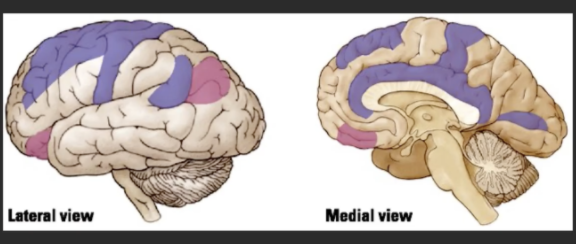
difference in estrogen and androgen receptors
sexually dimorphic regions
- purple - high estrogen receptors; pink - androgen
- male brains are larger
- sexually dimorphic regions in PFC, paralimbic cortex, posterior parietal cortex
- womens brain volume in PFC and medial paralimbic regions is significantly higher than men
- men have larger volumes in medial and orbitofrontal cortex and angular gyrus
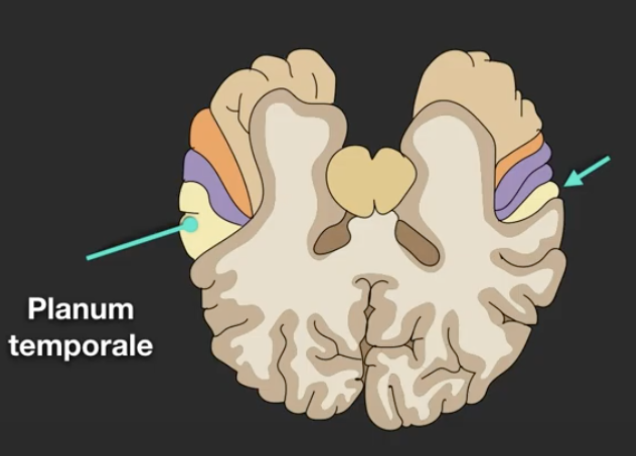
asymmetry in planum temporale
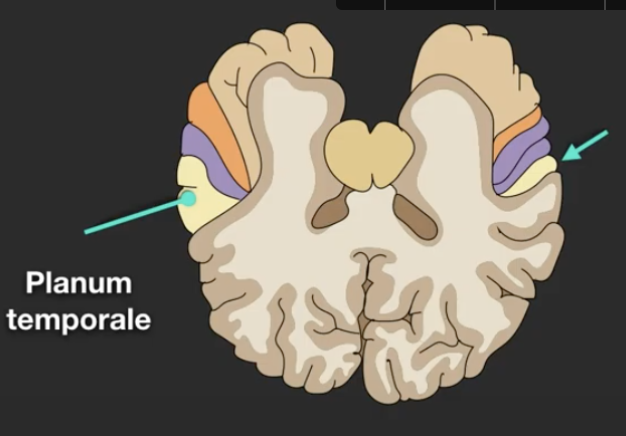
planum temporale (Wernicke’s area)
- asymmetry (left larger than right) is seen more often in men than women - sex difference in organization of language related functions
- large asymmetry in males than no asymmetry in females
sex differences
callosal studies
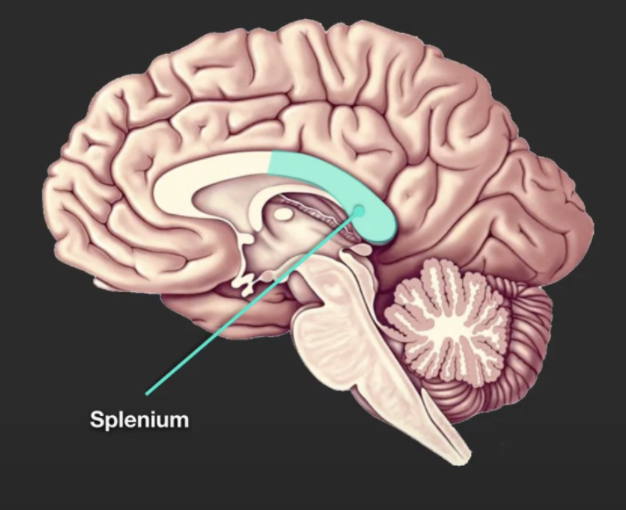
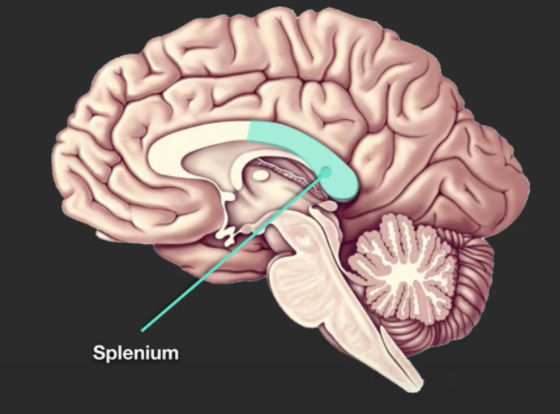
- posterior part of callosum (splenium) is significantly larger in women than men
- women have more interhemisphereic connections in both the corpus callosum and anterior commissure than men
sex differences from resting state fMRI studies
- extensive sex differences in neural connectivity
- men show greater connectivity within the rt hemi, women greater in left
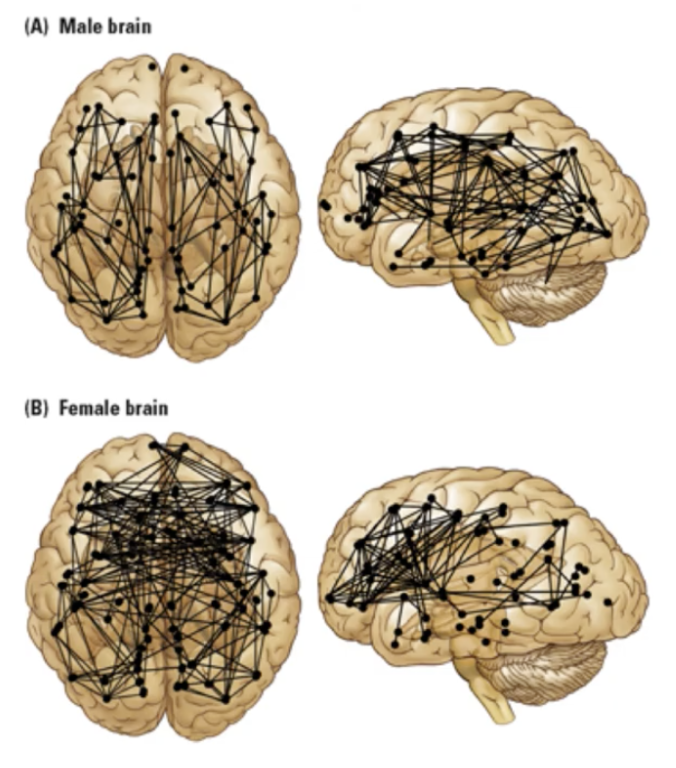
sex differences from diffusion tensor imaging
diffusion tensor imaging (tracks white matter fibers in brain)
- females have greater interhemispheric connectivity
- males have greater intrahemispheric connectivity
- If female and male brains differ in anatomical organization and connectivity as well as in metabolic activity as shown by the results of blood flow,fMRI and DTI studies → effects of injury also might differ between the sexes
sex differences
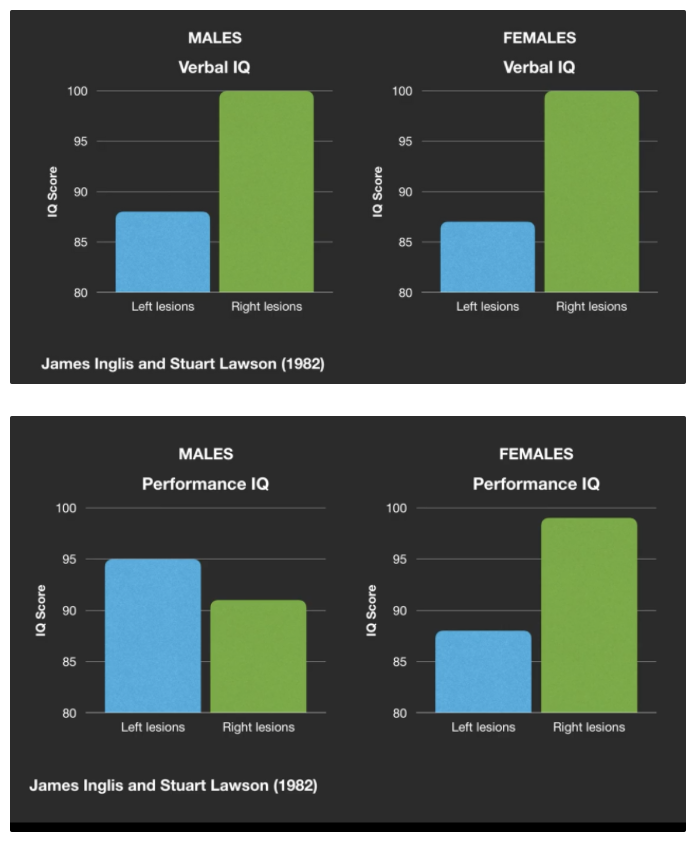
effects of lateralized lesions
- equivalent effect of lt hemisphere lesions on verbal IQ scores in both sexes
- men with right hemisphere lesions were more disrupted than women on the performance IQ test → could imply that rt hemi organization differs in men and women (or women more likely than men to use verbal strategies)
sex differences explanations
types
- hormonal effects
- genetic sex linkage
- maturation rate
- environment
- preferred cognitive mode
sex differences
hormonal effects
inductive or organizing effect: influence of gonadal hormones on brain and behavioral development → could lead to sexual differentiation
sex differences
genetic sex linkage
- if a gene for a particular trait such as spatial analysis is recessive, the trait will not be expressed in a girl unless the recessive gene is present on both X chromosomes
- if the child is a boy, the recessive gene need be present only on one chromosome
- if a mother carries the gene on both X chromosomes, all of her sons will have the trait, but her daughters will possess it only if their father also carries the recessive gene on his X chromosome
sex differences
maturation rate
- regardless of sex, early maturing adolescents perform better on tests of verbal abilities than on tests of spatial ones, while late maturing adolescents do the opposite → maturation rate may affect the organization of cortical function
- bc on average, girls mature faster than boys, superior spatial abilities in boys may relate directly to their relatively slow development
sex differences
environment
- exposure to gonadal hormones perinatally, near birth, determines the later ability of environmental stimulation to alter the synaptic organization of the cerebrum of rats
- environmentally induced changes in hippocampus and neocortex are affected differentially by gonadal hormones
- ex: female hippocampus is far more plastic new environments than the male hippocampus and this plasticity depends on estrogen
sex differences
preferred cognitive mode
genetic, maturational, and environmental factors may predispose men and women to prefer different modes of cognitive analysis
cerebral asymmetries development
- adult-like cerebral asymmetries are present before birth
- parallel development theory: initally permits some flexibility or equipotentiality
- the hemispheres themselves are not becoming more lateralized wrt a given function, instead they are developing more highly specialized functions
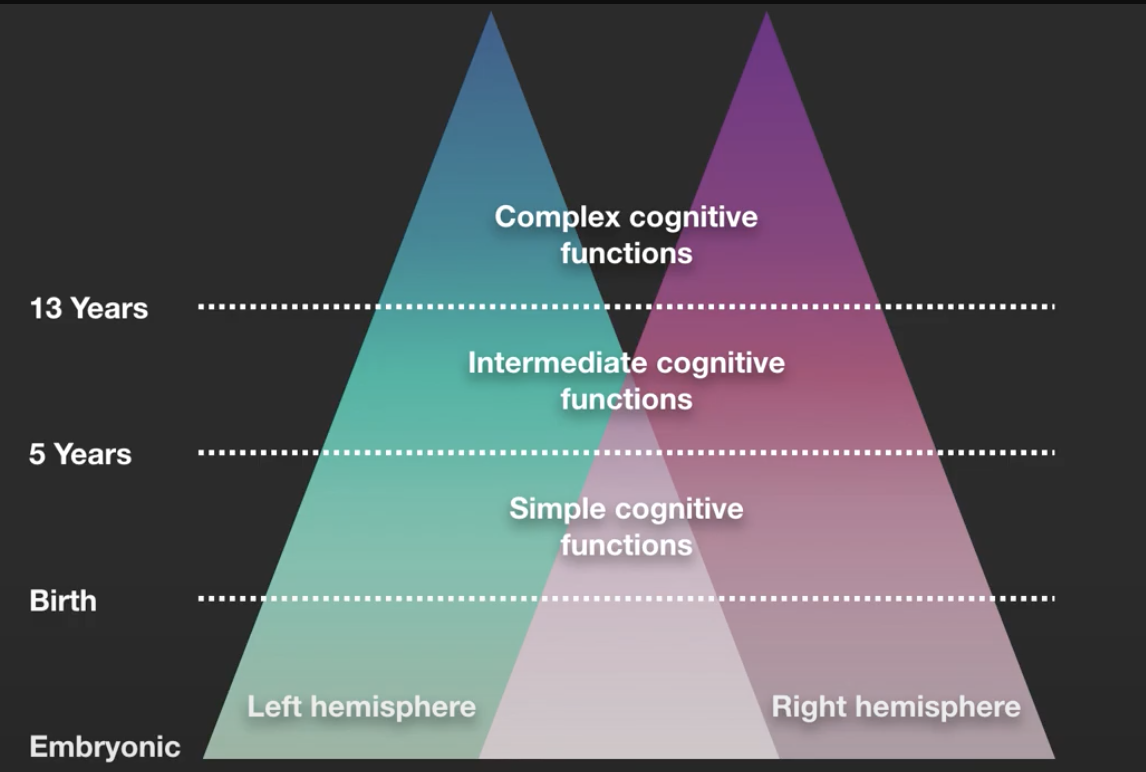
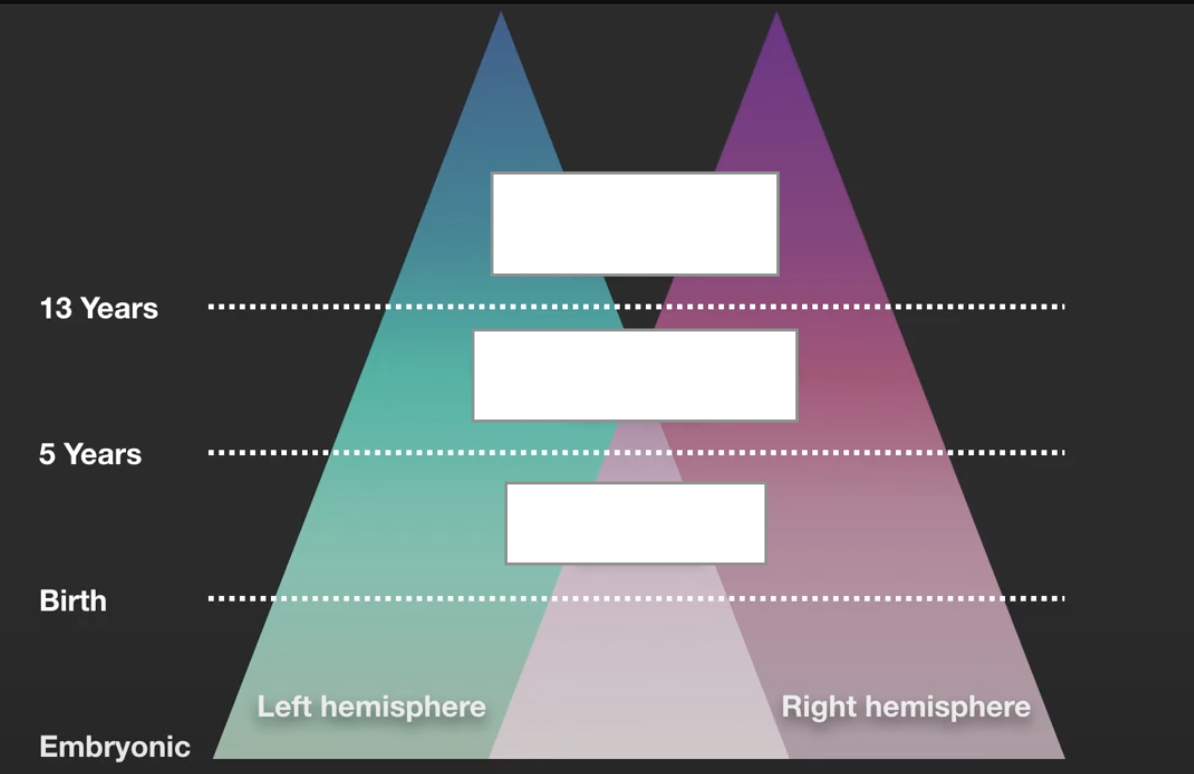
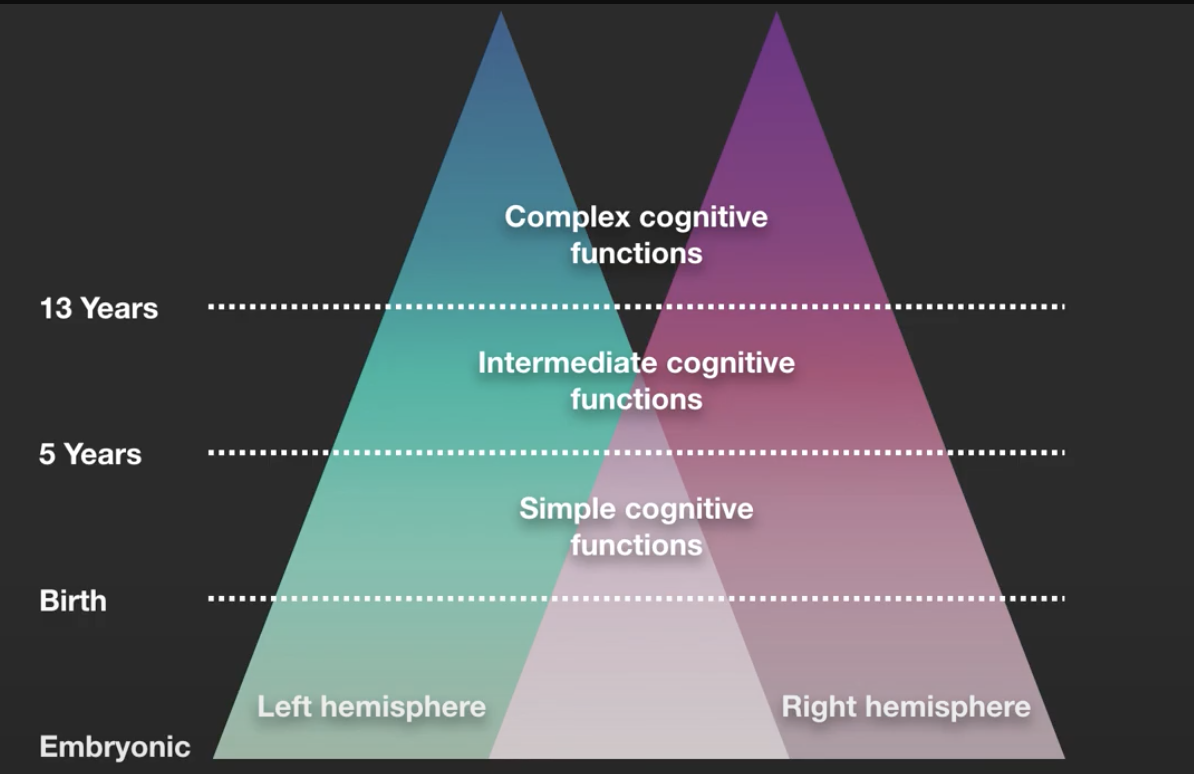
development of simple cognitive functions (birth)
- functions in the primary somatosensory, motor, language or visual spatial areas
- two hemispheres overlap functionally because each is processing low level behavior





