List 5 advantages of arthroscopy over open sx
- Decreased morbidity
- Faster recovery
- Reduced complication rate
- Improved functional outcome
- Reduced GA/sx time
- Reduced hospitalization time
- Improved client perception
What three factros should be included of arthroscope used?
- Diameter
- Distal lens angle
- Long vs short
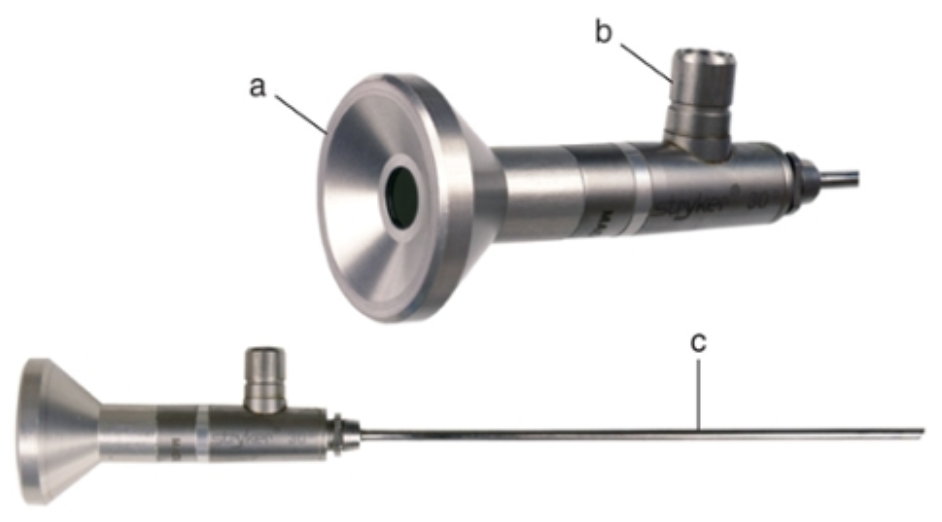
Label the diagram
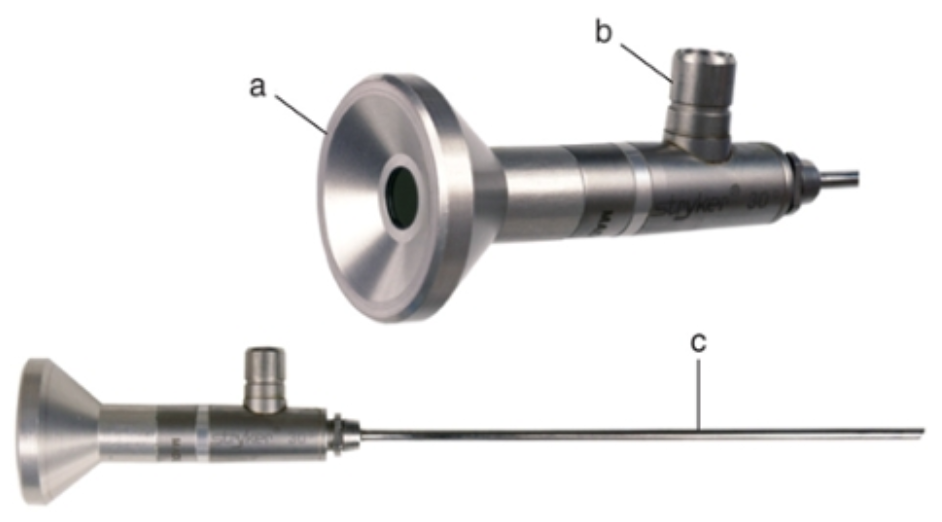
a) Eyepiece
b) Light post
c) Telescope
What 3 bulbs are used in arthroscopy?
Which is preferred and why/
What is the disadantage of this bulb
- Xenon, Halogen, metal halide
- Xenon preferred as better light intensity and colour temperature. Also more economical.
- Downside of Xenon is that they fail suddeny i.e. no dimming.
3 benefits of joint irrigation during arthroscopy
- Joint distension –> bigger working space
- Tamponade of bleeding vessels
- Flushed out debris
What is recommended irrigation pressure in joint
60 mmHg
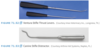
Name the instruments
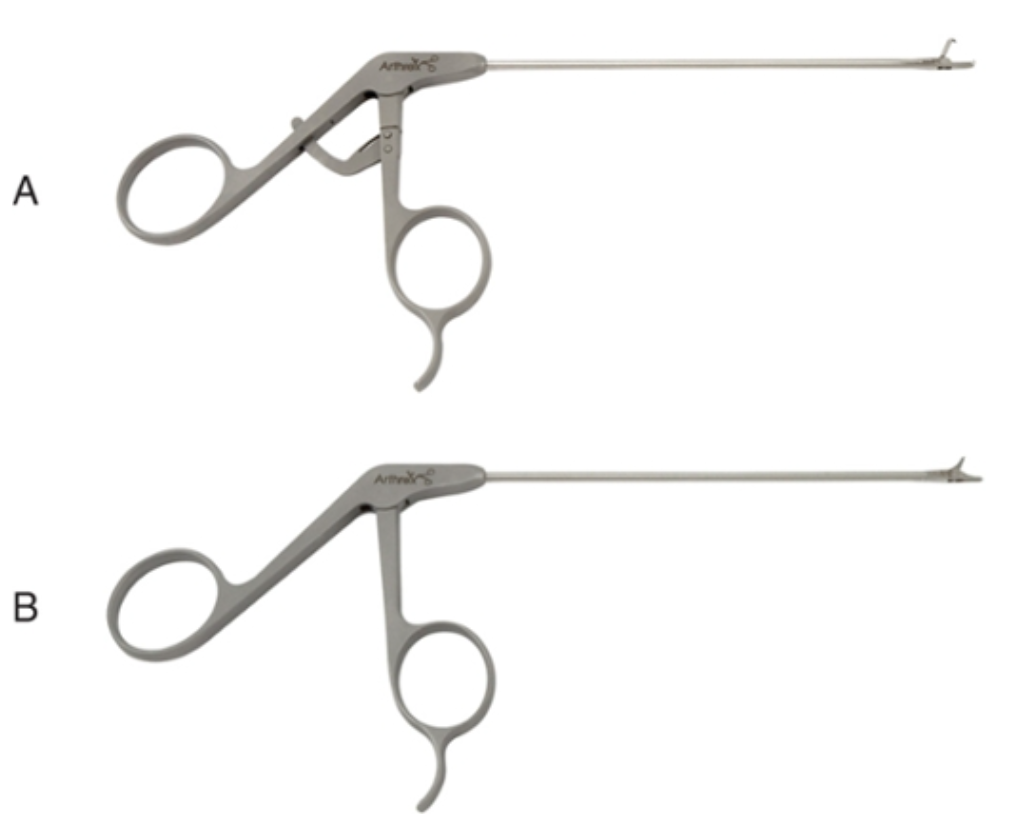
a) locking arthroscopic grasping forceps
b) non-locking arthroscopic grasping forceps
(ideally without teeth)
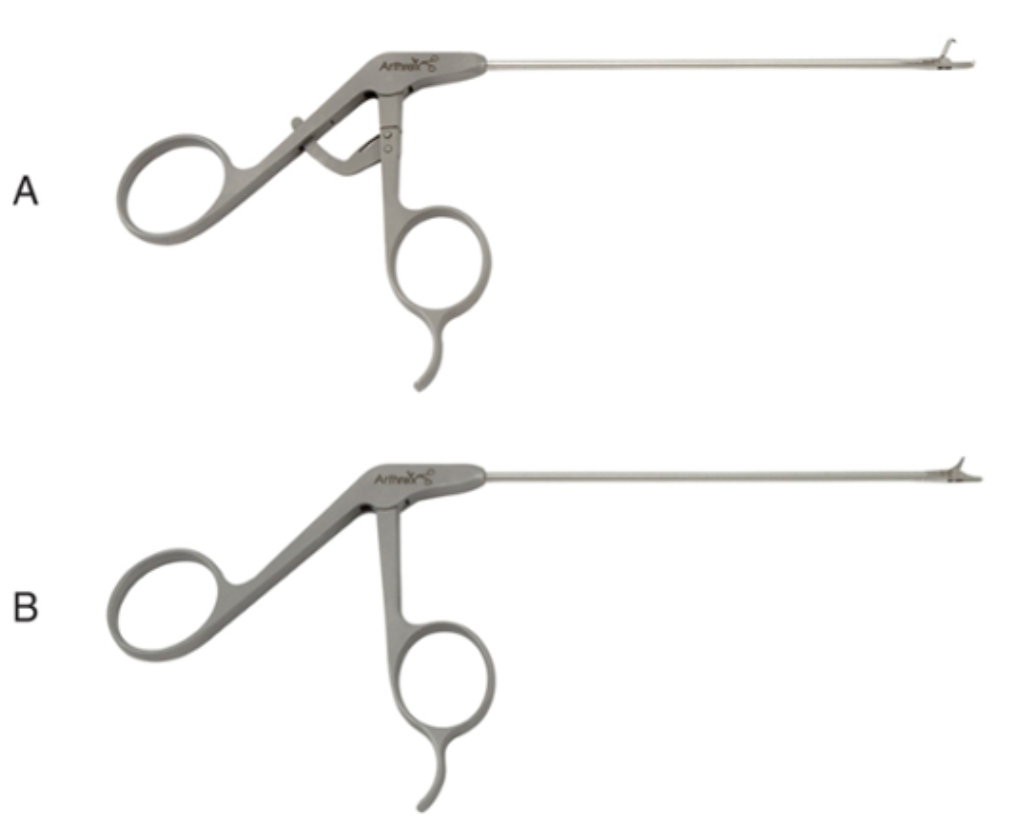
Name the instrument
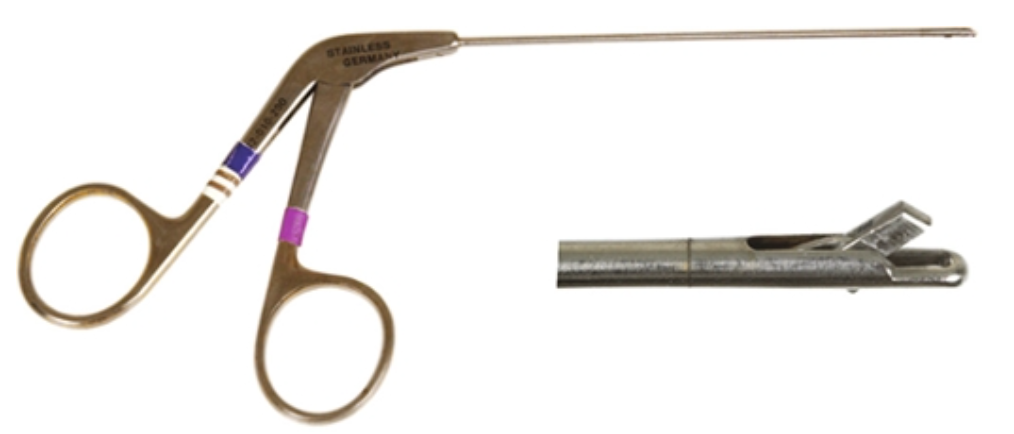
Arthroscopic punch forceps
Name the instruments
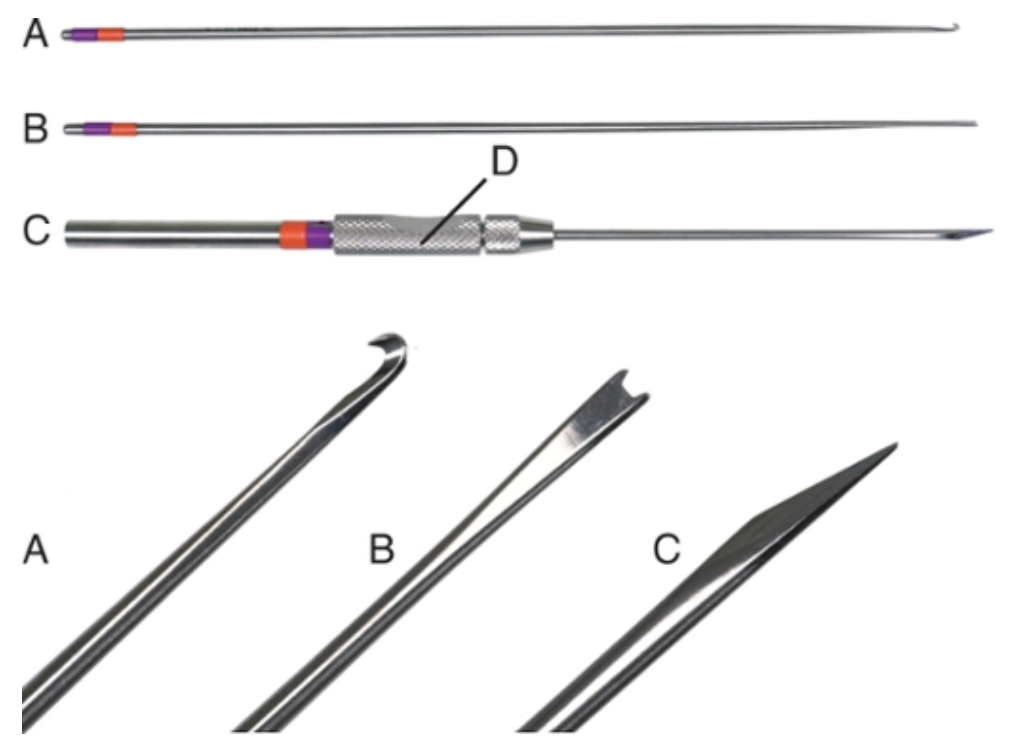
a) Hook knife
b) Meniscal push knife
c) Bayonet knift
d) Handle
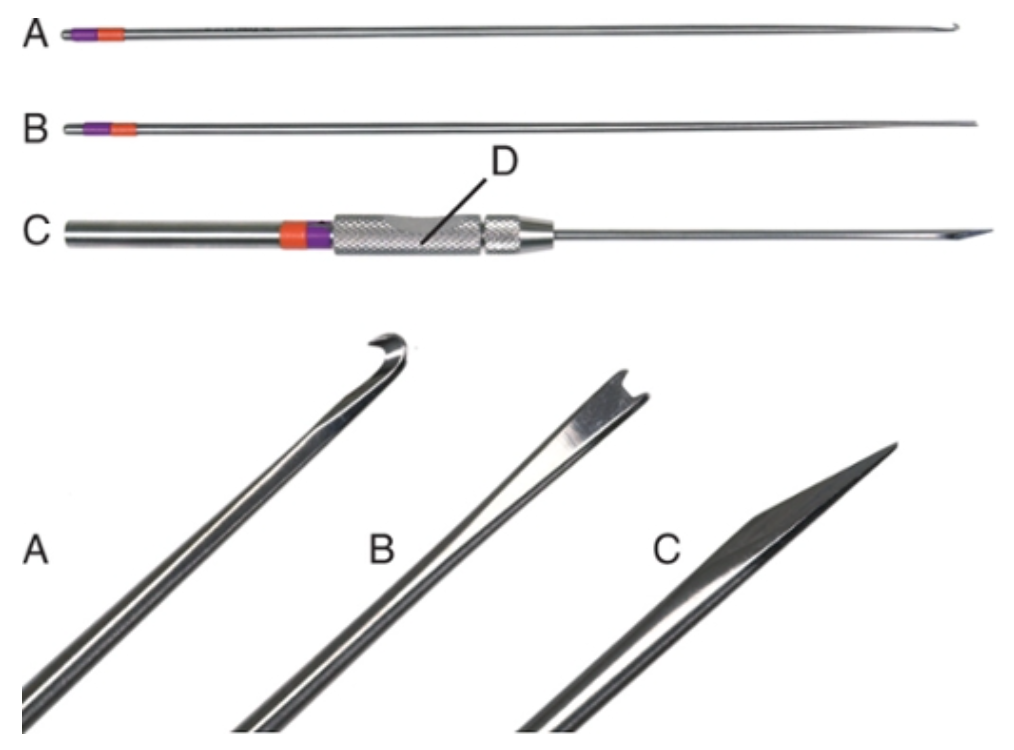
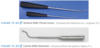
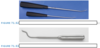
What are these instruments?
Name the types
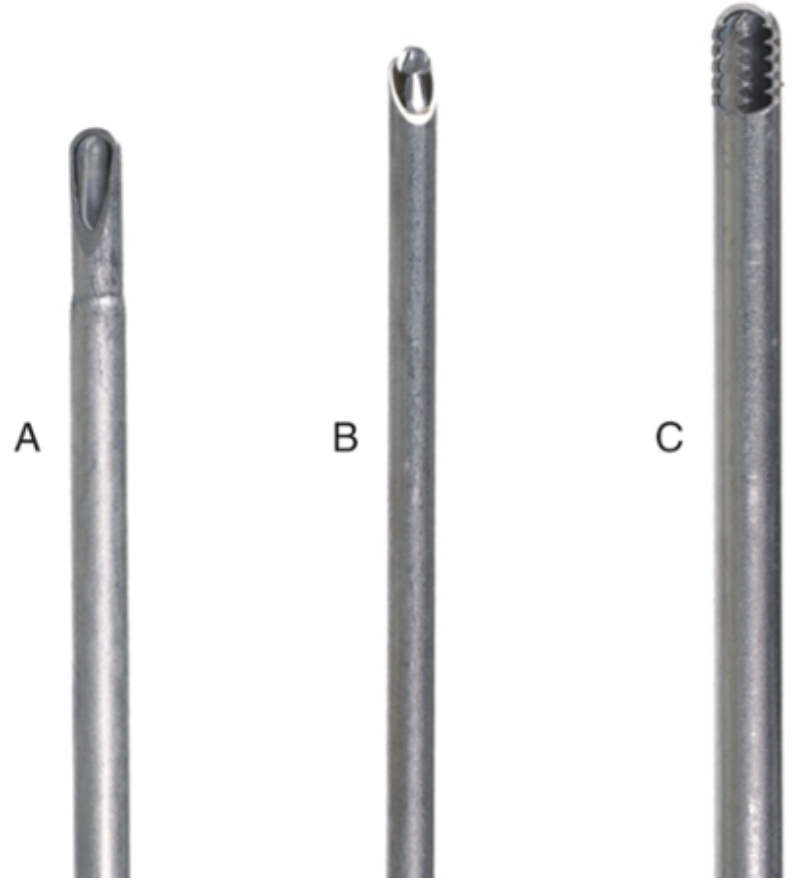
Arthroscopic power shavers
a) Radial shaver
b) Burr
c) Aggressive cutter
For stifle fat pad removal, what mode and speed should aggressive shaver be used?
Oscillating
1500 rpm
What is primary collagen type of joint capsule
Type 1
What is optimal temperature range of radiofrequency probe?
65 - 75ºC
Radiofrequency ablation leads to initial weakening of tissues. How long for?
What % shrinkage is usually seen clinically?
6 - 12 weeks
25%
What effect do local anaesthetics have on chondrocytes?
Chondrotoxic
What is infection rate post-arthroscopy?
<1%
What type of scope is used in the shoulder?
2.7mm, 30º, long
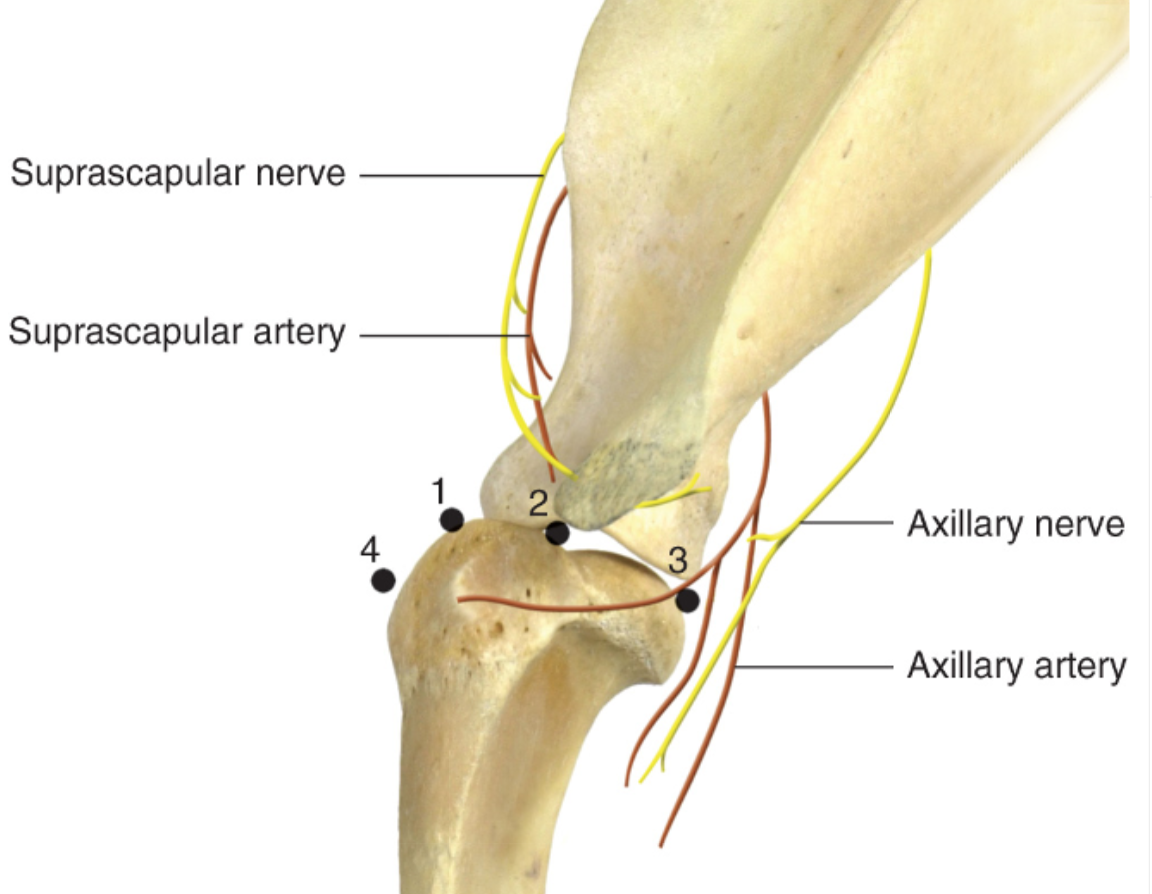
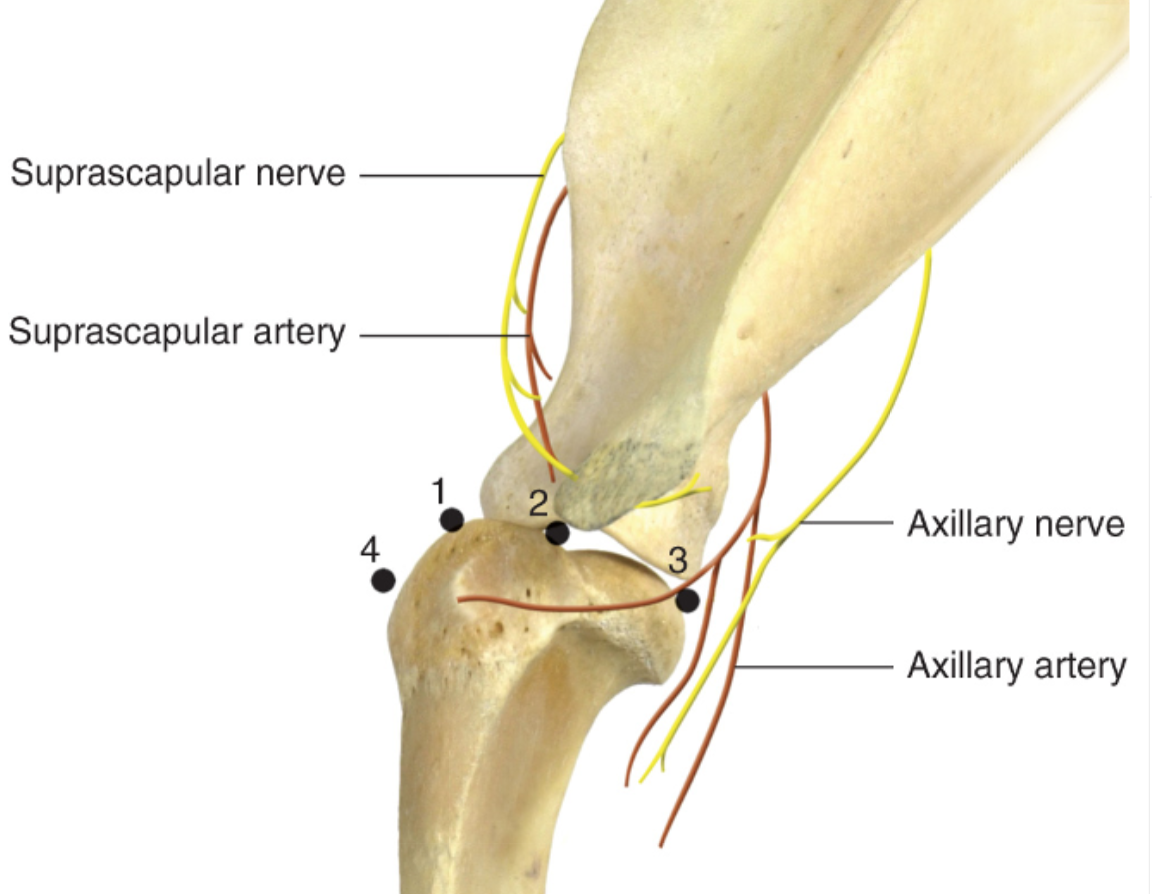
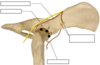
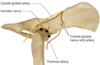
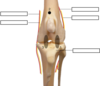
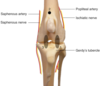
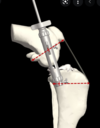
Mark portal positions for shoulder arthroscopy
What 2 vessels and 2 nerves have to be avoided
- Egress
- Arthroscopy
- Instrument
- Instrument for biceps tendon access
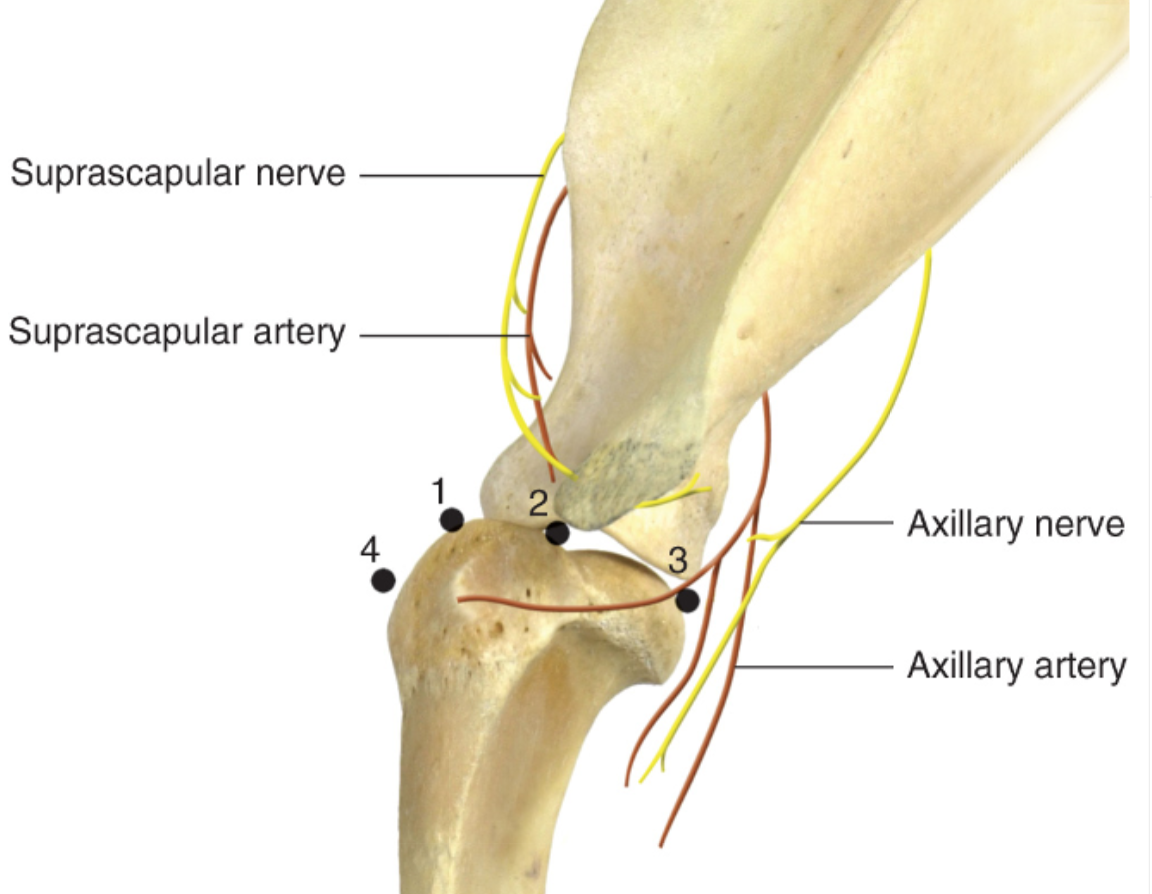
Describe the landmarks for shoulder portals
Arthroscope portal: Directly distal to actomion (and 2 mm cranial)
Egress: Midway along craniocaudal margin of greater tubercle
Instrument portal: Typically 2cm caudal and slightly distal to arthroscope portal
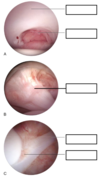
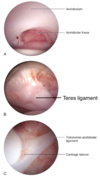
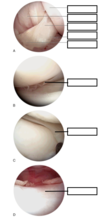
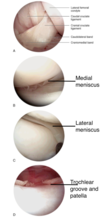
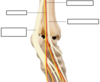
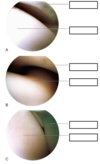
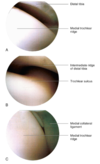
Label the diagram
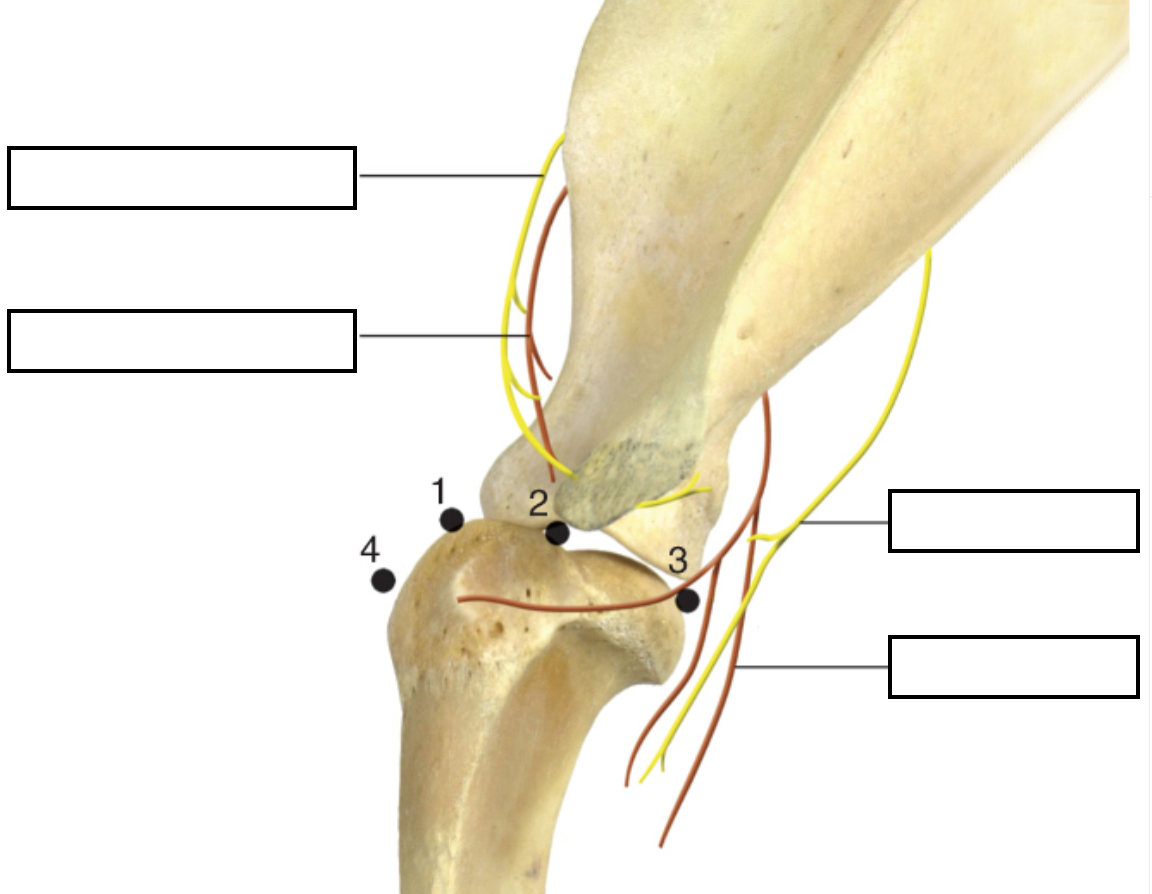
Label the anatomic structures (shoulder arthroscopy)
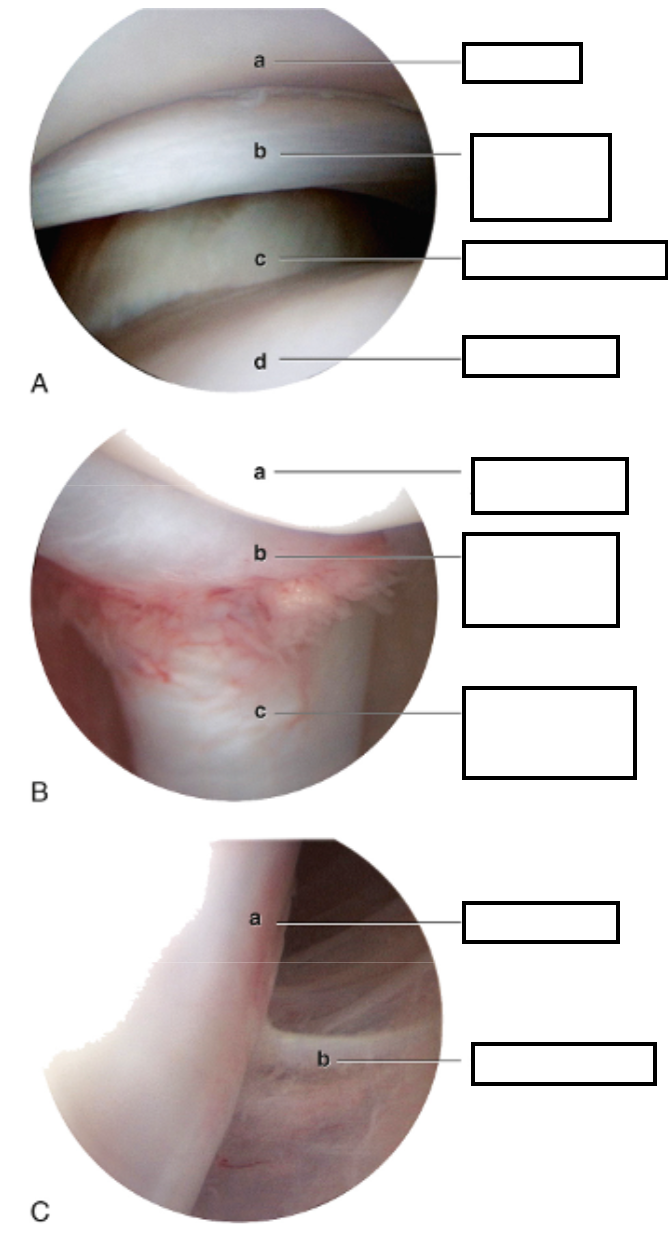
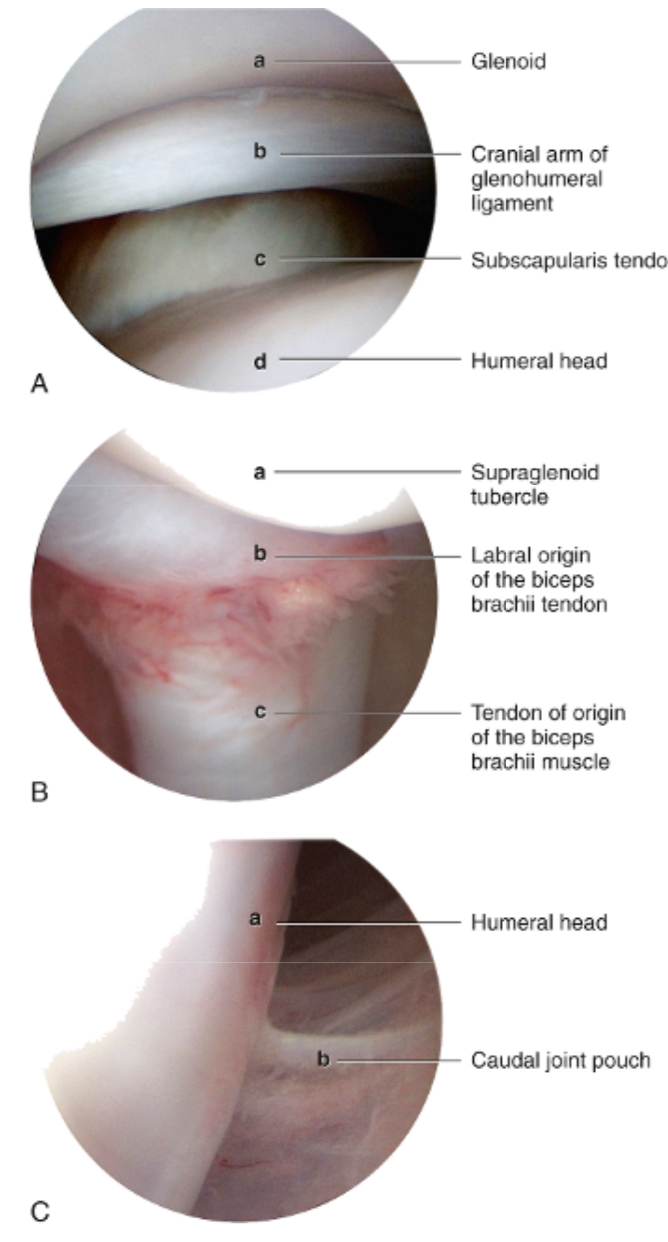
What structures should be inspected when performing shoulder arthroscopy (from lateral approach)
- Medial glenohumeral (collateral) ligament
- Subscapularis tendon
- Joint capsule
- Biceps tendon
- Supraglenoid tubercle
- Glenoid
- Humeral head
- Caudal joint pouch
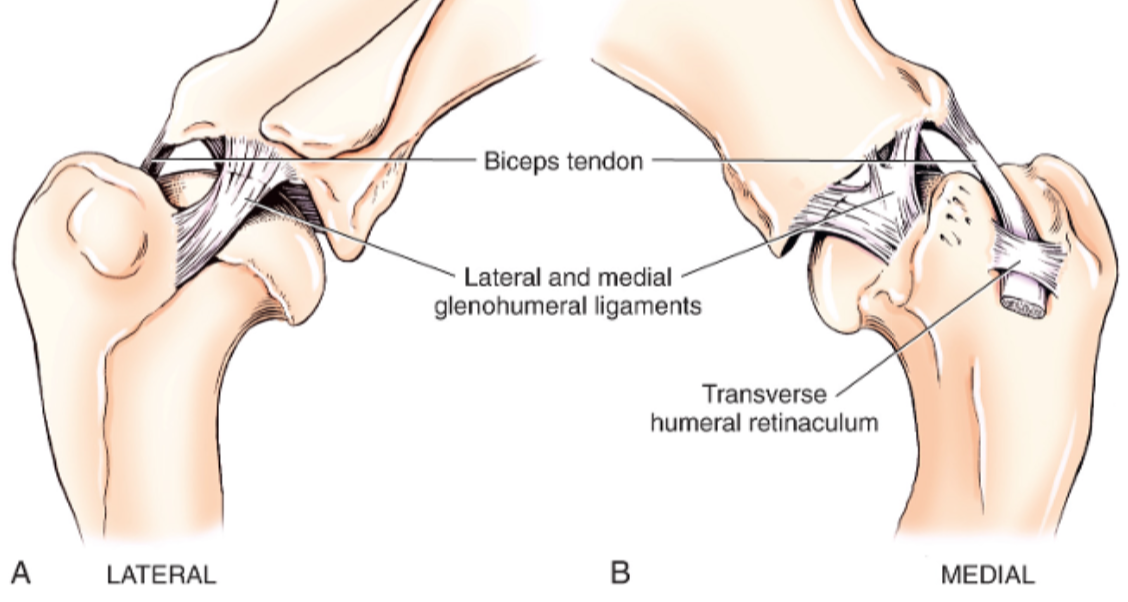
Comment on this structure at origin of biceps brachii tendon
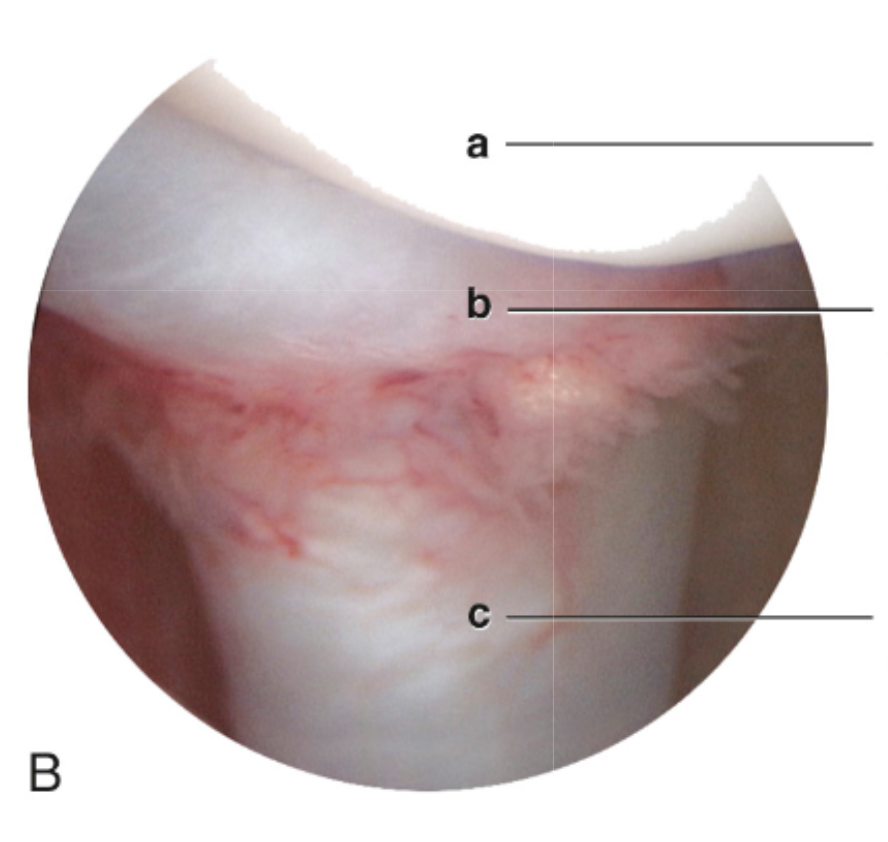
Normal fibrous cuff
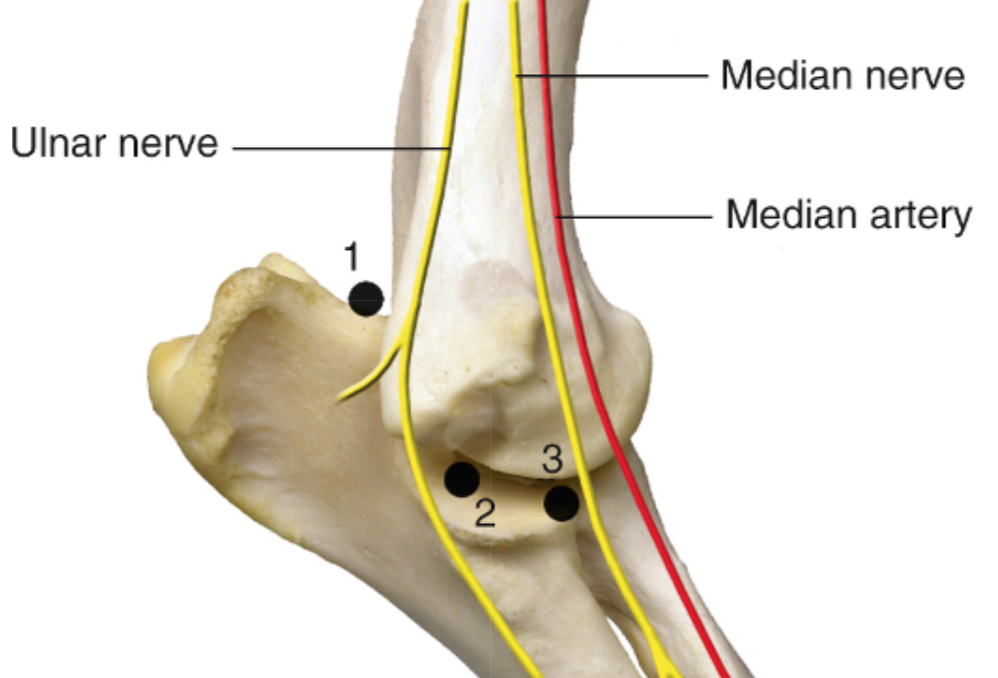
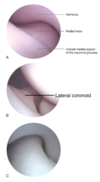
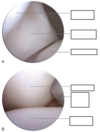
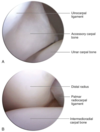
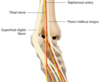
Describe the landmarks for portal insertion in elbow arthroscopy
Arthroscope portal: 1-2cm distal to medial epicondyle, and slightly caudal
Egress portal: Parallel with olecranon, angled distomedially
Instrument portal: Just caudal to medial collateral ligament

-
Chapter 38 Tissues of MSK System28
-
Chapter 39 Bone Biomechanics and Fracture Biology38
-
Chapter 40 Open Fractures4
-
Chapter 41 Internal Fixation69
-
Chapter 42 ESF28
-
Chapter 43 Overview of MIO16
-
Chapter 45 Delayed Unions, Non-unions and Malunions5
-
Chapter 46 Principles of Angular Limb Deformity Correction29
-
Chapter 47 Osteomyelitis and Implant-Associated Infections13
-
Chapter 48 Bone Grafts and Substitutes47
-
Chapter 49 Scapula Fractures19
-
Chapter 50 The Shoulder80
-
Chapter 51 Fractures of the Humerus32
-
Chapter 52 Surgical Diseases of the Elbow102
-
Chapter 53 Total Elbow Replacement in Dogs15
-
Chapter 54 Radius and Ulna46
-
Chapter 55 Carpus, Metacarpus and Digits55
-
Chapter 56 Fractures of the Pelvis32
-
Chapter 57 Hip Luxation25
-
Chapter 58 Pathogenesis, Diagnosis, and Control of Canine Hip Dysplasia24
-
Chapter 59 Surgical management of Hip Dysplasia78
-
Chapter 60 Fractures of the Femur86
-
Chapter 61 Stifle STAR WORTHY QUESTIONS ONLY6
-
Chapter 62 Total Knee Replacement in the Dog17
-
Chapter 63 Fractures of Tibia and Fibula19
-
Chapter 64 Tarsus and Metatarsus49
-
Chapter 65 Amputations22
-
Chapter 66 Dentistry for the Surgeon33
-
Chapter 67 Mandibular and Maxillofacial Fractures40
-
Chapter 68 Arthritis42
-
Chapter 69 Misc Ortho Conditions70
-
Chapter 70 Muscle and Tendon Disorders17
-
Chapter 71 Arthroscopy50
-
Chapter 72 Musculoskeletal Neoplasia and Limb Sparing Surgery83
-
Chapter 73 OCD10



