Glands in which ducts carry secretions to surface or organ cavity and have extracellular effects such as food digestion
Exocrine Glands
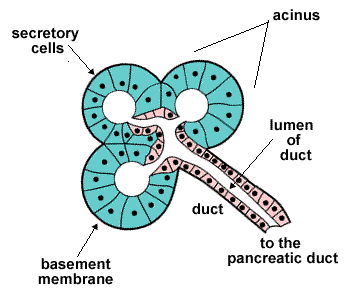
Glands without ducts which secrete hormones into tissue fluids, capillary networks and the bloodstream
Endocrine Glands
Secretions have intracellular effects, altering cell metabolism
What is the general function of the endocrine system?
Controlling and integrating the function of other organ systems via hormones
What is the difference in nervous vs. endocrine communication?
nervous - electrical and chemical signals
endocrine - chemical signals only
What is the difference in nervous vs. endocrine response speed and effect persistence?
nervous - quick reaction (milliseconds), effect stops quickly
endocrine - slow reaction (seconds to days), effect may continue for weeks
What is the difference between nervous vs. endocrine adaptation to long-term stimuli?
nervous - adapt quickly and response declines
endocrine - response persists
The 3 Main Endocrine System Components
- Endocrine Glands
- Hormones
- Target Cells
Hormone
- a chemical “messenger” molecule secreted into the bloodstream which stimulates a response in another tissue or organ
Target Cells
- cells with receptors for a certain hormone
(ex: thyroid cells are target cells for TSH secreted by the anterior pituitary)
Receptor Site
the site on a cell membrane or in its cytoplasm/nucleus to which a hormone binds
Three Types of Endocrine Glands
- Pure endocrine
- Endocrine/exocrine (mixed)
- “Neuroendocrine” glands
Pure Endocrine Glands
- thyroid
-parathyroid
- adrenal cortex
- thymus
- pineal gland
Endocrine/Exocrine (Mixed) Glands
- pancreas
- ovaries
- testes
“Neuroendocrine” Glands
- Adrenal medulla
- Hypothalamus
- Posterior pituitary
- contain specialized nervous cells which produce hormones
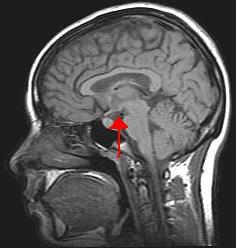
Hypothalamus
- directly below thalamus in diencephalon
- composed of several groups of nuclei ( neurons & neuroglia)
- regulates anterior pituitary hormones
- sends ADH and Oxytocin to posterior pituitary for storage and future release
What is this entire structure?
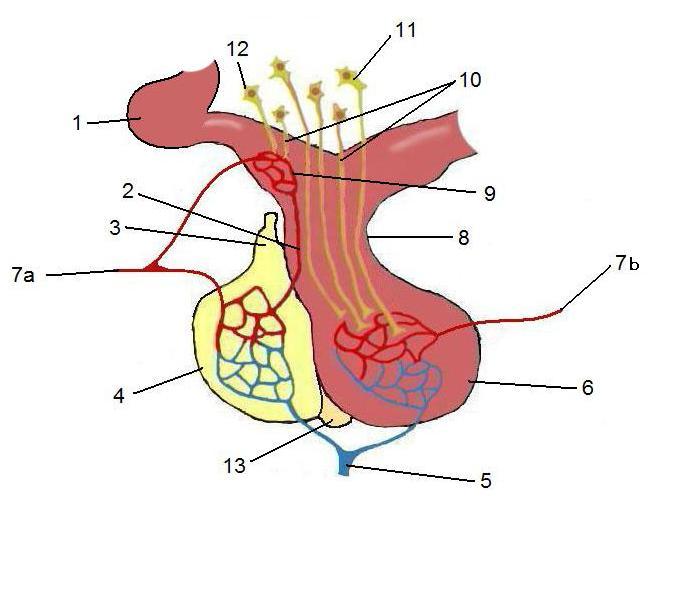
Pituitary Gland (AKA Hypophysis)
- sits in sella turcica of sphenoid bone
- attaches to hypothalamus via the infundibulum
- secretes nine homeostatic hormones
- two lobes: Adenohypophysis (Anterior, “adeno” = glandular) and Neurohypophysis (Posterior, “neuro” = neural)
What is #4 and what hormones does it secrete?
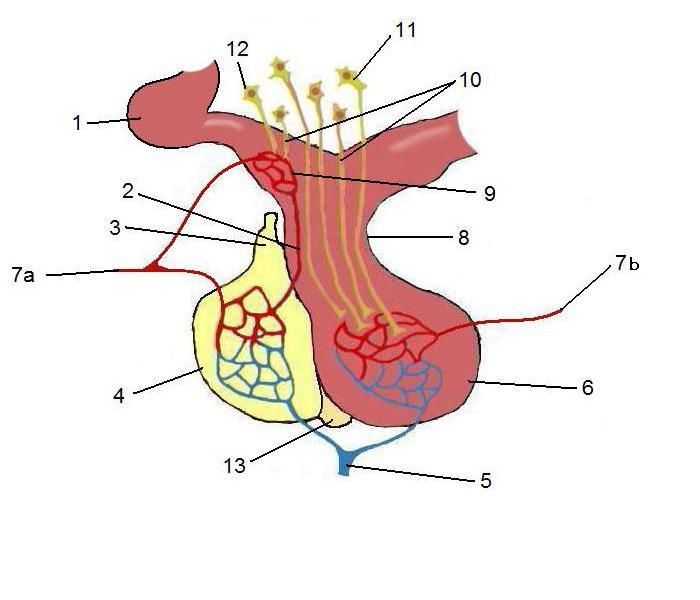
Anterior Pituitary (AKA Adenohypophysis)
- releases 7 hormones:
- Growth Hormone (GH)
- Prolactin (PRL)
- Thyroid-stimulating Hormone (TSH)
- Adrenocorticotropic Hormone (ACTH)
- Melanocyte-Stimulating Hormone (MSH)
- Follicle-Stimulating Hormone (FSH)
- Luteinizing Hormone (LH)
What is #6 and what hormones does it secrete?
Posterior Pituitary (AKA Neurohypophysis)
- Secretes 2 hormones:
- Anti-diuretic Hormone (ADH) (AKA Vasopressin)
- Oxytocin
What is the fancy latin name for #4?
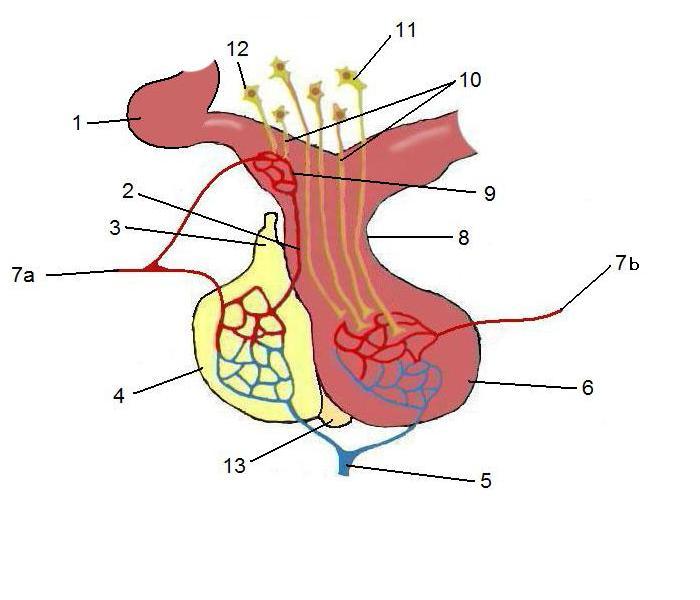
pars distalis
What’s the fancy latin name for #6?
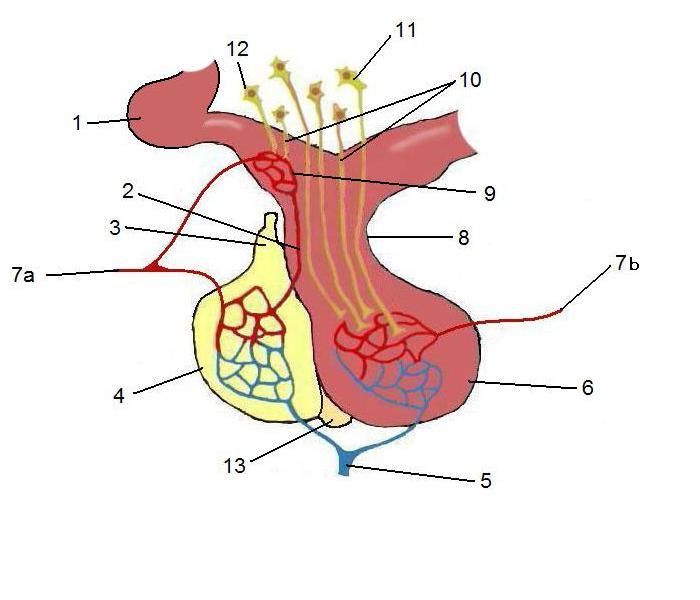
pars nervosa
A general name for hormones that stimulate other endocrine glands and the 4 of them secreted by the anterior pituitary
Tropic Hormones
- TSH
- ACTH
- FSH
- LH
A general name for hormones that stimulate the gonads and the two secreted by the anterior pituitary
gonadotropins
- FSH
- LH
follicle-stimulating hormone
- stimulates production of egg or sperm cells
Luteinizing Hormone
- stimulates hormone production
males - stimulates interstitial teste cells to secrete testosterone
females - stimulates ovulation and corpus luteum to secrete progesterone and estrogen



-
Tissues63
-
Integumentary System47
-
Bones & Skeletal Tissues67
-
Joints62
-
Muscular System61
-
Selected Skeletal Muscles52
-
Nervous System56
-
The Brain100
-
spinal cord37
-
Peripheral Nervous System44
-
Autonomic Nervous System23
-
Special Senses111
-
Endocrine System76
-
Cardiovascular Part I: Blood34
-
Cardiovascular Part II: Heart66
-
Cardiovascular Part III: Blood Vessels97
-
Lymphatic System44
-
Respiratory System89
-
Digestive System137
-
Urinary System72
-
Reproductive System77



