Explain the physiology of thermoregulation
What is thermoregulation?
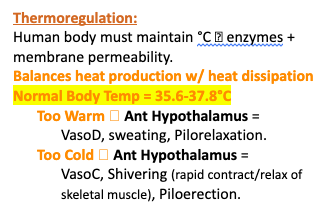
Thermoregulation = mechanism by which mammals maintain a body temperature by tightly controlled self regulation, no matter what the temperature of the surrounding environment is.
Human core temperature - 37 oc
Controlled by the hypothalamus
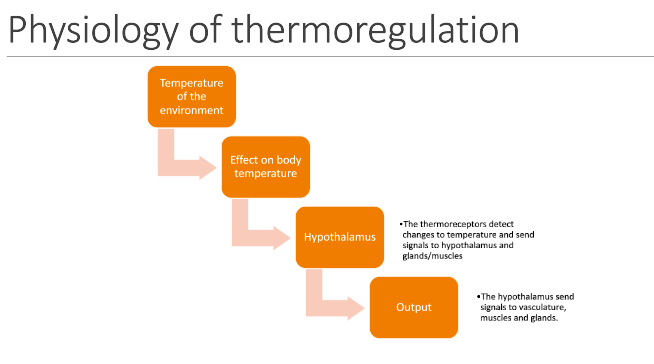
Physiology of thermoregulation:
What sensors are involved?
- Body has thermal sensors within the skin and body core (mainly the hypothalamus) that respond to changes in their local temperature.
- Skin receptors ideal for sensing environmental temperature (not internal temp); body core thermoreeptors are ideal for detecting changes in core temperature (not outside environment).
- Skin thermoreceptors –> warmth and cold receptors that increase firing rate over certain temperature ranges (40> and <40 respectively) –> info sent to hypoT and via thalaus to cerebral cortex (conscious awareness of temp)
- Core thermoreceptors –> brain, spinal cord, blood vessels and muscle.
- Preoptic area and anterior hypothalamus particularly involved.
- Sensory information is fed into the anterior hypothalamus/ preoptic area
- balances heat production/ heat loss to maintain core body temperature within narrow limits
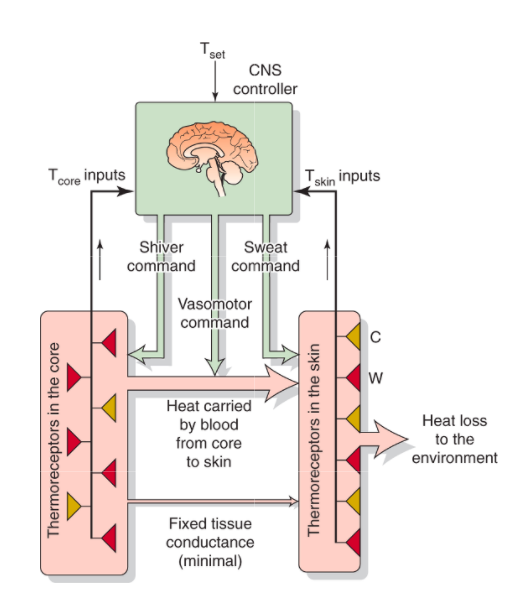
Physiology of thermoregulation:
Integration centre and efferent part?
- Info from skin thermoreceptors travels via spinal cord to hypoT
- HypoT integrates thermal information from other parts of the body (including hypoT core temp thermoreceptors) and compares prevailing thermal status to ideal set of thermal conditions
- directs efferent commands to alter rate of heat generation and modify heat transfer rates
- Efferents:
- Vasodilation of cutaneous arterioles (heat transfer to environment) vs vasoconstriction of cutaneous arterioles (minimis heat loss)
- Eccrine sweat glands –> heat load activates ANS to stimulate sweat secretion onto skin –> heat loss (remember innervation to sweat gland = sympathetic but Ach is neurotransmitter).
- Shivering –> cold stress stimulates involuntary muscular contractions of skeletal muscle, increase basal metabolic rate.
- Non shivering thermogenesis in brown adipose tissue –> in newborn infants
Define fever
Fever = an abnormal elevation of core temperature as part of a specific biologic response mediated and controlled by the CNS.
CDC defines it as any temperature aobe 38oc.
Current covid guidance = any temp above 37.7
Explain the pathophysiology of fever
What is the purpose of fever?
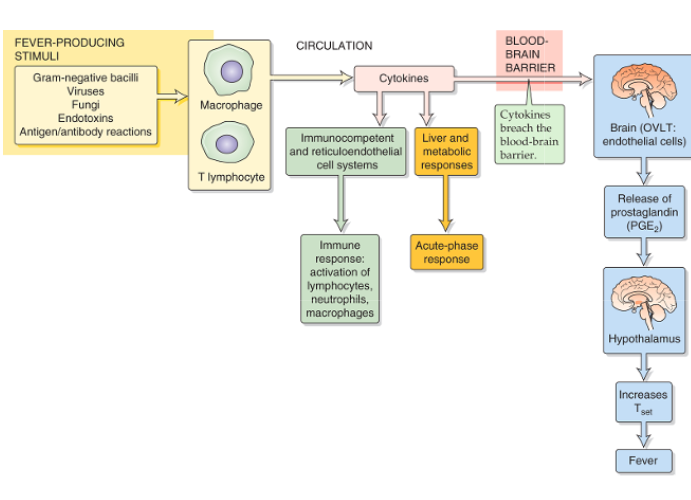
- Fever caused by action of circulating cytokines called Pyrogens - produced by cells of the immune system
- Macrophages and lymphocytes release cytokines into the circulation in response to various infectious and inflammatory stimuli
- act as endogenous pyrogens –> cascade initiated when IL1B interacts with endothelial cells in leaky portion of BBB –> triggers endothelial release of prostaglandin E2 –> diffused to hypothalamus and elevates T set –> initates febrile response
- Pyrogenic cytokines = IL6/IL1/TNFalpha/IFN gamma/ prostaglandins, phospholipase) –> raised T set in hypoT –> Fever –> raised temp inhibits pathogen reproductiong and facilitates immune response
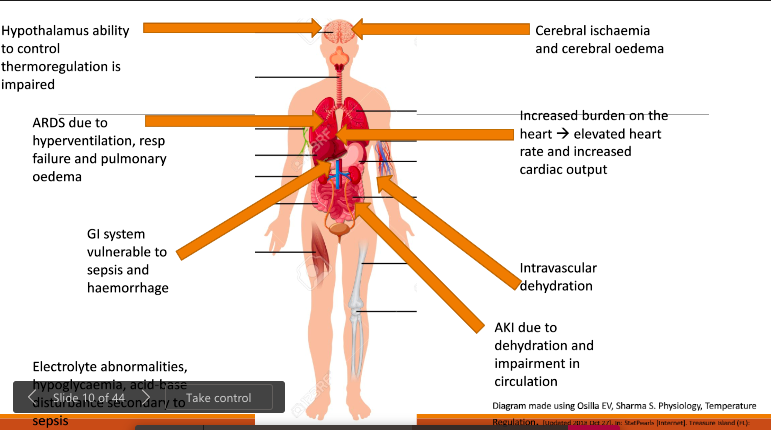
What are the pathological effects of fever on the body?
- Related to the fact that fever requires more energy to raise core temperature:
- ↑O2 need, ↑RR, ↑HR, ↑body protein as energy source, ↓glucose ↑protein/fat breakdown.
- Hypothalamus ability to control thermoregulation becomes impaired
- cerebral ischaemia and cerebral oedema develop
- ARDS –> due to hyperventilation, respiratory failure and pulmonary oedema
- increased burden on the heart –> elevated HR and increased CO
- GI system –> vulnerable to sepsis and haemorrhage due to stress response
- Intravascular dehydration
- AKI due to dehydration and impairment in circulation
- Leads to electrolyte abnormalities, hypoglycaemia, acid base disturbance secondary to sepsis
Define pyrexia of unknown origin
BMJ = Pyrexia of unknown origin = temperature > 38.3 on several separate occasions, duration of fever > 3 weeks ,appropriate initial diagnostic work up which does not reveal cause of the fever.
Oxford handbook definition = temperature of over 38.3 for over 3 weeks without any obvious cause despite investigation
Non infectious causes of fever?
Non infective:
malignancy –> leukaemia, fever and night sweats – prognostic of the severity
endocrine à thyrotoxicosis
recreational drugs à amphetamines, cocaine, MDMA
prescribed drugs à ssri AND Serotonin syndrome, drug fever w new drugs
Rheumatological à RA, Gout, IBD,
Common infectious causes of fever?
PCP- pneumocystis pneumonia - fungus pneumocystic jirovecii (often linked to HIV / immunosuppression).
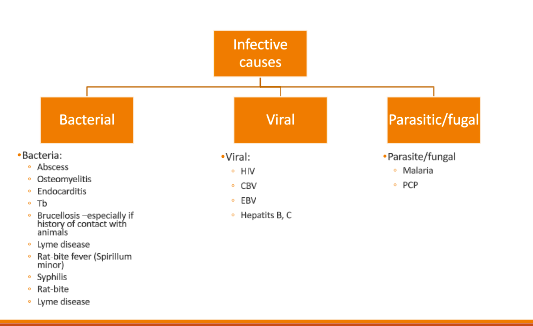
What are the causes of fever?
- Divided into infectious and non infectious causes
Noninfectious causes:
- Connective tissue disorders - polymyalgia rheumatica, SLE, RA
- Autoimmune - IBD, temporal arteritis, adult onset stills disease
- Drug reactions - serotonin syndrome, drug fever
- Malignancy - haemtological, renal, liver, colon etc.
- Thyrotoxicosis
Infectious cause: acute response to infection - any part of the body where infection can develop e.g :
- CNS – meningitis, encephalitis, myelitis
- URTI/LRTI/TB/Pneumonia
- GI- hepatitis, cholescystitis, gastroenteritis
- Urological - pyelonephritis, UTI
- Joints/ bones/ skin - cellulitis/ osteomyelitis/ septic arthritis
- Viral - HIV/ Covid19
- Parasite - Malaria/ scabies
- Fungal - candidaemia - in immunocompromised patients
What is serotonin syndrome and what type of fever does it cause?
Serotonin syndrome = excess serotonin in the body leading to severely raised temp above 40oc
Presents with altered mental status (agitation/excitement/confusion/coma), altered meuromuscular excitability (muscle spasms, tremor, rigidity, hyperreflexia) and autonomic instability ( hyperthermia > 40, tachypnoea, tachycardia, diaphoresis, mydriasis (pupillary dilation)
Can proceed to rhabdomyolysis –> kidney then needs to filter breakdown product of muscle (myoglobin) which can induce AKI
Causes of serotonin syndrome: SSRI/SNRI/ MAOI’s - careful with switching SSRI’s, ensure washout before starting new one.
Illegal drugs - methamphetamins, cocaine, MDMA
Tx- cooling, fluid resucitation and dialysis for AKI
What is a drug fever?
Drug fever = fever coinciding with administration of a drug, disappearing after the discontinuation of the drug when no other cayse for the fever is evident.
5 Categories - hypersensitivity reactions, altered thermoregulatory mechanisms, reaction to adminstration method, reactions direct extension of normal drug effect, idiosyncratic reactions
Idiosyncratic reactions include:
1) malignant hyperthermia - in response to GA - sudden onset muscle rigidity, metabolic acidosis, haemodynamic instability
2) neuroepileptic malignant syndrome - dopamine depleting agents e.g. haloperidol - high fever, muscle rigidity, altered mental state,
3) serotonin syndrome - excess 5HT
Identify and classify common/ important causes of fever and understand demographics/ RF’s associated with each cause:
Polymyalgia rhematica:
Who commonly presents with this/ Rf’s?
- Polymyalgia rheumatica - inflammatory rheumatological syndrome manifesting as pain/ morning stiffness, involving the neck/ shoulder/ pelvis in individuals > 50 yrs. May have peripheral MSK involvement too.
- Risk factors:
- Female
- giant cell arteritis- 15-20% present w this (inflammation of the arteries within head - commonly temporal - can lead to blindness!)
- age > 50 yrs
- often acute onset, low grade fever, weight loss/ anorexia, general malaise, PLUS shoulder/ hip stiffness and pain, there is a rapid response to corticosteroids
Identify and classify common/ important causes of fever and understand demographics/ RF’s associated with each cause:
SLE
SLE = chronic multi system disorder - most commonly affecting women during reproductive years.
Characterised by presence of antinuclear antibodies
Involves skin and joints, serositis, nephritis and haemotological cytopenias, neurological manifesations can occur.
Key diagnostic features: malar (butterfly) rash, photosensitive rash, discoid rash. Plus fatigue/WL/fever/ ulcers/ arthraligia/ lymphadenopathy/ HTN
RF’s: Female, age 15-45 yrs, african/asian descent in europe and US, drugs (AE: carbamazepine, phenytoin, DMARD - sulfasalazine)
Identify and classify common/ important causes of fever and understand demographics/ RF’s associated with each cause:
Rheumatoid arthritis
- RA = chronic inflammatory erosive arthritis primarily affecting the small joints of the hands and feet.
- Diagnostic factors = active symmetrical arthritis lasting > 6 weeks, age 50-55yrs, female, joint pain and swelling (commonly metacarpophalangeal, proximal interphalangeal, metatarsophalangeal). (wrist/elbow/ankles can also be affected), morning stiffness > 1 hr
- Risk factors:
- FHx of RA
- Female
- age 50 - 55yrs
Key features of fever history?
- Have they measured temp at home?
- Is there a pattern to the temperature?
- Tertian and quartan fever in malaria
- Tertian - fever for a day whilst malaria larvae attach to RBC, gorw, and burst causing inflammation, then fever subsides as they enter the liver to reproduce (quartan similar, fever for a day, returns in three days).
- Associated symptoms:
- Joint pain - arthritis
- Chest pain - endocarditis
- Rashes? –> target lesions in lymes dsease, generalised cutaneous eruptions in drug reactions
- haemoptysis - TB or malignancy
- Full systems enquiry:
- WL: malignangy/ HIV/TB/ endocarditis
- Lumps: malignancy or abscess
- lymphadenopathy: abscess, HIV, malignancy
- Travel history:
- Where - any malaria endemic areas (SE asia, subsaharan africa, ZIKA in South america, TB edemic areas?)
- How long for
- vaccination history/ antimalarials whilst they were there?
- what did they do - hiking and lyme disease, swimming in open water (schistomiasis in lake malawi), tattoos and sexual encounters
- PMH - immunosuppresion?
- Drug Hx: any new medications (drug fever), immunosuppresion (steroids/DMARDS etc), vaccinations?
- Past surgical hx - infected prosthesis or collection?
- Sexual Hx - HIV/hepatitis/syphyllis/ PID
- Social Hx:
- RF’s –> malignancy & smoking, alcohol,
- Occupation: exposure to asbestos (bulders/ plumbers/ mining/ shipyards), pigeons lung = pulm fibrosis reaction to bird faeces/feathers, brucellosis w livestock, leptospirosis w rats
- Illicit drug use –> serotonin syndrome
Key features of examination in fever?
- Examine head to toe but specifically:
- Head and neck exam - Sinusitis/ oral lesions associated w autoimmune or infectious disorder (candiasis HIV), temporal artery tenderness (GCA)
- Heart - New murmurs - endocarditis
- Lungs - pneumonia
- joints - SLE/RA/polymyalgia rhematica
- abdominal tenderness - intraabdominal infection or IBD
- Hepato or splenomegaly - malignancies or autoimmune disorders
- Lymphadenopathy - infection or maligancy (lymphoma or disseminated TB)
- janeway lesions/ oslers nodes (Pathophysiology of splinter haemorrhage / Janeway lesions à septic emboli (infected emboli) -> shoot off and block capillaries in the peripheries à if throw off emboli that are big enough you can get necrotic toes)
- roth spots fundoscopy - red spots - microemboli in retina - endocarditis
- skin - rashes?
- butterfly/ malar rash/ discoid/ SLE
- HIV - atopic dermatitis, dryness, seborrheic dermatitis
- Epstein barr - maculopapular rash
- Temperature pulse disparity (Normally rise 8bpm per degree, exception - relative bradycardia- can be caused by typhoid/brucellosis/ legionellosis
Key investigations for fever?
- Bedside:
- Observations - temp/ HR/RR/BP/Cap refill/
- Fever diary
- Sputum culture
- Urine - MSU and culture
- ECG
- Bloods:
- FBC - Raised WBC
- U&E’s - AKI/ baseline/ drugs
- BBV - blood borne virus screen - HIV/hepB/hepC
- LFT’s - liver disease/ baseline
- CRP- acute phase reactant raised
- ESR - giant cell arteritis and long term inflammatory conditions
- Blood cultures
- serology - rule out collagen vascular diseases e.g RA/SLE/polymyalgia rheumatica
- serology - EBV/CMV/toxoplasmosis/brucellosis
- Imaging:
- CXR - pneumonia
- Xray of joint
- Echo - suspicious of endocarditis
- CT chest abdomen and pelvis if suspicous of malignancy
- MRI - osteomyelitis
- Special tests:
- joint aspiration/ abscess aspiration
- Lymph node biopsy
- liver biopsy
- LP
Management of FUO?
- Specific treatment if a cause has been identified (e.g. carbimazole in thyrotoxicosis etc)
- do not start empirial Abx or steroid treatment unless large degree of suspicion for infection/pt neutropenic/ immunocompromised or steroids w giant cell arteritis
- diagnsotic trail of NSAID - more likely to respond if malignant or autoimmune
- In patient where cause unknown but clinically stable
- watchful waiting - reassess hx and exam
What are the acute phase proteins?
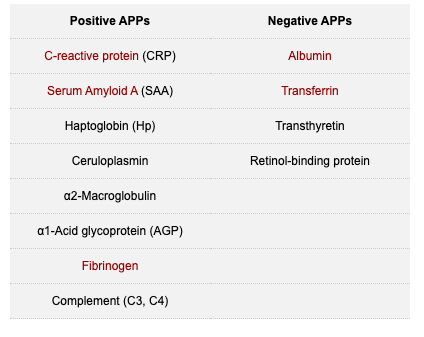
APP - proteins that change serum concentration by > 25% in response to inflammatory cytokines - IL1/IL6/TNFa
Positive acute phase proteins increase conc by 25% in response to inflammation, negative APP decrease conc by 25% in response.
Positive: CRP, complement C2/C4, serum amyloid A
Negative: Albumin (production falls to allow AA’s for positive APP production), transferrin
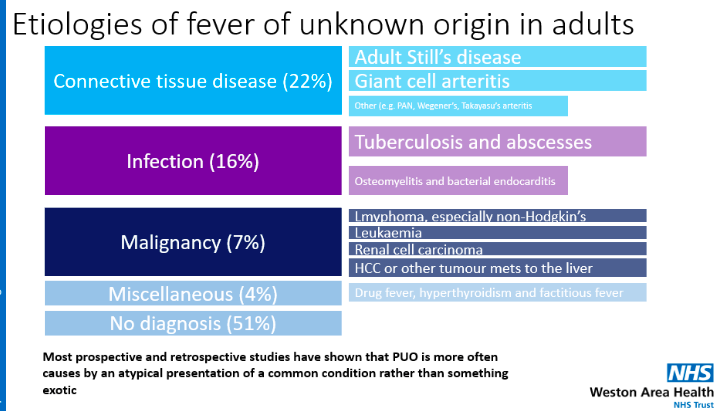
Common causes of FUO in adults?

-
Acute Central Chest Pain38
-
Abnormal blood sugar: includes ACI clinical diabetes52
-
Abnormal blood sugar presentation48
-
Heart murmurs68
-
Hypertension - includes two AC1 lectures and presentation50
-
Complications of HTN29
-
Proteinuria14
-
Renal failure59
-
Positive HIV serology29
-
Oedema19
-
Chronic headache35
-
Obesity22
-
Cough +/- wheeze29
-
Pleuritic chest pain41
-
Acute upper respiratory symptoms46
-
Neutropenic sepsis18
-
Fever21
-
Central chest pain (Chronic)28
-
Weight loss33
-
Breathlessness - Cardiac48



