Define obesity
Obesity = chronic adverse condition due to an excess amount of body fat that presents a risk to health.
most widely used method to determine obesity is BMI = [[weight in kg]/ [height in m]2]
BMI > 30 considered obese.
BMI > 25 considered overweight.
What is the physiology underlying energy homeostasis? (3 major factors)
Appetite regulation:
Where is the main centre of appetite regulation?
What signals does this area receive?
What inputs are there/ what hormones are involved?
- In the average person the mechanism whereby there becomes an imbalance between energy intake and expenditure occurs via 1) the regulation of appetite 2) metabolism 3) physical activity. = energy homeostasis
- Appetite:
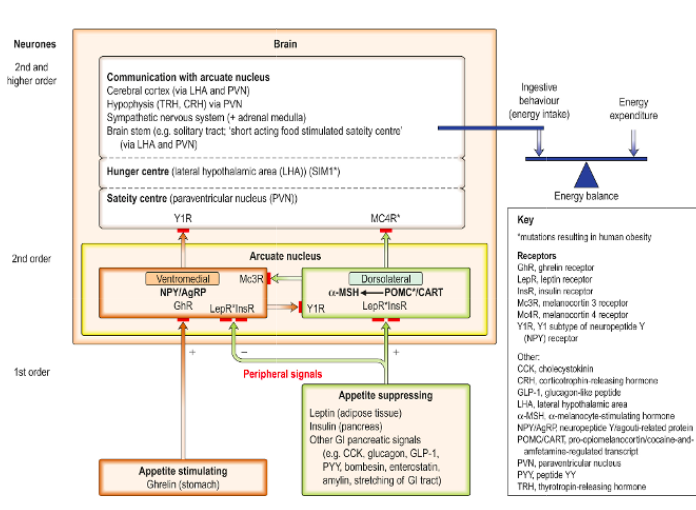
- Regulation of substrate intake consists of two way communication between the CNS (hypothalamus) and peripheral tissues (gut organs and adipose tissue) –> involves neurones, hormones and small molecules.
- Hypothalamus:
- Central processing unit for multiple factors:
- hormones –> leptin release from adipose tissue
- peripheral neural input –> gastric distention sends -ve feedback via vagal afferents
- cerebral cortex –> seeing/smelling/tasting food
- Centred in the ARCUATE nucleus, intergrates the multiple inputs and then delivers signal back via arcuate nucleus to CNS and periphery
- either stimulates or suppresses hunger
- modulates metabolism
- influences physical activity level
- Central processing unit for multiple factors:
- Leptin:
- secreted by adipose tissue when substrate is plentiful, decreases when substrate is scarce
- acts as satiety signal to inhibit appetite, increase substrate utilisation via hypoT
- enhances secretion of hypoT appetite inhibitors
- inhibits release of caloric- intake stimulators –> neuropeptide Y, agouti related protein, orexin A and B
- Obesity –> state of leptin resistance, do not respond to raised leptin level
- Gut derived hunger signals:
- Ghrelin –> primarily secreted by the stomach, acts directly and indirectly via vagus nerve to hypoT –> increases appetite
- endocannabinoids also stimulate appetite , T3 too but HyperT (lose weight due to increases expenditure)
- Gut derived satiety signals:
- Peptide YY –> secreted by distal intestine –> decreases appetite at hypoT
- GLP1 produced intestine and brain –> stimulates pancreatic insulin secretion, inhibits food intake
- CCK –> released from intestine after food, stimulates gallbladder contraction and pancreatic enzyme secretion, plus inhibits appetite
- pancreatic polypeptide is released postprandially by islet cells reducing food intake
- insulin also acts as appetite suppressant
- Other circulating molecules = glucose, lipids, AA’s themselves
*
What are the NICE gradings of obesity?
BMI = weight (kg) / height (m2)
Ideal = 18.5-24.9 kg/m2
Overweight = 25-29.9
Obese (Grade 1) = 30-34.9
Obese (grade 2) = 35-39.9
Obese (grade 3) / morbidly obese = 40 –> threat to health!
What are the limitations of BMI?
- Not accurate in pregnancy or in people with large muscle mass (professional athletes)
- BMI does not account for age/sex/bone structure which influence relative amount of body fat.
- Asian people are at increased risks at lower BMI’s
- Elderly people have lower morbidity in the overweight category
When is waist circumference used to assess obesity?
What are the cut offs?
Waist circumference is used in combination with BMI to assess health risk in individuals with a BMI < 35 kg/m2 - i.e in overweight or obese grade 1 individuals
Waist circumference gives risk:
M:F < 94 <80 = low risk
M:F 94-102 : 80-88 = high risk
M:F >102 : >88 = very high risk: high risk
What proportion of the UK population is obese?
- 28.7% of the adult population is obese
- 9.5% children are obese, with 12.8% overweight
What are the common causes of obesity?
- excessive calorie intake
- inadequate exercise
- disease –> hypothyroidism and cushings syndrome
- drugs –> Anticonvulsants, antidepressants, antipsychotics and oral corticosteroids
What makes up energy expenditure?
- Basal metabolic rate
- BMR is higher in obese people than lean people, as obesity is associated with an increase in lean body mass (fat free mass). (In obesity not just an increase in fat mass but lean body mass too).
- Physical activity
- obese patients expend more energy during physical activity due to larger mass to move
- however many obese patients reduce amount of physical acitivty
- mild- moderate increase in physical activity plays small part in losing weight
- Thermogenesis
- 10% of ingested energy is dissipated as heat unconnected with physical activity
- lower in obese patients than lean subjects - favours energy deposition in obesity
Why is central obesity more dangerous than peripheral?
Central distribution of body fat at waist/hips is at higher risk of morbidity and mortality than peripheral as fat located centrally, especially within the abdomen is more sensitive to lipolytic stimuli –> result is abnormalities in circulating lipids are more severe.
What are the risks of obesity?
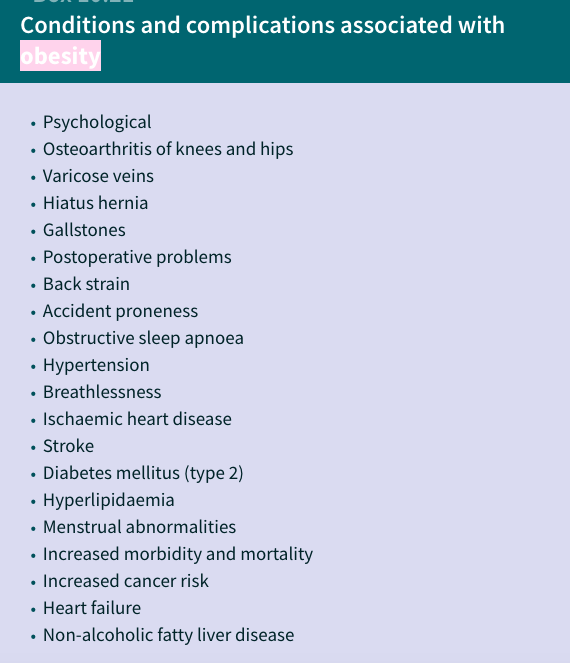
Obese patients generally have increased morbidity, mortality and increased risk of cancer (oesophageal and renal)
- Psychological –> social stigmatisation and depression
- Cardiovascular –> ↑ risk CAD/ essential HTN/ atherosclerosis/ LVH and cor pulmonale
- Respiratory –> Obstructive sleep apnoea
- CNS –> ↑ risk stroke
- Reproductive –> Pregnancy related HTN, fetal macrosomia, pelvic dystocia, anovulation, infertility, PCOS, hyperandrogensim (in men hypogonadotropic hypogonadism)
- Metabolic –> T2DM, metabolic syndrome and dyslipidaemia
- extremities –> varicose veins
- Malignancy –> endometrial/prostate/colon/ gall bladder/ pancreatic/ ovarian/ oeosphageal (↑ risk for GORD) /renal
- Joints –> ↑risk arthritis hips and knees, back strain
- GI –> NAFLD/ gallstones/ hiatus hernia
Identify key features of the history relating to obesity that supports development of differential diagnoses?
Symptoms of hypothyroidism?
- Hypothyroidism symptoms:
- fatigue
- depression
- cold intolerance
- excessive sleepiness
- dry/course hair or dry skin
- constipation
- muscle cramps
- decreased concentration
Identify key features of the history relating to obesity that supports development of differential diagnoses?
Symptoms of Cushing’s syndrome?
Cushing’s syndrome symptoms:
- Central obesity
- moon facies
- striae
- hirsutism
- hypertension
- diabetes
- depression
Key parts of obesity history?
- PC: assess for symptoms of Hypothyroidism or Cushing/s
- Drug hx: antidepressants/ anticonvulsants/ antipsychotics/ corticosteroids?
- Diet : eating behaviour, previous dieting? High in sugar/cholesterol/fat/fastfood?
- binge eating/ purging/lack of satiety/ food seeking behaviour/ night eating syndrome
- Alcohol intake?
- Exercise and activity levels
- Psychological issues associated with obesity? (depression)
- PMH: comorbidities associated with obesity –> T2DM/CVD/HTN/hyperlipidaemia/GORD/asthma/obstructive sleep apnoea/Stroke/ gout/arthritis/ NAFLD/ gallbladder disease/ urinary incontinence
- FHx: DM, obesity or HF
- ICE: explore patient views on weight/behaviour/beliefs/readiness to change?
Diagnosing obesity
- Confirm obesity with BMI/ waist circumference
- If suspecting secondary cause of obesity/ complications may investigate
- assess any underlying factors –> thyroid/ cortisol/ PCOS/drugs
- Lifestyle: diet and exercise
- Assess risk –> BP/ HbA1c, lipids, demographics
- Inform patient of risks –> MI/DM etc
- Benefits for change –> lower all causes of mortality, DM, better oA control & BP control, improved lung function, life expectancy etc
- Assess willingness to change
Key features on exam for obesity?
- Measure height and weight, waist circumference
- Skin –> rashes from skin-skin friction, hirsutism, ancothosis nigrans (sign of insulin resistance), skin tags, striae of cortisol excess (wide and purple) vs striae of rapid weight gain (pale pink striae), acne (excess androgen/cortisol)
- Cardiac and respiratory –> excluse cardiomegaly and respiratory insufficiency
- Abdominal –> hepatomegaly might suggest NAFLD (NASH = non alcoholic steatohepatitis is an advanced form of NAFLD, inflammation and scarring).
- extremities –> joint deformity, evidence of OA, pressure ulcers
Investigations for obesity?
Bloods:
- FBC –> screen for anaemia where complications are suspected
- LFT’s –> serum transaminases –> Liver dysfunction elevated
- TFT’s –> Hypothyroidism –> low T4, elevated TSH in primary hypothyrodism, or normal/inappropriately low in central hypothyroidism
Bedside:
- ECG –> routine screen if heart disease suspected
Imaging:
- Abdo USS –> screen for fatty liver/ steatohepatitis
- Pelvic USS –> ovaries PCOS
- polysomnography –> routine screen for obstructive sleep apnoea
Special:
- Cushing’s disease –> 24 hour urine cortisol, low dose dexamethasone suppression test
Management of obesity?
- Diet and exercise = initial approach –> combination of reduced calorie diet and exercise better than one alone
- GOAL = 10% reduction in body weight over 6 months
- Diet –> low carbohydrate/ high protein diet, intake 1000-1200 for women, 1200-1500 for men, carbohydrates should be complex (vegetable and fruit), discourage alcohol
- increase physical activity –> 5x / week for 30 mins each session + strength training
- Psychological –> CBT
- Pharmacotherapy –> for patients where BMI > equal to 30kg/m2 or > 27kg/m2 if associated with obesity related comorbidity (for 3 months only)
- Orlistat = reversible inhibitor of gastric/pancreatic lipases –> prevents absorption of 30% dietary fat. Consider fat soluble vitamin supplementation in these patients especially if elderly
- SE’s: abdo pain/distention/ liquid oily stools/faecal urgency/ flatulence
- GLP1 -> suppress appetite and tx T2DM
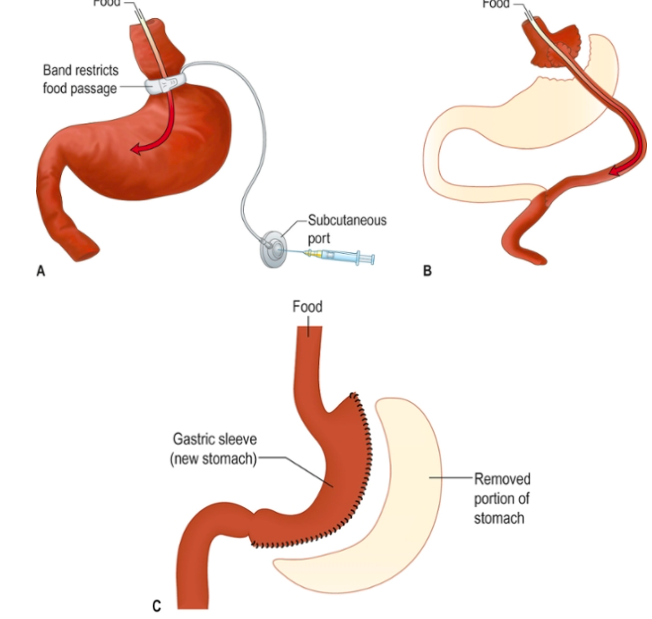
- Surgical: Bariatric surgery –>
- If BMI> 40 kg/m2 OR 35 w sig disease
- 1st line if BMI > 50
- Multiple procedures; most common = restrictive gastric banding –> restricts ability to eat
- Can also do malabsorptive procedures –> reduce ability to absorb nutrients (issue here is deficiency/ malnutrition) (biliopancreatic diversion )
Specific causes:
Cushing’s syndrome - Define
Cushing’s disease - Define
Typical signs/symptoms
Cushing’s syndrome - clinical manifestation of pathological hypercortisolism from any cause.
Cushing’s disease = hypercortisolism caused by an adrenocorticotropic hormone (ACTH) secreting pituitary adenoma (responsible for 80% cases).
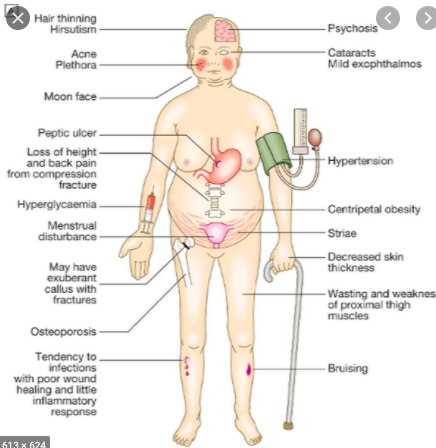
Typical signs/symptoms:
- Weight gain w central obesity
- supraclavicular fullness
- facial rounding and plethora (moon facies)
- proximal muscle weakness
- thinning of the skin and striae (violet - violaceous)
- metabolic complications –> DM/dyslipidaemia/ metabolic bone disease (premature osteoporosis) and hypertension.
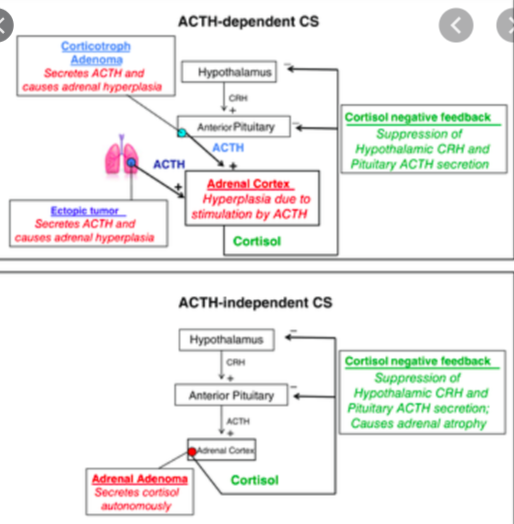
Causes of Cushing’s syndrome?
- Majority –> ACTH dependent:
- ~80% endogenous Cushing syndrome caused by ACTH secreting pituitary adenoma = Cushing’s disease
- Can get ectopic ACTH secreting tumours or ectopic CRH secreting tumours.
- ACTH independent:
- 10% Adrenal adenoma
- unregulated secretion of cortisol
- Bilateral adrenal hyperplasia
- 1% Adrenal carcinoma (extremely rare - presents as large, rapdily growing adrenal mass)
- Adrenal overproduction of cortisol
- 10% Adrenal adenoma
- Exogenous Corticosteroids:
- high dose glucocorticosteroids can develop cushing’s syndrome.
Investigations of Cushing’s syndrome?
- Late night salivatory cortisol (11pm-midnight)
- First line test - at least 2 samples on two different nights
- Will be elevated in CS
- +ve results need to be confirmed with dexamethasone suppression testing or 24 hr urinary free cortisol
- Dexamethasone suppression test
- Exogenous dexamethasone provides negative feedback to the pituitary gland to suppress secretion of ACTH (binds Glucocorticoid receptors in anterior pituitary gland)
- normal result = decrease in cortisol levels w low dose dexamethasone
- in Cushing’s disease –> post low dose dexamethasone –> morning cortisol remains elevated (above 50nanomol/L), ACTH levels are either normal or slightly elevated (some inhibition but still ACTH hypersecretion).
- High dose dexamethasone suppresses
- Serum cortisol and ACTH remaining high —> ectopic ACTH secreting tumour
- 24 hour urinary free cortisol:
- two samples for diagnostic accuracy
- > 50 micrograms/ 24 hours = +ve test
- Imaging:
- pituitary MRI 1st line in patients with ACTH dependent cushing’s syndrome –> may show pituitary adenoma
- adrenal CT –>1st line in patient’s with ACTH independent Cushing’s syndrome may show adrenal adenoma/ hyperplasia or tumour
- CT chest/abdo/pelvis –> determine source of ectopic ACTH tumour
Management of Cushing’s syndrome
- Tumour resection –> pituitary adenomectomy or surgical resection/ablation of ectopic ACTH or CRH secreting tumour / unilateral or bilateral adrenalectomy
- then non corticosteroid pituitary replacement therapy (if pit adenoma)
- Can decrease cortisol levels by ketoconazole (prevents ACTH rise) or metyrapone (suppresses cortisol production) - adjunct to pituitary radiotherapy
What drugs could cause obesity?
Anticonvulsants –> valproate, carbazepine, gabapentin
antidepressants –> amitryptiline, mirtazapine, SSRI’s
Antipsychotics –> clozapine, olanzapine, risperidone, quetiapine
Oral corticosteroids
oral contraceptive pill

-
Acute Central Chest Pain38
-
Abnormal blood sugar: includes ACI clinical diabetes52
-
Abnormal blood sugar presentation48
-
Heart murmurs68
-
Hypertension - includes two AC1 lectures and presentation50
-
Complications of HTN29
-
Proteinuria14
-
Renal failure59
-
Positive HIV serology29
-
Oedema19
-
Chronic headache35
-
Obesity22
-
Cough +/- wheeze29
-
Pleuritic chest pain41
-
Acute upper respiratory symptoms46
-
Neutropenic sepsis18
-
Fever21
-
Central chest pain (Chronic)28
-
Weight loss33
-
Breathlessness - Cardiac48



