Common inscision sites
- Midline incision = most intra-abdominal structures including retroperitoneal. Utilised avascular nature of linea alba to access abdominal contents without cutting/splitting muscle fibres. May be extended cephalad or caudally to improve access. However more pain than transverse incision and perpendicular to langers skin tension lines so poorer cosmesis .
- Commonly for emergency laparotomy (eg, faecal peritonitis secondary to malignant intestinal perforation or ischaemic bowel. Can also be used to assist laparoscopic cases.
- Layers: Skin, subcutaneous fatty layer (campers fascia), Membranous fascia (Scarpa’s), linea alba, transversalis fascia, peritoneal fat, parietal peritoneum.
- Paramedian Incision: Falciform ligament of liver common encountered when incision right of midline ad tendinous intersections must be divided on chosen side to access peritoneum. Largely now midline as poor cosmesis.
- Pararectal Incision: Largely abandoned as disruption of innervation to rectus lying medially.
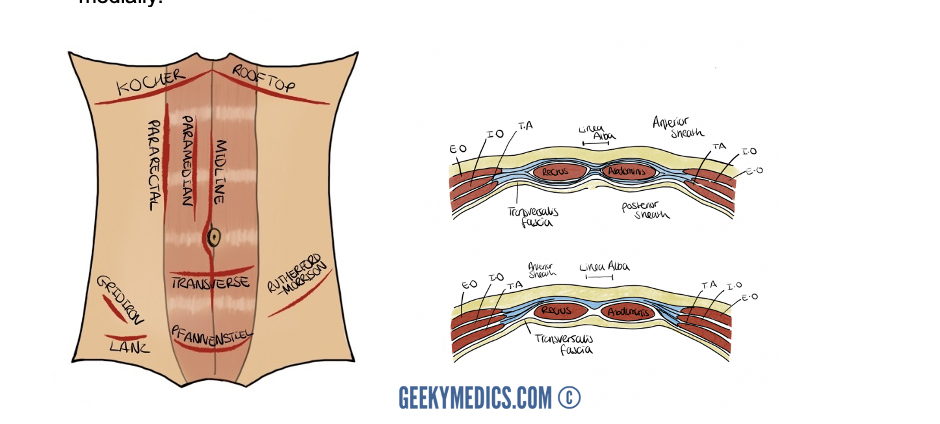
Rectus sheath
Rectus Sheath:
- Anteiror sheath – Ex.Ob and anterior lead of Int.Ob aponeurosises. Recti interrupted by 3 paired tendinous intersections. Posterior sheath – posterior lead internal and transversus abdominis aponeurosis. Get Linear alba.
- No posterior sheath above costal margin level and recti covered anteriorly by Ex.Ob aponeurosis and insert onto costal cartilages.
- 1/3-1/2 between umbilicus and pubic symphysis is arcuate line where posterior elements of sheath perforate to join anterior sheath and get thickened transversalis fascia in direct contact with rectus muscles.
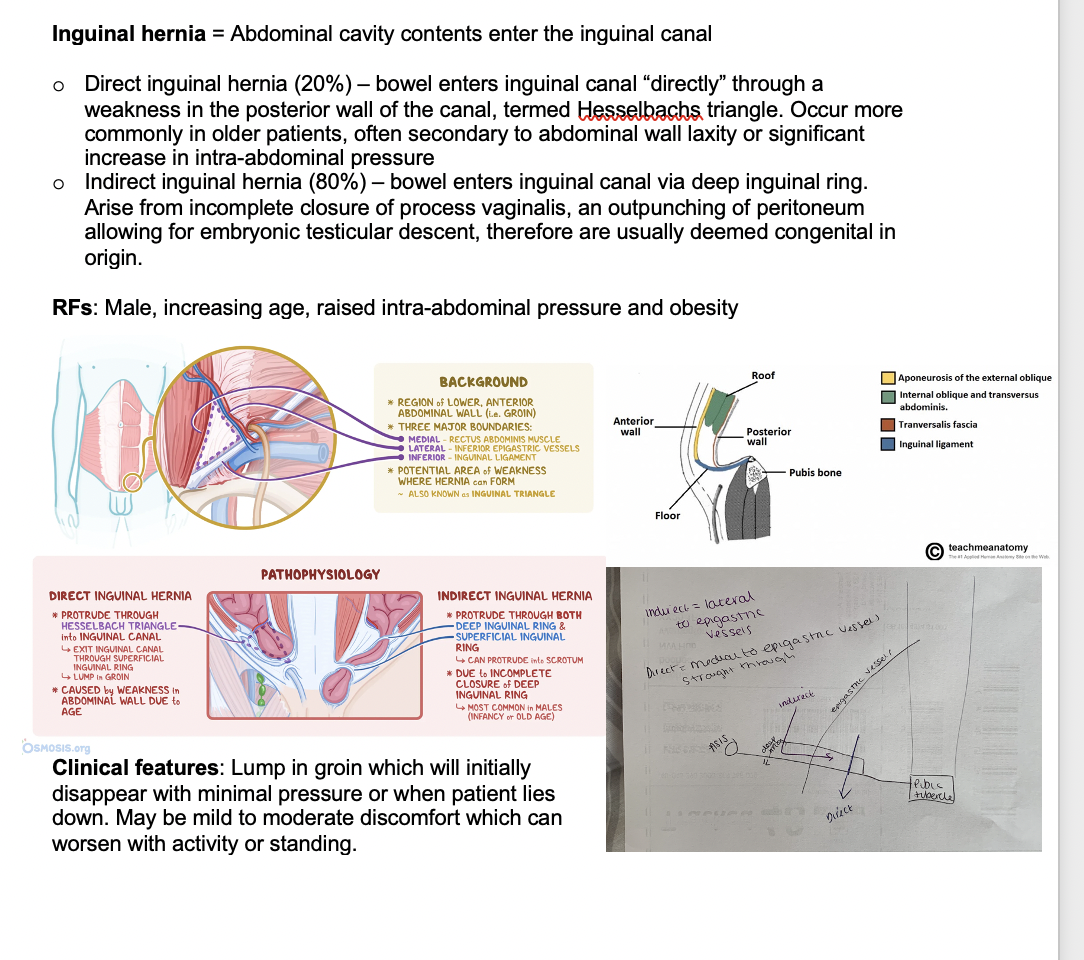
Identify Anatomy of inguinal canal and relate to inguinal hernia classification
Requirements for General anaesthetic
- Through pre-anaesthetic assessment of fitness
- Patient consent
- Hypnosis or unconsciousness
- Analgesia
- Muscle relaxation
- Easy reversibility of induced state
- Maintenance of as near to normal physiology as possible
ASA scoring- American society of anaesthesiologists
- Normal healthy patient
- Mild systemic disease
- Severe systemic disease that limits activity but is not incapacitating
- Incapacitating systemic disease; threat to life
- Moribund patient not expected to survive 24hours with or without surgery
- (Brain dead)
Groups 1 to 3 have no or little increased risk with normal anaesthesia. None are an absolute contraindication to anaesthesia, they are about comparing wellbeing of the patient to the important of the procedure.
Assessment of fitness for anaesthesia
- History – existing Cardiorespiratory disease, intercurrent medical conditions, medications, allergies, past admissions, FH, SH
- Examination – Cardiorespiratory exam (hypertension, cough, murmurs etc)< hydration, sites for IV access, Cervical spine, loose or damaged teeth.
- Blood tests – U&Es, Hb, Haematocrit, blood glucose (supplementary are G&S, LFTs, clotting, sickle cell test, TFT, plasma cholinesterase activity).
- ECG – for those with ischaemic heart disease, hypertension, rheumatic fever, respiratory disease. Recommended over 40 in general.
- Pulmonary function tests
- Others relevant to specific medical conditions
Gaining consent for surgery process
- Surgeons must establish and maintain effective relationships with patients and be honest and sensitive.
- Informed decision making with patience and clarity
- Should involve supporter if possible
- Establish they have capacity
- Involve those young in discussions and decisions
- Ensure consent obtained by person providing treatment or actively involved and they have clear knowledge of the procedure.
- Obtain consent prior to surgery and ensure sufficient time for them to make informed decisions.
- Discuss:
- Diagnosis and prognosis
- Options for treatment including non-operative and no treatment
- Purpose and expected benefit
- Likelihood of success
- Clinicians involved in treatment
- Risks inherent in the procedure
- Potential follow up treatment.
- Written information where possible
- Make patients aware of national guidelines on treatment choices
- Sign consent form and check on day of procedure nothing changed
- Record in writing the details of consent discussion with your patient
- Make sure there aware of student participation.
Complications of surgery (Immediate, Early and Late)
Immediate (24h): haemorrhage, basal atelectasis (minor lung collapse), shock (reduction in BP), low urine output, broken teeth, nausea and vomiting, allergy to anaesthetic
Early (1-30): Pain, acute, confusion, nausea & vomiting, fever, secondary haemorrhage from infection, pneumonia, DVT, acute urinary retention, UTI, pressure sores. Parlytic ileus (Bowel doesn’t move for few days and get vomiting etc).
- DVT- throbbing/cramping pain in 1 leg, swelling in 1 leg, red or darkened skin around painful area, warm skin around, swollen veins
- PE- rapid or irregular heartbeat, light headedness, excessive sweating, fever, leg pain or swelling, clammy or discoloured skin
7s post operative pyrexia: chest, catheter, CVC line, cannula, cut, collections, calves.
Late (>30days): Bowel obstruction, incisional hernia, recurrence of reason for surgery, keloid formation, cosmetic appearance, osteoporosis, failure of surgery etc..,
Explain Possible complications of abdominal surgery and identify
Post-op haemorrhage – assess for increase in BP, decrease HR
Basal atelectasis
For Bowel surgery:
- Delayed return of function – Temporary disruption of peristalsis (nausea, anorexia, vomiting, described as ileus)
- Early mechanical obstruction – twisted or trapped loop of bowel or adhesions. May settle with nasogastric aspiration and IV fluids
- Late mechanical obstruction – adhesions can organise and persist, commonly causing isolated episodes of small bowel obstruction months or years after surgery
- Anastomotic leakage or breakdown – small leaks are common with small localised abscesses with delayed recovery of bowel function
- Major breakdown causes generalised peritonitis and progressive sepsis needing surgery for peritoneal toilet and antibiotics. Abscess can go into fistula.
Possible complications after vascular surgery
- Haemodynamic stability
- Respiratory failure e
- Myocardial ischaemia
- Bleeding and coagulopathy
- Temperature management
- Neurologic disorders
- DVT
- Acute kidney injury
*
Surgical Sieve
- Congenital Acquired
- Inflammatory
- Infective / autoimmune
- Bacterial
- viral
- fungal
- Degenerative / mechanical / traumatic
- Metabolic
- Neoplastic
- Benign
- Malignant - Primary/Secondary
- Vascular
- Neurological
- Psychological
What is anaesthesia and the types?
Anaesthesia – removal of sensation (1 per 100,000 GA people die)
- General anaesthesia – not conscious, no sensation, no pain.
- Endotracheal tubes (ET)or laryngeal mask tube (LMA)
- volatile anaesthetic (gas), total IV anaesthetic.
- Awake or asleep to put tubes down and secure airway
- Local anaesthetic - topical
- Neuraxial anaesthetic (anything to do with the back)- spinal, epidural, combined spinal and epidural,
- Regional anaesthesia – nerve blocks
- Sedation (Not anaesthetic but used)
What increases the risk with General anaesthetic
Co-morbidities: all about bodies ability to get oxygen so we can heal and get through post-op.
- Respiratory: COPD, fibrosis (asthma), lower respiratory tract infections
- Smoking
- CV: heart failure, ischaemic heart disease, PE, arrhythmias, anaemia (Hb)
- Endocrine – diabetes (badly controlled then sugar isn’t been taken into tissues by insulin so won’t be able to increase oxygen carrying capacity)
- Malnutrition –
- Trauma: pneumothorax, hypovolemia
We need ATP to give cells energy + regenerate. To make ATP efficiently need oxygen and glucose. When you have surgery that’s a massive insult on the body and body needs a lot of ATP to heal tissues so give oxygen.
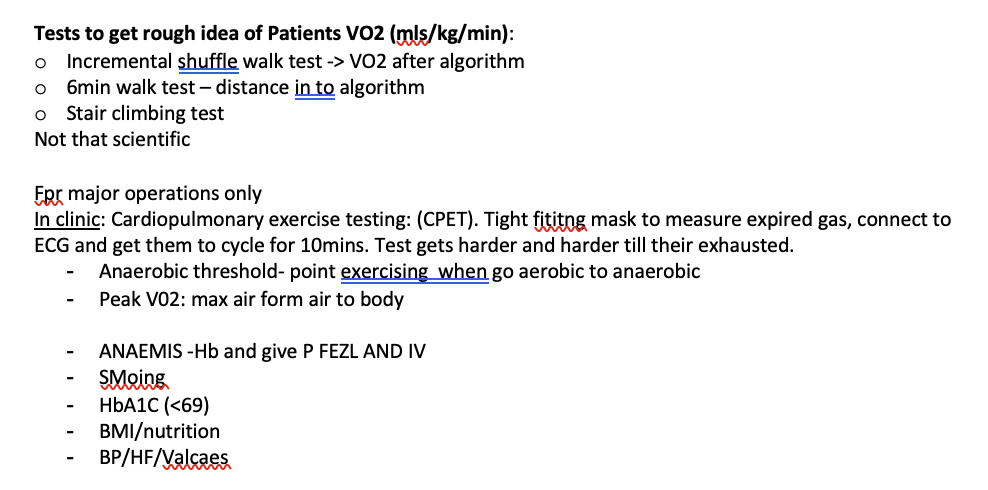
Tests to get rough idea of Patients VO2 and what to do for major operations
Post-Op Haemorrhage - types
- Primary = during procedure
- Reactive = within 24hours
- Secondary = within 10days. More likely due to surgical site infection.
Sites bleeding (trauma) = intraabdominal, intra-pelvic, bleeding in to chest, bleeding into long bones. (compartment)
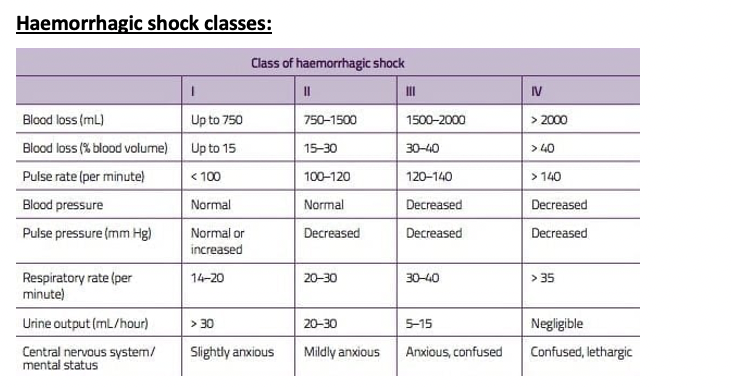
Signs: tachycardia, hypotension, tachypnoea, cool peripheries, presyncpe…
Haemorrhagic shock classes
Pulmonary embolism, RFs and symptoms
RFs = Pregnancy, cancer, HRT, pill, obesity, smoking, infection, recent fractures/surgery, recent immobility.
Symptoms: SOB, Chest pain, pain in calves, tachycardic, tachypnoea, haemoptysis, swelling/redness in calves, pleural rub.
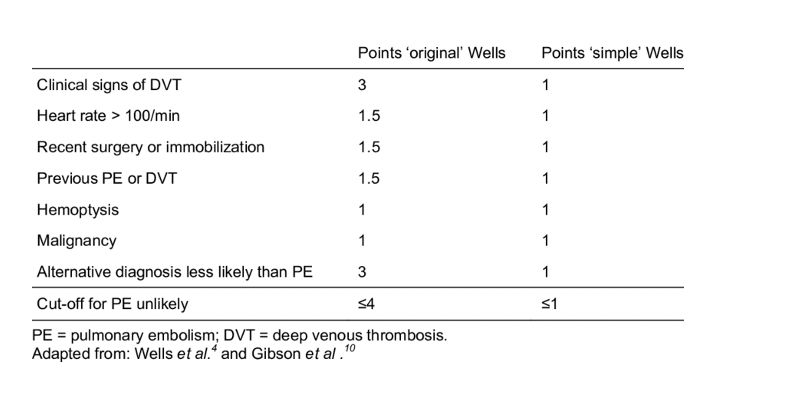
Wells score
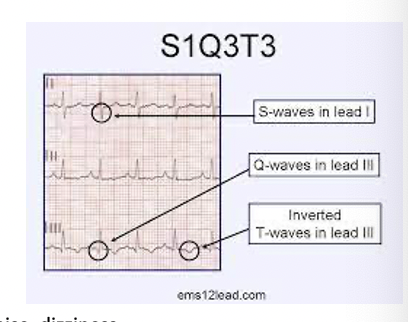
ECG Changes in PE
Most commonly sinus tachycardia.
S1Q3T3 of acute cor pulmonale is a classic – McGinn-White sign
- A large S wave in Lead I
- Q wave in lead III
- Inverted T wave in Lead III
These indicate right heart strain.
Post Op Sepsis
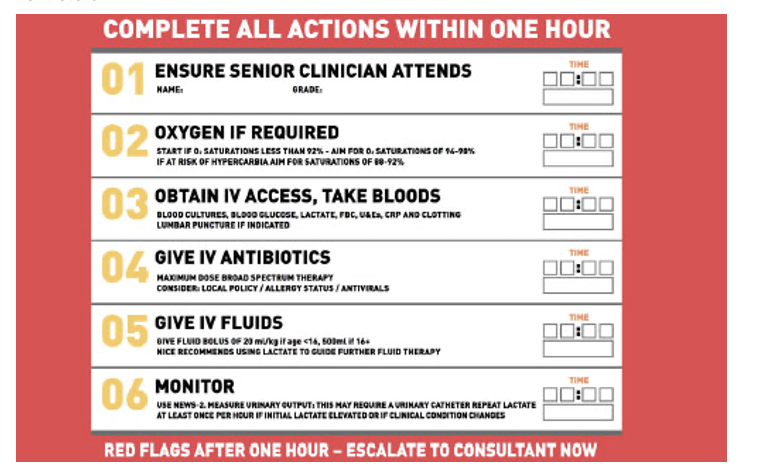
Post Op sepsis: Pyrexia, confusion, tachycardic, low BP, cold + clammy, low urine output, localising signs, non blanching rash, malaise, dizziness…
Red flags:
SEPSIS 6
Types consent forms
- Consent form 1: Patient agreement to investigation, treatment or procedure. Adults or competent young adults
- CF2: Parental agreement to investigation, treatment or procedure for a child or young person
- CF3: Patient parental agreement to investigation, treatment or procedure where consciousness not impaired.
- CF4: Adults unable to consent to investigation or treatment.
AMPLE hsitory taking in surgery
Allergies, Medications, PMH, Last meal or intake, Events leading to presentation
Goals of a wound dressing
Goals of a Wound dressing:
- Protecting a wound form microorganisms
- Aiding hemostasis – pressure dsg prevents bleedings and eliminates dead space
- Promoting healing by absorbing drainage and debriding a wound
- Patients comfort.



