Paediatric life support routine
- Safety (MRI)
- Stimulate
- Shout for help
- Assessment 10secs - look,listen, feel
- Not breathing - 5rescue breaths (neutral head for babies and tilted back for infants and odler). C to E grip tehcnique and dont cover eyes
- assess for signs of life
- CPR 15c:2breaths
- assess for signs of life
- Repeat
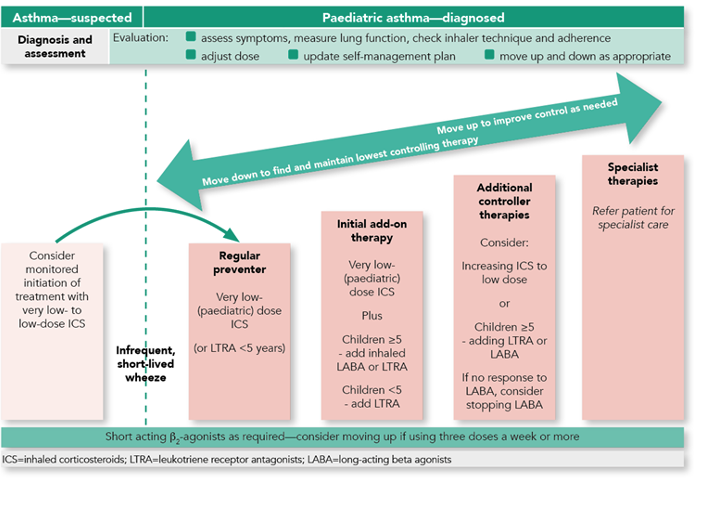
Descrieb Chronic asthma, the patho, exam and mamagement
- Asthma = chronic inflammatory disorder of airways
- Diagnosis: Episodic symptoms. Wheeze confirmed by healthcare professional, diurnal variability, atopic history, nothing suggestive of alternative diagnosis.
- Red flags – Failure to thrive, focal signs, abnormal cry, dysphagia, stridor, nasal polyps, persistent wet cough, frequent infections, murmur, present since birth, FH, severe attack.
- Patho: Chronic inflammation of the bronchial mucosa associated with mucosal oedema, secretions and constriction of airway smooth muscle narrows the airway.
- Focus on: Pattern symptoms, triggers, severity, personal/family history atrophy
- Examination: Hyper expansion, pigeon chest, Harrison sulcus.
- Management: Aim is No daytime symptoms or waking at night, no exacerbations, no need for relievers, no limitations, normal lung function and minimal side effects.
Prevent brown, reliever blue
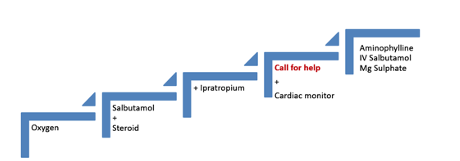
Acute Asthma
- Commonly from attack triggers
- Requires hospital when you havent repsonded dequately clinically so become exhausted and reduced O2 sats or reduced PEFR or FEV1 (<50%)
- Clinical - PEF<33% predicted, O2 sats <92% in high flow oxygen, silent chets, hypotension, fatigue, poor repsiraotry effort, reduced consciousness, agitation
- Management:
Bronchiolitis - Dx, management
- Bronchiolitis = Inflammation of bronchioles, in repsonse to viral infection, most commonly RSV. Less common are adenovirus, influenza, parainfluenza, mycoplasma pneumoniae.
- Major cuase of LRTi in infants with increased risk if premature, congenital cardiac or respuratory disease, downs syndrome and exposure to ciagerrette smoke.
- Clinical - – coryza, dry cough, breathing difficulties, poor feeding, end inspiratory crackles, wheeze, recessions, nasal flaring
- Investigations =Pulse oximetry, clunical diagnosis but possible CXR
- Management - humidified oxygen, CPAP may be used if ventilation required and feeding support (NG feeds or IV fluids)
- DDx - GORD, congenitla malformations,sasthma, foreign body apsiration.
Most make full recovery in 2weeks, but some have recurrent episodes cough and wheeze over few years and some may develop asthma.
80% caused by RSV
90% infants affected are 1-9
What is croup?
- Croup = acute laryngotracheobronchitis.
- Most caused by parainfluenza virus (respiratory synctital virus also) and bacterial infection.
- More common in winter and pea at 2 years old (6m-6rs)
- Clinical = symptoms LRTi (cough, fever) usually few days then characetristic barking cough, hoarse voice, stridor. Symptoms tpyiclaly start and worse at night
- MX = All with mild, mdoerate corup should get single dose oral dexamethasone (or oral prednisolone) and if too unwell to receive inhaled budesonide or IM dexamethasone. If severe then nebulised epinephrine (adrenaline) qith oxygen by face mask abd closely observe for 2-3hours after effects worn off.
The causative organisms of Pneumonia
Pneumonia - inflammation of the lung parenchyma with consolidation within alveoli. Can be caused by virsuses (More under 2 years) and bacteria.
- Newborn – GBS, gram negative enterococci
- Infants + young children – Viruses 9RSV/Adenovirus/rhinovirus. Influenza/parainfluenza. Bacteria – strep.pneumoniae (most common), H.influenzae (unvacc), bordatella pertussis, chlamydia trachomatis. S.Aureus in CF
- Every 5 years old – Bacteria, mycoplasma pneumoniae, streptococcus pneumoniae and chlamydia pneumoniae
- Always consider mycobacterium tuberculosis.
*
Pneumonia - Inflammation of the lung parenchyma with consolidation within alveoli. Can be caused by viruses (more in under 2years) and bacteria.
Presentation: Fever, cough, increased work of breathing, tachypnoea, lethargy, poor feeding.
Exam: Tachypnea, coarse crackles, reduced 02 sats, nasal flaring, recessions.
DDx - Otitis media, Rhinnorrhea, Nasal polyps, Pharyngitis, Upper respiratory infections, asthm, bronchiolitis, Bronchitis
Investigations – CXR may confirm diagnosis, NPA aspirate for viral PCR, Bloods – generally helpful.
Management:
- Indications for admission – O2 sats<92%, apnoeas/grunting, unable to maintain fluids
- Antibiotics (newborn-broad s, older amoxicillin, over 5 amocixillin or oral macrolide)
- Small parapneumonic effusions in some and may resolve with antibiotics but persistent fever after 48hours antibiotics suggests pleural collection which needs drainage.
- With lobar collapse or atelectasis then consider 4-6weeks faster, CXR
- Complications – sepsis, acute respiratory distress syndrome, pleural effusion, empyema.
Chest Xray basics
Assess image quality: Rotation, inspiration (ribs), picture and projections (assume PA), exposure
Systematic approach:
- Airways and lungs + tracheal deviation
- Bones and soft tissues (scoliois, rib fractures, lytic lesions)
- Cardiac - size,borders, mediastinal masses
- Diaphragm - clear and crisp
- Extra body equipment
Used for checking NG placement.
Cystic fibrosis
CF = Autosomal recessive disease from mutations in a gene on chromosome 7 that encodes cystic fibrosis transmembrane regulator (CFTR) protein. Mmebrane chloride channel affects sodium transportation = thickened, sticky secretions
CF – abnormal ion transport across epithelia l cells. Dysregulation oof inflammation and defence against infection. Pancreatic ducts become blocked. And abnormal function ins sweat glands.
Clinical features: Most picked up via screening (heel prick) .
- Neonates – meconium ileus
- Children – frequent infection, failure to thrive, wheeze, cough, steatorrhea.
In most, def of pancreatic co-enzymes leads to malabsorption, steatorrhea, and failure to thrive.
Investigations – Part of new-born blood spot test with immunoreactive trypsinogen. Gold standard is sweat test with pilocarpine iontophoresis as failure of normal reabsorption of sodium and chloride by sweat duct leads to abnormally salty sweat (high chloride). A CF genotype using DNA analysis is also available for more common mutations to help confirm diagnosis (DeltaF508)
Management: Prevent progression and maintain adequate nutrition and growth.
- Respiratory management – recurrent and persistent chest infections (prophylactic antibiotics). Physiotherapy to clear airway continuous prophylactic antibiotics. Bilateral lung transplant is end stage treatment. Vaccines, Mucolytics
- Nutritional management – pancreatic replacement therapy, high calorie diet. Annual OGTT and creon replacement
- Targeted – Lvacaftor/Lumacaftor
- Teens and adults – treating more complications etc.
Given monoclonal antibodies in winter to try to stop them developing bronchiolitis.
Bacterial Meningitis
- Patho = Usually followes bactaraemia and msot damage is from the response to infection,a nd leads to cerebral oedema, raised intracranial pressure and decreased cerebral blood flow.
- Neonatal -3m = GBS, E.Coli, listeria monocytogens
- 1M-6y = Neisseria meningitides, streptococcus pneumonias, haemophilus influenza
- >6y = neisseria meningitides, streptococcus pneumonia
- Presentation = Headache, neck stiffnes, photophobia. Some may have sepsis so tachycardia, tachypnoea, prolonged capillary refill time and hypotension (shock)
- Investigations = lumbar punctue for CSF for antibiotic sensitives and organism, blood culture, throat swabs
- Management - antibiotics and supportive therapy. 3rd gen cephalosporin (ceftriaxone). Dexamethasone might help long temr complication risk.
- Complications = Hearign impairment, local vascultitis, local cerebral infarction, subdural effusion, hydrocpehalus, cerebral abscess.
- Prophylaxis = Rifampicin or ciprofloxacin to eradice nasopharyngeal carriage in household contacts for meningococal or Hib or vaccinated if group C
Viral Meningitis
- Usually less severe, most make full recovery
- organisisms - mostly viral (enterovirus, EBV, adenovirus, mumps). Uncommon is thing slike mycoplasma species or borell aburddorferi (lymes), particularly in immunocomprimised.
Acute otitis media
- Acute otitis media = infeciton of the middle ea,r often following iral URTI but can also be caused by bacterial infection. Very common in preschool children.
- Pathogens - Viruses, especially RSV and rhinovirus including strep pneumonia, haemophilus influenza and Moraxella catarrhalis
- Clinical:
- Often non specific with fever, tahcycardia, vomtiing and distress although older choldren may localise pain to right ear
- O/E- otosocpy reveals red, bulging eardrum with loss of light reflex. Perforation of eardrum may occur, with purulent discharge.
- Recurrent ones can lead to otitis media with effusion “glue ear”. Hearing loss and developmental delay, may be treated with grommets.
- Recurrent infections are asosicated with otitis media with effusion (OME). Mastoiditis and meningitis are now incommon complications of acute otitis media
- Mx = Mx – reassurance (usually self resolves in 3/5days, analgesia and fluids and antibiotics not usually required unless not resolving. Kids get more ear infectiosn due to shorter, more horizontal eustachian tubes that let bacteria nad viruses find their way in more easily and tubes are narrower so more likely to get blocked.
Impetigo
- Impetigo = highly contagious skin infection commonly on the face in infants and oyung children, espeically if pre-existing skin disease.
- Eryhtematous macules develop into characteristic honey-coloured cursted lesions.
- Sometimes due to streptococcal infection
- Topical antibiotics can be used for mild xases (mupirocin) but fo rmoe severe then systemic Abs like flucloxacillin.
- Nasal carriage is important source of reinfection and can be eradictaed by nasal cream with chlorhexidine and neomycin.
- Complications – cellulitis, lymphadenitis and rarely scarlette fever, glomerulonephritis, staph scalded skin syndrome (SSSS)
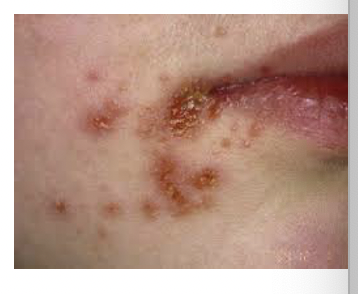
Chicken Pox - Varicella Zoster virus
- Common childhood disease caused by primary infection with the varicella zoster virus. Highly infectious transmission occurring by droplet infection, direct contact or contact with soiled materials. Average incubation period is 2weeks. The infectivity is from 2days before eruption of the rash until all lesions have crusted over.
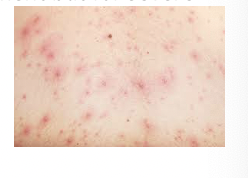
- Clinical =brief coryzal period, then eruption of an itchy rash which progresses from macules to papules to vesicles before crusting over. This starts on scalp or trunk and spread centrifugally; mucous membranes may be involved and typically new crops develops over 3-5days.
- Complications – unusual in immunocompetent children but can include secondary bacterial infection of skin with staphylyococci or streptococci and encephalitis which appears 3-6days after onset o the rash. Chickenpox can be very serious if immunocompromised child and in the newborn infant if mother develops chickenpox just before deliver. Persisting fever after the typical chickenpox rash has erupted should prompt evaluation for secondary infection
- Mx – clinical diagnosis but can isolate virus from fluid and identified. Generally symptomatic treatment but for severe or immunosuppressed can give acyclovir. Varicella zoster immune globulin provides passive immunity and should be given to immunosuppressed or newborn if mother develops chickenpox or shingles in 7days before or after birth. Live, attenuated vaccine exists but not given routinely in UK.
UTIs
Symptoms and signs: Usually non-specific.
- Infants – Fever, vomiting, lethargy, poor feeding, irritability
- Older children – fever dysuria, increased frequency, abdominal pain, vomiting, incontinence.
Investigations: Urinanalysis + Urine culture and sensitivity – E.Coli and klebsiella. No further ones unless concerned about sepsis.
Mx:
- If good clinical evidence or <3m then start antibiotics
- Upper UTI/Pyelonephritis = Cefalexin or Co-Amoxiclav
- Lower UTI – trimethoprim
- Under 3m – IV antibiotics
Further investigations after first ab confirmed diagnosis UTI:
<1 = For children do ultrasound (check structural things, within 6wks), DMSA (4-6m after to check renal parenchymal defects), MCUG- micturating cystorethrogram (check renal reflux). Also prophylactic antibiotics
1-3yrs = US, DMSA
3+ = US
Explanation: Caused by microorganisms in urinary tract. Usually UTIs are caused by bacteria from GIT.
Urinalysis: When suspected UTI or health problem that can cause abnormality in urine.
Presence RBC/WBC, presence bacteria/organisms, presence substances like glucose, pH, concentration.
Treatment: 5 days: Cefalexine trimethoprim, nitrofurantoin amoxicillin. (Depends on culture)
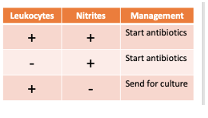
UTI: pus clel, nitrites
Microscopy >100/microlitre/100000/ml/10^8 of single type bacteria.
Culture: bacterial growth 100/microlitre/100000/ml/10^8 per litre.
Immunsiation schedule for children

Gastroenteritis
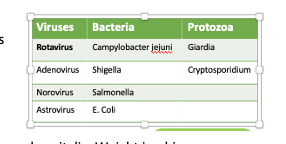
Gastroenteritis = Infection of the GIT. Rotavirus is most common cause in developed countries, particularly winter and early spring.
- Presentation – diarrhoea, vomiting, fever, poor feeding, shock. Green vomit (bile stained) is intestinal obstruction till proven otherwise.
Investigations: not usually indicated.
- Stool culture – if septic or blood in stools
- U+Es – If IV fluids required
- Glucose
- Blood culture (if started on Antibiotics)
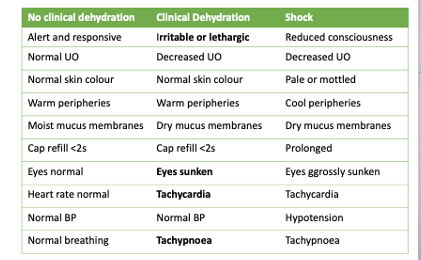
- Assess dehydration.
Mx – correct dehydration (oral/IV fluid replacement). No place for antidiarrheal drugs (loperamide, Lomotil) and antiemetics as prolong bacteria excretion in stools etc, Antibiotics only if suspected sepsis/malnourished/ immunocompromised etc)
Causes: Most are viral (rotavirus), adeno or Campylocbacter (CB produces gripes an dbloody diarrhoea). E.Coli 157 (mostly for children on farms). If bloody diarrhoea send stool to check for CB as notifiable disease.
Abdominal pain and blood or mucus in stool suggests invasive bacterial pathogen. Toxic with high fever appearance is more likely bacterial.
Examine for signs of dehydration and fever, abdominal distention, hernia orifices and genitalia. Weight is a big determinant of dehydration as clinical dehydration is usually 5-10% weight lost and shock is >10%.
Assessment dehydration
Isonatraemic and hyponatraemic dehydration – when have ltos of water or hypotonic substances theres more loss of sodium than water so shift of water from ECF to ICF. This leads to increase in brain volume and can lead to seizures. More so in poorly nourished infants in developing countries.
Hypernatraemic dehydration – water loss eceeds sodium loss and plasma sodium concentration increases, Water goes ECF->ICF. Depression of fontonelle, reduced tissue elasticity and sunken eyes.
Full management schematic of dehdration due to gastroenteritis
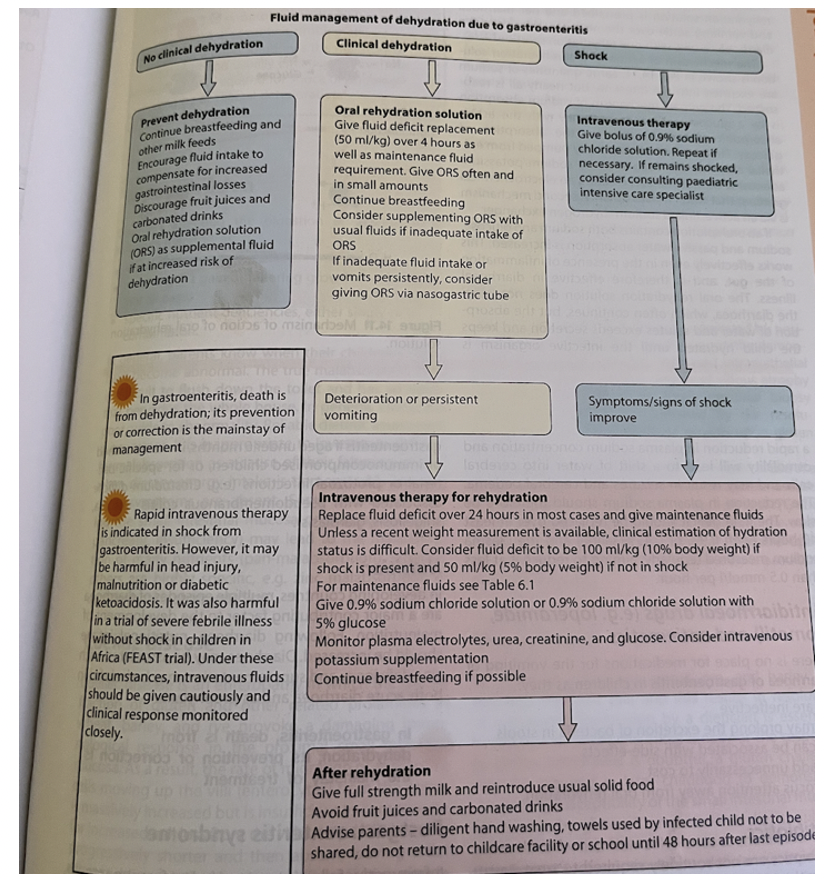
Mnagement of dehdryation
Management: Rehydration with correction of fluid and electrolyte imbalance.
- No signs dehydration then encourages normal fluid intake and oral rehydration salts as supplemental fluids if worsens.
- Evidence clinical dehydration – give 50mL/kg ORS over 4hours in addition to maintenance fluids as ORS.
- Evidence shock (decreased conscious levels, poor perfusion, hypotension) then give 20mL/kg 0.5% saline rapidly and repeat if needed then continue with IV rehydration with 0.9% saline adding 100mL/kg to maintenance requirements.
Calculating maintenance fluids:
- 100mL/kg/24h for 0-10kg bodyweight
- 50mL/kg/24h for 10-20kg bodyweight
- 20mL/kg/24h for >20kg bodyweight
- If diarrhoea continues, give additional 5mL/kg ORS for each large watery stool.
GORD
Gastro-oesophageal reflux = involuntary passage of gastric contents into oesophagus
- Functional immaturity of lower esophageal sphincter
- Predominately fluid diet
- Mainly horizontal posture
- Short intra-abdominal length of oesophagus.
Reflux is common in infancy and usually benign and self-limitinglimiting but when termed ‘GORD’ it causes significant problems and is treated.
Clinical:
- Infants: Recurrent vomiting or regurgitation after feeds, Discomfort lying flat after feed, Usually well and normal growth
- Older children: Heartburn, Epigastric pain, Vomiting
Investigations: Most can be diagnosed clinically with no investigations. More common in those with cerebral palsy or neurodevelopmental disorders. Some techniques to confirm:
- 24h esophageal pH monitoring in older children or impedance studies in infants
- Barium studies – might be to exclude underlying anatomical abnormalities
- Endoscopy – for those with suspected esophagitis.
Management: Mostly reassurance and 95% resolve by 12/18m.
- Feeding assessment and smaller, more frequent and thicker feeds
- Alginate therapy (Gaviscon)
- 4 week trial PPI/H2 receptor antagonist
Complications – faltering growth from severe vomit, oesophagitis, recurrent pulmonary aspiration, dystonic neck posturing etc.
Coeliac Disease
What is it: Autoimmune disease where gluten ingestion results in dagame to the mucosa of the proximal small intestine with subsequent atrophy of the villi and loss of absorptive surface.
Gliadin + Glutenin = Gluten
Gliadin causes damaging immune response in proximal small intestinal mucosa.
Family predisposition with approx. 10% of 1st degree relative affected, HLA-DQ2 found in 95%. More common in Caucasian people and association with other autoimmune disease, downs syndrome and Turners syndrome.
Clinical features:
Classical presentation:
- Malabsorption at 8-24 after weaning
- Faltering growth and buttock wasting
- Abdominal pain and distention
- Abnormal stools
Often: Non-specific GI symptoms, anaemia (iron and/or folate deficiency)
Investigations:
- Bloods: Serological screening tests
- Anti-tTG (immunoglobulin A tissue transaminase antibodies)
- EMA (Endomysial antibodies)
- Biopsy = mucosal changes of small intestine.
Mx –Gluten free diet under dietician supervision. Adhere for life as otherwise you risk micronutrient deficiency, osteopenia, risk of increased bowel malignancy and mall bowel lymphoma.
Obesity in children
- Aetiological factors: excess caloric intake, reduced activity levels, prevalence of obesity in family and rarely endocrine or chromosomal cause like Cushing’s, hypothyroidism or Prader-Willi.
- Consequences: long term health risks (diabetes, hypertension, ischaemic heart disease), emotional disturbance, obstructive sleep apnoea.
BMI = weight in kilograms/ height^2 (m). Age and sex specific in children so plot on BMI chart.
Overweight = BMI over 91st centile
Obese = GMI over 98th centile.
- Prevention – decreased fat intake, increased fruit + veg, reduction in screen time, more physical activity and education.
- Mx – drug treatment for over 12 and BMI>40 (extreme obesity) or >35 and complications. Orlistat (reduces abrosption dietary fat and get steatorrhea), bariatric surgery – unless mature,
Faltering weight gainc causes
Faltering weight gain = Sustained dorp down two centile spaces. SLower weight gain than expected for age and sex in infants and preschool children and mostly due to inadequate nutritional intake. Compelx an dmultifactoria
- inadequate nutritioal intake - lakc healthy food, maltreatment, lack knowledge
- Inadequate absroption nutrients - vomiting, GORD, coeliac
- Psychological deprivation
- neglect or child abuse
- Undelryign patho - imapired suck/swallow
- Excessive energy expenditure from udnelryign problems
- Inadequate retention
- Malabsroptipn
- Failrue to utilise nutrient
- Increased requirements



