- Most significant preoperative risk factors that predict postoperative cognitive impairment
- Intraoperative risk factors that predict postoperative cognitive impairment
- Advancing age (older than 70 years), preoperative cognitive impairment, decreased functional status, alcohol abuse, and a previous history of delirium.
- Surgical blood loss, hematocrit less than 30%, and the number of intraoperative blood transfusions.
Factors that have not been shown to increase the risk of postoperative delirium or postoperative cognitive dysfunction (POCD)in adults include intraoperative hemodynamic derangements (hypotension), the administration of nitrous oxide, and the anesthetic technique (general versus regional).
A 50-year-old patient develops stridor and difficulty breathing upon extubation after a complicated total thyroidectomy. The surgical site is seen to be normal. Which of the following is the most likely etiology of the patient’s presentation?
Bilateral recurrent laryngeal nerve injury
The recurrent laryngeal nerve innervates all the muscles of the larynx except for the cricothyroid. Unilateral damage to this nerve will result in hoarseness, but bilateral damage will result in respiratory distress. Visualization of the vocal cords will show a paramedian position of the cords. Bilateral superior laryngeal nerve injury (external branch) is incorrect as that will only result in hoarseness, whereas unilateral damage will have minimal effect on the voice. Bilateral superior laryngeal nerve injury (internal branch) is incorrect as that will not result in stridor and dyspnea as it must be noted that the internal branch is sensory. Hematoma is incorrect as that results within the first few hours after surgery (generally within 6-24 hours). Also, this patient is not presenting with any signs of a hematoma.
- Largest cause of mortality in obese patients receiving liposuction?
- What about during Abdominoplasty?
- What concentration of lidocaine is used for tumulscent liposuction?
- Pulmonary Embolism
- Liposuction and abdominoplasty when combined have a high risk for deep vein thrombosis. Some people believe that during liposuction, every patient suffers from some degree of fat embolization / shower phenomenon.
- Patients at increased risk are those greater than 40 years old, surgery duration greater than 30 minutes, malignancy, immobilization, hypercoagulable states, and obesity. In patients at higher risk, deep vein thrombosis chemoprophylaxis with low molecular weight is indicated.
- Deep Vein Thrombosis
- Abdominoplasty has the highest published rates of deep vein thrombosis and pulmonary embolus in plastic surgery.
- Tumescent anesthesia often uses 0.05% and 0.1% lidocaine to prevent local anesthetic systemic toxicity.
True or False: The Sensory component of the trigeminal nerve is combined in the gasserian ganglion
TRUE
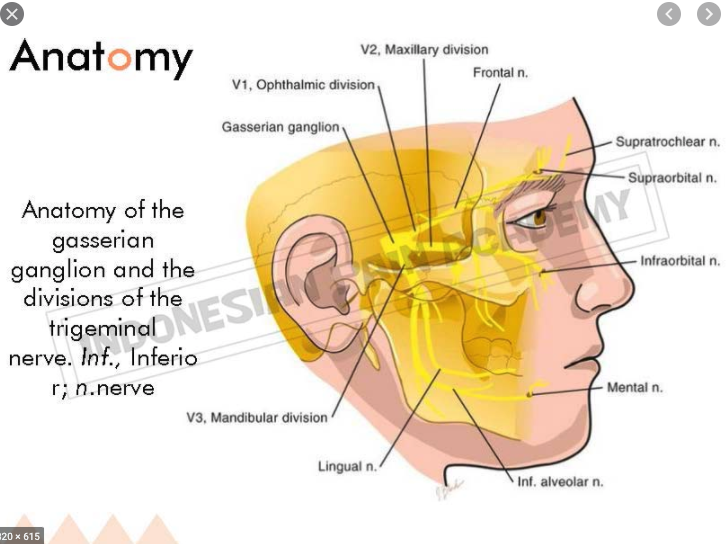
The sensory component of the trigeminal nerve is combined in the gasserian ganglion. The sensory innervation of the face is under the dependence of the trigeminal nerve associated with the C2-C4 cervical nerve roots that constitute the superficial cervical plexus. The trigeminal nerve provides sensory and motor components. The sensory component is combined in the trigeminal ganglion, also known as the semilunar or gasserian ganglion. This ganglion lies in the Meckel cave, an invagination of the dura mater near the apex of the petrous part of the temporal bone in the posterior cranial fossa. Postganglionic fibers exit this ganglion to form three nerves: the ophthalmic nerve, the maxillary nerve, and the mandibular nerve. The ophthalmic nerve innervates the forehead, eyebrows, upper eyelids, and anterior area of the nose. The maxillary nerve innervates the lower eyelid, upper lip, lateral portion of the nose and nasal septum, cheek, roof of the mouth, bone, teeth, sinus of the maxilla, and soft and hard palates. The mandibular nerve provides nerve supply to the anterior two-thirds of the tongue and the skin, mucosa, teeth, and the bone of the mandible.
Patient presents for elective surgery with the following EKG. Patient is a highly athletic marathon runner. What is the next step in management?
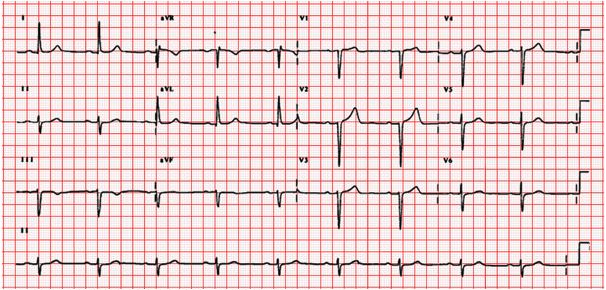
Patient has 1st degree heart block; prolonged PR d/t high vagal tone at resting heart rate.
First-degree AV block is common amongst highly conditioned athletes due to increased vagal tone and a lower heart rate. However, a 24-hour Holter, option A, is appropriate to prove that this rhythm disappears during exercise and/or hyperventilation.
What is the correct Miller Laryngoscope Blade Size for the following patients:
- Premature
- Full term Infant
- 1 year old child
- 2 year old
- 6 year old
- 10 year old
- 18 year old
Unlike laryngeal mask airways, the choice of laryngoscope blade size is based on age and not on weight.
- A size 0 is recommended for premature infants.
- A size 0-1 for full term infants
- A size 1 for a 1-year-old child
- A size 1-1.5 for a 2-year-old child
- A size 1.5-2 for a 6-year-old child
- A size 2-3 for a 10-year-old child
- A size 3 for an 18 year old.
A 43-year-old man is receiving a blood transfusion following colorectal surgery. Only 1-2 ml of ABO compatible, screened, crossmatched blood has dripped in when he develops dyspnea, bronchospasm, and hypotension occurs. His wife says that he has received a unit of blood before without any complications. Which diagnoses is most likely?
HEREDITARY IgA DEFICIENCY
A true anaphylactic reaction to a blood transfusion can occur during transfusion of crossmatched blood when the patient has a hereditary IgA deficiency. A prior transfusion and exposure to IgA antigens results in antibody formation and subsequent blood transfusion causes an anaphylactic reaction.
During an infusion, how many half lives does it take to reach steady state??
4-5 half lives
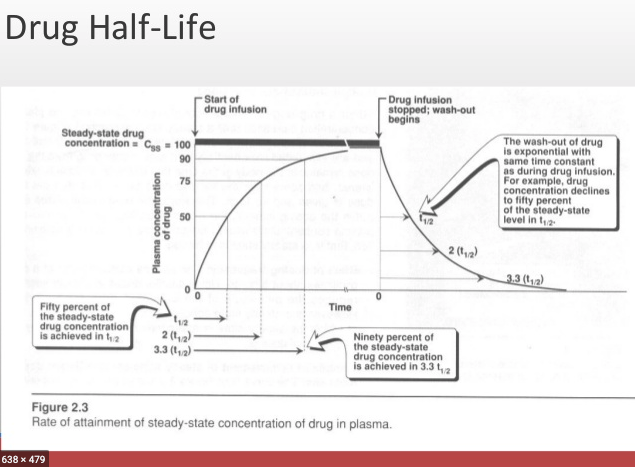
During an infusion, it takes one half-life for the drug to reach 50% of steady-state concentration. It similarly takes 2 half-lives to reach 75%, 3 half-lives to reach 87.5%, and 5 half-lives to reach 97% of the steady-state concentration. By 4 to 5 half-lives, the patient is typically considered to be at steady state.
- Where is the superficial cervical plexus blocked?
- The Deep Cervical Plexus?
- The superficial cervical plexus is blocked at the midpoint of the posterior border of the sternocleidomastoid muscle.
- The deep cervical plexus block is a paravertebral block of the C2 to C4 spinal nerves as they emerge from the foramina in the cervical vertebrae.
The prevertebral muscles receive branches from the cervical plexus. The cervical plexus is a plexus of the anterior rami of the first four cervical spinal nerves which arise from C1 to C4 cervical segments in the neck. It is located in the neck, deep to the sternocleidomastoid muscle, and supplies branches to the prevertebral muscles, strap muscled of the neck, and the phrenic nerve.
The deep cervical plexus supplies the musculature of the neck segmentally and the cutaneous sensation of the skin between the trigeminally innervated face and the T2 dermatome of the trunk.
The cervical plexus is unique in that it divides early into cutaneous branches, penetrating the cervical fascia and deeper muscular branches that innervate the muscles and joints, which can be blocked separately.
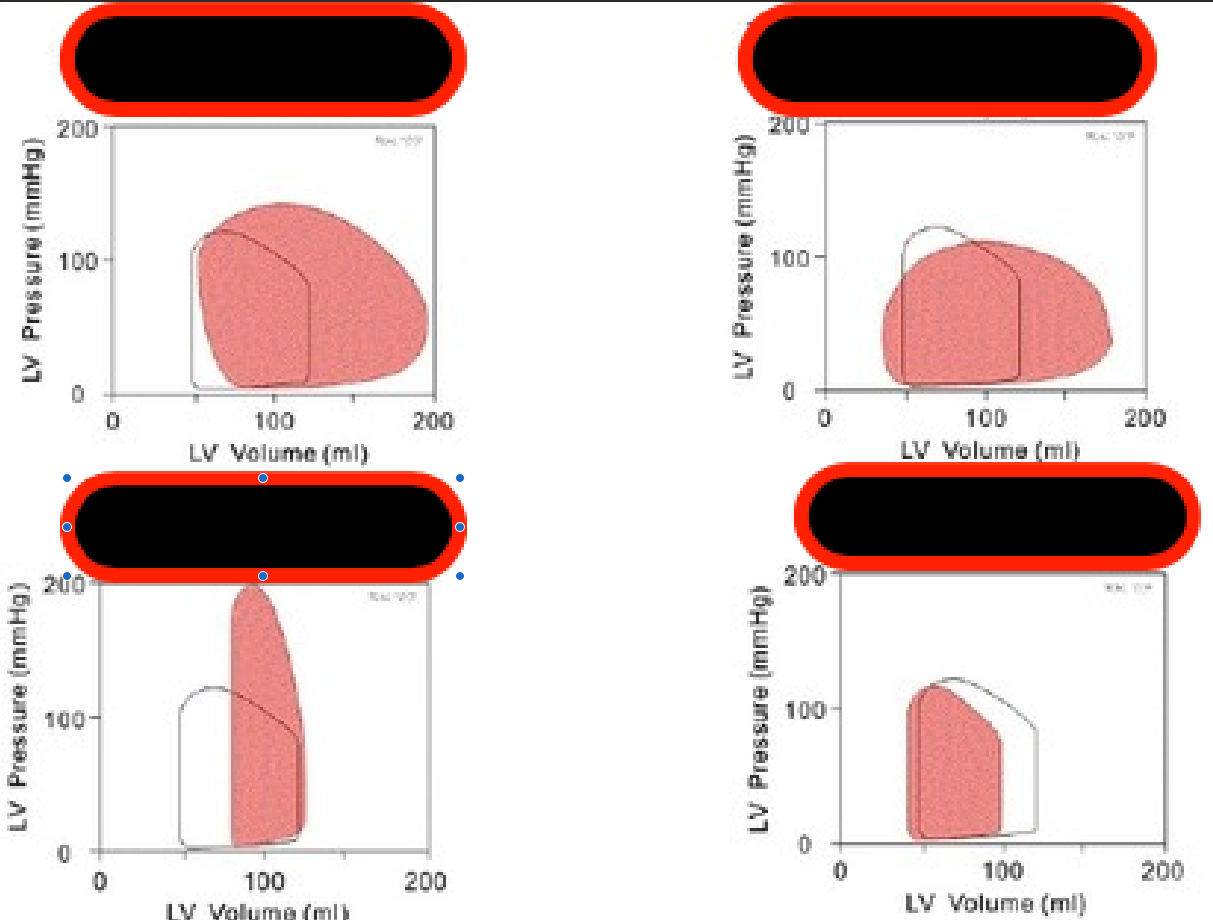
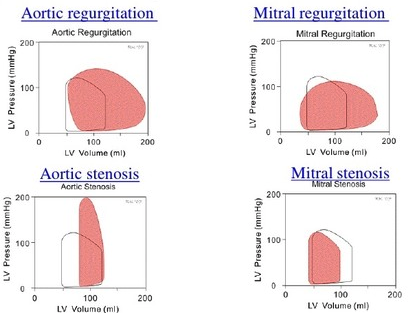
Identify the following pressure volume loops
What is difference between adult and newborn lumbar spine?
- What is the conus medullaris?
- What is the filum terminale?
- Termination of dural sac?
- Conus medularis is the termination of the Spinal Cord
- L2 in Adults; L3 in Newborn
- Conus medularis continues as filum terminale attaches at coccygeal ligament
- Adult Dural Sac Terminates at S2 vs Newborn at S3
Your anesthetic is delivered via a normal sevoflurane variable bypass vaporizer. Temperature of room increases to 80 degrees. What affect will this have on the amount of oxygen being diverted into the vaporizing chamber of your sevoflurane vaporizer?
- The rise in temperature will result in more sevoflurane evaporating inside the vaporizer (just as, if the temperature of a pot of water increases, more water will evaporate and go into the vapor phase). If there were no compensating mechanism inside the vaporizer, then this rise in temperature would result in higher delivered sevoflurane, which could result in a dangerous overdose of inhaled agent.
- Inside every variable bypass vaporizer is a temperature compensation valve. This temperature compensation valve will divert MORE oxygen into the vaporizing chamber if the temperature DROPS, but the temperature of the room did not drop in this case.
- The temperature compensation device in a variable bypass vaporizer diverts LESS oxygen into the vaporizing chamber when the ambient temperature RISES. That is, more sevoflurane is going into the vapor phase due to the rise in temperature, to compensate for this, the compensation device sends less oxygen into the vaporizing chamber to keep the output of sevoflurane constant.
What drugs metabolized by the following enzyme
- CYP 3A4
- CYP2D6
- CYP2C9
- CYP2B6
- CYP2C19
- CYP 3A4: metabolizes (inactivates) acetaminophen, alfentanil, dexamethasone, fentanyl, lidocaine, methadone, midazolam, and sufentanil; partially propofol
- CYP2D6: Converts codeine to morphine, Tramadol, Hydrocodone, Oxycodone
- CYP2C9: Phenytoin, Warfarin, Ibuprofen, Losartan, and Glipizide.
- CYP2B6: Propofol
- CYP2C19: Clopidrogrel, proton pump inhibitors, such as omeprazole, and antidepressants
Irreversible ischemia in patients occurs at what cerebral blood flow?
What is normal CBF?
- Normal global cerebral blood flow (CBF) is 50 mL/100 g/min.
- When CBF falls to 35 mL/ 100g/min, protein synthesis is neurons is stopped but the tissue can survive if the CBF doesn’t worsen.
- At 20 mL/100 g/min, the synaptic transmission between neurons is interrupted, disturbing the function of still viable neurons.
- AT 10 mL/100 g/min, irreversible cell death.
When does peak serum level of lidocaine occur following injection of lidocaine for tumulscent anesthesia for liposuction?
- It has been shown that serum levels of lidocaine peak after 12 to 14 hours after tumescent anesthesia for liposuction has been used.
This technique involves the subcutaneous injection of large volumes of dilute lidocaine and epinephrine. The American Society of Plastic Surgeons guidelines recommends 35 mg/kg as the maximum dose of lidocaine that can be used for liposuction although doses up to 55 mg/kg have been used safely. These high doses pose a clinical concern as patients are at high risk for LAST which includes symptoms such as mental status changes, seizures, respiratory arrest, dysrhythmias, and cardiac arrest. It is not uncommon for surgical centers to discharge patients home after these procedures and prior to the peak serum lidocaine level. This practice carries the risk of leaving the patient unmonitored during period of increased risk.
Which one of the following induction agents has been shown to produce convulsion-like EEG potentials in epileptic patients?
A. Propofol
B. Thiopental
C. Midazolam
D. Etomidate
E. Fentanyl
Etomidate has been shown to cause myoclonus as well as convulsion-like EEG potentials in patients with epilepsy or other seizure disorders. Despite this property, etomidate does have anticonvulsant properties and has been used to terminate status epilepticus. None of the other agents listed have been known to show convulsion-like EEG patterns. Ketamine and propofol may induce myoclonic and seizure-like activity in nonepileptic patients.
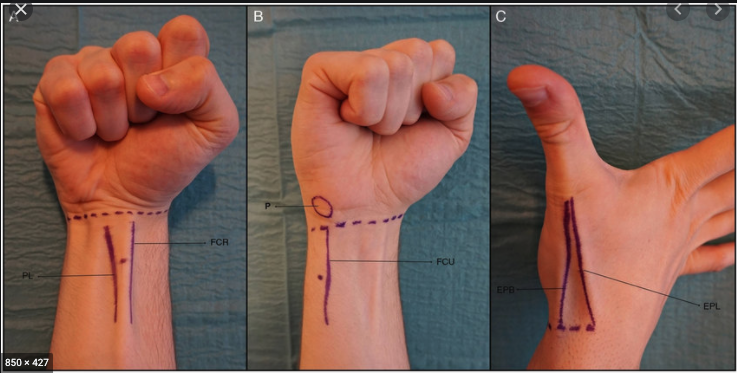
- Where do you inject local anesthetic for an ulnar nerve block at the wrist?
- The Medial Nerve?
- The Radial?
- The ulnar nerve may anesthetized by injecting beneath the flexor carpi ulnaris tendon between the ulnar artery and pisiform bone.
- Injecting between the flexor carpi radialis and palmaris longus tendons 2 to 3 cm proximal to the wrist crease will anesthetize the median nerve.
- Placing local anesthetic superficial to the extensor pollicis longus tendon at the base of the first metacarpal following the tendon will anesthetize the radial nerve.
Line isolation monitor will alarm when current exceeds what threshold?
5 miliamps
Prevents macroshock
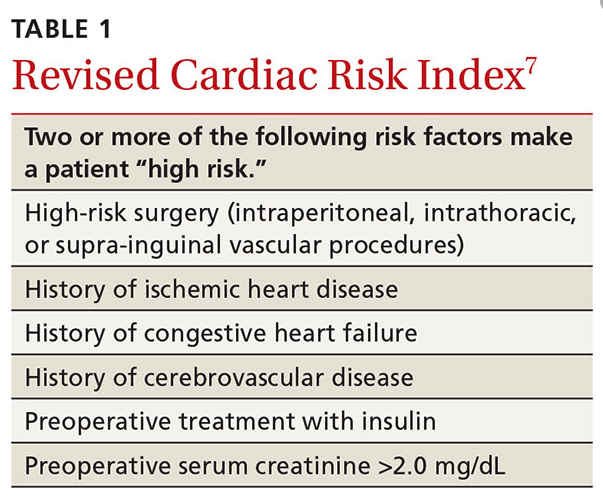
Revised Cariac risk Index Criteria
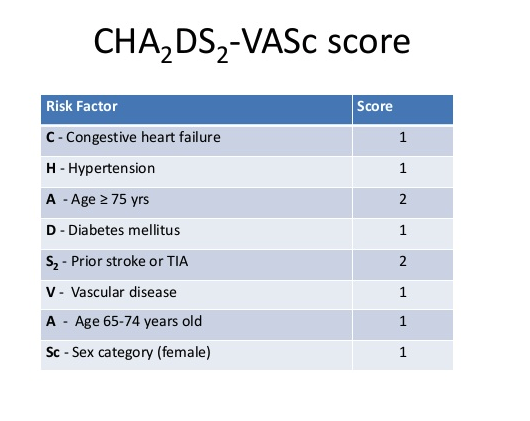
CHADS2VASC Criteria
Score for for Atrial Fibrillation Stroke Risk calculates stroke risk for patients with atrial fibrillation
Max Score is 9
0 = Low Risk, no need for AC
1 = Low - consider oral AC or Aspirin
2 = High Risk, Consider oral AC
Hyperventilation affects cerebral blood flow for what duration of time?
24 hours
Hyperventilation causes a decrease in the PaCO2 levels which then leads to vasoconstriction of cerebral vasculature thereby causing a reduction in the cerebral blood flow and intracranial pressure. Carbon dioxide (CO2) crosses the blood-brain barrier where it alters the extracellular pH leading to either vasodilatation or vasoconstriction, depending on the pH level. Because of this, respiratory acidosis markedly affects the cerebral blood flow as compared with metabolic acidosis since hydrogen ions do not cross the blood-brain barrier.
Immediately during hyperventilation, cerebral blood flow begins to decrease, and it continues to decrease until PaCO2 level reaches 30 mmHg.
Beyond this level, the effect stabilizes, and after 24-48 hours, any change in PaCO2 will no longer change the cerebral blood flow and intracranial pressure because of the buffering effect of alkalotic cerebrospinal fluid. Acute hyperventilation may lead to a significant decrease in the cerebral blood flow that may cause cerebral ischemia.
The most labile factor in plasma is what?
Factor 8
A surgical patient presents with a history of a “heart problem” their doctor told them about, but they state it has never been an issue and they have good exercise tolerance. About halfway through his open small bowel resection surgery, the patient’s blood pressure begins to decline. There is no ongoing hemorrhage. A bolus of epinephrine is given, but it does not rectify the problem. Next, a bolus of esmolol is administered with resolution of the hypotension. Which of the following is the most likely “heart problem” this patient has?
Hypertrophic Obstructive Cardiomyopathy
It causes a dynamic obstruction of the left ventricular outflow tract. Increasing contractility worsens the dynamic obstruction while decreasing the contractility with beta-blockade usually shows improvement. Although it is beneficial to slow heart rate in the setting of aortic stenosis, the most common drug that improves cardiac stability with this lesion is phenylephrine.
Between what layers is local anesthesia deposited for a TAP block in the following image?
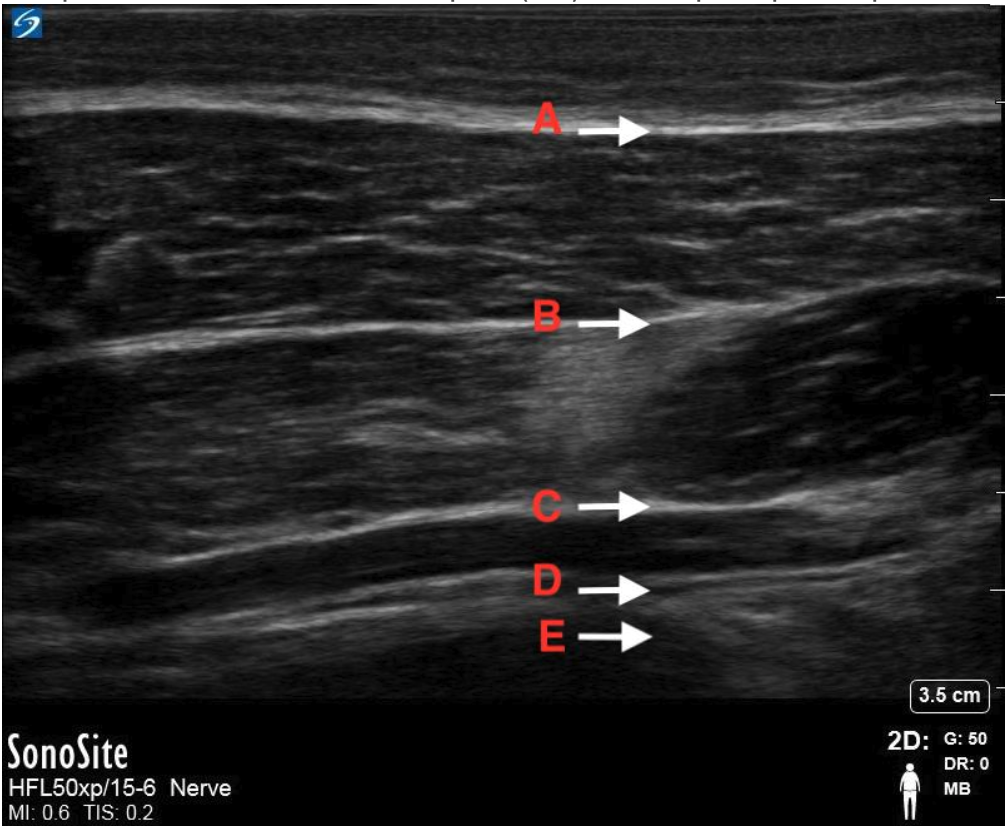
C
Transverse Abdominis and Internal Oblique
“TI the TAP”






