define emphysema
- Irreversible enlargement of airspaces DISTAL to terminal bronchiole
–> accompanied by destruction of airway walls but WITHOUT obvious fibrosis
- overlap between disease caused by alpha1-AT deficiency and pure chronic bronchitis
- common pathogenesis = HEAVY CIGARETTE SMOKING
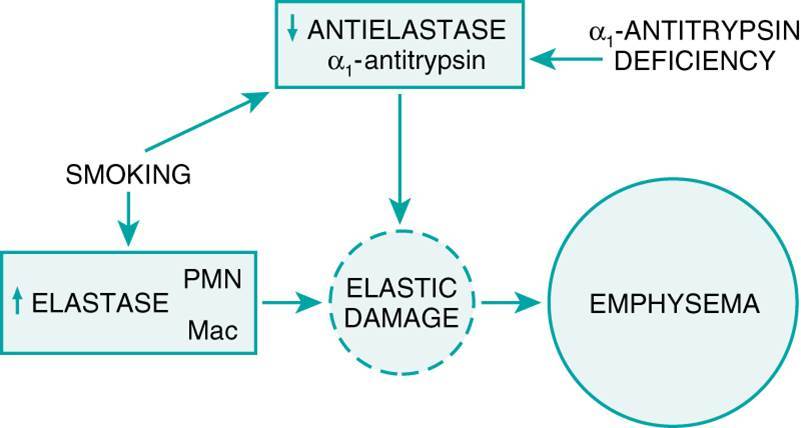
describe the factors associating smoking and emphysema
- smokers have INCREASED neutrophils in the lung
–> neutrophils and macrophages accumulate in alveoli
- smoking stimulates release of ELASTASE from both neutrophils and macrophages (macrophages elastase is NOT inhibited by alpha1-AT)
- Oxidants in cigarete smoke and oxygen-derived free radiacls from neutrophils INHIBIT antiprotease
–> FREE RADICALS INCITE TISSUE DAMAGE
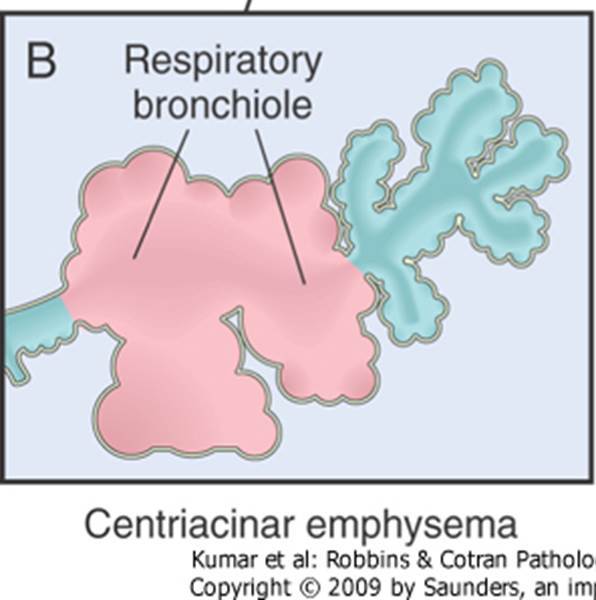
Describe centriacinar emphysema
- most common (95%)
- Portion of acinus formed by RESPIRATORY BRONCHIOLES affected; DISTAL ALVEOLI SPARED
- GREATEST severeity in APICAL segements of upper lobes
- assoc. carbon pigment and coal dust suggests MAJOR role of tobacco and coal in genesis
describe panacinar emphysema
- ACINI uniformly enlarged from respiratory bronchioles to terminal blind alveoli
- Assoc. with ALPHA1-antitypsin deficiency
- most common in BASILAR PORTIONS OF LUNG
–> often occurs together with centriacinar emphysema
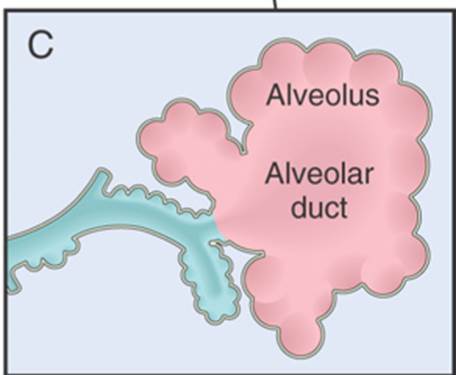
describe Distal acinar emphysema (paraseptal emphysema)
- Enlargement with destruction of DISTAL portion of ACINUS
–> usually worse in upper lung zones
- usually ADJACENT TO PLEURA, septae, lobule margins; adjacent to areas of scarring, fibrosis, or atelectasis; can form cyst-like structures
- ASSOC. with SPONTANEOUS PNEUMOTHORAX and bullous disease of lung in young adults
–> not associated with smoking
describe irregular emphysema (airspace enlargement with fibrosis)
- ACINUS IS IRREGULARLY involved
- associated with SCARRING
–> usually from inflammatory process (called paracicatrical emphysema)
- most common; usually asymptomatic, insignificant
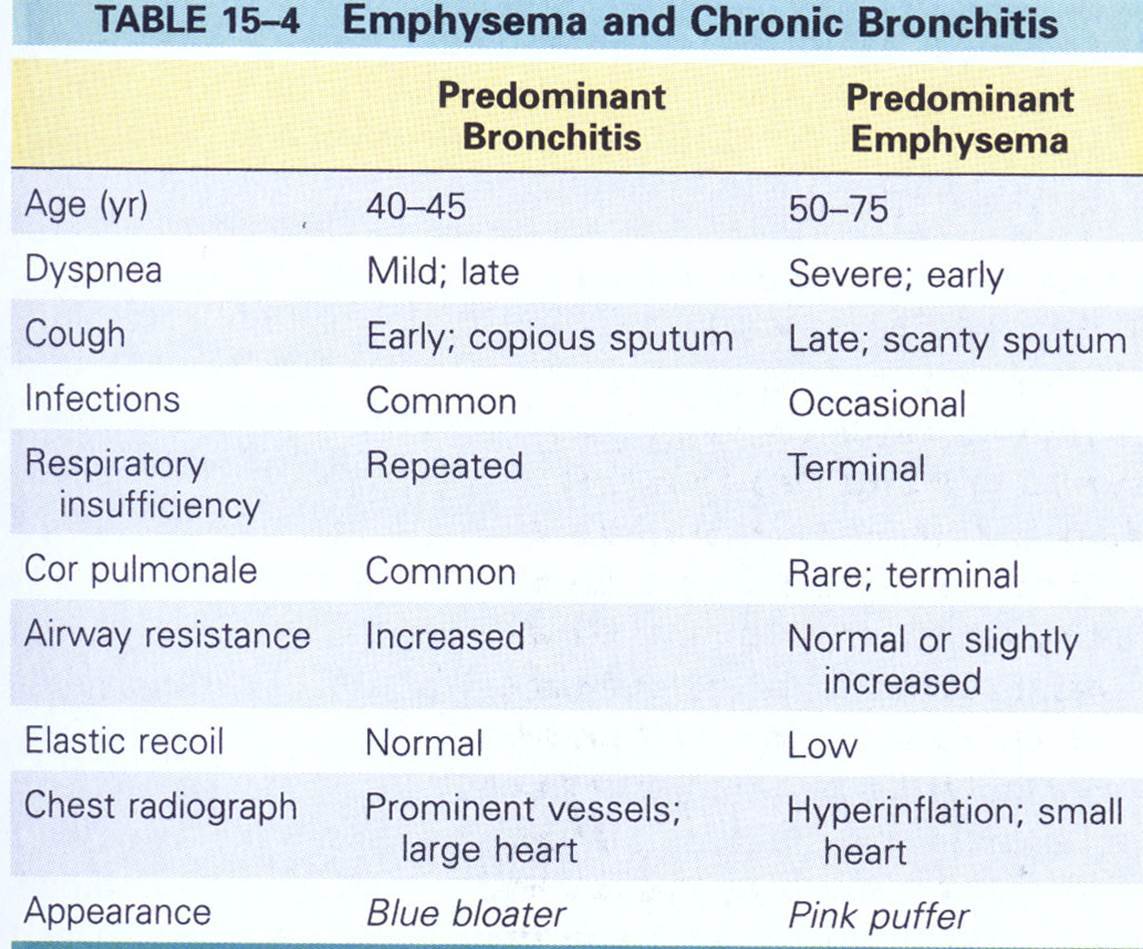
Define Pink puffers
- SEVERE emphysema
- over-ventilate and remain relatively well-oxygenated
–> decrease diffusion capacity and relatively normal blood gas values; not much bronchitis
–> barrel chest, DOE; pursed-lip breathing, weight loss
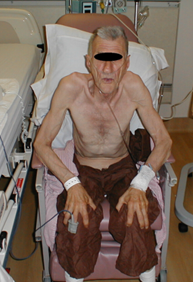
describe blue bloaters
- major component of chronic bronchitis, hypercapnia, abundant purulent sputum and severe hypoxemia (BLUE)
- may develop cor pulmonale and eventually cardiac failure
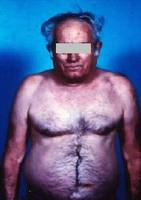
Describe Chronic bronchitis
- Persistent cough with production of sputum for AT LEAST 3 MONTHS of a year for at least 2 CONSECUTIVE YEARS
–> may have airflow decrease (decrease FEV1)
- CIGARETTE SMOKING (most important factor)
- microbiologic factors important in initiating and maintaing, but 2ndary process; cilia damage
describe the morphologic correlates in chronic bronchitis
- chronic inflammation of airways
- HYPERTROPHY of submucosal glands of trachea and bronchi (REID INDEX)
- GOBLET CELL METAPLASIA
–> mucus hypersecretion with plugging
- bronchial epithelium may show squamous metaplasia and dysplasia
- marked narrowing of bronchioles; possible BRONCHIOLITIS OBLITERANS
describe the clinical presentation of CHRONIC BRONCHITIS
- Persistent cough and sputum production
- may lead tos ignificant COPD with outlfow obstruction ; hypercapnia, hypoxemia, possible cyanosis
- may cause SQUAMOUS METAPLASIA AND DYSPLASIA of bronchial epithelium, providing ground for deelopment of cancer
describe acute exacerbation of chronic bronchitis
- Bacterial infections
- viral infections
- cigarette smoke predisposes to infection by:
–> inferfering with ciliary action
–> directly damaging the epithelium
–> inhibiting the ability of bronchial and alveolar leukocytes to clear bacteria
describe asthma
- CHRONIC INFLAMMATORY DISORDER OF AIRWAYS
–> recurrent episodes of wheezing, breathlessness, chest tightness and cough (night or early morning)
- variable bronchoconstriction and airflow limitiation
- partly reversible
describe the pathophysiology of asthma
- inflammation –> hyperreactive airways –> episodes of reversible bronchoconstriciton
–> unpredictable and disabling with dyspnea, coughing and wheezing
–> patient may be asymptomatic between episodes
- disease may be unremitting = Status asthmaticus
describe ATOPIC (extrinsic) asthma
- initiated by type I hypersensitivity rxn after exposure to extrinsic allergen
- Initial sensitization to inhaled antigens stimulate induction of CD4+ cells of Th2 type
- Th2 cells release cytokines –> IL-4, IL-5
- subsequent IgE- mediated rxn to inhaled antigens –> acute response and late-phase reaction
- Induction of Th2 response fundamental
describe non-atopic asthma
- initiated by diverse nonimmune mechanisms such as ingestion of aspirin, pulmonary infections, inhalants, and exercise
describe the phases of allergic asthma
- Early phase
–> antigen exposure
–> 30 minutes
–> asthmatic attack
–> goes away by itself in hours
- late phase:
–> 4-8 hours later recruited cell arrive in bronchus
–> binding to left-over IgE triggers another attack
- Bronchoconstriction: vagal, direct effect of mediators on smooth muscle
describe the morphology of asthma
- overdistended, hyperinflated lungs, possible atelectasis
- occlusion of bronchi and bronchioles by thick, tenacious mucus plugs
–> curschmann sprials = whorls of shed epithelium
–> charcot-leyden crystals = crystalloids made of eosinophilic proteins
Describe Bronchiectasis
- permanent dilation of bronchi and bronchioles
–> caused by destruction of muscle and elastic supporting tissue,
–> assoc. with chronic necrotizing infections
**IRREVERSIBLE**
- TWO CONDITIONS REQUISITE = OBSTRUCTION AND CHRONIC PERSISTENT INFECTION
describe kartagener syndrome
- autosomal recessive Disorder that results in a STrUCTURAL DEFECT IN CILIA (DECREASE MOTILITY)
–> loss of radial spokes
- results in bronchiectasis;; sinusitis; infertility (if male)
describe the clinical features
- chronic productive cough, hemoptysis, FOUL SMELLING SPUTUM, can be bloody
- dyspnea and hypoxemia; pneumonia, lung abscess
- SYSTEMIC = fever, weight loss, weakness
- COMPLICATIONS = pulmonary HPT; brain abscesses
describe pathogenesis of bronchiectasis
- Two processes necessary
1) obstruction
–> airway damaged, dilates and distorts
2) chronic persitent infection
–> causes fibrosis around distorted airway and locks it in that position
**IRREVERSIBLE**




