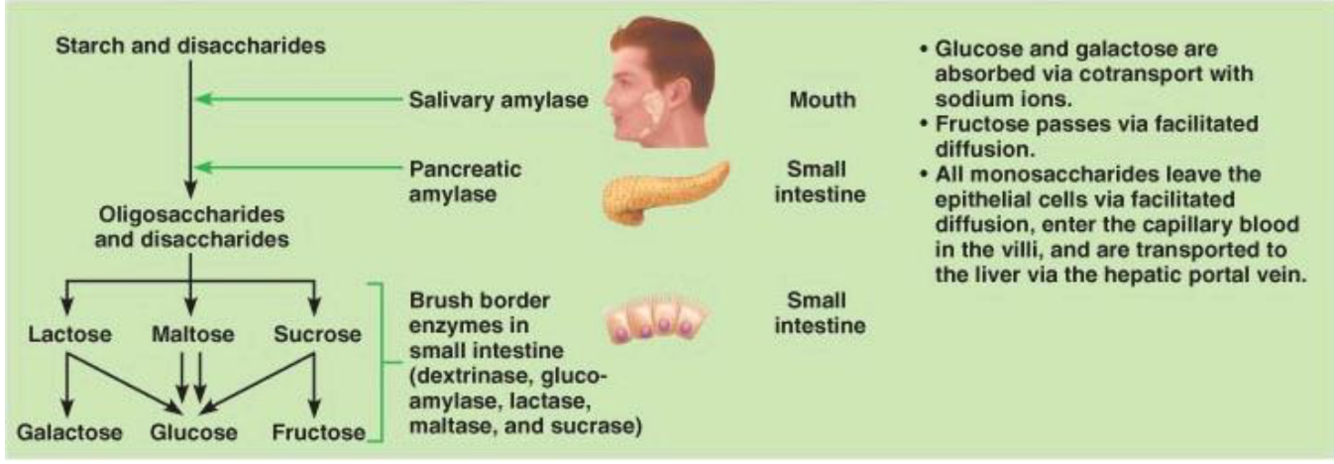
Review: Digestion of carbohydrates
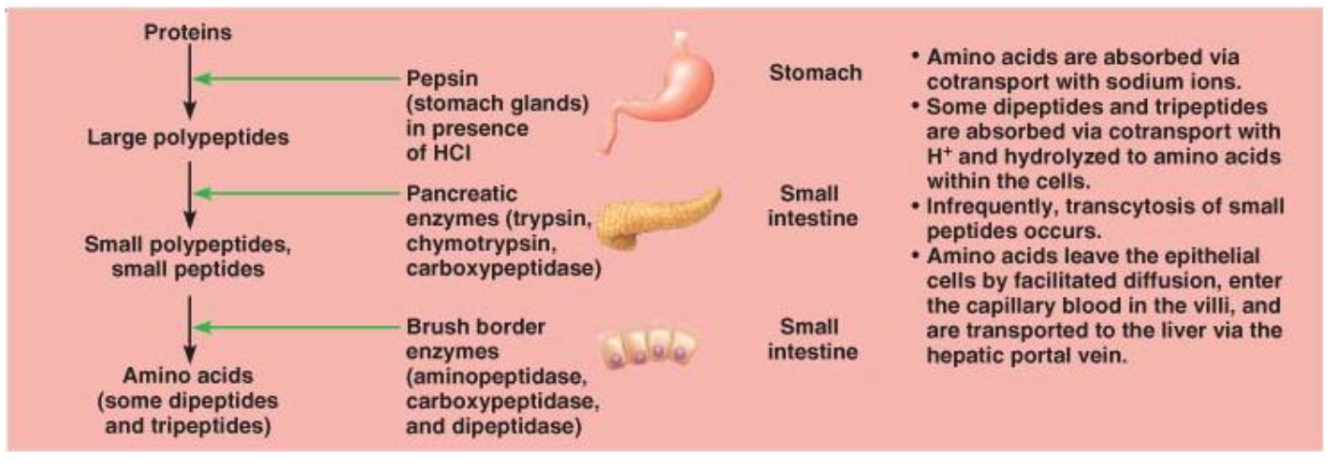
Review: protein digestion
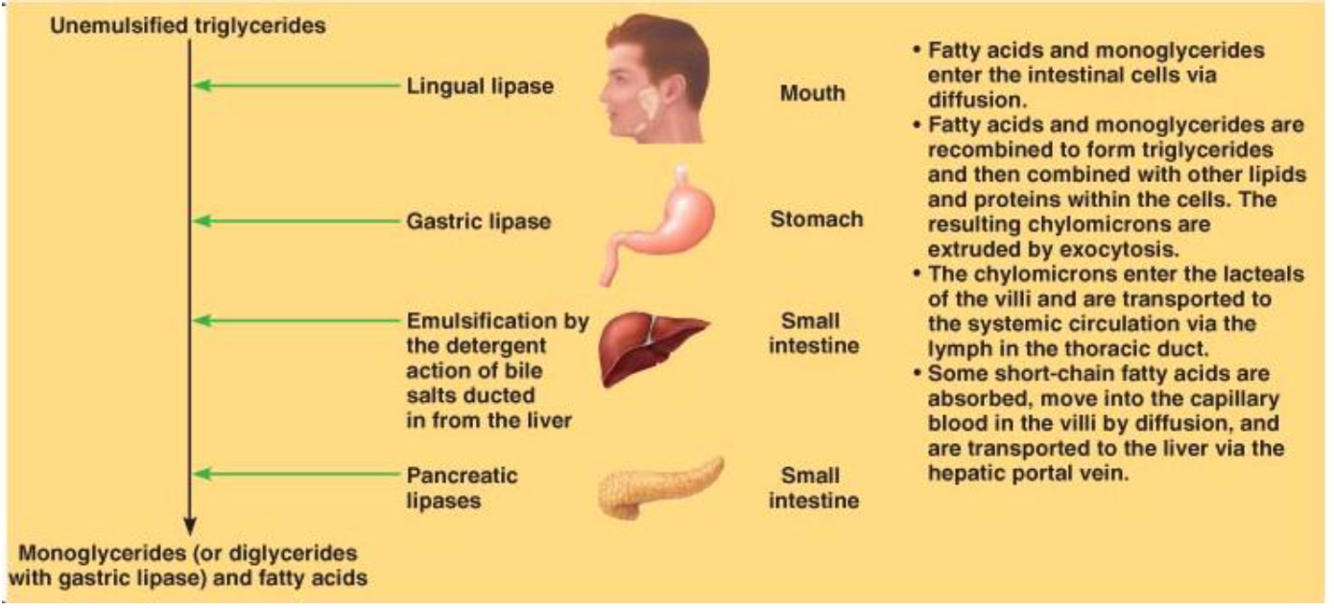
Review: Lipid digestion
oMouth: Lingual lipase (activated in stomach)
oStomach: Gastric lipase(has a limited role in the adult) (kids digesting fats in breast milk)
oSmall Intestine:
- Bile salts
- Pancreatic lipase
- No enzymes in brush border
oTriglycerides are broken down into long/short chain fatty acids and monoglyceridesfor absorption
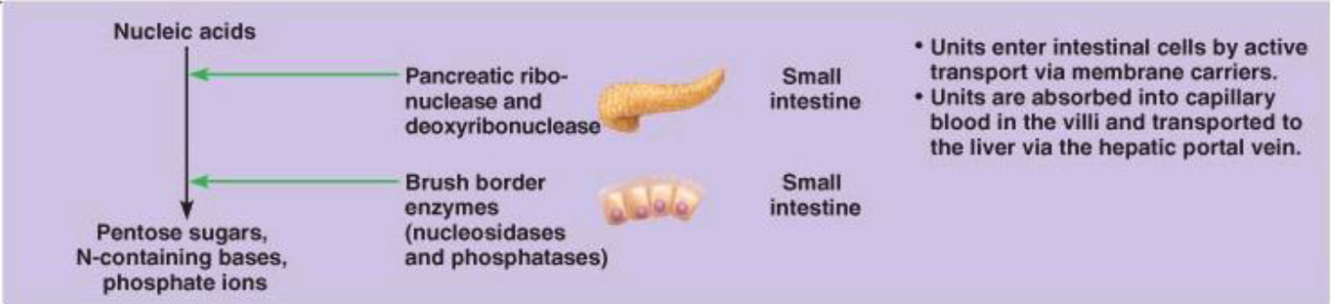
Digestion of Nucleic Acids (basically sugars joined together)
How does absorption occur in the small intestine?
oAbsorption: The passage of the end products of digestion from the GI tract (the gut) into the blood or lymph
oOccurs by:
- Simple diffusion
- Facilitated diffusion
- Osmosis
- Active transport
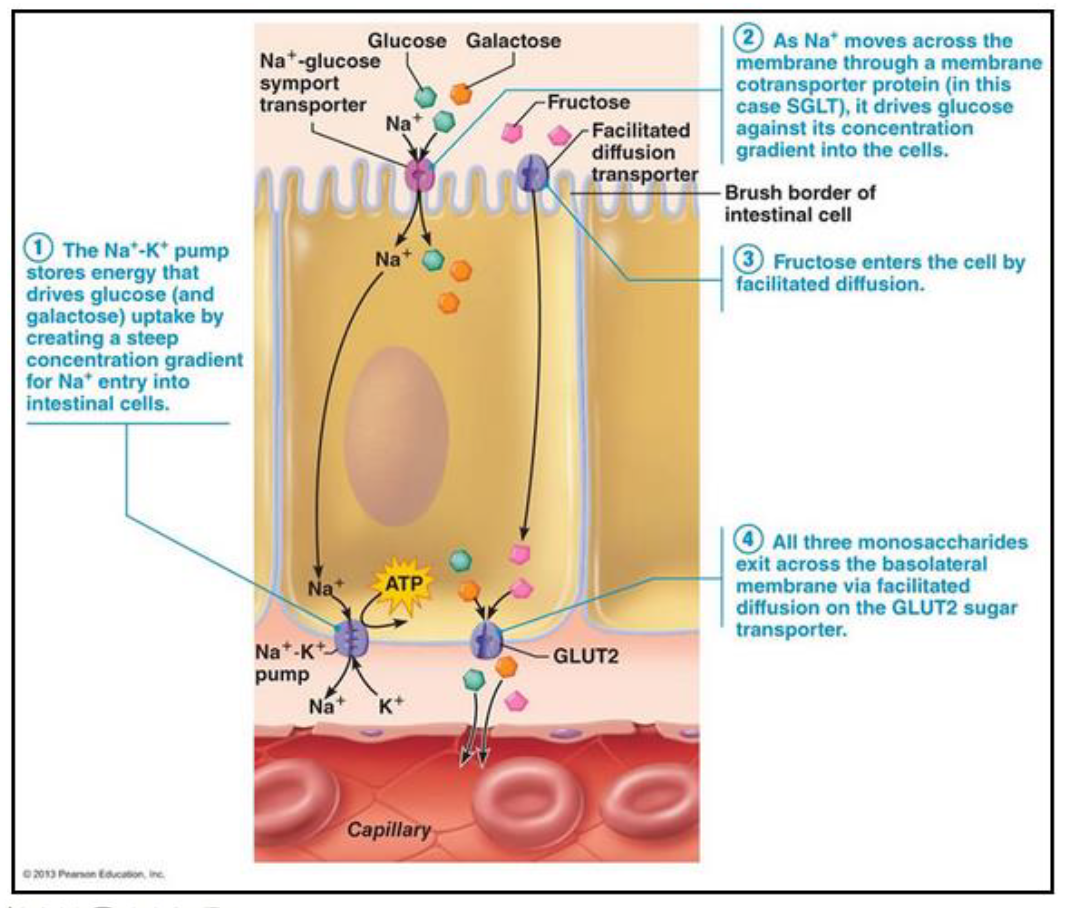
Essentially all carbohydrates are absorbed as monosaccharides.
How are they absorbed into the epithelial cell and how do they move out of the epithelial cell into the bloodstream?
oAbsorption into epithelial cell
- Glucose and Galactose -sodium glucose symporter (active transport)
- Fructose -facilitated diffusion
oMovement out of epithelial cell into bloodstream
•by facilitated diffusion
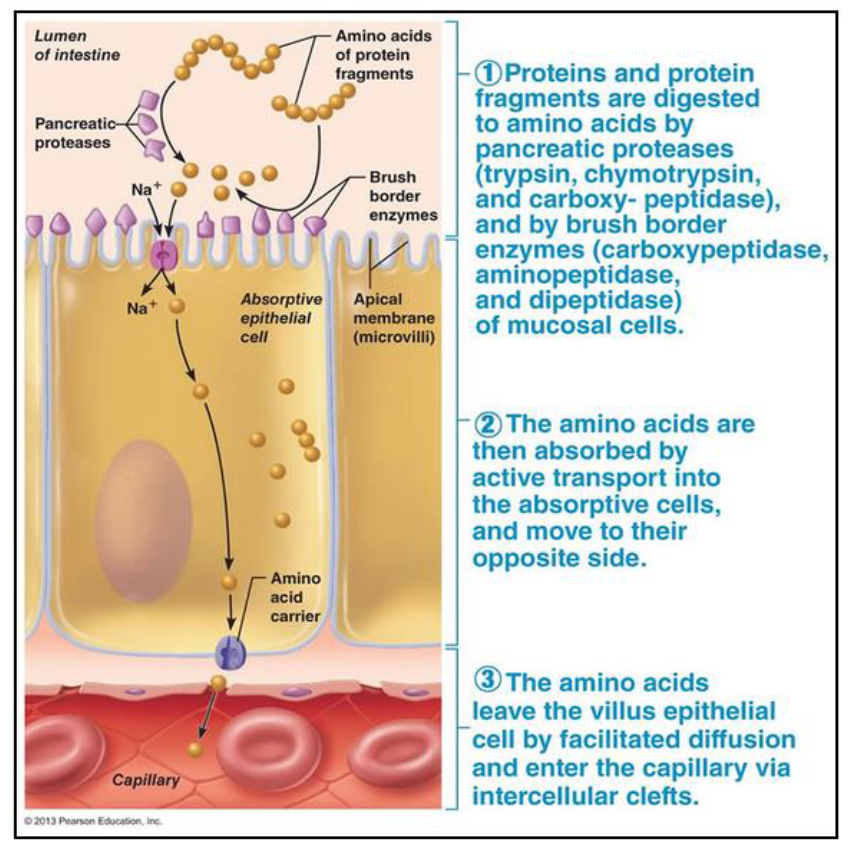
How does Absorption occur of Amino Acids and Dipeptides into epithelial cell (of small intestine) and how do they move out into blood?
oAbsorption into epithelial cell
•active transport with Na+ or H+ ions (symporters)
oMovement out of epithelial cell into blood
•diffusion
Absorption of lipids
How are they absorbed into epithelial cell ?
How are they moved out?
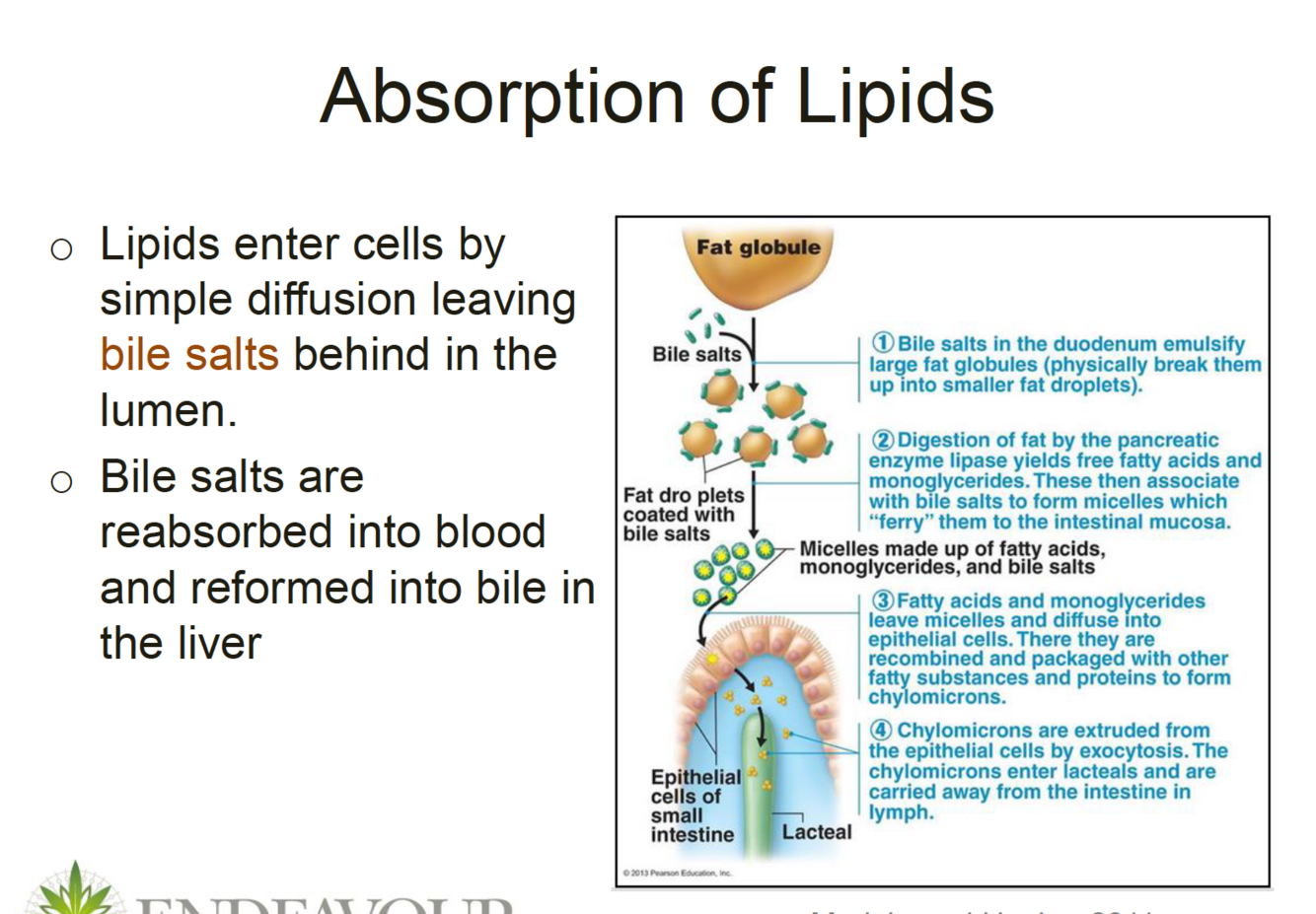
oDietary lipids are all absorbed by simple diffusion.
oAbsorption into epithelial cell:
- Long-chain fatty acids and monoglycerides: absorbed as part of micelles
- Small fatty acids: simple diffusion
oMovement out of epithelial cell
- Long-chain fatty acids and monoglycerides: chylomicrons into the lacteal of a villus.
- Small fatty acids: simple diffusion into blood
Extra info ** They are absorbed as part of micelles - when the lipids are in the gut and they have been emulsified by the bile they form these little structures called micelles and when they move into the epithelial cell by simple diffusion, they then reassemble themselves into chylomicrons. That’s how they move out of the epithelial cell.
How are electrolytes abosrbed by the small intestine?
There are specific process on the epithelial cells that are involved in absorbing electrolytes
electrolytes such as..
sodium
chloride, iodide and nitrate
Iron, magnesium, potassium and phosphate ions
Calcium
Are absorbed by diffusion and secondary active transport
Define how vitamins such as fat soluble, water soluble and B12 are absorbed in the small intestine?
oFat-soluble vitamins (A, D, E, and K):
•travel in micelles and are absorbed by simple diffusion
oWater-soluble vitamins (B and C):
•absorbed by diffusion
oB12 combines with intrinsic factor before it is transported into the cells
•receptor mediated endocytosis
** intrinsic factor Produced in the stomach to help absorb B12 in the small intestine
Explain water absorption in the small intestine
Absorption is by Osmosis
Osmosis from the lumen of the intestines through epithelial cells and into blood capillaries.
o Small intestine reabsorbs 8.3 liters
Functions of the large intestine
- Haustral churning, peristalsis, and mass peristalsis drive contents of colon into rectum.
- Bacteria in large intestine convert proteins to amino acids, break down amino acids, and produce some B vitamins and vitamin K.
- Absorbing some water, ions, and vitamins.
- Forming faeces and defecating (emptying rectum).
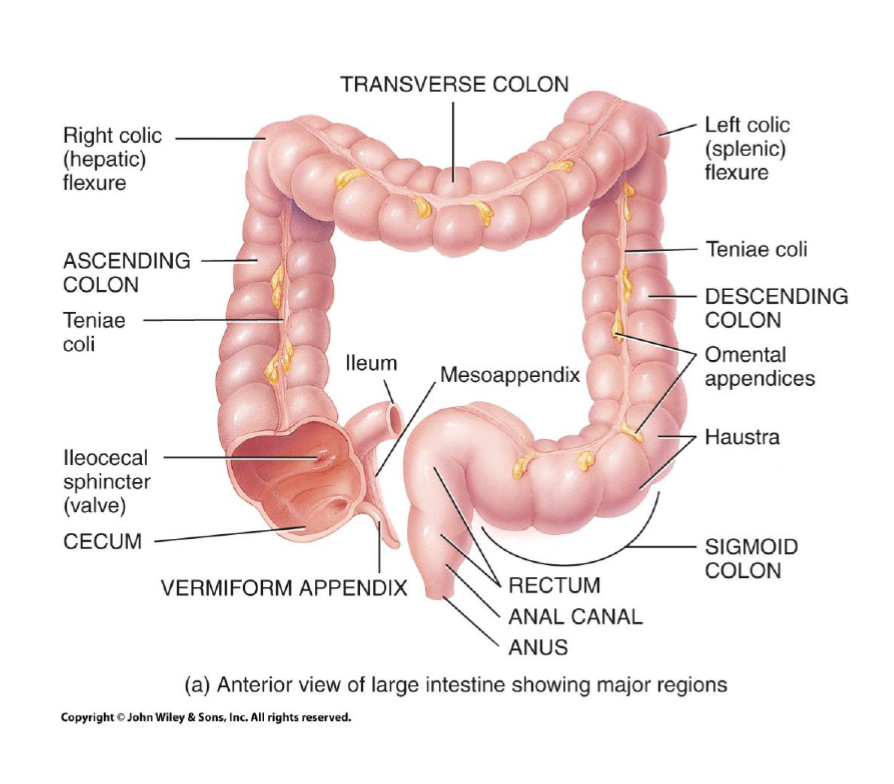
Anatomy of the large intestine - Name the divisions
Anatomical subdivisons :
- caecum
- Colon
- Rectum
- Anal canal
Appendix
Mechanical digestion in the large intestine
oMechanical movements:
•Haustral churning - Slow contracting pockets that mixes the contents locally: Slow haustral contractions that occur about every 30 minutes and last approximately 1 minute.
•Peristalsis: If we want to move the contents along the large intestine - propels the contents along
3 to 12 contractions per minute
•Mass peristalsis: 3 or 4 times a day, during or immediately after a meal
Chemical digestion in the large intestine
oBacterial fermentation:
- Undigested carbohydrates: into hydrogen, carbon dioxide and methane gas
- Flatulence
- Undigested proteins: into indole, skatole, hydrogen sulfide, and fatty acids
- Fecal odour and Urinary excretion
- Bilirubin (bile pigment): into simpler pigments-Stercobilin
- Fecal colour (brown poo)
•Vitamins K and B produced in the colon
Feces is..
Solid or semisolid chyme
Dietary fibers
Insoluble and soluble fibers and their benefits
oDietary fibers: indigestible plant carbohydrates
–cellulose, lignin, and pectin—found in fruits, vegetables, grains, and beans
–affect the speed of food passage through the GI tract
oInsoluble fiber: insoluble in water
–woody parts of plants (wheat bran, veggie skins)
–may help protect against colon cancer
o_Soluble fiber:_ soluble in water
–in beans, oats, barley, broccoli, prunes, apples, and citrus fruits.
–lowers blood cholesterol by preventing reabsorption of bile salts so liver has to use cholesterol to make more
What are the three phases of digestion
oThree overlapping phases:
- Cephalic phase
- Gastric phase
- Intestinal phase
* They are not seperate, they overlap and can happen at the same time! *
Explain the Cephalic phase of digestion
prepares the mouth and stomach for food that is about to be eaten.
oActivated by: The smell, sight, thought, or initial taste of food
oNeural centres: in the cerebral cortex, hypothalamus, and brain stem.
oThe facial and glossopharyngeal nerves:
•stimulate the salivary glands to secrete saliva
oVagus nerve: (stimulates the stomach)
ostimulate the gastric glands to secrete gastric juice
Explain the gastric phase
Begins when food arrives in the stomach.
Promote gastric secretion and gastric motility
Two regulations:
- Neural control
- Hormonal control
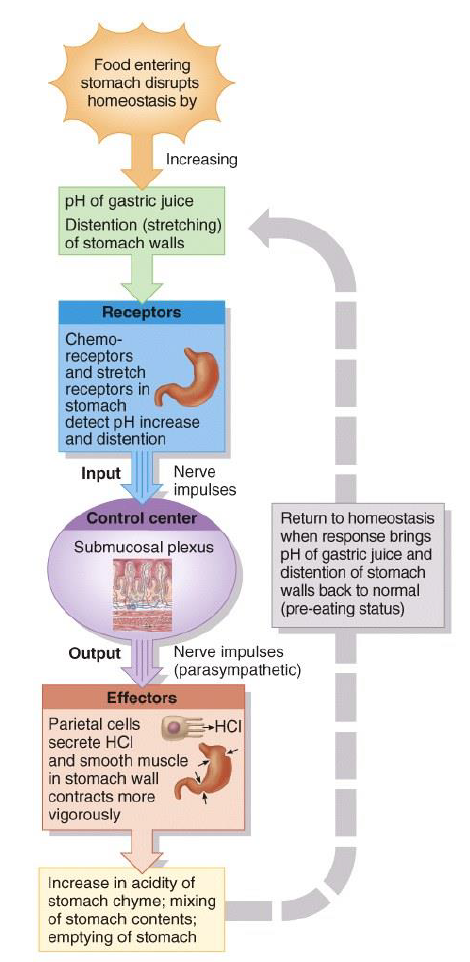
Explain neural control in the gastric phase of digestion
Food enters the stomach and disrupts PH of gastric juice and casues distension of the stomach (stretching of the stomach wall)
- Stretch receptors and chemoreceptors: in the wall of stomach detect this
- Nerve impulses are sent to Submucosal plexus
. Parasympatheitc nerve impulses are sent out releasing HCI
- In response = Vigorous peristalsis(mixing, churning and moving) and gastric juice secretions
- Gastric emptying
Explain the role of hormonal control in the gastric phases of digestion
oGastrin: released from G cells secretion of gastrin into bloodstream
oStimuli:
- Distension of the stomach by chyme,
- Partially digested proteins in chyme,
- High pH of chyme due to the presence of food in the stomach*
- Acetylcholine released from parasympathetic neurons.
* Gastrin release inhibited when pH of gastric juice drops below 2.0
The role of gastrin..
( gastrin is released as part of hormonal control in the gastric phase of digestion)
- Stimulates gastric glands to secrete large amounts of gastric juice.
- Strengthens the contraction of the lower oesophageal sphincter to prevent reflux of acid chyme into the oesophagus,
- Increases motility of the stomach, and relaxes the pyloric sphincter, which promotes gastric emptying.
Explain the intestinal phase of digestion and how is it regulated ?
oThe intestinal phase: Begins when food enters the small intestine.
oSlow the exit of chyme from the stomach. Promote digestion of food in small intestine
oTwo regulations:
- Neural control
- Hormonal control

-
Session 1 - Blood and the elements35
-
Session 2 - Haemostasis and blood groups16
-
Session 3 - Cardiovascular system - the heart27
-
Session 7 - Lymphatic and Immune System 140
-
session 8 - immune system28
-
Session 9 - Immunity system 238
-
Session 10 - Respiratory system31
-
Session 11 - Pulmonary ventilation30
-
Session 12 - Gas Transportation19
-
Digestive system47
-
session 14 - digestive system part 2 - Pancreas, Liver, Small Intestine32
-
Session 15 - Digestive System 3 – Small Intestine & Large Intestine27
-
Urinary system 1 - the kidneys26
-
session 17 - Urinary system - glomerular filtration15
-
Session 18 - Urinary system - Tubular Reabsorption and Secretion37
-
Session 19 - Urine Production, Storage and Elimination61
-
Session 20 - male repro14
-
session 431
-
session 528
-
session 633



