action potential phases
- rapid depolarisation
- plateau
- repolarisation
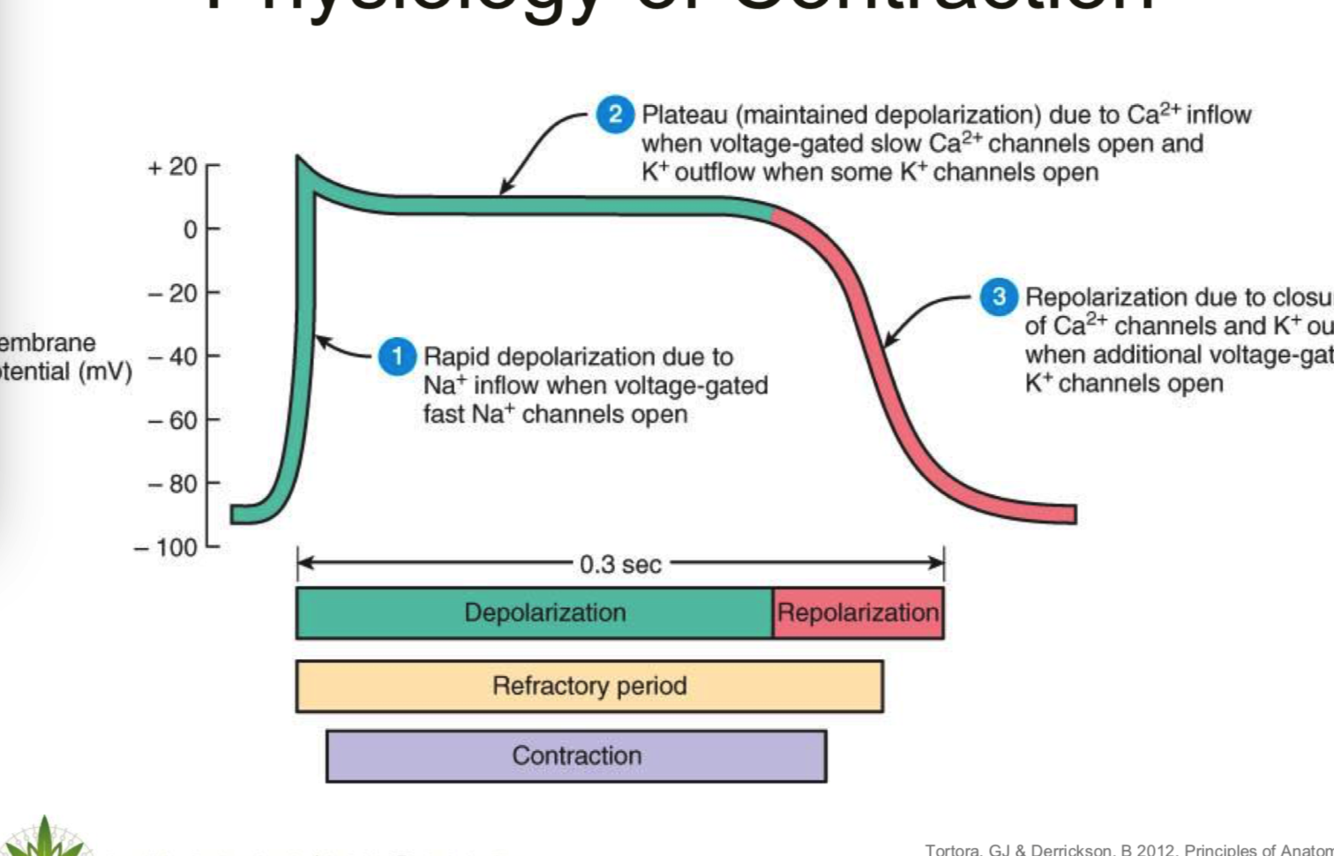
what occurs dueing depol of the heart
fast sodium Na+ channels open for rapid depol
plateau pahse of the heart
- slow calcium channels open
- calcium binds to troponin
- potassium channels open (K+)
repolarisation of the heart
calcium channels close
potassium channels open
This then goes back to resting membrane potential
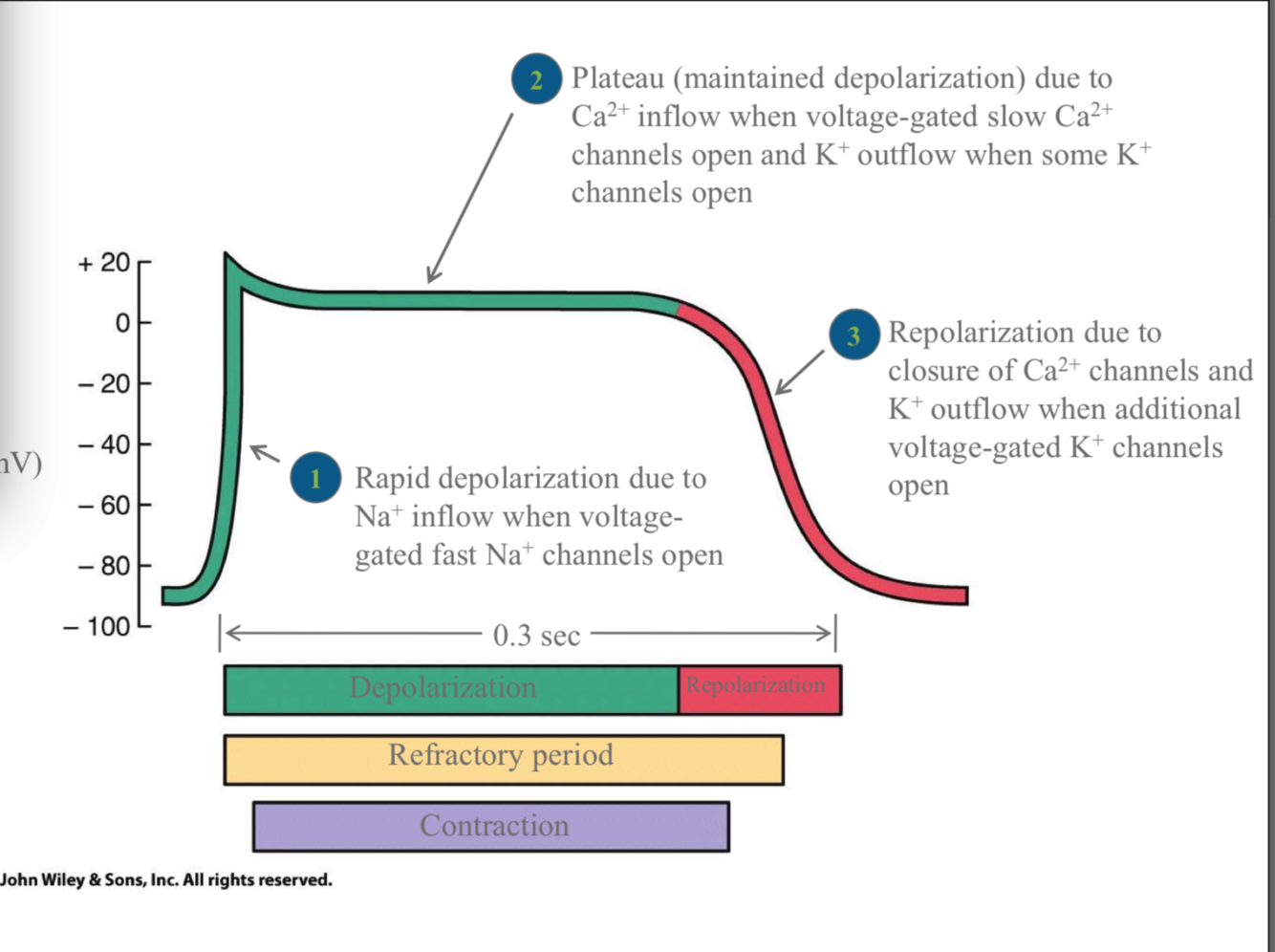
refractory period
Long Period after a contraction which doesn’t allow a second contraction to occur
- Tetanic contraction therefore not allowed - this is when they just remain contracted
*
electrocardiogram (ECG)
- electrical currents of the heart detected on skin surface
- is a sum of all action potentials of active cells
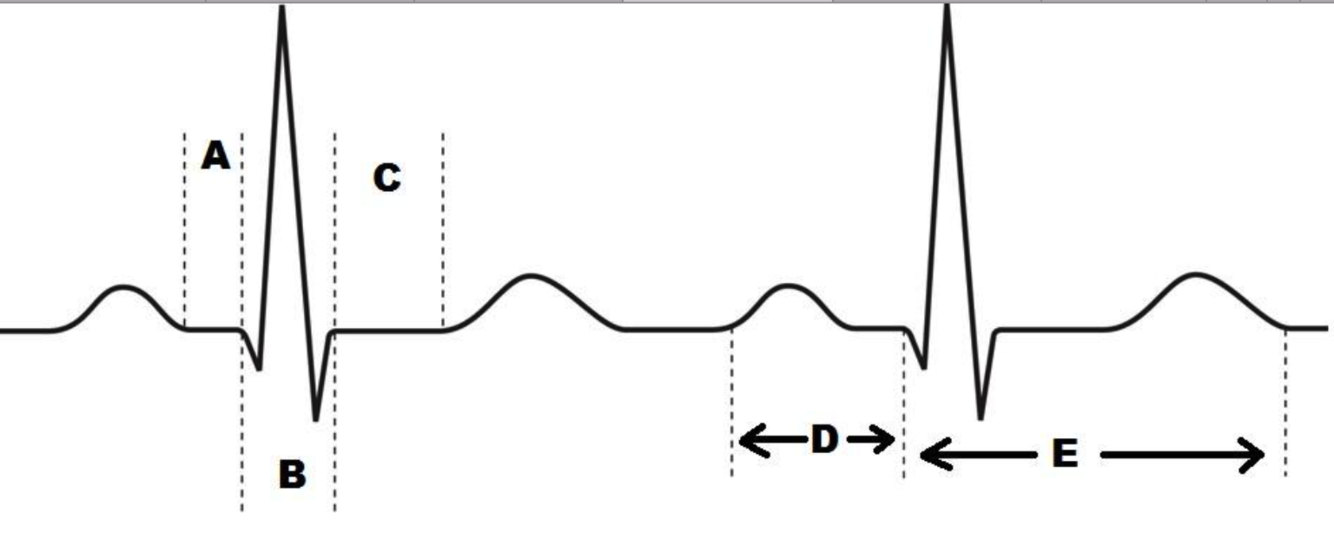
- A - P-Q segment
- B - QRS complex
- C - S-T segment
- D - P-Q interval
- E - Q-T interval
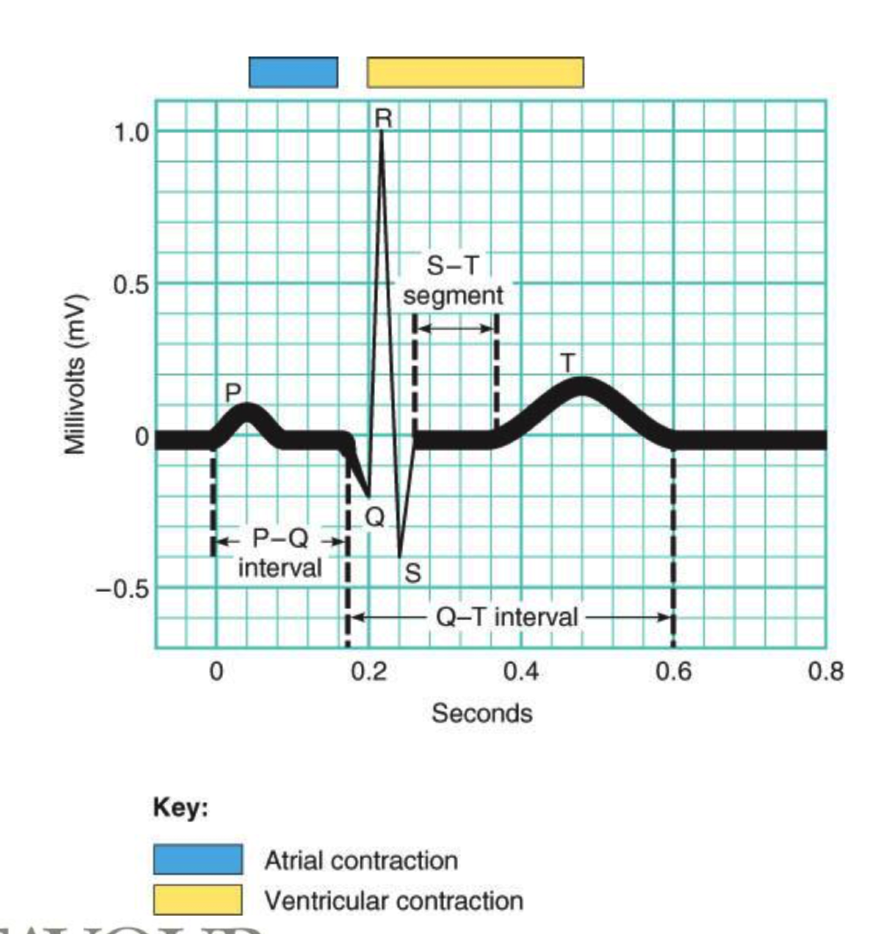
P wave represents
atrial depolarisation
- impulse from SA node over atria
QRS complex represents
ventricular depol
- spread of impulse through ventricles
T wave represents
ventricular repol
As atrial fibers depolarise the P wave appears. After the P wave begins..
The atria contract
pathway of electrical current
- SA node
- AV node
- slight delay here to let atria contract
- bundle branches
- perkinje fibres
three phases of cardiac cycle
- atrial systole
- 0.1 sec
- atria contract and blood through AV valves into ventricles
- ventricular systole
- 0.3 sec
- ventricles contract and AV valves close
- ventricular ejection
- relaxation period
- 0.4 sec
- ventricular diastole
- ventricular filling
End diastolic volume is
the amount of blood in the ventricles at the end of diastole
define isovolumetric contraction
- AV and SL valaves are all closed
- ventricular volume remains the same
ventricular ejection
- pressure rises and SL valaves open = blood ejection from heart
end systolic volume ESV
amount of blood in the left ventricle at the end of systole
stoke volume
volume ejected per beat from each ventricle
ventricular pressures
- maximum BP in aorta is 120mmHg
- max in pulmonary trunk 30mmHg
why is left ventricular wall thicker
ejects same amount of blood with more force
auscultation
- listening to sounds within body
- can hear heart sounds which result from turbulent blood flow and valve closure
Four heart sounds
- S1 (lubb)
- closing of AV valves
- S2 (dupp)
- closing of SL valves
- S3
- rapid ventricular filling
- S4
- during atrial systole
Can only hear sound 1 and 2 in normal heart
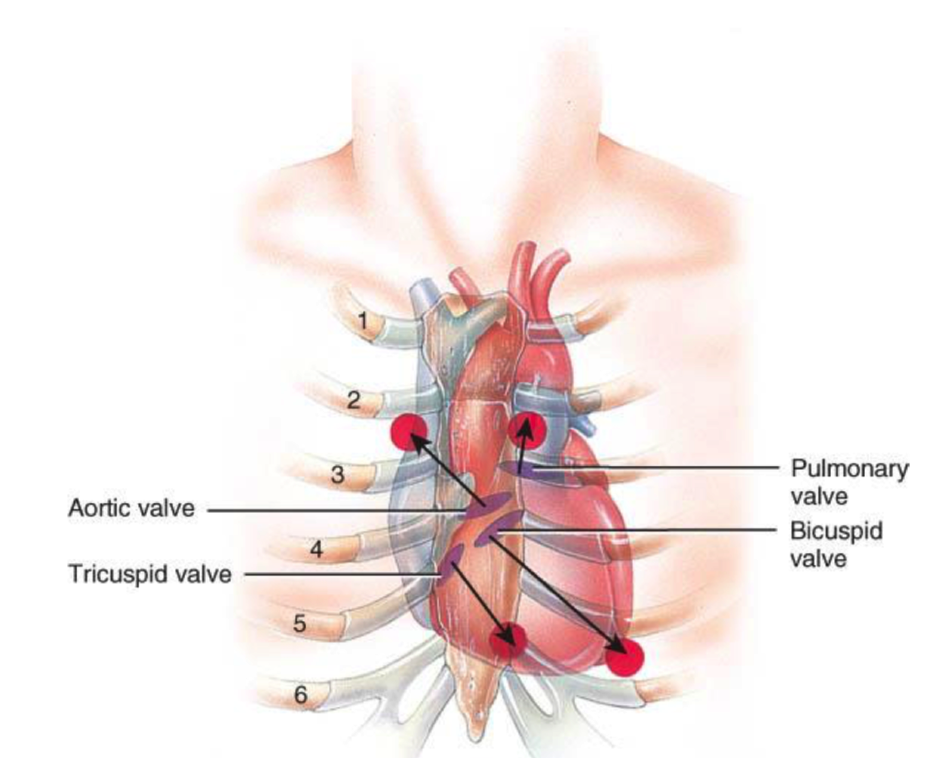
Heart murmur
Abnormal heart sound
- some can be from backward blood movement in the heart



-
Session 1 - Blood and the elements35
-
Session 2 - Haemostasis and blood groups16
-
Session 3 - Cardiovascular system - the heart27
-
Session 7 - Lymphatic and Immune System 140
-
session 8 - immune system28
-
Session 9 - Immunity system 238
-
Session 10 - Respiratory system31
-
Session 11 - Pulmonary ventilation30
-
Session 12 - Gas Transportation19
-
Digestive system47
-
session 14 - digestive system part 2 - Pancreas, Liver, Small Intestine32
-
Session 15 - Digestive System 3 – Small Intestine & Large Intestine27
-
Urinary system 1 - the kidneys26
-
session 17 - Urinary system - glomerular filtration15
-
Session 18 - Urinary system - Tubular Reabsorption and Secretion37
-
Session 19 - Urine Production, Storage and Elimination61
-
Session 20 - male repro14
-
session 431
-
session 528
-
session 633



