The shoulder joint is very mobile and hence unstable; what is the chance of a young person re-dislocating their shoulder after a traumatic first dislocation?
80%
Define a shoulder dislocation
Humeral head loses its articualtion with glenoid cavity of scapula
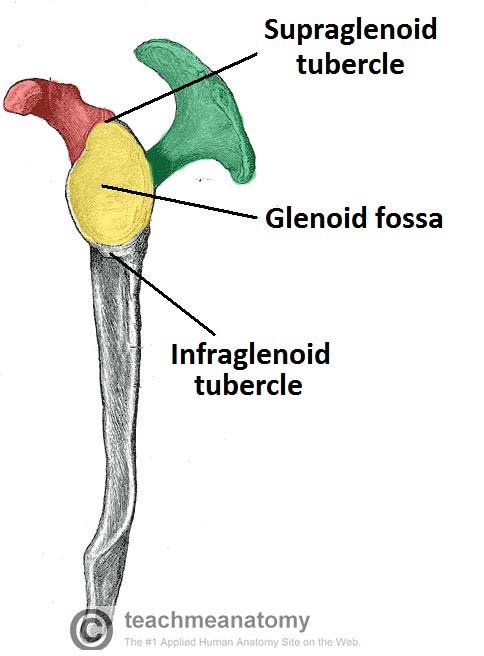
The type of shoulder classification is classified based on the relation of the humeral head to the….
Infraglenoid tubercle
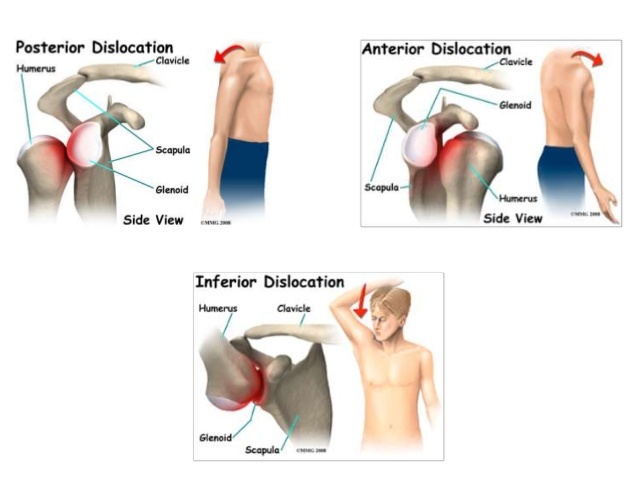
State the three types of shoulder dislocation
Which is most common
- Anterior
- Posterior
- Inferior (luxatio erecta. Rare)
Anteriorinferior (usually just termed anterior) is most common; accounting for ~95% of dislocations
Describe the likely mechanisms of injury for the following:
- Anterior dislocation
- Posterior dislocation
- Inferior dislocation
Anterior dislocation
- Direct force to posterior shoulder
- Injury in which shoulder is forced into extension, abduction and externally rotation e.g. fall on oustretched hand
Posterior
- Direct blow to anterior shoulder
- Injury in which shoulder is forced into flexion, adduction and internal rotation
- Typically caused by seizures or electrocution
Inferior
- Hyperabduction
- Axial force on overhead arm
State some risk factors for shoulder dislocation
- Injury
- Seizure
- Previous dislocation
- Repetitive shoulder motion causing laxity of ligaments
State symptoms of shoulder dislocation
- Pain
- Acute reduced mobility and range of motion
- Feeling of instability
What might you find on clinical examination of someone with:
- Anterior dislocation of shoulder
- Posterior dislocation of shoulder
Anterior Dislocation
- Shoulder looks square
- Anterior bulge of humeral head
- Arm abducted and externally rotated
Posterior Dilocation
- Arm held internally rotated
- No external rotation possible
What must you assess when there has been a shoulder injury?
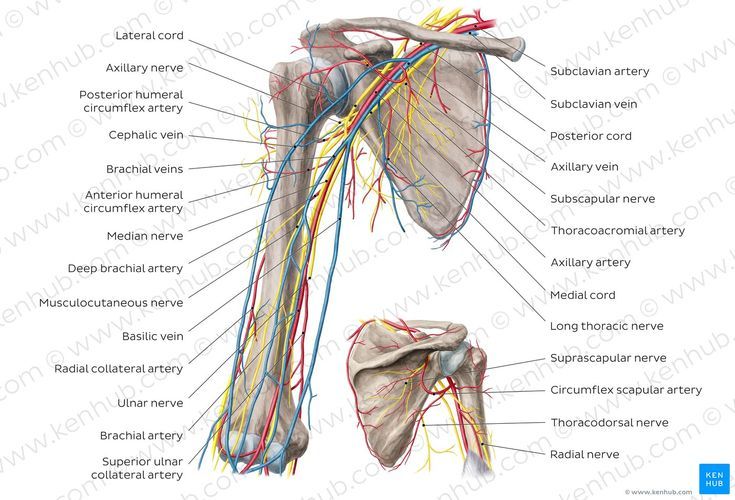
Assess neurovascular status. Axillary and suprascapular nerves are especially at risk
State some injuries associated with shoulder dislocations
Bony injuries
- Bony Bankart lesions
- Hill-Sachs lesions
- Fracture of greater tuberosity
- Fracture of surgical neck of humerus
Labral, ligamentous and rotator cuff injuries
- (soft) Bankart lesions
- Glenohumeral liagment avulsion
- Rotator cuff injuries
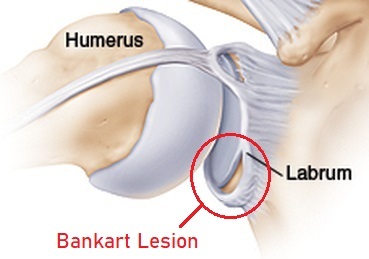
What is a Bankart lesion?
What is a bony Bankart lesion?
- Bankart lesion= avulsion of anteriorinferior glenoid labrum and inferior glenohumeral ligament
- Bony bankart= avulsion of anteriorinferior glenoid labrum and inferior glenohumeral ligament alongside a fracture of the anterior inferoir glenoid cavity of the scapula
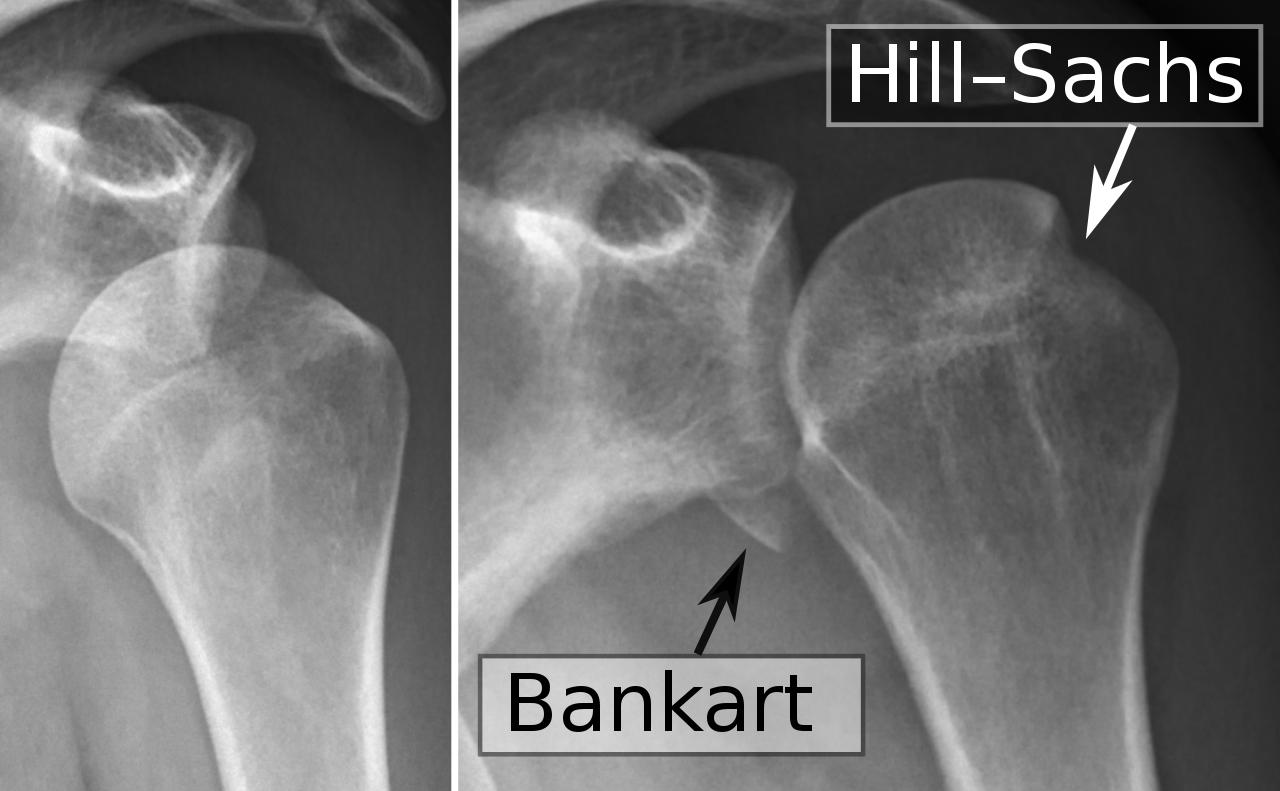
What is a Hill Sach’s lesion?
Impaction injury to the chondral surface of the posterior and superior portions of humeral head (present in 80% traumatic dislocations)
What investigations would you do if you suspect shoulder dislocation?
- X-ray shoulder (in particular a trauma shoulder series is required: anterior-posterior, Y-scapular [lateral] and axial views)
- MRI shoulder (if suspect labral or rotator cuff injuries)
What type of shoulder dislocation does this x-ray show? (AP view)
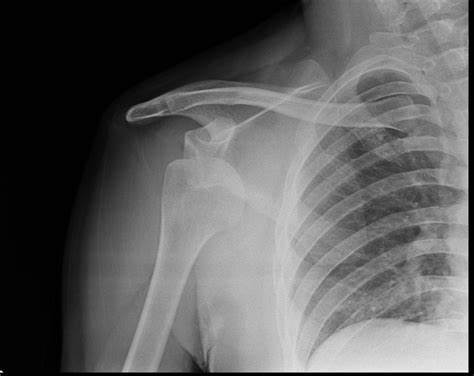
Anterior dislocation
Typical X-ray findings in anterior shoulder dislocation include:
- AP view: the humeral head will lie medial and inferior to the glenoid fossa.
- Lateral view: the humeral head will lie anterior and inferior to the glenoid fossa.
- The humeral head will also lie inferior to the coracoid process and this is typically most obvious in the lateral view.
What type of shoulder dislocation does this x-ray show? (AP view)
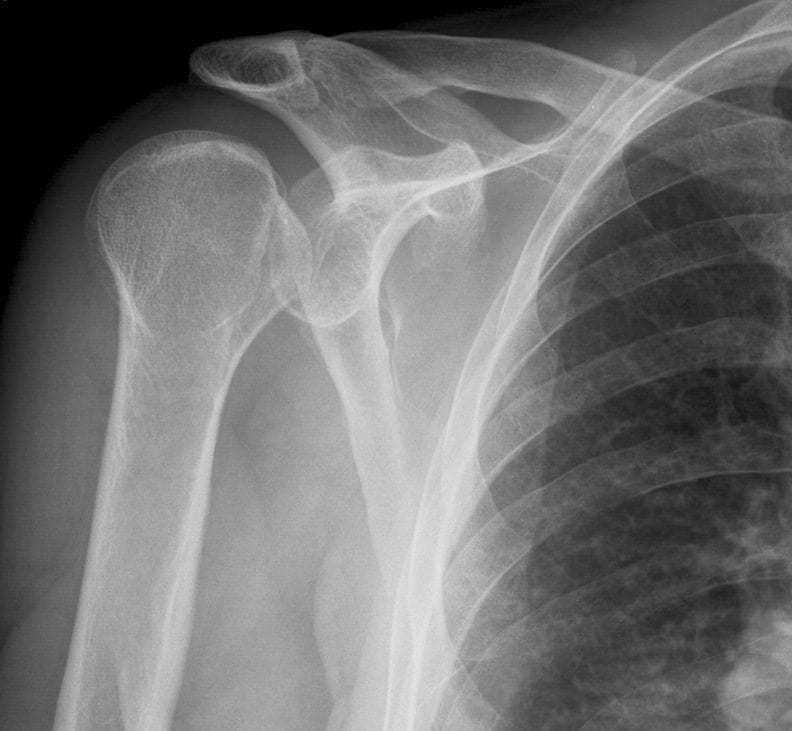
Posterior shoulder dislocation
Typical X-ray findings in posterior shoulder dislocation include:
- AP view: the glenohumeral joint will be widened and the humeral head will take on a classic “light bulb” appearance due to forced internal rotation of the humerus. Also be widened joint space.
- Lateral view: the humeral head will lie posterior to the glenoid fossa.
Discuss the management of shoulder dislocations
When they first present do A-E as often injuries occur following trauma so ensure pt is stable and assess for other injuries.
Mainstay of treatmen is “reduction, immobilisation & rehabilitiation”
- Closed reduction
- Immobilise joint in broad-arm sling for ~2weeks (may need longer for posterior)
- Rehabilitation- physiotherapy to restore ROM, function and strenthen rotator cuff muscles & other pericapsular muscles
- Surgery may be required for:
- Ongoing shoulder pain
- Joint instability
- Large Hill-Sachs defects
- Large (bony) Bankart lesions
*NOTE: must assess neurovascular status pre- and post- reduction
State some potential complications of shoulder dislocations
- Chronic pain
- Limited mobility
- Stiffness
- Reoccurence
- Instablity
- Dead arm syndrome
- Can’t trust arm
- Feels like shoulder pops out
- Adhesive capsulitis
- Nerve damage
- Rotator cuff injry
- Degeneratvie joint disease e.g. OA
What is dead arm sydnrome?
Sudden sharp or ’paralyzing’ pain when the shoulder is moved forcibly into a position of maximum external rotation in elevation or is subjected to a direct blow. The patient is no longer able to perform a throwing movement with the control and the velocity that he achieved before the injury due to pain and numbness. It’s also called recurrent transient subluxation of the shoulder
Discuss the Stanmore classification for shoulder instability
Idea that there are broadly 2 reasons why shoulder becomes unstable:
- Structural- capsulolabral mechanism has been damaged by injury or is already deficient
- Non-structural- unbalanced muscle recruitment around shoulder
Stanmore classification uses three polar groups to classify shoulder dislocations: traumatic structure, atraumatic structural and muscle patterning non structural.
However, there can be much overlap between groups therefore Bayley’s triangle is used to represent this idea of continuity between three groups.
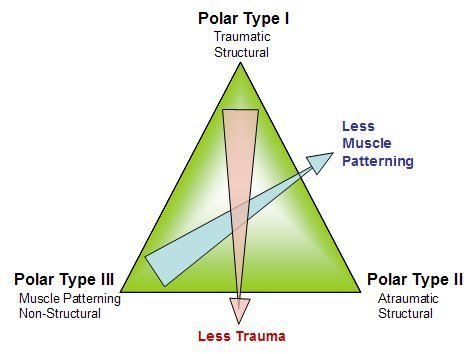
Suggest how each of the following categories of shoulder dislocation, from Stanmore classification, may present:
- Traumatic structural
- Atraumatic structural
- Muscle patterning
I Traumatic structural
• significant trauma
• often a Bankart’s defect
• usually unilateral
• no abnormal muscle patterning
II Atraumatic
• no trauma
• structural damage to the articular surfaces
• capsular dysfunction
• no abnormal muscle patterning
• not uncommonly bilateral
III Habitual non-structural (muscle patterning)
• no trauma
• no structural damage to the articular surfaces
• capsular dysfunction
• abnormal muscle patterning
• often bilateral
What might suggest that a shoulder dislocation is a non-structural muscle patterning (type III) dislocation?
Discuss the management for type III dislocations?
Pt features:
- High Beighton’ score
- Winging of scapula
- Lacks muscle coordination
- Lacks proprioception
- Underlying disorder e.g. Marfan’s, Ehlers-Danlos
Usual “reduction, immobilse, rehabilitation” but with lots and lots of PHYSIO
What two tests can we do for shoulder instability?
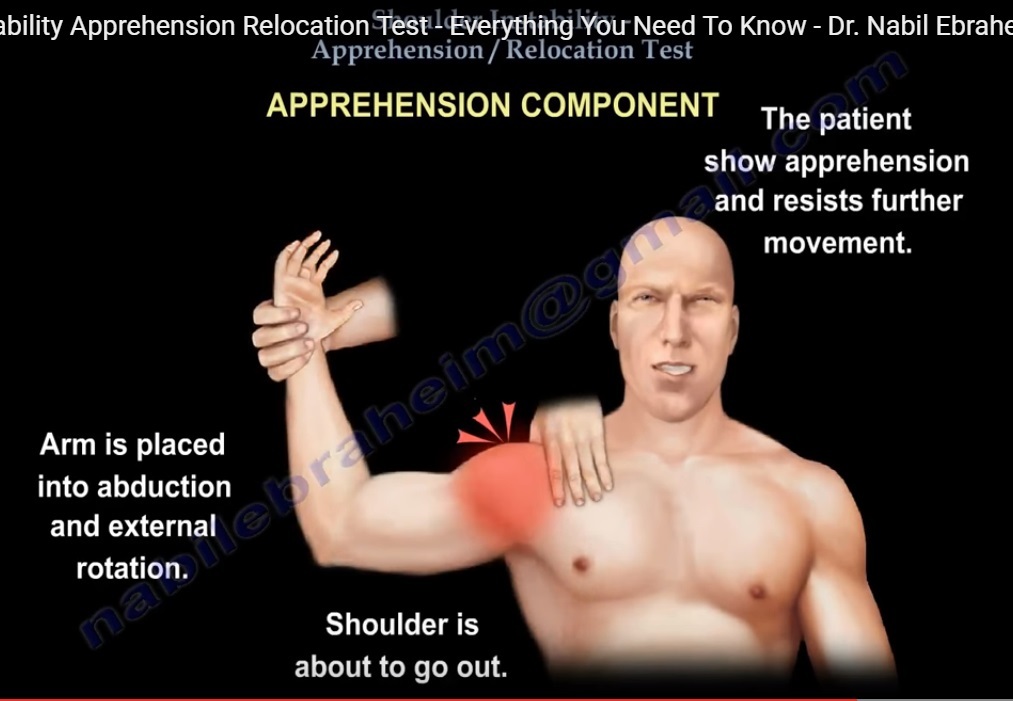
- Apprehension test: tests for glenohumeral capsule integrity (e.g. is there a labral tear) and anterior shoudler instability and
- Jobes relocation test:
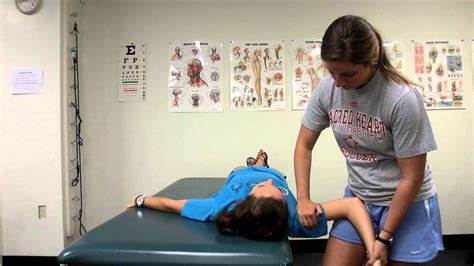
Explain how to do the apprehension test
The patient can be supine or sitting (if sitting use one hand to stabilise back of shoulder). The therapist will flex the patient’s elbow to 90 degrees and abducts the patient’s shoulder to 90 degrees, maintaining neutral rotation. The examiner then slowly applies an external rotation force to the arm to 90 degrees while carefully monitoring the patient[1]. Patient apprehension from this maneuver, not pain, is considered a positive test
Explain how to do Jobe’s relocation test
Following positive result from apprehension test, apply posterior force to the shoudler. If pt shows relief/reduced apprehension this is a positive Jobe’s relocation test.