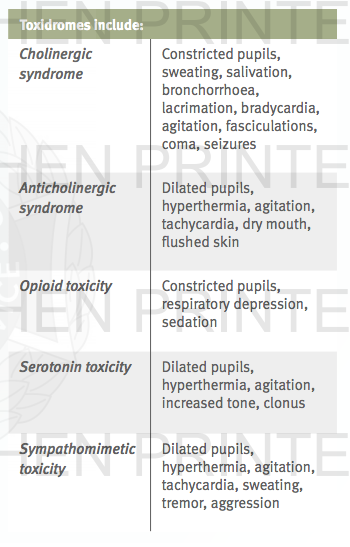
Toxidrome clinical manifestation summary (cholinergic, anticholinergic, opioid toxicity, serotonin toxicity, sympathomemetic toxicity)
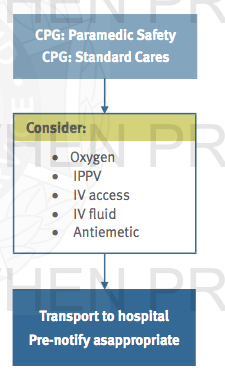
Benzodiazapine overdose managment
- 02
- IPPV
- IV access
- IV fluid
- Glucose
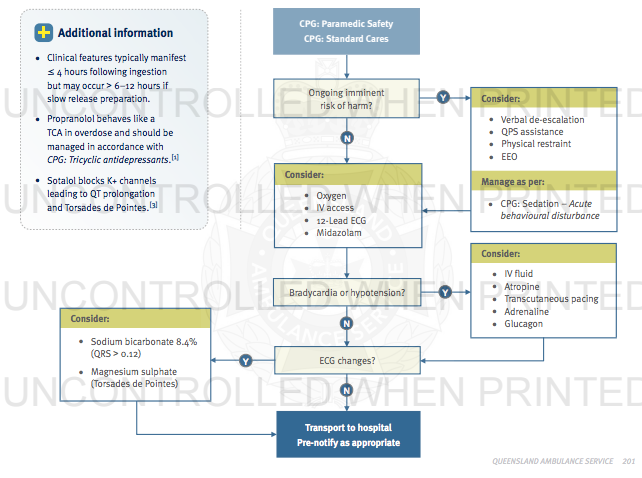
Beta blocker overdose management
Beta blocker cardiovascular and systemic affects
Cardiovascular:
- Bradycardia
- Heart block
- Hypotension
- Cardiogenic shock
Systemic effects:
- Hypoglycemia/hyperglycemia
- Hyperkalemia
- Bronchospasm
- Seizures
- Coma
Calcium channel blocker cardiovascular and systemic effects
Cardiovascular:
- Bradycardia
- Heart block
- Hypotension
- Cardiogenic shock
Systemic affects:
- Seizures
- Coma
- Hyperglycemia
- Metabolic acidocis
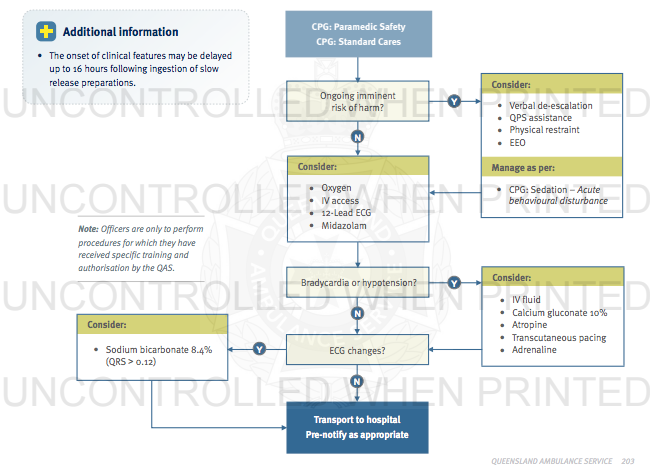
Calcium channel blocker overdose management
Gamma-hydroxybutyrate presentation
- Euphoria
- Vomiting
- Sweating
- Miosis
- Respiratoey depression
- Coma
- Bradycardia
- Rapid onset of coma - rousable with stimulus
- Spontaneous recover in 2-4 hours typical
Gamma-hydroxybutate managment
Paraqaut poisoning featurs (Early, delayed and late)
Immediate:
- GI upset
Early hours:
- Oral corrosive injury
- Metabolic acidosis
- Hypotension
Delayed (24-48 hours)
- Progression of acidosis
- Multi-organ failure
- Coma
- Seizures
If patient survives past 48 hours may develope pulmonary fibrosis
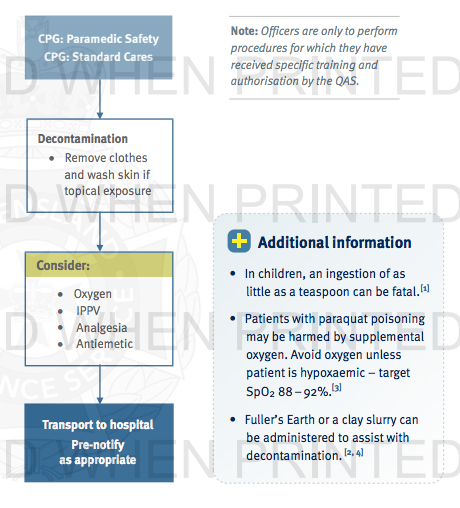
Paraquat poisoning management
Agents associated with Serotonin toxicity
- Antidepressants/antiepileptics
- Analgesics
- Antiemetics
Clinical features of serotonin toxicity (neurological, autonomic, neuromuscular)
Neurological dysfunction:
- Anxiety, agitation
- Delirium
- Seizure
- Coma
Autonomic dysfunction:
- Flushed skin, dilated pupils, diaphoresis
- Tachycardia, hypertension
- Hyperthermia
- Diarrhoea
Nueromuscular dysfunction:
- Tremor
- Clonus
- Hyperrflexia
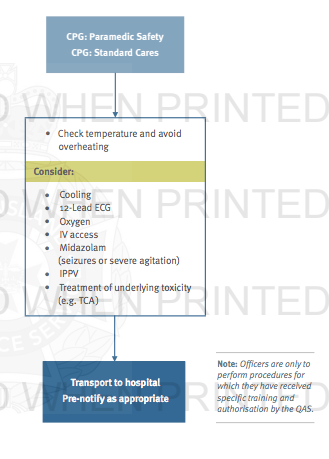
Serotonin syndrome managment
Trycyclic antidepressant clinical features
Anticholinergic:
- Agitation and delirium
- Dilated pupils
- Dry warm skin, flushed
- Hyperthermia
- Tachycardia
Neurotoxicity:
- Sedation
- Seizures
- Coma
Cardiotoxicity:
- Tachycardia
- Hypotension
- Broad comples arryhtmias
- Bradycardia (late)
ECG changes:
- Prolonged PR, QRT and QT interval
- Large terminal R wave in aVR
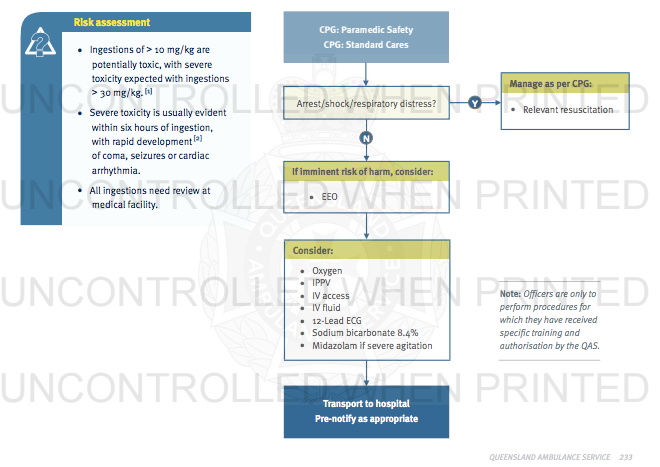
TCA management
Symptoms suggesting severe systemic envenomation in large black spider or funnel-web spider bites (may occur within 10 minutes) - general, autonomic and neurological
- General agitation, nausea, vomiting, headache
- Neurological: muscle spasm, numbness/tingling in and around mouth and altered mental status
- Autonomic: diaphoresis, tachycardia, salivation, piloerection, salivation, lacrimation
- Cardiovascular: BP and HR out of nomral limit (up or down) and pulmonary oedema
Redback spider clinical features
Local:
- Pain and fangs at injection site
- Radiation of pain to proximal limb
- Localised piloerection and redness
- Localised diaphoresis
Systemic:
- Nausea, vomiting headaches
- Malaise and lethargy
- Generalised pain
- Less common: hypotension, irritability and agitation, fever, paraesthesia, muscle spasms, priaprism
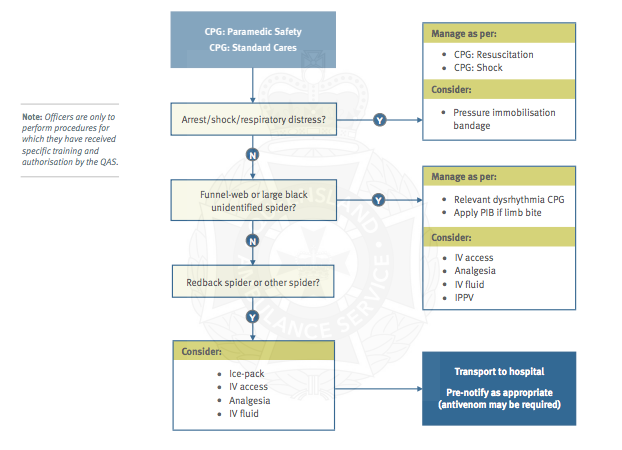
Spider bite managment
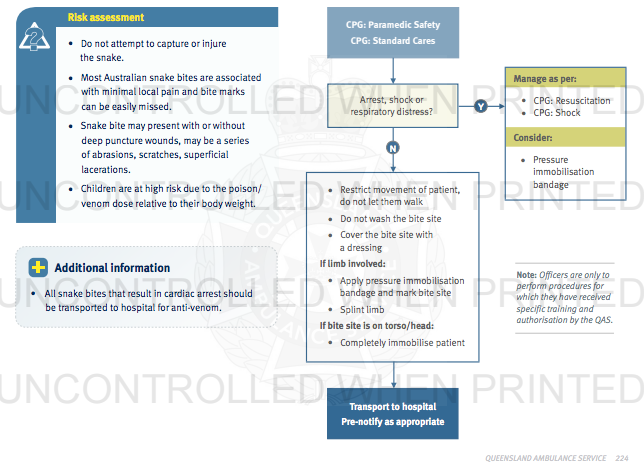
Systemic effects and non-specific effects of snake bites
Non-specific:
- Nausea
- Vomiting
- Headache
- Abdominal pain
- Diarrhoea
- Diaphoresis
Systemic effects:
- Neurotoxicity (facial drooping, drooling, paralysis)
- Coagulopathy (bleeding from nose and gums etc)
- Myotoxicity (damage to skeletal muscles)
- Renal impairment/failure
Snake bite management
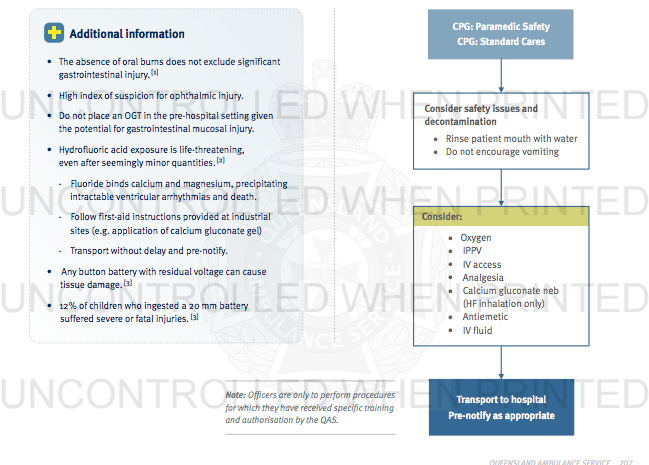
Corrosive Agent management
Acid versus base burns
Acids cause damage via coagulative necrosis. The eschar formation limites the depth of penetration.
Alkali substances cause liquifactive necrosis resulting in an ongoing deeper penetration despite an initial benign appearance.
Organophosphate/cholinergic poisons mechanism of action
Inhibit acetylcholinesterase, increasing the action of acetylcholine at parasympathetic and presynaptic sympathetic ganglion receptors - can lead to cholinergic syndrome.
Effects of cholinergic poisoning
Muscarinic effects (DUMBBELS)
- Diarrhoea
- Urination
- Miosis
- Bronchorrhoea/bronchospasm
- Bradycardia
- Emisis
- Lacrimation
- Salivation
Nicotinic excess:
- Fasiculations
- Tremor
- Muscle weakness
- Respiratory msucle paralysis
Central effects:
- Agitation
- Seizures
- Coma



-
Topic 1 - Cardiac Arrest34
-
Topic 2 - ALOC16
-
Topic 3 - Dyspnoea37
-
Topic 4 - Shock6
-
Topic 5 - Chest pain28
-
Topic 6 - Trauma33
-
Topic 7 - Endocrine22
-
Topic 9 - Environmental/Sepsis/Infection26
-
Topic 8 - Obstetrics61
-
Topic 10 - Posoning/Overdose40
-
Topic 11 - Pediatrics/Geriatrics36
-
Topic 12 - Mental Health6



