3 considerations in prehospital trauma by-pass
- Mechanism of Injury
- Pattern of Injury
- Vital signs
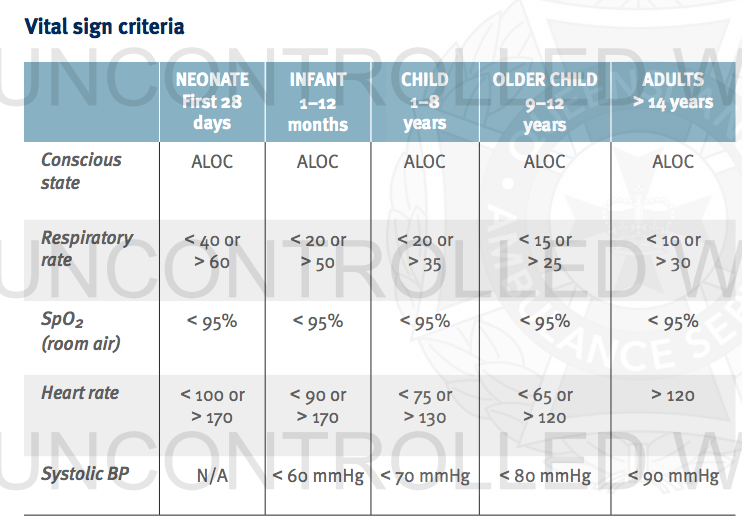
Trauma bypass vital sign criteria
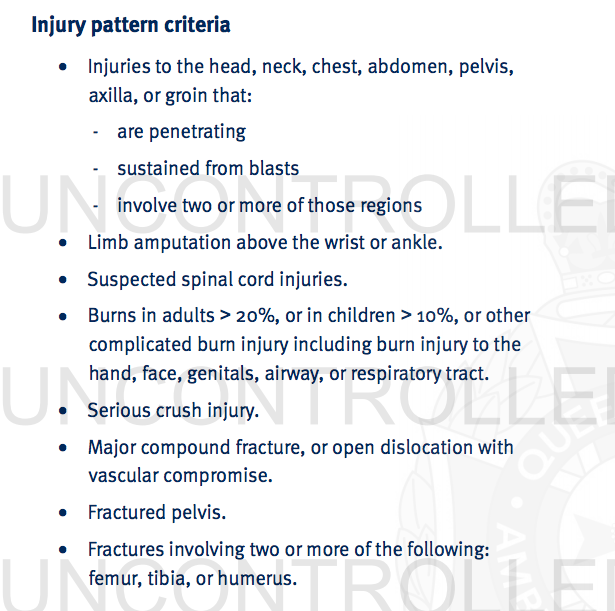
Injury pattern criteria
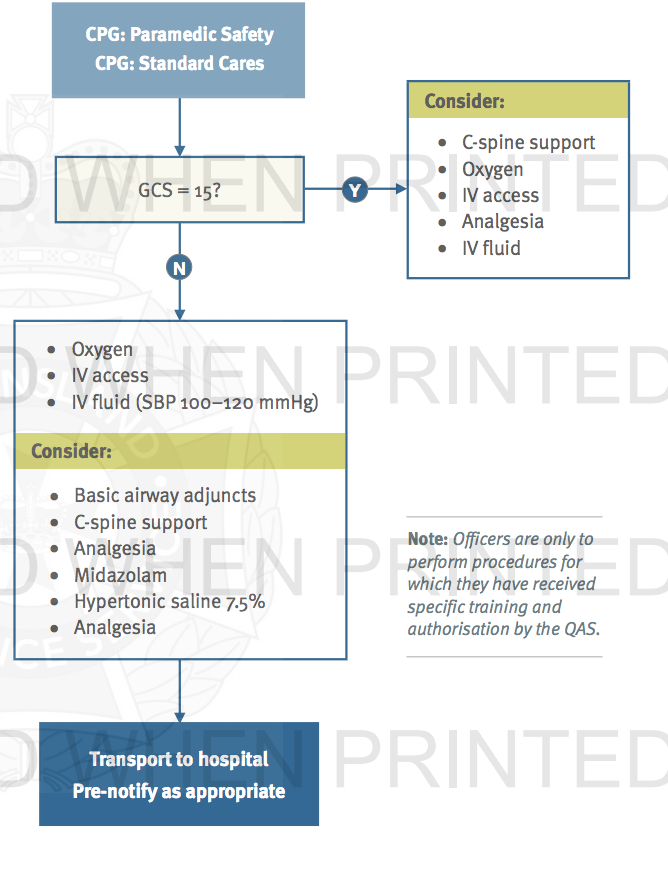
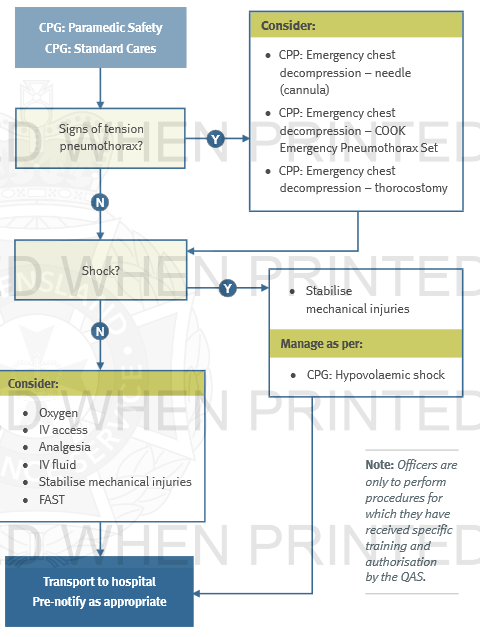
Trauma bypass guideline
If any of the vital sign or pattern of injury criteria are present, the patient should be transported to a major trauma service if there is one within 45 minutes road transport time - IF NOT - should be taken to regional trauma service if within 45 minute road transport time - IF NOT - take to closest available hospital and notify comms to organise areomedical retreival at hospital
Facility choice in traumatic cardiac arrest
- Take to major trauma centre only if within 15 minutes of scene - otherwise closest available facility
Cushings triad
- Bradycardia
- Hypertension
- Irregular respirator pattern
- Indicates raised ICP and imminent herniation
TBI management
Goals in prehospital care of TBI
- Reduce secondary hypoxic injury
- Reduce acidocis
- Prevent hypotension
Neurogenic versus spinal shock
SPINAL SHOCK - transient condition following acute cord injury charecterised by flaccid paralysis below lesion. It will often resolve over months and reflexes will return to normal in most instances
NEUROGENIC SHOCK - Loss of vasomotor tone, resultant in hypotension and bradycardia. Usually in injuries T5 and above (site of sympathetic outflow)
NEXUS C-spine criteria
- No posterior midline c-spin tenderness
- No evidence of intoxication
- No ALOC
- No distracting injuries
- No focal neurological deficit
Chest Injuries - general management
Grey Turner’s, Kehr’s and Cullen’s sign
GREY TURNERS - bruising of the flanks which indicates retroperitoneal bleeding
CULLEN’s - superficial edema and bruising in the subcutaneous fatty tissue around the umbilicus. Indicates retroperitoneal and intra-abdominal bleeding
(Cullen’s and Grey Turner’s sign are often late indicators of bleeding)
KEHR’S SIGN - left shoulder tip pain associated with peritoneal irritation (often bleeding)
Fluid therapy in abdominal trauma
- SBP of >90 mmHg or minimum amount required to maintain radial pulse
Abdominal injuries - management
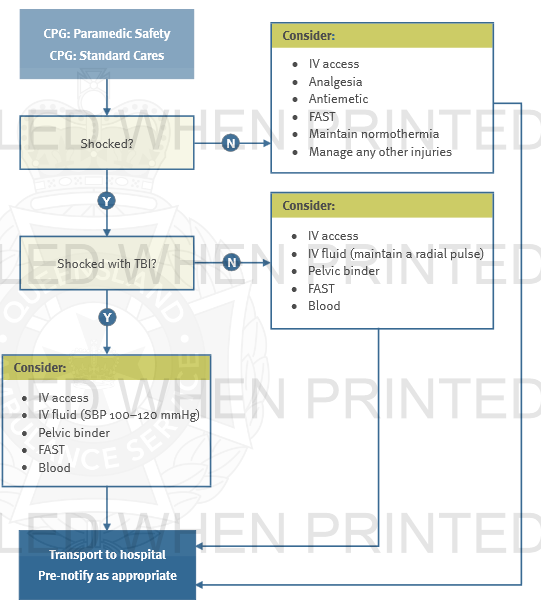
General management principals in eye injuries
- Irrigation with saline for chemical or biological fluid exposure, foreign body or burns
- Flush from medial aspect with injured eye facing down
- Protect eye with shield
- Antiemetic administration (vomiting causes raised intraoccular pressure)
- Position patient head up
- Significant eye injury may be present despite normal vision and minimal symptoms
Assessment of eye injuries
- One eye at a time
- Count fingers and if successful:
- Motion and light perception
- Do not delay standard cares
Crush injury, compartment syndrome and crush syndrome
Crush Injury - localised tissue injuryt from compressive force
Compartment Syndrome - compromised perfusion to tissues within an anatomical compartment due to increased pressure. Can lead to necrosis, parmenant impairment and crush syndrome
Crush syndrome - systemic resonse from application of a compressive force of significant force and duration to cause widespread ischemia and necrosis of soft tissue. This leads to increased permeability of membranes and the release of potassium, enzymes and myoglobin into systemic circulation occurs. It is characterised by rhabdomyolysis, lactic acidosis, hyperkalemia, shock, dysrythmias and death
Compartment syndrome characteristics
- Palpable tension or swelling of an anatomical compartment
- Pain disproprtionate to the injury
- Pain on passive stretching of muscles within a compartment
- Parasthesia of skin and paresis of muscles
- Pallor of skin over compartment
- Diminishing distal pulses
Risk assessment in crush injury
- Anticipate crush syndrome on removsal of compressive force
- Anticipate hypovolemic shock on removal of compressive force
- Chest involvment means immediate release of compressive force
Contraindications for probe removal in Taser incidents
- Eyes
- Face
- Neck
- Genitals
Transport indications in Taser incidents
- Probes cannot be removed
- Patient requries psychiatric evaluation
- Other injuries
- Patient effected by substance other than alcohol
Taser incident general management
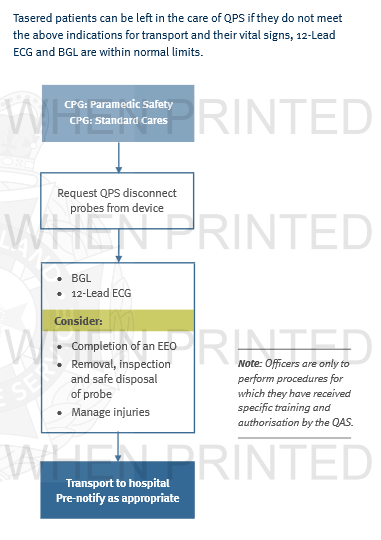
Secondary injuries from muscle contractions during Taser use
- Fractures
- Spinal injuries
- Head injuries
- Other soft tissue injuries
- Hyperthermia
Contraindicatons for cervical collar use
- Surgical airway
- Penetrating neck trauma

-
Topic 1 - Cardiac Arrest34
-
Topic 2 - ALOC16
-
Topic 3 - Dyspnoea37
-
Topic 4 - Shock6
-
Topic 5 - Chest pain28
-
Topic 6 - Trauma33
-
Topic 7 - Endocrine22
-
Topic 9 - Environmental/Sepsis/Infection26
-
Topic 8 - Obstetrics61
-
Topic 10 - Posoning/Overdose40
-
Topic 11 - Pediatrics/Geriatrics36
-
Topic 12 - Mental Health6



