US Flashcards

(37 cards)

1
Q

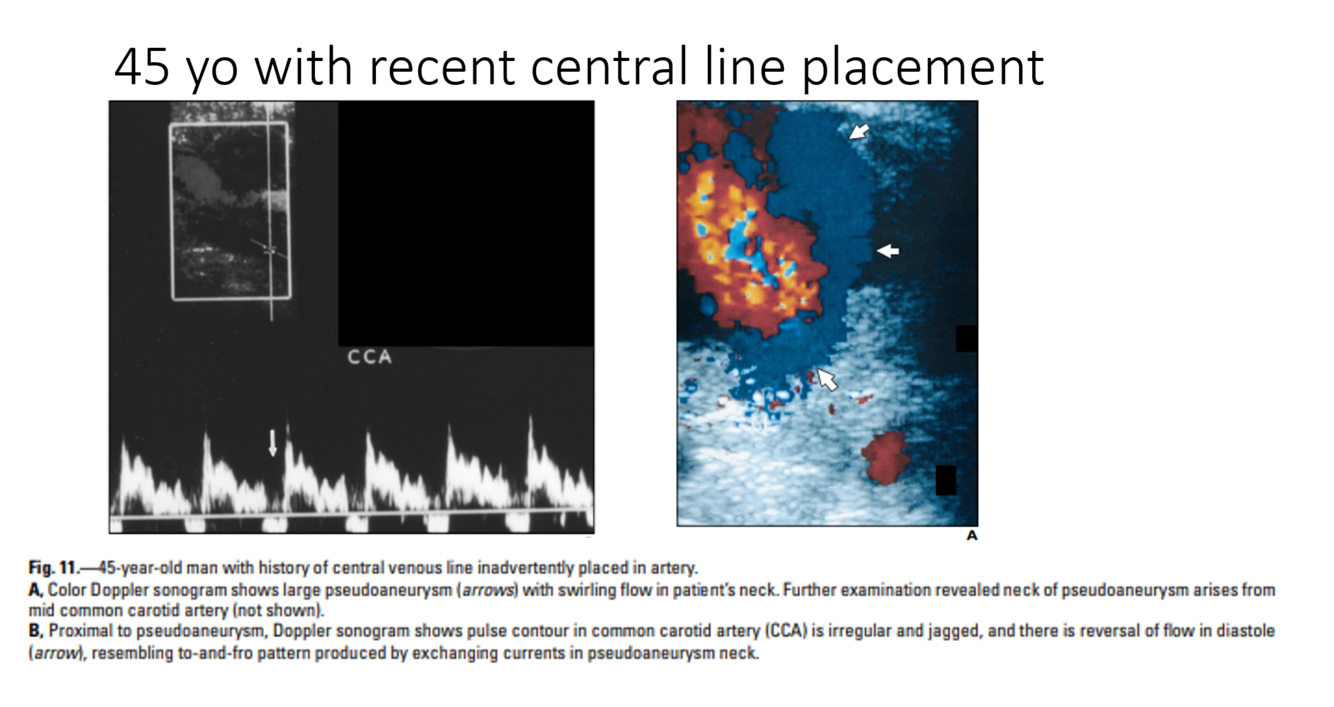
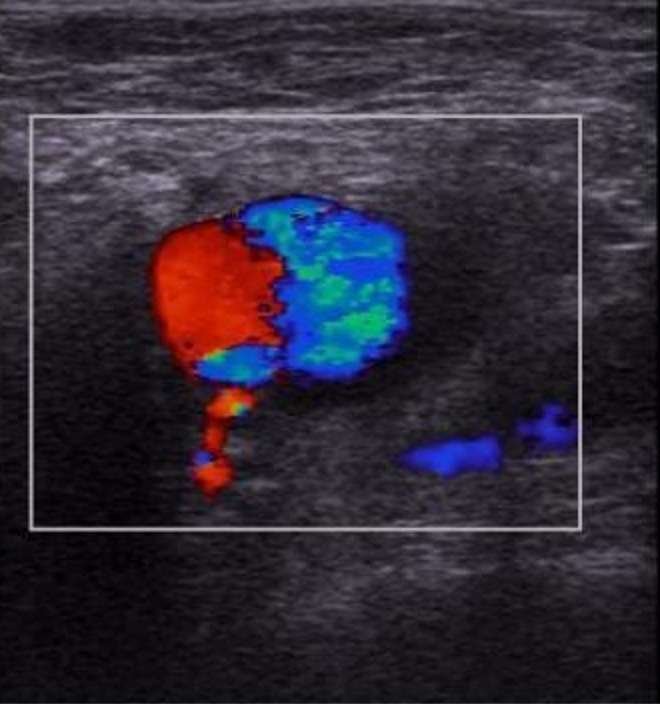
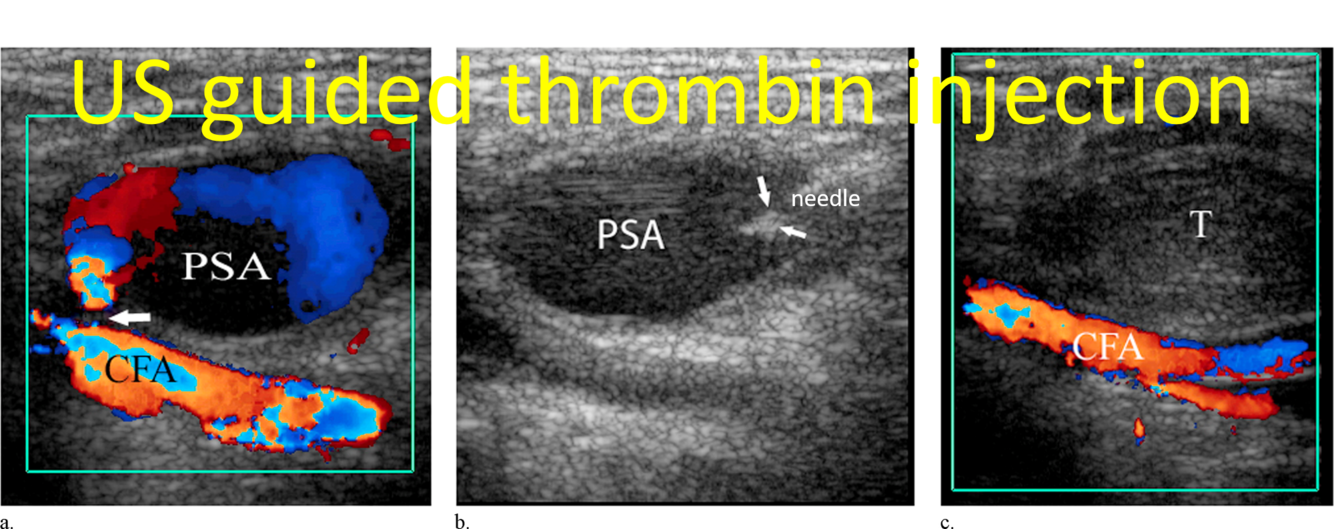
right groin US image with color doppler. What intervention did the pt likely have, diagnosis, and what is the treatment?
A

femoral artery pseudoaneurysm with classic “yin-yang” sign indicated to and fro flow into and out fo the pseudoaneurysm sac.

likely right femoral arterial access recently (like heart cath)

treatment = ultrasound guided thrombin injection. GOAL: introduce thrombogenic material under sonographic visualization to eleimate visible flow within the pseudoaneurysm sac
2
Q
A

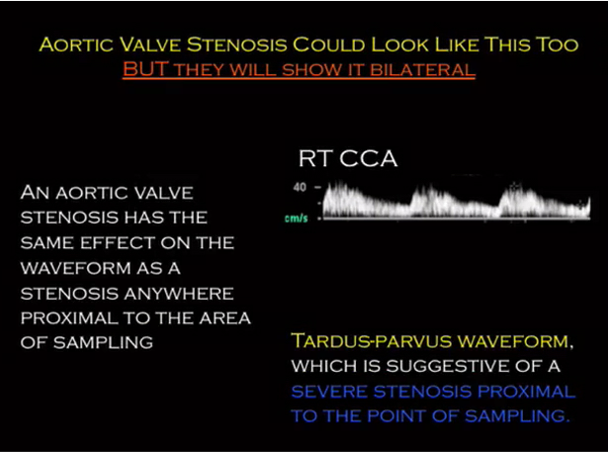
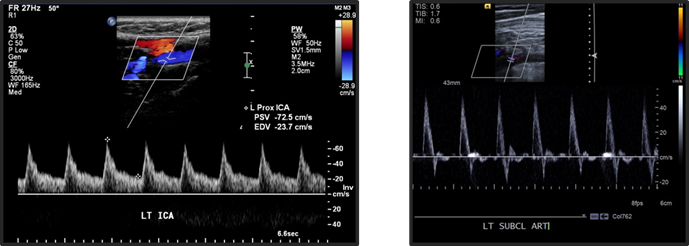
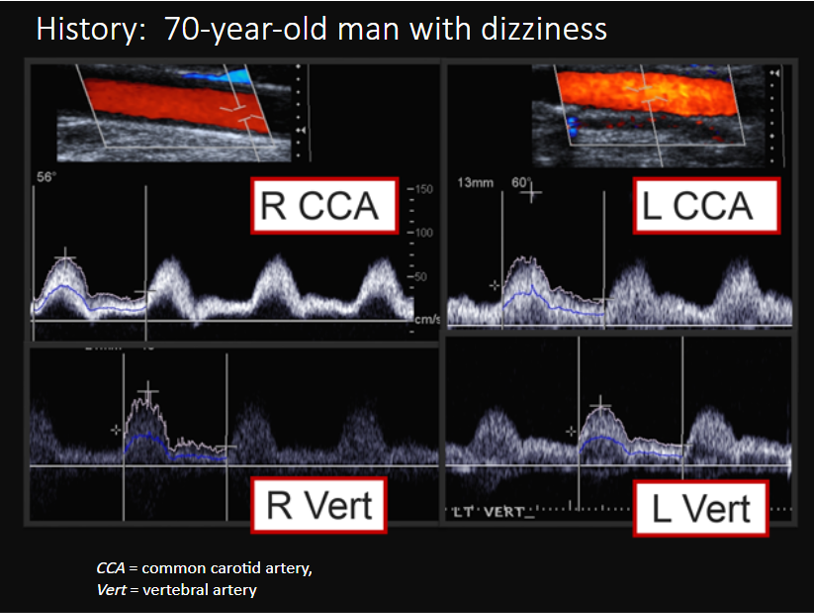
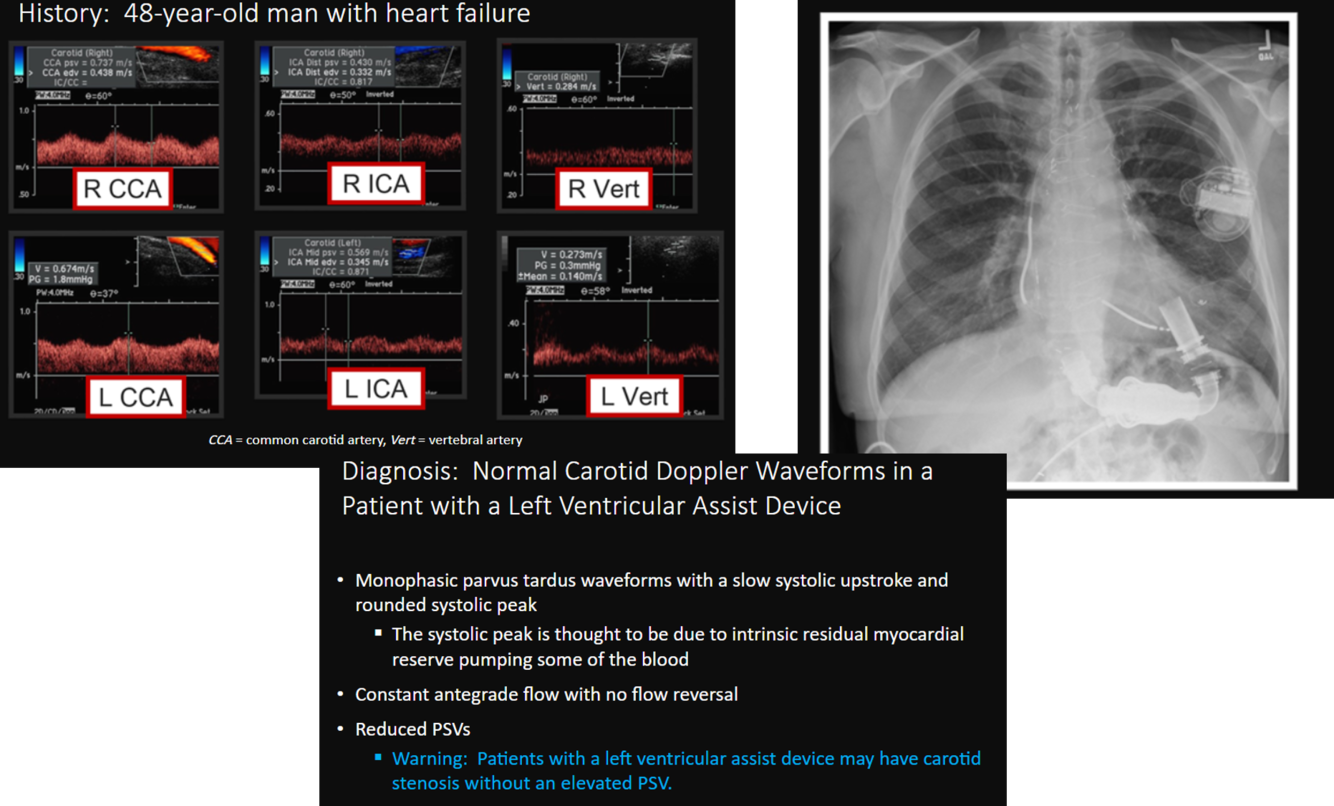
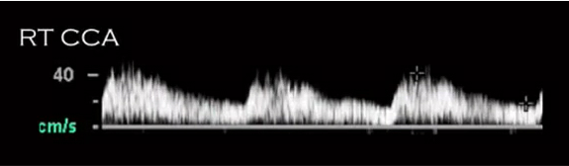
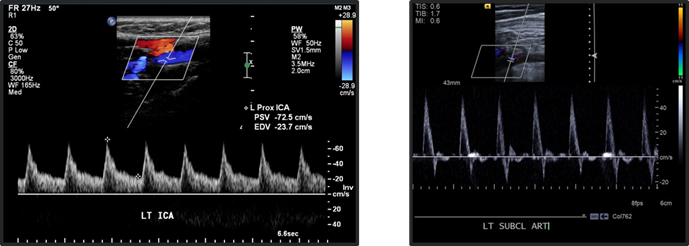
tardus parvus waveform. PROXIMAL stenosis
3
Q

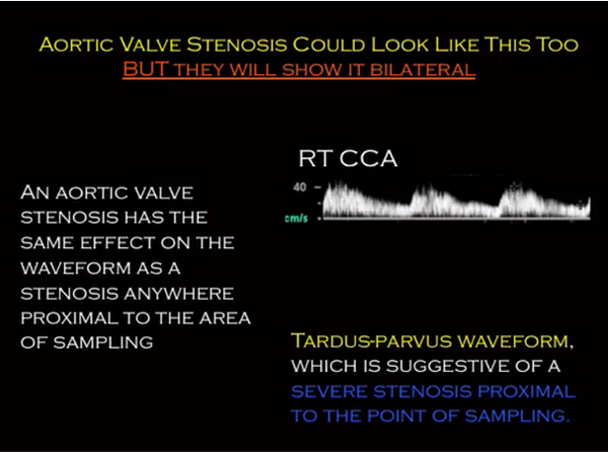
If shown BILATERAL parvus tardus in the carotids:

A

aortic stenosis

4
Q
A
5
Q
A
6
Q
A
7
Q
A
8
Q

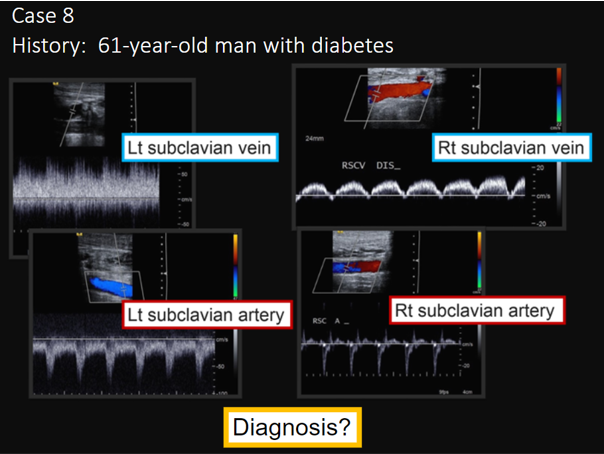
if you are given a doppler US of the vertebral artery. most likely diagnosis?

A

subclavian steal.

9
Q

Resistive Index equation

A

RI = (PSV - EDV)/PSV

10
Q

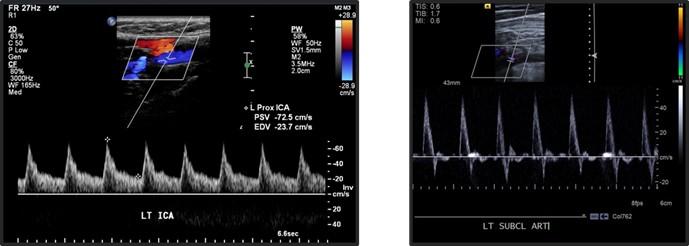
higher diastolic flow is seen in what arteries?

A

carotid and vertebral artries (lower resistance waveforms –> lower RI)
11
Q

lower diastolic flow is seen in what vessels?

A

extremities

lower diastolic flow = higher resistance waveform (higher RI)

due to elastic recoil.

retrograde flow may be seen in early diastole (triphasic flow)
12
Q

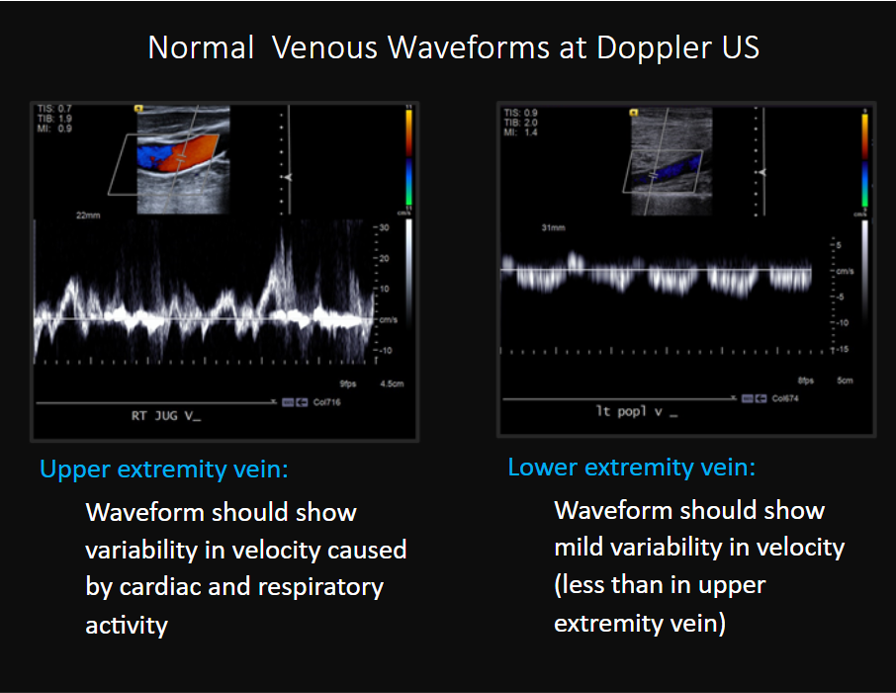
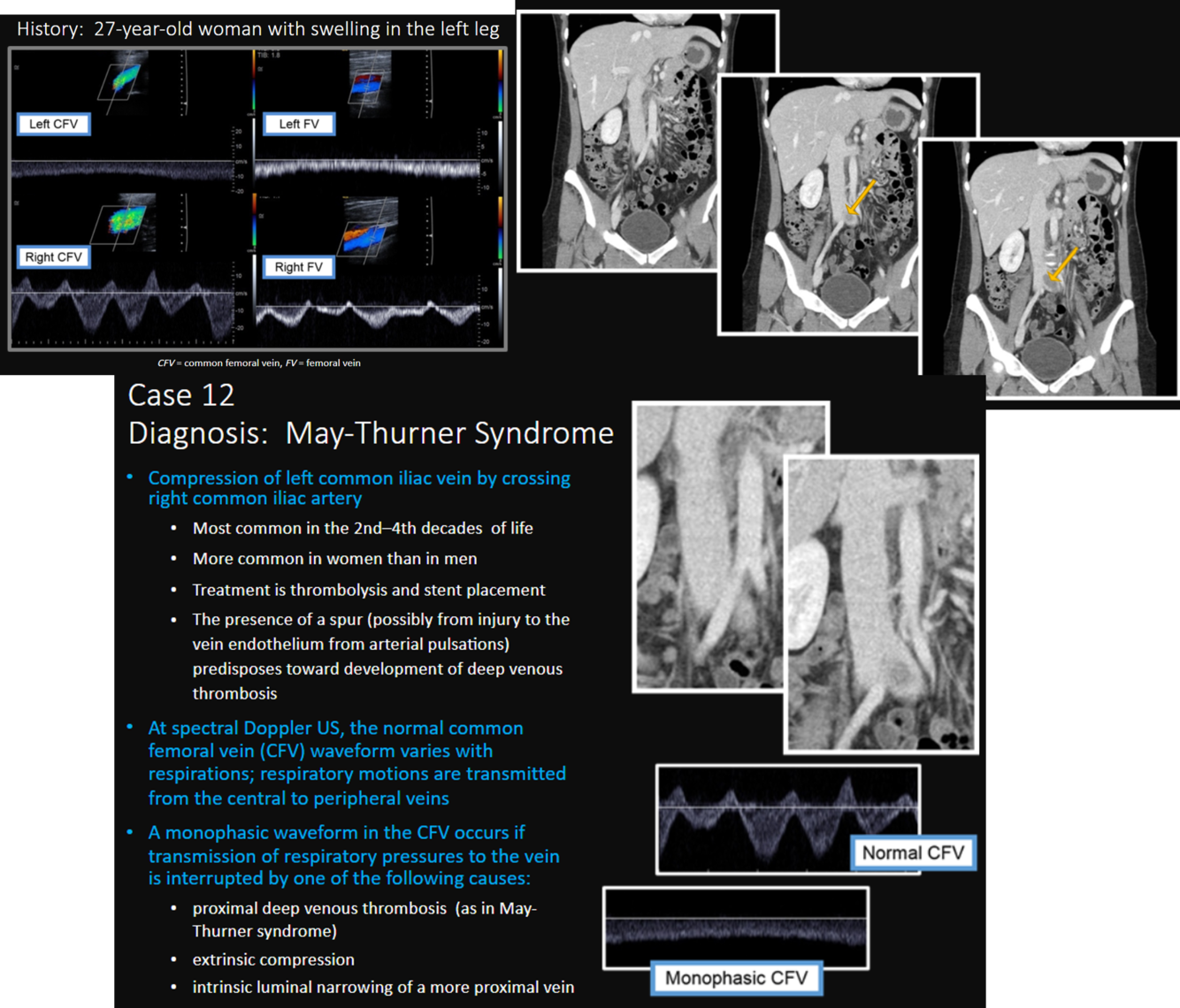
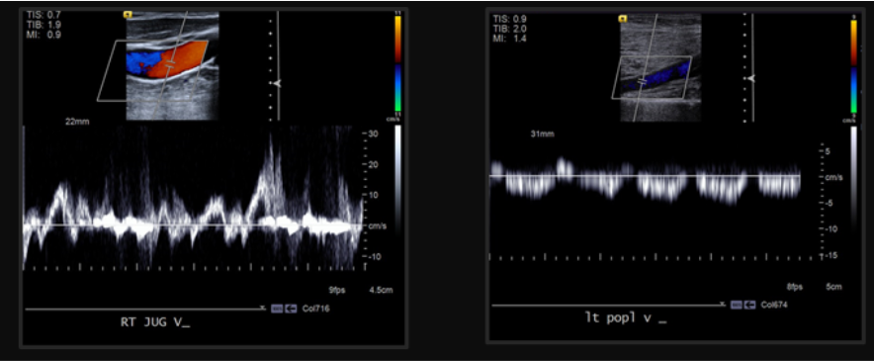
both of these are normal waveforms. Which is an upper and which is a lower extremity vein?
A
13
Q
A
14
Q
A
15
Q
A
25
26
what is the single most reliable parameter for differentiating the ECA from the ICA if only a single vessel is identified distal to the carotid bulb?
temporal tap maneuver . The temporal tap maneuver involves tapping on the superficial temporal artery and looking for reflected flow in the ECA. [https://pubs.rsna.org/doi/pdf/10.1148/rg.256045013](https://pubs.rsna.org/doi/pdf/10.1148/rg.256045013)
27
ICA occlusion
28
Nyquist limit =
1/2 (PRF)
29
How do you fix this?
Things you can do to fix aliasing: * Can increase velocity scale * Change the baseline setting * Lower frequency doppler probe
30
31
what happens as you increase the gate size to the spectral window?
you get spectral broadening if you increase the size of the gate. wider gate = more and more sampling of frequency shifts
32
cd image corresponds to what phase of the cardiac cycle?
late systole
33
color doppler image corresponds to what phase of the cardiac cycle
peak systole
34
this color doppler image corresponds to what phase of the cardiac cycle?
early diastole
35
this color doppler image corresponds to what phase of the cardiac cycle?
mid/late diastole
36
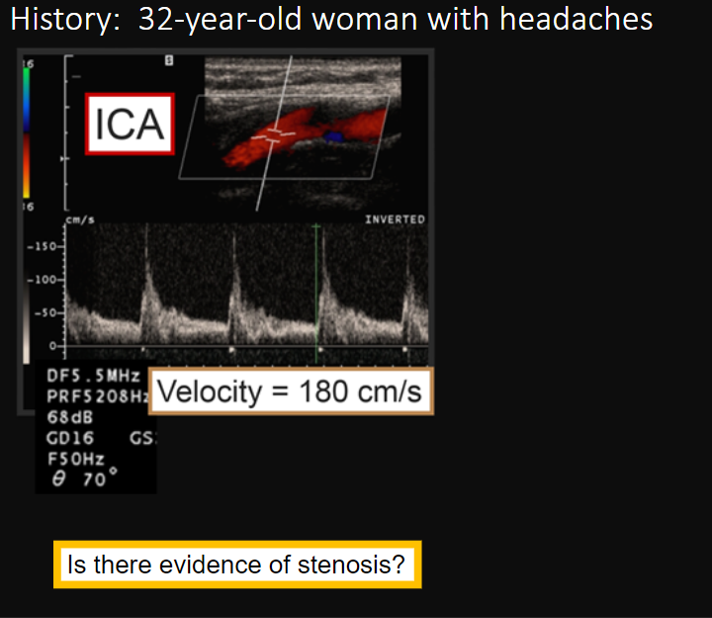
\>70% stenosis because there is still diastolic flow this is not near total occlusion
37
Dosing of US guided thrombin injection for arterial pseudoaneurysm
100-1000IU mean dose of approximately 300 IU