there is a case right at the beginning of this
(V. Bone Diseases of Unknown Cause)
(Metaphyseal Osteopathy)
- aka what?
- what dogs get it?
- Fever, anorexia, severe lameness with swelling where?
- What bones most severly affected?
- What bones are spared?
- Canine Hypertrophic Osteodystrophy (HOD)
- Young (usually 3-6 months old), fast-growing dogs, large/giant breeds
- in metaphyseal regions of long bones
- Distal radius and ulna
- Bones distal to tarsus and carpus
there is a case right at the beginning of this
(V. Bone Diseases of Unknown Cause)
(Metaphyseal Osteopathy)
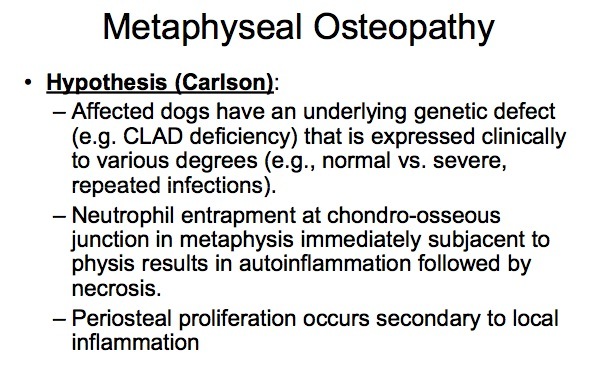
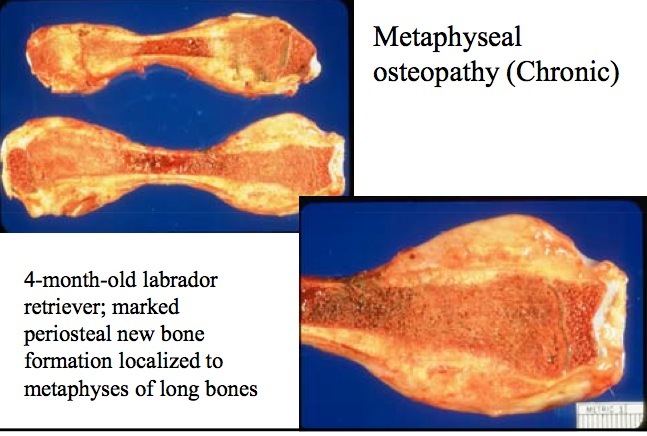
- What are the gross lesions?
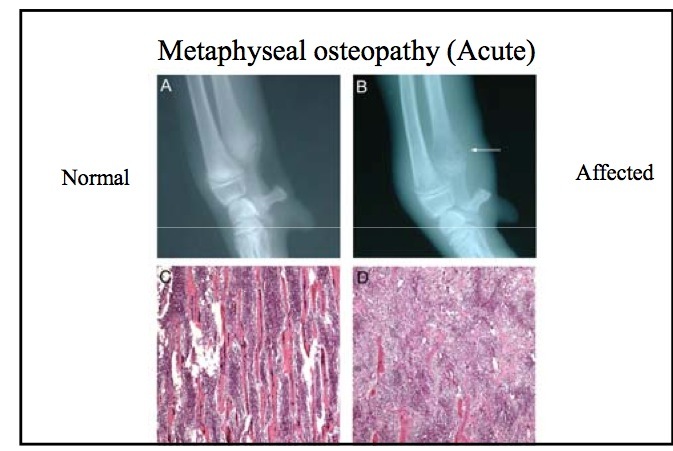
- What are radiographic lesions?
(Histological lesions)
- hemorrhages and necrosis of what?
- neutrophils infiltrate what?
- marked periosteal new bone formation
- Ends of long bones become swollen and hard (periosteal new bone)
- Alternating radiodense/radiolucent zones in metaphysis
- osteoblasts
- chondro-osseous complex
there is a case right at the beginning of this
(V. Bone Diseases of Unknown Cause)
(Metaphyseal Osteopathy)
- remissions/exacerbations over weeks to months
- important - can dogs recover?
how so?
- Post-vaccination metaphyseal osteopathy in what?
- Unknown cause, but interesting recent developments!!!
- yes! - with supportive care!!
Excess bone removed/resorbed over time
- weimeraners
(V. Bone Diseases of Unknown Cause)
(Metaphyseal Osteopathy)
- colony of dogs with what?
- so get many what?
- what percentage of these dogs gets metaphyseal osteopathy at 10-12 weeks of age?
- what lead to resolution of all symptoms/lesions?
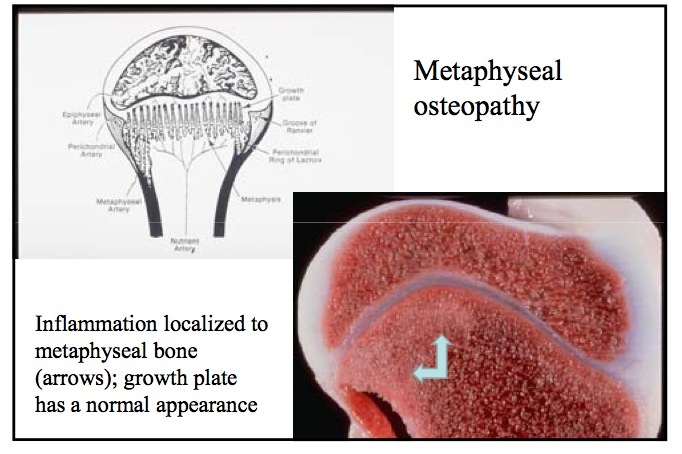
- combined leukocyte adhesion deficiency (CLAD)
Lack CD18 expression on neutrophil surface
Neutrophils do not marginate or extravasate and
cannot phagocytose by CD18
- system infections
- 75-85%
- Hematopoietic stem cell transplants
NOT ON TEST - JUST READ THIS HAHAHA
(Bone Diseases of Unknown Cause)
(Canine Panosteitis)
- aka?
- what get it?
- 75% what breed?
- Shifting lameness, mild to extremely severe, remission/exacerbation, self-limiting
- Abnormalities in what of long bone?
what percentage involve multiple bones?
- radiographic signs?
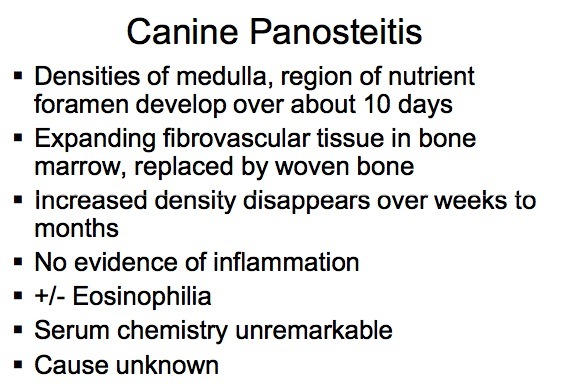
- eosinophilic pacosteitis
- Large/giant breeds, 5-12 months of age, males
- german shepherds1
- diaphysis (usually foreleg)
50%
- not initially
(Bone Diseases of Unknown Cause)
(Hypertrophic Osteopathy)
SHE ASKS TEST QUESTION ABOUT this vs metaphyseal osteopathy - KNOW THIS
- aka?
- affects what animals?
- Diffuse periosteal osteophytosis secondary to what?
- inflammatory or neoplastic?
- initial clinical signs often related to what?
- What happens if primary thoracic lesion removed?
- hypertrophic pulmonary osteopathy
- humans and all domestic
- chronic lesion, usually intrathoracic
- either
- secondarybone changes
- Bone lesions regress
(Bone Diseases of Unknown Cause)
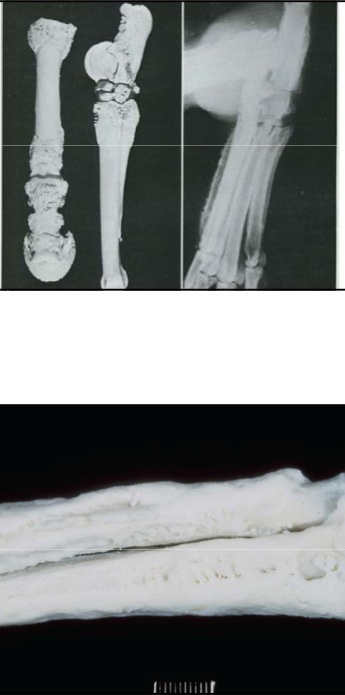
(Hypertrophic Osteopathy)
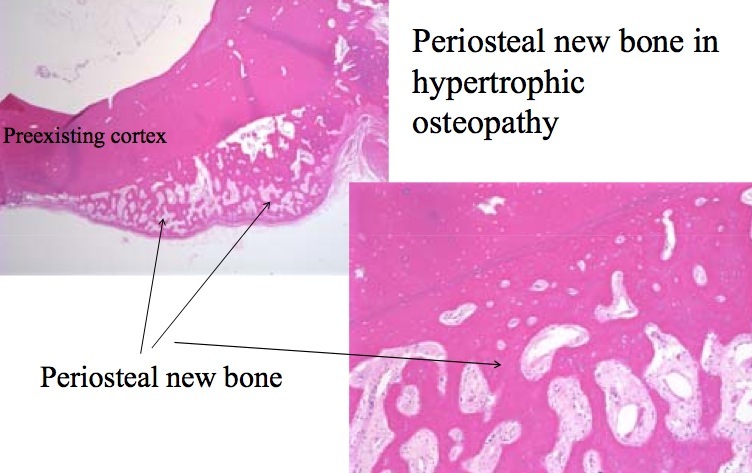
another case at 21:04!
(Bone Disorders of Unknown Cause)
(Hypertrophic Osteopathy: Pathogenesis)
- Pulmonary lesions may lead to what?
- Lesions similar to HO can be reproduced in dogs by doing what?
- reflex vasomotor changes (mediated by vagus nerve) and increased blood flow to extremities
(Regression of bone lesions occurs if primary lesion is removed AND also after vagotomy)
- creating shunts that allow blood to bypass pulmonary circulation
(Increased arterial pressure, hyperemia, and edema of periosteum lead to thickening of the periosteum by fibrous tissue (early) and new bone formation (later))
(Bone Disorders of Unknown Cause)
(Osteochondrosis)
covered in another lecture
(VI. Neoplastic Conditions of Bones)
- Primary skeletal tumors common in what?
- assume malignant or benign?
(fibrous tumor of bone)
- called what?
- located where?
- more or less likely to metastatize vs. osteosarcoma
- dogs
(Dogs > cats >>> other species (uncommon))
- Malignant until proven benign
- Fibrosarcoma
- Medullary cavity and periosteum
- Less likely to metastasize than osteosarcoma
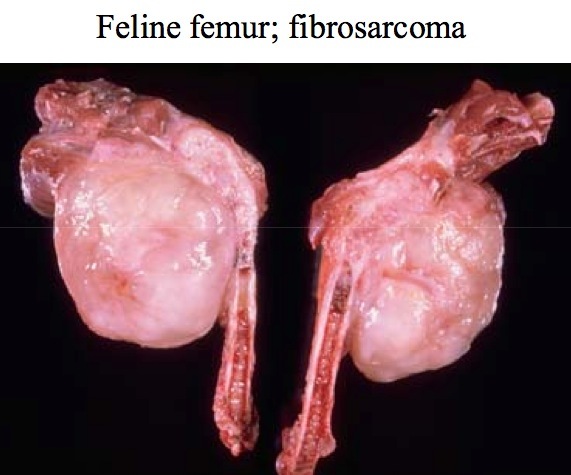
(Neoplastic Conditions of Bones)
(Cartilage-forming tumors)
- rare, except in what?
- difficult to diagnose and classify?
what may distinguish malignant from benign?
- sheep
- yep
one mitotic figure
( Clinical information regarding behavior of the tumor is important)
(pic - mitotic figure that didn’t indicate neoplasm in cartilage - very unusual!!!)
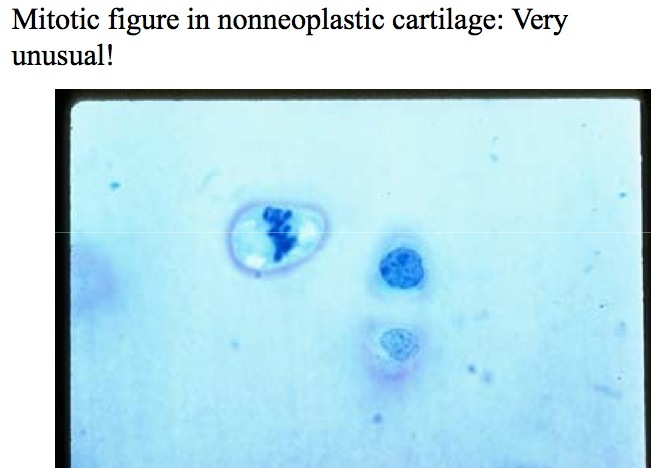
(Neoplastic Conditions of Bones)
(Cartilage-forming tumors)
- what is a Benign tumor of cartilage?
- what is malignant tumore of cartilage?
- arise from what?
- Occur more commonly in pelvis, nasal cavity, sternum, and ribs or in long bones?
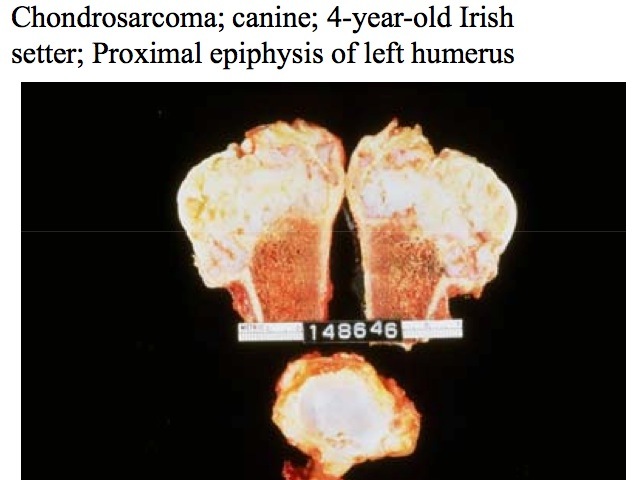
- chondroma
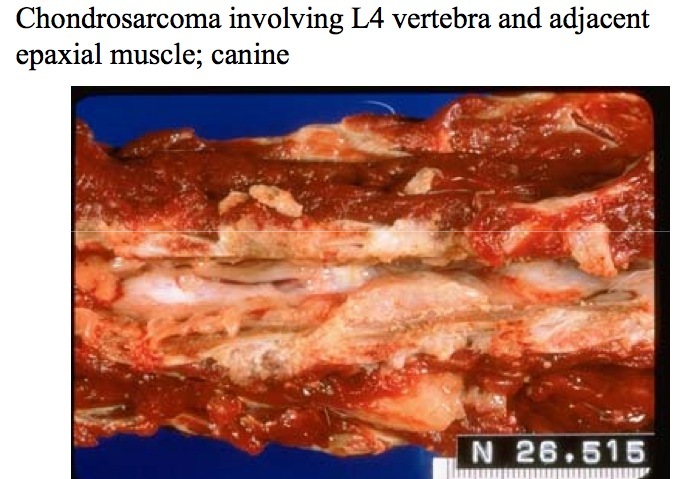
- Chondrosarcoma - Malignant neoplasm in which cartilaginous matrix is produced
- cartilage and perichondrium
- pelvis, nasal cavity, sternum, and ribs
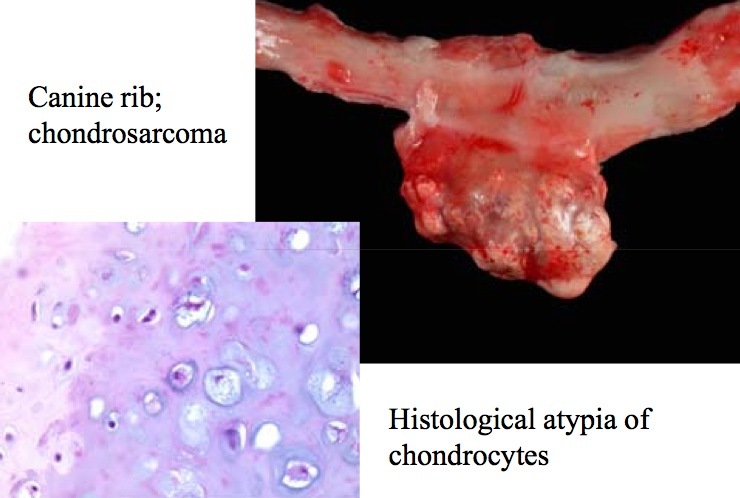
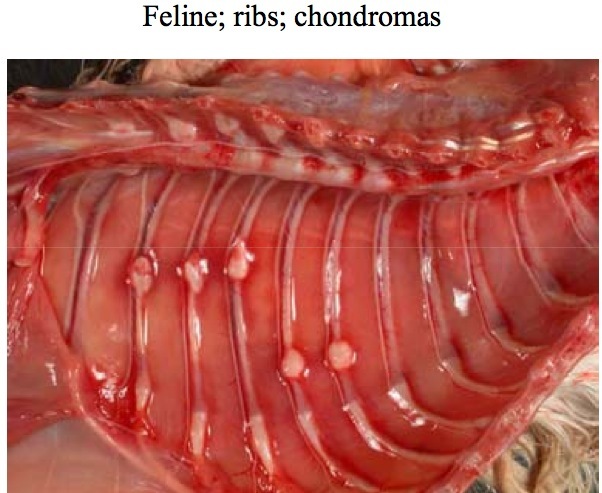
(Neoplastic Conditions of Bones)
(Bone-forming tumors)
- What is bening tumor of bone?
how common?
- What is Malignant tumors in which osteoid or bone is produced?
how common in dogs and cats?
- osteoma
Uncommon, usually involve bones of head
- Osteosarcoma
Most common skeletal neoplasm in dogs and
cats (80 % and 50% of skeletal tumors,
respectively)
(Rare in other species)
(Neoplastic Conditions of Bones)
(Osteosarcoma)
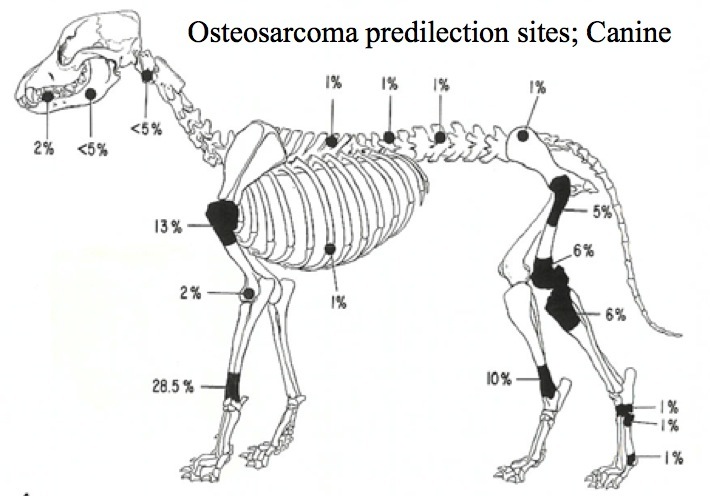
- often metastasizes to where?
- present as what?
- in dogs, what percentage involve the legs?
- forelegs or hindlegs more?
- Proximal humerus/distal radius vs. distal tibia/femur
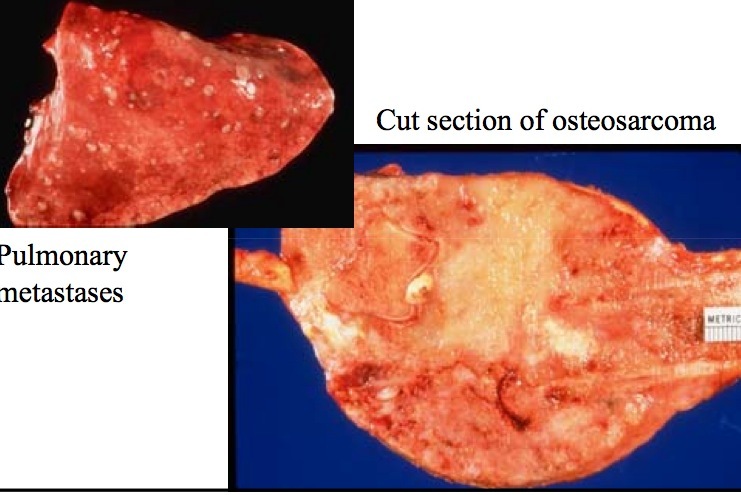
- lung (early)
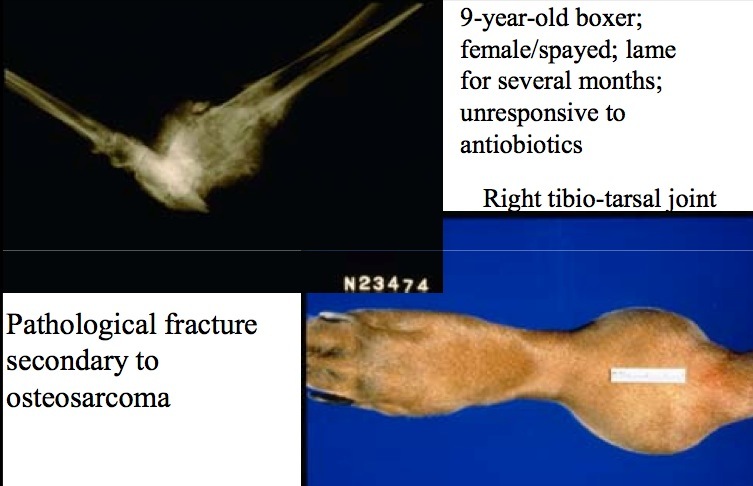
- painful swellings of bones
- 60-80%
- forelegs
- Proximal humerus/distal radius more
(Osteosarcoma)
- what type of dogs get this?
- most common in what age range?
- Mature males of large and giant breeds
Risk is 61-185X greater for a dog weighing >80 lbs compared to one <20 lbs
Most common breeds are St. Bernard, Great Dane, boxer, German shepherd, and Irish setter
- 5-9
(Osteosarcoma)
- sarcomas that produce what?
- Cause is unknown - but may develop in assocation with what?
(notice in pic that it is mostly in appendicular skeleton)
- osteoid
- Bone infarction
Previous fractures
Metallic fixation devices
Viral origin in mice
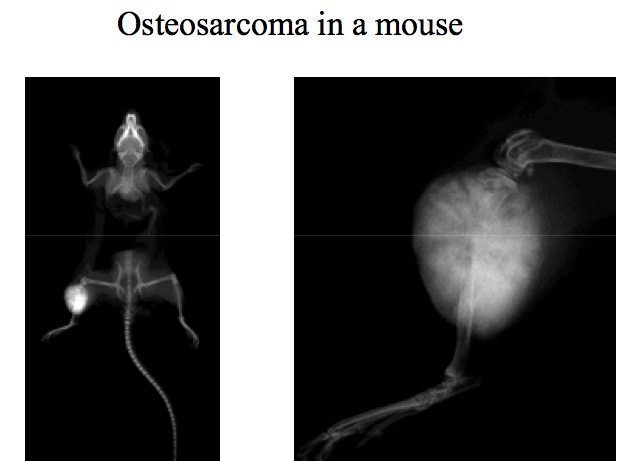
(Miscellaneous Tumors of bones)
- Bovine lymphoma of juvenile type
– Commonly involves long bones
– Infarction of marrow and necrosis of bone
Myeloma (plasmacytoma) in dogs
Primary hemangiosarcoma of bone in dogs
2.

-
01 - Respiratory System28
-
02 - Respiratory system (cont)17
-
02 - Developmental Abnormalties8
-
04 - Developmental Abnormalities (cont)28
-
05 - Developmental Abnormalities (cont)28
-
01 - Resp Antmy & Histo - dfns mchnsms11
-
02 - path of upper - path of lar and phar9
-
03 - Path of treachea and lung9
-
04 - ROVIRA21
-
04 - ROVIRA - COW12
-
05 - Hypothryoidism & Hyperthyroidism (ERIK)17
-
06 - Hyperadrenocorticism9
-
07 - Diabetes Mellitus9
-
08 - Primary Hyperparathryoidism7
-
09 - Pancreatic Endocrine Neoplasia11
-
03-01 - path of lung12
-
03-02- pleuradogscats9
-
BONE-0127
-
BONE-0227
-
BONE-0320
-
BONE-0435
-
BONE-0522
-
BONE-0631
-
BONE-06.51



