Adhesion of cells to each other and their extracellular matrix provides many of the cues neccessary for controlling:
- Cell migration
- Cell shape
- Survival
- Proliferation
- Differentiation
These events regulate an organism’s normal development, maintenance, and recovery from injury and infection.
Defects in the pathways associated with cell adhesion provide the basis for:
- Cell transformation
- Cancer cell metastasis
- Developmental defects
- Cardiovascular disease
Protein complexes forming at specific sites of cell membranes (typically epithelium)
cellular junctions
cellular junctions organize contacts of cells with one another through:
- Adhesion
- Definition of cellular domains
- Control of permeability of epithelium
- Intracellular signaling
- Intercellular communication / signal transmission
Cellular junctions organize contact between cells and extracellular matrix:
- Anchoring
- Intracellular signaling
Typical components (cellular junctions)
- Transmembrane adhesive protein
- Cytoplasmic adapter (anchor) protein
- Cytoskeletal filament
Arrangement (cellular junctions)
- Macula: patch-like junction of limited extent
- Zonula: junction which encircles the entire cell
Junctional combinations
- Junctional complex (terminal bar): cuboidal or columnar epithelium
- Intercalated disc: cardiac muscle
Typical three-component arrangement
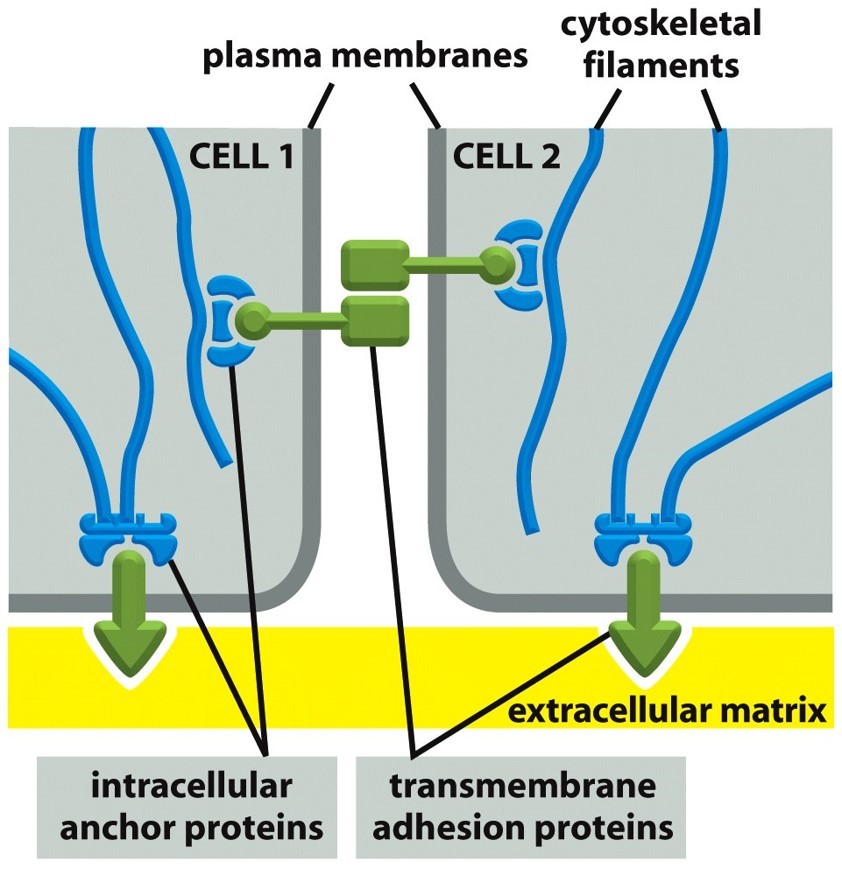
Types of junctions
- Gap (Nexus) junction (communicating junction)
- Tight junction (occluding junction, zonula occludens)
- Adherens junctions
- Cells attaching to other cells
- Adherens junction (or zonula adherens, intermediate junction)
- Desmosome (macula adherens)
- Cells attaching to / anchoring in the extracellular matrix
- Hemidesmosome
- Focal adhesion
- Cells attaching to other cells
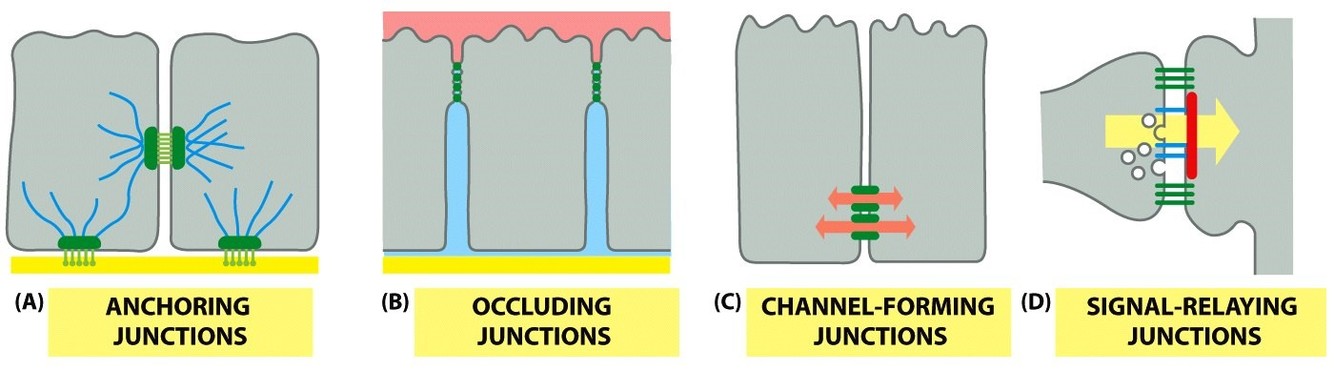
Three (Four) functional classes of cell junctions in animal tissues
- Anchoring junctions
- Adherens Junctions
- Occluding Junctions
- Tight Junctions
- Channel-forming Junctions
- Gap Junctions
- Signal-relaying junctions
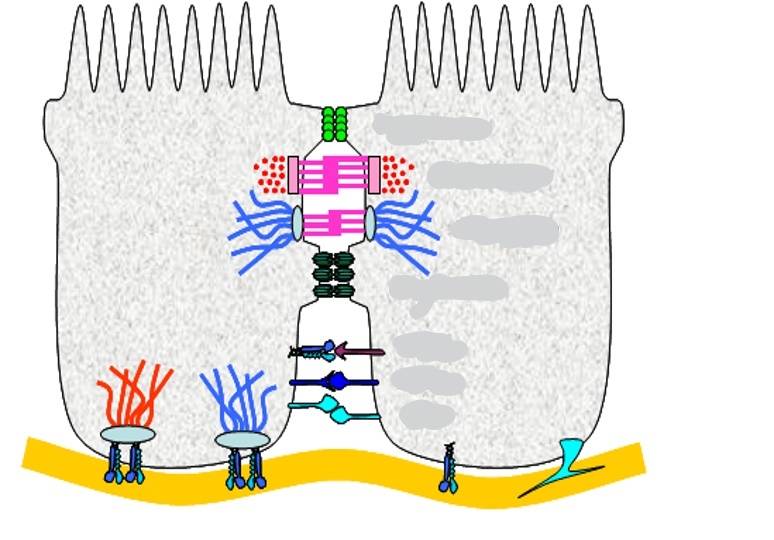
Summary figure of cell adhesion proteins
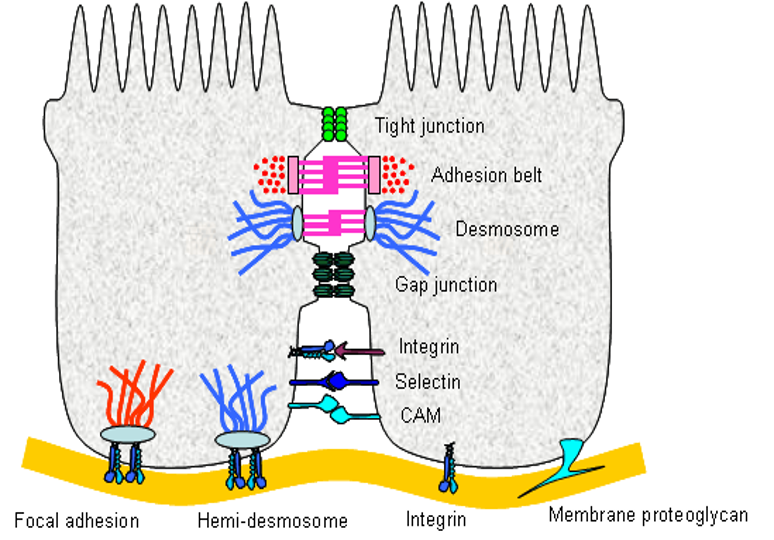
Gap/Nexus/Communicating junction
- Plaque-like junction
- Cell membranes of neighboring cells very close together; intercellular space only 2-3 nm
- Can be found in all basic tissue types
- Common in epithelial cells, smooth and cardiac muscle cells, neuronal cells, and osteocytes
Integral membrane protein
connexin
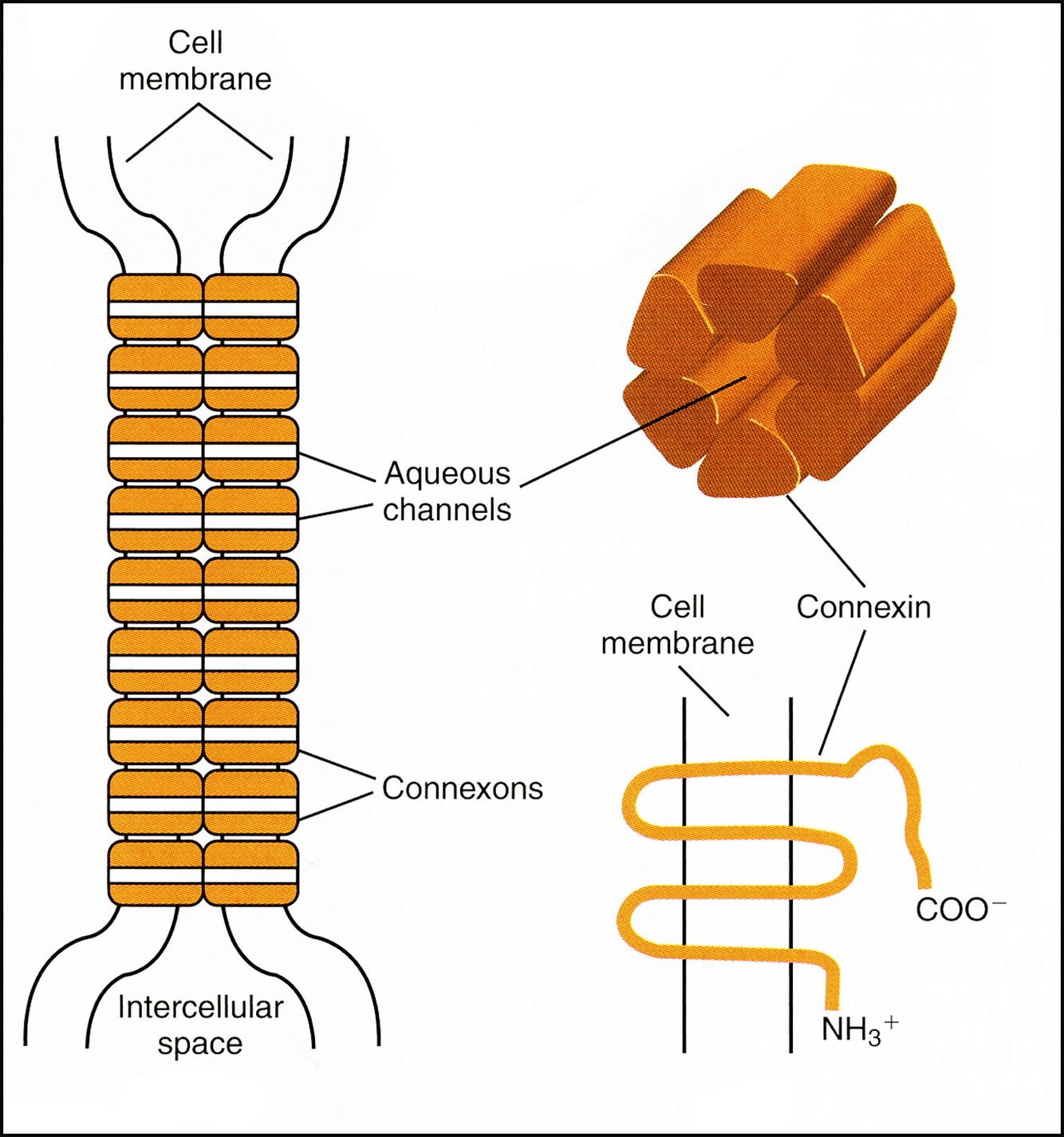
6 connexins form connexon (connexin hemichannel)
Connexon has central channel (diameter 2nm)
Connexons of one cell connect to connexons in adjacent cell to form hydrophilic channel
Tens to hundreds of aligned connexon pairs hexagonally packed in gap junction
Aqueous channel formed between cytoplasm of adjacent cells
Passage of small signaling molecules and ions possible
Connected cells are electrically coupled for coordinated responses to stimuli
Different members of connexin family result in differences in permeability
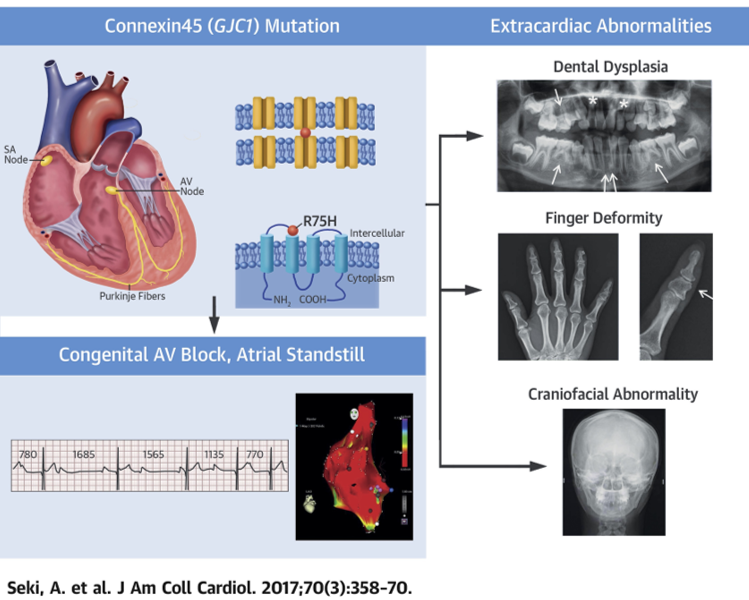
Connexin mutations are linked to:
- deafness
- cataracts
- Charcot-Marie-Tooth demyelinating disease
- oculodentaldigital dysplasia
Tight/occluding junction
Anastomosing strands of adhesive transmembrane proteins
Linear series of contacts to proteins of adjacent cell
Intercellular space obliterated at contact site
Junction encircles entire cell
Found close to the apical end of cuboidal or columnar epithelial cells
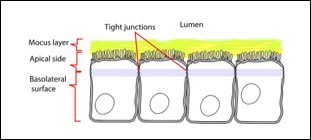
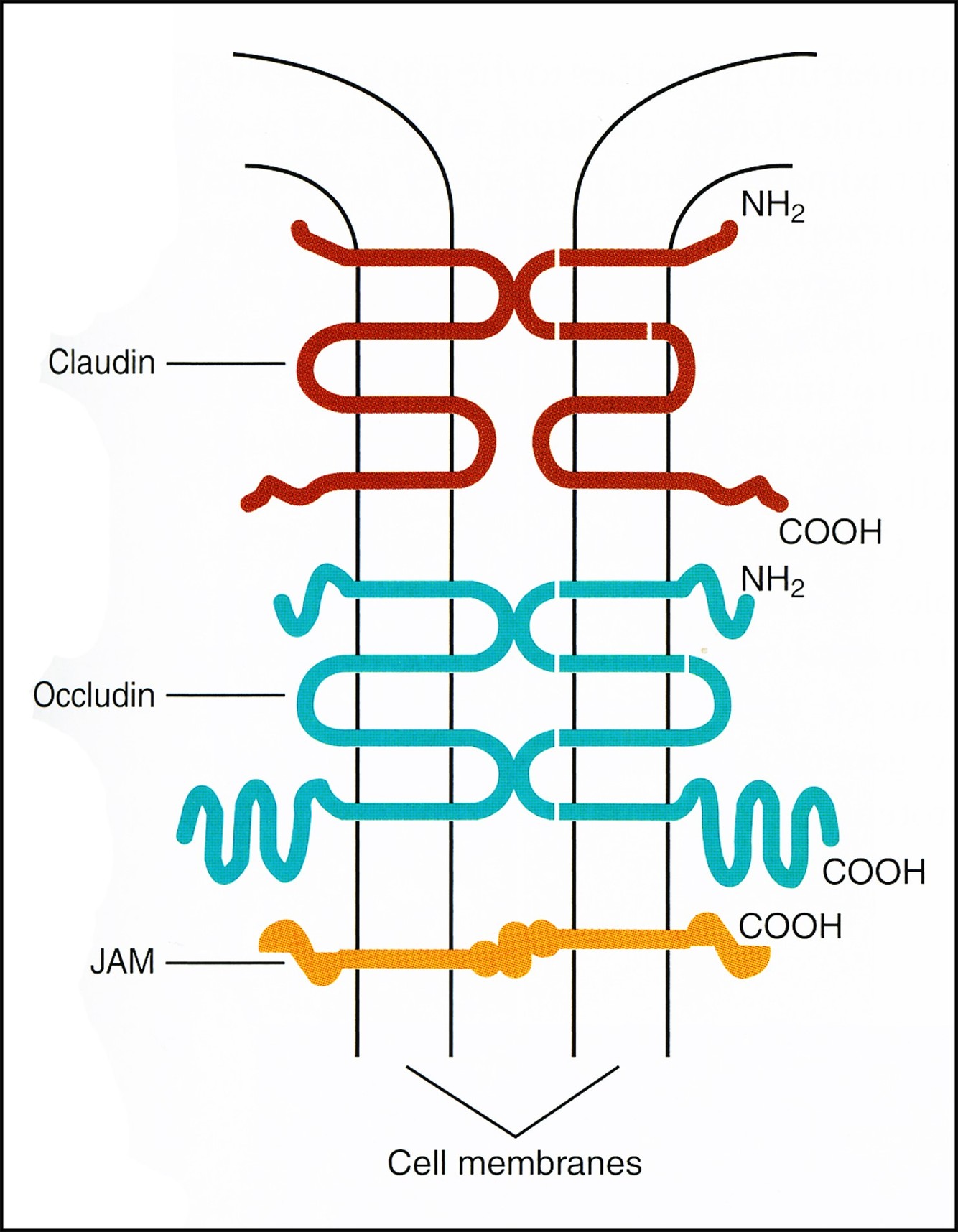
Transmembrane proteins (tight/occluding junction):
- members of claudin family (4 pass membrane proteins)
- occludin
- junctional adhesive
Transmembrane adhesive proteins interact homotypically with proteins in adjacent cell
Some cytoplasmic proteins (tight/occluding junction):
- kinases
- transcription factors
- cell polarity-related proteins
Actin filaments associated
Tight/occluding junction:
Movement of ions and small molecules in intercellular space:
Tightness (permeability):
Movement of membrane proteins:
Movement of ions and small molecules in intercellular space prevented / controlled
Tightness (permeability) depends on number of junctional strands, their completeness, and type of adhesive protein
Movement of membrane proteins limited
Adherens junctions
Cells held together or attached to/anchored in the:
Intercellular space between attached cells:
Adhesive junctions commonly involved in:
Loss of contact to adjacent cells or extracellular matrix may trigger:
Cells held together or attached to / anchored in the extracellular matrix
Intercellular space between attached cells: 20 nm wide at location of adhesive junction
Adhesive junctions commonly involved in (intra) cellular signaling (e.g. for nuclear transcription, tumor suppression, differentiation)
Loss of contact to adjacent cells or extracellular matrix may trigger apoptosis or result in loss of polarity
Cell-to-cell adhesive junctions:
Cell-to-ECM adhesive junctions:
- Cell-to-cell adhesive junctions:
- Transmembrane adhesive proteins members of cadherin (calcium ion-dependent proteins) family
- Cytoplasmic adapter proteins members of the catenin family
- Cell-to-ECM adhesive junctions:
- Similar to cell-to-cell adhesive junctions, but:
- Transmembrane proteins members of integrin family (heterodimers with alpha and beta subunits)
Adhesive junction with electron-lucent intercellular space and ___________on cytoplasmic face
Associated with ____________
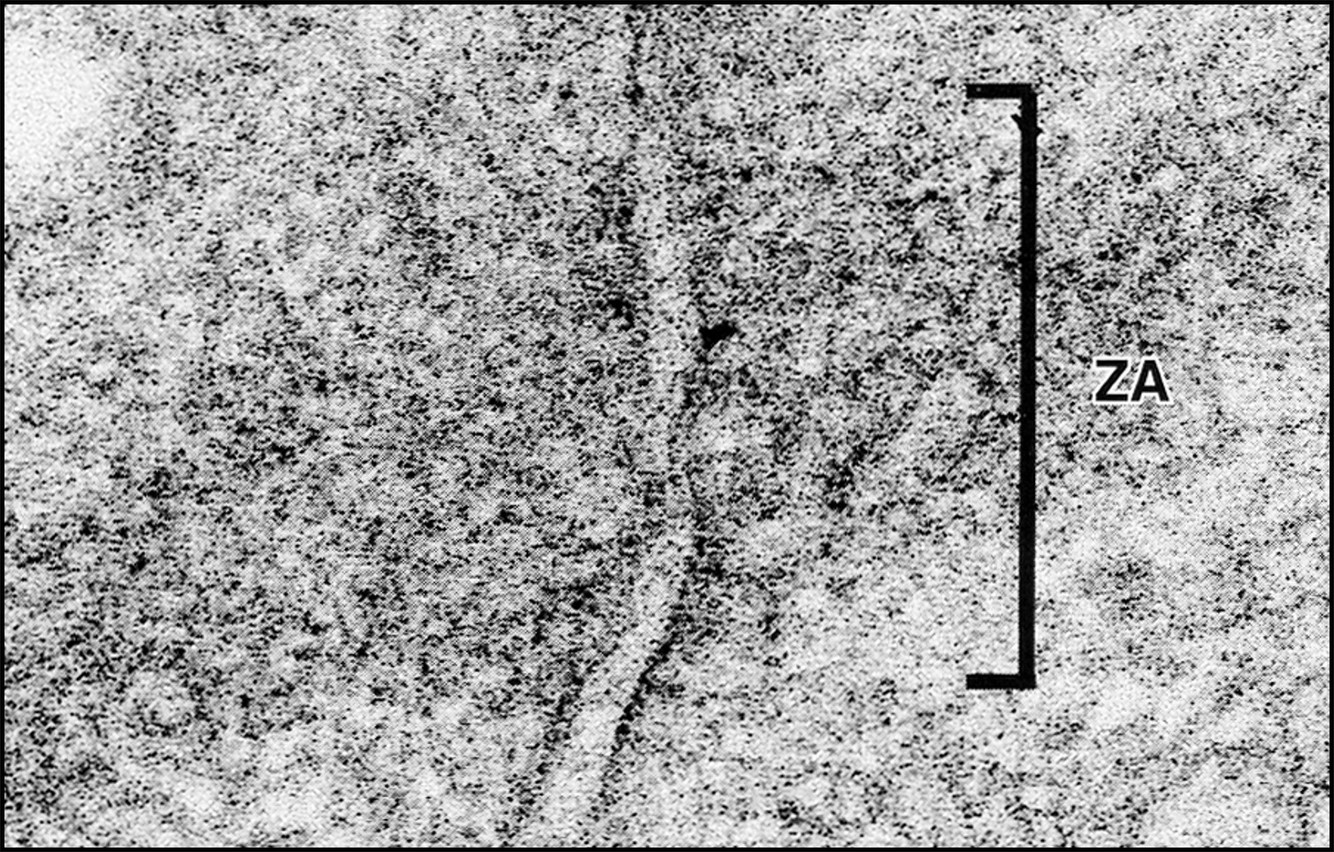
Adhesive junction with electron-lucent intercellular space and ‘fuzzy’ plaque on cytoplasmic face
Associated with belt-like band of actin
Encircles entire cell (zonula)
Found basal to tight junction zonula in epithelial cells
- Transmembrane adhesive proteins (Adherens junction):
- Cytoplasmic adapter proteins:
- Interact with:
- Cytoskeletal element:
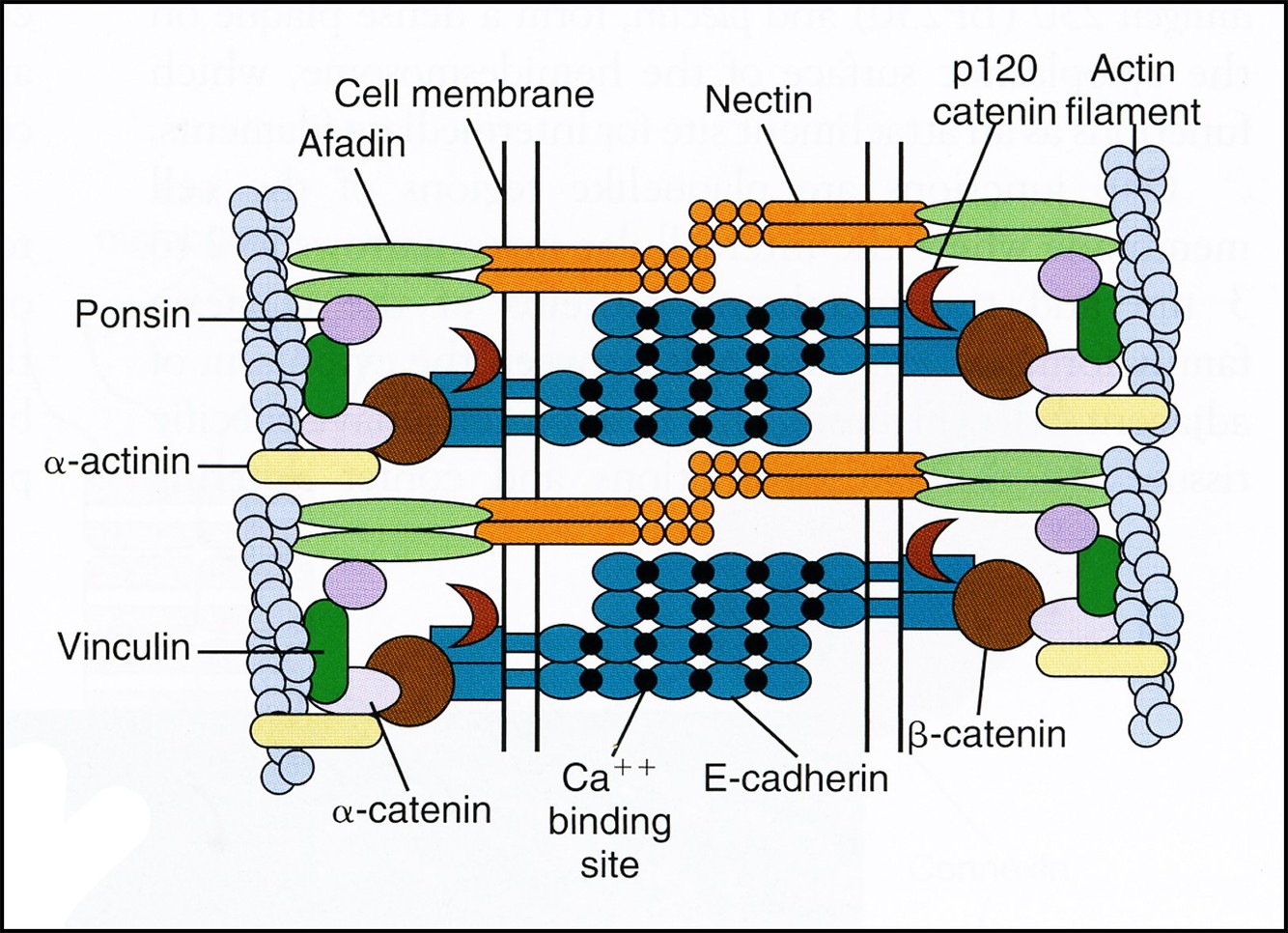
- Transmembrane adhesive proteins: E-cadherin; (nectin)
- Cytoplasmic adapter proteins: a- and b-catenin; (p120 catenin, afadin, vinculin, a-actinin)
- Catenins interact with cytoplasmic domain of trans-membrane protein, cytoskeletal proteins, and other cytoplasmic proteins
- Cytoskeletal element: actin filaments (continuous with apical terminal web)
Adheren junction functions:
- Contribution to adhesive force between one cell and another
- Support to apical domain of epithelial cell
- Intracellular signaling


-
Lecture 2: Acid/Bases28
-
Proteins I25
-
Proteins II33
-
Proteins III31
-
Proteins IV16
-
Hemoglobin22
-
Blood Coagulation49
-
Enzymes72
-
Biochemisty of Drugs as Enzyme Inactivators58
-
Lecture 1: Bioenergetics39
-
Glycolysis24
-
TCA Cycle24
-
The Electron Transport Chain, ATP Synthesis, and Mitochondrial Shuttles55
-
Gluconeogenesis49
-
Glycogen Metabolism75
-
Lipids60
-
Fatty Acid Catabolism88
-
Lipid Biosynthesis81
-
Lipids - Clinical Applications53
-
Peripheral Nerve29
-
Muscle Histology15
-
Abdominal Cavity12
-
Embryology29
-
Lipid Malabsorption Clinical Concepts56
-
Purine and Pyrimidine Synthesis39
-
Purine and Pyrimidine Breakdown and Heme52
-
Nitrogen Balance, Urea Cycle, and Amino Acid Metabolism19
-
Amino Acid Metabolism and associated diseases20
-
Nucleic Acid Structures81
-
Gene Expression and Regulation41
-
Protein Synthesis7
-
Molecular Medicine8
-
Overview of Cells and Structure29
-
Cytoskeleton44
-
Intro to Histology48
-
Membrane Structure and Function76
-
Mitochondria41
-
Nucleus40
-
Connective Tissue55
-
Cell Adhesion38
-
Biosynthesis and Cell Membranes30
-
Blood75
-
Lymphoid Organs25
-
Basic Components of the Immune System35
-
CD antigens14
-
Introduction to Viruses25
-
Somatosensory Receptor Physiology29
-
Physiology of Somatosensation24



