Factors determining assets demand:
…;
- An increase in …
…;
- An increase in an …
…;
- If an asset’s ….
…;
- The more…
Factors determining assets demand:
Wealth;
- An increase in wealth raises the quantity demanded of an asset; (increase the demand for assets)
Expected return;
- An increase in an asset’s expected return relative to that of an alternative asset, raises the quantity demanded for the asset;
Risk;
- If an asset’s risk rises relative to that of alternative assets, its quantity demanded will fall. (assuming the investors are risk averse)
Liquidity;
- The more liquid an asset is relative to alternative assets, the more desirable it is and the greater the quantity demanded will be
Theory of Portfolio Choice
Holding all other factors constant
- The quantity demanded of an asset is …
- The quantity demanded of an asset is …
- The quantity demanded of an asset is …
- The quantity demanded of an asset is …
Theory of Portfolio Choice
Holding all other factors constant
- 1.The quantity demanded of an asset is positively related to wealth;
- The quantity demanded of an asset is positively related to its expected return relative to alternative assets;
- The quantity demanded of an asset is negatively related to the risk of its returns relative to alternative assets;
- The quantity demanded of an asset is positively related to its liquidity relative to alternative assets.
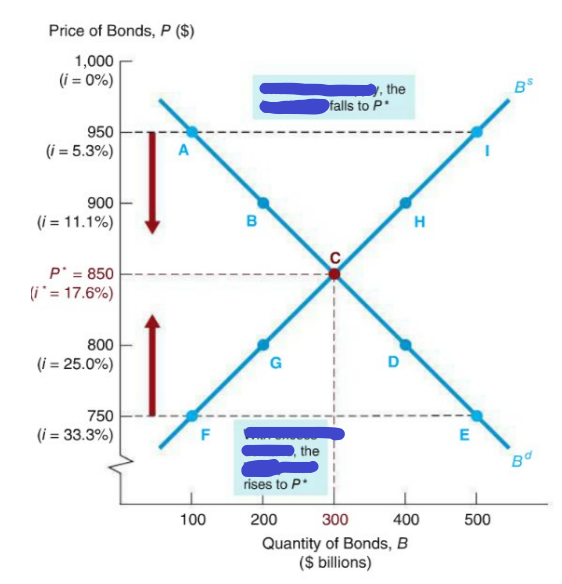
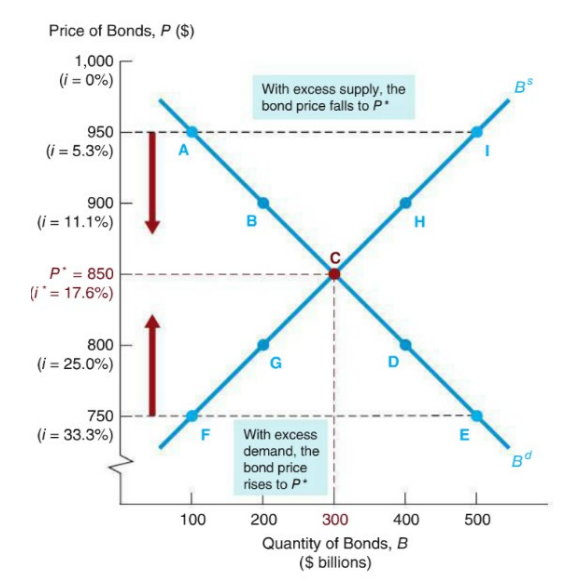
Where is excess supply? And in which case is excess demand? Changes in equilibrium interest rates
Note: we use …. for understanding behavior in financial market, which emphasizes the stocks of assets, rather than flows, in determining asset prices.

Note: we use asset market approach for understanding behavior in financial market, which emphasizes the stocks of assets, rather than flows, in determining asset prices.
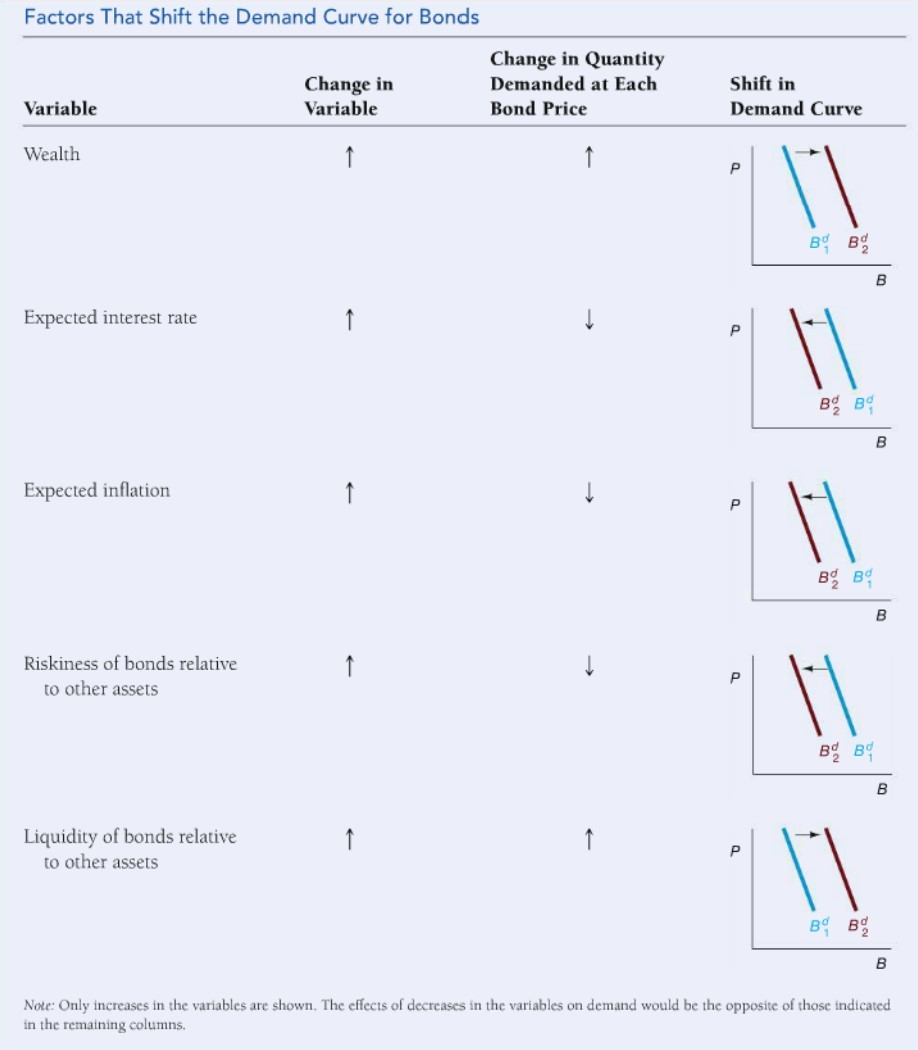
Demand for bonds
- .
- .
- 4.
Demand for bonds
- Wealth: e.g. business cycle expansion with growing wealth, recession, public’s propensity to save
- Expected returns
- For a one-year discount bond and a one-year holding period, the expected return and the interest rate are identical, so nothing other than today’s interest rate affects the expected return.
- . For bonds with maturities of greater than one year, higher expected future interest rates lower the expected return for long-term bonds, decrease the demand (today);
- Change in expected returns on other assets also shift the demand curve for bonds;
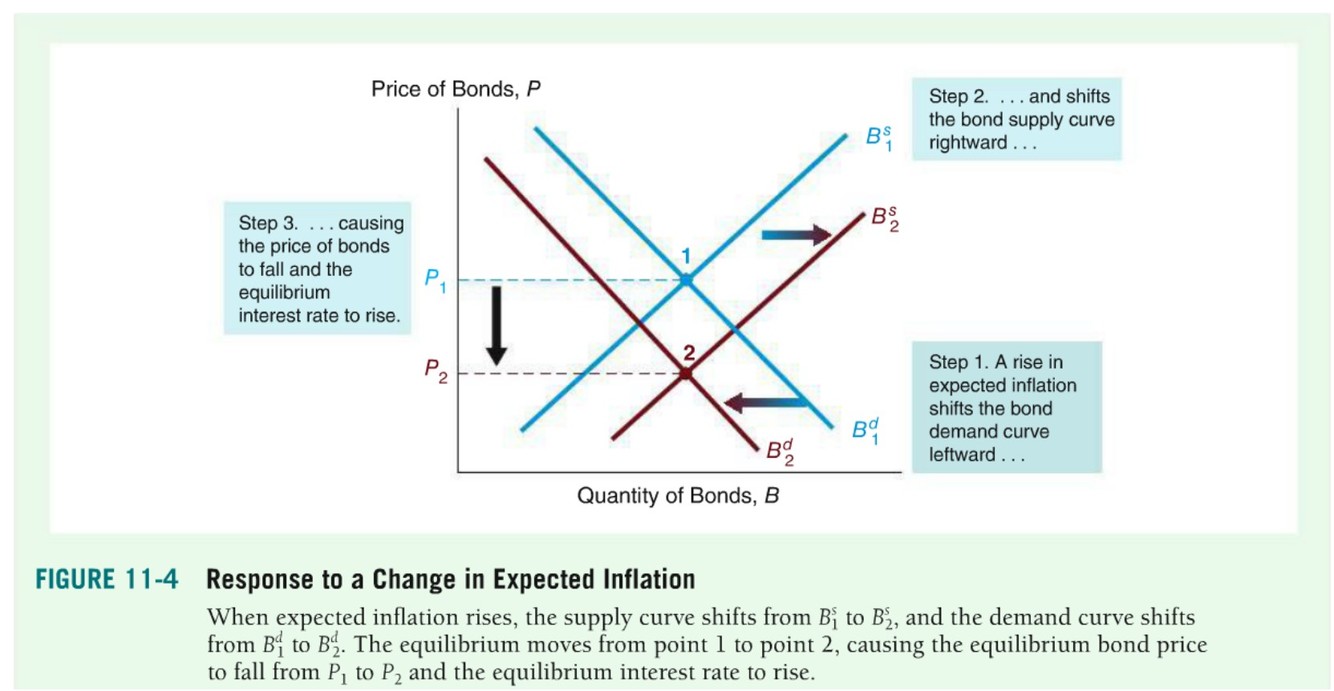
- . Changes in expected inflation is likely to alter expected returns on physical assets, therefore will affect the demand for bonds;
- Risk ( the majority of investors are risk averse): higher risk, lower demand
- Liquidity: higher liquidity, higher demand
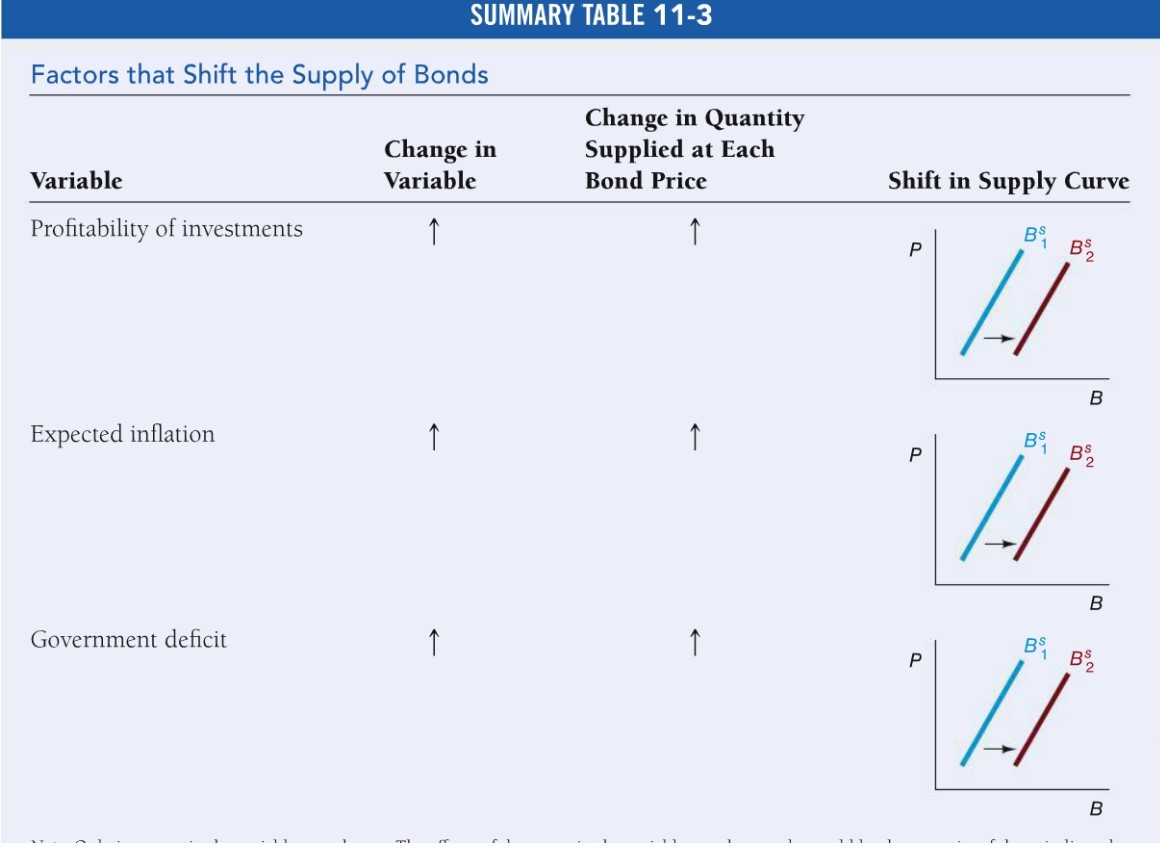
Supply of bonds
Expected profitability of Investment Opportunities:
Expected inflation:
Government budget deficits:
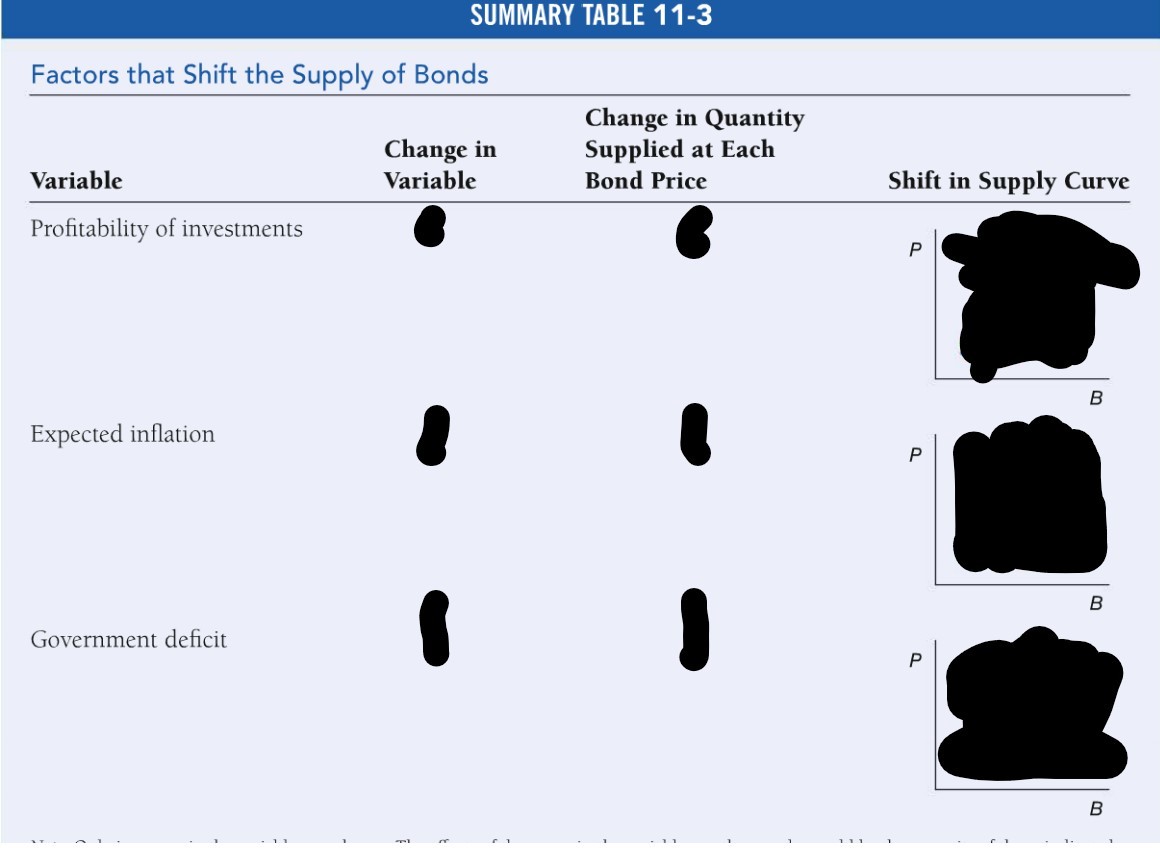
- Expected profitability of Investment Opportunities; e.g. business cycle expansion, recession.
- Expected inflation: higher expected inflation lead to lower real interest rate (cost of borrowing), therefore increases the supply of bond, ceteris paribus.
- Government budget deficits: higher deficits, more supply of government bond.
C. Wealth affects both the Demand and Supply of the bond:
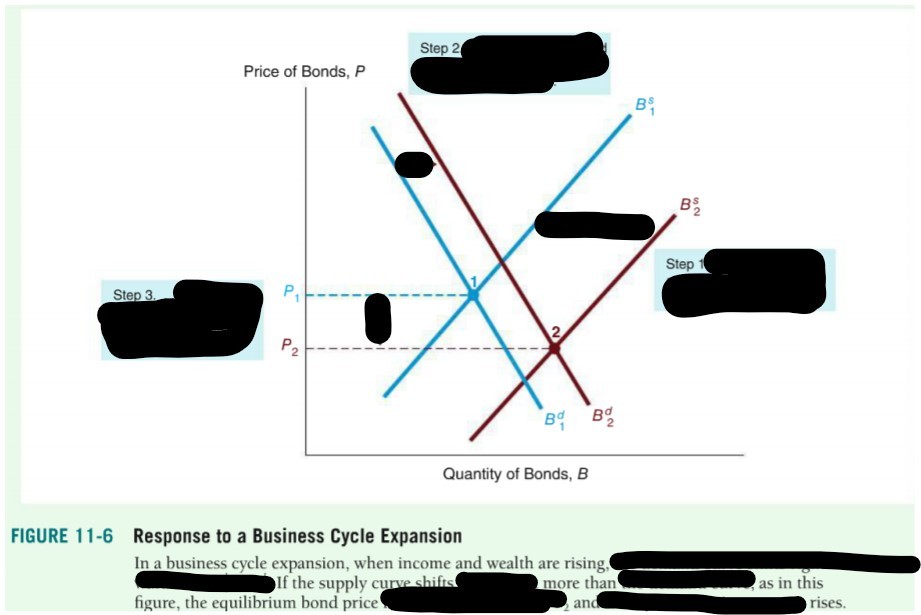
C. Wealth affects both the Demand and Supply of the bond:
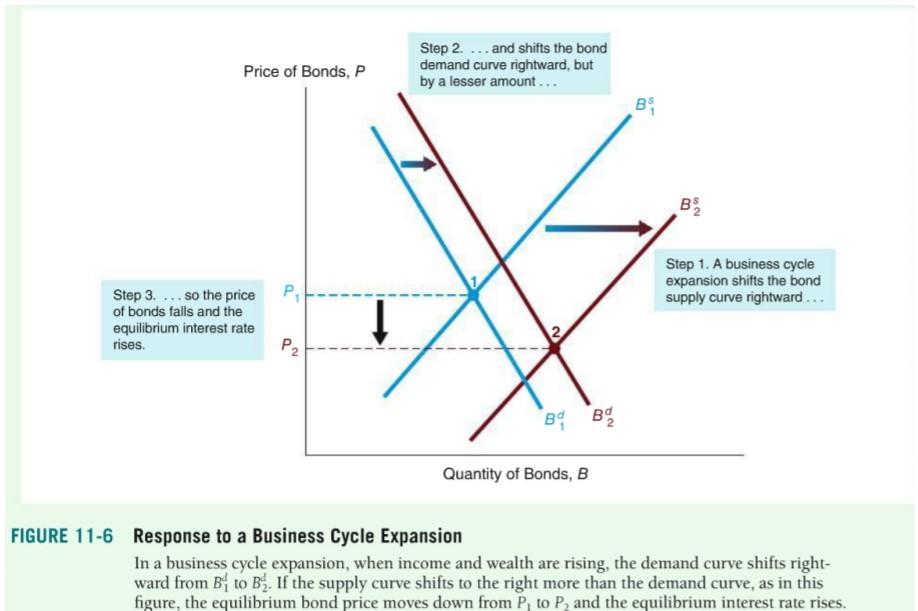
The Fisher effect: (The expected inflation rate changes may affect both the demand and the supply of bonds)
a) when
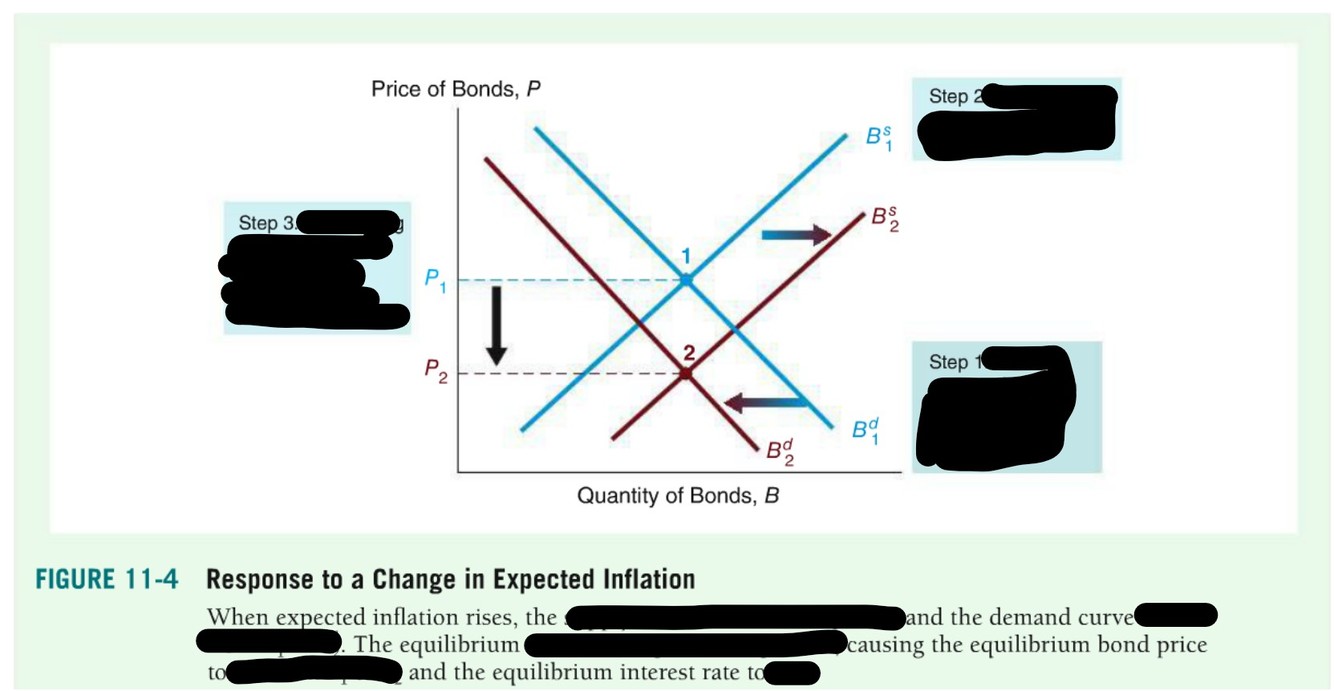
The Fisher effect: (The expected inflation rate changes may affect both the demand and the supply of bonds)
a) when expected inflation rises, interest rates will rise
Liquidity preference framework:
a)Keynes assumes: people use
𝐵….(formula)
Total wealth in the economy must equal ….
If the market for money is in equilibrium…
Liquidity preference framework: the equilibrium interest rate is determined through demand and supply for money.
a)Keynes assumes: people use two main categories of assets to store their wealth: money and bonds Thus:
𝐵^𝑆 + 𝑀^𝑆 = 𝐵^𝐷 + 𝑀^D
S=supply d=demand
Total wealth in the economy must equal the total quantity of bonds plus money in the economy
If the market for money is in equilibrium (Ms =Md ), then the bond market is also in equilibrium.
Continuation of Liquidity preference framework
B. Quantity of money demanded and the interest rate should be
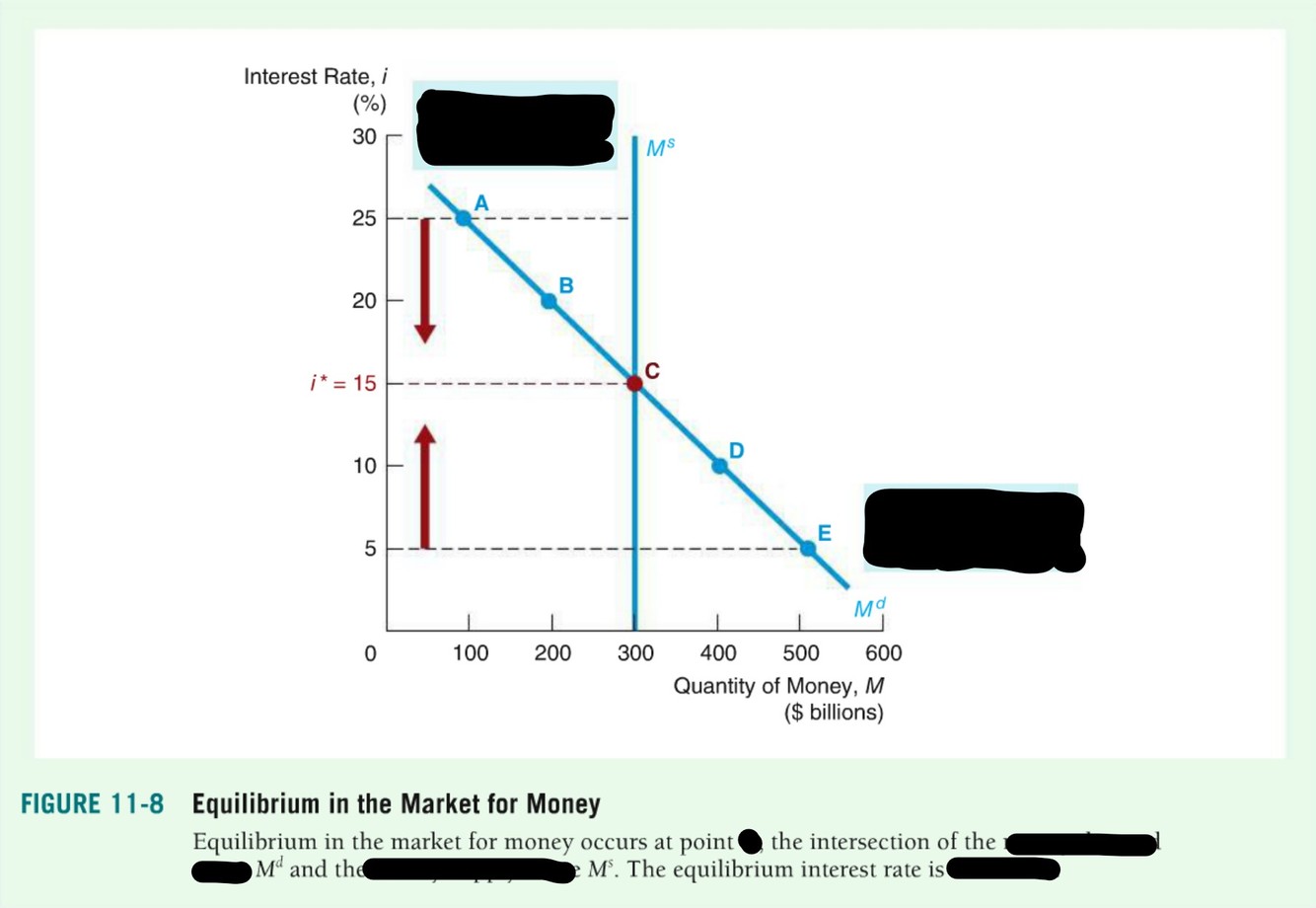
B. Quantity of money demanded and the interest rate should be negatively related by using the concept of opportunity cost.
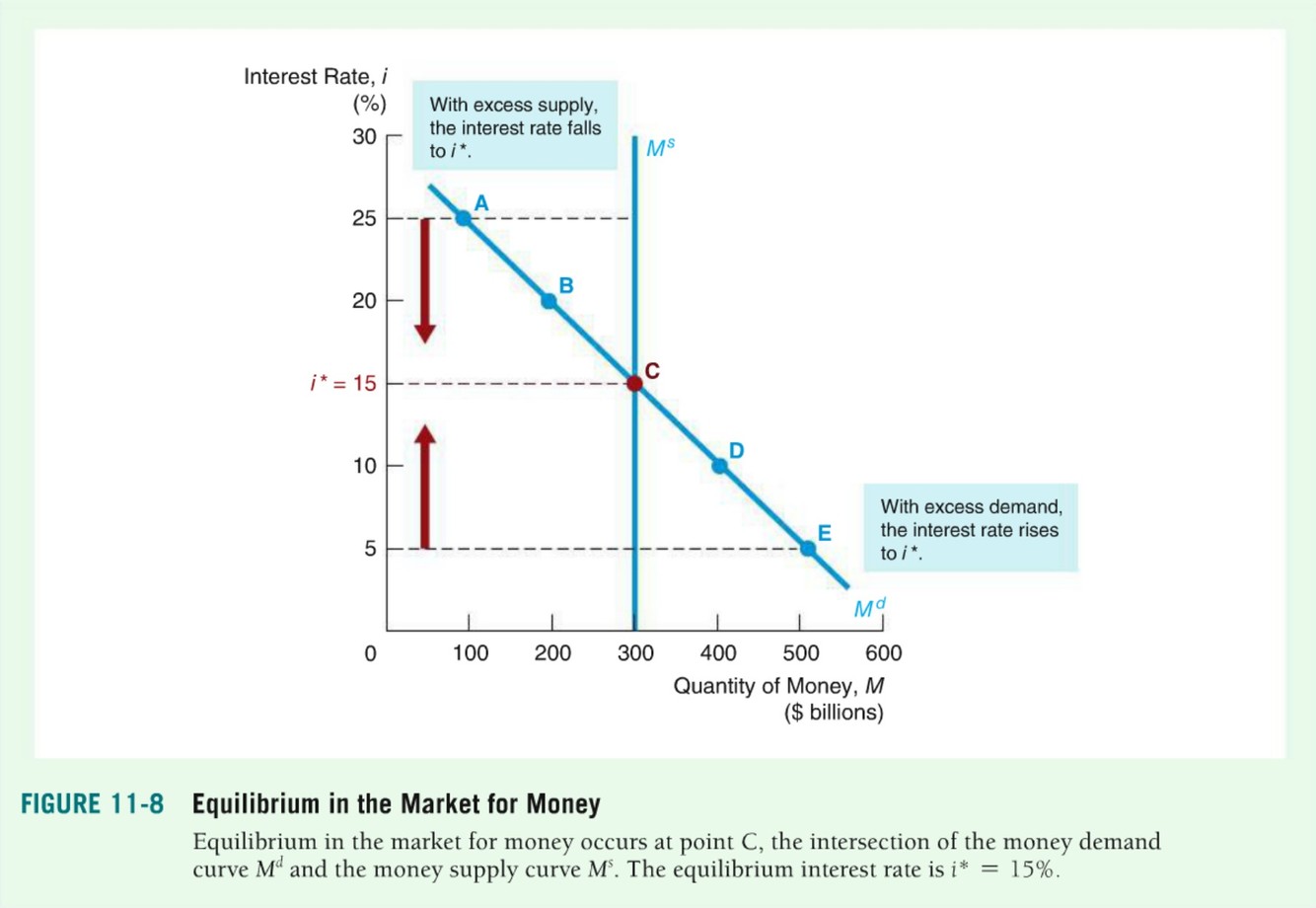
Continuation of Liquidity preference framework
C.Changes in equilibrium interest rates in the liquidity preference framework
a. Demand for money:
i. Income Effect:
ii. Price-level effect:
b. Supply of money
i. Assuming that supply of money is completely controlled by the central bank (e.g. Bank of Canada): an
Continuation of Liquidity preference framework
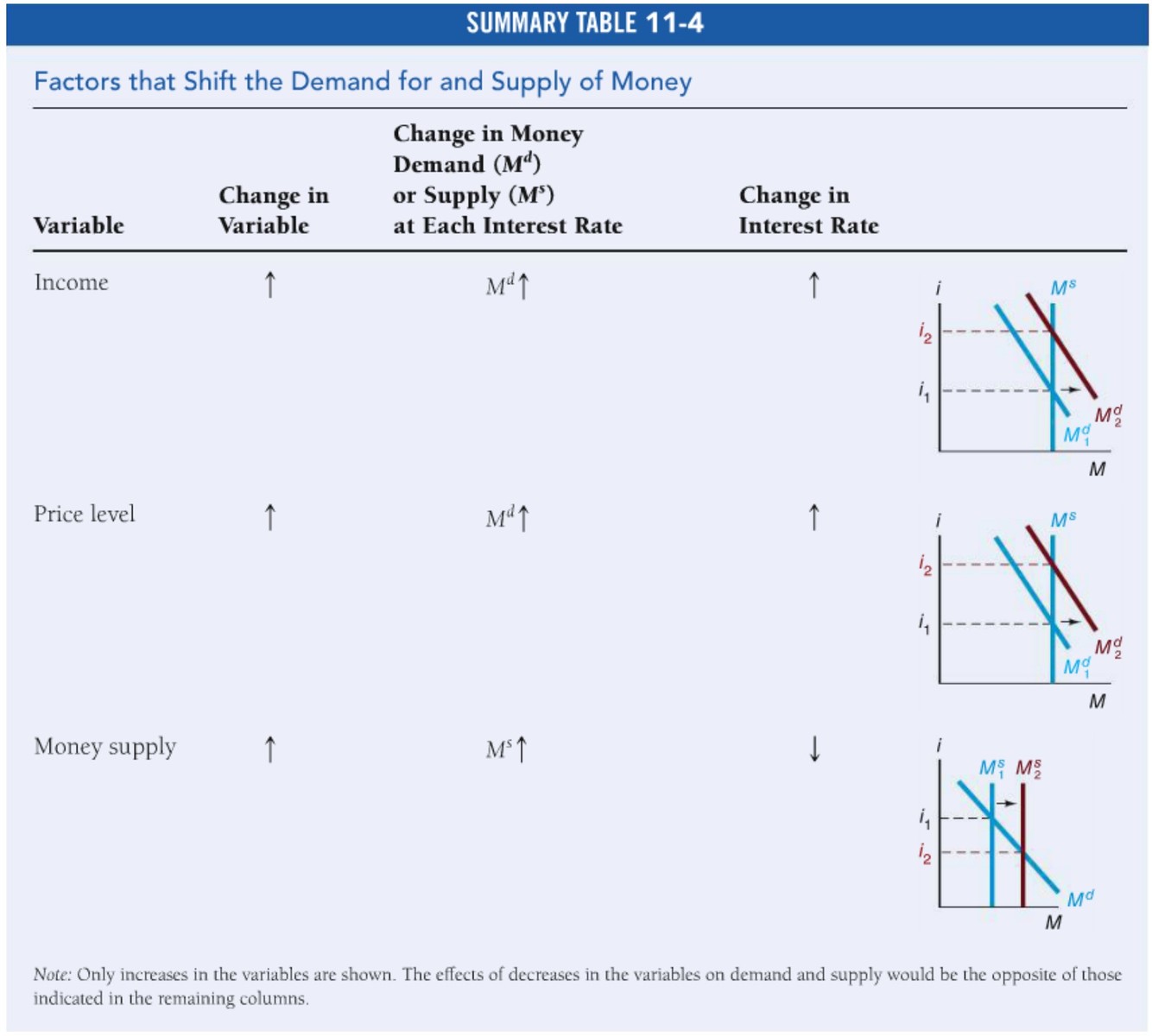
C.Changes in equilibrium interest rates in the liquidity preference framework
a. Demand for money:
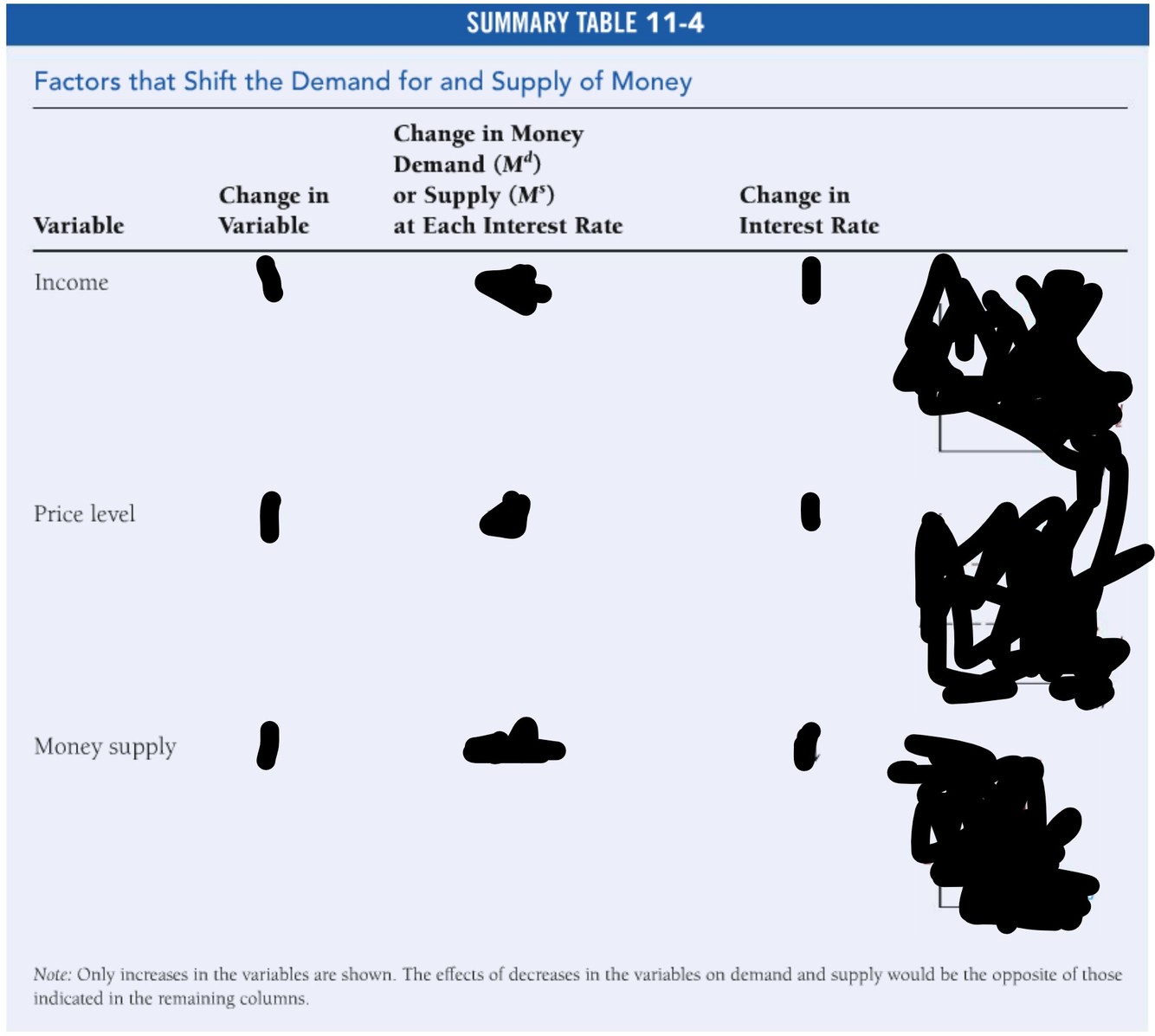
i. Income Effect: a higher level of income causes the demand for money at each interest rate to increase and the demand curve to shift to the right;
ii. Price-level effect: a rise in the price level causes the demand for money at each interest rate to increase and the demand curve to shift to the right;
b. Supply of money
i. Assuming that supply of money is completely controlled by the central bank (e.g. Bank of Canada): an increase in the money supply engineered by the Bank of Canada will shift the supply curve for money to the right.
How equilibrium interests rate are affected:
i. …, interest rates will rise, ceteris paribus. (Same as the analysis in the bond supply and demand)
ii. … interest rates will rise, ceteris paribus.
iii. …, interest rates will decline, ceteris paribus.
a) Criticism on the liquidity effect: raised by Milton Friedman. An increase in the money supply …
b) The increase in money supply may have the following effect which will increase the equilibrium interest rate, and is opposite to the liquidity effect.
a. …
b. …
c. ….
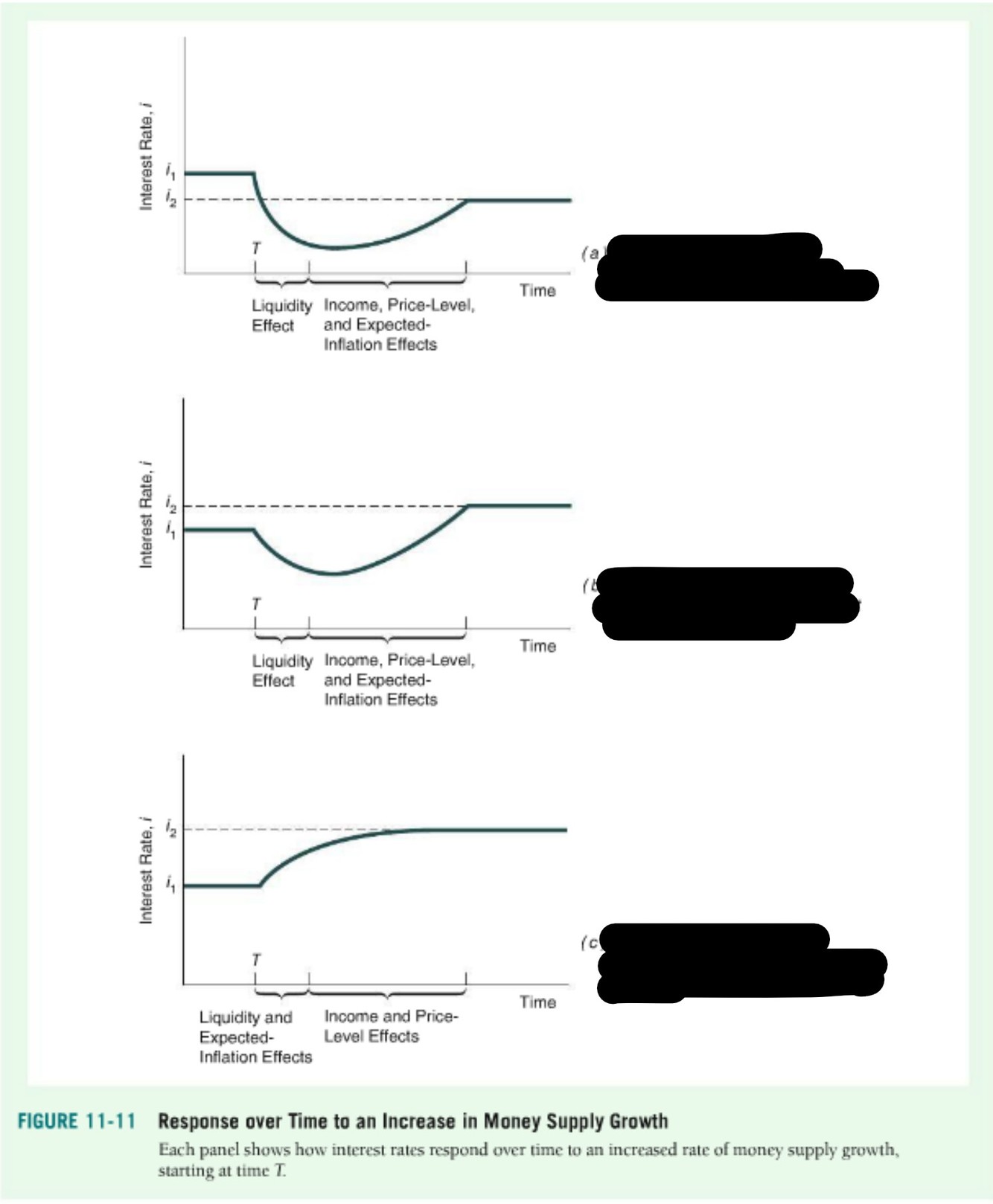
iv. Growth of the money supply and interest rates
a) Some policy maker suggest to provide a higher rate of money growth to … the interest rate. This is true only when the …dominates the rest of the effect, i.e. …
b) Generally, the liquidity effect from greater money growth takes effect …., because the rising money supply leads to an ….
c) The income and price-level effects take … because … for the increasing money supply to raise the….
d) The expected-inflation effect can …, depending on w…when the money growth rate is increased
e) There are three possibilities, as a result of increase in money supply:
a. …
b. …
c. …
How equilibrium interests rate are affected:
i. When income is rising during a business cycle expansion, interest rates will rise, ceteris paribus. (Same as the analysis in the bond supply and demand)
ii. When the price level increases, interest rates will rise, ceteris paribus.
iii. When the money supply increases, interest rates will decline, ceteris paribus.
a) Criticism on the liquidity effect: raised by Milton Friedman. An increase in the money supply might not leave everything else equal and will have other effects on the economy that may make interest rates rise. If these effects are substantial, it is possible that when the money supply increases, interest rates might also increase.
b) The increase in money supply may have the following effect which will increase the equilibrium interest rate, and is opposite to the liquidity effect.
a. Income effect: the income effect of an increase in the money supply is a rise in interest rates in response to the higher level of income;
b. Price-level effect: the price-level effect from an increase in the money supply is a rise in interest rates in response to the rise in price level.
c. Expected-inflation effect: the expected-inflation effect of an increase in the money supply is a rise in interest rates in response to the rise in the expected inflation rate. (remember Fisher effect)
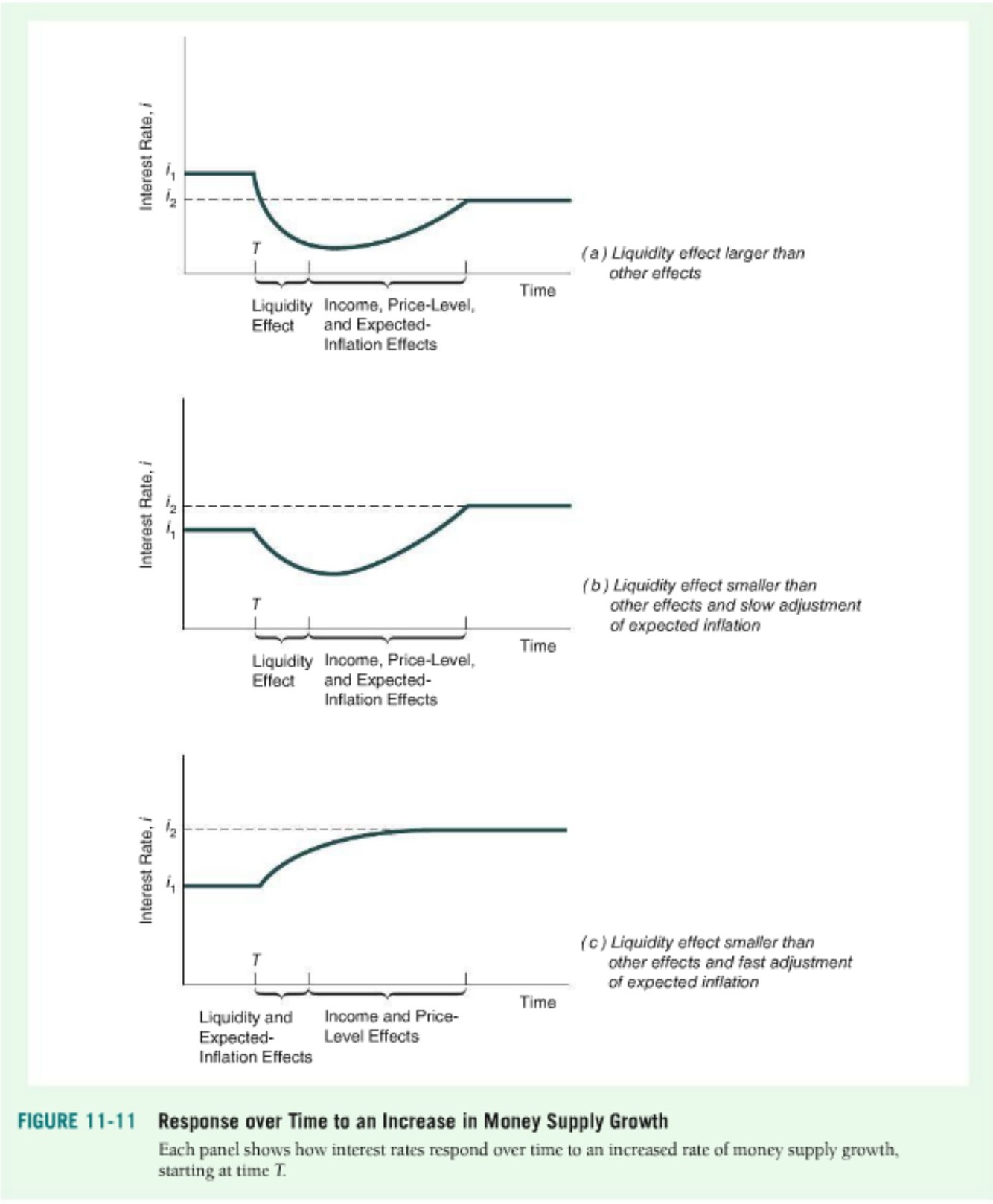
iv. Growth of the money supply and interest rates
a) Some policy maker suggest to provide a higher rate of money growth to decrease the interest rate. This is true only when the liquidity effect dominates the rest of the effect, i.e. income effect, price-level effect, and expected-inflation effect.
b) Generally, the liquidity effect from greater money growth takes effect immediately, because the rising money supply leads to an immediate decline in the equilibrium interest rate.
c) The income and price-level effects take longer to work because time is needed for the increasing money supply to raise the price level and income.
d) The expected-inflation effect can be slow or fast, depending on whether people adjust their expectations of inflation slowly or quickly when the money growth rate is increased
e) There are three possibilities, as a result of increase in money supply:
a. Liquidity effect dominates
b. The liquidity effect is smaller than the other effects
c. The expected-inflation effect dominates and operates rapidly




