- The gains from trade: the …
- … is an economic theory that holds there is a fixed amount of wealth in the world and …. A. The key mistake in … thinking was the …
- …: When a country … trade with other countries, meaning it is a closed economy, we call it …
- The gains from trade: the improvement in national welfare is known as the gains from trade
- Mercantilism: is an economic theory that holds there is a fixed amount of wealth in the world and that a nation’s prosperity depends on its success in accumulating wealth by exporting more than it imports, thereby earning profits from its exports. It stressed exports over imports, primarily as a way to obtain revenues for building armies and national construction projects. A. The key mistake in mercantilist thinking was the belief that trade was a zero sum activity
- Autarky: When a country do not trade with other countries, meaning it is a closed economy, we call it autarky
4. R… model of trade (barter trading)
I. Absolute …
A. Assuming:
a. Two ….
b. Two …
c. One input: …
d. Firms are …, or markets are ….
e. Technology is …. and there are no changes …
f. Labor is perfectly …between ….but perfectly … across ….
B.Labor Productivity= ..
C. Basis of Adam’s Smith’s support for free trade was the belief that every country would have an…. and that the source …did not matter.
D. Example:
Ricardian model of trade (barter trading)
I. Absolute productivity advantage
A. Assuming:
a. Two goods
b. Two countries, A and B
c. One input: labor
d. Firms are price takers, or markets are competitive
e. Technology is constant and there are no changes in technology or skills
f. Labor is perfectly mobile between industries but perfectly immobile across national borders.
B.Labor Productivity: (unites of output)/(hours worked)
C. Basis of Adam’s Smith’s support for free trade was the e belief that every country would have an absolute advantage in something and that the source of the advantage did not matter.
D. Example:
Ricardian model of trade (barter trading)
a. Absolute productivity advantage:
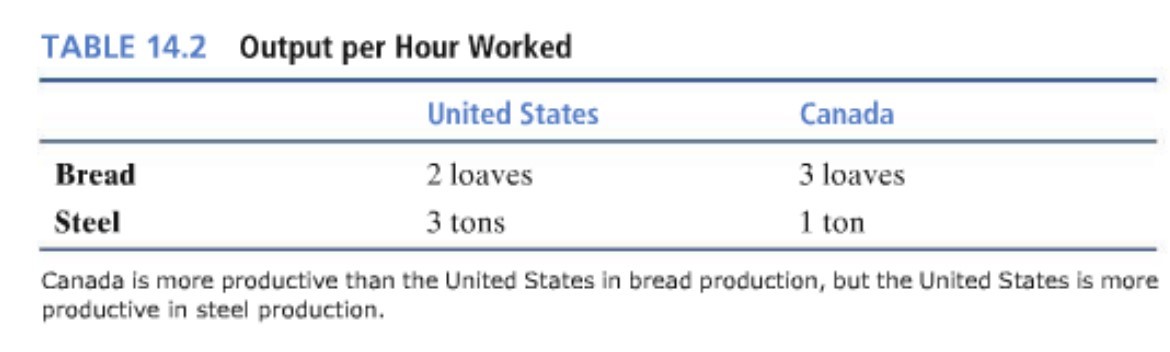
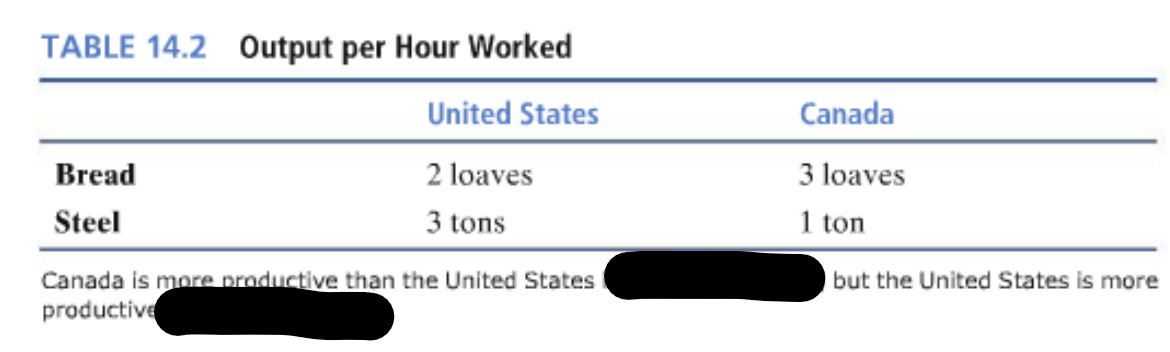
In this case: Canada has absolute productivity advantage in producing bread, and USA has absolute productivity advantage in producing steel. when trade occurs, USA will specialize in producing steel, and Canada will specialize in producing bread.
b. Opportunity cost:
In Canada, the opportunity cost of producing Steel=3 loaves of bread/1 ton of steel;
The opportunity cost of producing 1 loaves of bread=1 ton of steel/3 loaves of bread;
In USA, the opportunity cost of producing steel=2 loaves of bread/3 tons of steel;
The opportunity of producing 1 loaves of bread=3 tons of steel/2 loaves of bread.