EKGs Flashcards

Review the most important EKGs and medications. (38 cards)

1
Q

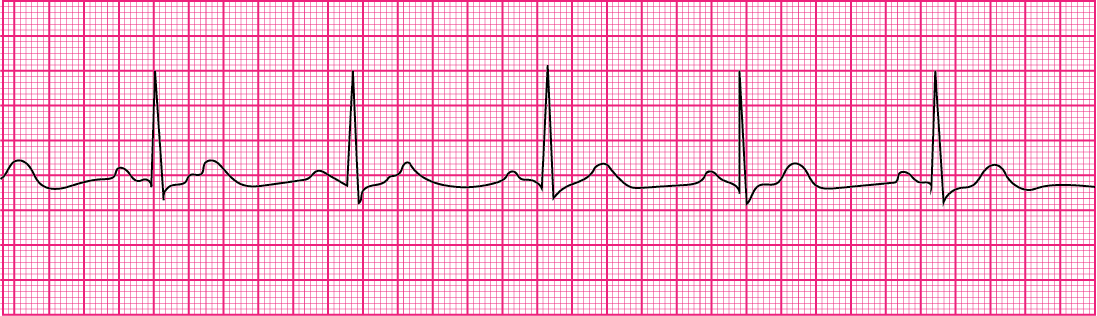
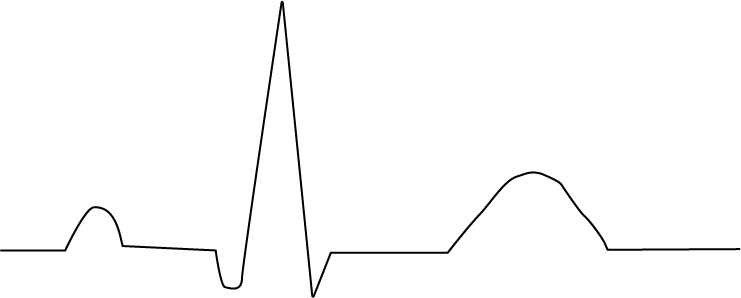
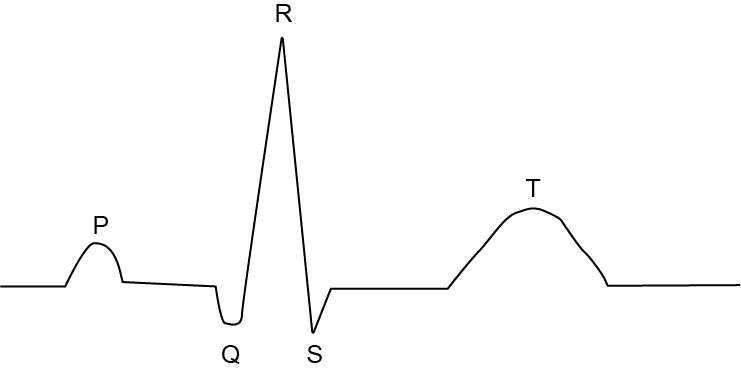
Where is the P, QRS, and T wave?
A
2
Q

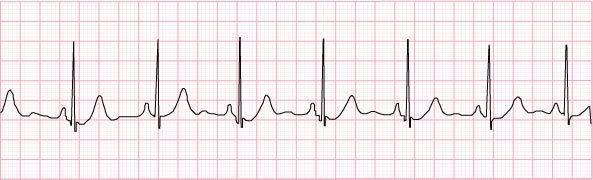
Using the rhythm below, how would you calculate the heart rate?

A

Count the peaks (the R waves) and multiply times 10.

Example: 7 peaks X 10 = about 70 beats per minute

3
Q

What are the common signs and symptoms for most dysrhythmias?

A
  • heart palpitations
  • tachycardia
  • short of breath
  • anxiety
  • dizziness
  • decreased level of consciousness
4
Q

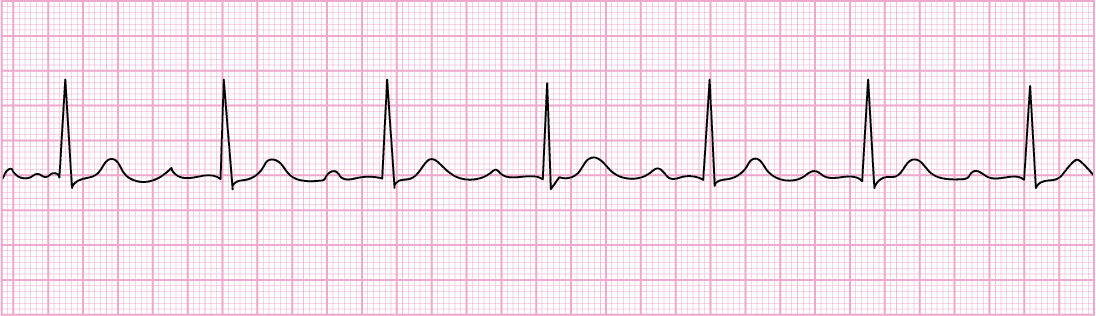
Identify this rhythm:

A

normal sinus rhythm

70 beats per minute

5
Q

Identify this rhythm:

A

sinus bradycardia

50 beats per minute

6
Q

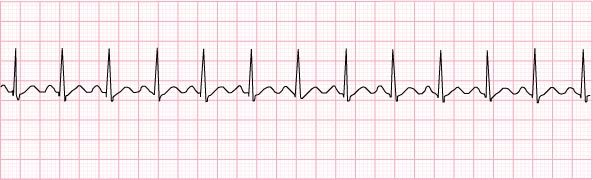
Identify this rhythm:

A

sinus tachycardia

130 beats per minute

7
Q

Identify this rhythm:

(immediate complication)
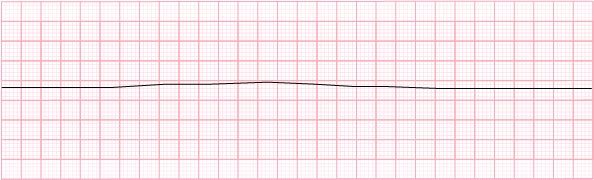
A

asystole

8
Q

Identify this rhythm:

(immediate complication)
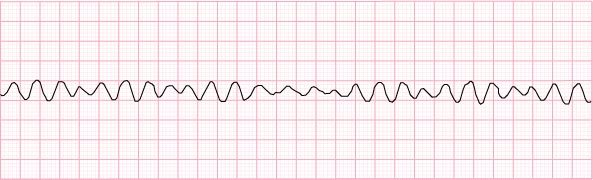
A

ventricular fibrillation

9
Q

Identify this rhythm:

(immediate complication)
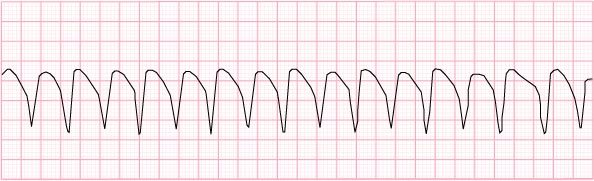
A

ventricular tachycardia

10
Q

Identify this rhythm:

(immediate complication)
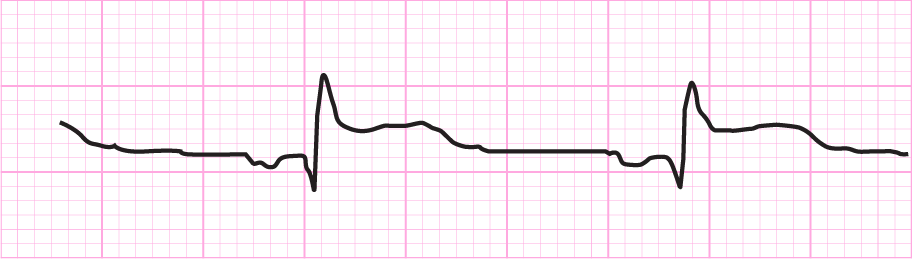
A

myocardial infarction

11
Q

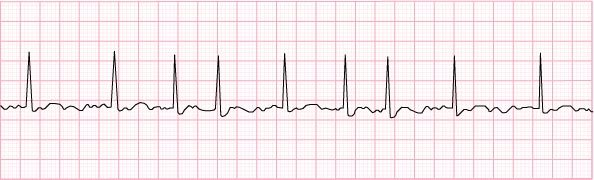
Identify this rhythm:

A

atrial fibrillation

12
Q

Identify this rhythm:

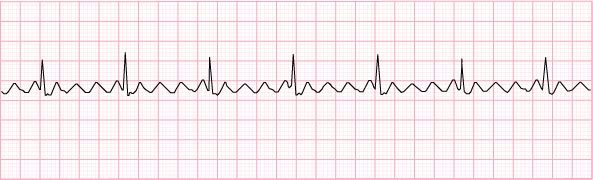
A

atrial flutter

13
Q

Identify this rhythm:

A

1st degree AV block

PR interval is elongated.

14
Q

Identify this rhythm:

A

2nd degree AV block Type 1 (Wenckebach/Mobitz I)

PR interval gets longer and longer and then it drops.

15
Q

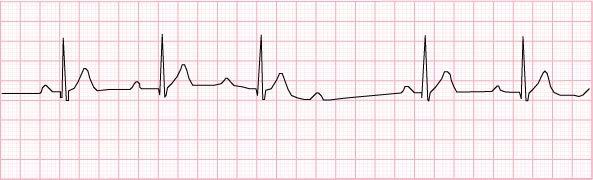
Identify this rhythm:

A

2nd degree AV block Type 2 (Mobitz II)

PR interval stays the same and then QRS is missing.

16
Q

What is common about most heart blocks?

A
  • typically less than 60 beats per minute
  • have an elongated PR interval
  • will receive atropine if showing symptoms
  • if atropine doesn’t work, client will either get cardioversion or a pacemaker.
17
Q

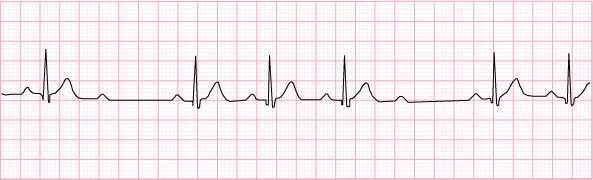
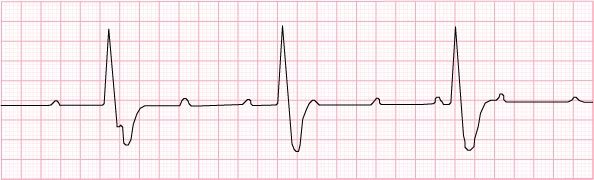
Identify this rhythm:

(Immediate complication)
A

3rd degree heart block (complete heart block)

18
Q

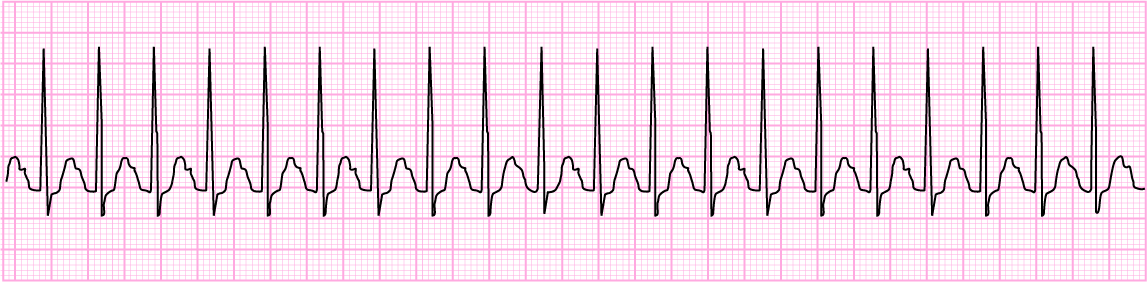
Identify this rhythm:

(Immediate complication)
A

supraventricular tachycardia

19
Q

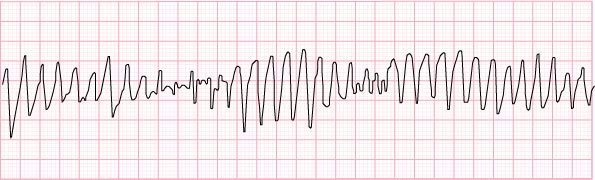
Identify this rhythm:

(Immediate complication)
A

torsades de pointes

20
Q

Identify this rhythm:

A

normal sinus rhythm with premature ventricular contractions (PVCs)

21
Q

Medications:

sinus tachycardia

A

Give meds to decrease the heart rate:

  • Beta blockers
  • Calcium channel blockers
  • Digoxin
22
Q

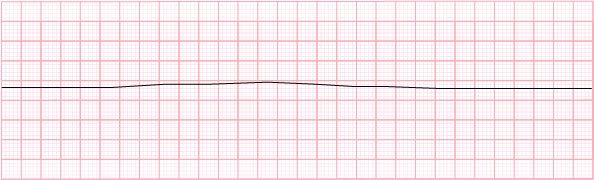
Interventions:

asystole

(Immediate complication)
A
  • start CPR
  • epinephrine
  • NO defibrillation
23
Q

Interventions:

ventricular fibrillation

(Immediate complication)
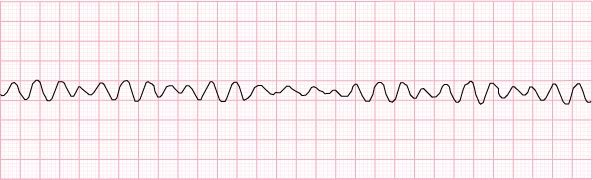
A
  • “defib the V-fib”
  • CPR
  • epinephrine
  • amiodarone (or lidocaine)
24
Q

Interventions:

ventricular tachycardia

(Immediate complication)
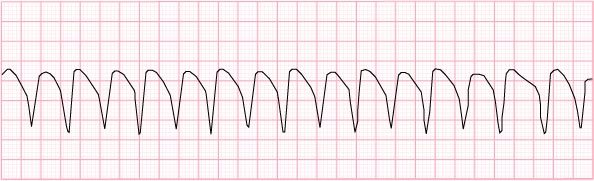
A
  • Pulseless V-tach
    • CPR
    • defibrillate
    • epinephrine
    • amiodarone (or lidocaine)
  • With a pulse: amiodarone (or lidocaine)
25
# Medications: atrial fibrillation and atrial flutter
1. **high risk for blood clots** * antiplatelets * anticoagulants 2. **to decrease heart rate** * beta blockers * calcium channel blockers * digoxin
26
# Interventions: myocardial infarction | (Immediate complication)
1. give **"OANM"** * oxygen * aspirin * nitroglycerin * morphine 2. **"clot busters"** if caused by a clot: T-PA 3. **cardiac catheterization** if caused by plaque
27
# Interventions: supraventricular tachycardia
* **vagal maneuvers** (carotid sinus massage, beardown/valsalva) * **cardiovert with adenosine**
28
# Interventions: normal sinus rhythm with pre-ventricular contractions
**If getting 6 PVCs in a row or more than 6 in a minute treat with:** * beta blockers * amiodarone * catheter ablation
29
What is a **pacemaker**?
Uses batteries to send electric signals to the heart to help it pump correctly. ## Footnote The pacemaker is connected to the heart by one or more wires.
30
# Teaching: Pacemakers
* take pulse daily and report abnormalities * avoid contact sports * inform airport security about pacemaker (can set off security detector) * most electrical devices are OK to use: move back 5 - 10 feet if experience unusual feelings * use cell phone on opposite side of pacemaker site
31
What is **defibrillation** and **cardioversion**?
Giving the client a **controlled electric shock** in order to put the client back into a normal sinus rhythm.
32
What is the **difference between defibrillation** and **cardioversion**?
* _Cardioversion_ is an administered shock **synchronized with the QRS complex.** * _Defibrillation_ is a **randomly administered shock** anytime during the cardiac cycle. *It is always done in emergencies.*
33
What is **catheter ablation**?
A procedure where a **part of cardiac tissue is burned off to prevent dysrhythmias**.
34
What are some common causes of dysrhythmias?
* electrolyte imbalances * CAD/blocked arteries * heart damage from an MI * cardiomyopathy * increased blood pressure * hyperthyroidism * smoking * caffeine/alcohol * meds/illegal drugs * genetics
35
# Signs and Symptoms: Myocardial infarction
* chest pain * left arm pain * gastric reflux pain * jaw pain * nausea/vomiting * upper back/shoulder pain * shortness of breath
36
What is the lead placement for an ECG?
37
What is the order of electrical activity in the heart?
1. SA node 2. AV node 3. bundle of HIS 4. bundle branches (left and right) 5. purkinje fibers
38
What is an implantable cardio defibrillator?
It sends a shock to reset the heart. ## Footnote Shock may be felt by others, but is not harmful.