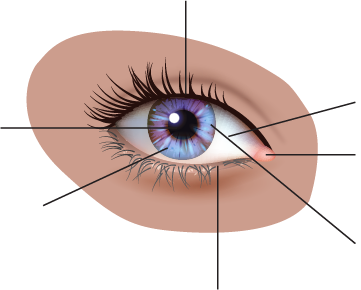
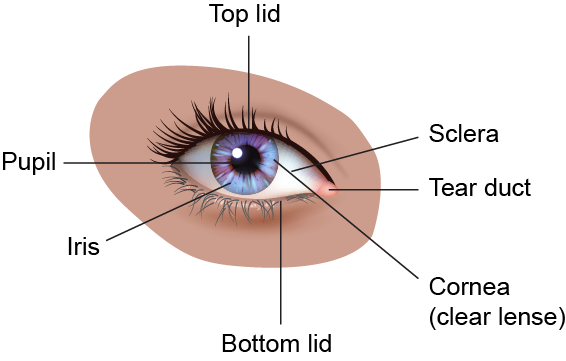
Name the parts of the eye on the diagram:
- bottom lid, cornea, iris, pupil, sclera, tear duct, top lid
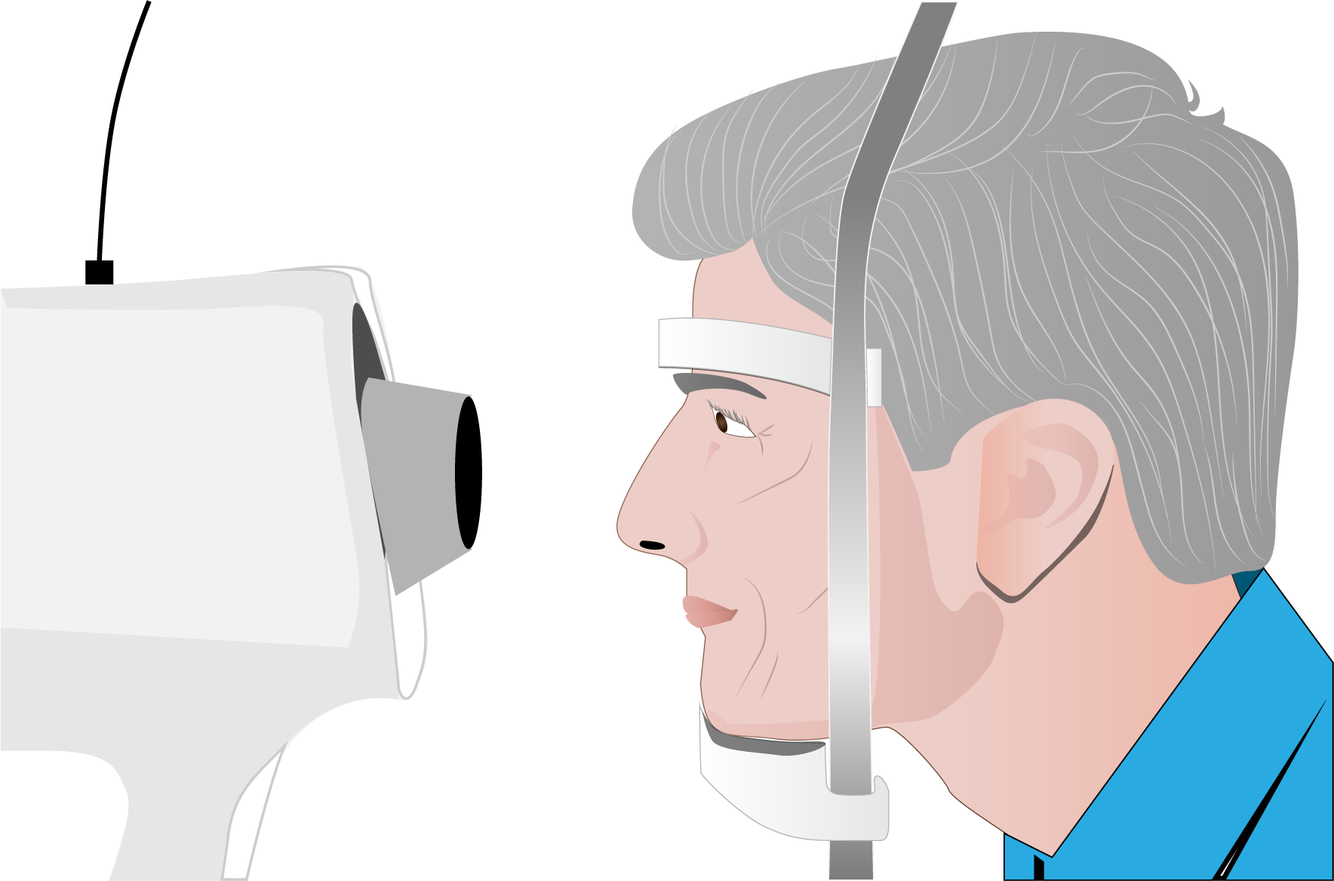
What is tonometry?
A diagnostic test to assess for an increase in the intraocular pressure, which could indicate glaucoma.
What is normal intraocular pressure (IOP)?
IOP = 10 to 21 mm Hg
It is higher in the mornings, so document what time it was measured.
What are the risk factors for eye and ear problems?
- aging
- infections
- medications - some meds cause blurry vision or ototoxicity
- trauma and tumors
- diabetes mellitus increases risk for blindness - due to sugar destroying the small vessels
What are the safety precautions for a client with a vision problem or eye injury?
- no straining
- don’t rub the eye
- fall precautions
What is considered perfect vision?
20/20 vision
How should the nurse speak to a client who can’t see well or is legally blind?
- orient client to the environment by explaining where things are
- use the “clock method” of describing where foods are on the plate
- let client hold onto the nurse’s arm when ambulating
- provide equipment that gives the time orally
Describe:
Cataracts
An opacity of the lens that distorts what the client sees that can progress to blindness.
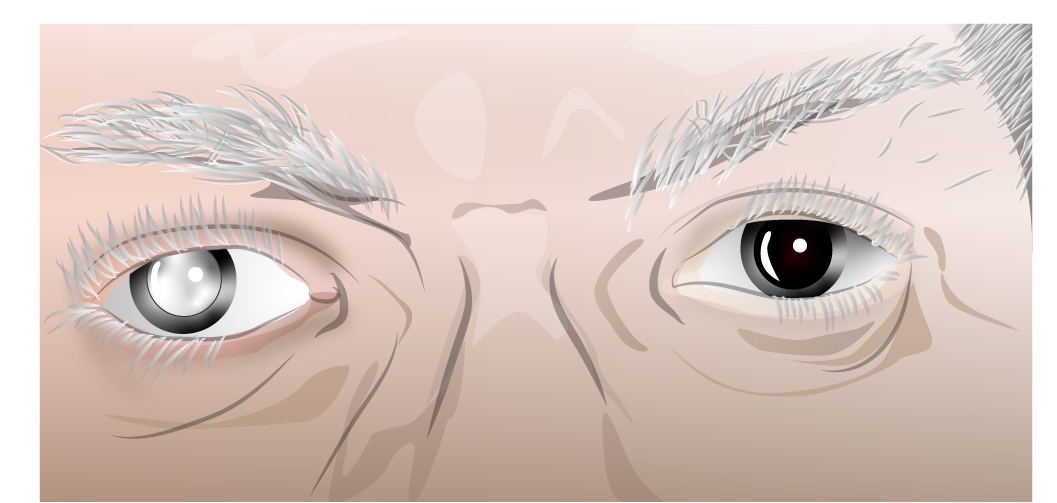
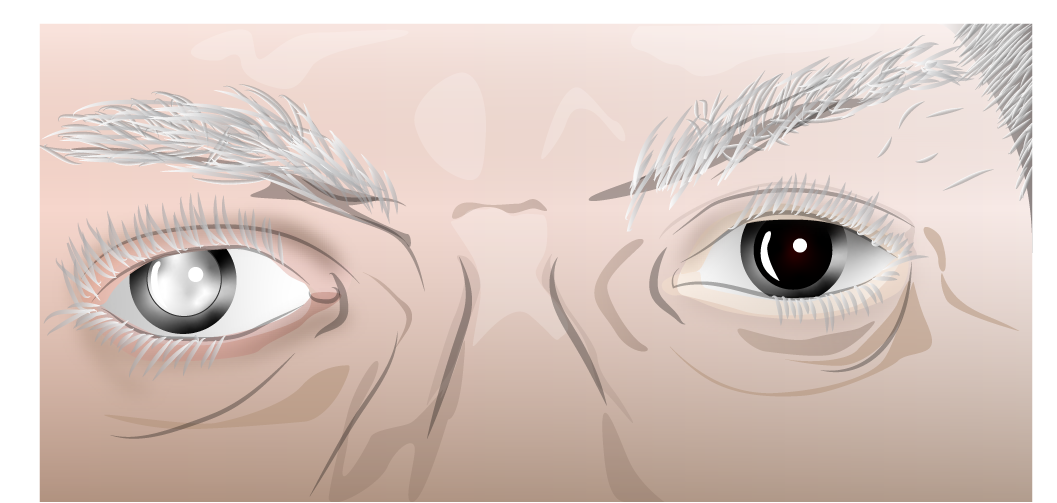
How do clients with cataracts see?
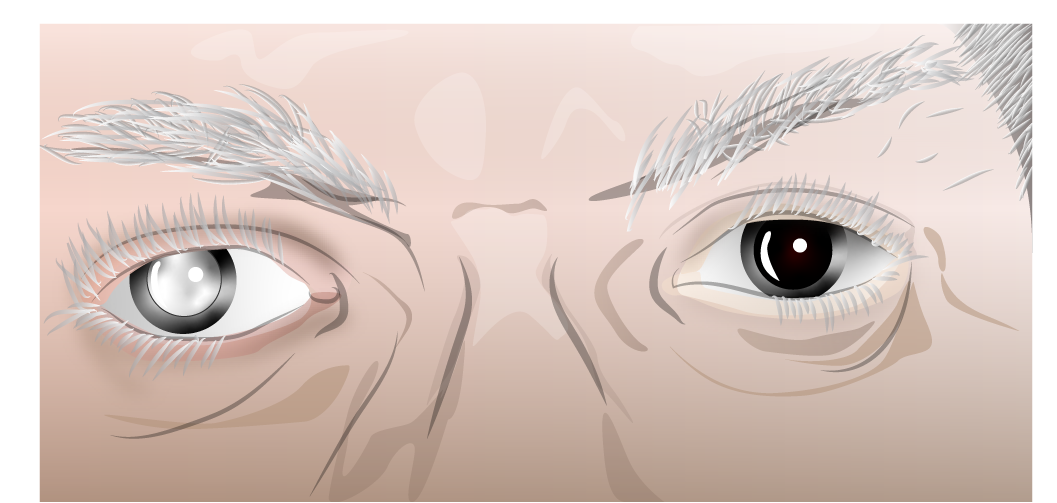
- blurry vision,
- double vision (diplopia), and
- have a harder time seeing color
Treatment:
Cataracts
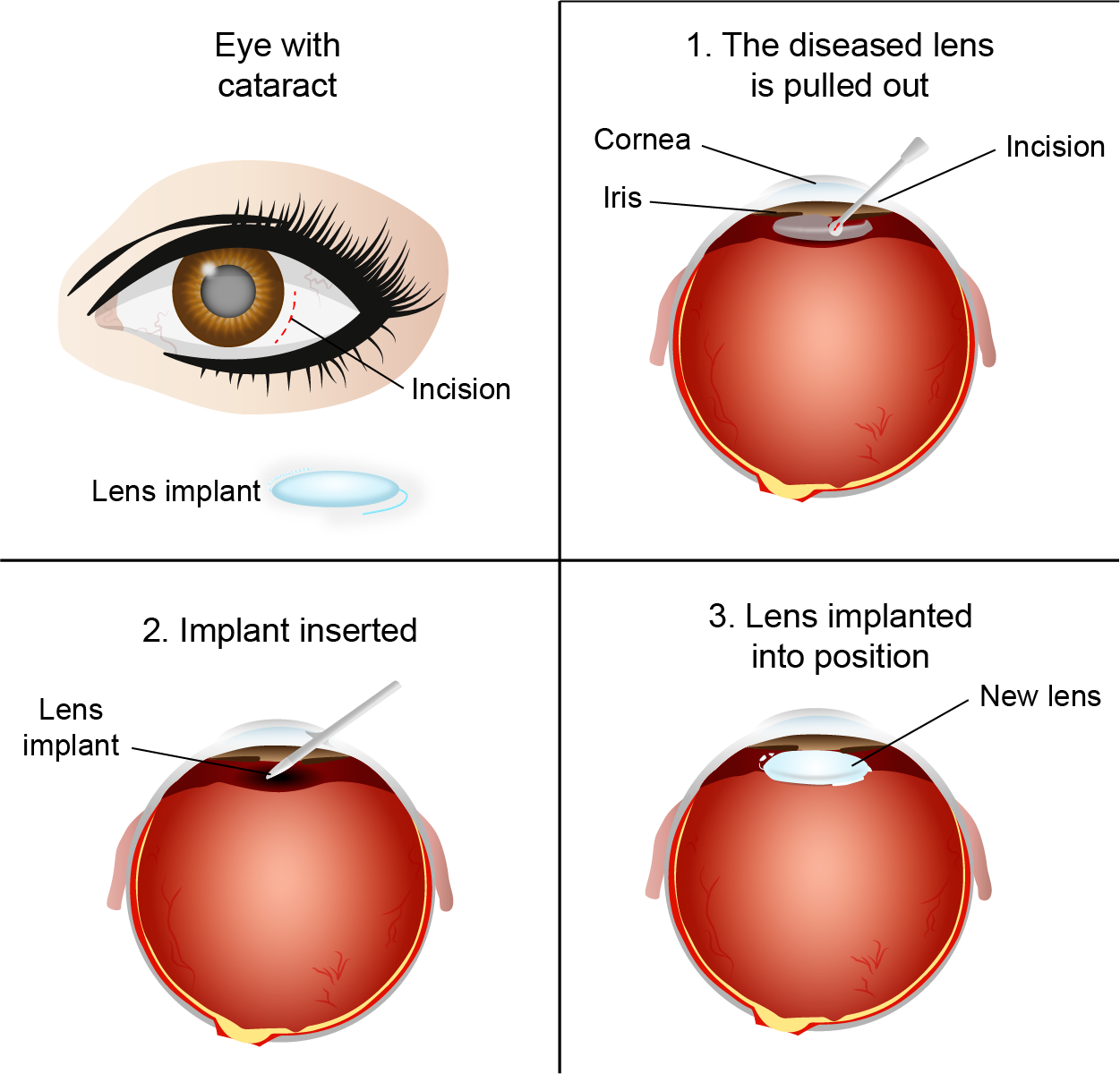
Cataracts are surgically removed (one at a time) when the vision interferes with the client’s ability to function normally.
Describe:
Glaucoma
An increase in intraocular pressure of the eye, which can damage the ocular nerve causing blindness.
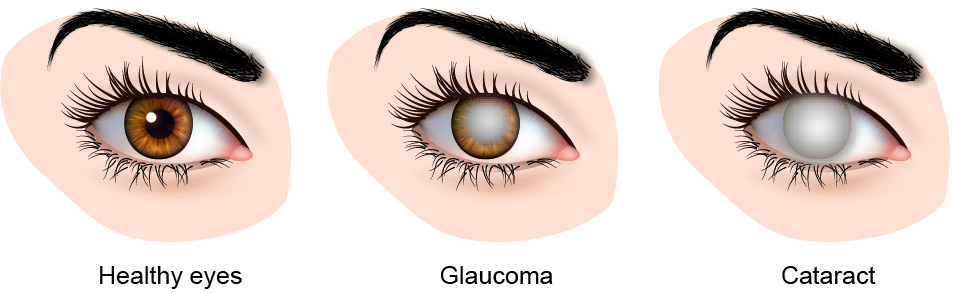
It occurs later in life and is hereditary.
Describe:
Acute angle-closure glaucoma
(Immediate complication)
Sudden eye pain and possible nausea and vomiting, resulting in blindness.
The client will receive antiglaucoma meds to lower the pressure.
What classification of medications are contraindicated with acute angle-closure glaucoma?
Anticholinergic medications
These meds cause the pressure to increase.
What is the most common type of glaucoma?
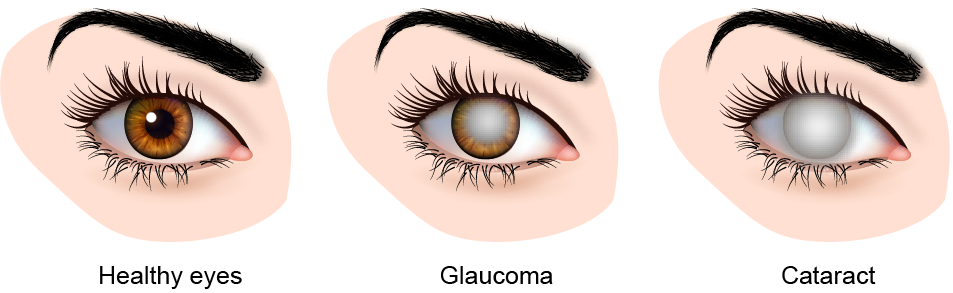
Open-angle glaucoma
Client can get loss of peripheral vision.
Interventions:
Glaucoma
Focus on lowering the pressure in the eye:
- give eye drops
- latanoprost
- timolol
- dorzolamide
If meds don’t work, possible surgery to drain fluid.
Describe:
Retinal detachment
The separation of layers in the eye due to too much fluid or a tumor.
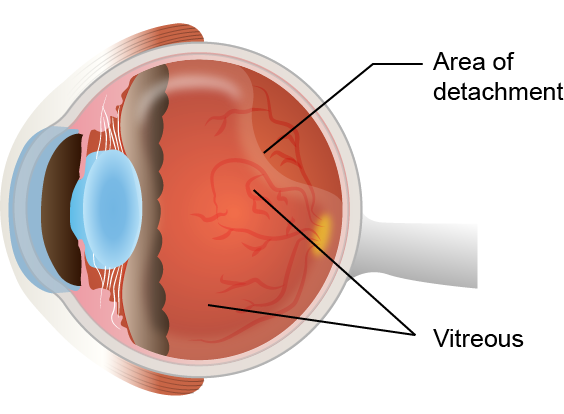
If untreated, blindness can occur.
What are the characteristic signs and symptoms of retinal detachment?
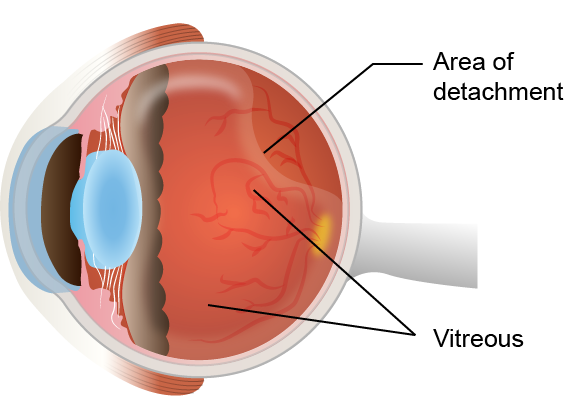
- flashes of light
- floaters
- blurry vision
- a sense that curtain is being drawn over the eye
- painless loss of vision

Interventions:
Retinal detachment
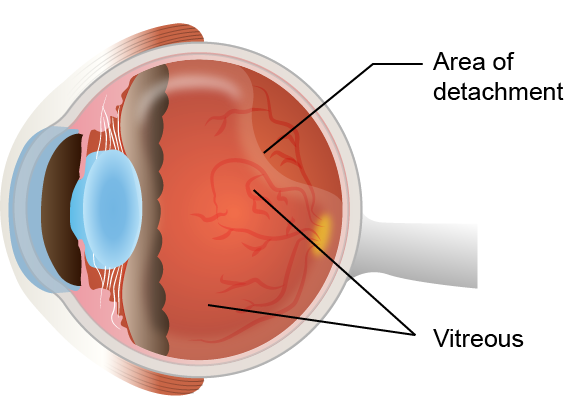
- avoid additional pressure on eyes
- surgery to drain fluid or remove tumor
Describe:
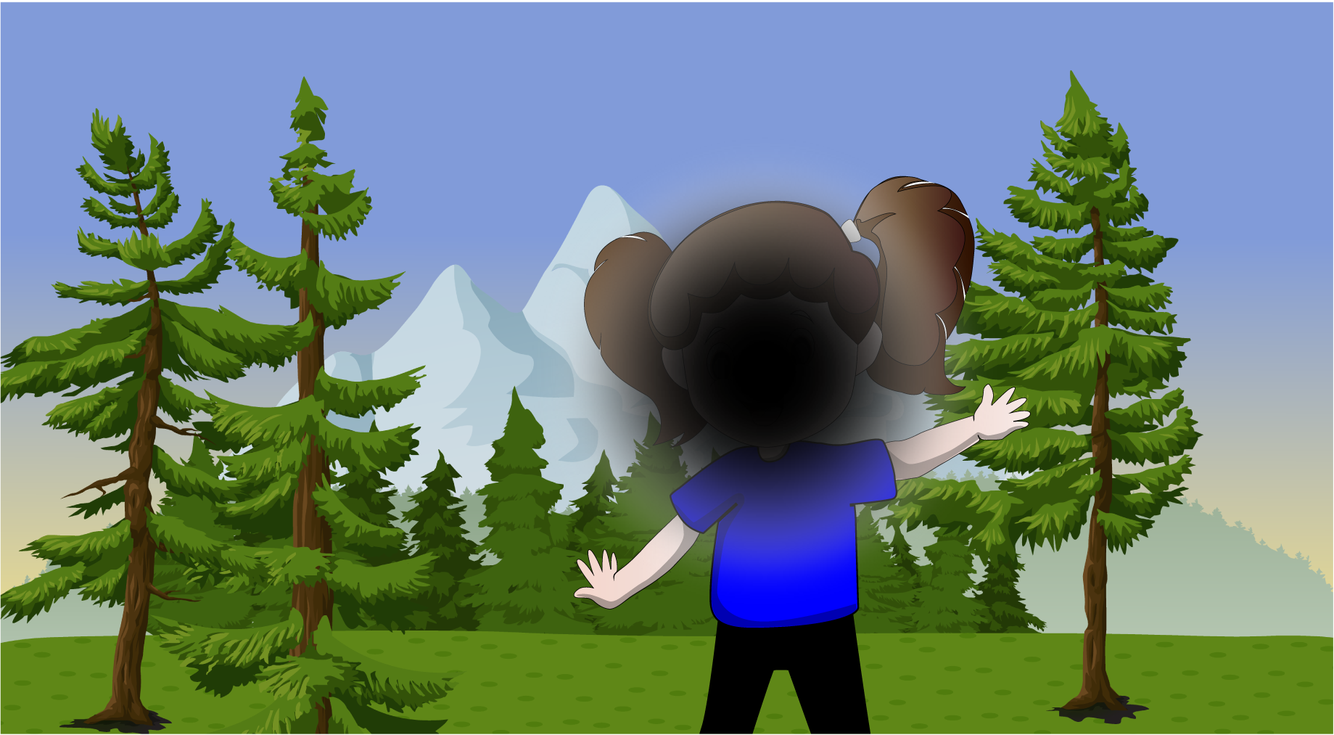
Macular degeneration
The loss of central vision more common in the elderly caused by leaking blood vessels.
Treatment:
Macular degeneration
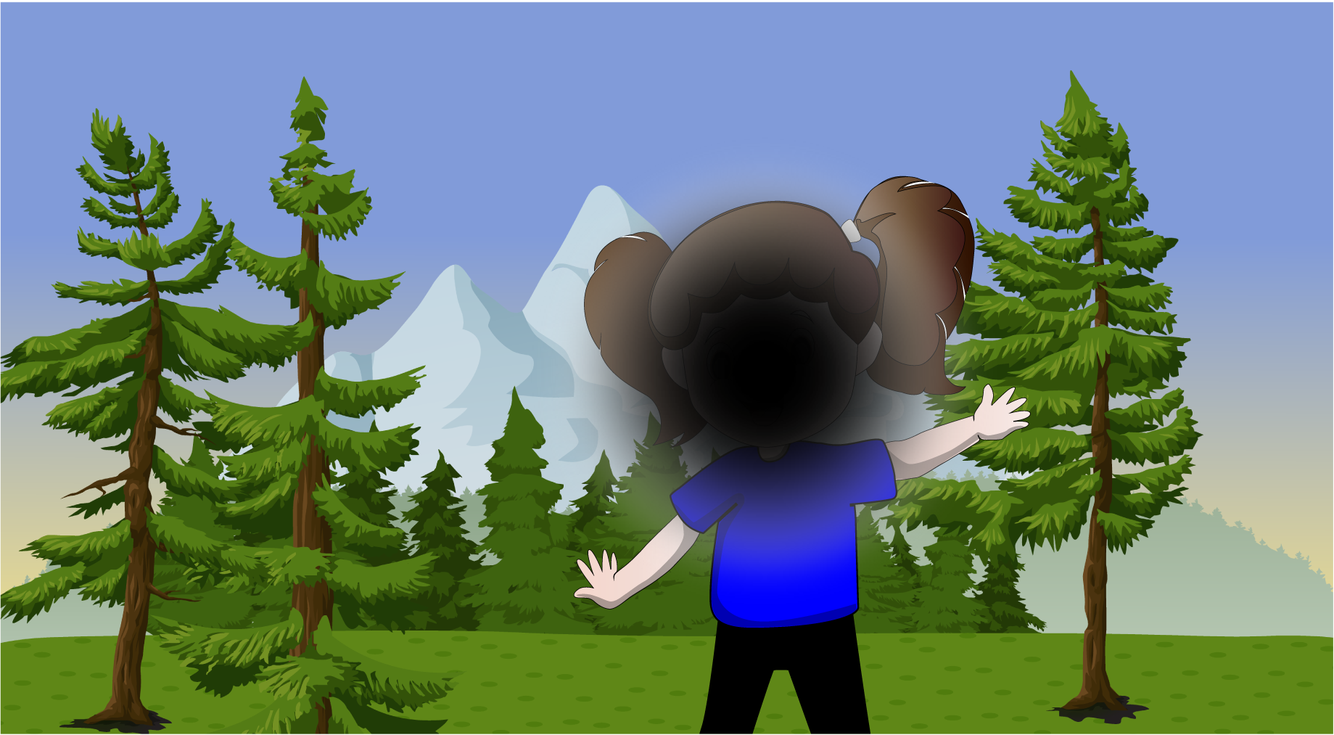
Possible surgery to seal leaking blood vessels.
What are the post-op interventions for eye surgery?
- keep bed elevated to 30 - 45 degrees
- maintain an eye patch
- position belongings on non-operative side
- fall precautions
Teaching:
Eye surgery
- avoid straining (bending over, constipation, heavy lifting)
- administer stool softeners
- don’t rub the eye
- administer eye drops
- contact HCP for signs of infection
What are the interventions if a client has a penetrating object in the eye such as sharp metal?
(Immediate complication)
- DO NOT remove the object
- cover the eye with a cup and tape in place
- no bending, no straining
- surgery to remove object

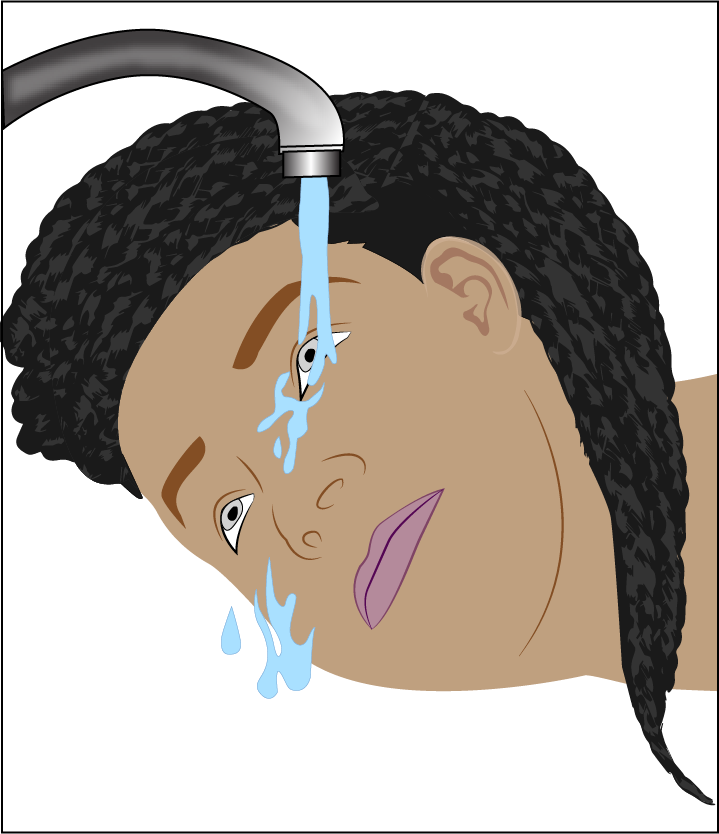
What is the intervention if a client gets chemicals splashed in the eye?
Flush eyes with water for at least 15 to 20 minutes.