Describe:
Syndrome of inappropriate anti-diuretic hormone (SIADH)
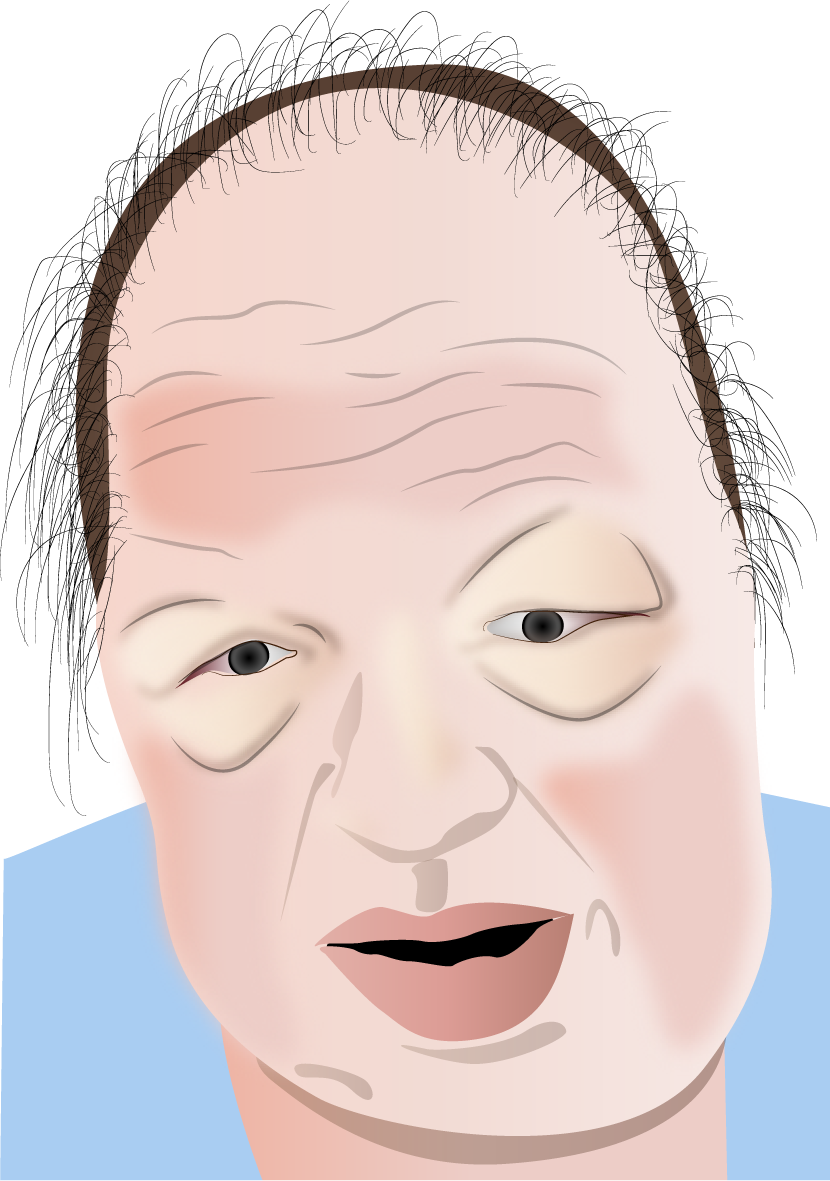
SIADH is increased secretion of antidiuretic hormone (ADH) in the posterior pituitary. It causes the client to hold onto urine (mostly water) and go into fluid volume overload.
It is caused by a type of head injury, stroke, brain tumor, or surgery of the brain.
Signs and symptoms:
SIADH
These are caused by the client holding onto urine (mostly water) and going into fluid volume overload:
- weight gain
- hypertension
- hyponatremia (diluted from too much water)
- high urine specific gravity >1.030 - dark yellow urine
Describe:
Diabetes Insipidus
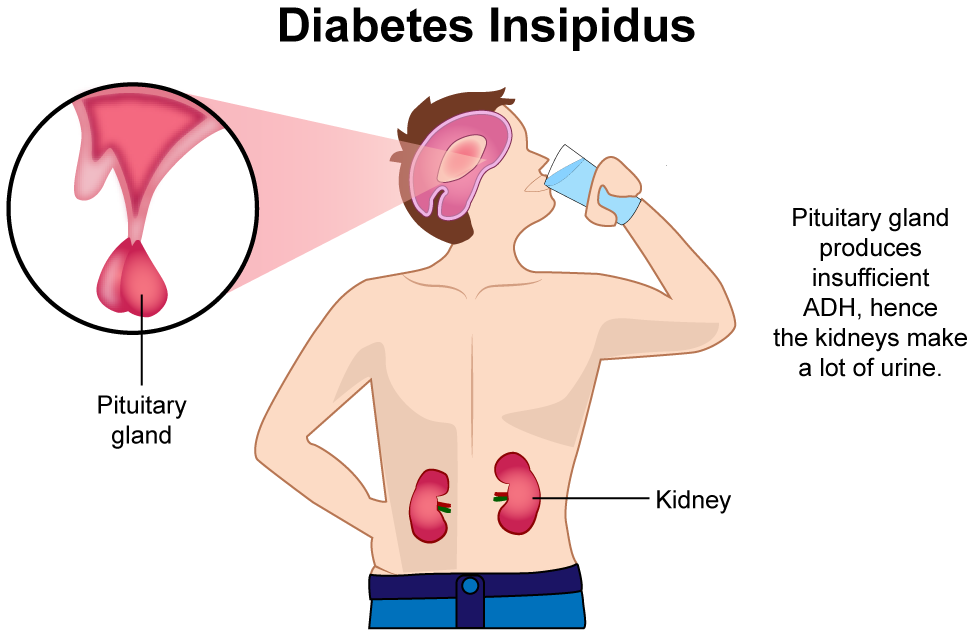
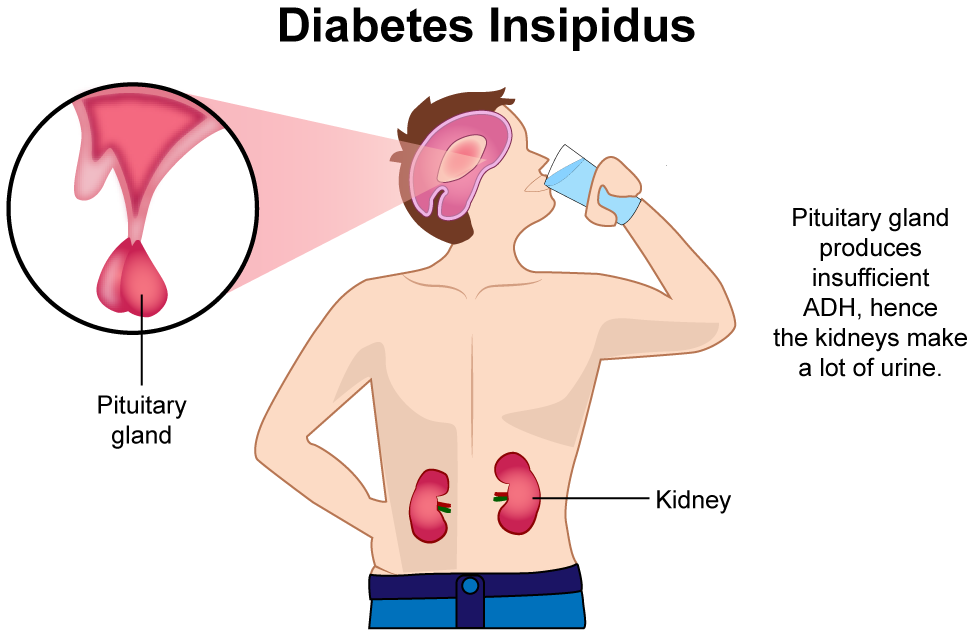
Decreased secretion of antidiuretic hormone (ADH) in the posterior pituitary. It causes the client to urinate a lot and go into fluid volume deficit.
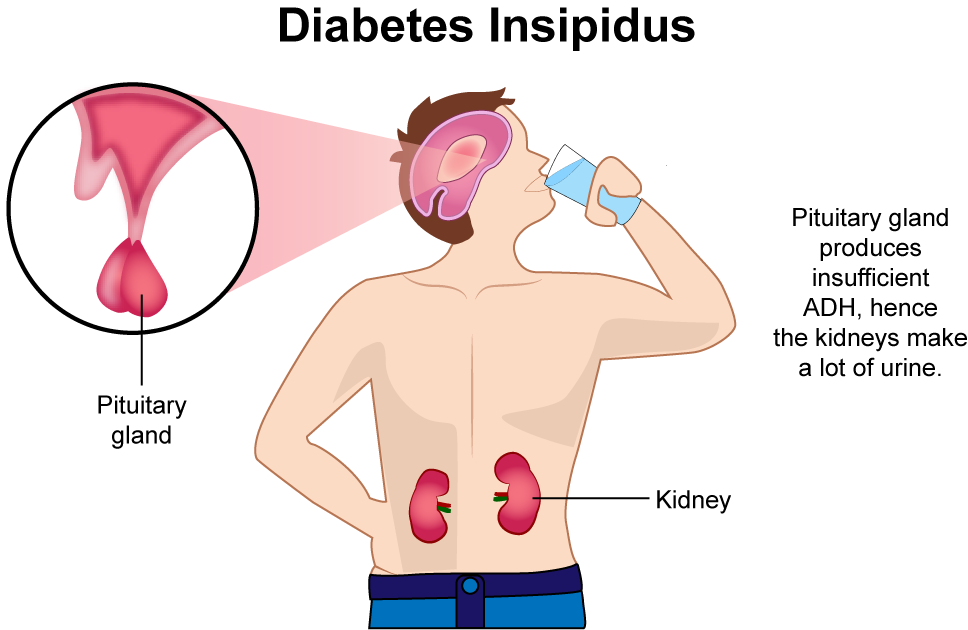
It is caused by a head injury, stroke, brain tumor, or surgery of the brain.
Signs and symptoms:
Diabetes insipidus
These are caused by the client urinating too much and going into fluid volume deficit:
- polyuria and polydipsia
- dehydration
- low urine specific gravity (<1.005) - urine is pale
- postural hypotension
What are the general interventions for diabetes insipidus and SIADH?
Focus on assessing and maintaining fluid balance:
- monitor vital signs and electrolyte levels
- monitor intake and output and get daily weights
- fall and seizure precautions
- monitor level of consciousness
What are the specific interventions for diabetes insipidus?
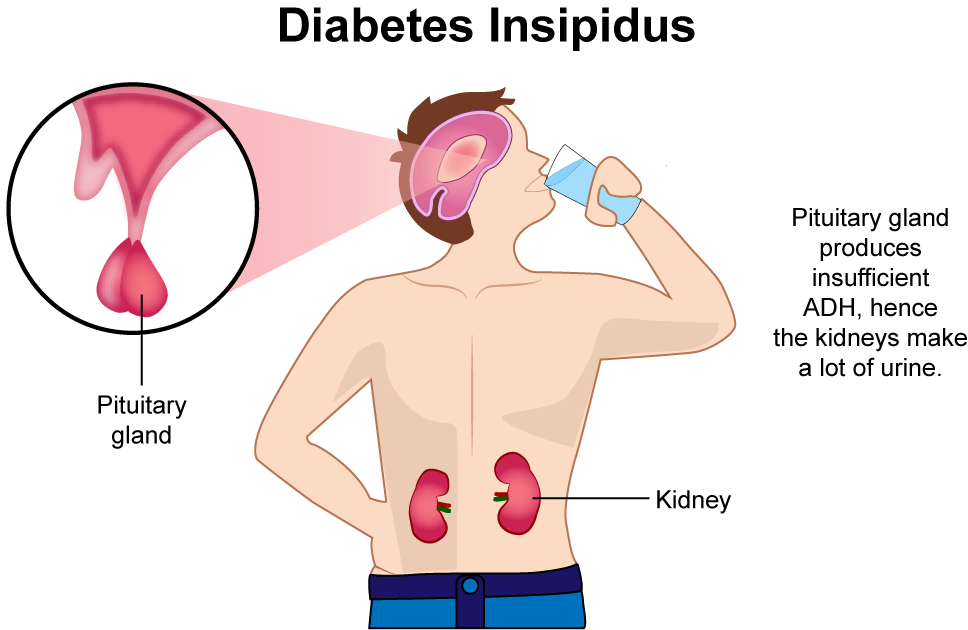
Focus on increasing fluids:
- give IV fluids
- avoid foods that cause diuresis (coffee and tea)
- give vasopressin or desmopressin (hormone replacement for ADH)
What are the specific interventions for SIADH?
Decrease fluids and increase sodium level:
- restrict fluids
- give 3% normal saline if sodium is less than 120
- loop diuretics if sodium is at least 125 to get rid of the extra fluids - monitor potassium with loop diuretics
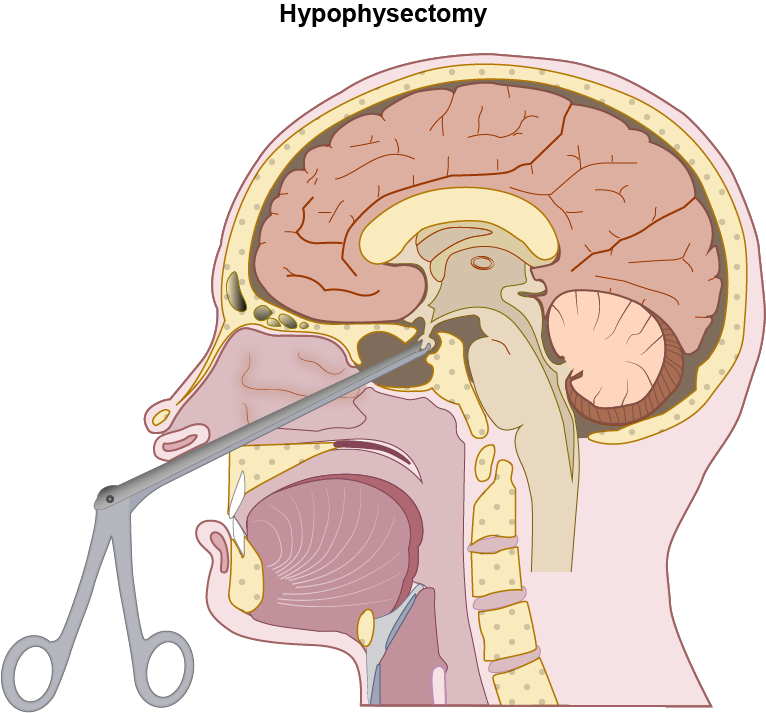
What is a hypophysectomy?
The removal of the pituitary gland to treat cancerous or benign tumors.
The pituitary gland (also called the hypophysis) is a small, pea-sized gland in the brain behind the eyes.
Describe:
Cushing’s syndrome and Cushing’s disease
Cushing’s is too many steroids in the body.
- Cushing’s syndrome is caused by taking large doses of steroids for a few weeks or more.
- Cushing’s disease is caused by a release of too many steroids secreted by the pituitary gland or adrenals of the kidney.
What are the characteristic signs and symptoms of Cushing’s?
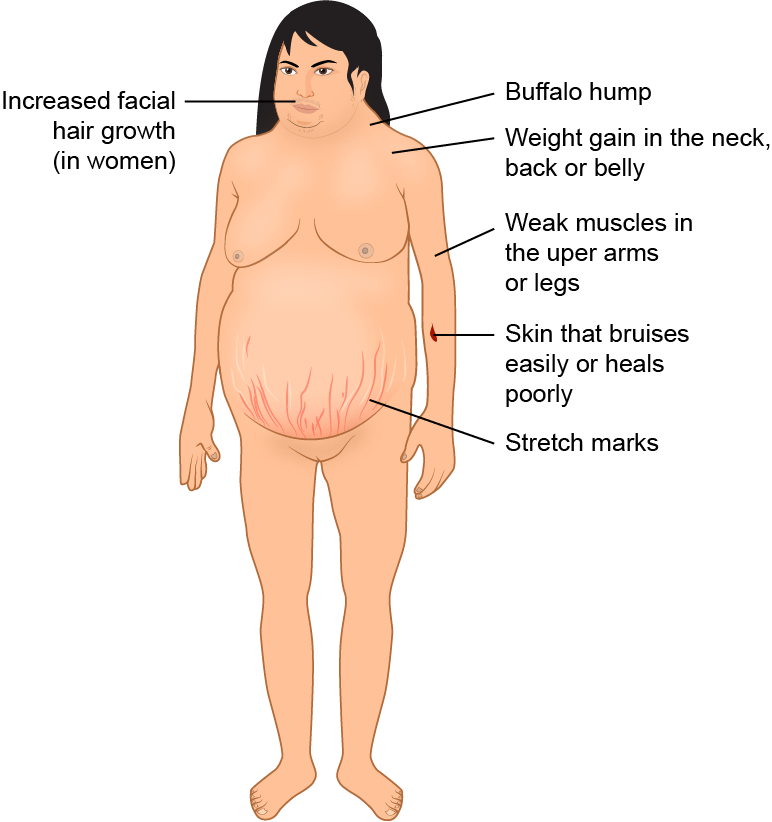
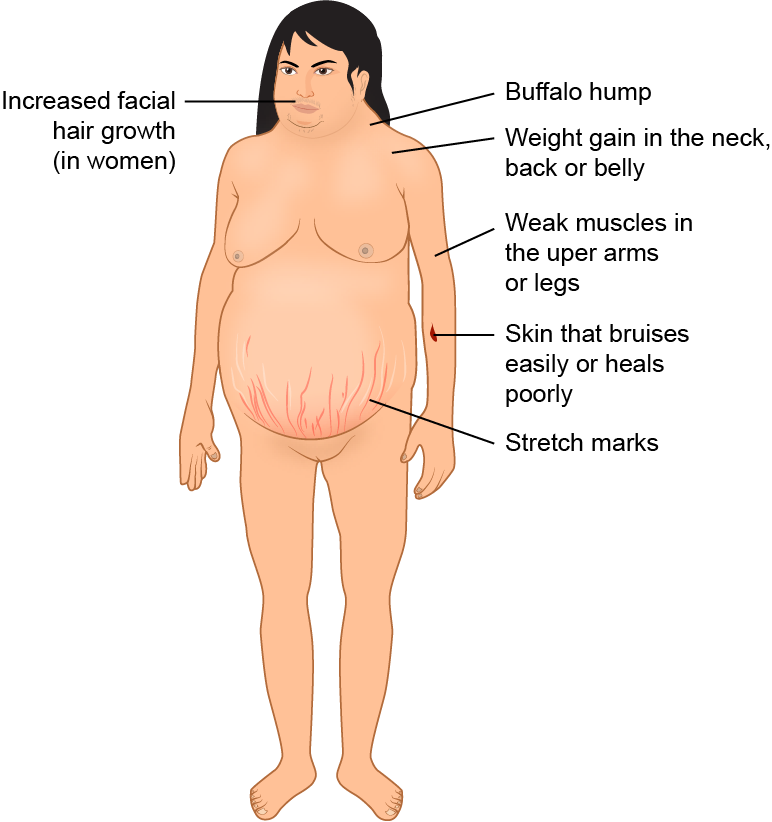
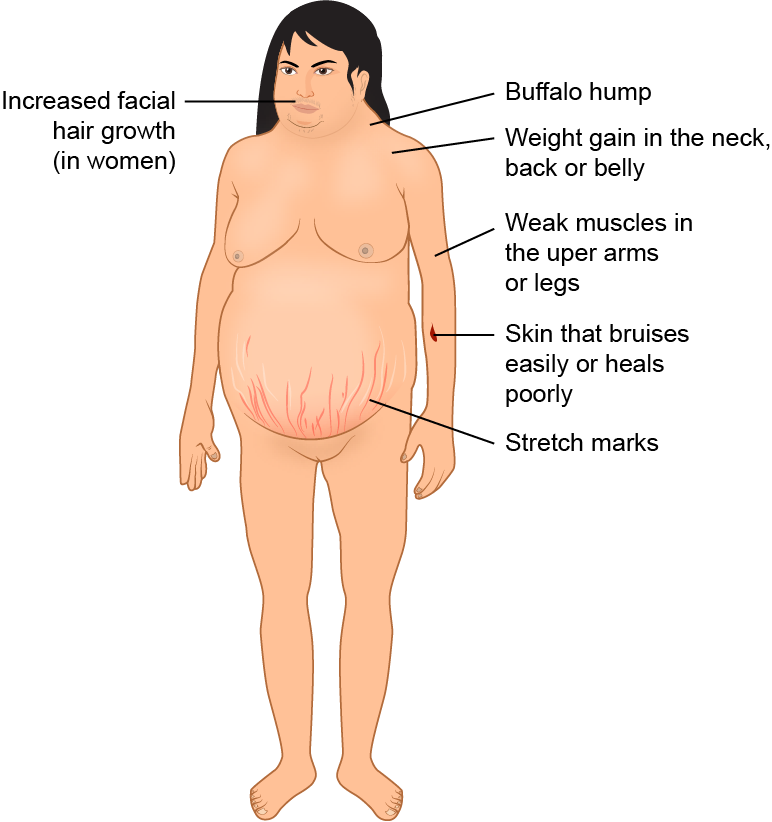
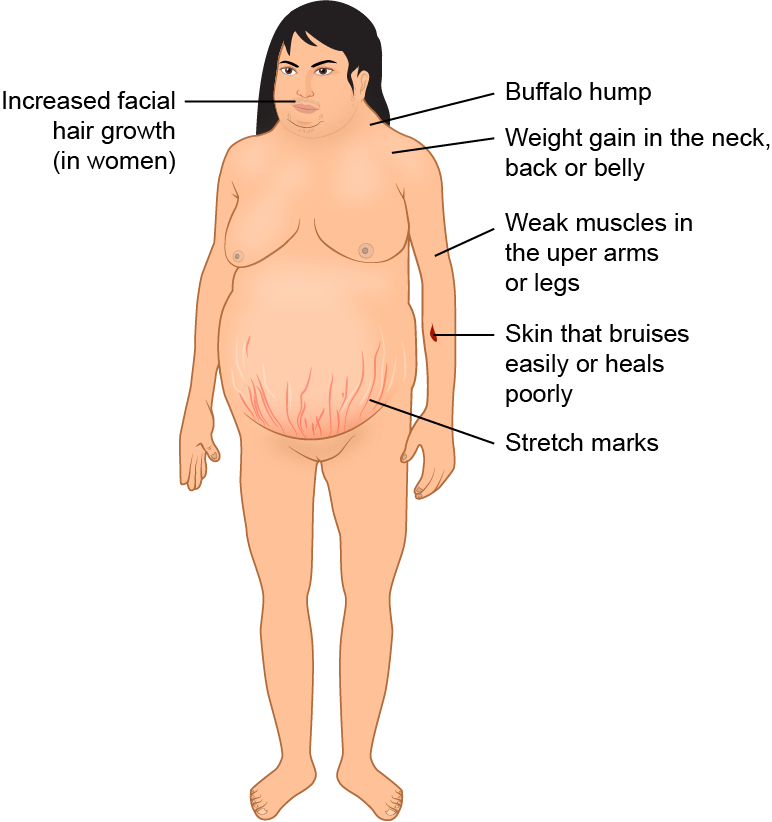
These are caused by the client getting too many steroids (hypercortisolism). Steroids control many functions in the body.
- fluid volume overload and obesity
- moon face and buffalo hump
- muscle wasting: thin arms and legs
- hirsutism (facial hair)
- fragile skin that bruises easily
What lab values are abnormal with Cushing’s?
- elevated cortisol level
- possible elevated white blood cell count
- hyperglycemia - steroids increase blood glucose and WBC count
- hypernatremia - increased aldosterone (one of the steroids) holds onto water and sodium
- hypokalemia - inverse relationship with sodium
Interventions:
Cushing’s syndrome
Because Cushing’s syndrome is caused by taking large amounts of steroids, the interventions will focus on:
- preventing fluid and electrolyte imbalances
- preventing infection
- preventing high blood sugar
Monitor vital signs, electrolytes, WBC, and glucose level.
Treatment:
Cushing’s disease
Because Cushing’s disease is caused by a tumor on the pituitary gland or adrenals, the treatment will focus on surgery:
- hypophysectomy (removal of the pituitary)
- adrenalectomy (removal of the adrenals)
Client will need life-long steroid replacement post-surgery.
What are the specific post-operative interventions for a hypophysectomy?
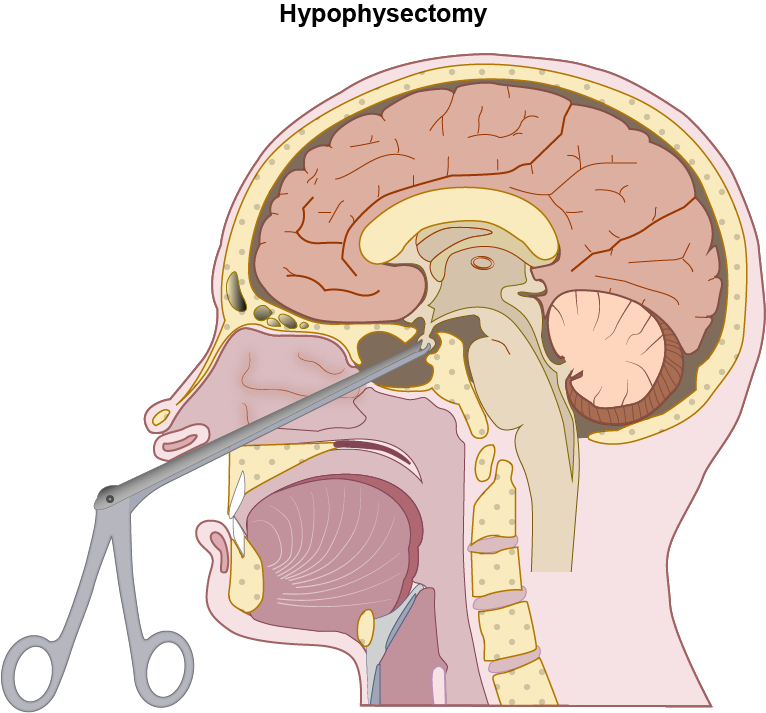
Focus on preventing increased intracranial pressure:
- no coughing, blowing nose, or using a straw
- assess level of consciousness and vital signs for bleeding and CSF leak
What are the post-operative interventions for an adrenalectomy?
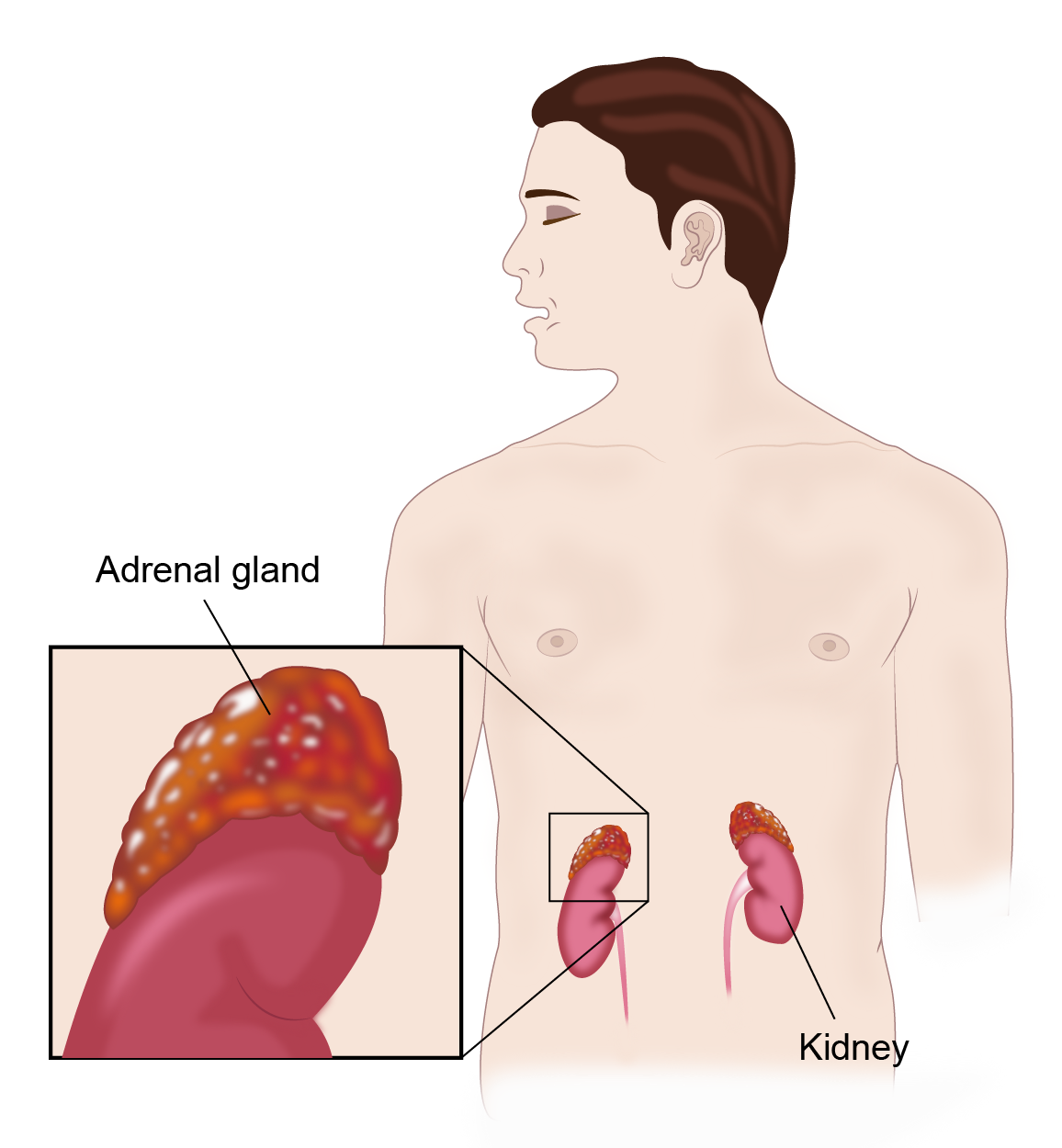
- focus on fluid and electrolyte balance - monitor I&O, vital signs
- administer glucocorticoids (steroids)
Describe:
Addison’s Disease
NOT enough steroids in the body.
It is caused by an autoimmune deficiency.
What are the characteristic signs and symptoms of Addison’s disease?
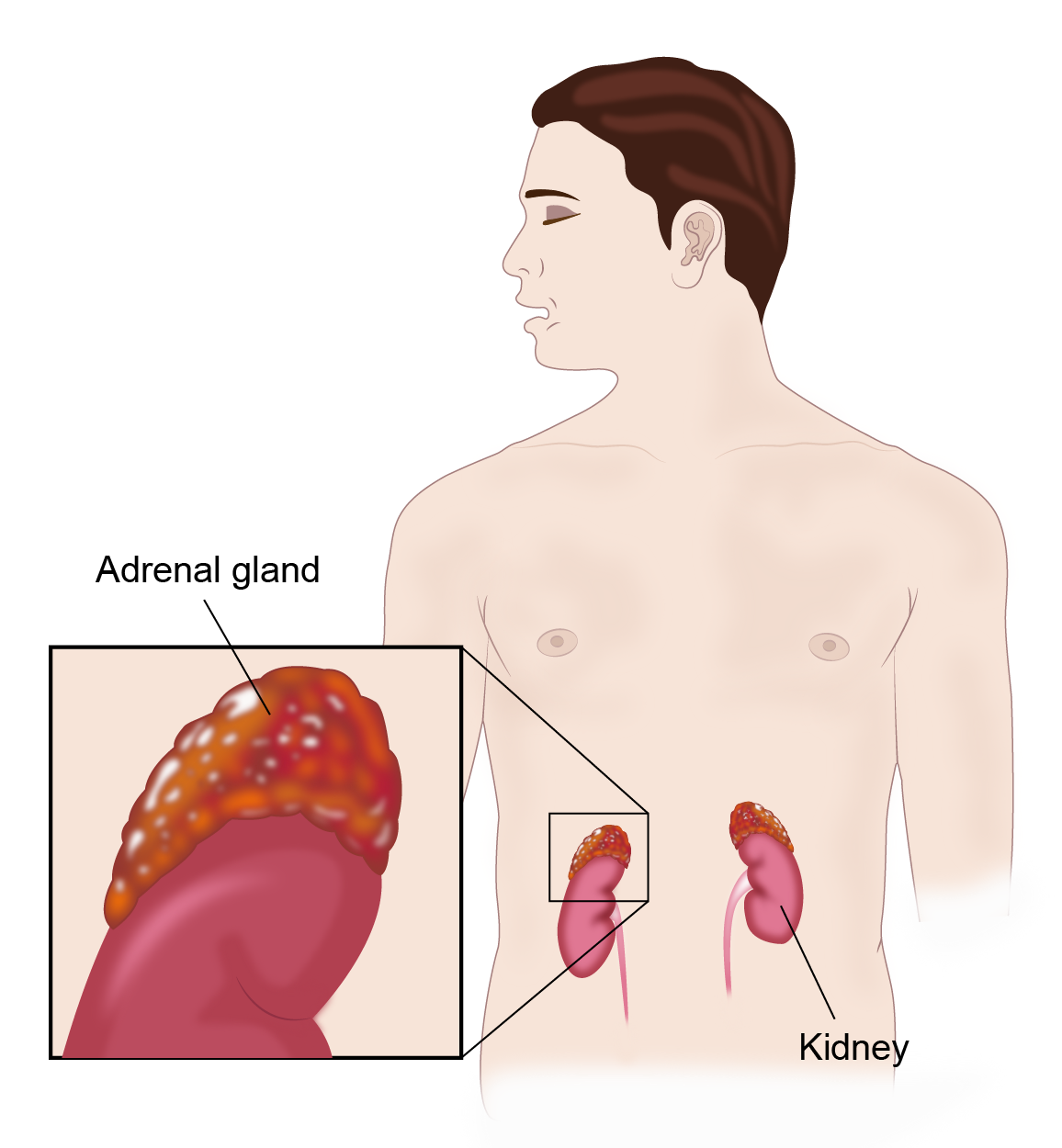
These are caused by the client not getting enough steroids (primary adrenal insufficiency). Steroids control many functions in the body:
- fluid volume deficit and weight loss
- bronze skin color
What lab values are abnormal with Addison’s?
- hypoglycemia - due to not having enough steroids
- hyponatremia - decreased aldosterone (one of the steroids) rids the body of water and sodium
- hyperkalemia - inverse relationship with sodium
Interventions:
Addison’s disease
Because Addison’s disease is caused by a lack of steroids, the interventions are:
- assess for hypotension (due to fluid volume deficit)
- assess for dysrhythmias (due to high potassium)
- give IV fluids and electrolyte replacement
- corticosteroid replacement for life
Describe:
Addisonian crisis
(Immediate complication)
Can cause severe fluid and electrolyte imbalances.
It is caused by stress, infection, trauma, or abrupt discontinuation of steroids.
During times of stress for clients taking life-long steroids, how are steroid needs adjusted?
Clients will need an increase in steroid dose.
Describe:
Hypothyroidism
It’s when the body does not produce enough thyroid hormones which controls metabolism.
This causes the metabolism to be slow.
What are the thyroid labs with hypothyroidism?
- T3 and T4 are low
- TSH is high (due to compensation)
Signs and symptoms:
Hypothyroidism
These are due to a slow metabolism:
- lethargy
- intolerance to cold
- weight gain
- dry skin and hair loss
- bradycardia
- constipation
- myxedema (edema around face and eyes)
- menorrhagia or amenorrhea