What is primary and secondary cancer?
Primary - arising directly from the cells in an organ
Secondary- spread from another organ, directl or by other means
What are cancers of the following neuroendocrine cells:
- enteroendocrine cells
- Intersititial cells of cajal
Enteroendocrine cells- Neuroendocrine Tumours (NETs)
Interstitial cells of Cajal- Gastrointestinal Stromal Tumours (GISTs)
What are the cancers of the following connective tissues of GI tract:
- smooth muscle
- Adipose tissue
Smooth muscle- Leiomyoma/Leiomyosarcoma
Adipose tissue- Liposarcoma
What are the cancers of the following epithelial cels of the GI tract:
- Squamous
- Glandular epithelium
Squamous - Squamous cell carcinoma
Glandular epithelium - Adenocarcinoma
N.B. Malignant
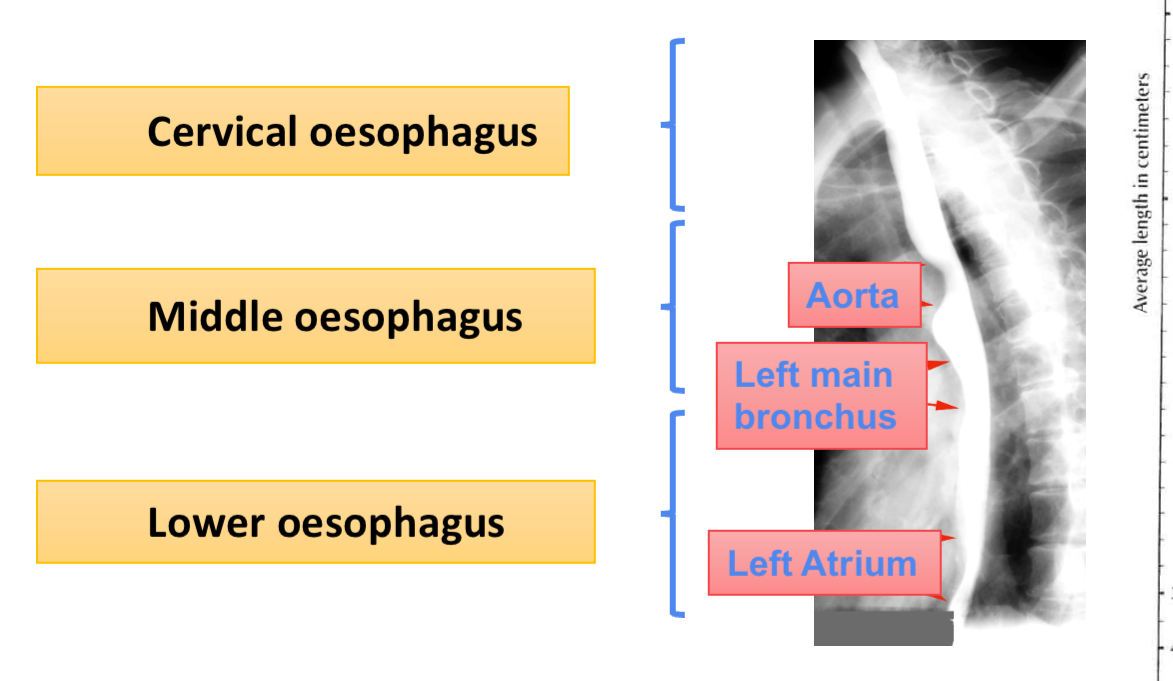
What are the 3 demarcations of the Oesophagus
Cervical Oesophagus
Middle Oesophagus
Lower Oesophagus
N.B. Left main bronchus is between middle and over oesophagus
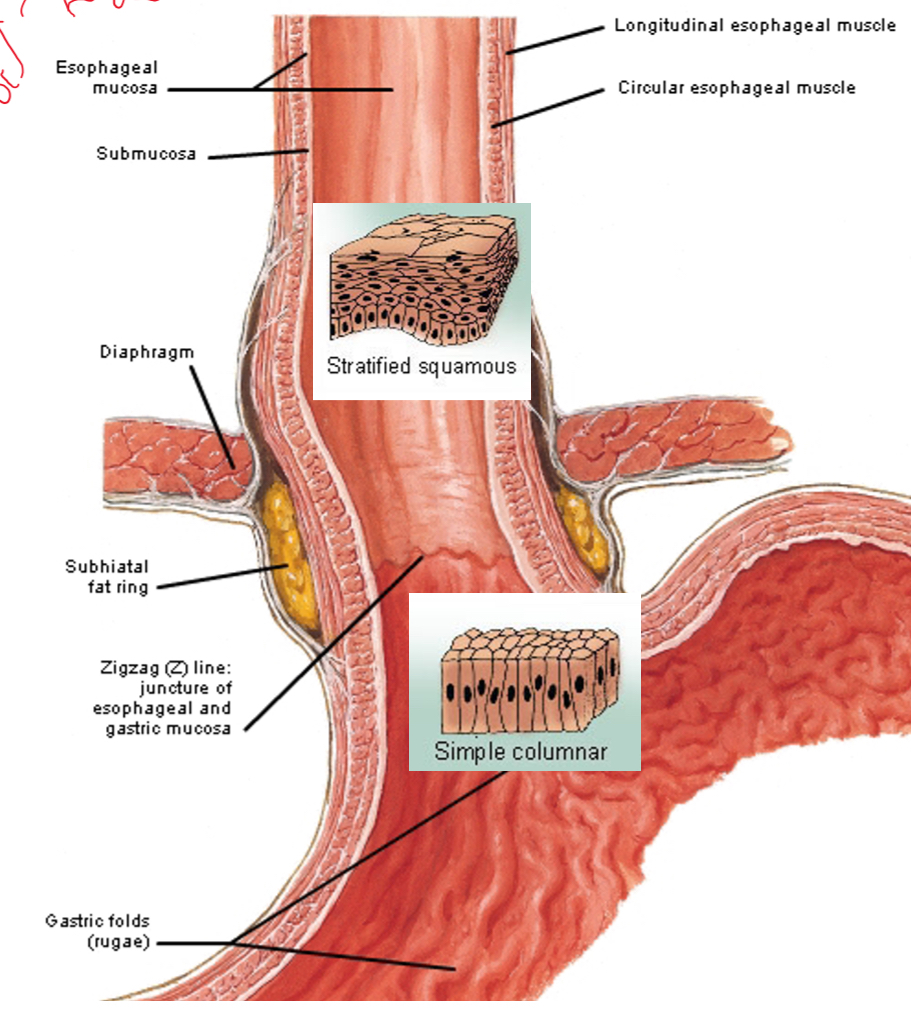
Where does squamous cell carcinoma develop in oesophageal cancer? explain it’s features and causes
From normal oesophageal squamous epithelium
it affects the upper 2/3 of Oesophagus
it is more common in less develop world
Most related to alcohol as too much alcohol us converted to Acetalaldehyde- Acetylaldehyde pathway
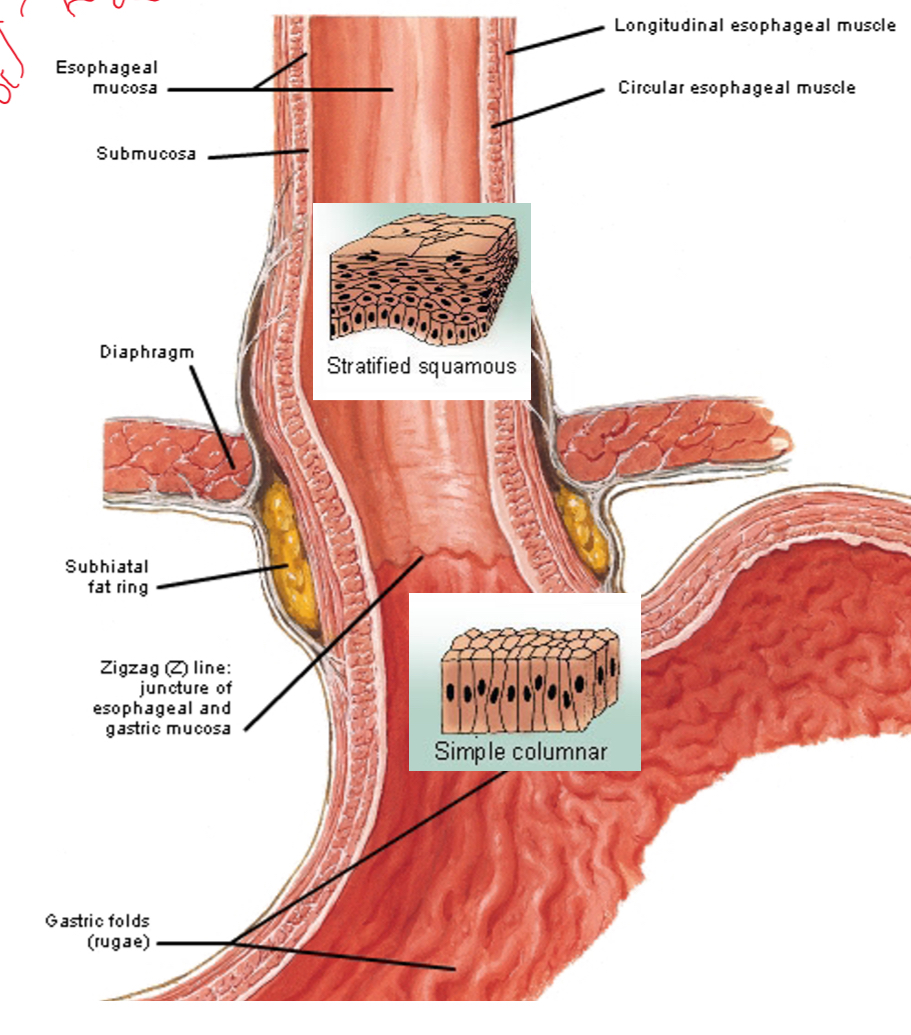
What are the common features of Adenocarcinoma in Oesophageal cancer
Develops from metaplastic columnar epithelium
Occurs in lower 1/3 of Oesophagus
it is related to acid reflux
More common in developed world
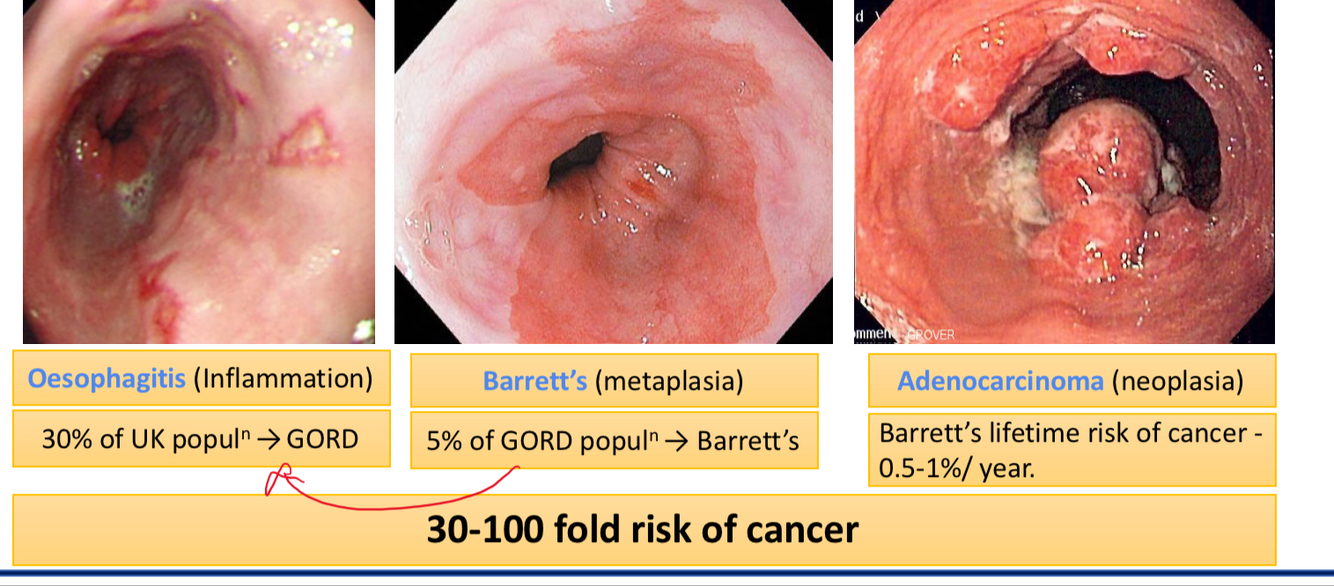
Describe the progression from GO Reflux to cancer
Firstly there’s oesophagitis due to Gastro-oesophageal reflux disease
then Barrett’s Oesophagus (metaplasia) can develop- 5% of GORD population
Dysplasia and high grade dysplasia can form
Then adenocarcinoma can develop
N.B theres’ an increased 30-100 fold risk of cancer if you have GORD
What procedure is used to monitor progression of reflux too cancer
Oestro-gastro duodenoscopy (OGD)
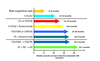
Describe the BSG guidelines for Barrett’s surveillance
If there’s NO dysplasia - check every 2-3 years
if there’s LOW GRADE dysplasia - check every 6 months
if there’s HIGH GRADE dysplasia - intervention
N.B. Be careful of intervention as it could cause death and you’re not 100% sure the pt will develop cancer
Describe the epidemiology of Oesophageal cancer
9th most common cancer
Affects the elderly
In Adenocarcnioma - theres more male affetced than female (10:1)
Describe and exlplain the prognosis of oesophageal cancer, what are the features of it’s late presentatin
Late presentation : difficulty swallowing, loss of weight
65% are palliative
HIgh Morbidity and complex surgery
poor 5 year survival - lower than 20%
How do help patients with oesophageal cancer to allow food to pas down Oesophagus. Any complications?
Add a stent
sometimes the cancer grows through this
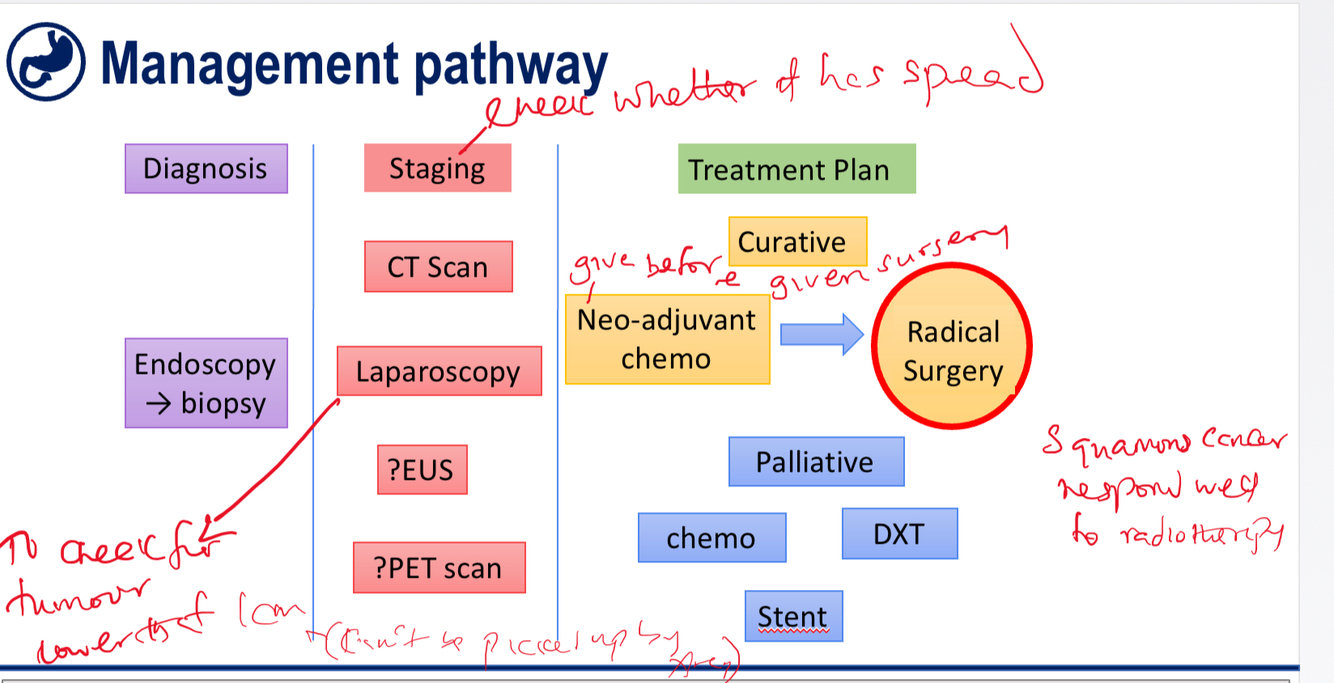
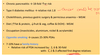
Draw out the management pathway for oesophageal cancer.
If struggling , complete the gaps below
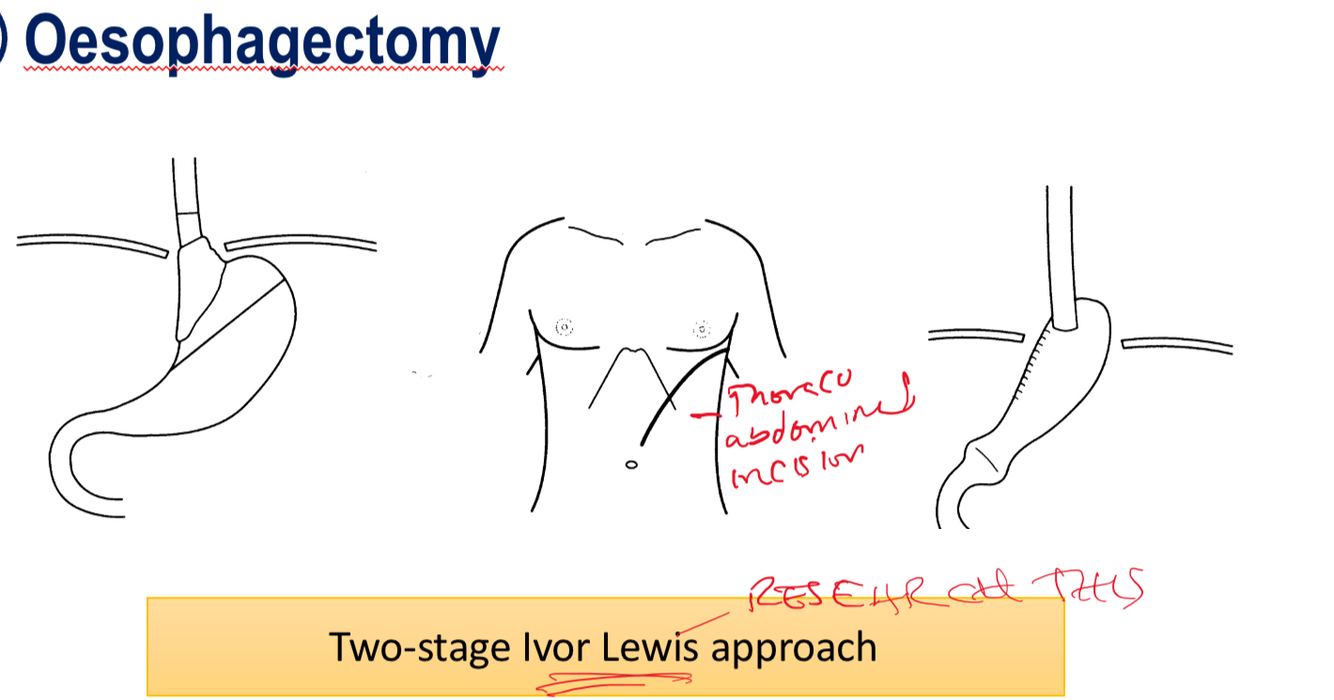
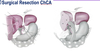
What surgical approach is commonly used for oesophagectomy
Two- stage Ivor Lewis approach :
a thoracic-abdominal incision is made
add diagram- research this before completing
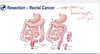
Describe the epidemiology of Colorectal cancer
- Most common GI cancer in ther West
- 3rd most common cancer death in men and women
- Generally affects patients more than 50 yrs old
- Life time risk is:
- 10% men
- 1 in 14 for women
- Appendicitis - more common in men than women
What are the forms of colorectal cancer- genetics
Sporadic - no family history, older population have this form
Familial - there’s family history and relative is a 1st degree one. Pt lower than 50yrs
Hereditary syndrome- family history and there’s specific gene defects . E.g.
- FAP- Familial adenomatous polyposis
- HNPCC or Lynch syndrome - Hereditary nonpolyposis colorectal cancer
What’s the histopathology of colorectal cancer
Adenocarcinoma
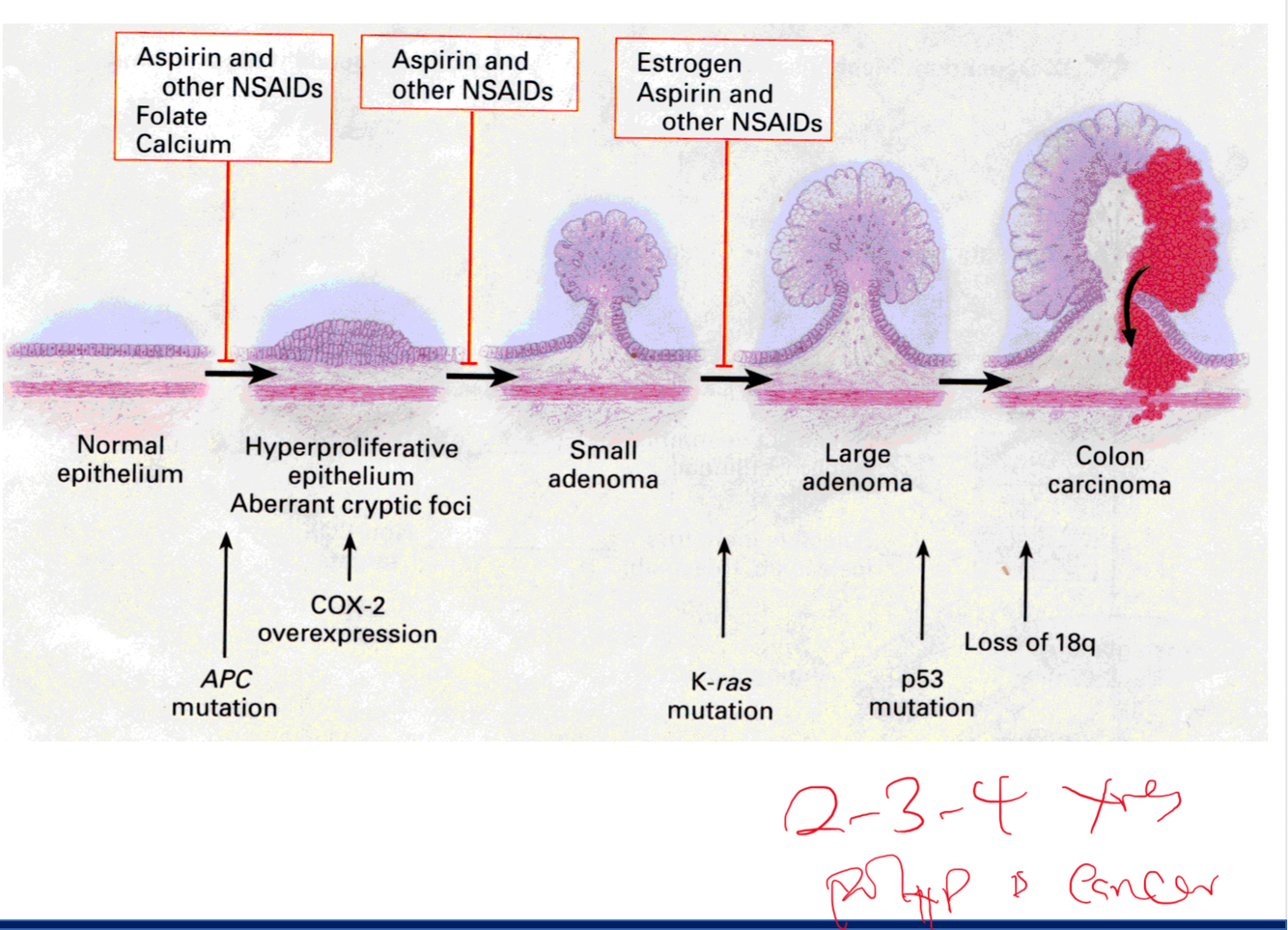
Describe the pathogenesis of colorectal cancer
draw
What are the risk factors of colorectal cancer
PMHx of - colorectal cancer, ulcerative colitis, adenoma or radiotherapy
Family history - 1st degree relative and relatives with identified genetic predisposition
Diet/environmental- NOT AS HIGH AS A RSIK FACTOR AS THE UPPER 2
- carcinogenic food
- smoking
- obesity and socio-economic status
What does clinical presentation of colorectal cancer depend on
The location of the cancer throughout the colon ad rectum
What are the clinical presentations of Caecal and right sided cancer (colo-rectal)
- Iron deficiency anaemia- most common
- Change in bowel habit (diarrhoea)
- Distal ileum obstruction- late
- Palpable mass- late presentation
What are the clinical presentations of left sided and sigmoid carcinoma (Colorectal cancer)
PR Bleeding and mucus
Thin stool -late presentation
What are the clinical presentations of rectal carcinoma (colorectal cancer)
- PR bleeding, mucus
- Tenesmus; cancer presses on anal sphincter
- Anal, perineal and sacral pain - late presentation








-
Action Potentials25
-
CNS34
-
PNS20
-
Cranial Nerves14
-
Neurones19
-
Neurotransmitters24
-
Pharmacological basics9
-
Autonomic nervous system18
-
Practical- Neurophysiology5
-
Cardiovascular mechanics29
-
CARDIAC CYCLE26
-
Structure and function of airways23
-
Ventilation and gas exchange33
-
Microcirculation35
-
Cardio respiratory mechanics50
-
Control of Heart function51
-
Control of lung function32
-
Pulmonary Function Test11
-
ECG48
-
Cardiovascular disorder76
-
COPD vs Asthma26
-
Psychiatry disorders20
-
Mental Health Overview24
-
Introduction to dermatology72
-
Pituitary gland44
-
THYROID glands44
-
Adrenal Gland41
-
Calcium phosphate regulation42
-
Glucose Homeostasis33
-
Diabetes Mellitus47
-
Reproductive organs- male and female86
-
Endocrinology diagnostic techniques11
-
Sex Hormones during life57
-
Microstructure and contraction41
-
Bone and soft tissue47
-
Connective tissues and Rheumatology intro44
-
Bone injury and healing35
-
Osteoarthritis and osteoporosis18
-
Clinical skills principles20
-
Heptobiliary system73
-
Upper GI tract48
-
Genitourinary system and urinalysis52
-
Pancreas and Small bowel56
-
Obstructive jaundice16
-
GFR and Renal clearance19
-
Large bowel44
-
Regulation of Gut function38
-
Ions, minerals and vitamins34
-
Pancreatitis33
-
Liver Failure46
-
Urological disorders55
-
GI cancers80
-
Introduction to the Upper Limbs7
-
Bones of the Upper Limb16



