What is digestion
Process of breaking down macromolecules to allow absorption
What is Absorption
Process of moving nutrients and water across a membrane
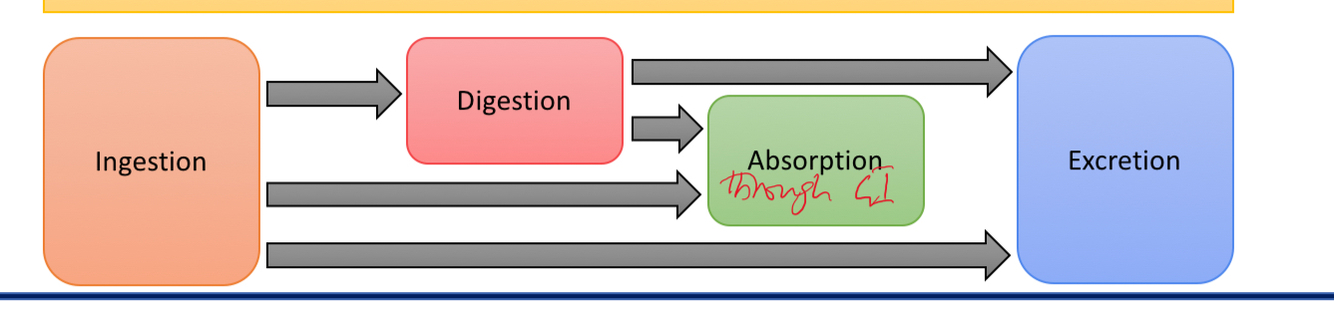
What are the different ways in which a substance can go from ingestion to excretion
Draw it
Ingestion to digestion to absorption / excretion
either you end at absorption or excretion but you don’t have to be absorbed
What is the margins of the foregut, midgut and hindgut
Foregut- Pharynx to pyloric sphincter
Midgut- dueodenum to 2/3rd proximal part of transverse colon
Hindgut- distal 3rd oif transverse colon to anus
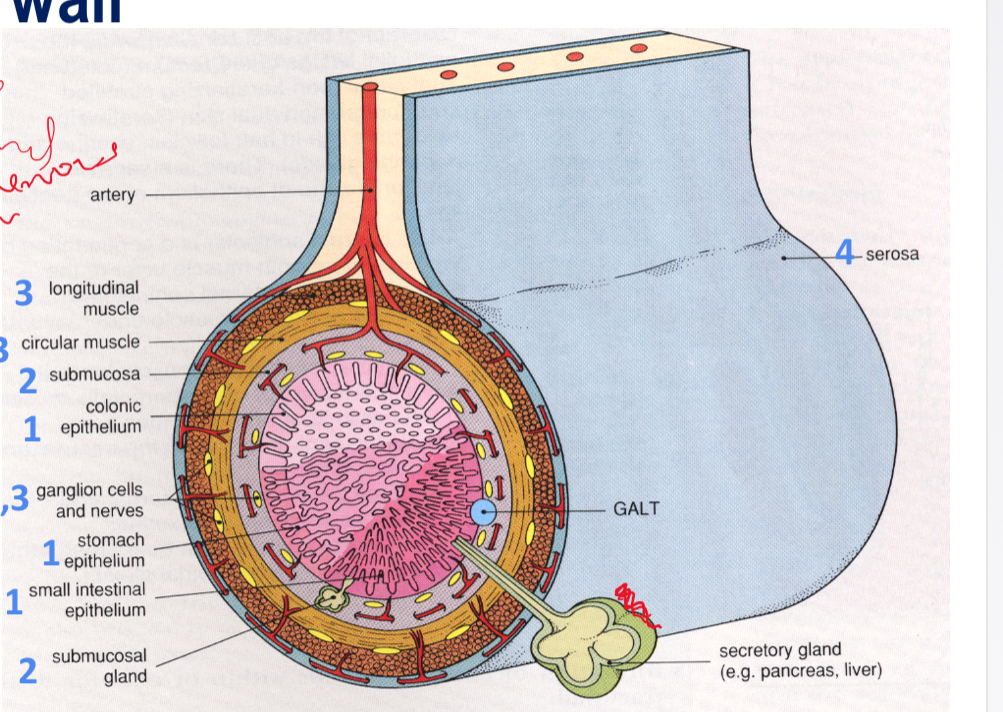
What are the layers of the gut wall from lumen going downwards
Mucosa
submucosa
muscularis
serosa/Adventitia
What are the features and structure of the mucosa layer of Oesophagus
Mucosa has secretory functions
1st layer is squamous epithelium
2nd layer is lamina propria (loose connective tissue)
3rd layer is muscularis mucosae
What is the submucosa layer of the oesophagus
Connective tissue containing nerve plexus
Extensively describe the muscularis layer of the Oesophagus gut wall
what innervates them
It’s smooth muscle containing nerve plexus (myenteric plexus of the enteric nervous system)
divided into 2 layer: outer circular layer and inner longitudinal layer
they both help in peristalsis
Contrast the ways in which circular muscles and longitudinal muscles work to bring about peristalsis in Oesophagus
Circular muscles: constrict at different locations to allow oesophagus to hold food
longitudinal: allow bolus to pass down
What is the Serosa/Adventitia
Connective tissue with/without epithelium
What are the muscles of the oral cavity
Masseter muscle; largess jaw muscle that is responsible for biting
several muscles control the position of mandible
What is the fucntion of the salivary gland
They secrete saliva (containing aqueous secretions and diegesitv enzymes). This mix with food
the enzymes are: Lingual lipase and Salivary amylase
What are the different muscles in the tongue and relate them to their functions
Intrinsic muscles: fine motor control and moving food. E.g. longitudinal and transverse muscle
Extrinsic muscle
- gross movement of tongue like protrusion, retraction
- Asssits mechanical digestion
- e.g. Platoglossus, styloglossus, hyoglossus, Genioglossus
What is the fucntion of the Oesophagus?
Conduits for food, drink and swallowed secretions form pharynx to stomach via neck, thorax and into abdomen
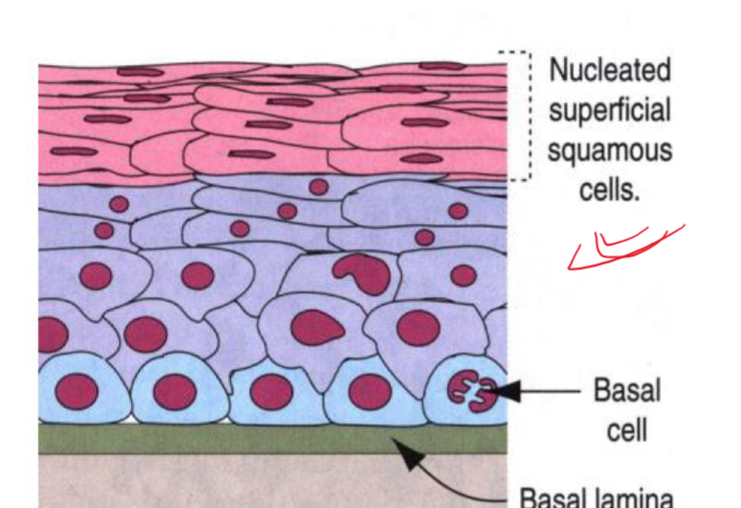
Describe the epithelium structure and function of the Oesophagus epithelium
Non- keratinising stratified squamous ; doesn’t make keratin
Lubrication- mucus secreting glands and saliva to lubrications food and hence easily allow muscle to move it down
wear and tear lining (extreme of temperature and texture)
What is the purpose of the upper and lower oesophageal sphincter
UPPER: this muscle controls how much food enters Oesophagus
LOWER: controls how much food leaves the Oesophagus
Describe the structure and function of the muscles of the Oesophagus
Tonically acitve
Acts as swallowing centre
Peristalsis
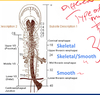
N.B. AS YOU MOVE More supeirorly, there’s more skeletal msucle. As you move down inferiorly, there’s a combination to skeletal and smooth muscle until it’s completely smooth muscle
Descirbe how Barretts oesophagus can form and it’s prognosis if nothing is done
Chronic acid reflux form stomach into Oesophagus
Hence Oesophagus sqamous epithelial cell is converted to columnar (same type that lines the stomach) in order to cope with the acids; making more mucus. THIS IS METAPLASIA
Metaplasia can lead to dysplasia which can then become cancerous if not monitored.
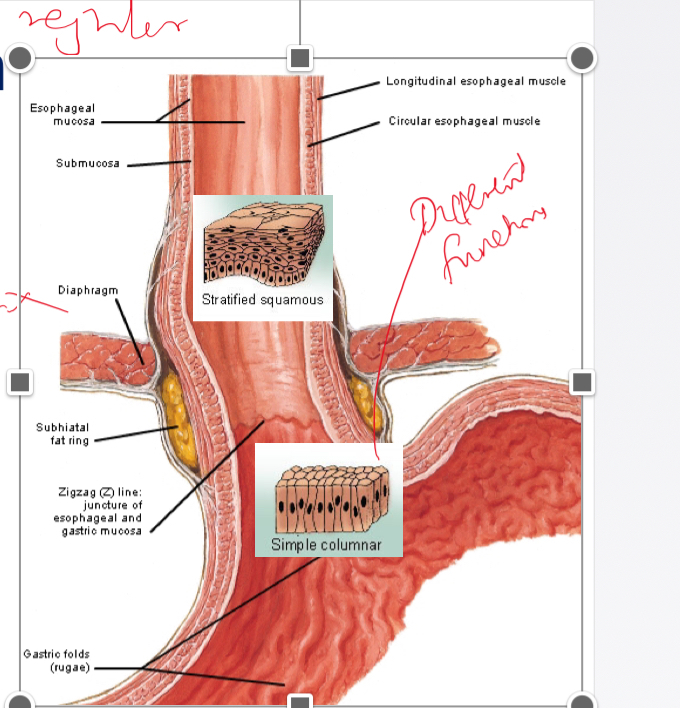
Describe the purpose of the gastro- oesophageal junction
Reflux - prevented by diaphragm
Epithelial transitions: they have different functions
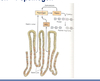
Gastirc folds: ruggae- this is to increase SA for absorption as it contains villae
there’s pressure difference between thorax and abdomen hence there’s ligaments that prevent collapse of Oesophagus
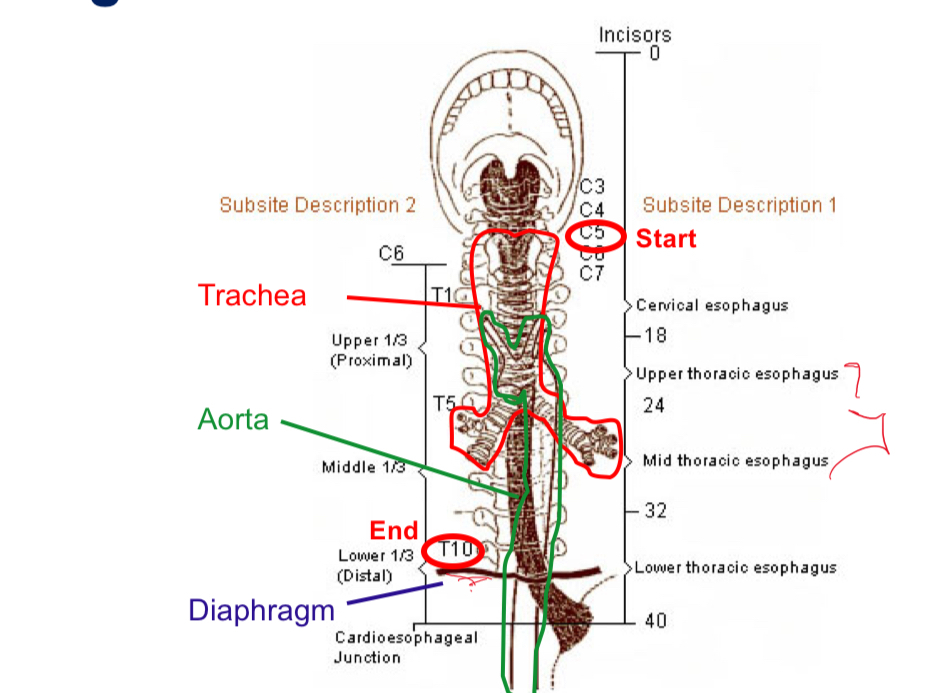
At what vertebrae does the Oesophagus start and end
Start at C5
end at T10/T11 (just after oesophagus hiatus)
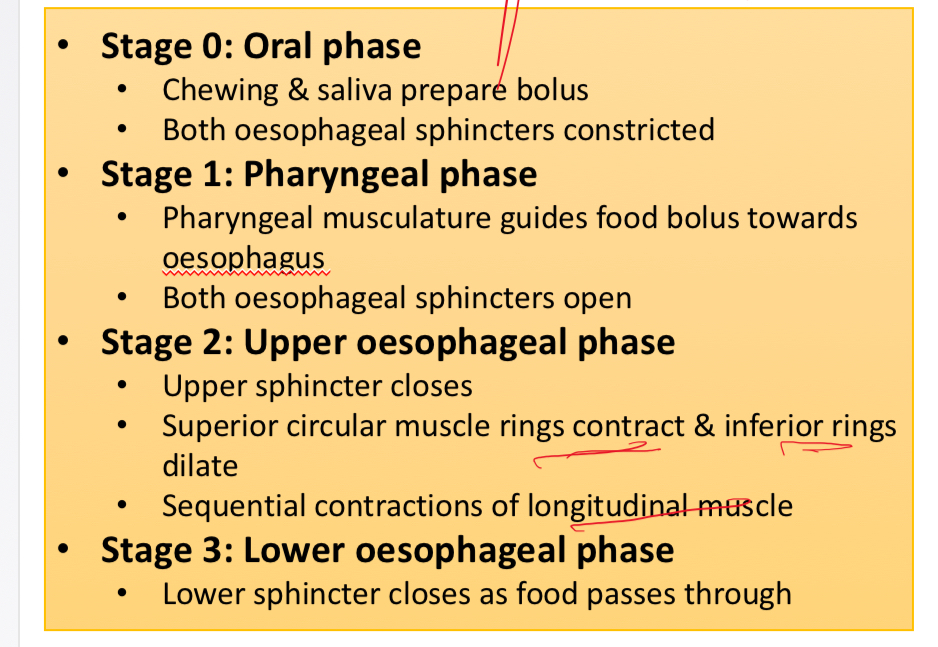
Describe and explain the stages of swallowing
Superior muscles contract and inferior muscles relax
What are the functions of the stomach?
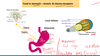
Breaks food into smaller particles (acid and pepsin)
Holds food, releasing it in controlled steady rate into duodenum
Kills parasites and certain bacteria
Can people survive without their stomach?
Yes, people with gastric cancer .
*Research how*
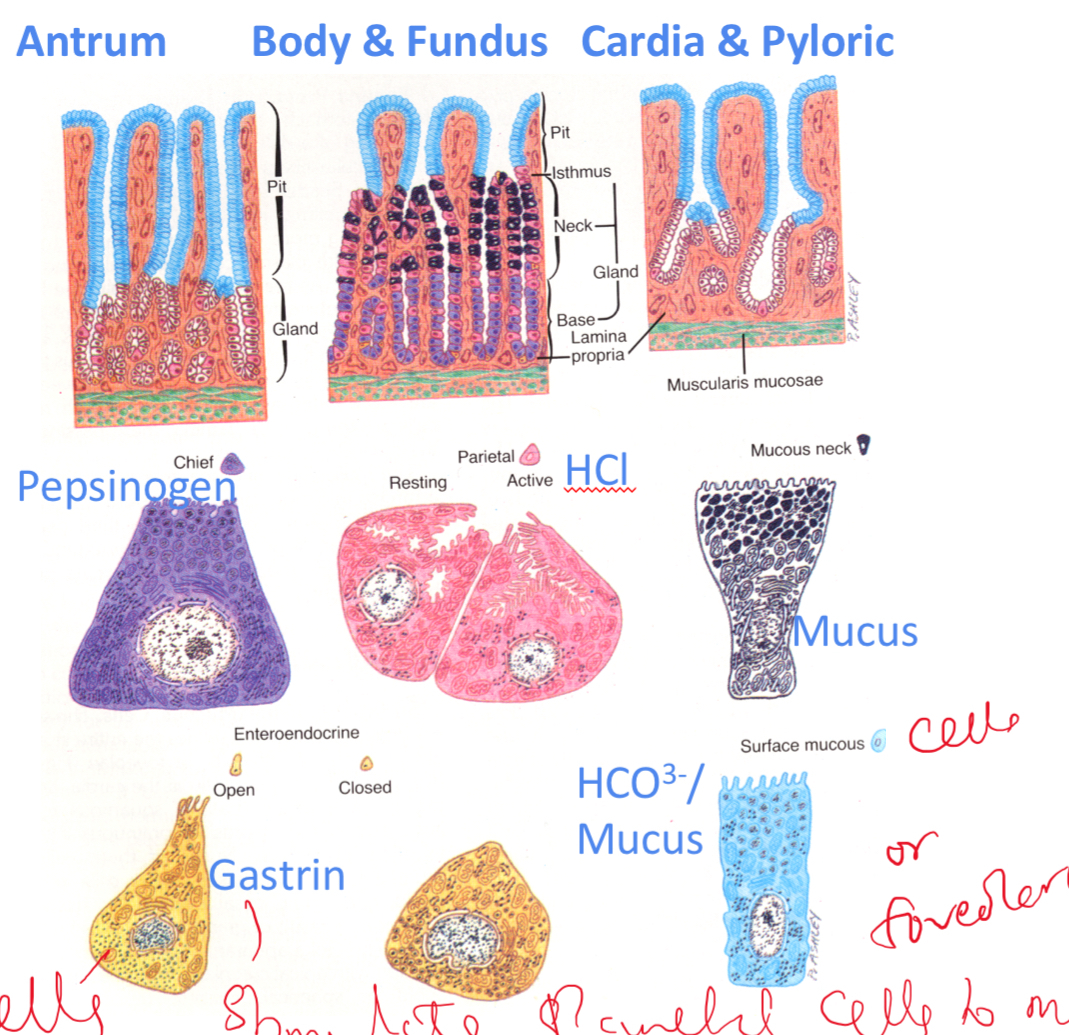
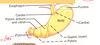
What does the following part of the stomach make
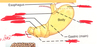
- Cardia and Pyloric region
- Body and fundus
- Antrum
- Cardia and Pyloric region: Mucus only
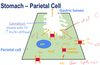
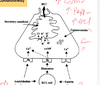
- Body and Fundus: Mucus, HCl, pepsinogen
- Antrum: GASTRIN

-
Action Potentials25
-
CNS34
-
PNS20
-
Cranial Nerves14
-
Neurones19
-
Neurotransmitters24
-
Pharmacological basics9
-
Autonomic nervous system18
-
Practical- Neurophysiology5
-
Cardiovascular mechanics29
-
CARDIAC CYCLE26
-
Structure and function of airways23
-
Ventilation and gas exchange33
-
Microcirculation35
-
Cardio respiratory mechanics50
-
Control of Heart function51
-
Control of lung function32
-
Pulmonary Function Test11
-
ECG48
-
Cardiovascular disorder76
-
COPD vs Asthma26
-
Psychiatry disorders20
-
Mental Health Overview24
-
Introduction to dermatology72
-
Pituitary gland44
-
THYROID glands44
-
Adrenal Gland41
-
Calcium phosphate regulation42
-
Glucose Homeostasis33
-
Diabetes Mellitus47
-
Reproductive organs- male and female86
-
Endocrinology diagnostic techniques11
-
Sex Hormones during life57
-
Microstructure and contraction41
-
Bone and soft tissue47
-
Connective tissues and Rheumatology intro44
-
Bone injury and healing35
-
Osteoarthritis and osteoporosis18
-
Clinical skills principles20
-
Heptobiliary system73
-
Upper GI tract48
-
Genitourinary system and urinalysis52
-
Pancreas and Small bowel56
-
Obstructive jaundice16
-
GFR and Renal clearance19
-
Large bowel44
-
Regulation of Gut function38
-
Ions, minerals and vitamins34
-
Pancreatitis33
-
Liver Failure46
-
Urological disorders55
-
GI cancers80
-
Introduction to the Upper Limbs7
-
Bones of the Upper Limb16



