Thyroid nodule management algorithm
Note: If first FNA indeterminate, wait 6-12 weeks and repeat (to avoid false positives from reactive changes caused by first FNA)
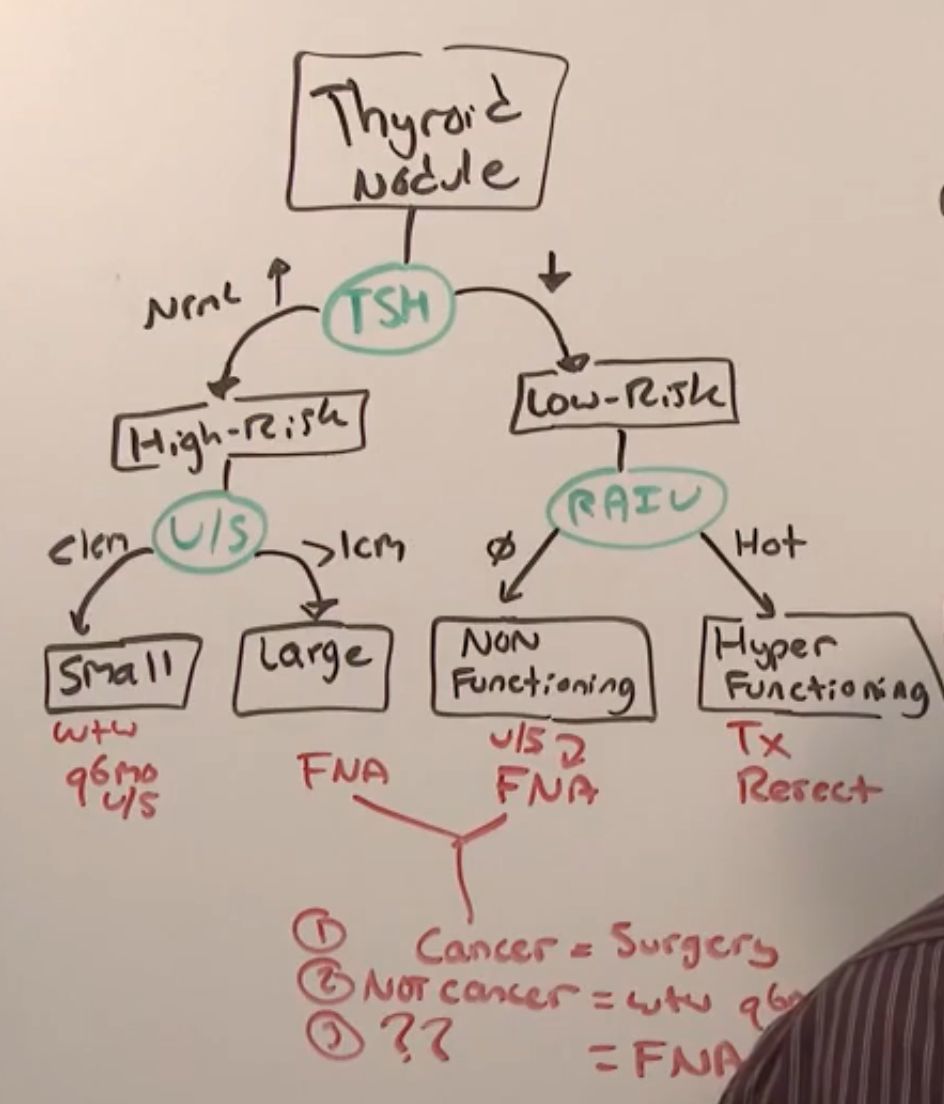
Thyroid nodules greater than ___ in size are clinically significant and require further evaluation
Thyroid nodules greater than 1 cm in size are clinically significant and require further evaluation
If a biopsy result for thyroid mass returns as medullary thyroid cancer, the next step is. . .
. . . MEN2 testing
If MEN2 testing is positive, urine metanephrines should be run to screen for pheochromocytoma. If present, this cancer takes precidence and should be dealt with prior to the medullary carcinoma.
If a patient’s FNAB results are nondiagnostic, the next step is to. . .
. . . try FNAB again!
Repeat biopsy will obtain an adequate specimen the second time in 50% of cases
If this second biopsy failed, the surgery is recommended.
Routine tests performed in a patient with a thyroid nodule who is clinically euthyroid
TSH and FNA biopsy
Adrenocortical carcinoma
- Poor prognosis
- No biochemical markers to detect malignancy – criteria for cancer based on imaging findings
- < 4 cm, can monitor, low risk malignancy
- > 4 cm, higher risk malignancy, remove by open adrenalectomy
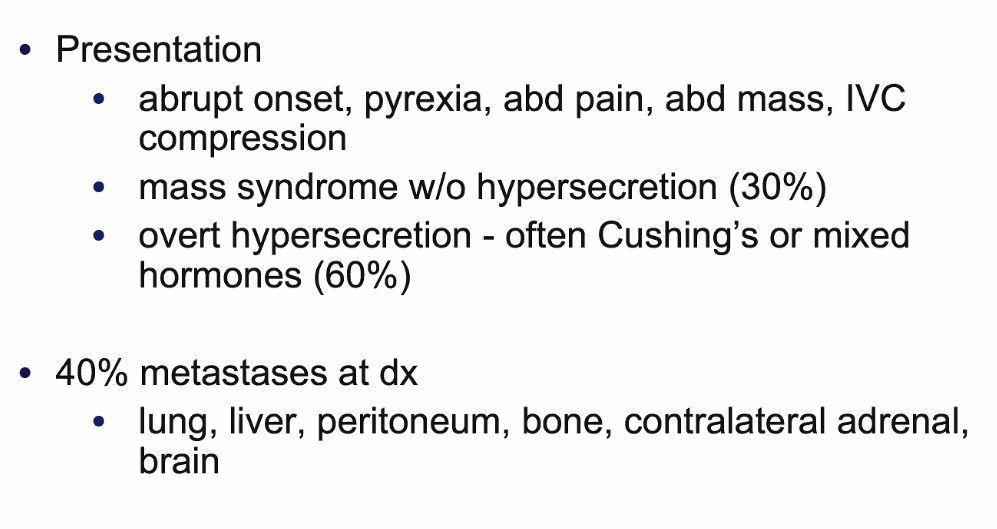
Any adrenal incidentaloma ____ needs an evaluation – unless it is ___.
Any adrenal incidentaloma > 1 cm needs an evaluation – unless it is an obvious myelolipoma (fatty on imaging).
You should NEVER biopsy a patient with an adrenal mass without ruling out. . .
. . . pheochromocytoma
When you have an adrenal mass and you are not sure whether or not it is a pheochromocytoma after CT and metanephrines, what can you do?
I-131 metaiodobenzylguanidine scan
Used for confirmation or evaluation of nonlocalized pheochromoctyomia. Has specificity of 90-100% for pheos, but is not entirely sensitive.
Types of focal liver lesion
- Hemangioma (benign)
- Focal nodular hyperplasia (benign)
- Hepatic adenoma (potentially malignant)
- Hepatocellular carcinoma (malignant)
- Cholangiocarcinoma (malignant)
- Metastasis from distant site (malignant)
Liver hemangioma
- Most common benign liver tumor
- Typically asymptomatic, may cause vague abdominal pain, nausea, loss of apetite
- “Light bulb sign” is classical. Marked hyperintensity of the lesion relative to the surroundings with early filling of the rim and late filling of the central mass.
- Biopsy is contraindicated – highly vascular
- Surgical resection or embolization may be indicated for palliation of symptoms
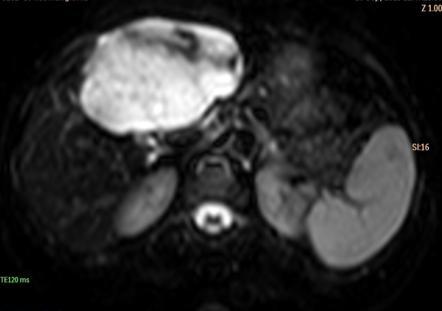
Focal nodular hyperplasia
- Benign liver tumor common in women in their 40’s-50’s
- Mostly asymptomatic
- “Central scar” appearance on CT
- May require biopsy to differentiate from hepatic adenoma
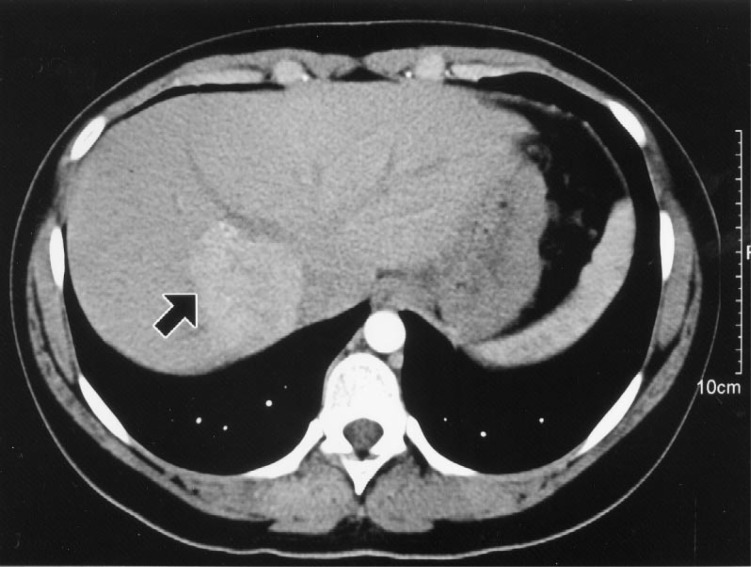
Nodular regenerative hyperplasia
- Focal regeneration in the liver
- Thought to be related to obstructed blood flow in liver regions resulting in injury and subsequent regeneration
- Common in those over age 80
- No treatment necessary
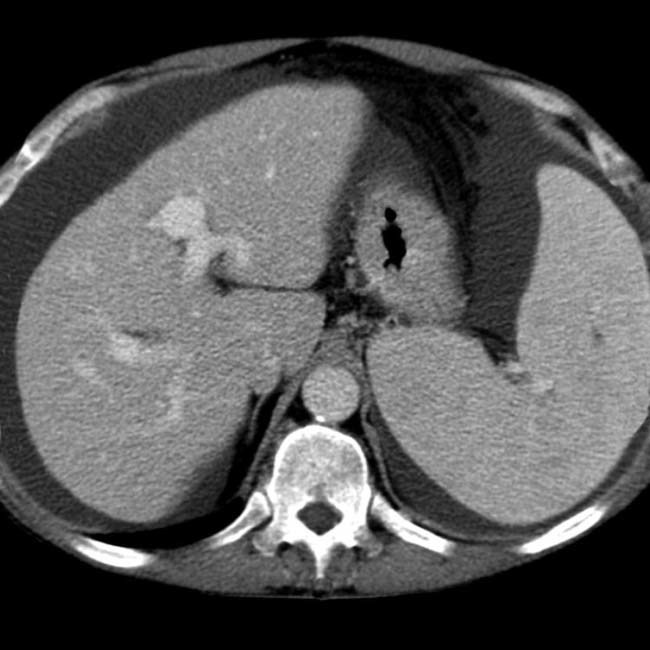
Triple phase CT scan
CT scan with IV contrast that acquires images at 30 seconds (arterial), 60 seconds (portal-venous), and 90 seconds (equilibrium)
Alows for better characterization of liver lesions
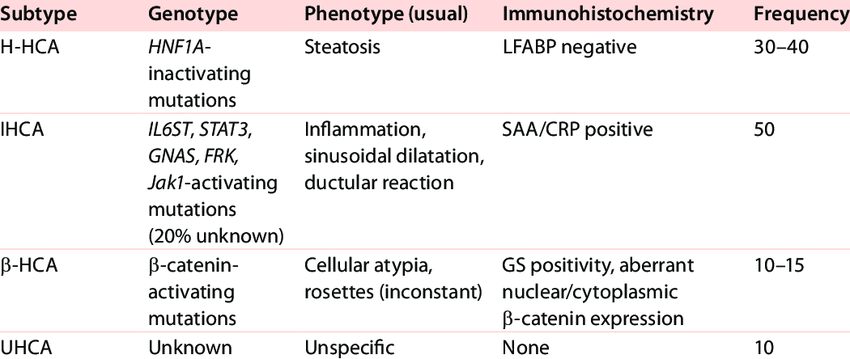
Subtypes of hepatic adenoma
- Inflammatory:
- High risk for bleeding, low risk for malignant transformation
- HNF-1 mutated:
- No risk for bleeding or malignant transformation – benign
- Beta-catenin activated:
- High risk for malignant transformation when > 5 cm in size
CT scan has a reduced detection rate of hepatocellular carcinomas in patients with . . .
. . . cirrhotic livers
Cirrhosis makes it difficult to visualize the interior of the liver as well as you would otherwise
Management of a new diagnosis of hepatic adenoma
- If on an OCP or taking anabolic steroids, STOP these medications
- If < 5 cm in size, risk of rupture and malignant transformation is low. These can be safely observed and managed expectantly.
- Pregnancy is not contraindicated for women with <5 cm adenomas
- If > 5 cm in size, patient should be considered for tumor resection or ablation to reduce bleeding and malignant transformation risks
Major risk factors for hepatocellular carcinoma
- Untreated hepatitis B virus (most important of all)
- Cirrhosis:
- Fatty liver
- Alcohol use disorder
- Chronic untreated hepatitis C virus
- Other etiologies of cirrhosis (less than the above three)
Differentiating FNH from hepatic adenomas
Best test for this is radiolabeled sulfur colloid scintigraphy
This isotope is taken up by Kupffer cells in FNH, but not by adenomas.
This can be super helpful as the demographics affected by FNH and hepatic adenomas (middle aged, pre-menopausal women) are the same.
Hemochromatosis on MRI
Increased liver density on CT, decreased signal on MRI
Quick MRI trick to identify a hemangioma
They are one of the only lesions in the abdomen that exhibits the T2 shine phenomenon: Bright on DWI, bright on ADC
Fat in an adrenal adenoma vs a myelolipoma
A myelolipoma is mostly fat, and so it will be fat attenuation on CT
Fat in a benign adrenal adenoma is mostly microscopic, so you cannot tell on CT. But, on MRI it will have reduced signal on in/out of phase imaging.
Finding the parotid on CT
The parotid is quite fatty, and is slightly hypoattenuating on MRI. It is just medial to the pinna.
How can you tell whether a renal cyst is simple or hemorrhagic?
Simple: T1 dark, T2 bright
Hemorrhagic (Extravasated blood): T1 bright, T2 gray


-
Radiology Physics15
-
Image Cases54
-
Basics of X-ray interpretation106
-
Lines and tubes9
-
Basics of CT interpretation61
-
Basics of KUB interpretation21
-
Measurements to know4
-
Pelvis imaging13
-
Radiology Ethics and Professionalism3
-
Basics of MRI16
-
Test of choice5
-
Urologic radiology12
-
Abdominal Ultrasound23
-
Nuclear Medicine and Molecular Imaging9
-
Neuro Radiology69
-
Radiology in the Setting of Trauma24
-
Hepatobiliary Imaging13
-
Spine imaging11
-
Bones and Arthritis36
-
Mammography and GYN imaging43
-
Common Pediatric Rads54
-
Rad Onc16
-
Trauma45
-
Last Week Topics57



