Question: A 32-year-old man sustains a high-energy open tibial fracture in a motorcycle accident, resulting in a segmental defect of the tibial shaft measuring 12 cm in length after serial debridements. The overlying soft tissues are also deficient. Which of the following free flaps is most appropriate for reconstructing both the bony and soft tissue components of this defect?
A) Anterolateral thigh osteocutaneous flap
B) Fibula osteocutaneous flap
C) Radial forearm osteocutaneous flap
D) Scapular osteocutaneous flap
E) Posterior tibial artery perforator flap
The correct answer is Option B.
Rationale: For large segmental tibial defects exceeding 5-6 cm, the fibula osteocutaneous flap is the workhorse for reconstruction. It provides a long, strong segment of vascularized bone (up to 25-30 cm) that can be “double-barreled” to match the tibia’s width and provide sufficient mechanical strength for weight-bearing. The flap’s reliable skin paddle can simultaneously address the soft tissue deficit. The peroneal artery vascular pedicle is consistent and of adequate length. In contrast, the anterolateral thigh flap (Option A) provides only a corticocancellous segment unsuitable for a 12 cm weight-bearing defect. The radial forearm flap (Option C) offers limited bone length and carries a risk of donor-site fracture. The scapular flap (Option D) provides a curved bone segment ill-suited for a straight tibial defect and lacks sufficient strength for weight-bearing. The posterior tibial artery flap (Option E) is used for soft tissue coverage only and does not provide a structural bone graft.
References:
1. Huang Q, Lu Y, Ma T, et al. Pedicled double-barrel fibular transplantation versus bone transport in the treatment of upper tibial osteomyelitis with bone defects. Orthop Surg. 2022;14(11):2888-2896.
2. Brody RM, Pandey NC, Bur AM, et al. Anterior lateral thigh osteomyocutaneous free flap reconstruction in the head and neck. Head Neck. 2016;38(12):1788-1793.
A 35-year-old man is brought to the emergency department 2 hours after sustaining a severe crush injury to the right distal thigh in a motor vehicle collision. Physical examination shows an open fracture of the femur; the leg and foot are pale and cool. There are no palpable popliteal, dorsalis pedis, or posterior tibialis pulses. Closed reduction does not restore perfusion. Which of the following is the most appropriate next step?
A) Arterial repair with a polytetrafluoroethylene graft
B) Arterial repair with reverse saphenous vein graft
C) CT angiography
D) Intramedullary fixation of the femoral fracture
E) Placement of a temporary vascular shunt
The correct response is Option E.
Gustilo Type IIIC fractures involve arterial injury requiring repair irrespective of the degree of soft tissue and often represent significant limb-threatening injuries. Early recognition and management of lower extremity vascular injury is crucial to limb salvage. CT angiography is of little benefit in the presence of hard signs of vascular injury and can delay operative intervention as well as increase limb ischemia time.
The combination of vascular and orthopedic injuries requiring repair is rare, with a reported incidence as low as 1.5%. Data exist from both wartime and civilian groups evaluating the sequence of management of such injuries. The recommended algorithm suggests improved ischemia times and favorable limb salvage rates with temporary vascular repair, using shunts as the initial adjunct to restore perfusion followed by debridement and fracture fixation.
Definitive vascular repair should follow debridement and fracture fixation. Both synthetic polytetrafluoroethylene and autologous (reverse saphenous vein) interposition grafts are reported to be used in traumatic reconstruction, although autologous tissue is often preferred in the setting of gross contamination.
Which of the following vascular structures supply the secondary vascular pedicle of the gracilis muscle flap?
(A) Lateral femoral circumflex artery and vein
(B) Medial femoral circumflex artery and vein
(C) Obturator artery and vein
(D) Profunda femoris artery and vein
(E) Superficial femoral artery and vein
The correct response is Option E.
The gracilis flap is a type II muscle flap (one dominant pedicle and one secondary pedicle) that is used for pedicled and free tissue reconstructive procedures.
* This flap is comprised of one primary vascular pedicle, which is supplied by the profunda femoris artery via the ascending branch of the medial femoral circumflex artery and vein,
* And one secondary vascular pedicle, which is supplied by the superficial femoral artery and vein.
* The lateral femoral circumflex artery and vein supply the rectus femoris and vastus lateralis muscle flaps.
* The obturator artery is a branch of the internal iliac artery and divides further to give off vascular branches, primarily in the thigh.
A 24-year-old man comes to the office 3 months after closed reduction of a right knee dislocation. His knee is stable, but he still depends on an ankle/foot orthosis for ambulation. Physical examination shows decreased light-touch sensation along the dorsolateral aspect of the foot. Ankle eversion is absent. Sensation and motor function are otherwise intact. Nerve conduction testing is most likely to demonstrate a block in which of the following nerves?
A) Common peroneal
B) Lateral plantar
C) Medial plantar
D) Posterior tibial
E) Superficial peroneal
The correct response is Option E.
Common peroneal nerve injuries involving motor function loss have been reported in up to 50% of knee dislocations. If isolated sensory disturbances are also included, the incidence of nerve injury approaches 75%. If no recovery is noted by 3 to 6 months following injury, then surgical treatment is warranted. Physical exam primarily determines the nerve to be explored, neurolysed, and possibly grafted, but nerve conduction studies can be useful pre- and intraoperatively.
The common peroneal nerve divides into three branches at the knee, an articular branch that innervates the joint capsule and lateral collateral ligament of the knee, the superficial, and deep branches. The superficial branch innervates the muscles of the lateral compartment of the leg and provides sensation to the lateral calf and dorsal foot. The deep branch innervates the anterior compartment and provides sensation to the first web space of the foot. The scenario given above is most consistent with compromise of the superficial peroneal nerve. If dorsiflexion of the ankle and toe extension had also been lost, then common peroneal nerve injury would have been suggested.
The posterior tibial nerve proper innervates the muscles of the posterior calf, mediating ankle plantar flexion and toe flexion. The medial and lateral plantar nerves are terminal branches of the posterior tibial nerve. They provide motor innervation to the deep plantar muscles of the foot and sensation to the plantar surface of the foot.
A 34-year-old man who works as a police officer is brought to the emergency department after sustaining a traumatic avulsion of the right heel. Examination shows a 3 * 3-cm area of exposed calcaneus on the weight-bearing aspect of the heel. Which of the following arteries and nerves supply the flap that will provide the most appropriate sensate coverage?
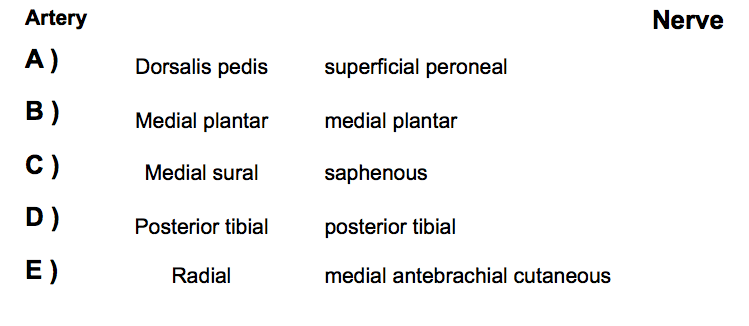
The correct response is Option B.
Sensate flaps include an intact sensory nerve supplying the overlying skin being transferred or, as in the case of a free tissue transfer, the cutaneous nerve is preserved and reanastomosed to a recipient cutaneous nerve. Sensate flaps are useful for areas where sensation is important for the appropriate function of a reconstructed region. Sensate flaps are beneficial in resurfacing wounds located on weight-bearing areas as in pressure sores or the heel, as in the scenario described.
The most reliable sensate flap for coverage of the plantar calcaneus comes from the medial plantar flap. This flap receives its sensation from the medial plantar nerve (L4-5) and receives its blood supply from the medal plantar artery. This flap comes from the instep of the foot between the head of the first metacarpal and the midpoint of the heel. The size of the flap can be up to 12 * 6 cm. Due to its proximity to the heel and the minimal donor morbidity with loss of sensation to the instep of the foot, this flap is the most appropriate for coverage of this patient €™s defect.
The dorsalis pedis flap receives its blood supply from the dorsalis pedis artery. This flap can be transferred as a sensate flap using the superficial peroneal nerve. However, this flap would not reach the area needed to be covered in this patient. The dorsalis pedis flap is used most frequently for coverage of the anterior ankle and dorsal distal foot.
The medial sural artery supplies the medial gastrocnemius flap. This flap is best used for soft-tissue coverage of the upper third of the leg and the distal knee. Preservation of the saphenous nerve with the medial gastrocnemius musculocutaneous flap will provide a neurosensory flap.
However, due to the distance from the flap, it would require a free tissue transfer and is typically not used for this type of coverage.
The proximal branches of the posterior tibial artery supply the medial soleus muscle flap. The posterior tibial nerve supplies only motor fibers to the soleus muscle and can therefore not be used as a sensate flap. This flap is best used for soft-tissue coverage of the middle third of the leg.
The radial forearm flap receives its blood supply from the radial artery and its septocutaneous perforating vessels. A neurosensory flap can be harvested based on the medial or lateral antebrachial cutaneous nerves to reconstruct the plantar surface of the foot. This would be a second choice to the medial plantar artery flap as it requires free tissue transfer.
A 24-year-old man is brought to the emergency department by ambulance because of injuries to the right leg he sustained in a motorcycle collision. Physical examination shows fracture of the tibia and fibula, thrombosis of the anterior and posterior tibial arteries, and transection of the posterior tibial and peroneal nerves just below the knee. Which of the following is the most appropriate management?
(A) External fixation
(B) Skeletal traction and vacuum-assisted closure of the wound
(C) Revascularization and coverage with a gastrocnemius flap
(D) Revascularization and coverage with a latissimus dorsi flap
(E) Below-the-knee amputation
The correct response is Option E.
This patient has sustained multiple traumas including injury to the skin, bone, arteries, and nerves. Using the injury severity scale, the prognosis of this injury is very poor. In an adult, there is little chance of regaining useful protective sensation or motor function after nerve repair in light of the open fractures and vascular injury. The best immediate management is amputation. Additionally, the return to weight-bearing and work is significantly shorter with amputation.
A 53-year-old man with a comminuted fracture of the midtibia has a 4-by-3-cm defect of the midanterior surface of the leg at the level of the fracture. He currently smokes two packs of cigarettes daily. Physical examination shows no palpable dorsalis pedis pulse. Which of the following surgical interventions is the most appropriate method of reconstruction in this patient?
A) Anterior tibialis muscle flap
B) Below-knee amputation
C) Gastrocnemius muscle flap
D) Gracilis free tissue transfer
E) Soleus muscle flap
Correct answer is option E.
The soleus muscle flap is most appropriate for reconstruction in this patient. The soleus is a bipenniform muscle; its medial head originates from the posterior tibia, and the lateral head originates from the proximal fibula. It is located deep to the gastrocnemius in the superficial posterior compartment. Blood to the medial head is predominantly supplied by the popliteal and posterior tibial arteries and the lateral head is predominantly supplied by the peroneal artery. Depending on the size of the defect, a hemisoleus muscle flap can be used to preserve flexor function.
Below-knee amputation is an option if salvage of the leg is not possible or if the extremity is insensate, particularly in older patients.
An anterior tibialis muscle flap can be used for small defects. In this patient with an absent dorsalis pedis pulse and possible injury to the anterior tibial artery, this is not an optimum choice.
For lower-extremity reconstruction, the gastrocnemius muscle flap is used for knee wounds and proximal tibial defects, the soleus for middle third defects, and free tissue transfer for distal third defects. The gastrocnemius muscle flap might not reach the defect in the middle third and therefore is not the best option. Free tissue transfer is often used for reconstruction of high-velocity injuries to avoid the use of muscle in the zone of injury. Free tissue transfer, however, is not the best option for this 53-year-old man because his history of cigarette smoking and absent pedal pulse suggest the possibility of peripheral vascular disease.
A 32-year-old woman comes to the office because the toes of the right foot “drag” when she walks. She underwent vein stripping of the right leg and ligation of the lesser saphenous vein 4 weeks ago. Physical examination shows absent dorsiflexion and eversion of the ankle. Electromyography findings show:
Which of the following is the most likely site of nerve injury in this patient?
A) Common peroneal nerve at the knee
B) Superficial peroneal nerve at the knee
C) Sural nerve at the knee
D) Tibial nerve at the knee
E) Tibial nerve at the mid calf

The correct response is Option A.
The most likely site of injury would be the common peroneal nerve at the knee. Injuries to the common peroneal nerve are well documented in both traumatic (knee dislocation) and iatrogenic settings. Patients have footdrop and numbness over the first dorsal web space of the foot. History and clinical examination are the mainstays for diagnosis, but electromyography can be helpful in less-clear circumstances. The absence of recruitment of the lateral compartment muscles (peroneals) and the anterior compartment muscles (tibialis anterior, extensor hallucis longus) strongly suggest common peroneal involvement. The presence of recruitment of the biceps femoris and the tibialis posterior rules out tibial nerve involvement. An isolated superficial peroneal nerve injury would spare the anterior compartment muscles.
The sural nerve is a sensory nerve and provides no motor function.
A 70-year-old man has a mildly tender, clean, 6-cm wound to the lower leg that occurred spontaneously seven months ago. Physical examination of the ankle shows a brown-red discoloration and edema of the surrounding tissue. Which of the following is the most appropriate initial management of the wound?
A ) Hyperbaric oxygen therapy
B ) Silver sulfadiazine dressing
C ) Surgical debridement
D ) Unna boot compression dressing
E ) Vacuum-assisted closure therapy
The correct response is Option D.
The patient described has signs and symptoms of a venous stasis ulcer, a common cause of chronic lower leg wounds. Venous valve incompetence leads to chronic venous hypertension, capillary hydrostatic pressure elevation, and leakage of fluid and proteins to the extracellular space. Oxygen transport to the tissues is impaired, causing localized cellular necrosis and ulceration.
The hallmark of treatment is compression of the edematous limb to reduce the severe interstitial edema. By decreasing the tissue pressure, oxygen delivery is enhanced and wound healing mechanisms may be gradually restored. The open wound is best treated with an absorptive and occlusive dressing such as Unna wrap. Care must be taken to avoid overcompression and arterial compromise. Unna boots can be changed weekly or more frequently as needed. After reepithelialization has occurred, compression stocking or elastic bandage wraps are essential to prevent occurrence. Compression therapy is also a cost-effective treatment. Venous insufficiency affects up to 5% of the population; more than 500,000 patients in the United States suffer from ulceration. The economic costs from treatment and lost productivity are enormous.
Hyperbaric oxygen therapy and vacuum-assisted compression dressings may augment healing or help prepare the wound for grafting, but they are not the first line of treatment in uncomplicated ulcers. Recurrent ulceration rates are high, therefore unnecessary grafting should be avoided. Silver sulfadiazine and other topical antimicrobials may help reduce surface bacterial loads but do little to promote healing in the presence of venous hypertension. Debridement is reserved for necrotic wounds.
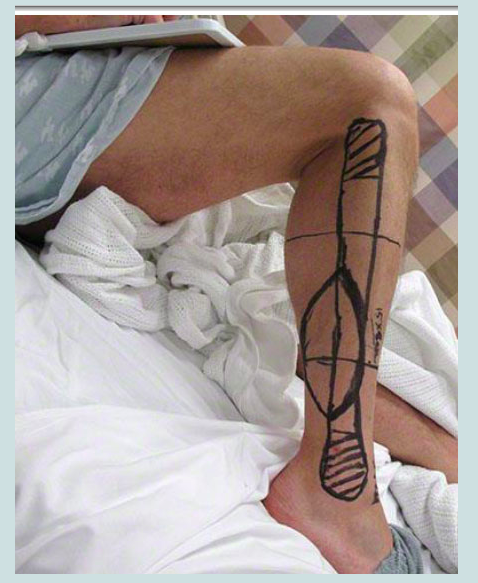
A 57-year-old man comes to the office 4 weeks after undergoing a free osseocutaneous fibula flap. He says he has pain with walking. A photograph is shown. X-ray studies show 6 cm of fibular bone remains proximally and distally. Sensation of the right foot shows no abnormalities; pain is noted on plantar flexion. Which of the following is the most appropriate next step in management?
A) Cast immobilization of the lower extremity (above the knee)
B) Cast immobilization of the lower extremity (below the knee)
C) Operative exploration and bone grafting
D) Operative exploration and nerve grafting
E) Reassurance that the pain is self-limiting
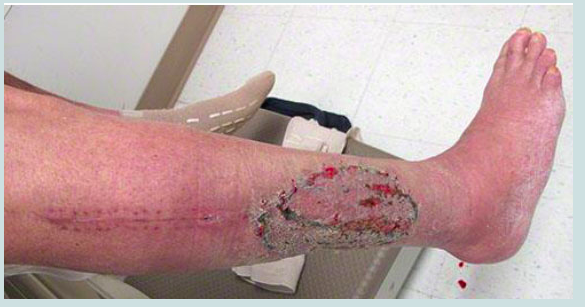
The correct response is Option E.
Vascularized bone flap is typically needed for defects >6 cm regardless of location in the body. The fibula is a common donor for vascularized bone. Understanding the postoperative course and complications is needed both in terms of discussions with the patient preoperatively and management of the patient’s condition after surgery. Common sequelae of fibula harvest include pain in the leg (especially when walking). Four weeks is relatively early in the postoperative course and reassurance should be given.
Risks of fibula harvest include damage to the peroneal nerve (increased when <6 cm of bone is left behind or when the head of the fibula is included in the harvest); destabilization of the ankle (increased when <6 cm of bone is left behind); and damage to the posterior tibial nerve.
A free-fibular flap design with hash marks left intact is shown.
A 38-year-old man comes to the office for follow-up examination two months after undergoing open reduction and internal fixation of a fracture of the right proximal fibula. A preoperative radiograph is shown. On current physical examination, he can evert the right foot, but he is unable to dorsiflex it. This patient has most likely sustained an injury to which of the following nerves?
A ) Common peroneal B ) Deep peroneal C ) Sciatic D ) Superficial peroneal E ) Sural
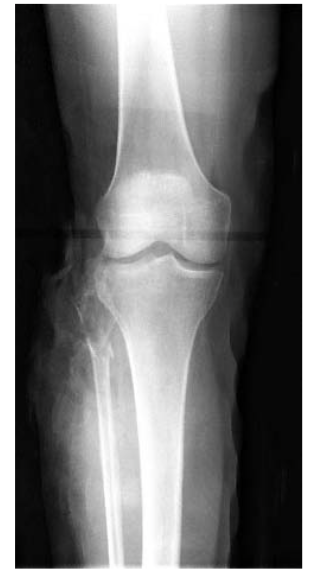
The correct response is Option B.
The patient described has sustained an injury to his deep peroneal nerve. An electromyelogram should be ordered to confirm the diagnosis. The common peroneal nerve divides into two branches. The deep branch of the peroneal nerve innervates the extensor hallucis longus and the anterior tibial muscles. The superficial branch of the peroneal nerve provides motor innervation to the peroneus longus and brevis muscles. If the common peroneal nerve had been injured, eversion would not have been likely. A sural nerve injury would have a sensory component, not a motor component. The sciatic nerve injury would have more global consequences, though this pattern is theoretically possible in a Sunderland Grade VI injury. Thus, the most likely injured nerve is the deep peroneal nerve.
A 28-year-old man is flown by helicopter to the emergency department after sustaining a deep, isolated, lateral abrasion to the right lower leg in a motorcycle collision. On physical examination, he has a segmental injury to the common peroneal nerve. Repair with a sural nerve autograft is planned. Which of the following is the maximum length at which any functional recovery is expected?
A) 3 cm
B) 6 cm
C) 9 cm
D) 12 cm
E) 15 cm
The correct response is Option D.
Nerve repair outcomes are related to mechanism of injury, need for a graft and graft length, and timing of surgery relative to injury. Although results vary, good results are typical for grafts measuring less than 6 cm, and may be possible in approximately 25% of patients with grafts measuring 6 to 12 cm. Almost no studies report an M4 motor recovery or better when a graft greater than 12 cm is used.
Where can the blood supply of medial plantar artery flap be located?
A) Between the abductor hallucis and flexor digitorum brevis
B) Between the adductor hallucis and flexor hallucis brevis
C) Between the adductor hallucis and flexor digiti minimi brevis
D) Between the lumbricals
Correct answer is option a.
The medial plantar artery is typically identified between the abductor hallucis and the flexor digitorum brevis.
Scaglioni 2018 correct answer is option a.
Which of the following anatomic structures is an important landmark in raising a reverse sural artery flap?
A) Achilles tendon
B) Deep peroneal nerve
C) Lesser saphenous vein
D) Plantaris tendon
E) Posterior tibial artery
The correct answer is option C.
When raising a reverse sural artery flap, the important landmarks are the lesser saphenous vein and sural nerve, which should bisect the cutaneous paddle. The blood supply to this flap depends on the medial superficial sural artery and the lesser saphenous vein with its two small accompanying arteries. The pivot point of the pedicle is typically 5 cm above the lateral malleolus, where the perforators of the flap enter a more superficial plane. The Achilles tendons are not landmarks for raising this flap but, when exposed, are good indications for this type of flap. The deep peroneal nerve is located in the lateral compartment. The posterior tibial artery is found in the deep compartment and is not associated with this flap. The plantaris tendon is deep to the dissection of the flap.
A 17-year-old boy undergoes resection of the right distal femur to treat osteosarcoma. A large allogeneic corticocancellous bone graft is used for skeletal reconstruction of the 10-cm bony defect. An intramedullary vascularized fibular free flap is also placed in the construct. Which of the following is the most likely purpose of this additional procedure?
A) Decrease the immunogenicity of the allograft
B) Decrease the rate of infection
C) Increase creeping substitution in the allograft
D) Increase the immediate strength of the construct
E) Shorten union time
The correct response is Option E.
The most likely reason to place an intramedullary fibular free flap in the allogeneic bone graft is to shorten union time. Free fibular flaps contain an intrinsic blood supply and osteogenic cells. These offer an alternative to the allograft and the capability of osteogenesis through osteoinduction. Thus, the biologic advantage of fibular free flaps is a shortened union time compared with the allograft, which solely depends upon creeping substitution for healing. Union times may be as short as 3 to 5 months. The healing of massive allografts is generally slow, superficial, and incomplete. The union times for allograft healing have been reported at 14 to 23 months for intercalary defects.
Nonvascularized massive allografts provide a biologic spacer with strong cortical bone. These grafts give great strength to the construct; however, despite this advantage they have many disadvantages, including their lack of blood supply, lack of osteogenic cells, and potential for immunologic reaction. The fibula may add some strength to the overall construct but this is not the primary reason for its use in the scenario described. It also does not mitigate any potential antigenicity that the graft may have. The graft heals by creeping substitution and as such is only osteoconductive, unlike vascularized bone. This process in the allograft remains unchanged by the presence of the fibular flap; however, it does provide the additional process of osteoinduction as described above, which helps in healing. It is the avascular status of the allograft that predisposes these reconstructions to infection, not the dead space in the medullary canal.
The above photograph is of a 45-year-old man with insulin-dependent diabetes mellitus who develops a gangrenous toe. Culture of the wound shows mixed aerobic and anaerobic organisms, including Bacteroides, Enterococcus, and Staphylococcus. Noninvasive vascular studies show an ankle-brachial index of 0.76. The patient wishes to undergo a single-stage surgical procedure.
Which of the following is the most appropriate type of amputation for this patient?
(A) Amputation at the level of the metatarsophalangeal joint
(B) Transmetatarsal amputation
(C) Lisfranc amputation
(D) Syme’s amputation
(E) Below-knee amputation

The correct response is Option B.
Amputation is indicated in this patient who has obvious necrosis of the toe. Indeed, ischemic changes and wound problems are often seen in patients with diabetes mellitus. Because these patients are typically predisposed to further, more proximal amputations in the future, a conservative approach to amputation should be used in this instance. Several factors, including ankle-brachial index, help to predict the success rate in patients who undergo partial amputations of the foot; an ankle-brachial index of less than 0.7 indicates a markedly increased risk for wound healing problems following surgery. However, this patient has an ankle-brachial index of 0.76, which is an acceptable risk for complications following amputation. Therefore, an evaluation for the likelihood of revascularization should be undertaken prior to any amputation procedure. The surgeon should attempt to save as much of the foot as possible to allow for primary closure of the defect. As a result, the amputation should be performed at the metatarsal level in this patient. The surgeon should also be aware of the vascular supply to the adjacent toes during the amputation procedure in order to prevent any associated complications.
A 37-year-old man comes to the office because of wound breakdown 2 weeks after he sustained a calcaneal fracture. Orthopaedic stabilization was performed in the emergency department at the time of the injury. Examination today shows a 3 × 4-cm wound over the lateral calcaneus. Coverage with a propeller fasciocutaneous flap from the lateral leg is planned. Which of the following blood vessels supplies the perforators of this flap?
A) Anterior tibial artery
B) Lateral plantar artery
C) Lateral sural artery
D) Peroneal artery
E) Posterior tibial artery
The correct response is Option D.
Propeller flaps are a useful method of lower extremity reconstruction. These flaps were initially popularized by Teo and have been utilized for a variety of defects in the lower leg and foot. The propeller flap is based on perforating blood vessels from the peroneal artery to reconstruct lateral defects and perforators from the posterior tibial artery to reconstruct defects on the medial aspect of the leg wound. The propeller flaps can often replace the need for a sural artery, neurocutaneous artery flap or a free tissue transfer. Laterally based plantar flaps may be used to cover small defects on the weight-bearing surface of the foot but are not reliable for larger or lateral defects. The posterior and anterior tibial arteries do not have perforator in the desired location for a distally based propeller flap. The lateral sural vessels are too proximal for heel coverage.
In which of the following lower extremity trauma scenarios of would pre-operative traditional angiography be most useful?
A) A patient with palpable pedal pulses
B) A patient with acute kidney injury
C) A patient with questionable pulses and pre-existing hardware
D) All patients with Gustilo IIIB injuries
The correct answer is option C.
Patients with abnormal pedal pulses should have pre-operative imaging prior to lower extremity free flap reconstruction. CT angiography is non-invasive and precise, but nearby hardware may create too much scatter for detailed evaluation of vessel run-off, and therefore in this patient population, traditional angiography is recommended. Patients with acute kidney injury may have further worsening of renal function with the dye load associated with angiography. Patients with normal pulses may not require pre-operative angiography, however this may be ordered to assist with operative planning.
Shokrollahi 2017, Lutz 2000
The correct answer is option C.
A 55-year-old male with a 30 pack year history presents with complaints of calf pain when walking over 100 feet. This is relieved by 5-10 minutes of rest. The next appropriate step in management is:
A) Fem-pop bypass
B) Coumadin
C) Smoking cessation, exercise, and aspirin
D) Angiogram
Correct answer is option C.
smoking cessation, exercise, aspirin. Conservative management with alteration of risk factors, medical treatment of co-morbidities, and good exercise regimen is initial treatment to halt progression of claudication.
A 77-year-old man has a 4 x 3-cm defect of skin and soft tissue over the distal third of the tibia after he had a stroke and fell. He has a history of myocardial infarction and chronic obstructive pulmonary disease. Physical examination of the lower leg shows exposed bone and desiccated periosteum; there is no fracture.
Which of the following is most appropriate for reconstruction of the defect?
(A) Full-thickness skin graft
(B) Cross-leg flap
(C) Fasciocutaneous flap
(D) Gastrocnemius flap
(E) Free tissue transfer
The correct response is Option C.
The most appropriate management is coverage of the defect with a fasciocutaneous flap. This flap is ideal for reconstruction of lower extremity wounds in patients with severe illness or multiple trauma, or in patients with small wounds that cannot be covered with a skin graft alone. The fasciocutaneous flap can be based either proximally or distally on various septocutaneous perforators, including those of the medial leg (which lie approximately 3 cm posterior to the tibia), the posterolateral septum, and the anterolateral leg.
Skin grafting should not be performed over bone that is exposed and lacks periosteum. Some surgeons have recently described a technique for grafting over exposed bone, in which holes are drilled into the bone to allow for granulation and grafting is then performed. However, this process is not the best option in an elderly patient with multiple medical problems.
The gastrocnemius flap is appropriate for defects of the upper and sometimes middle third of the leg, but lacks the adequate reach for defects of the distal leg.
Cross-leg flaps are rarely used now because of the availability of free tissue transfer. This flap is more appropriate in children than elderly patients, in whom stiffness is a factor.
Free tissue transfer is not an option in a patient who has had serious medical conditions, including stroke, myocardial infarction, and pulmonary disease.
Six months after undergoing plate fixation and primary wound closure for management of open fractures of the distal tibia and fibula sustained in a motorcycle accident, a 43-year-old man has purulent drainage from the wound site. Radiographs show bony nonunion at the fracture sites. Which of the following is the most appropriate initial management?
A) Continuous irrigation
B) Debridement of bone
C) Coverage with a muscle flap
D) Bone grafting
E) Insertion of an intramedullary rod
Correct answer is option B.
Osteomyelitis is a frequent complication of open fractures associated with soft-tissue injury, fibrosis, and localized ischemia. Measures to prevent the development of osteomyelitis, including removal of dead and devitalized bone, closure of dead space, and coverage with well-vascularized soft tissue, are recommended. In patients with established osteomyelitis, the most appropriate initial management is debridement of devascularized bone and necrotic or scarred tissues and removal of any nonautologous material, such as fixation devices. Because local soft tissue is frequently inadequate, free tissue transfer is often performed for soft-tissue coverage in the lower third of the leg. In patients who have unhealed fractures, an external fixation device is used to stabilize the fracture pattern. An Ilizarov frame may be applied if lengthening is required.
Continuous irrigation alone will not treat the osteomyelitis. Coverage with a well-vascularized muscle flap should be performed following bony debridement, and bone grafting should be delayed until the bone and soft tissues are stabilized and the osteomyelitis has resolved. Insertion of an intramedullary rod may further compromise bony perfusion.
An 18-year-old man is brought to the trauma center after sustaining an injury to the right lower extremity. Examination shows an open fracture of the right tibia. Which of the following mechanisms of the injury is most likely to require the most extensive surgical debridement?
A ) A collision on the rink during which one skater runs over another
B ) A fall from a bicycle onto a curb after a collision with a pedestrian
C ) A fall from a 6-ft ladder onto a ceramic floor
D ) A fall from a shopping cart onto a parking lot
E ) A vehicle crash into a highway barrier while speeding
The correct response is Option E.
All of the mechanisms could have caused an open fracture requiring surgical intervention. Only the vehicle crash represents a high-energy injury. The approach to high-energy injuries must take into account a wider zone of injury beyond just the fracture site and skin laceration.
Open fractures in high-energy soft-tissue injuries have a high incidence of malunion and infection, especially with tibia fractures. These injuries require emergent debridement of both devitalized soft tissue and bone. Aggressive debridement will decrease the incidence of infection and increase the likelihood of successful reconstruction. Wounds frequently require multiple debridements followed by soft-tissue coverage including pedicled and free flaps. Vacuum-assisted closure applies negative pressure to an open wound causing increased granulation tissue, decreased edema, and decreased wound size. This technique has lowered the need for free flaps even in high-energy Gustilo Type III fractures.
The other options listed are not appropriate because the mechanisms of injury are low energy. Free-fall physics shows the housepainter hit the ceramic floor at a maximum of 13 mph. The patient €™s weight does not affect speed at impact. Distance = 1/2 × Gravity × Time (squared), Velocity at impact = Gravity × Time, Gravity = 32 ft/s2. The ice-skater sustained a sharp injury of low energy. The incident with the shopping cart is a low-energy injury, as is the bicyclist/pedestrian collision. The bicyclist hit a pedestrian and then fell. Average speed for a serious bicyclist is 13 to 18 mph. Colliding with a pedestrian would further decrease that speed.
Where is the sural nerve best localized?
A) 1 cm anterior to the fibular head
B) 1 cm posterior to the lateral malleolus
C) 1 cm anterior to the lateral malleolus
D) 1 cm posterior to the medial malleolus
E) 1 cm anterior to the medial malleolus
The correct response is Option B.
The sural nerve is typically found 1-1.5 cm posterior to the lateral malleolus. It is a sensory nerve formed by contributions from the medial and lateral sural cutaneous nerves, making it suitable for nerve grafting due to its favorable characteristics.
A 62-year-old man is brought to the emergency department by helicopter after sustaining severe injuries to the head, neck, and right femur during a motor vehicle collision. The patient’s condition is stabilized, and the femur is temporarily reduced and splint immobilized. Peripheral pulses in the right leg are not palpable and capillary refill is noted; handheld Doppler shows weak pulses. Which of the following is the most appropriate next step to establish lower extremity vascular injury in this patient?
A) CT angiography
B) Doppler ultrasonography
C) Measurement of ankle brachial index
D) Serial physical examinations
The correct response is Option A.
As with many patients who have sustained severe upper or lower extremity trauma, the vascular status of the limb in the patient described is in question. Because of significant collateral blood flow in the upper and lower extremities, capillary refill and handheld Doppler tones can often be found even with complete disruption of major arteries. Although traditional angiography is known as the ?gold standard? for the diagnosis of vascular injuries, it is not without its difficulties. A special suite, technicians, and physicians are needed to perform traditional angiography, and the potential for morbidity has been noted. As a result, CT angiography is fast becoming the new ?gold standard? for the diagnosis of vascular injuries. Coupled with the fact that many trauma patients will be brought to the CT suite for other injuries, CT angiography is a rapid and natural next step to be taken when the head or abdomen is being scanned. Serial physical examination, ankle brachial index, and Doppler ultrasonography are adequate techniques, but they may be operator-dependent or sometimes have difficulty localizing the actual injury. Both traditional and CT angiography will localize the injury, but, for obvious reasons, CT angiography has overtaken traditional angiography in the diagnosis of acute vascular injury in the trauma patient.


-
Anesthetics - Critical Care152
-
Basic Surgical Principles203
-
Blepharoplasty - Oculoplastic105
-
Body Contour - Abdominoplasty - Liposuction184
-
Breast Augmentation, Mastopexy182
-
Breast Reconstruction177
-
Breast Reduction / Gynecomastia81
-
Burns principles and treatment136
-
Chest/Abdomen/Trunk/Rec/Congenital193
-
CL & CP, CL Nose, VPI161
-
Coding27
-
Craniofacial Anomalies - Migraine212
-
Ear Reconstruction - Microtia - Trauma118
-
Oculoplastic - Eyelid Reconstruction38
-
Facelift - Browlift110
-
Facial Palsy - Cheek and Lip reconstruction77
-
Facial Rejuvenation - Chemical Peel / Fillers / Botox / Non-Surgical115
-
Facial Trauma - OMF - Mandible171
-
Flaps - Principles - Complex Flap Recons.151
-
Genital, Urinary, Gender Affirmation, Pelvic52
-
Grafts: Skin, Fat, Cartilage and Bone97
-
Hand & Lower Extremities - General75
-
Hand - Amputation, Replantation, Dupuytren's235
-
Hand - Arthritis47
-
Hand - Extensor and Flexor Tendon Injury147
-
Hand - Fractures - Dislocations77
-
Hand - Limbs - Congenital105
-
Hand Nerve Injury - Compression - Brachial plexus198
-
Hand - Tumors77
-
Hand - Wrist ligament injuries and fractures97
-
Head and Neck Anatomy - Embryology76
-
Head and Neck Congenital105
-
Head and Neck Tumors / Parotid156
-
Infections - Soft Tissue - Hand106
-
Lasers50
-
Lower Extremity218
-
Lymphedema / venous Inssuficiency43
-
Mandible - OMF93
-
Microsurgery principles51
-
Nasal Reconstruction52
-
Orthognathic, TMJ, Chin138
-
Practice management - Health Care System - Ethics - Legal - Research79
-
Pressure Injuries55
-
Rhinoplasty - Septoplasty127
-
Scalp, Forehead, Cranial Reconstruction - Hair Restoration48
-
Skin Lesions Benign, Malignant SCC BCC (No-melanoma)158
-
Skin Melanoma45
-
Tissue Expansion18
-
Wound Healing, Hypertrophic scars and Keloids, Transplant125
-
Vascular Tumors And Malformations - PAD - Trauma111



