Stroke
- Also known as Cerebrovascular Accident (CVA)
- 3rd biggest killer in the UK
- In the UK someone has a stroke every 5 minutes – approx. 150,000 / year
- Age group most affected >65 years
- 1,000 adults <30 years have a stroke each year
Blood Supply to Brain
how much blood supply goes to your brain
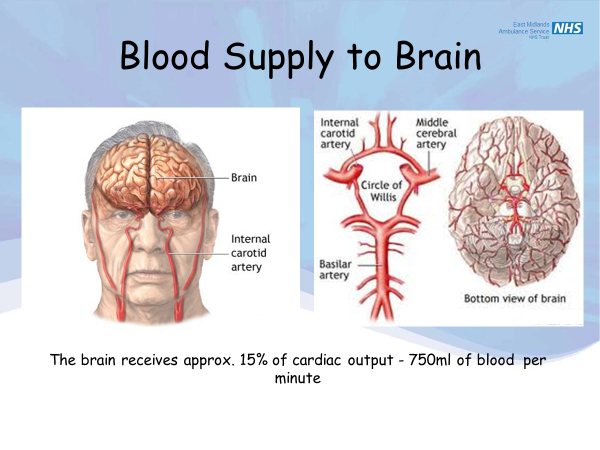
Blood Supply to the Brain
circle of willis plays what role
% of cardiac output
mls
- Two internal carotid and two vertebral arteries
- Internal carotid branches to form anterior and middle cerebral
- Vertebral join together to form the basilar artery
- Basilar splits again to form posterior cerebral arteries
- Major branches are joined together to form circle of willis
•Circle of willis plays major role in ensuring constant supply of oxygen and glucose when head is moved and when contributing artery is narrowed
- Brain receives approx 15% of cardiac output
- •Approx 750ml/min
- Autoregulation keeps blood flow constant by adjusting diameter of vessels across range of blood pressure (About 65-140 mmHg)
Stroke Definition
•Stroke – “A stroke is a clinical syndrome characterised by rapidly developing clinical symptoms and/or signs of focal, and at times global, loss of cerebral function, with symptoms lasting more than 24 hours or leading to death, with no apparent cause other than that of vascular origin.” (Hatano 1976 )
•Transient Ischaemic Attack (TIA) –Definition
•Transient Ischaemic Attack (TIA) – “…a clinical syndrome characterised by an acute loss of focal cerebral or monocular function with symptoms lasting less than 24 hours and which is thought to be due to inadequate cerebral or ocular blood supply as a result of arterial thrombosis or embolism associated with arterial, cardiac or haematological disease.” (Hankey and Warlow 1994)
Causes/Types of Stroke
Name two different types
% which cause each one
1.Ischaemic (80%) – caused by”a blockage of a blood vessel (embolus or thrombus) causing hypoxic damage to a critical area of brain tissue”
1.Haemorrhagic (20%) – caused by a “ruptured blood vessel in the brain which applies pressure to, or bleeds into, the surrounding brain tissue”
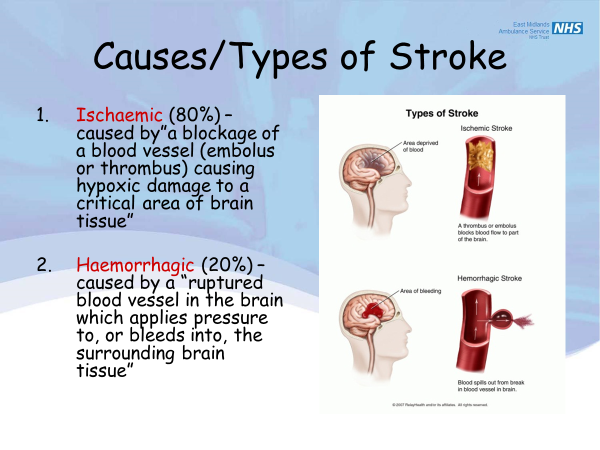
Ischaemic Stroke
Ischaemic Stroke - Causes
Name them?
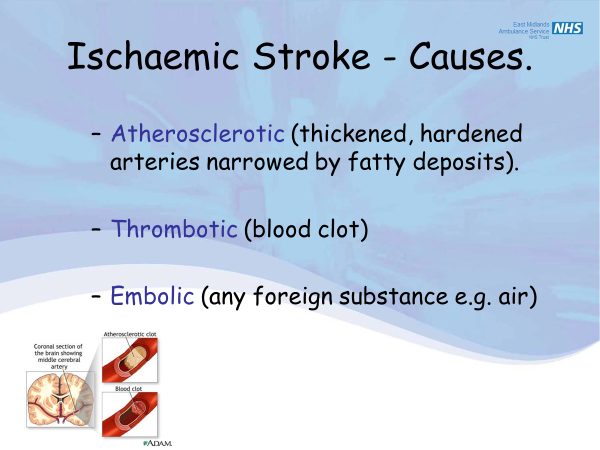
–Atherosclerotic (thickened, hardened arteries narrowed by fatty deposits).
–Thrombotic (blood clot)
–Embolic (any foreign substance e.g. air)
Haemorrhagic Stroke
Name types?
•Haemorrhagic strokes account for approx. 20% of all stroke deaths. This group includes:
- Intra-cerebral haemorrhage (bleeding within the brain)
- Sub-arachnoid haemorrhage (bleeding outside the brain)
Clinical Signs of Stroke
- Slow, full pulse
- Flushed and warm skin
- Possibly unequal pupils
- Blurred vision
- Noisy breathing
Paralysis of muscles on one side of the body (hemiplegia
- Weakness
- Patients may not understand simple instructions
- Slurred speech with dribbling of saliva
- Incontinence
- Agitation/Confusion
- Hypoxia induced fits
- Hypertension
- Possible altered consciousness
- Vomiting
- Headache
Loss of balance
Management of Stroke
- Correct any ABCD problems
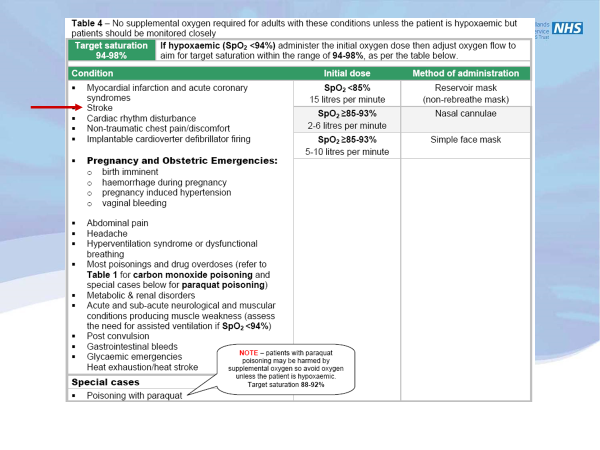
- Administration of O2 therapy if patient is hypoxic (<94%) – maintain SpO2 94% - 98%
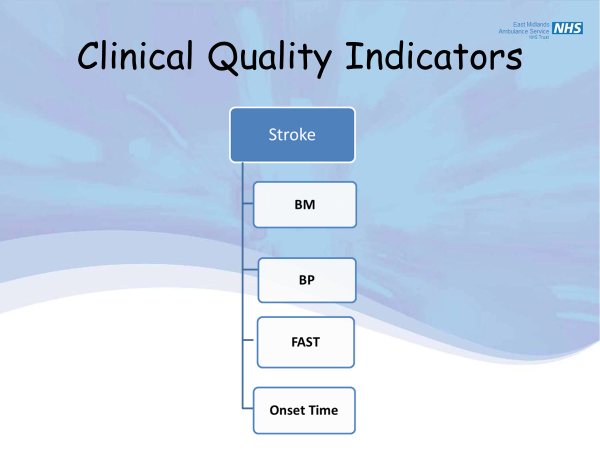
- Assess for FAST positive features
- Note time of onset
- Consider appropriate patient positioning
- Obtain Blood Glucose level
- Apply 12 lead ECG and Pulse Oximetry monitoring
- Assist in obtaining IV access if required
- Utilise direct admission pathway if in place
FAST” Test for Stroke
list and why?
•Facial droop – assess the smile or ability to expose the teeth using facial muscles.
•
•Arm drift – ask the patient to close their eyes and hold their arms straight-out in-front-of them.
Weakness will result in the affected arm drifting down
•Speech – ask the patient to repeat a simple sentence.
Slurred words (dysarthia) or inability to speak (aphasia) are important indicators.
Epilepsy
Causes of Fitting/Convulsions/Seizures
List possible causes?
Causes of Fitting/Convulsions/Seizures
- Epilepsy
- Febrile Convulsions
- Cardiac Arrest
- Hypoglycaemia
- Hypoxia
- Stroke
- Cerebral tumour
- Electrolyte imbalance
- Drug overdose
- Hypotension
Epileptiform Seizure
Main Types
2 main types:
- Generalised - Both sides of the Brain
- Partial - Discharge is in a localised area of the brain
Classifications
Epileptiform Seizure
GENERALISED
•
•Tonic Clonic
•Tonic
•Atonic
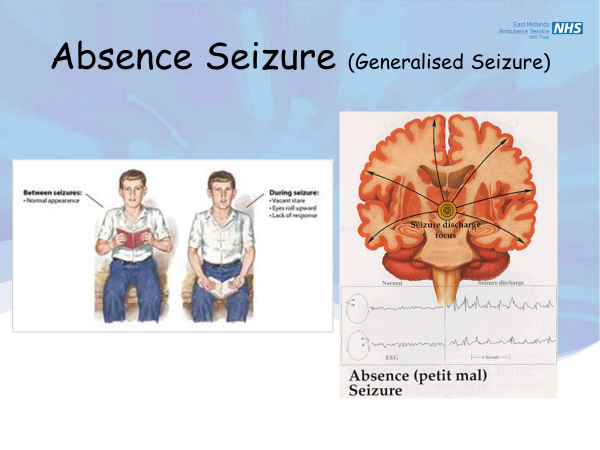
Absences
PARTIAL
•
•Simple
•Complex
•Secondarily
Generalised
Tonic Clonic Seizure (Generalised Seizure)
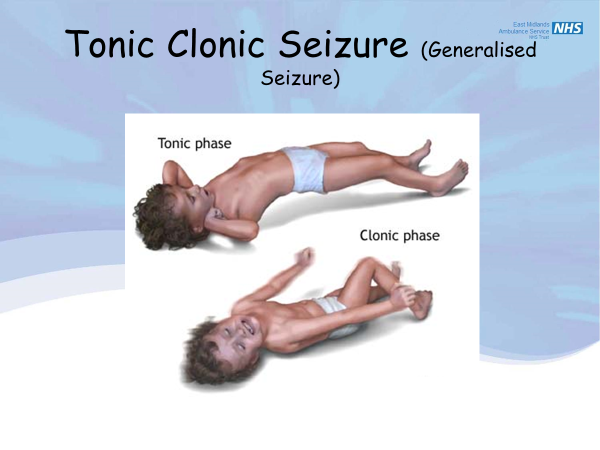
Stages of Tonic Clonic Seizures
- Aura - Visual disturbance, strange taste, smell or feeling.
- Tonic phase - Stiffening of the body
- Clonic phase - Jerking of muscles
- Post-ictal phase - gradual return to consciousness in which confusion, stupor, weakness & combativeness may occur.
Absence Seizure (Generalised Seizure)
Status Epilepticus
•Potentially life threatening
•Seizures continue for more than 30 minutes with no recovery (lucid interval) in between
Non-epileptiform Seizures
Causes of Non-epileptiform Seizures
- Hypoxia
- Trauma
- Stroke
- Intracranial tumour
- Drug intoxication
- Septicaemia
- Hyper
- Hypoglycaemia
- Metabolic disturbances
- Eclampsia
- Fever (Febrile)
- Meningitis
- Uraemia
tension
Assessment - History
Seizures
list
- Is the patient known to be epileptic?
- If so, are they on medication, and are they taking it?
- Have they had convulsions recently?
- Has the adult patient been unwell at present? Have they had a pyrexia?
- Is the patient diabetic?
- Is the patient pregnant?
- Is there any history of head injury?
- Is there any evidence of alcoholism or drug usage?
Assessment - General
- Assess ABCD’s
- Are there any time critical features? :
–Any major ABCD problems
–Serious head injury
–Status epilepticus
–Underlying infection (e.g. meningococcal infection)
Eclampsia?
- Assess ECG - Is there any sign of arrhythmia?
- Check blood glucose level - alcohol use?
- Assess the type of convulsion – is it generalised or focal?
- Assess for raised temperature and any sign of rash
- Assess for arrhythmia
- Blood pressure – hypotension?
- Assess for mouth/tongue injury, incontinence
Management of Seizures
- Ensure high flow O2 if active convulsion
- Post-Ictal - Administer O2 if hypoxaemic
- Establish if any treatment has already been administered (e.g. rectal diazepam)
- Administer patient’s own prescribed midazolam
- Position for airway security, comfort and protection from dangers
- Consider a nasopharyngeal airway if patient still convulsing (Don’t force the mouth open!)
- Assist in obtaining IV access if convulsion persists or recurs
- Apply ECG and pulse oximetry
- Check blood glucose level
- Assist with the administration of Diazemuls/Diazepam
- If patient can be moved, remove to hospital a.s.a.p
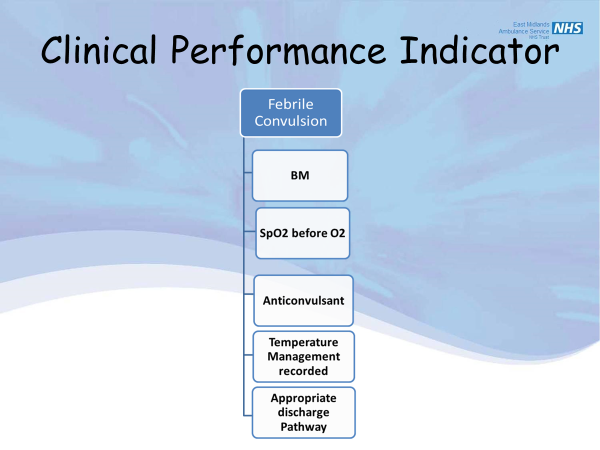
Febrile Convulsion
- Most commonly occurs between the ages of 6 months and 5 years
- Usually had an infection accompanied by a rapid rise in temperature
- May have experienced a febrile convulsion before
- Present as a tonic clonic seizure
Clinical Performance Indicator

-
MOD E TECH 26 Child protection/vulnerable adults/domestic violence41
-
MOD E Tech 27 Nervous System37
-
MOD E Tech 28 Nervous Disorders24
-
MOD E Tech 29 Skeletal System18
-
MOD E Tech 30 Musculoskeletal injuries18
-
MOD E Tech 31 Injuries to the Spine and Pelvis25
-
MOD E Tech 32 Head & Maxillofacial injuries29
-
MOD E Tech 33 Vehicle Extrication/Helmet Removal2
-
MOD E Tech 34 Wounds & Bleeding22
-
MOD E Tech 35 Burns and Scalds17
-
MOD E Tech 36 Trauma Management31
-
MOD E Tech 37 Disease Information19
-
MOD E Tech 52 Introduction to Pharmacology32
-
MOD E Tech Abdominal Trauma24
-
MOD E Tech Paediatric Trauma14
-
MOD E Tech Trauma in Pregnancy13
-
MOD E Tech Trauma in the Elderly14
-
MOD E Tech 28 Nervous Disorders COPY24



