Paediatric Trauma
Causes of death in childhood
- SIDS (“Cot death”) – most common between 1 month and 1 year of age
- Between the ages of 1 and 4 the cause is equally split between congenital abnormality and trauma
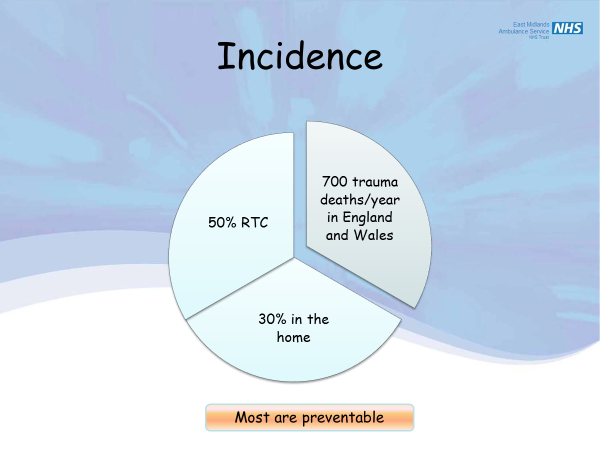
- In the UK Trauma is the most frequent cause of death after 1 year of age
Differences in response to injury between Adults and Children
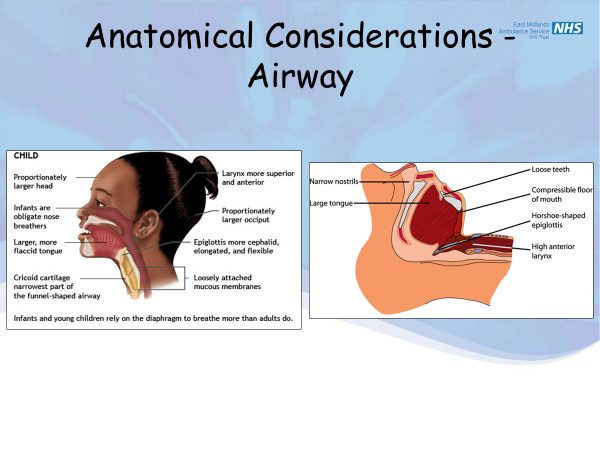
Anatomical Considerations
Physiological Considerations
Anatomical Considerations
- The large occiput
- Compliant chest wall
- Position of the abdominal organs
Physiological Considerations
- Smaller lung capacity
- Smaller blood volume
- Healthy hearts & extreme vasoconstriction
- Larger surface area
- Smaller glycogen stores
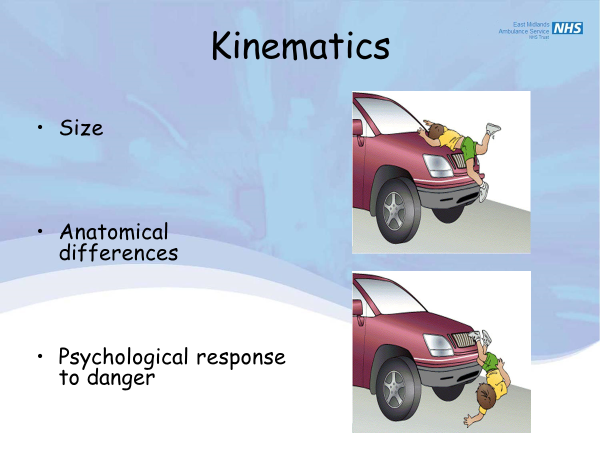
Kinematics
Assessment
- SCENE (“First 5”)
- <c>ABCDE</c>
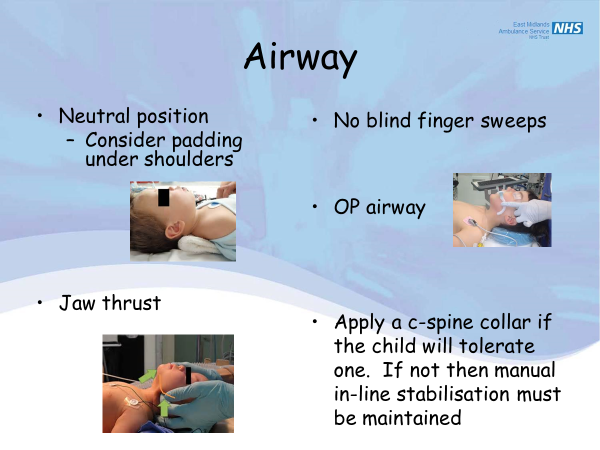
Airway
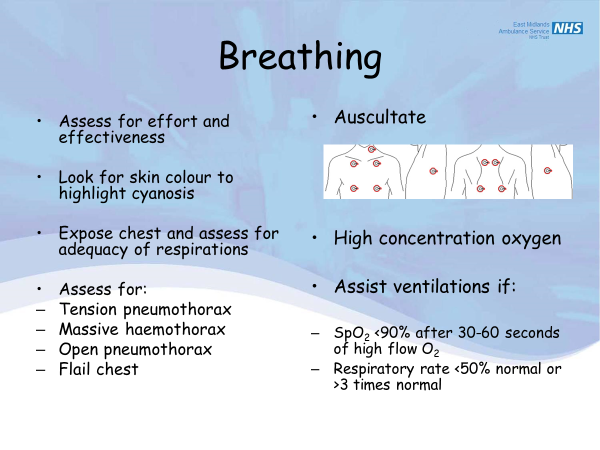
Breathing
Circulation
- Arrest any significant external bleeding
- Assess skin colour and temperature
- Capillary refill (sternum or forehead)
- Assess pulse rate and volume
- Signs of shock unlikely until at least 25% blood volume is lost
Disability / Level of Consciousness
•Note initial LOC on the “AVPU” scale
•
•If the patient does not score “A” then consider them time critical
•
- Assess pupils
- Note any spontaneous limb movements
- Ask the patient to “wiggle” their fingers and toes
- Measure blood glucose level in any child with altered LOC
- Confusion or agitation in the child may arise directly from head injury or secondary to hypoxia from airway impairment, impaired breathing or hypovolaemia.
- After initial AVPU assessment, use revised GCS
•
•Note any changes no matter how slight
•
•Children loose heat rapidly – Keep warm!
Head Injuries
•Children often fall head first
•
•Must prevent secondary injury due to hypoxia by adequate management of:
•
A + B = 100% Oxygen
–
- Vomiting is common with paediatric head injuries so prevent aspiration and monitor GSC regularly
- The skull sutures fuse at approx. 12 – 18 months.
- Large intracranial bleeds can be accommodated without obvious abnormal neurological signs
- Deteriorating conscious level or development of unequal pupils mandates urgent removal to hospital
Chest Injuries
- Fractured ribs and flail segments are rare in children
- Pneumothoraces and pulmonary contusions are more common – Tracheal deviation difficult to see due to chubby necks
- Be aware of the signs and symptoms of respiratory distress
Spinal Injuries
•Rare, but can be catastrophic if present
•
•Treat the same as for an adult
•
•Pad under the shoulders to aid neutral positioning
•
•Consider manual immobilisation
Abdominal Injuries
- Blunt trauma is the second leading cause of death in children
- Skeleton protects abdominal organs less well in a child
- Thin abdominal wall transmits forces easily
–internal injuries without external signs
- GENTLE palpation
- Think SHOCK
Extremity Injuries
- Bones are less likely to fracture
- Bones are able to absorb more force so underlying damage may be more severe
- Rapid healing of fractures
- Injuries to the growth plate can result in permanent deformity
Thermal Injuries
- Burns and scalds are relatively common in children
- Consider NAI if the mechanism of injury and/or history do not match the sustained injury
- The Rule of Nines does not work in children <14years – use palmar surface
- Burns >10% TBSA = Time Critical

-
MOD E TECH 26 Child protection/vulnerable adults/domestic violence41
-
MOD E Tech 27 Nervous System37
-
MOD E Tech 28 Nervous Disorders24
-
MOD E Tech 29 Skeletal System18
-
MOD E Tech 30 Musculoskeletal injuries18
-
MOD E Tech 31 Injuries to the Spine and Pelvis25
-
MOD E Tech 32 Head & Maxillofacial injuries29
-
MOD E Tech 33 Vehicle Extrication/Helmet Removal2
-
MOD E Tech 34 Wounds & Bleeding22
-
MOD E Tech 35 Burns and Scalds17
-
MOD E Tech 36 Trauma Management31
-
MOD E Tech 37 Disease Information19
-
MOD E Tech 52 Introduction to Pharmacology32
-
MOD E Tech Abdominal Trauma24
-
MOD E Tech Paediatric Trauma14
-
MOD E Tech Trauma in Pregnancy13
-
MOD E Tech Trauma in the Elderly14
-
MOD E Tech 28 Nervous Disorders COPY24



