List 5 findings in acute infantile glaucoma.
Name 4 possible complications.
List 5 findings in acute infantile glaucoma.
- Triad
- Photophobia
- Blephorospasm
- Epiphora = Tearing
- Enlarged cornea/globe
- Conjunctival injection
- Corneal edema/clouding
Name 4 possible complications.
- Vision loss
- Amblyopia
- Corneal scarring
- Optic nerve damage
- Luxation of lens (from corneal enlargement)
Notes:
- Infantile = Glaucoma that starts in the first 3 years of life (juvenile = 3-30 years old
- > 50% are primary = caused by anomaly of the eye drainage system (trabecular meshwork)
- Secondary glaucoma = other ocular or systemic anomalies are associated
- Traumatic (especially if hyphema)
- Intraocular neoplasm (e.g. retinoblastoma, leukemia, melanoma, rhabdo)
- Uveitis
- Lens subluxation (Marfan’s - upward, homocystinuria - downward)
- Cataract surgery
- ROP
- Microphtalmos
- Maternal rubella
- Intraocular infection
- Diagnosis: intraocular pressure evaluation (tonopen)
- Treatment: primarily surgical +/- medical therapy (eye drops)
Nelson’s chapter 632: Childhood glaucoma
UpToDate: Primary infantile glaucoma
Corneal abrasion
Clinical manifestations (4)
Treatment goals (3)
Management (5)
Indications for ophthomology referral (7)
- Treatment goals:
- Treat pain
- Rule out more serious ocular injuries
- Facilitate corneal/conjunctival healing
- Management:
- Most physicians apply lubricating topical antibiotic (Polysporin, erythromycin, bacitracin) or artificial tears for 3 to 5 days (limited evidence to say improves outcome)
- No patch (does not accelerate healing or reduce pain)
- Use of mydriatic drops such as cyclopentolate 1% can reduce ciliary spasm
- Topical ointments containing neomycin or steroids should not be used
- If asymptomatic at 48 hours, no follow up required
- Contact lens wearers:
- Remove contact lens immediately
- Do not put contact lens back in until fully healed
- Do not put fluorescein in prior to contact lens removal (can result in permanent staining)
- Never patch (can create microenvironment resulting in bacterial ulceration)
- Place on antipseudomonal topical antibiotic
- Refer to ophtho urgently (see below)
- Indications for ophtho referral:
- Large corneal/conjunctival abrasions (within 24 hours)
- Abrasions involving the visual axis (within 24 hours)
- Increasing pain or redness
- Pain or FB sensation persists past 48 to 72 hours
- Suspicion of foreign body (also tailor topical antibiotics to cover Bacillus species if suspect contamination from soil)
- Contact lens wearer (urgently)
- History of ocular herpes (urgently)
Fleisher’s Chapter 122 Ocular Trauma
Neonatal conjunctivitis
4 causes
When does chlamydia conjunctivitis present?
Major causes:
- Chemicals
- Chlamydia
- Bacteria
- Viruses
Mild non-purulent inflammation of the conjunctiva that begins 12-24 hours after birth usually due to 1% silver nitrate instilled at birth
Chlamydia conjunctivitis is the most common neonatal conjunctivitis → appears 5-14 days after birth. 10-20 % will also have chlamydial pneumonia. Treat with oral azithro.
Gonoccocal conjunctivitis appears 2-5 days after birth, manifests as marked inflammation of the eyelids, chemosis, and copious purulent discharge → medical emergency because can cause corneal ulceration and perforation. Treat with IV 3rd gen cephalosporin or penicillin with topical abx as well.
HSV more rare. Look for skin lesions.
Gram stain and culture and conjunctival scraping for work up.
Swelling and pustule on eyelid margin for 3 days.
Dx?
Tx?
Dx?
- Hordeolum
- A hordeolum is a purulent infection of any one of the sebaceous or apocrine sweat glands of the eyelid, including the glands of Moll and Zeis, which drain near the eyelash follicle, and the mebomian glands, which drain nearer the conjunctiva. Clinically, a hordeolum is recognized as a red, tender swelling. It is usually caused byS. aureus or Staph epidermidis.
- A stye is an external hordeolum, on the skin side of the eyelid (inflammation of Zeis gland)
- A chalazion is an internal hordeolum, on the conjunctival side of the eyelid (inflammation of mebomian gland)
- Predisposing conditions: acne, soborrhea, blepharitis
How do you treat it?
- In all cases, these lesions are treated with warm compresses and topical antibiotic drops or ointment (although their value is debatable) and usually resolve within 7 days. Intralesional triamcinolone injection can be beneficial for a chalazion. A chalazion is more likely to become chronic and require surgical excision
Pediatric Secrets Chapter 10 Infectious Diseases
Pediatric Emergency Medicine Secrets 3rd Ed Chapter 22 Red Eye
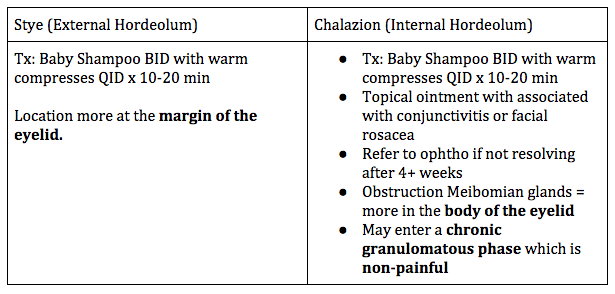
Description of a kid who had an open globe rupture:
What are 3-4 initial steps?
What is the most serious complication that can cause visual loss?
- What are 3-4 initial steps?
- Shield the eye edges
- should make contact with bony prominences above/below the eye)
- commercial vs styrofoam cup
- Pain control - to avoid crying = increased IOP
- Anti-emetics - to avoid vomiting = increased IOP
- Ophthalmology consultation emergently
- IV antibiotics only if IV access already there!
- No eye drops!
- Shield the eye edges
- What is the most serious complication that can cause visual loss?
- Retinal detachment?
- Other complications:
- Infection
- Corneal scarring
- Loss of intraocular contents
- Visual prognosis worse if:
- blunt injury or injury from GSW,
- young age,
- large wounds,
- Wounds involving sclera, associated injury - hyphema, vitreous hemorrhage or retinal detachment.
Post traumatic bacterial endophthalmitis
- 3-30% depending on setting and circumstances of trauma
- both gram positive and negative organisms or mixed can occur
- Bacillus cereus recently recognized as a virulent organism in post traumatic endophthalmitis
- higher risk with dirty lacs, retained IOFB
- poor prognosis
- by the time infection is clinically evident, antibiotic may be too late to reverse
JAMA Ophtho 2007 Prophylaxis of Acute Posttraumatic Bacterial Endophthalmitis
Most common complication - Traumatic cataract. Can occur within days to years. (Up To Date)
Quick facts: globe rupture
- Definition: presence of corneal or scleral laceration
- At risk for extrusion of ocular contents
- Clinical manifestations:
- Teardrop pupil (iris/choroid moving to plug the opening)
- Blue or brown material on surface of sclera
- 360 degree conjunctival hemorrhage
- Hyphema only if corneal or anterior scleral laceration
- Diagnosis: clinical
- Imaging (depends on FB material, if metal - no MRI!)
Fleisher’s chapter 122 Ocular trauma: ruptured globe
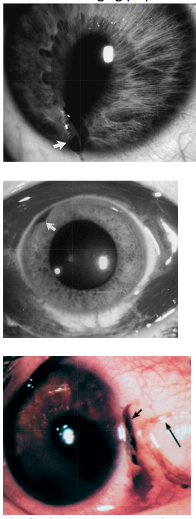
Teen hit with a squash ball 18 hrs ago, now blepharospasm, red and tearing, constricted and poor response to light - most likely diagnosis?
- Traumatic iritis
- Presents 24-48 hours after blunt trauma to the eye
- Inflammation within anterior chamber
- Ocular injection (may be present in circular ring around the cornea - ciliary flush)
- Photophobia
- Loss of visual acuity
- Pupillary constriction (miosis)
- Dx: slit lamp examination
- Mgmt: topical steroid eye drops and dilating drops, ophthalmic consult (concurrent eye injuries often present)
Fleisher’s Chapter 122 Ocular Trauma
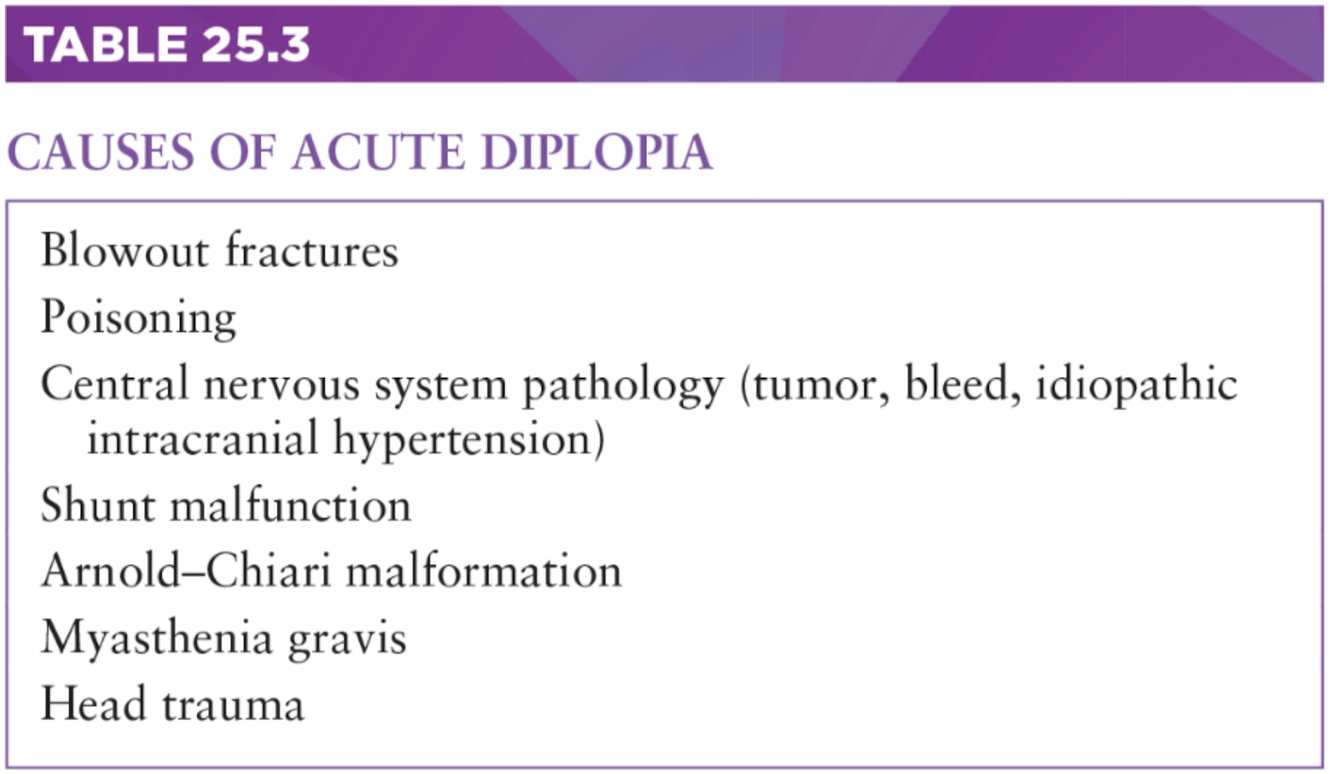
8 causes of diplopia
- Extra-ocular muscle involvement
- Orbital floor fracture + entrapment
- Orbital cellulitis
- Myasthenia gravis
- Tick paralysis
- Botulism
- Mass lesions of the orbit
- Increased intracranial pressure = CN III or VI compression
- Idiopathic
- Brain Tumor
- Head trauma
- Cerebral venous thrombosis
- Infection (intracerebral abscess, meningitis)
- Hydrocephalus
- Conditions associated with transient loss of supraoptic controll of eye movements
- Migraines (ophtalmoplegic or basilar)
- EtOH
- Benzodiazepines
- Sedative hypnotic medications
- Seizures
Up To Date Approach to the pediatric patient with vision change
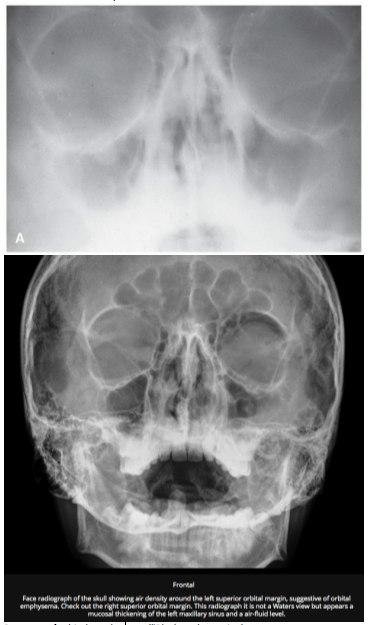
A 14 year old boy presents after a baseball game. A ball hit him in the eye and he is now swollen and bruised around the right eye and has difficulty opening the eye.
- Biggest concern?
- 3 signs seen in this condition on x-ray?
- How would you manage this condition?
- Biggest concern?
- Orbital blowout fracture (also need to rule out globe rupture, retrobulbar hematoma, hyphema, other associated eye injuries)
- 3 signs seen in this condition on x-ray?
- Teardrop configuration of fracture through orbital floor (herniation of orbital fat inferiorly)
- Air-fluid level in maxillary sinus
- Presence of orbital emphysema (“Black eyebrow sign)
- How would you manage this condition?
- Plastic surgery consult (urgent if signs of entrapment)
- Note: Repair of trapdoor fractures within 24 to 48 hours and release of extraocular muscles may prevent ischemia and fibrosis and result in better functional outcome
- Ophtho consult:
- Immediate: globe rupture, retrobulbar hematoma
- Within 24 hours: entrapment, enophthalmos, orbital dystopia
- Within 1 week: all others with orbital fracture
- Prophylactic antibiotics if fracture involves a sinus
- Steroids if signs of entrapment (a few studies suggest may decrease swelling and hasten resolution of diplopia)
- Assess for signs of globe-threatening, vision-threatening injuries/those with poor cosmetic outcome
- Plastic surgery consult (urgent if signs of entrapment)
Note:
- Signs of orbital blowout fracture:
- In children, orbital floor fracture may occur in a linear pattern which snaps back resulting in “trap door” fracture, and trapping of extraocular muscles and fat
- Limited voluntary upward gaze in cases of inferior rectus muscle entrapment
- Enophthalmos
- Orbital dystopia
- Diplopia
- Decreased sensation to cheek, upper lip, upper gingiva (infraorbital nerve injury)
- Step-off deformity
- Subcutaneous emphysema
- Nausea and vomiting
- Sensitivity of x-ray facial bones for orbital fractures is poor (approximately 50%)
- Plain films are difficult to interpret and also cannot be used to determine if patient needs operative intervention
- May be used as a screening tool if CT not available or in children with minor mechanism of injury who would require sedation for CT
- CT should be obtained in all patients who:
- Have evidence of fracture on exam
- Have decreased EOM
- Have decreased visual acuity
- Have severe pain
- Have limited physical exam (usually due to soft tissue swelling, especially in patients with decreased LOC)
Fleisher’s Chapter 115 Facial Trauma
Up To Date Orbital Fractures
Radiopaedia Facial Fractures https://radiopaedia.org/articles/orbital-blowout-fracture-1
DDx of pink eye (7)
- Chemical chemosis
- Allergic conjunctivitis
- Viral infection: adenovirus, HSV
- Bacterial infection: Chlamydia
- Corneal abrasion
- Corneal foreign body
- SJS
- Trichiatis
- Dry eye syndrome
- Iritis
- Glaucoma
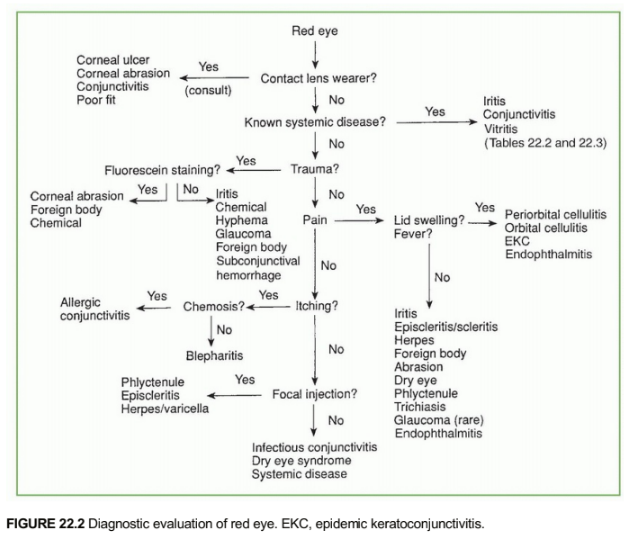
Differentiate allergic vs. viral conjunctivitis
- Pruritus is the cardinal symptom on allergic conjunctivitis (vs. irritation, grittiness, and burning in viral)
- History of specific allergy
- History of atopy
- Seasonal allergy
- Usually bilateral (vs. viral which is usually unilateral)
Pediatric Emergency Medicine Secrets 3rd Ed Chapter 22 Red Eye
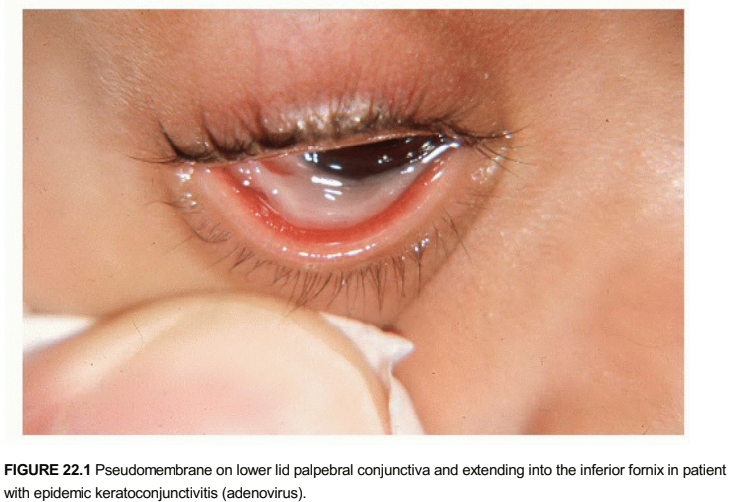
A 5 year old in the Emergency complains of bilateral eye discomfort. On examination, you notice both eyes to be intensely red with pseudomembranes on both palpebral conjunctivas.
Name 2 common causes for this clinical finding?
Pseudomembranes are found commonly in these two entities:
Fleisher’s Ch22 - Adenovirus or Steven Johnson Syndrome
AAO
Viral Conjunctivitis - adeno, HSV, molluscum
Bacterial - staph, strep, chlamydia, corynebacterium
Toxic conjunctivitis secondary to medication use
Allergic Conjunctivitis
Amyloidosis
Pseudomembranes are white/white-yellow plaques caused by loosely or firmly adherent collections of inflammatory cells, cellular debris and exudate.
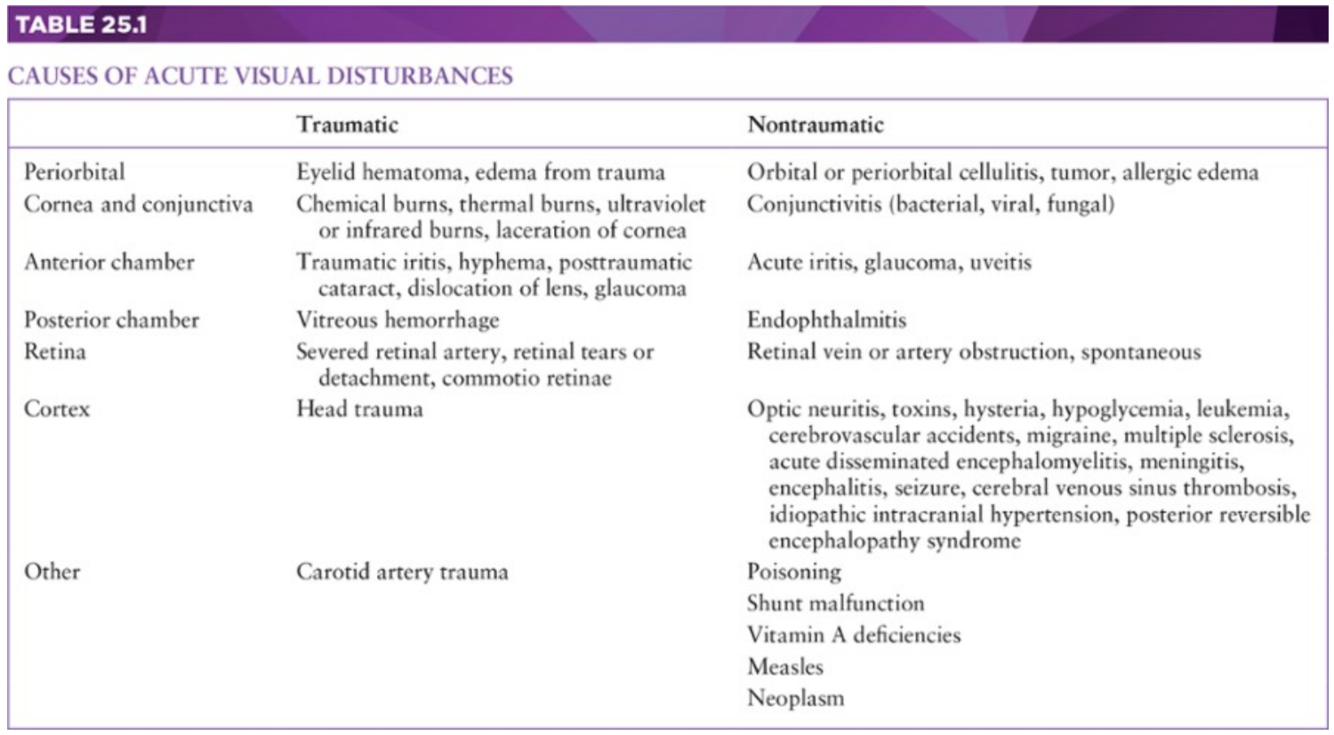
16 year old comes to the Emergency with a complaint of sudden vision loss in his left eye. List 4 serious, major causes of sudden vision loss?
- Intraocular contents:< >Retinal detachmentVitreous hemorrhageLens dislocationGlobe rupture (would have preceding trauma)
- Extra-ocular contents< >Chemical exposure ( would have acid vs alkali exposure)Corneal abrasionHerpetic keratitisUveitis/iritis
- Optic nerve
- Optic neuritis (multiple sclerosis)
- Central retinal artery/vein thrombosis
- Central causes
- Vascular< >StrokeVasculitis
- Infectious< >Brain abscessBrain tumor
- Encephalitis
A 15-year-old boy is involved in a very minor MVC in which the front airbag was deployed. He comes to the ED complaining of right eye pain and blurry vision. He is otherwise healthy.
You immediately note the right eye is red and tearing.
List 5 causes of a red, painful eye in this patient.
- Corneal abrasion
- Pain, involuntary blephorospasm, photophobia, FB sensation
- Lubricating topical antibiotic or artificial tears, ophtho F/U if ongoing pain past 48 to 72 hours
- Foreign body
- Suspect retained FB if multiple linear corneal abrasions
- Topical anesthesia, remove with cotton tip applicator or normal saline flush, topical antibiotics and ophtho consult 24-72 hours, urgent ophtho referral if deeply embedded, associated conjunctival laceration, subconjunctival
- Hyphema
- Pain, increased IOP, vision loss, photophobia, anisocoria, blood between cornea and iris (may fill entire space “8 ball” hyphema, or be microhyphema requiring slit lamp)
- Emergent ophtho consult, hard eye shield, bedrest, HOB 45 degrees, cycloplegic drops, antiemetics, analgesia (topical first),
- Subconjunctival hemorrhage
- May have foreign body sensation, but often asymptomatic
- When results from trauma, especially in cases of bullous elevation, urgent ophtho consult to evaluate for retinal injury and rule out open globe
- Globe rupture
- Teardrop pupil, 360 degree subconjunctival hemorrhage, enophthalmos
- No eye drops, hard eye shield, analgesia and antiemetics, broad spectrum IV antibiotics desirable, immediate ophtho consult)
- Traumatic iritis
- Usually does not present until 24 to 48 hours later
- Chemical conjuntivitis (alkali burn)
- From airbag - byproducts of sodium azide combustion
Fleisher’s Chapter 122 Ocular Trauma
Up To Date Conunctival Injury, Traumatic Hyphema Clinical Features and Diagnosis
A woman comes to your ED with her 3-year-old nephew because his pupils are unequal. She is babysitting him for the week. He had a minor tumble the evening before when he fell over her anatomy book (she is a medical student) and hit his head. He did not cry and got up and kept playing. When you examine him you agree; his right pupil is approximately 1 mm bigger than the left.
How can you tell which one is abnormal?
Physiological Anisocoria:
- If the relative difference in pupillary size is the same in both dim and bright illumination, the patient does NOT have an abnormal pupil.
- 20% of people with normal pupils have differences in excesso f 0.4mm
DDX of Anisocoria
Common Ddx
Life Threatening Ddx
Physiological
Pharmacologial
Local Factors
- miosis: iritis, surgical trauma
- mydriasis: trauma
- abnormal pupil shape from scarring
Neurological
- Miosis - Horner Syndrome
- Mydriasis - CNIII Palsy, Adie pupil
Congenital
- coloboma
- anterior chamber dysgensis syndrome
Physiological
Miosis
- Iritis (trauma, JRA, idiop)
- Abnormal pupil shape
- Horner Syndrme
Mydriasis
- Trauma
- CN III Palsy
- Adie Pupil
Congenital
-Coloboma
Miosis
- intracranial mass or vascular insult
- spinal cord tumour/compression
- intrathoracic tumour
- aneurysm
- cavernous sinus inflammation, thrombosis or tumour
Mydriasis
- increased ICP
- Intracranial mass lesion
- Aneurysm
- Cavernous sinus inflammation, thrombosis, tumor
- Orbital tumour
Kid comes in with unilateral red eye, watery discharge and pre-auricular nodes
what is the most likely cause
6 clinical exam findings to document when examining a red eye
- Epidemic keratoconjunctivitis
- Adenovirus is the most common etiology
- Clinical exam findings:
- Pupillary response (direct and consensual)
- Visual acuity
- Extraocular movements
- Presence of foreign body
- Hypopyon or hyphema in anterior chamber
- Fluorescein exam
- Intraocular pressure
Up To Date Evaluation of the red eye
kid with hyphema - 4 management steps
- Eye shield
- HoB to 45 degrees
- Bed rest
- Cycloplegic drops
- Ophthalmology consult
At risk for rebleed in the first 5 days
Complications:
- Elevated IOP
- Corneal staining
- Synechae
- Rebleeding
Hyphemas can be graded from I-IV in the following manner:[4]
Grade 0: No visible layering, but red blood cells within the anterior chamber (microhyphema)
Grade I: Layered blood occupying less than one third of the anterior chamber
Grade II: Blood filling one third to one half of the anterior chamber
Grade III: Layered blood filling one half to less than total of the anterior chamber
Grade IV: Total filling of the anterior chamber with blood. If the anterior chamber is completely filled with bright red blood it is called a total hyphema. If the anterior chamber is filled with dark red-black blood it is called a blackball or 8-ball hyphema. The black color is suggestive of impaired aqueous circulation and decreased oxygen concentration. This distinction is important because an eight ball hyphema is more likely to cause pupillary block and secondary angle closure.
Higher the grade the increased risk of raided IOP.
This doesn’t matter for kids with sickle cell - always at increased risk for IOP withy hyphema - no matter the grade.




